Is There Still a Point in Making Art?

A Heretic’s Meditation on Creativity in the Age of AI

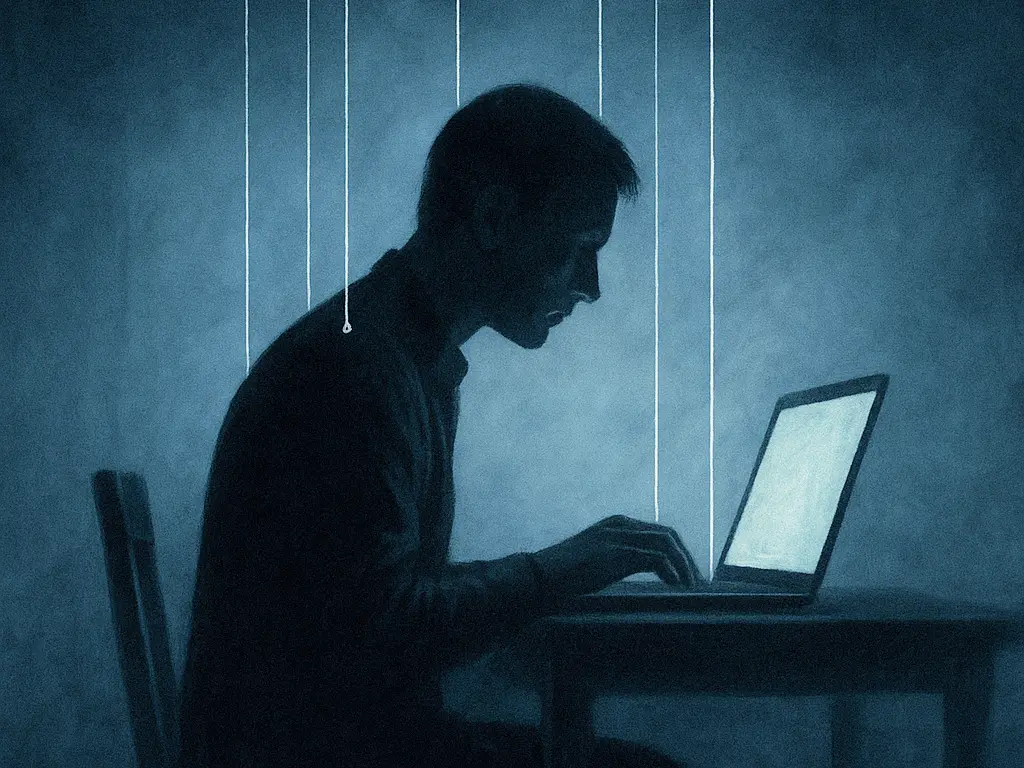
A shadowed artist stands before a glowing abstract canvas in a dimly lit studio, capturing the tension between solitude and creative fire.

The recent rise of AI-generated content has sent shockwaves through the creative world. Artists are feeling threatened. Jobs are already disappearing. The cultural landscape is shifting faster than many of us can process.

Arguments are flying from all directions — some warning of creative extinction, others hailing a new era of democratized expression.

But I’m not here to join the shouting match.

I want to offer something else. A quieter, steadier voice — not of panic or praise, but of reflection. I’ve asked myself the difficult questions that many artists are too afraid to face. And I’m still here.

This isn’t a defence of AI. It’s not a eulogy for art. It’s something else entirely:

A meditation on what art really is, what it’s always been, and what it might become now that the illusions are falling away.

An alternative perspective.


The Fear Beneath the Fear

It’s easy to say that artists are afraid of being replaced. But let’s be honest: that fear didn’t start with AI. The creative world has always been a battlefield — for attention, for validation, for survival. AI just turned up the volume.

But there’s a deeper layer beneath all the hot takes and headline panic.
It’s not just:

Because we don’t just make art — we identify as artists.
And if the world suddenly doesn’t need us anymore… where does that leave our sense of purpose?

This is the fear that creeps in quietly — beneath the debates, beneath the memes, beneath the moral panic.
It’s not just about skill. It’s about soul.

But here’s the thing:
True faith doesn’t fear challenge. It welcomes it.
If our relationship with art is sacred, it should survive this moment — maybe even be clarified by it.

So instead of defending “art” as an abstract institution, maybe it’s time to ask what it really is.
Not for everyone.
But for you.


What Are We Actually Protecting?

When people rush to defend “art” from AI, they often act like it’s one sacred, indivisible thing.

But it’s not.
It never was.

“Art” is a suitcase term — we’ve crammed a hundred different things into it and slapped a fragile sticker on the front.
So let’s unpack it.

When we say we care about art, do we mean:

  • Art as self-expression? A way to explore who we are and leave fingerprints on the world?
  • Art as labour? A career, a hustle, a means to pay rent and buy overpriced notebooks?
  • Art as recognition? A cry for visibility, validation, applause?
  • Art as therapy? A way to metabolize pain, soothe the nervous system, survive?
  • Art as culture? A ritual, a form of collective memory, a way to pass down stories and values?

All of these are valid. All of them matter.
But AI challenges them differently.

It doesn’t invalidate self-expression — but it floods the market, making it harder to be seen.
It doesn’t erase art as therapy — but it does make “making it your job” a shakier proposition.

And if we’re honest, a lot of the current panic is less about expression… and more about position.

We’re not just afraid that AI will make good art.
We’re afraid it will make so much good art that we’ll become invisible — or irrelevant.

So maybe it’s time to stop defending “art” as a single monolith, and start being honest about what we’re actually trying to protect.

Because some of it may be worth protecting.
And some of it… might be worth letting go.


AI as Tool, Collaborator, or Colonizer

Depending on who you ask, AI is either a miracle or a monster.
But like most tools, it’s not the thing itself — it’s how it’s used, and who’s holding it.

On one hand, AI can be a godsend.

It can:

  • Remove the soul-sucking labour from creative workflows
  • Help finish rough ideas, generate variations, or act as a bouncing board
  • Enable people with physical limitations, fatigue, executive dysfunction, or lack of technical training to finally create what’s been living in their heads for years

For the disabled, the neurodivergent, the chronically tired, or the time-poor — this isn’t just a productivity hack. It’s liberation.

And in that light, AI becomes a collaborator — a strange new instrument to improvise with.

But then there’s the other side.

The side where corporations use AI to:

  • Fire entire creative departments
  • Mass-produce art without paying artists
  • Feed models on unpaid, uncredited human labour
  • Flood platforms with content to drown out independent voices

Here, AI stops being a tool or a collaborator. It becomes a colonizer.

A force that doesn’t just assist human creativity — but replaces it, absorbs it, rebrands it, and sells it back to us.

So let’s not fall into the binary trap.
AI isn’t inherently good or evil.
It’s not “just a tool.” It’s a tool in a system.
And that system has motives — economic, political, exploitative.

The question isn’t “Is AI good or bad?”
The real question is: Who gets to use it, and who gets used by it?


Art Has Never Been a Fair Game

Let’s be brutally honest for a second.

The idea that AI is suddenly making things unfair for artists?
Please. Unfairness has always been baked into the system.

Long before AI could spit out a passable oil painting in 15 seconds, we had:

  • Artists born into wealth with unlimited time and resources
  • Others working three jobs, stealing hours from sleep just to sketch
  • Elite schools with gatekept knowledge
  • Whole industries built on interns, nepotism, and exploitation

We’ve always lived in a world where:

  • Exposure trumps talent
  • Looks sell better than skill
  • Who you know can matter more than what you do
  • Some people get book deals, grants, galleries, and record contracts — while others more talented go unheard

So no — AI didn’t suddenly ruin a golden age of meritocracy.
There never was one.

What it has done is raise the ceiling.
Now the people with the most compute power, the biggest models, and the best prompt engineering skills are taking that same advantage and supercharging it.

Yes, it’s threatening. But it’s not new.

And maybe the real source of pain here is that for a long time, we convinced ourselves that finally, with the internet and social media, the playing field was levelling out.
That if you just worked hard, stayed true, and got good at your craft — you’d find your audience.
Now, that illusion is crumbling.

But maybe that’s not all bad.
Because when the fantasy dies, we stop chasing validation in a rigged system — and start asking what art really means outside of that system.


What Cannot Be Replicated

Let’s say it plainly: AI can now create art that looks like art.
It can mimic styles, blend influences, even generate “original” pieces that fool the eye or impress the algorithm.

But mimicry is not meaning.
And this is where the line is drawn — not in pixels or waveforms, but in presence.

An AI cannot:

  • Create in order to understand itself
  • Bleed into a canvas because it doesn’t know where else to put the pain
  • Sit with a feeling until it shapes into a melody
  • Wrestle with childhood trauma through choreography
  • Capture the tension of grief, guilt, or longing in a line of poetry

It can replicate the result.
It can’t live the becoming that led to it.

Because human art isn’t just a thing we make — it’s a thing we are while we’re making it.

It’s the shaky voice at an open mic.
The sketch on a receipt in a café.
The song that never leaves your bedroom.
The project that took ten years to finish because you changed and needed the piece to change with you.

It’s the refusal to turn away from your own soul, even when no one’s watching.

That’s not something AI will ever “catch up to” — because it’s not a race of output.
It’s a ritual of transformation.

So no — AI can’t replace that.
Because it was never part of that to begin with.


In a World of Noise, Humanity is the Signal (Maybe)

We’re heading toward a world flooded with content — not just more, but more convincing.
Music, art, writing, even personal reflections… all generated in moments, all capable of simulating depth.

And yes — some will argue that “authenticity will always shine through.”
That human touch can’t be faked.
That something deep down will feel the difference.

But what if that’s not true?

What if AI can learn to mimic the crack in the voice, the hesitation in a phrase, the poetic ambiguity of a grieving soul?

What if it becomes so good at being us — or at least simulating the traces we leave behind — that even we can’t tell the difference anymore?

What happens when you read a poem that moves you to tears… and find out it was written by a machine running a model of a hypothetical person’s life?

Will it still be real to you?

Will it matter?

Maybe the age of AI won’t destroy authenticity — but it might blur it so thoroughly that we stop being able to locate it with certainty.
In that world, maybe the only real test is why we create, not whether the world knows who made it.

Not to stand out.
Not to compete.
Not to prove we’re human.

But because the act of creating still does something to us — regardless of how indistinguishable it becomes.

That’s where humanity will live.
Not in the product.
But in the process.


Heresy as Devotion

To even ask the question — “What if art no longer matters?” — feels like a betrayal.
A kind of blasphemy. Especially if you’re an artist.

We’re supposed to defend it.
Stand by it.
Die for it, if necessary.

But I’m not interested in loyalty based on fear.
I’m not here to parrot romantic slogans or protect some fragile ideal.
I’m here because I asked myself the unaskable questions
And I didn’t break.

I looked my art in the eye and said:

And instead of running, I stayed.
I stayed with the silence.
I stayed with the ache.
And I found something deeper underneath the need to be seen, or praised, or preserved.

I found devotion.

Not to an outcome.
Not to a career.
Not to being “better than AI.”

But to the act itself.

To stepping into the space (or sometimes being thrown into it!).
To listening in the dark.
To turning feeling into form.
To becoming through making.

If that makes me a heretic in the temple of Art, then so be it.
I’ll burn my incense in the ruins and still call it sacred.

Because I’m not making to be important.
I’m making to be honest.

And honesty can’t be replaced.


The Point Is Still the Point

Maybe AI really can make better images, smoother songs, cleverer lines.
Maybe soon we won’t be able to tell the difference between a painting made by a person and one made by a machine trained on ten thousand human lifetimes.

Maybe the difference won’t even matter anymore.

But here’s what I know:

I still create.

I still need to shape the chaos inside me into something I can look at and say, “Yes — that’s part of me.”
I still feel the pull to translate the unspeakable into form, even if no one else ever sees it.

And that need? That impulse?
It doesn’t care whether it’s marketable.
It doesn’t care whether it could have been done faster by a prompt.

It exists outside of all that.

Maybe that’s where art actually begins —
Not with what we make,
but with why we keep making.

So no — I’m not here to convince you that art still matters.
I’m here to remind you that you do.

And no, I can’t say with certainty that you’re not a simulation.
Maybe none of us are real in the way we think we are.
Maybe we’re all just playing out the parameters of some higher-dimensional being’s prompt.

But here’s the thing:

This still feels real.
The ache.
The pull to create.
The beauty we try to name before it dissolves.
The questions we keep asking even when the answers don’t come.

And maybe that’s enough.

So make.
Not because it proves your humanity.
Not because you’ll get noticed.
But because whatever this is — this strange loop of becoming — it’s calling you.

And to respond to that call,
even from inside the simulation?

That is the point.

Built-In Tyranny

A dark, atmospheric digital painting of a modern smartphone encaged by iron bars and heavy chains. The phone rests on a stone surface, with a glowing red fingerprint scanner symbol on its screen. A rusty USB-C cable wraps around the scene like a shackle. In the background, shadowy, ghostlike human figures loom in a dimly lit gothic interior, evoking a sense of imprisonment and surveillance.

We were promised liberation.
Sleek devices that fit in our pockets, connect us to the world, and put the power of creation in our hands. But instead, many of us now live in quiet submission to machines that seem to serve corporate masters more than their owners.

Our phones and laptops were once portals of personal freedom. Now they behave more like obedient jailers — installing apps we didn’t ask for, blocking accessories we bought with our own money, updating themselves while we sleep, and feeding our data to companies we never consented to.

Worse still, the more you rely on these devices — for work, communication, creativity, or accessibility — the tighter the leash becomes. And for neurodivergent users, whose very functioning may depend on predictability, clarity, and user agency, these constraints are not just frustrating — they can be disabling.

This isn’t just bad design.
It’s a philosophy: one that says you don’t really own the tools you buy.
Welcome to the era of built-in tyranny.


1. The Illusion of Ownership

You buy a phone. You expect it to work with whatever charger or headphones you already own. But surprise: it demands an official accessory. Or worse, it just won’t work at all.

Many devices now contain hardware-level restrictions that reject third-party gear unless it’s certified by the manufacturer — which often means more expensive and less sustainable.
Example: Apple’s Lightning cable ecosystem often blocks uncertified accessories, while newer MacBooks only support external displays via specific USB-C docks.

On the software side, entire ecosystems are locked down.
Samsung Galaxy phones ship with unremovable Facebook apps.
Amazon Fire tablets restrict app choices to their own store.
You’re not choosing an experience; you’re renting a branded enclosure.


2. Forced Updates, Feature Loss, and UX Hostility

Updates used to be a good thing. Now, they’re Trojan horses. You wake up one day to find your device has rearranged your menus, removed your favorite feature, or is running slower because your old hardware can’t handle the new bloat.

Examples:

  • Many Windows 10 users were forcibly upgraded to Windows 11 despite preferring the previous layout.
  • Google Nest devices lost key features like local device control after updates.
  • Instagram moved the post button to prioritize shopping.
  • Spotify now auto-plays algorithmic tracks after your playlist ends.

For neurodivergent users, this is deeply destabilizing.
Predictable routines become shifting sands.
Custom workarounds break.
The cognitive load to re-learn an interface you never asked to change can be overwhelming.


3. Vendor Lock-In and the War on Repair

Remember when you could pop open a laptop or phone, swap out the battery, maybe upgrade the storage? Now, you need specialized tools just to open the case — and even if you succeed, you might find parts refuse to work unless the manufacturer “pairs” them via software.

Examples:

  • Apple requires calibration for many replacement parts like screens and batteries.
  • HP printers have rejected third-party ink cartridges via firmware updates.
  • Tesla has remotely disabled features like Autopilot on used vehicles.
  • John Deere tractors require proprietary software access, blocking DIY repairs.

For many neurodivergent users, the ability to tinker and customize is part of how they function. Taking that away is more than just annoying — it’s disempowering.


4. Surveillance and Consent Illusions

Your device is always listening. Your apps are always tracking. Settings may appear customizable, but they often hide the truth.

Examples of “dark patterns” include:

  • Confirmshaming: “No thanks, I prefer boring content.”
  • Pre-checked boxes for mailing lists or data collection.
  • Buttons where “Accept” is bright and big, but “Decline” is small and grey.
  • Amazon’s multi-page unsubscribe process.
  • Google’s multi-click cookie opt-out.

For neurodivergent users especially, these deceptive experiences create anxiety and a feeling of being manipulated. The illusion of control is a form of psychological strain.


5. The Neurodivergent Toll

For many neurodivergent people, consistency is survival.
We rely on routines and predictability to function. When updates override our settings, change layouts, or disable our workarounds, it can throw everything out of balance.

Sensory overload from flashy animations, auto-playing videos, or constant notifications compounds the stress.

Many ND users report:

  • Updates that reset accessibility settings
  • UI layouts that defy logic or require too many steps
  • Changes that break assistive tools or workflows

This isn’t just a usability issue — it’s a form of systemic inaccessibility.


6. A Glimpse at Alternatives

Some hopeful alternatives include:

  • Librem 5 and PinePhone: Linux-powered open-source smartphones
  • /e/OS or LineageOS: De-Googled Android systems
  • Right to Repair: Supported by groups like iFixit
  • Linux laptops and mod-friendly systems

They’re not always easy or accessible to everyone, but they do prove that different models are possible — ones that respect the user’s right to own, modify, and control.


7. Conclusion: Know Your Shackles

Built-in tyranny doesn’t arrive with jackboots.
It arrives with glossy screens, sleek packaging, and biometric locks.
It whispers, “for your convenience,” while tightening its grip.

If you can’t fix it, can’t change it, and can’t control it —
Then you are not the owner.
You are the product.

If we want a more ethical, inclusive, and truly empowering digital world, we must start by naming the shackles that come standard — and imagining a world where they don’t.

What They Don’t Tell You About Gigging: The Quiet Cost of Being an Unsigned Artist

When I first imagined performing live, I pictured something transcendent. I saw myself on stage, lost in the music, surrounded by friends and strangers all riding the same wave. I imagined sound washing over us like a baptism. Something pure. Communal. Liberating.

And while those moments do exist, they are rare—buried beneath a pile of stress, mismanagement, and quiet indignities. Gigging, for unsigned artists, often means sacrificing peace of mind for a slot on a poster. It’s a world where passion collides with a brick wall of indifference.

Let’s talk about it.


The Environment They Don’t Talk About

You turn up to the venue and there’s no green room. No safe place to relax or focus. You’re balancing nerves and gear in a room that wasn’t built for either.

There’s no proper soundcheck—or if there is one, it’s rushed, incomplete, and handled by a disinterested engineer. You don’t get a feel for the room, or confidence in how you’ll sound. You just get: “Alright, you’re on.”

Your expensive equipment? It lives in fear. There’s no secure lockup, no backstage, no assurance. Just watch it like a hawk and pray it doesn’t disappear while you try to catch your breath.

You finish your set and you’re ushered off-stage like livestock in a holding pen, with barely enough time to speak to friends who came to see you play.

And money? If you get anything at all, it won’t come close to covering travel, time, gear maintenance, or the emotional cost. But you’re told to be grateful. Exposure is your reward.


“But at least you get to play live, right?”

Here’s what they don’t tell you:

  • You won’t even be considered unless you’ve racked up enough social media followers—not talent, not originality, just metrics.
  • Promoters often don’t listen to your music. You’re not curated—you’re slotted into a lineup like stock on a shelf.
  • Genre cohesion? Forget it. You might play sludge doom between bubblegum punk and comedy folk. Audiences scatter. Nobody wins.
  • You’ll be expected to promote and sell your own tickets, as if you’re the promoter now. If ticket sales are poor, you take the blame.
  • In city venues: no parking. You load in through a narrow alley, then drive three streets away and hope for the best.
  • Your rider? One drink. One. And if you’re lucky, it might not be warm beer in a plastic cup.
  • The sound system might be hanging on by a thread. Drum kits with stripped lugs, guitar amps with mystery hums. Monitors that don’t monitor.
  • Cramped stages mean you can’t move. You play like statues because there’s nowhere else to go.
  • Lighting? Maybe a flickering bulb or a half-dead strobe. Energy comes from you, not the room.

A Moment of Contrast

Recently, I saw Billy Corgan perform live as part of a supergroup at Black Sabbath’s monumental final show. From our seats, we could glimpse backstage. We saw Corgan vibing out with joy—smiling, hugging, present.

That’s what music should feel like.

And yes, there’s still stress at higher levels. But at least there’s infrastructure. Roadies to carry the weight. Engineers who care. A system that catches you when you fall.

For us, the unsigned, there is no such safety net. And sometimes, the dream of playing live gets eroded by the conditions we’re forced to endure.


Why I’m Still Here

I’m not writing this to whine. I’m writing it because someone has to say it: it shouldn’t have to be this hard to share something sacred.

I still believe in the core of it—in the magic of a note ringing out, in connection, in that moment where the world stops and music takes over.

But if we want to protect that magic, we have to talk about what threatens it. And for unsigned artists, that means speaking up about the quiet cost of every “opportunity” we’re handed. Because love alone doesn’t make the system fair. And passion doesn’t pay for parking.

We deserve better.

Feeding Ghosts: Simulated Cuisine and the Ethics of Experience

Introduction

What if the future of food wasn’t food at all? What if your steak dinner, your birthday cake, your cup of morning coffee—were all just carefully crafted illusions? Not imitations, but full-on simulations: perceived directly by the brain, bypassing the need for physical ingredients, cooking, or consumption.

This isn’t just science fiction anymore. With technologies like Virtual Reality, Neuralink, and brain-computer interfaces rapidly advancing, we’re on the cusp of being able to replicate the full sensory experience of eating. Visuals, smells, textures, tastes—even the feeling of satiety—could be artificially generated and customized. And if we go down this path, the consequences will be both profound and bizarre.

This article explores the possibilities, benefits, and potential horrors of simulated eating.


I. The Tech: Where We Are, and Where We’re Going

Already, research teams are experimenting with VR dining experiences and electric taste stimulation. Smell generators are being prototyped. Haptic mouthpieces are under development to replicate food textures. Neural interfaces are growing more precise, and companies like Neuralink are working toward bidirectional brain-computer communication. We’re not yet able to simulate a full meal flawlessly—but the component parts are assembling fast. Within a few decades, you may be able to eat a lobster bisque that doesn’t exist, while your body digests a simple plant-based nutrient paste or intravenous supplement.


II. Why Bother? Benefits of Simulated Eating

One of the most significant advantages of simulated eating is ethical liberation. There would be no animal suffering, no factory farming, no slaughter—just simulated meat, tailored to your taste and consumed with your ethics intact. Environmentally, the impact would be enormous. Without the need for traditional agriculture, we’d see dramatically reduced land use and greenhouse gas emissions, making food production vastly more sustainable.

Simulated eating also offers unprecedented accessibility. People with dysphagia, allergies, or other eating limitations could finally experience the foods they’ve missed or never had. For terminal patients, it could be a source of comfort—an opportunity to relive cherished meals. On the health front, the ability to indulge in the taste and sensation of indulgent foods while consuming precisely what your body needs could help with weight management, diabetes, and even malnutrition.

But the possibilities stretch beyond practicality into the creative. Imagine tasting your favorite music, designing entirely new flavor profiles that have never existed in nature, or using synaesthesia to blend art and gastronomy. Even the simple act of trying a new food before buying it could become a low-risk, immersive experience.


III. New Dangers & Ethical Nightmares

With such radical potential comes equally radical risk. Simulated eating could open new pathways for eating disorders. Virtual eating without nourishment might be exploited by those suffering from anorexia or bulimia, and entirely new disorders could emerge—like an obsession with “clean neural eating” or neurochemical binge cycles.

There’s also the danger of sensory addiction. These taste experiences could become hyper-engineered, surpassing junk food in their intensity and reward. Corporations might monetize these artificial cravings, exploiting our neurobiology in much the same way social media exploits our attention.

Another concern is the potential for deepening class divides. If high-fidelity neurofood simulators are expensive, we could see a world where the wealthy dine on gourmet illusions while the poor are stuck with analog nutrition. Meanwhile, cultural erosion may occur as traditional food practices and rituals lose relevance in a world of synthetic alternatives.

Consent and privacy introduce yet another layer of complexity. Could someone simulate feeding you without permission? Could this technology be used to prank or harass others? In fact, weaponized taste is a very real possibility—imagine being force-fed the sensation of squirming insects or rotting meat, complete with accurate texture, temperature, and smell. Taste could become a tool of torture or psychological manipulation.

And then there’s the more humorous, but still invasive, possibility of “taste rickrolling.” You expect tiramisu; instead, your neural sensors are hijacked with the exact flavor and mouthfeel of human feces. This isn’t just a joke—it’s a form of sensory cyberattack. We’ll need cybersecurity systems that filter and authenticate taste profiles to avoid such revolting surprises.


IV. The Philosophical Fork

If no animal was harmed, and no food was truly eaten, but the experience of eating occurred in full… what did you actually do? Did you eat meat? Does simulated cruelty normalize real cruelty? Can pleasure without substance still nourish the soul?

Simulated eating will challenge not just our taste buds, but our ethics, our rituals, and our definitions of reality. It forces us to ask: what do we really want from food? Is it nourishment? Comfort? Culture? Control? The answers may not be as simple as we think.


Conclusion

Simulated eating holds massive potential. It could reduce suffering, protect the planet, and empower those with food limitations. But like all powerful technologies, it carries the risk of exploitation, addiction, and unintended consequences. The fork of the future might not feed the body—but it may very well shape the mind.

The Fallacy Deck: The Communism Card


We’ve all seen it happen.

Mention that capitalism might have a few… catastrophic flaws — ecological collapse, wealth inequality, a tendency to consume everything in its path — and someone at the table narrows their eyes, leans forward, and slaps down a familiar, crimson-colored card.

Checkmate. Conversation over.

No need to discuss actual policy. No need to consider history, nuance, or alternatives. The mere mention of capitalism’s failings has triggered the defensive system — and the Communism Card has been played.


What Is the Communism Card?

The Communism Card is a rhetorical maneuver designed to shut down critiques of capitalism by lumping them in with the most dystopian, fear-loaded caricature of communism imaginable.

It goes something like this:

  • You suggest wealth caps? That’s Marxism.
  • You question private ownership of essential resources? Sounds like Stalin.
  • You propose a cooperative model for local governance? Might as well move to North Korea.

The tactic is rarely about communism itself. It’s about weaponizing the fear of authoritarianism, scarcity, and historical trauma to scare people away from even thinking about alternatives.


Why It Works

It works because it’s easy.

Capitalism is deeply embedded in modern Western identity. It’s marketed as synonymous with freedom, choice, and innovation. So anything that challenges it can be framed as the opposite: tyranny, restriction, and stagnation.

And let’s be fair — historical examples of state-communism have given plenty of ammunition.
Soviet purges. North Korean isolation. Bread lines and secret police. It’s not hard to associate communism with suffering.

But here’s the thing: none of that has anything to do with what you were actually suggesting.

The Communism Card doesn’t engage with your argument — it simply projects a nightmare onto it.


Why It Fails

  • It’s intellectually dishonest. Suggesting a wealth tax or public healthcare is not the same as proposing a one-party state.
  • It ignores diversity. Not everything left of capitalism is communism — and not all communism looks the same either.
  • It suppresses innovation. If every alternative gets branded as “failed communism,” we never get the chance to explore new systems.

Worst of all, it prevents nuance — forcing every idea into a binary of “free market good” vs. “authoritarian communism bad.”
This kind of false dichotomy is exactly what keeps us stuck in systems that no longer serve us.


What Gets Lost

When the Communism Card gets played, curiosity is the first casualty.

We lose the chance to explore:

  • Cooperative economics
  • Degrowth models
  • Resource-based economies
  • Participatory democracy
  • Hybrid systems that blend the best of multiple ideologies

All of these vanish the moment someone throws down the red card and says, “You’re just being unrealistic.”


How to Respond

So how do you counter the Communism Card without getting sucked into its trap?

  • Stay on topic. “I wasn’t proposing communism. I was questioning whether capitalism is working for everyone.”
  • Name the tactic. “That sounds like a deflection, not an argument.”
  • Invite nuance. “There are more than two systems in the world. Let’s explore the options.”

You don’t need to defend communism to critique capitalism.
And you don’t need to be a utopian to want something better.


The Real Question

If our system is so great, why is it so afraid of being questioned?

Why is the mere suggestion of change met with panic, scorn, or accusations of treason?

If capitalism truly is the best we can do — shouldn’t it welcome comparison?
Shouldn’t it thrive under scrutiny?

Or has it simply learned to play the game better — stacking the deck and silencing dissent before it can take shape?


Final Thought

The Communism Card isn’t just a fallacy — it’s a smokescreen.
It disguises the real conversation we need to have with fear, ridicule, and false choices.

But we don’t have to accept the terms of that game.
We can collect the cards.
We can reshuffle the deck.
We can deal ourselves back in — with new rules, new questions, and a refusal to fold under someone else’s illusion of certainty.

Counterfeit Culture: How Fake Products Are Eroding Trust, Value, and Accessibility

An abstract digital illustration featuring generic consumer items like headphones, a shoe, a microphone, and a box labeled “counterfeit,” all stylized in a bold, retro-inspired design with a red-orange background.

Introduction

We live in an age where the line between genuine and fake is becoming alarmingly blurred. With online marketplaces like Amazon and eBay flooded with counterfeit goods—often poor-quality imitations from anonymous sellers—consumers are losing the ability to trust what they’re buying. You may think you’re holding a legitimate product, but it might just be a convincing fake. This isn’t just about getting ripped off—it’s about something deeper: a quiet erosion of quality, trust, and economic fairness.


1. The Saturation of the Market with Fakes

Counterfeit goods are no longer confined to shady back-alley dealers or sketchy websites. They’re on the front pages of major retailers. Anyone can set up a seller account and start listing items under familiar brand names, complete with faked logos, photos, and even fake reviews. From Shure microphones to Hakko soldering irons to Yamaha saxophone mouthpieces—I’ve seen these counterfeits firsthand, and it’s almost impossible to tell at a glance.


2. When Brand Names Stop Meaning Anything

A brand was once a seal of quality. Now? It’s little more than a decorative badge. Counterfeiters hijack brand recognition while delivering none of the quality. Even reputable retailers have unknowingly stocked fakes. Trust in brands is being systematically dismantled—and with it, the very purpose of branding as a concept.


3. Hidden Exploitation Behind the Curtain

Most counterfeits aren’t just cheap—they’re cheap for a reason. Many are produced in factories with little regard for worker safety, fair wages, or environmental standards. When we buy these items—often unknowingly—we’re indirectly supporting unethical labor practices and contributing to unsustainable global supply chains.


4. Normalizing Mediocrity

The more we’re exposed to fakes, the more they become the norm. Subpar performance, shoddy materials, and quick failures all become “just how things are.” This desensitization gradually lowers public expectations for quality across the board—and that bar may never rise again.


5. Quality Comes at a Price—A Higher One Than Before

To get the real deal now takes research, effort, and often a significant markup. Verifying a product’s authenticity often means ordering directly from the manufacturer or a highly vetted supplier, sometimes even importing from overseas. That’s time, effort, and money the average buyer might not have.


6. A New Form of Gatekeeping

When the only way to ensure quality is to pay more or jump through verification hoops, we start drifting toward class-based access to authenticity. The wealthy can afford the genuine article, while everyone else must settle for “close enough.” And when the tools you buy affect the quality of your work, this becomes a systemic disadvantage—where privilege quietly amplifies itself.


7. So What Can We Do About It?

This problem can feel overwhelming—especially when even trusted retailers are compromised. But while we may not be able to stop the tide of counterfeits alone, we’re not entirely powerless. Here are some steps that can help reclaim a little control:

Be a Skeptical Shopper
Don’t trust a listing just because it has hundreds of positive reviews. Check for oddly worded product descriptions, low-resolution images, or sellers with inconsistent names and histories. Search Reddit, forums, or YouTube for authenticity comparisons when in doubt.

Buy from Authorized Dealers
Whenever possible, purchase directly from the manufacturer’s website or an official distributor. Many brands have a ‘Where to Buy’ section listing authorized sellers. Yes, it might cost more—but it often saves more in the long run.

Choose Quality Over Quantity
Rather than buying five cheap tools or accessories, invest in one solid item that will last. It’s a form of rebellion against disposable culture, and it’s better for your wallet (and the planet) in the long term.

Spread Awareness
If you discover a counterfeit, speak up. Report it to the platform, warn others online, and share your experience. Your voice might prevent someone else from being duped.

Support Regulation and Accountability
Push for greater platform accountability. These retailers have the resources to implement verification systems—they just need public pressure to prioritize them. Consumer movements and watchdog groups can make a difference over time.

Advocate for Fair Pricing
Counterfeit culture thrives because authentic products are increasingly priced out of reach. The long-term solution must include making quality accessible, not exclusive. That requires systemic change, but acknowledging the issue is the first step.


In short:

We can’t shop our way out of this problem—but we can shop with more awareness, demand better from sellers and platforms, and help each other navigate the fog of modern consumerism.

Systemic Abuse: The Guilt Machine

We’re all told that we live in a free world—one where our choices define us, our values shape our lives, and our purchases reflect our integrity. But for many of us, that freedom feels like a lie. The world we live in today doesn’t empower us to live by our values—it conditions us to betray them. And then it has the audacity to make us feel guilty for it.

It’s a clever machine. A cruel one. And like all truly dangerous systems, it doesn’t look like abuse at first glance. But if you’ve ever been in an abusive relationship, the emotional pattern might feel eerily familiar.


A System That Breaks You—and Then Blames You

Under late-stage capitalism, we are caught in a web of manufactured necessity. Take Amazon, for instance: many of us hate supporting it, knowing full well its exploitative practices—but still use it because it’s fast, cheap, and frictionless in a world that’s already draining us. This isn’t hypocrisy. It’s survival.

But the system wants you to think otherwise.

It sets impossible standards, offers you only compromised choices, and then whispers:

“If you were really a good person, you’d find a way to do better.”

Sound familiar? It should. These are classic abuse tactics.


Capitalism as a Scaled-Up Abuser

Personal Abuse TacticCapitalist Mirror
Gaslighting“You’re free to choose!” (between unaffordable, unethical, or unsustainable options)
Guilt manipulation“You bought from Amazon? That’s on you.”
Love bombing → withdrawalConvenience and perks up front, rising costs and exploitative policies later
Financial controlWage suppression, subscription traps, cost-of-living spirals
IsolationLocal businesses die, monopolies grow, alternatives shrink
Punish dissent, reward compliancePoints, perks, delivery guarantees… unless you opt out
Minimizing harm“Well, at least you’re not poor there,” or “Think of the jobs!”

This isn’t just resemblance. It’s design.

The system cultivates guilt as a form of emotional control. It ensures that even when we make the only viable choice, it doesn’t come without psychic cost. That cost is shame. Shame for being complicit. Shame for surviving.


Ethical Living as a Luxury?

Trying to live ethically under capitalism often feels like a full-time job—and an expensive one. Buy fair trade? It costs more. Boycott Amazon? Pay extra postage, wait longer, open three more accounts. Ditch tech giants? Navigate dozens of fractured, less-supported alternatives.

Convenience has become a commodity, one that’s traded in return for your participation in systemic harm. And if you don’t participate? You fall behind. You suffer more. You may even be cut off entirely.

In other words: the price of your values is your wellbeing. The system exploits this, because it knows that eventually, even the strongest burn out.


Witness the Guilt. Don’t Let It Own You.

So what can we do?

The answer is not to deny the guilt. In denying it, we risk becoming part of the very system we oppose—numb, complicit, desensitised.

But nor should we let it define us.

We need to witness it. To sit with it. To understand it as a symptom of captivity, not a flaw in our morality. The guilt we carry is evidence that our values still live.

Ethics in this world isn’t about being pure. It’s about being present.


You’re Not the Problem.

You didn’t create this system. You didn’t vote for monopolies. You didn’t sign up to be gaslit by algorithms and guilt-tripped by subscription services. You’re surviving in a rigged game.

But you’re also seeing it. And that matters.

Every time you acknowledge the manipulation—every time you name it, resist it, or even just survive it without turning cold—that’s resistance.

You don’t need to be perfect. You just need to be aware.

Because in a system that profits from your disconnection, your clarity is a threat.

Divide and Distract: How We’ve Been Trained to Fight the Wrong Enemy

There’s a trick being played on all of us.

Not a sleight of hand with cards or coins—but with narratives, identities, and emotional levers. It’s a trick so seamless that most people never realise they’re part of the performance. And even those who do see the misdirection often struggle to escape its grasp.

Here it is:


Manufactured Enemies

Scroll any social feed. Watch any televised debate. Eavesdrop on a crowded train. You’ll see it:

  • Left vs right
  • Boomers vs millennials
  • Masked vs unmasked
  • Rural vs urban
  • Vegans vs carnivores
  • iPhone vs Android

The content shifts, but the structure remains the same: us vs them.

The modern attention economy thrives on tribalism. It doesn’t matter if the war is over vaccines, identity politics, language, or lunch orders—what matters is that we’re constantly fighting someone. And more importantly, that we believe the other side is the reason things are broken.

But they’re not.

The real culprits are watching from above—largely invisible, fully protected, and often laughing.


When Rage is Rerouted

Righteous anger is one of the most powerful forces in existence. It can topple empires, end injustice, and forge solidarity across continents.

But misdirected?
It becomes a tool of oppression.

When we pour our outrage into culture wars, internet spats, and shallow memes, we expend real energy on phantom battles. We feel like we’re doing something—but in reality, we’re spinning our wheels while the real machinery of exploitation grinds on, uninterrupted.


The Puppet Masters

Let’s name some of the true antagonists:

  • Mega-corporations extracting resources and dodging tax
  • Lobbyists writing laws behind closed doors
  • Surveillance firms profiling us under the guise of convenience
  • Billionaires hoarding wealth in a world that can’t feed itself
  • Algorithmic platforms radicalising users for ad revenue

These forces aren’t hidden in shadows. They’re right out in the open, but rarely seen as the enemy—because we’re too busy arguing over pronouns or pineapple on pizza.


But What About Accountability?

Yes, people still make harmful choices.
Yes, individuals can be complicit in cruelty.
Yes, ignorance can do real damage.

But focusing only on the individual is like blaming the leaf for falling when the whole tree is being poisoned. Systems shape behaviour. Narratives shape perception. And we are all shaped—whether we like it or not.


The Role of the “Smart Ones”

If you’re someone who sees the manipulation clearly, your role isn’t to stand above others—it’s to help redirect the lens.

Not with superiority. Not with contempt. But with precision.
Call out the sleight of hand.
Pull back the curtain.
Refocus the conversation.

Because right now, many of the smartest, most perceptive people are caught in the same web—burning themselves out arguing with reflections instead of breaking the mirror.


Solidarity Is a Threat

Here’s what terrifies the system:

  • When a poor conservative farmer and a leftist city renter both realise they’re being screwed by the same landlord class.
  • When neurodivergent people across ideologies start recognising shared patterns of exploitation.
  • When the working class, the disabled, the artists, the overworked and overlooked stop fighting each other and start asking, together:
    “Who’s benefiting from all of this?”

That kind of cross-factional awareness? That’s dangerous.

Because solidarity is hard to control.


The End of the Trick

We don’t all have to agree on everything.
We don’t need to form some utopian consensus.

But we do need to see the stage.
Recognise the magicians.
Refuse to be the props in their show.

Because when the people stop fighting each other, they might finally start fighting back.

The Idiots Aren’t the Problem: Misdirected Misanthropy in an Engineered Divide

Let’s start with something raw and uncomfortable:

Not because I want to. Not because it makes me feel good. But because it often feels true — especially in a world flooded with shallow opinions, regurgitated slogans, wilful ignorance, and a collective refusal to look beyond the surface of anything.

But here’s the deeper truth—one that hurts far more:

And if we don’t understand that, we risk becoming exactly what the system wants us to be: angry, superior, divided.


Weaponized Disdain

There’s a quiet kind of relief in misanthropy. It gives you someone to blame.
You look around and see a world on fire—and people watching it burn while arguing about which brand of lighter fluid to buy next.

It’s tempting to direct your rage downward:

  • “Why won’t they wake up?”
  • “Why do they fall for propaganda?”
  • “Why don’t they care?”

But what if they were trained not to?

What if distraction, ignorance, and tribalism aren’t signs of stupidity, but symptoms of psychological warfare?


The Architecture of Blame

Everything about modern society is designed to fragment us.
We’re not just encouraged to fight amongst ourselves—we’re engineered to.

  • Left vs Right
  • Poor vs poorer
  • Neurodivergent vs “lazy”
  • Ethical vs indulgent
  • Educated vs “sheeple”
  • Every micro-identity in endless battle for moral superiority

And while we tear each other apart, the architects of our suffering float untouched above the fray—untouchable, unblamed, and richer by the minute.


The Illusion of Choice

Yes, people parrot nonsense. Yes, they deny science. Yes, they post horrifying things on the internet.

But behind every foolish comment is a person shaped by years of manipulation:

  • An underfunded education system
  • Stress-induced tunnel vision
  • Algorithmic feedback loops
  • Culture soaked in shame, punishment, and performance

So when we mock the “idiots,” we’re often mocking the symptoms of systemic collapse.
And in doing so, we absolve the system of responsibility.


Awake, and Alone

Those of us who see the manipulation clearly can feel isolated. It’s lonely to be awake in a room full of sleepers. The temptation to feel superior is strong—especially when your insight is met with mockery or silence.

But superiority is a trap.

It doesn’t lead to change. It doesn’t inspire connection. It only deepens the divide.

And worst of all? It makes you easier to control.

Because if you believe everyone else is the problem, you’ll never reach for collective liberation. You’ll wall yourself off. You’ll give up.


The Real Enemy

So let’s be brutally clear:
The enemy is not the unaware individual.
The enemy is the machine that benefits from that unawareness.

The corporations, politicians, media empires, and algorithmic puppeteers who:

  • Profit from ignorance
  • Weaponize distraction
  • Silence nuance
  • Turn suffering into spectacle

These are the forces that deserve our outrage.
Not the broken, numbed, hypnotised humans trapped beneath them.


Reclaiming Compassion Without Losing Fire

This isn’t a call to softness. It’s a call to precision.

We don’t need to stop being angry—we need to point our anger in the right direction.

That means:

  • Calling out manipulation, not just compliance
  • Critiquing systems, not just symptoms
  • Building solidarity across the fractures we’ve been taught to defend

Because the truth is: we’ve all been trained.
Some of us just noticed sooner.

Trained Not to Think: The Slow Death of Nuance

There’s something quietly catastrophic happening right under our noses.

It’s not a sudden event, not a single explosion we can point to and say there, that’s when it all changed. It’s more like a slow leak—an unseen corrosion of the collective psyche. A subtle but systematic dismantling of our ability to think deeply, question meaningfully, and sit with complexity long enough to understand it.

We are being trained not to think.

And worst of all? Most people don’t even realise it’s happening.


The Bite-Sized Brain

Our media landscape is increasingly dominated by short-form, low-commitment content. TikToks. Reels. Shorts. Endless scrolls of 15-second fragments, memes, and dopamine loops. Each piece designed not to provoke reflection, but to maintain momentum—keep you scrolling, laughing, liking, and forgetting.

There’s nothing inherently wrong with snack-sized entertainment. The issue arises when it becomes the default diet.

Over time, this steady stream of shallowness erodes the mental muscles required to engage with anything else. Articles become “too long.” Books become intimidating. Complex discussions become “boring” or “too much.” Even conversations that require nuance—about ethics, identity, politics, the planet—begin to fall apart because we no longer have the patience or attention span to hold the thread.


Algorithmic Amnesia

This isn’t just cultural drift—it’s a structural phenomenon. Social media platforms don’t just reward short-form content; they require it to thrive. Their algorithms are finely tuned to promote content that triggers reaction, not reflection. Engagement is king, and what engages is rarely what enlightens.

The platforms want us scrolling, not thinking. They want clicks, not contemplation. And over time, that design reshapes us.

We become addicted to novelty. Impatient with depth. Emotionally reactive. Distrustful of grey areas.
Nuance, in this environment, is not just inconvenient—it’s unprofitable.


The Disappearing Platform

As someone who writes longform, reflective articles—things that actually take time to absorb—I’ve noticed the shift personally. The number of people willing to engage with an argument from start to finish has shrunk dramatically. It’s not that people disagree with the ideas, necessarily—it’s that they no longer have the bandwidth to even hear them.

That should terrify us.

Because the issues that most desperately require attention—climate change, economic inequality, systemic manipulation, the future of AI—are complex. They require space. They demand nuance.
And yet, the public platform capable of holding that nuance is being eroded. The vessel for critical discussion is being shattered. What’s left are fragments: tweets, comments, outrage clips, soundbites.

And you cannot build collective understanding out of fragments.


Why This Matters

Some will argue: “This is just how things evolve. People want things quick and simple. It’s not that deep.”

But that’s exactly the point—it is that deep. Our appetite for oversimplification is being engineered, not chosen. We are not naturally allergic to nuance—we’re being trained to flinch from it.

This isn’t about elitism. It’s not about being “too clever” for the current world. It’s about being human. We are creatures of story, complexity, contradiction. We need space to explore, to change our minds, to hold two opposing truths at once.

When we lose that, we lose our grip on reality itself.
We become easy to manipulate.
We become unable to resist.
We become exactly what the system needs us to be: docile, distracted, divided.


Staying Awake

So what do we do?

We resist, in small ways at first:

  • Choose to read the full article.
  • Pause after a video and actually think about it.
  • Engage with things that challenge you, not just affirm you.
  • Support creators who give you substance, not just sugar.

And most importantly, when the world tries to shrink your attention span down to a goldfish loop of clicks and kicks—notice it. Name it. Fight it.

Because the death of nuance isn’t just the death of intelligent discourse.
It’s the death of our ability to understand anything at all.