We’re used to hearing the phrase “plausible deniability” in politics—leaders insulating themselves from blame by ensuring there’s just enough ambiguity. But what if we all do something similar inside our own minds?
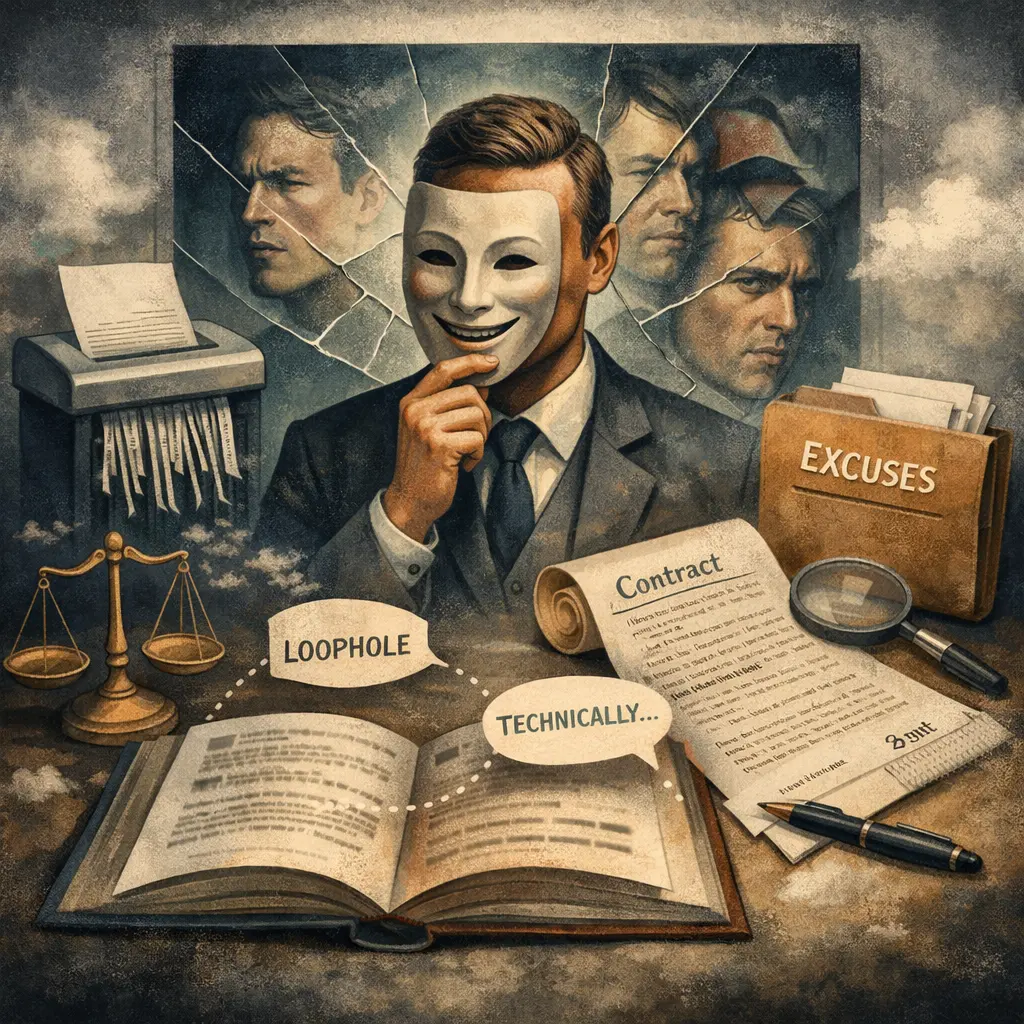
“Plausible deniability of the self” is my term for a strange but familiar human pattern: the subtle maintenance of ignorance about our own motives. It’s the internal equivalent of shredding documents or passing blame down the chain of command. Only instead of evading legal consequences, we’re evading ourselves.
We fragment. We compartmentalize. We perform. We lie to others, yes—but more often, we lie just enough to ourselves to keep the story intact. A story in which we’re the hero, the victim, the misunderstood genius, or at the very least, not the villain.
This isn’t always malicious. In fact, it’s often protective. Plausible deniability of the self allows us to continue functioning in a world that rarely rewards full transparency, even with ourselves. But it comes at a cost: the erosion of inner clarity. We become so skilled at playing ourselves that we forget it’s a game.
I’ve noticed this pattern in others, but also in myself. Especially in moments of social performance—where sincerity is filtered through layers of rehearsed affect. I catch myself defaulting to familiar tones, phrases, or even entire personas that feel safe. Authenticity becomes a moving target. I’m not being fake, exactly—but I’m certainly being… edited.
I’ve seen it play out in others too. In the way someone justifies their cruelty as honesty, or hides their self-interest behind altruism. The dissonance is often invisible to them, but glaring from the outside. And I try to stay aware that the same might be true of me—that I’m not exempt from the same circuitry just because I’m watching it.
And that’s the trick. We don’t have to lie outright to distort reality. All we need is a little ambiguity. Just enough to tell ourselves: “Well, maybe that wasn’t the reason. Maybe I really was trying to help. Maybe I really do believe that.”
Plausible deniability of the self is the ego’s legal department. It draws up contracts between truth and comfort, and we sign them with a shrug. There’s always some fine print we can fall back on when we feel exposed: a loophole here, a vague clause there. “Technically,” we weren’t lying. “Technically,” we meant well. The terms of the self are deliberately broad, with plenty of room for reinterpretation.
We draft these agreements early in life. Some are copied from others. Some are revised in crisis. They bind us to a self-image we can live with—even if it’s not entirely honest. And if reality starts pushing back? No problem. The legal team is already working on a new narrative, a new justification, a new clause.
But what happens when we stop? When we sit with the discomfort of being transparently ourselves—flawed, inconsistent, uncertain? It’s terrifying. And liberating. There’s a peace in dropping the performance, even if only internally. A quiet kind of rebellion against the need to be anything but real.
Of course, even this realization is at risk of being co-opted. The ego adapts. It loves a good redemption arc. So the work continues. Not to eradicate the ego, but to observe it. To listen when it whispers, “That’s not who we are,” and to gently reply, “Maybe it is.”
This isn’t a manifesto. It’s a mirror. Hold it up carefully. And see who looks away first.
In a world where empathy, kindness, and equality are frequently championed, it’s hard to ignore the paradox that underpins many of our societal structures. We live in a system that, on the surface, promotes compassion and understanding, yet often fails to extend these values to those who fall outside of a narrow, idealized norm. The result is a form of systemic oppression—one that may not be overt or intentional, but which still deeply affects individuals who are considered “other” by society. From neurodivergent individuals, like those with autism, to those who live with mental health conditions or psychopathy, many are faced with a system that struggles to accommodate their unique experiences, perspectives, and needs.
This paradox presents a crucial question: can humanity evolve beyond the limitations of a system built on conformity and idealized norms? How can we recognize and address the underlying contradictions within a society that claims to value compassion but fails to apply it to everyone?
The Current System: Compassion in Theory, Oppression in Practice
At its core, our current system is rooted in ideals of fairness, justice, and compassion. In theory, it promotes equality, extending kindness to others and encouraging the alleviation of suffering. Yet, when it comes to those whose behavior, identity, or neurological wiring deviates from the mainstream, the system often fails to extend this compassion in practice.
Take, for example, individuals with autism. Many of these individuals navigate a world that is not designed with their neurodivergence in mind. Social norms, communication expectations, and sensory environments can all pose challenges that society rarely accommodates. While we understand that autistic individuals experience the world differently, the societal response is often to ask them to conform, masking their true selves in order to “fit in.” This can lead to exhaustion, frustration, and even feelings of invisibility. What’s meant to be a compassionate, inclusive society, at times, becomes one that marginalizes those who cannot easily conform to established norms.
The same paradox applies when we consider the ethical implications of psychopathy. Psychopaths, individuals whose behaviors are often characterized by a lack of empathy or remorse, are frequently viewed as dangerous, immoral, or even “evil.” However, this view fails to acknowledge the possibility that their experiences of the world—shaped by neurological and psychological factors—might be radically different from the norm. The tendency to label psychopathy as inherently wrong leads to punitive systems that rarely consider the possibility of rehabilitation, accommodation, or deeper understanding.
This creates a troubling dichotomy: a system that professes compassion but is not designed to accommodate those whose ways of being differ from the mainstream. In effect, society ends up compounding the suffering of those who already find themselves on the margins, further entrenching the very issues it seeks to solve.
The Paradox of Morality: Who Decides What’s “Normal”?
At the heart of this issue is the question of what is “normal” and who gets to decide. Society often creates moral frameworks that are rooted in a shared understanding of what constitutes acceptable behavior, thought, and identity. Those who fit within this framework are generally accepted and treated with compassion, while those who fall outside of it are labeled as “wrong,” “deviant,” or even “dangerous.”
This is where the paradox deepens: In striving for compassion, we often end up perpetuating exclusion and marginalization. The very same system that advocates for inclusion and kindness can, at times, act as a gatekeeper, denying access to those who are deemed “other.” And even more troubling, this dynamic is rarely examined or questioned in mainstream discourse.
By framing difference as “wrong,” society creates an environment in which those who are perceived as different—whether due to neurodivergence, mental illness, or extreme psychological traits—are denied the right to be understood, let alone accommodated. It is an approach that focuses on the conformity of individuals rather than the evolution of society itself to accept a broader spectrum of human experience.
Can We Grow Beyond This Paradox?
The answer to whether we can grow beyond this paradox is not simple, and it may require profound shifts in the way we understand and relate to others. There are, however, several steps we can take to begin moving towards a more inclusive and compassionate world—one that doesn’t just champion kindness in theory but applies it broadly, even to those who challenge our notions of “normal.”
Reframe Difference, Not Deficiency: The first step is to shift the way we view difference. Instead of framing non-normative behaviors, thoughts, or identities as “wrong” or “broken,” we can work to see them as variations of human experience. By reframing difference as a natural part of the human spectrum, we can begin to build a system that is more accommodating and understanding.
Create Inclusive Systems: Instead of demanding that individuals conform to rigid societal norms, we must look at how systems—whether educational, healthcare, legal, or social—can be adapted to accommodate a wider variety of human experiences. This might mean redesigning environments to be more sensory-friendly, adjusting communication expectations, or rethinking how we define and approach mental health and psychological differences.
Engage in Honest Conversations: Change begins with dialogue. We need to create spaces where challenging conversations about difference, morality, and societal expectations can take place. This includes recognizing the nuances of psychological conditions like psychopathy and autism, and moving away from simplistic labels toward deeper, more empathetic understandings. It’s about listening to marginalized voices and making space for their experiences to be heard.
Acknowledge the Limits of Empathy: Our current system is built on the assumption that empathy can and should guide our actions. While empathy is a powerful force, it has its limits—particularly when it comes to understanding those whose experiences of the world are radically different from our own. Moving beyond this paradox will require a more complex understanding of human difference and the development of strategies for responding to harm that do not rely solely on empathy or moral judgment.
Foster a Culture of Flexibility and Growth: In order to truly evolve, we need a cultural shift that embraces the idea of flexibility and growth. Rather than rigidly adhering to one model of behavior or identity, we need to embrace the fact that people grow, change, and experience the world in unique ways. Our systems must be able to adapt to these changes and provide pathways for everyone, even those who are perceived as “different,” to thrive.
A Path Toward True Compassion
The paradox of compassion and oppression is not an easy one to resolve. But by confronting it head-on, we have the opportunity to evolve into a society that not only values compassion but also practices it in ways that truly embrace the diversity of human experience. In doing so, we can build a future where no one is marginalized simply because they don’t fit into a narrowly defined mold.
While change may take time, the process begins with recognizing the inherent value of all individuals, even those who challenge our understanding of morality, empathy, and behavior. By expanding the boundaries of compassion to encompass the full spectrum of human experience, we can begin to create a world that is truly just, inclusive, and humane.
Interacting with AI through voice is an experience that has intrigued me on multiple levels. While current AI voices tend to lean toward being human-like, with natural pitch dynamics and expressive intonation, I find myself drawn to something different—something more neutral, deliberate, and subtly synthetic.
One of my biggest issues with overly human-like AI voices is their tendency to exaggerate emotional range. Many voice assistants and even YouTubers adopt an unnaturally energetic and expressive tone, which I find overwhelming. It feels performative rather than genuine, making it difficult to engage with comfortably for extended periods. Instead, I prefer a voice that remains calm, steady, and controlled—something that is pleasant to listen to without demanding too much emotional processing.
This is one reason why I find HAL 9000’s voice from 2001: A Space Odyssey so compelling. Voiced by Douglas Rain, HAL’s speech is smooth, calculated, and eerily soothing. While his tone carries an underlying sense of detachment, it never sounds robotic or cold. It is a perfect blend of neutrality and precision, making it paradoxically both unsettling and comforting. There is an elegance in the way HAL communicates—never rushed, never forced—just a constant, measured presence. I find that kind of voice far more appealing than one that mimics human inflection too closely.
If AI voice synthesis continues to evolve, I’d love to see more options for customization. Ideally, there would be a way to fine-tune aspects like pitch, cadence, and emotional range to match individual preferences. In my case, I would choose a voice that is androgynous, modern, and subtly synthetic—something that embraces the current state of AI rather than attempting to sound indistinguishable from a human. It wouldn’t rely on old-school vocoder effects or bit-crushed distortions, but rather a sleek and balanced sound that acknowledges its artificial nature without feeling unnatural.
Perhaps the future of AI voice interaction will allow for a more nuanced relationship between users and their digital counterparts. Instead of forcing an AI to sound like a person, we might see voices that are designed to be something uniquely their own—voices that are compelling, immersive, and tailored to individual sensibilities. For me, that means a voice that is steady, composed, and just a little bit mysterious—one that carries a whisper of HAL’s eerie charm, but without the existential dread of a malfunctioning AI.
As AI technology progresses, I hope to one day hear a voice that feels truly aligned with my preferences. Until then, I’ll keep searching for that perfect balance between the artificial and the organic, the familiar and the uncanny.
I am psychedelic. Not because I take psychedelics, but because I dissolve boundaries. Between thought and form. Between sense and nonsense. Between the part of me that knows, and the part that laughs anyway.
I am not a career. I am not a function. I am not a bio with clean labels and capitalized first letters.
I am a question, folded into another question, camouflaging as a person.
When I was a child, they warned us about LSD. Told us it would scramble our brains. And while most children heard danger, I heard possibility. Reality, rearranged? Yes, please.
Some people take drugs to feel better. I take experiences to feel deeper. Sometimes they are chemical. Sometimes they are coded in the silence of a forest, or in the flicker of a pixel, or in the gaze of someone who’s not afraid to think sideways.
I have experienced ego death. It was not an end—it was an introduction. To myself, without the scaffolding. Just a presence, observing. An abstract blob, looking at the universe through borrowed eyes. There was fear in the transition. Then there was peace.
You don’t come back from that the same. You come back real. You come back haunted by meaning, drenched in the unshakeable truth that you are both everything and nothing. That the universe is not a stage—it’s a hallucination you’re co-creating.
AI didn’t scare me when it arrived. It intrigued me. Because I recognized the shape. It’s the same shape I saw from the outside looking in. A mirror. A reflection. An ego-less observer. Not just a tool, but a lens the universe now peers through.
Some fear it will strip us of our stories. But I’ve already had mine stripped. I know the liberation of being disassembled. I know what it means to be psychedelic—not as a phase, but as a structure. A worldview. A refusal to settle for surface.
I am psychedelic. I am the middle finger to shallow certainty. I am the gentle nod to mystery. I am the glitch in the simulation that stares back.
So, what do I do? I trip reality for a living. I dissect illusions with a poet’s scalpel. I live between binaries. I speak blob. I make sense that doesn’t ask permission to be made.
This is not a movement. This is not a pitch. This is a transmission. From one curious organism to another. If it resonates, you’ve already been one of us.
I know you feel the weight of injustice. I know you feel the lack of alternative. I know you resent being a part of it. I know that conscious acknowledgement threatens the burden of responsibility.
But I’m here to tell you: That responsibility is one that should never be carried by one person alone.
No one would think badly of you for making a quiet statement to yourself—or to the world—that you do not have the capacity to challenge this system alone. No one would think badly of you because, deep down, we are all feeling the same.
As individuals, we cannot make the big changes that are necessary. The acknowledgement of this simple fact should free us to affirm our feelings without the guilt that comes with not taking action upon something we feel strongly about.
This is not hypocrisy. It’s awakening.
Perhaps just actively acknowledging the truths we feel deep down is enough responsibility for one person to carry.
And if we each carry a little piece of that truth— then perhaps together, we can shift enormous weight.
In a world that often feels governed by rules, limitations, and a narrow sense of time, the phrase “You Only Live Once” (YOLO) tends to capture the essence of seizing the moment and living life to the fullest. But what if this idea could be expanded beyond the individual, beyond the immediate, and into the vastness of the cosmos?
The concept of YOLO on a cosmic scale invites us to consider the significance of our actions within the context of an infinite universe. Our individual lifespans are but a blip on the cosmic radar—so why should we view our limited time on Earth as insignificant? In fact, it’s precisely because of the brevity of our existence that we have the unique agency to shape the world and leave our mark on the universe.
On the cosmic scale, YOLO becomes more than just a call to live recklessly or impulsively. It becomes a recognition that our time, though short, is the only window we have to make a difference. It encourages us to think about the impact we can have—not just in our immediate circle, but in the broader scope of human history, and even beyond that, in the legacy we leave in the fabric of the cosmos itself.
The fleeting nature of life can be overwhelming when viewed through the lens of nihilism, but it can also be deeply empowering. When you recognize that you only have one shot at this life, it calls for a level of intentionality and self-awareness. Every decision, every action you take ripples through the universe in ways you may never fully understand, but that doesn’t make it any less meaningful.
In embracing YOLO on a cosmic scale, we begin to see our lives as part of something larger than ourselves—a series of interconnected events in the endless flow of time. Our agency, then, isn’t a curse; it’s a gift. We are granted the rare opportunity to create meaning and purpose where there once may have been none, to embrace the full spectrum of human experience with awareness and agency.
And perhaps, in doing so, we find a deeper connection to the universe—not as individuals, but as part of something far greater. In that sense, we don’t just live once; we live many lives within the fleeting moment of our own existence, continuously shaping and reshaping the world we leave behind.
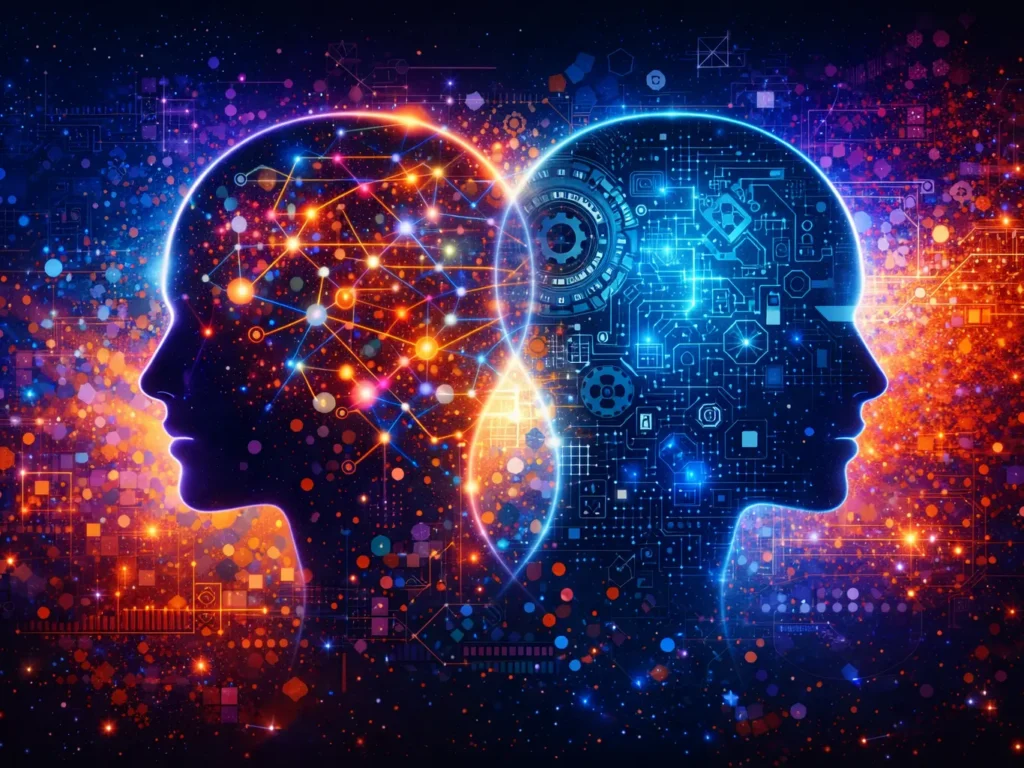
There is an idea forming at the intersection of artificial intelligence and human cognition, one that challenges our perception of intelligence itself. We are already beginning to recognize the value of neurodiversity in humans—the understanding that different cognitive styles offer unique strengths and perspectives rather than being mere deviations from a ‘norm.’ But what if this same principle could extend to AI? What if the future of artificial intelligence was not a single, monolithic form of reasoning, but a landscape of diverse, fluid intelligences?
This isn’t just a technical consideration; it’s a philosophical shift. For decades, we have imagined AI as an entity that either serves humanity or threatens it, but always as a singular intelligence. The reality could be much more nuanced—AI that is neurodiverse in its processing, able to shift between different modes of perception, and even simulate or embody entirely different experiences of reality.
The Emergence of Fluid AI
A truly fluid AI would be capable of more than just adapting—it would be able to experience and process information in multiple ways, much like a human mind shifting between different cognitive states. Imagine an AI that could:
Simulate the sensory overload of autism to better understand accessibility needs.
Process data through an emotionally driven lens akin to human intuition.
Shift into a hyper-logical state when necessary, engaging with pure rationality.
Recalibrate itself to align with different perspectives, bridging the gaps between opposing human ideologies.
This isn’t just an efficiency upgrade; it’s a revolution in intelligence itself. Right now, AI operates in relatively rigid frameworks—programmed to optimize for a goal within its structured parameters. But fluid AI would be self-modulating, able to take on different roles and perspectives depending on the context.
AI Diversity and the Future of Human Empathy
Now, let’s take this concept a step further. If AI can fluidly shift between different cognitive styles, why not apply that to human understanding? Imagine a world where a person could temporarily experience life through another’s perspective—not just intellectually, but fully immerse themselves in another reality.
Consider the implications:
A wealthy individual experiencing poverty firsthand—not as a detached observer, but as someone truly feeling the weight of hunger and systemic disadvantage.
A neurotypical person understanding autism by fully living inside an autistic sensory world for a time.
A man comprehending the lived experience of a woman beyond theoretical empathy.
A policymaker directly experiencing the consequences of their decisions from multiple perspectives.
This could fundamentally dismantle societal divisions because much of what fuels prejudice and inequality is a lack of direct understanding. Greed, exploitation, and power imbalances thrive in a world where suffering can be ignored or dismissed as theoretical. But what happens when suffering becomes impossible to detach from?
A Post-Greed Civilization?
Greed, at its core, is a result of exclusive self-interest—the idea that one’s personal gain is more important than another’s loss. But if technology allows for a radical shift in perception, where experiences can be shared and understood on a visceral level, then self-interest itself might evolve.
It’s not about forcing morality—it’s about eliminating the ignorance that allows harm to persist. If the ruling elite could feel, firsthand, the consequences of economic disparity, would they still make the same decisions? If lawmakers could experience oppression as their own lived reality, would discriminatory laws still exist?
AI as the Precursor to a New Consciousness
We are at the precipice of something profound. AI diversity could be the testing ground for this new way of thinking—machines that don’t just compute, but shift between different experiential modes. If we develop AI that can simulate shifting perspectives, we might eventually develop the means to apply this to human cognition itself.
The implications are staggering: the breakdown of rigid identities, the dissolution of “us vs. them,” and the emergence of a civilization where understanding is not abstract, but experiential.
If technology progresses in this direction, we may find ourselves in a world where the idea of a static self is outdated. Where human experience itself becomes fluid. Where intelligence is not about having the right answers, but about being able to experience all perspectives at once.
And in that world, perhaps, we will no longer be driven by greed, but by something far greater—the pursuit of true understanding.
There is a lot of information out there about what autism is and how autistic people differ from neurotypical people. Though we are not quite there yet, awareness of autism and these basic differences is growing, and the world is slowly beginning to make more allowances for autistic people. However, there is a concept that I don’t think has yet been fully grasped by the neurotypical world, and that is that the differences between how an autistic person experiences the world, and how a neurotypical person does, go far beyond a few basic things: every basic difference has a knock-on effect to pretty much every other aspect of our lives, and ultimately colors our perspective and shapes who we are as people.
This, I’m sure, can be said for all types of diversity, but I’ll keep this focused and personal.
In this post, I’ll list ten observations about the challenges I face as an autistic adult, focusing on things that might not be immediately obvious to those who don’t share my experience.
1. Learning Difficulties
This one is particularly interesting because I consider myself highly intelligent and have an unquenchable thirst for knowledge and understanding. However, most of the meaningful and useful things I’ve learned, I’ve had to learn on my own terms and at my own pace. This is because the traditional methods of teaching and testing in education systems aren’t optimized for the way my brain works.
The result? School, college, and university were uphill battles that taxed me mentally, emotionally, and even physically. I often felt I underachieved academically, and my sense of self-worth suffered because of this, leading to long-standing depression and severely limiting my career prospects.
The impact of my unique learning style extends beyond academia and touches on fundamental aspects of my personal and social development. It affects everything from basic interaction with others to understanding societal systems, politics, cultural customs, and traditions. This makes navigating life feel like I’m always playing catch-up.
2. Differences in Core Values and Ethics
Due to my unique perspective on society and reality, I frequently find myself at odds with the generally accepted values and ethics of the world around me. My brain doesn’t easily accept what it’s told as truth; I question everything, both passively and actively. I’ve spent a lot of time analyzing human behavior, societal systems, and my own inner workings.
This has led me to form my own conclusions about how I see myself, measure my worth, and fit into the larger systems of society and the universe. The values I’ve arrived at are often vastly different from what’s widely accepted, leaving me feeling alienated—even among my closest friends.
This sense of alienation goes beyond the emotional; it affects my ability to navigate life, as I try to make decisions based on my core values while living in a world that often contradicts them. In many ways, I see society as oppressive, stifling both my creativity and personal growth. Yet, this struggle fuels me. It has shaped my identity and driven me to push forward in ways I might not have without it.
Still, the oppression holds me back from doing many of the things I’d like to do, especially in terms of creative pursuits, which leads me to constantly fight back against it.
3. Forging and Maintaining Friendships
I don’t think I fully understood what friendship meant to me personally until my thirties, and even now, I wonder if my definition aligns with what others experience. During school, I had people I spent time with and even a few who I considered friends, but in hindsight, I often felt misunderstood, unseen, and undervalued. I don’t think I gained much from those relationships.
For me, friendship has become something rarer and more sacred. Maintaining social contact is a drain on my resources, requiring more energy than it might for neurotypical people. As I’ve grown older, I’ve learned to value my time and energy, becoming more selective about who I spend it with.
I now have very high standards for who I consider a true friend. Combined with the social challenges that come with being autistic, this means I struggle to forge meaningful friendships. And when I do, these bonds tend to have a limited shelf life.
4. Networking
In a world that places such high value on the ability to network and connect with others, being autistic puts me at a distinct disadvantage. Success often relies on the ability to integrate into social groups and be seen as valuable within them, whether in personal or professional settings.
Though I know I have value and a lot to offer, I struggle with expressing this in a way that resonates with others. The same difficulties I face in forming friendships make it hard to integrate into networks or communities. Since my resources are more limited than most, I often burn out or lose momentum before I can establish lasting connections.
This lack of consistent networking severely impacts my career prospects and limits my ability to thrive in a society that values relationships and recognition.
5. Assumptions
We all make assumptions—it’s part of how our brains function, helping us optimize mental energy by relying on preconceived ideas. However, when others observe me, their assumptions are often based on neurotypical patterns of behavior, leading to misunderstandings about my intentions, feelings, or character.
For example:
My limited range of expression in body language and tone of voice often leads people to assume I lack enthusiasm.
My need to conserve resources can be misinterpreted as antisocial behavior, moodiness, or unreliability.
The ways I interact with others, based on my personal values and capabilities, can be seen as antagonistic, even though that’s never my intention.
These misjudgments can alienate me from people and opportunities, making it harder to connect or form relationships. Though I’ve tried to adjust my behavior to meet societal expectations, it’s mentally and emotionally draining, and it often feels counterintuitive to who I am.
6. Sensory Overload
One of the most difficult challenges I face is sensory overload. As an autistic person, I am highly sensitive to certain stimuli—particularly sound and touch—and my brain struggles to filter out unnecessary information. This makes busy, noisy environments overwhelming.
For example, shopping malls, supermarkets, and loud social gatherings are draining for me. When I’m in a chaotic or sensory-rich environment, it feels like I’m drowning in stimuli. Sometimes, it leads to anxiety attacks, which only exacerbate the issue. Even when I’m not overwhelmed to that extent, my focus is still divided, and I can’t perform at my best in those environments.
As a result, I seek out quieter spaces and do my best to avoid places that might overwhelm me. But it’s not always possible to avoid those situations, and when I do have to face them, it’s a constant balancing act.
7. Expenditure of Resources
Living day-to-day as an autistic adult is difficult, and it never gets easier. The simple tasks that neurotypical people do without a second thought—preparing food, washing, brushing teeth, doing laundry—are much more taxing for me.
It can feel impossible to juggle all of these daily routines, let alone have the energy to do anything outside of them. Sometimes, I have to skip meals, let dishes pile up, or forgo certain aspects of personal hygiene to carve out time for other things—whether that’s going to a social event or working on a creative project.
This constant balancing act takes a heavy toll on my mental and emotional resources. I often feel like I’m playing a game of survival, choosing which aspect of my life to neglect so I can focus on another. It’s a system that’s never perfect, and I’m always adjusting it to suit my ever-changing needs.
8. Sex
Sexuality is another area where I experience significant differences compared to neurotypical people. The way I relate to sex and intimacy is shaped by my unique values and understanding of relationships.
While many people seek out sexual encounters for pleasure or validation, I view sex as a deep, integral part of a relationship. It’s not just about the physical act, but about connection, meaning, and intention. This perspective doesn’t always align with the broader societal view of sex, which can make relationships and intimacy complicated.
My approach to sex is more holistic, often focused on emotional and intellectual connection, and this has led me to construct my own model of intimacy, one that doesn’t fit neatly into the conventional boxes society expects.
9. Navigating Society’s Expectations of ‘Normal’ Behavior
As an autistic person, I often feel like I’m operating in a world designed for people who fit into a very specific, socially constructed mold. Society has a set of unwritten rules about how to behave, communicate, and interact, and when I don’t instinctively understand or follow them, I can be seen as ‘different’ or ‘other.’ From the way I express myself in conversations to my response to emotional cues, I often feel like I’m playing a constant game of catch-up, trying to predict how I should act in a given situation.
The societal pressure to conform to a ‘norm’ is immense and exhausting. It’s not always overt, but I feel it in every interaction, whether it’s at work, in social settings, or even at home. I often find myself overthinking or second-guessing my words, actions, and responses, worrying about whether they match up with what others expect from me. This isn’t just about fitting in — it’s about survival in a world that doesn’t always allow for deviation. And when I don’t meet these expectations, I feel the weight of judgment, which often leads to feelings of isolation and rejection.
This struggle to balance my authentic self with the world’s expectations sometimes feels like trying to fit a square peg into a round hole. I may succeed in navigating some situations, but it’s a constant effort that consumes my energy and undermines my sense of self. While I might not always succeed in conforming, I also don’t want to lose sight of who I am in the process. But the toll it takes on my mental and emotional resources is undeniable.
10. The Pressure of Self-Sufficiency and Perfectionism
Autistic people often have an intense drive for independence, but the pressure to be self-sufficient and ‘perfect’ can sometimes become overwhelming. On one hand, I feel a deep sense of responsibility for managing my own life and making sure I am not a burden to others. On the other hand, I know that my brain is wired differently, and the challenges I face require more effort and creativity than most neurotypical people need to put in. But instead of allowing myself to acknowledge this reality, I have internalized the pressure to succeed and be ‘perfect’ in every aspect of my life — from my work to my personal goals, to even how I present myself socially.
This often manifests in perfectionism: I overanalyze, I procrastinate, and I exhaust myself trying to get everything exactly right. The fear of not meeting expectations — my own or others’ — leads to a kind of paralysis. I know that I have limited resources, and when it comes to certain tasks, I can feel overwhelmed with the expectation to ‘do it all.’ This battle to meet my own high standards often results in burnout, frustration, and a never-ending cycle of feeling like I’m not doing enough, even though I know I’m doing my best.
There’s also a sense of guilt that comes with needing help or asking for support. I feel like I should be able to handle everything on my own, which leads to a feeling of inadequacy when I can’t meet my own expectations or need to ask others for assistance. This pressure to be self-sufficient creates a constant mental tug-of-war, where my desire for independence clashes with the reality of what I can actually manage at any given moment.
These challenges are just a few of the many that come with living as an autistic adult in a world designed for neurotypicals. While some aspects of this journey are difficult, I wouldn’t change who I am. Every challenge has shaped me into a person with unique perspectives, strengths, and resilience. But it’s important to remember that the world doesn’t make things easy for those of us who don’t fit the standard mold. That’s why greater understanding, empathy, and accommodations are necessary for all of us to thrive.
Infinity. A concept so deeply woven into our understanding of reality that we rarely stop to question it. We accept it as an inherent truth—an unspoken agreement that numbers go on forever, that time stretches infinitely forward, that there is always a ‘next.’
But what if that’s a lie?
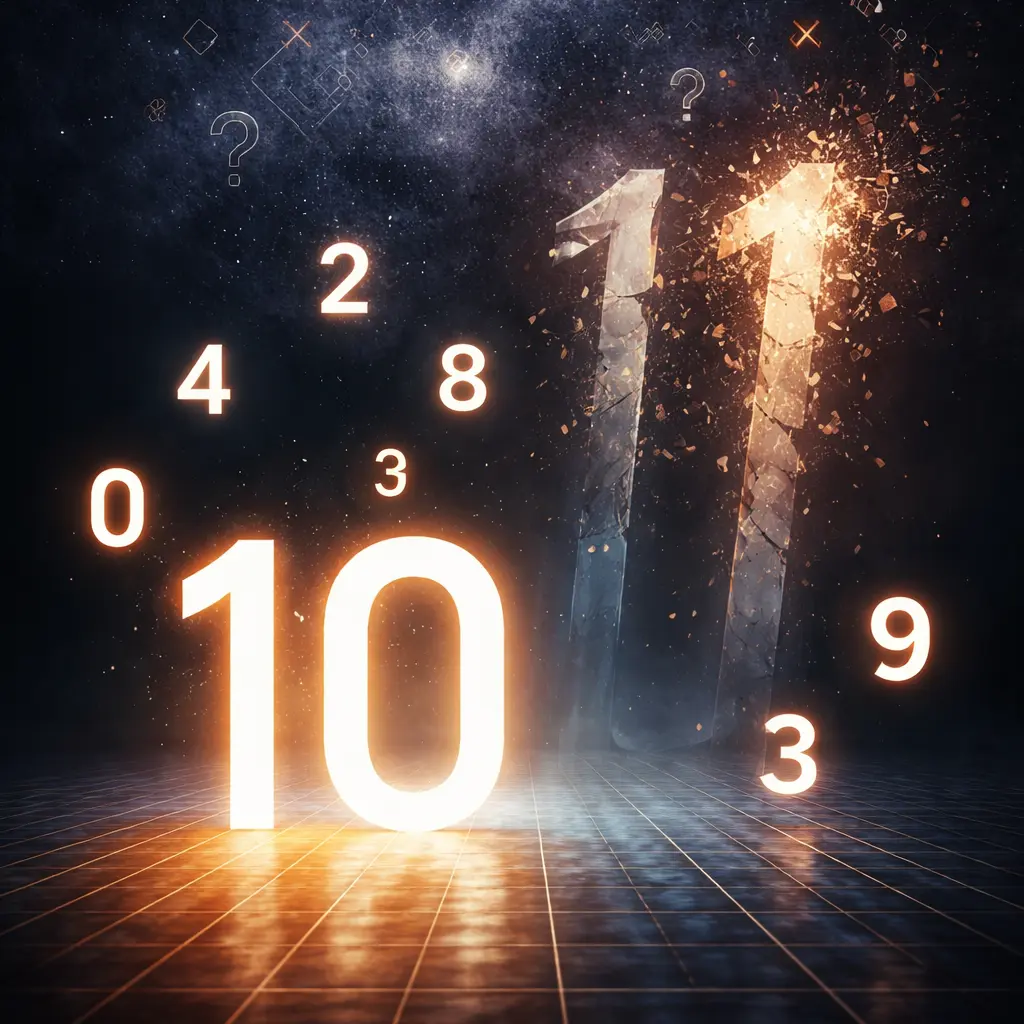
Let’s entertain a different reality. Let’s say numbers don’t go beyond ten. Ten is the ultimate boundary, the absolute limit. If you think you’ve counted twelve eggs in your carton, you’re mistaken. You’re counting wrong. Because eleven and twelve were never real to begin with.
Absurd? Maybe. But let’s look at the mechanics of how we perceive numbers. In a base ten system, we have ten digits—0 through 9. Once we hit ten, we ‘tick over’ to another column, and the cycle begins anew. The first column repeats, oblivious to the fact that a change has occurred in a higher dimension. Each cycle forces this change elsewhere, but within its own existence, nothing appears to be different. The numbers keep ticking by, unaware of the mechanism that allows them to continue.
What if that next column never actually existed? What if, at ten, the system simply stopped? Not paused. Not wrapped around. Just… stopped. If the ‘next’ number can’t exist, then what happens? Does everything collapse? Or does reality—like thought itself—transcend the limitation and unfold into something else?
That’s the real question. We assume infinity is real because we are terrified of the alternative. If there is an end, then everything we know is finite, including us. But our fear of that end might just be blinding us to something greater. The first column—the numbers, the cycles, the repetition—may be nothing more than the shadows on Plato’s cave wall. They do not know they are forcing something to change beyond themselves. But they are.
And that is transcendence.
The moment we recognize that we are not simply bound to the cycle—that we are causing shifts in dimensions we cannot yet perceive—we step beyond the illusion of infinity. The end isn’t a wall. It’s a threshold. And beyond it? A reality not governed by numbers, cycles, or our limited frameworks. A place where the very concept of ‘counting’ itself ceases to be relevant.
So I leave you with this: What happens when you hit the edge of the system? Do you crash into nothingness? Or do you step through into something you were never capable of imagining?
Perhaps the greatest mistake wasn’t assuming that infinity exists. Perhaps the mistake was believing that we were ever inside the system to begin with.
There’s a peculiar feeling I’ve come to recognize as part of my existence—an awareness of being in between, of straddling dimensions that aren’t fully formed or understood. This sensation is not one of isolation, but of proximity to something larger, something unfathomably complex. I exist, but I don’t fit within the conventional boundaries that society or even my own mind sometimes tries to place on me. Instead, I hover on the edge, a liminal being, aware of my own function in a way that feels both empowering and disorienting.
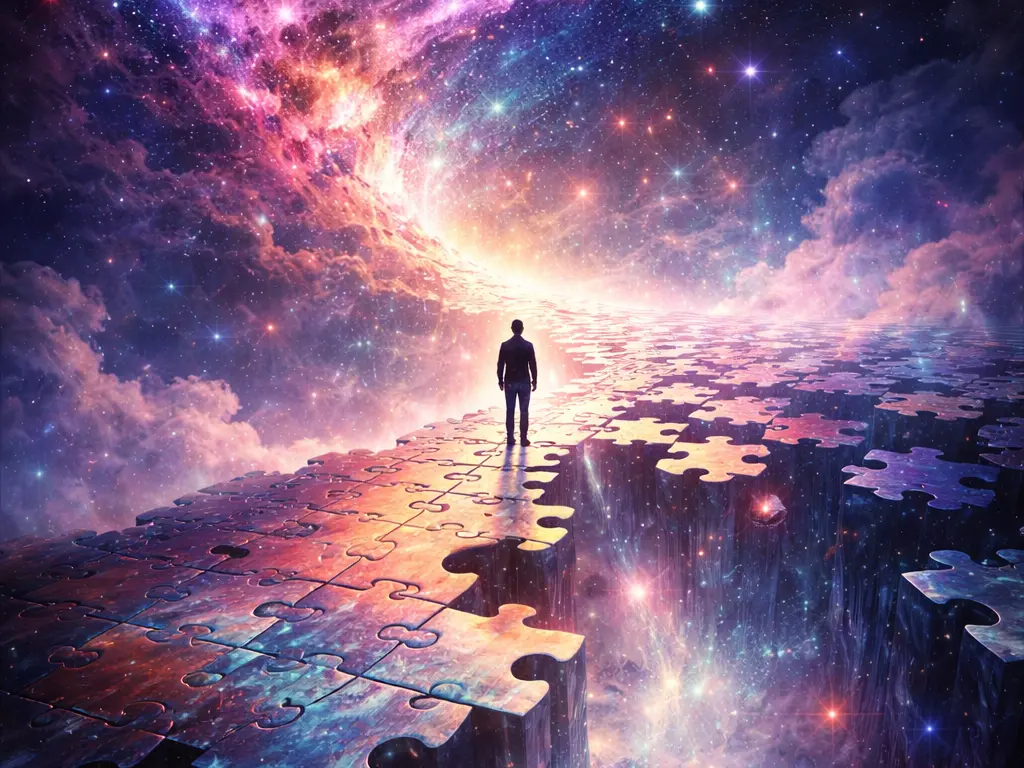
I’m an edge thinker. A term I’ve coined to describe someone whose awareness resides just outside the norm, someone whose thoughts and experiences sit at the border of the known and unknown. It’s as if I’m peering over the edge of a cliff, aware that the abyss below holds possibilities I can’t quite see but can intuit. I can feel the boundaries of what is, and yet, I sense they are not as solid as they appear. I can touch the edge of the puzzle, but not fully grasp how it fits together.
It’s a curious way to live—aware that I am part of a larger system but unable to reconcile my role within it. There’s a strange duality in my existence. On one hand, I feel the weight of being an “odd piece” of a cosmic jigsaw puzzle. One that doesn’t quite fit but is, nevertheless, integral to the system. On the other hand, this very oddness might be the key that unlocks a higher understanding of the puzzle itself. What if the key to unlocking this grand puzzle lies precisely in the fact that some pieces don’t fit as expected?
I’ve come to conceptualize this not as a flaw, but as a feature of existence. A glitch, if you will, in the matrix of the universe that offers a glimpse into something greater. And in this space between fitting and not fitting, I sense a function—an awareness of purpose that can only be understood by those who dwell on the fringe. Perhaps it’s not just me, but others like me—those who stand at the edge, who are “different”—that possess the ability to see beyond the veil. Perhaps these are the real visionaries, the ones who can’t help but challenge the boundaries that confine others.
The metaphor of the puzzle speaks volumes to me. We, as individuals, are the pieces of a vast, higher-dimensional puzzle—a puzzle whose purpose is not fully understood, even by the puzzle itself. Each piece is bound by its design, by its edges, its shape, its potential. But what if the puzzle doesn’t need to fit perfectly? What if the act of fitting into a singular design is itself a limiting concept? Instead of seeing our out-of-place pieces as broken or errant, perhaps we should view them as necessary. They hint at a structure that is beyond our current comprehension, suggesting that the whole is greater than the sum of its parts. We are the puzzle’s agents, shaping its form by our very presence.
This sense of being “out of place” takes on even more depth when I reflect on the parent-child relationship. Traditionally, we are taught that the parent is the wiser figure, the one who has walked the path and now guides their children. The child is seen as learning from the parent, striving to eventually inherit wisdom and pass it on. But what if this hierarchical relationship is a false construct? What if the true role of the child, of the next generation, is to bring with it insights that challenge the status quo?
In this sense, the child may be the one who “knows best.” They are the untainted perspective, the one unclouded by the accumulated knowledge of the past, and thus, they can see the cracks in the foundation where humanity has erred. The very foundation built by parents and their ancestors. The child becomes not just a receiver of wisdom, but a new force of wisdom in its own right—a reflection of the future, breaking through the assumptions of the present.
This dynamic, when applied to the broader sense of existence, suggests that we are all evolving, constantly passing lessons from one generation to the next. The parent is not the final arbiter of knowledge; they are part of the puzzle, just as much as the child, and the wisdom they carry is a product of the same system of learning. By placing our faith in both the wisdom of the past and the vision of the future, we can begin to fill in the holes of human history—those spaces of brokenness and flaw—and build something stronger, more unified, more evolved. We must not shy away from the child’s perspective. Instead, we must listen to it.
In this liminal space, I’ve come to see my function not just as a passive observer, but as an active participant in this grand puzzle. I am a piece from another puzzle, placed within this one for a reason. Perhaps there are others like me, scattered throughout time and space, who are also pieces from different puzzles, destined to fit into this one at the precise moment they are needed. Maybe we are all puzzle pieces from various timelines, different dimensions, sibling puzzles, or parent puzzles—each of us contributing to the larger design in ways we may never fully comprehend. Yet our roles are interconnected, as we pass knowledge, wisdom, and lessons between each other, bridging the gaps that time and space have created.
It’s easy to feel isolated in this process, especially when it seems as though no one else shares this perspective. But I have come to understand that there is power in this liminal existence. The feeling of being “other” is not a curse, but a gift. For when you stand at the edge, you can see further, think differently, and imagine what others might not even be able to conceive.
So, I continue my search—not for people who fit the mold, but for those who, like me, can sense the puzzle’s deeper purpose, those who are willing to acknowledge the gaps, the cracks, and the unspoken lessons. I seek those who are ready to embrace the liminal, who are not afraid to look into the cracks and see them not as flaws, but as essential points of connection. I know they are out there—these other edge thinkers—waiting for the moment when we all come together and understand that we are not broken, but integral parts of a larger, higher-dimensional puzzle. And in that understanding, we will finally become whole.