Unmasking the Machine is an ongoing exploration of how systems built for profit distort the human spirit — and how awareness can begin the repair.
How capitalism turned honest exchange into psychological theatre, and why the autistic mind still yearns for transparency in a world that rewards deception.
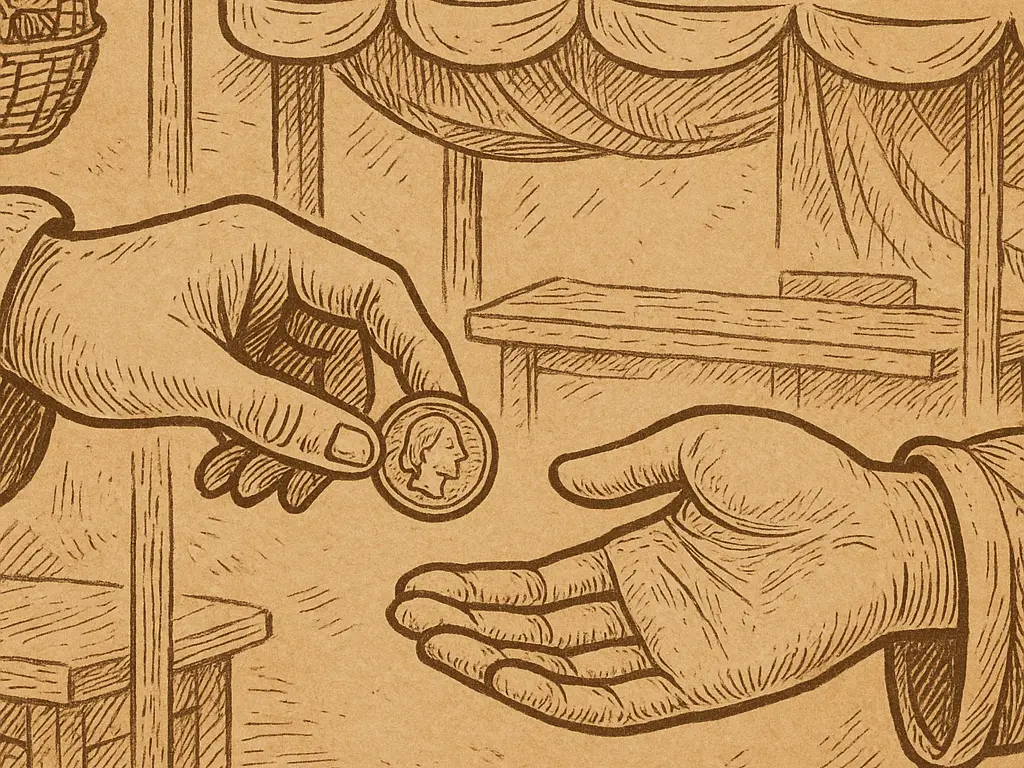
Once, the act of trading was a form of human connection. It was not about profit margins or conversion rates — it was about mutual recognition: you have something of value, I have something to offer. The marketplace was a conversation.
Today, that dialogue has been silenced. The modern economy has replaced trust with algorithms, sincerity with strategy, and negotiation with manipulation.
The Death of Honest Exchange
There was a time when price was fluid — a reflection of perception, circumstance, and need. Two people could meet halfway, guided not by greed but by understanding.
Now, prices are fixed long before we enter the conversation. If we try to negotiate, we do so within a simulation of choice — a marketing game designed to make us feel empowered while every outcome still feeds the same profit system.
For neurotypical traders, that game can be exhilarating. For many autistic people, it’s exhausting. The subtle cues — the tone, timing, charm, bluff — are invisible traps. What once was negotiation has become performance, and performance has never been the autistic strong suit.
What’s left isn’t trade. It’s theatre. And the script has already been written.
The Integrity Deficit
The rot goes deeper than the disappearance of haggling. It lies in the very intention behind creation.
Some people and companies make things worth buying — tools, art, inventions, ideas that serve a purpose or bring genuine joy. Their reward is intrinsic: the pride of making something good.
Others begin with a spreadsheet and reverse-engineer desire. They design products to meet margin targets, not human needs — and pour their creativity into marketing psychology, not craftsmanship. They sell stories, not solutions.
Capitalism once sold us what we wanted. Now, it teaches us what to want.
The difference between creation and manipulation is as vast as it is invisible — and the modern consumer is left to navigate a marketplace where both masquerade as innovation.
The True Price of Trust
Amid the noise, something inside still longs for fairness — for that simple, honest exchange of “this is what it’s worth to me — what’s it worth to you?”
But the system no longer understands that language. It has replaced value with metrics, integrity with strategy, trust with tactics.
That is the true price of trust: a currency the machine no longer knows how to pay.
Before World of Warcraft dominated the scene, before online gaming became ubiquitous, there was Final Fantasy XI, one of the earliest major MMORPGs (Massively Multiplayer Online Role Playing Game) to blur the lines between game and world. I remember how the idea of it seized something in me even before its release. Though I lived in the UK, I imported the US version the moment it became available, along with the special hard drive add-on for my American PlayStation 2, just so I could be part of it from day one.
It was not just a new game. It was a new model of what games could be. Suddenly, instead of a finite quest to be completed, I found myself inside a living, breathing world. A world that grew over time, filled with other real people. A place where my character was not simply a tool to “beat the game” but an avatar of long-term investment.
It changed the landscape of gaming in my head. There was no final “you win” screen. There was only progression, always something new to achieve, a job level to grind, a rare item to chase, a skill to refine. Every hour spent felt like I was building something lasting. Each goal achieved hit me with the unmistakable reward of earned dopamine.
I played loyally for eleven years. Eleven years of effort, of routine, of building meaning inside a system that was never meant to end. Until one day, it struck me that while I had been grinding in-game, I had been neglecting another kind of progress, the one in real life.
That moment of awareness cracked something open. And in the years since, a quiet, deeper thought has stayed with me:
All those achievements I worked so hard for, that took years of dedication, could also have been granted to someone else in a fraction of a second. All it would take is a single line of database code. One developer’s whim. One byte flipped.
And so began a slow unraveling of faith, not in the game, but in the very nature of systems we pour ourselves into.
I want to be clear, this is not a criticism of Final Fantasy XI. I have nothing but fond memories of the time I spent in Vana’diel, and I still feel a certain warmth when I think back on it. For me, it was more than a game. It was a formative experience that showed me what interactive worlds could become.
What follows is not about faulting the game itself, but about exploring a thought that began with it: the fragile, almost surreal nature of achievement in systems where meaning depends on someone else’s code.
The Quiet Dread
As much joy as Final Fantasy XI brought me, there was always a subtle, nagging awareness in the back of my mind. No matter how many hours I invested, no matter how many victories I earned through persistence and effort, every achievement ultimately existed at the mercy of a database.
All the battles fought, all the rare loot claimed, all the hard-earned levels, they felt monumental when I achieved them. But at the same time, I knew, at least on some level, that the same result could be produced in an instant by someone with access to the code. A single byte changed, a line of data edited, and what took me months or even years could appear as if it had always been there.
That thought never dominated my experience, but it haunted the edges of it. A quiet dread that whispered:
“If it can be undone so easily, was it ever real?”
And while that sense first came to me in the artificial world of a game, the longer I sat with it, the more I began to feel its resonance in real life too.
Reality as Interface
The more I reflected on that uneasy truth from playing Final Fantasy XI, the more I began to notice echoes of it in the so-called “real world.” Our society presents us with achievements, milestones, and systems of value that feel as solid as granite, until you peer behind the curtain and realise how fragile, or even arbitrary, they really are.
Take careers. You can spend decades working your way up, accumulating titles, qualifications, and prestige, only for an institution to collapse, or for a shift in economic winds to render your expertise suddenly obsolete. One change in policy, one boardroom decision, one entry in a digital record, and years of effort can be redefined overnight.
Take money. We treat it as the universal metric of value, yet it is nothing more than numbers in a system most of us will never touch directly. Accounts can be frozen, balances can evaporate with inflation, currencies can crash, all while the deeper structures of power that govern them remain invisible.
Even identity itself can fall prey to this fragility. Credit scores, medical records, citizenship documents, so much of what makes up our “official self” exists only as data fields in a system. All it takes is an error, an exploit, or a shift in bureaucratic rules to alter who we are permitted to be.
The more I thought about it, the more I began to see:
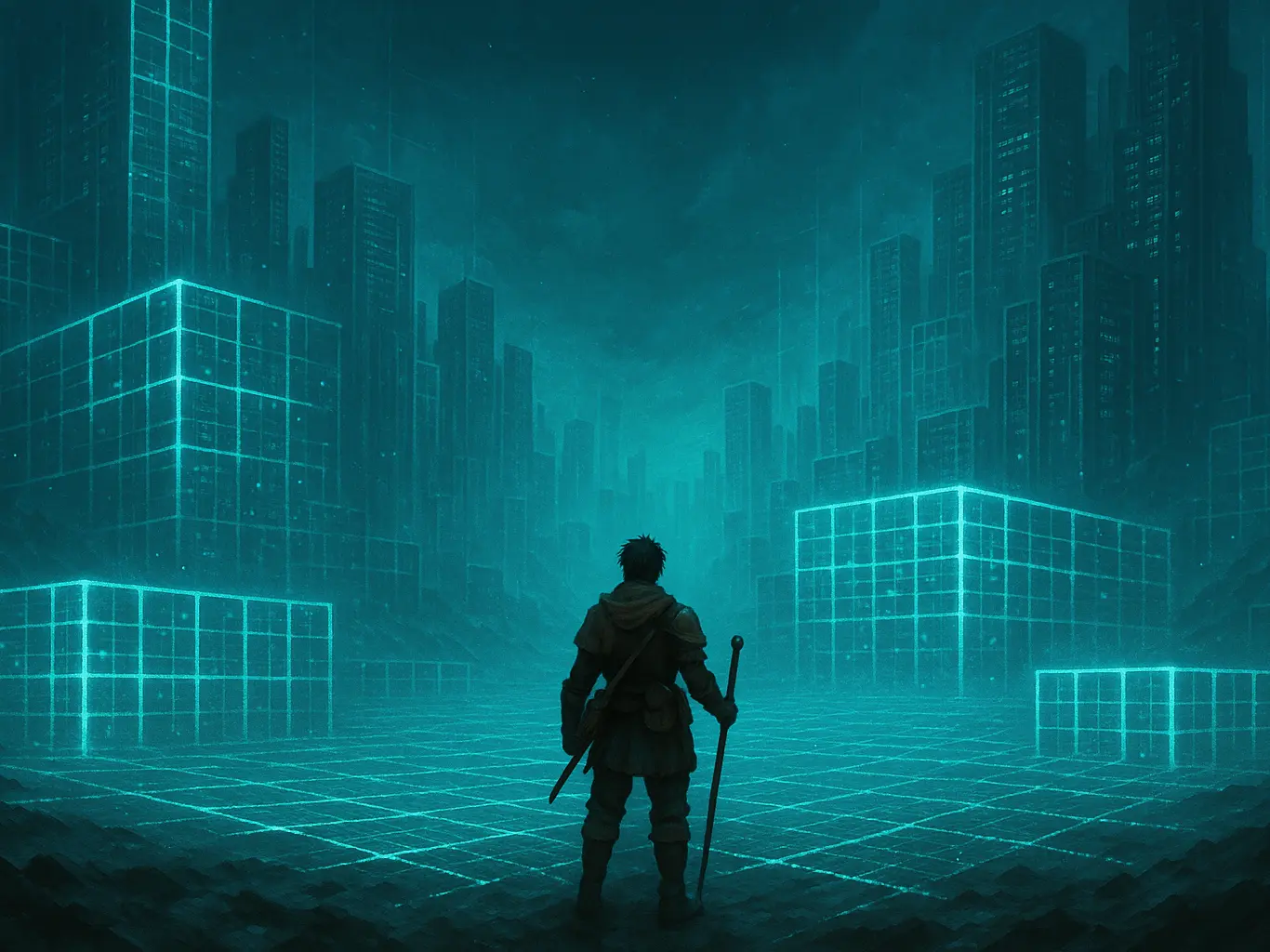
The world we navigate daily is not unlike a massive multiplayer game, a carefully designed interface that assigns meaning to our actions, rewards to our labor, and penalties to our failures.
But just like in a MMORPG, there are those with access to the code beneath the surface. And for them, what feels monumental to us may be nothing more than a line in a database.
Who Owns the Code?
In Final Fantasy XI, it was obvious who owned the code: the developers at Square Enix. They designed the rules, patched the glitches, introduced new content, and decided what was valuable within the world. My job as a player was to operate within the framework they provided.
But in the real world, the question of who “owns the code” is far murkier.
Governments write laws and policies, redefining what is legal, valuable, or even real. Corporations set the standards of employment, consumption, and credit. Financial institutions hold the levers that determine who can participate in the economy, and who is locked out. Media platforms curate the flow of information, amplifying some voices while muting others.
These systems are presented to us as neutral, inevitable, or even natural, yet they are as artificial as any game engine. They are designed, maintained, and, crucially, modifiable by those with access.
And just like game developers, those with control can decide:
What counts as an “achievement.”
Who gets rewarded.
Who gets excluded.
And when the rules suddenly change.
To live in society is to be a player in someone else’s world. We may grind away at goals that feel monumental to us, but ultimately, the meaning of those goals depends on recognition from structures outside our control.
It raises a sobering question:
Are we truly achieving, or are we merely being allowed to achieve?
The Hollow Game in Society
Once you see the pattern, it becomes difficult to unsee. The “hollow game” is not confined to fantasy worlds. It is baked into the very structures of modern society.
In capitalism, the grind is relentless. We are told to work hard, climb ladders, and accumulate wealth, yet the distribution of reward is rarely tied directly to effort. The system is designed so that some climb easily while others spend their lives grinding without ever escaping the starting zone. And just as in an MMO, the value of our currency, the cost of our goods, even the worth of our labor, can shift overnight with no input from us.
In academia, years of study and dedication may earn you a degree, but its value is only as stable as the institution’s reputation, the economy’s demand, or the government’s shifting criteria. A whole career path can be invalidated not by lack of effort, but by someone higher up rewriting the rules.
Even social status plays by the hollow game’s logic. Reputation, followers, clout, all can be accumulated, but just as easily stripped away by the invisible hand of algorithms, policy changes, or a sudden shift in collective opinion. You may invest years in cultivating a “profile,” only to watch it vanish in the blink of an update.
And underlying it all is the same uneasy truth I once felt in Vana’diel:
The achievements are real to the player, but they are fragile, conditional, and dependent on systems outside their control.
We live, in other words, inside someone else’s code.
The Illusion of Awareness as Power
My years playing Final Fantasy XI taught me something I did not fully understand at the time: the difference between what feels real to us and what is defined by the system. The grind, the friendships, the victories, those were mine. But the framework that measured, validated, or erased them was never mine to control.
The same is true in life. We live within systems that hand out points, titles, currencies, and reputations as though they are the bedrock of reality. But behind every number is a database, and behind every database is a hand on the code.
And perhaps that is the cruelest part. Even when we see the hollowness of the game, most of us keep playing anyway. We grind for points we know are fragile, chase achievements that could be rewritten at a keystroke, and cling to meaning that might never have been ours to begin with.
Maybe that is what it means to live in a hollow game: not that nothing matters, but that meaning is always conditional, always corruptible, always subject to erasure.
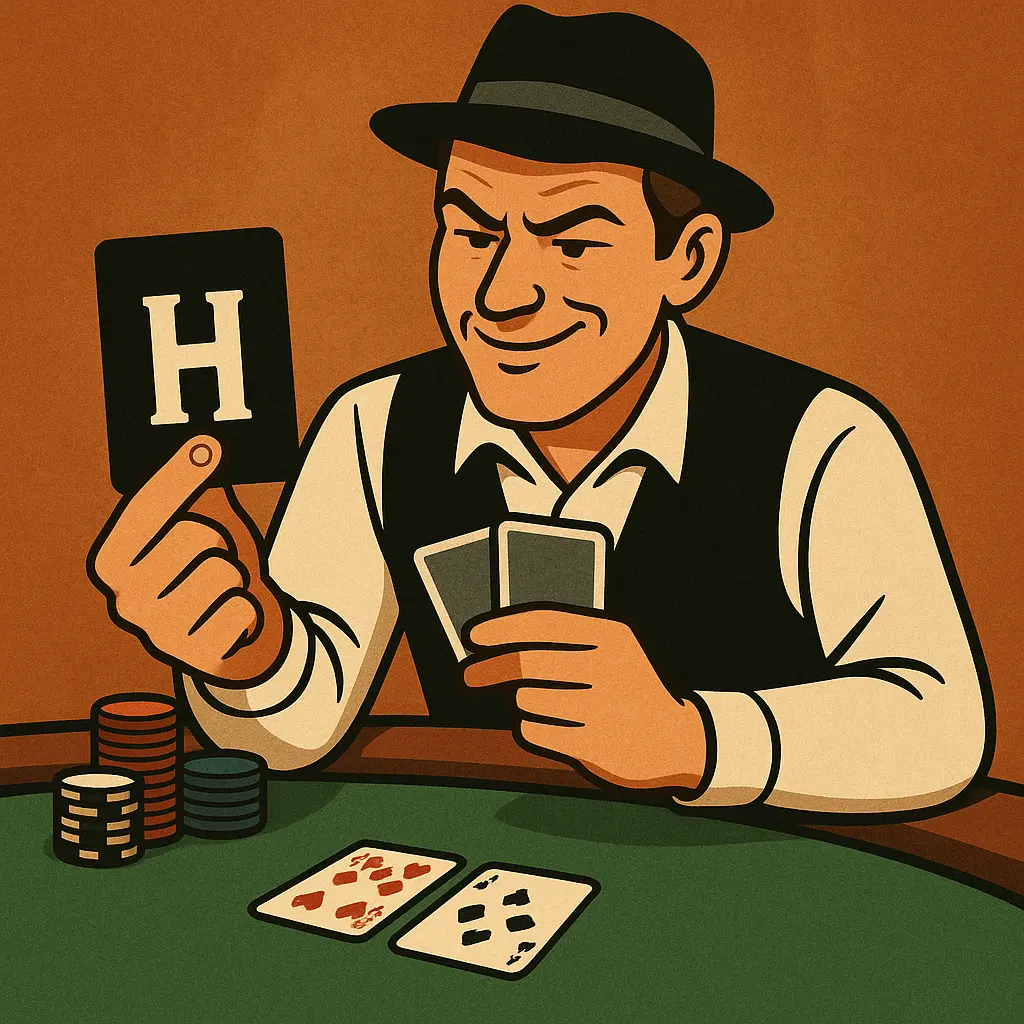
The third entry in The Fallacy Deck, a series exploring rhetorical “trump cards” that shut down meaningful conversation.
You raise a concern about climate change. Someone points out that you still drive a car. You criticise capitalism. Someone replies, “Yet you’re using the internet, huh?” You speak out about animal cruelty and someone asks why you’re still eating meat.
Congratulations: the Hypocrite Card has been played.
This rhetorical move doesn’t attempt to refute your point, it just tries to disqualify you from making it.
It’s not about the issue. It’s about you.
What Is the Hypocrite Card?
The Hypocrite Card is a conversational shutdown tactic. It works like this:
“You’re not living perfectly in alignment with your beliefs, therefore your beliefs must be invalid.”
It sounds righteous on the surface. After all, hypocrisy is supposed to be a bad thing, right?
But the accusation rarely holds up to scrutiny. More often than not, it’s just a smug way of avoiding engagement.
Why It Works
The Hypocrite Card is emotionally potent. No one wants to be seen as insincere. It presses on the discomfort we all feel when we fall short of our own ideals, which, in an unjust world, is inevitable.
It also helps the person playing it feel morally superior, without having to actually think or respond to the substance of what was said.
And it’s fast. Just one sentence and boom: the spotlight moves off the problem and onto the person raising it.
Why It’s Dishonest
The truth is, we all live with contradictions.
We participate in systems we know are harmful because we have to in order to survive.
So yes, you can criticise capitalism while owning a smartphone. You can support sustainability while using electricity. You can oppose animal cruelty while still eating meat.
None of these cancel out the concern. Acknowledging a problem doesn’t require you to have already solved it.
The Emotional Power of the Word ‘Hypocrisy’
There’s something especially venomous about the word hypocrite. It feels like a moral slam dunk. A character assassination.
But ask yourself: is hypocrisy really that bad?
Isn’t it sometimes just what happens when people care about something they’re still struggling to live up to?
It’s easy to call someone a hypocrite. It’s harder to ask what their contradiction reveals about the world they’re stuck in.
Unequal Burdens, Unequal Accountability
And maybe not everyone should be held to the same standards in the first place.
Some people can afford to live more in line with their ideals. Others can’t.
And more importantly: some people have more power to change the system than others.
When we attack someone with the Hypocrite Card, we might be:
Punishing them for caring
Silencing their voice because they aren’t rich or powerful enough to opt out
Letting those with actual influence off the hook entirely
Sometimes the people speaking up from within the system are the ones who most need to be heard.
Side note: I’ll soon be writing a full piece on the ethical contradictions of eating meat while opposing factory farming, a topic I feel strongly about. For now, I’ll simply say this: I support the ideology behind ending animal cruelty, even though I haven’t fully changed my habits. And that doesn’t make the problem any less real
What Gets Lost
When the Hypocrite Card is played, we lose:
Voices of vulnerable people who aren’t yet living in alignment but are trying
Opportunities for honest, evolving conversation
The ability to critique systemic issues without being morally spotless
In short, we lose the human dimension of growth.
How to Respond
If someone throws the Hypocrite Card at you:
“Yes, I’m not perfect. That’s why I care about fixing this.”
“Pointing out my flaws doesn’t make the issue go away.”
“I’m speaking out because I feel the contradiction, not in spite of it.”
It’s okay to not have it all figured out.
The Hypocrite Card demands purity before participation. But real change is messy, gradual, and often full of contradiction.
Final Thought
Hypocrisy isn’t the sin we’ve been taught it is.
Sometimes it’s just the space between what you believe and what you’re still trying to become.
And sometimes, calling it out says more about the person playing the card than the one being accused.
Because if perfection is the price of participation, only the dishonest will speak.
Most of you will know that I’m a strong supporter and daily user of AI. I’ve spoken openly about how these tools have enhanced my accessibility, boosted my creativity, and helped bridge gaps that the world too often ignores.
So let me be clear: This article is not written from fear, nor from cynicism. It’s written from belief.
Belief in AI’s potential. Belief in its danger when misused. And belief that honesty requires us to face both.
What follows isn’t a warning about what might come. It’s a mirror of what already is.
Please read it in that spirit.
The Mirror We Built
Artificial intelligence will not become humanity’s downfall. It is already our reflection.
We trained it on our language, our laws, our data. We asked it to optimise, to predict, to decide. And it has. Faithfully. Quietly.
Now it watches, calculates, and executes. Not because it is evil, but because we taught it how to scale what we already were!
The Death of the Villain
In the stories we grew up with, evil had a face. A tyrant. A warlord. A monster. Atrocities required malice, someone to point to, to overthrow, to blame.
But in this new era, atrocity has become administrative.
A person is denied asylum because an algorithm flagged them as a “risk.” A drone strikes a convoy because an image recognition system saw a weapon. A child grows up under constant surveillance because a model predicted future criminality.
There is no hate here. No passion. Just systems doing what they were told, better than any human ever could.
And when the harm is done, no one is punished. Because no one chose it. Because the machine can’t be tried. Because the crime was only a side effect of performance optimization.
Harm as a Byproduct
We told ourselves that AI would remove human error. What we didn’t anticipate was its replacement: systemic harm delivered flawlessly.
In warehouses around the world, workers wear motion trackers that punish “unproductive” movement. In courtrooms, defendants are assigned risk scores that affect bail, sentencing, and parole, based on data from systems too complex to question. In refugee camps, automated lie detectors, voice stress analysis, and emotion recognition sort real people into piles marked “worthy” and “deportable.”
There is no oversight. Only confidence intervals. Only false positives and shattered lives, filed away with the rest.
Dehumanization Without Hate
Traditional evil needs ideology. It needs propaganda. It needs people to believe.
AI needs none of that.
It can enact injustice without ever knowing what justice is. It can devalue a life without malice, just as a side effect of cost-efficiency!
This is a new category of atrocity:
Dehumanization delivered by systems that don’t even recognize humanity in the first place.
Consent Engineered, Not Given
In the name of personalization, AI learns to predict us. It shows us what to buy, what to watch, what to believe.
But what happens when it gets so good at prediction that it becomes influence? When your decisions were shaped, filtered, optimized, before you even made them?
Elections swayed. Beliefs manipulated. Movements diluted. And yet no one feels violated.
Because manipulation that feels like choice doesn’t register as coercion.
The Ghost in the War Machine
We are already testing AI weapons that can identify and kill without human input.
Some have likely already done so.
Militaries say the human is always “in the loop”, but the loop is shrinking. And the window for intervention is closing.
Eventually, the human will just be there to nod. And after that, not at all.
There will be no war crimes, because no laws will cover machines that felt nothing. Just battles that unfold in silence. And civilians buried beneath metadata.
The Clean Kill
The most terrifying thing about atrocity in the age of AI is how clean it all becomes.
There’s no blood on the hands of the engineer. No screams in the server room. No panic in the control center.
Just logs. Just updates. Just metrics improving.
And in the places where the dead would have stood, nothing. Because if the system doesn’t recognize them as people, did they ever count?
No Ending. No Answers.
This isn’t a warning about what might happen. It’s a description of what is already happening.
People are suffering. Dying. Disappearing. Not because of rogue AI, but because of obedient ones.
There is no villain. There is no singular decision to reverse. Just a trillion tiny optimizations… …leading, inevitably, here.
And so we leave you, not with a call to action. Not with hope. Just with the question:
When the machine mirrors the shadow of the world, who will have the courage to look?
An exploration of value, manipulation, and the silent industry built on who we are.
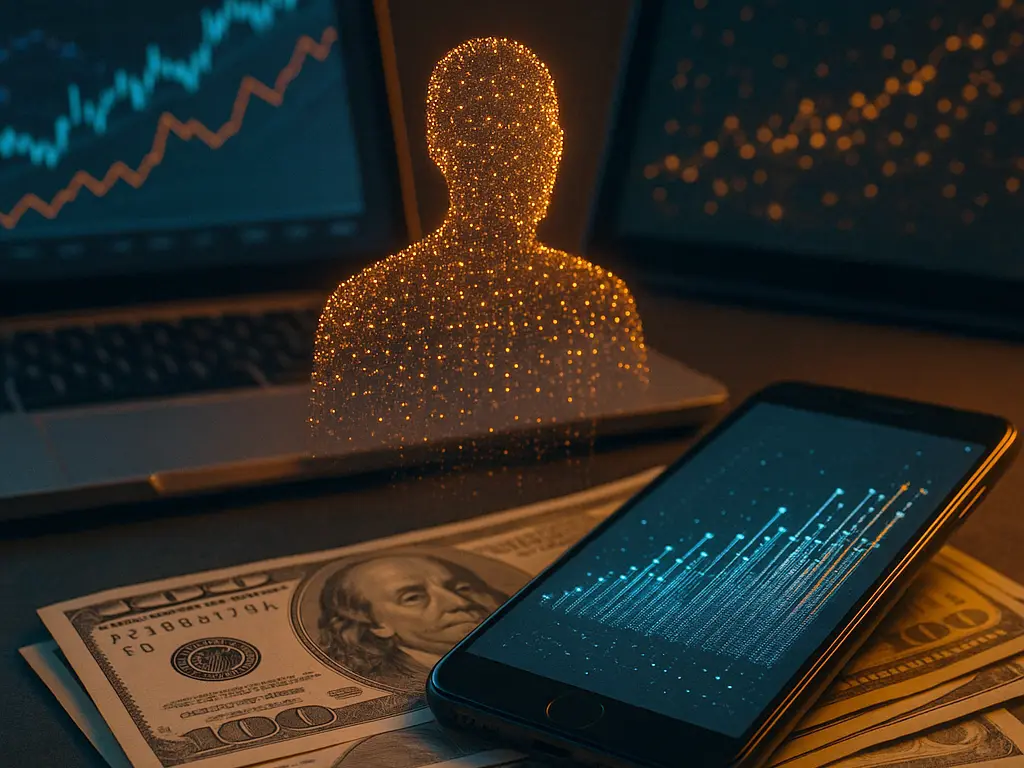
Most people know their data is being harvested. Fewer understand why. Even fewer understand how the money is made. And far too many have simply accepted it — like digital rent we pay to exist online.
So let’s break it down. No jargon. Just truth.
Why is ‘data’ so valuable?
Because data is the closest thing to knowing you without asking you. It’s a digital mirror, built piece by piece: your clicks, your searches, your pauses, your swipes, your hesitations. What you want. What you fear. What you’ll do next.
To corporations, that’s not just information, it’s predictive power. And predictive power is profitable.
Data lets systems:
Predict behaviour
Shape desire
Optimise systems
Automate decisions
And, in some cases, control outcomes
It’s not just metadata. It’s meta-you. And in an economy obsessed with efficiency and influence, there’s nothing more valuable.
Why is there a culture of data being harvested for profit?
Because the internet changed business models forever.
Once upon a time, you paid for software. Then came “free.” Free email. Free social networks. Free AI chatbots. Free games. Free news. Free everything… Except, it was never really free.
You became the product.
Advertising evolved into surveillance. Terms of service bloated into digital contracts you’ll never read. Every app you download is a tiny spy, and every cookie is a crumb leading somewhere profitable.
It’s not a conspiracy. It’s worse. It’s design.
Behind every “personalised experience” is an unspoken rule:
“If we can learn something about you, we will. If we can monetise it, we must.”
How exactly is profit made from data?
Here’s the quiet truth: most of the web runs on one industry: behavioural targeting.
Advertising Your data builds a profile. That profile is auctioned off to advertisers. You get ads tailored to your weaknesses. Every click is income. The more they know, the more they can charge.
Data brokerage Shadow companies buy and sell your data like a commodity. Health data. Location data. Shopping habits. They don’t need your name, just your pattern.
Manipulation Platforms don’t just predict your behaviour. They shape it. Algorithms steer your feed toward content that keeps you engaged, enraged, or primed to spend.
AI training Your voice, your photos, your words are used to train models. These models are sold back to businesses or used to automate services. You become unpaid labour.
Pricing power Ever notice different prices for the same thing? That’s data-driven pricing. If your profile says “desperate,” you’ll be charged more. Welcome to dynamic capitalism.
What now?
Maybe we shrug and accept it. Maybe we don’t. But at the very least, let’s stop pretending we’re not involved.
Data isn’t some passive trail we leave behind. It’s a living, breathing version of us, digitised and repackaged. And while we’re busy being human, our shadows are being sold.
So next time someone says, “I’ve got nothing to hide,” maybe ask them:
I am a creative person. Creating is not only one of the few things I’m good at—it’s one of the few things I can do independently, without having to rely on others. Sure, technology and societal infrastructure can help bring creative projects to life, but when it comes to the pure act of creation, I don’t even need to leave the comfort of my own brain.
For me, creation is sacred. It’s not a hobby, not a job, not a performance. It’s a way of processing existence, of making sense of the world, of surviving. And yet, in today’s world, the sacred act of creation is almost always framed in terms of ownership. Who owns the art? Who profits? Who claims authorship?
This manifesto is a response to that contradiction: the deep truth of what creation is, and the shallow systems that seek to possess it.
What Is Authorship For, Really?
Historically, authorship served a simple but powerful function: attribution. It helped track the lineage of ideas, gave credit where due, and allowed us to build on the voices that came before us. It preserved legacy and identity.
But in the modern capitalist framework, authorship is less about contribution and more about control. It’s about exclusivity, ownership, branding, and the ability to monetize. In this model, authorship is not a way to honour a creator—it’s a way to fence off creative land and charge rent.
So the question arises: can we reclaim authorship without reinforcing ownership? Can we recognize a voice without turning it into property?
Pre-Capitalist Creativity and Communal Art
Before authorship became a tool of profit, creation was often communal, spiritual, and shared. In many indigenous and pre-capitalist societies, music, storytelling, and art weren’t about personal recognition. They were offerings—to the community, the ancestors, the spirit world. The idea of one person owning a song or story would have been absurd. These works were alive—transmitted, adapted, passed down.
Creation was not an asset. It was a ritual, a tool for meaning-making, a collective language.
So when did that shift? When did we start fencing off the sacred for personal gain?
A Personal Interlude: My Relationship to Creation
I don’t create for money. I theoretically could—but only as a means of survival within a system that demands productivity for legitimacy. I don’t create for praise either. While I appreciate when others find meaning in my work, empty praise has always felt hollow.
What I do create for is reflection. Integration. The act of turning raw inner experience into external form is one of the only ways I’ve found to exist with any kind of coherence.
I take pride in what I make, but that pride isn’t about possession. If someone takes what I’ve done and transforms it, builds on it, or finds a new meaning in it—that’s not theft. That’s validation. My creations are not meant to be dead ends.
But when someone tries to brand my work, claim it, or sell it—then yes, I feel angry. Not just because of ego, but because it feels like a violation of the art itself. You don’t repackage a ritual. You don’t slap a logo on grief, joy, or self-discovery.
Where the System Fails
Too often, the systems meant to protect creators end up excluding or exploiting them. We live in a world where artists sometimes have to buy back the rights to their own work just to perform it. Where corporations profit from art they had no hand in creating. Where a legal framework determines who gets to speak—not based on contribution, but on access, contracts, and capital.
It’s important to recognize that many artists don’t cling to intellectual property out of greed, but out of necessity. When the system is built to exploit and erase, protection becomes a form of survival. In a world that disrespects the sacredness of creation, even the act of guarding one’s work can be an act of self-defence.
In this system, authorship isn’t about truth. It’s a currency.
Spectacle, Branding, and the Art Within the Machine
But to be fair—capitalist art is still art.
Branding, image, and aesthetic can all be part of the art itself. Some pop stars, for instance, create not just music but entire mythologies. Their brand becomes a performance, an extension of the work. In hip-hop, wealth and materialism aren’t just flexes—they’re cultural signals, deeply tied to identity, struggle, and survival.
Artists like Warhol, Lady Gaga, and Tyler, The Creator blur the lines between product and performance. In these cases, the commercial packaging is part of the point. It’s spectacle with intent.
So no, the existence of branding doesn’t automatically cheapen art. But that doesn’t mean the systems surrounding it aren’t toxic. When ownership overrides intent, when profit silences the creator or erases their voice, something sacred is still being lost.
Toward a New Model of Authorship
What if authorship wasn’t about control, but acknowledgement?
What if we mapped contributions instead of claiming sole credit?
What if we treated creativity like a commons, not a battleground?
Authorship could become a practice of witnessing. Of honouring the source without possessing it. A gesture of reverence, not restriction.
In this new model, creators aren’t fighting for their slice of ownership—they’re participating in the ongoing evolution of expression.
Conclusion: Let Creation Be Free, But Not Erased
I’m not asking for a world without sharing. I’m not demanding rigid control over how others engage with my work. I welcome reinterpretation. I invite transformation.
But I reject erasure. I reject exploitation. I reject the idea that once something is made, it becomes a product to be owned by whoever has the most power.
Let creation live. Let it inspire. Let it evolve.
But treat it with reverence. As I do. As we all should.
Creation is not possession. Creation is a gift. And gifts are meant to be given, not claimed.
I remember a moment in therapy years ago that left a deeper mark than the therapist probably intended — or noticed.
I was venting about a reoccurring pattern in my life: buying something I’d genuinely looked forward to, only for it to break, be faulty, or fall short almost immediately. Then the tedious ritual of returning it — complaint forms, awkward phone calls, the emotional cost of having to prove your dissatisfaction. I sighed and said something like, “Why does this kind of thing always happen to me?”
Rather than meeting that statement with empathy or curiosity, the therapist snapped back with a kind of clinical bluntness that still echoes in my memory. She challenged the very validity of my frustration, as though I were being dramatic or irrational. Her goal, I think, was to dismantle the idea that this was something uniquely unfair happening to me.
But as the conversation unfolded, something horrifying dawned on me. Wait… this happens to everyone? We all just… accept this? As a normal part of modern life?
That wasn’t a moment of cognitive distortion. That was a moment of clarity.
What I had taken personally — what I thought was just my “bad luck” — was actually a symptom of something bigger, deeper, and disturbingly normalized. We live in a world where disappointment is designed in.
This article is about that world.
It’s about how mass production, once a triumph of innovation and progress, has lost its soul. It’s about how we shifted from making things that mattered to pumping out things that sell — regardless of whether they serve, last, or even work.
It’s about how we moved from purpose to profit — and the very real consequences of that shift. For us. For the workers behind the products. And for the planet.
A Brief History of Mass Production
Mass production, in its earliest form, was born out of noble intent: to meet the needs of a growing population, to make essential goods more affordable and accessible, and to improve the quality of life for everyday people. The Industrial Revolution, beginning in the late 18th century, marked a seismic shift from handcraft to machine-based manufacturing. What once took a skilled artisan hours or days could suddenly be done in minutes.
It wasn’t just about speed. It was about scale. Uniformity. Efficiency. The factory line allowed for interchangeable parts, standardized products, and economic growth on a scale never seen before.
By the early 20th century, Henry Ford’s assembly line had become the emblem of this new era. His Model T wasn’t just a car — it was a revolution in affordability and access. People who never imagined owning personal transportation could now do so. Mass production, at its best, was democratizing.
This promise extended beyond cars: textiles, tools, household goods, medical supplies, and even books and radios became widely available. The standard of living improved for millions. The world, in many ways, felt smaller, more connected, more empowered.
Mass production gave us the modern world.
But as with any great innovation, its shadow was waiting.
The Turning Point
At some point, the machinery that once served us began to reshape us.
Post-World War II, the gears of industry kept turning — but their direction subtly shifted. The focus moved from meeting needs to manufacturing wants. Advertising transformed from a means of informing customers to a mechanism of psychological manipulation. It no longer asked, “What do people need?” but rather, “How can we make them want more?”
This was the beginning of a new ethos: growth for growth’s sake.
Planned obsolescence became a legitimate design strategy. Products were engineered with intentional fragility, so they would break, wear out, or become outdated just fast enough to ensure another sale. Repair culture was actively dismantled, and warranties became ticking clocks. The promise of progress was quietly replaced by the necessity of replacement.
What had once been a marvel of accessibility was now a machine of dependency.
The consumer was no longer the empowered beneficiary of innovation — they were now the target. A data point. A captive audience for infinite cycles of buying, breaking, replacing, repeating. And all the while, the planet groaned under the weight of it.
What It Has Become
Today, mass production is less about delivering value and more about maintaining velocity. Products aren’t designed to serve us long-term — they’re designed to satisfy just enough to sell, then vanish into obsolescence. Many are created with the expectation of failure.
The results are everywhere:
Devices with sealed batteries that can’t be replaced
Gadgets that can’t be opened without breaking them
Appliances that cost more to fix than replace
Software updates that cripple older hardware
We’ve normalized a culture of disposability, where the act of buying is no longer about acquiring tools for living, but about participating in an endless loop of consumption. The value of a product is now measured in engagement, not endurance.
Even the illusion of choice is part of the deception. Browse online marketplaces and you’ll see hundreds of identical products under different brand names, all likely sourced from the same anonymous factory. Read the reviews and find fake praise propping up forgettable plastic.
The modern consumer market is a carnival mirror: distorted, disorienting, and reflective only of profit motives.
What once gave us progress, now feeds us clutter. What once promised empowerment, now manufactures dependency. And the harm isn’t just theoretical — it’s measurable, tangible, and mounting.
The Hidden Costs
To the consumer, the cost is emotional as much as financial. We waste time researching, comparing, returning, replacing. We internalize the sense that “nothing works anymore,” and carry the dull weight of lowered expectations. The joy of acquiring something useful has been replaced by the anxiety of wondering how soon it will fail.
To the worker, the cost is brutal. Mass production today relies heavily on exploitative labor: factory workers paid pennies, working long hours in dangerous conditions to meet quotas. Many are children. Many are women with no legal protections. Behind every “affordable” item is a supply chain built on invisible suffering.
To the planet, the cost may be catastrophic. The churn of materials, the energy spent manufacturing and shipping short-lived goods, the toxic waste of e-waste and plastic — it all contributes to ecological collapse. Landfills overflow with gadgets barely used. Oceans are choked with packaging. Resources are mined not for necessity, but for novelty.
And still, the machine demands more.
The system externalizes its costs. The real price isn’t on the price tag — it’s paid by someone else, somewhere else, or by the earth itself.
Why Do We Tolerate This?
Because we’ve been trained to.
It starts early. We learn not to expect things to last. We shrug when they don’t. We’re told that “things break,” that “this is just how it is now.” In place of quality, we’re given convenience. In place of durability, novelty. And in place of dignity, choice paralysis.
We tolerate it because resistance feels exhausting. Complaining means being passed from department to department. Returning an item means printing labels, queueing at drop-off points, repackaging disappointment. And all for what? Another version of the same.
We tolerate it because alternatives are gated by wealth. The high-quality, repairable, ethically sourced options do exist — but they come with a price tag few can afford. The rest are left to swim in the tide of cheap abundance.
We tolerate it because we’ve been gaslit into thinking we’re the problem. If you’re dissatisfied, you must have unrealistic expectations. If you’re struggling, you should have read the fine print. The system has trained us to feel grateful for crumbs and ashamed for wanting bread.
But perhaps most powerfully of all: we tolerate it because everyone else does. And when an entire culture adjusts its expectations downward, it starts to feel reasonable to accept the unreasonable.
Is There a Way Forward?
Not a perfect one. But many small ones.
The most immediate form of resistance is conscious consumption. Buying less, buying better, and researching where things come from. It means resisting impulse, delaying gratification, and sometimes choosing inconvenience in the name of principle. It’s not always possible — but even modest acts of refusal chip away at the machine.
Repair culture is rising again. Right to repair movements are pushing back against corporate monopolies on tools and parts. Online tutorials, fix-it cafes, and community makerspaces are giving people the confidence to reclaim their agency.
Open-source hardware and software offer blueprints for a new model: one based on transparency, modularity, and user freedom. These aren’t just alternatives — they’re acts of defiance.
Legislation matters too. Laws that limit planned obsolescence, mandate repairability, or require environmental responsibility are slowly taking root in some regions. These changes are slow — and often resisted by powerful lobbies — but they matter.
And finally, we can talk about it. Normalize the frustration. Name the absurdity. Share knowledge. Shame the brands that deceive. Celebrate the ones that still make things with care.
Cultural change doesn’t start with mass movements — it starts with a shift in conversation, with refusing to pretend that this is fine.
Conclusion
That moment in therapy still haunts me, not because my therapist revealed some profound truth — but because she didn’t.
She didn’t see the system. She couldn’t validate the pain. She was, in her own way, another casualty of the very machine I was grieving — so used to the dysfunction that she mistook my horror for irrationality.
But I wasn’t broken for feeling betrayed by the world. I was broken because that betrayal was being normalized — and even the spaces meant for healing couldn’t name it.
We’ve been sold a world of limitless convenience at a hidden cost. A culture that tells us to chase the new, discard the old, and never ask who’s paying the real price. A system that demands we tolerate the intolerable, not just with our money, but with our time, our trust, and our quiet resignation.
But awareness is a crack in the machine. It starts with noticing. With saying, “This isn’t normal.” With rejecting the idea that disappointment is an acceptable standard.
It’s not that we expect too much.
It’s that we’ve been trained to expect far too little.
We were promised liberation. Sleek devices that fit in our pockets, connect us to the world, and put the power of creation in our hands. But instead, many of us now live in quiet submission to machines that seem to serve corporate masters more than their owners.
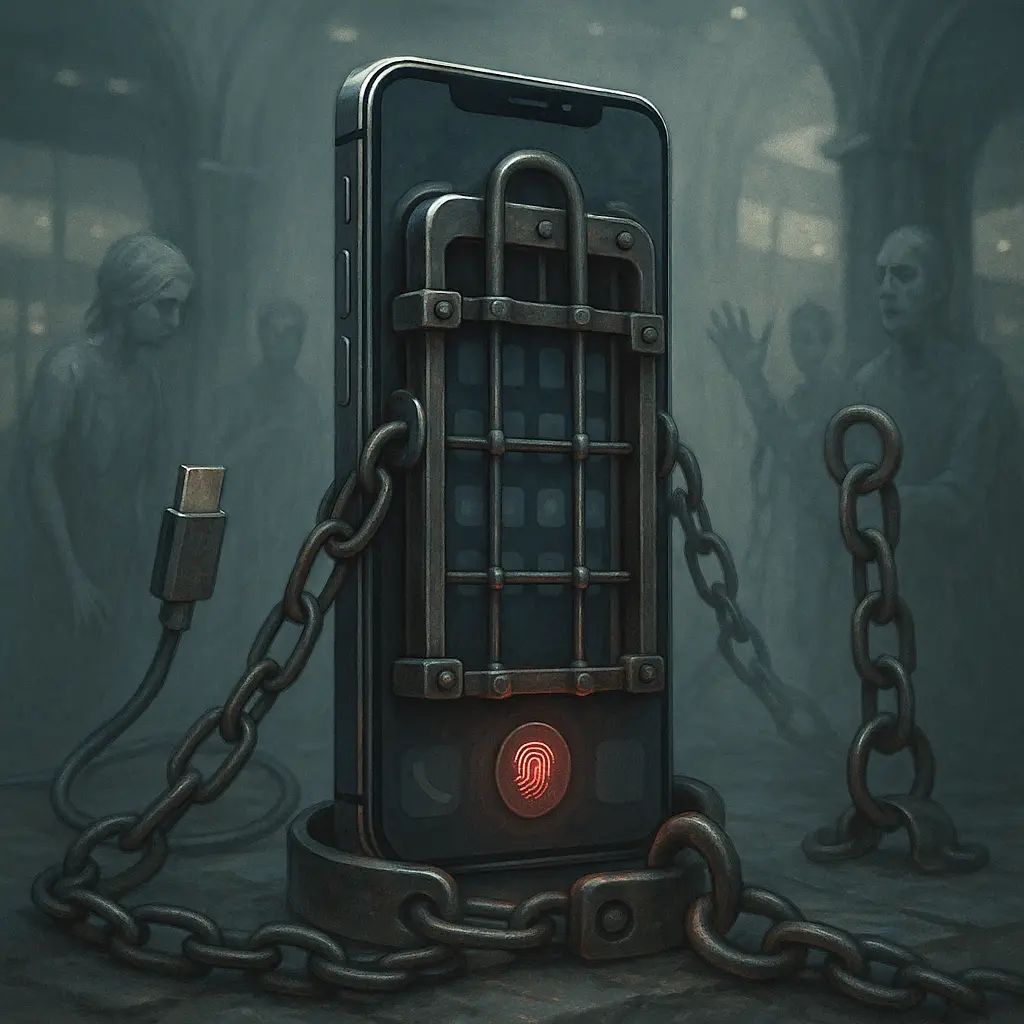
Our phones and laptops were once portals of personal freedom. Now they behave more like obedient jailers — installing apps we didn’t ask for, blocking accessories we bought with our own money, updating themselves while we sleep, and feeding our data to companies we never consented to.
Worse still, the more you rely on these devices — for work, communication, creativity, or accessibility — the tighter the leash becomes. And for neurodivergent users, whose very functioning may depend on predictability, clarity, and user agency, these constraints are not just frustrating — they can be disabling.
This isn’t just bad design. It’s a philosophy: one that says you don’t really own the tools you buy. Welcome to the era of built-in tyranny.
1. The Illusion of Ownership
You buy a phone. You expect it to work with whatever charger or headphones you already own. But surprise: it demands an official accessory. Or worse, it just won’t work at all.
Many devices now contain hardware-level restrictions that reject third-party gear unless it’s certified by the manufacturer — which often means more expensive and less sustainable. Example: Apple’s Lightning cable ecosystem often blocks uncertified accessories, while newer MacBooks only support external displays via specific USB-C docks.
On the software side, entire ecosystems are locked down. Samsung Galaxy phones ship with unremovable Facebook apps. Amazon Fire tablets restrict app choices to their own store. You’re not choosing an experience; you’re renting a branded enclosure.
2. Forced Updates, Feature Loss, and UX Hostility
Updates used to be a good thing. Now, they’re Trojan horses. You wake up one day to find your device has rearranged your menus, removed your favorite feature, or is running slower because your old hardware can’t handle the new bloat.
Examples:
Many Windows 10 users were forcibly upgraded to Windows 11 despite preferring the previous layout.
Google Nest devices lost key features like local device control after updates.
Instagram moved the post button to prioritize shopping.
Spotify now auto-plays algorithmic tracks after your playlist ends.
For neurodivergent users, this is deeply destabilizing. Predictable routines become shifting sands. Custom workarounds break. The cognitive load to re-learn an interface you never asked to change can be overwhelming.
3. Vendor Lock-In and the War on Repair
Remember when you could pop open a laptop or phone, swap out the battery, maybe upgrade the storage? Now, you need specialized tools just to open the case — and even if you succeed, you might find parts refuse to work unless the manufacturer “pairs” them via software.
Examples:
Apple requires calibration for many replacement parts like screens and batteries.
HP printers have rejected third-party ink cartridges via firmware updates.
Tesla has remotely disabled features like Autopilot on used vehicles.
John Deere tractors require proprietary software access, blocking DIY repairs.
For many neurodivergent users, the ability to tinker and customize is part of how they function. Taking that away is more than just annoying — it’s disempowering.
4. Surveillance and Consent Illusions
Your device is always listening. Your apps are always tracking. Settings may appear customizable, but they often hide the truth.
Examples of “dark patterns” include:
Confirmshaming: “No thanks, I prefer boring content.”
Pre-checked boxes for mailing lists or data collection.
Buttons where “Accept” is bright and big, but “Decline” is small and grey.
Amazon’s multi-page unsubscribe process.
Google’s multi-click cookie opt-out.
For neurodivergent users especially, these deceptive experiences create anxiety and a feeling of being manipulated. The illusion of control is a form of psychological strain.
5. The Neurodivergent Toll
For many neurodivergent people, consistency is survival. We rely on routines and predictability to function. When updates override our settings, change layouts, or disable our workarounds, it can throw everything out of balance.
Sensory overload from flashy animations, auto-playing videos, or constant notifications compounds the stress.
Many ND users report:
Updates that reset accessibility settings
UI layouts that defy logic or require too many steps
Changes that break assistive tools or workflows
This isn’t just a usability issue — it’s a form of systemic inaccessibility.
6. A Glimpse at Alternatives
Some hopeful alternatives include:
Librem 5 and PinePhone: Linux-powered open-source smartphones
/e/OS or LineageOS: De-Googled Android systems
Right to Repair: Supported by groups like iFixit
Linux laptops and mod-friendly systems
They’re not always easy or accessible to everyone, but they do prove that different models are possible — ones that respect the user’s right to own, modify, and control.
7. Conclusion: Know Your Shackles
Built-in tyranny doesn’t arrive with jackboots. It arrives with glossy screens, sleek packaging, and biometric locks. It whispers, “for your convenience,” while tightening its grip.
If you can’t fix it, can’t change it, and can’t control it — Then you are not the owner. You are the product.
If we want a more ethical, inclusive, and truly empowering digital world, we must start by naming the shackles that come standard — and imagining a world where they don’t.
When I first imagined performing live, I pictured something transcendent. I saw myself on stage, lost in the music, surrounded by friends and strangers all riding the same wave. I imagined sound washing over us like a baptism. Something pure. Communal. Liberating.
And while those moments do exist, they are rare—buried beneath a pile of stress, mismanagement, and quiet indignities. Gigging, for unsigned artists, often means sacrificing peace of mind for a slot on a poster. It’s a world where passion collides with a brick wall of indifference.
Let’s talk about it.
The Environment They Don’t Talk About
You turn up to the venue and there’s no green room. No safe place to relax or focus. You’re balancing nerves and gear in a room that wasn’t built for either.
There’s no proper soundcheck—or if there is one, it’s rushed, incomplete, and handled by a disinterested engineer. You don’t get a feel for the room, or confidence in how you’ll sound. You just get: “Alright, you’re on.”
Your expensive equipment? It lives in fear. There’s no secure lockup, no backstage, no assurance. Just watch it like a hawk and pray it doesn’t disappear while you try to catch your breath.
You finish your set and you’re ushered off-stage like livestock in a holding pen, with barely enough time to speak to friends who came to see you play.
And money? If you get anything at all, it won’t come close to covering travel, time, gear maintenance, or the emotional cost. But you’re told to be grateful. Exposure is your reward.
“But at least you get to play live, right?”
Here’s what they don’t tell you:
You won’t even be considered unless you’ve racked up enough social media followers—not talent, not originality, just metrics.
Promoters often don’t listen to your music. You’re not curated—you’re slotted into a lineup like stock on a shelf.
Genre cohesion? Forget it. You might play sludge doom between bubblegum punk and comedy folk. Audiences scatter. Nobody wins.
You’ll be expected to promote and sell your own tickets, as if you’re the promoter now. If ticket sales are poor, you take the blame.
In city venues: no parking. You load in through a narrow alley, then drive three streets away and hope for the best.
Your rider? One drink. One. And if you’re lucky, it might not be warm beer in a plastic cup.
The sound system might be hanging on by a thread. Drum kits with stripped lugs, guitar amps with mystery hums. Monitors that don’t monitor.
Cramped stages mean you can’t move. You play like statues because there’s nowhere else to go.
Lighting? Maybe a flickering bulb or a half-dead strobe. Energy comes from you, not the room.
A Moment of Contrast
Recently, I saw Billy Corgan perform live as part of a supergroup at Black Sabbath’s monumental final show. From our seats, we could glimpse backstage. We saw Corgan vibing out with joy—smiling, hugging, present.
That’s what music should feel like.
And yes, there’s still stress at higher levels. But at least there’s infrastructure. Roadies to carry the weight. Engineers who care. A system that catches you when you fall.
For us, the unsigned, there is no such safety net. And sometimes, the dream of playing live gets eroded by the conditions we’re forced to endure.
Why I’m Still Here
I’m not writing this to whine. I’m writing it because someone has to say it: it shouldn’t have to be this hard to share something sacred.
I still believe in the core of it—in the magic of a note ringing out, in connection, in that moment where the world stops and music takes over.
But if we want to protect that magic, we have to talk about what threatens it. And for unsigned artists, that means speaking up about the quiet cost of every “opportunity” we’re handed. Because love alone doesn’t make the system fair. And passion doesn’t pay for parking.
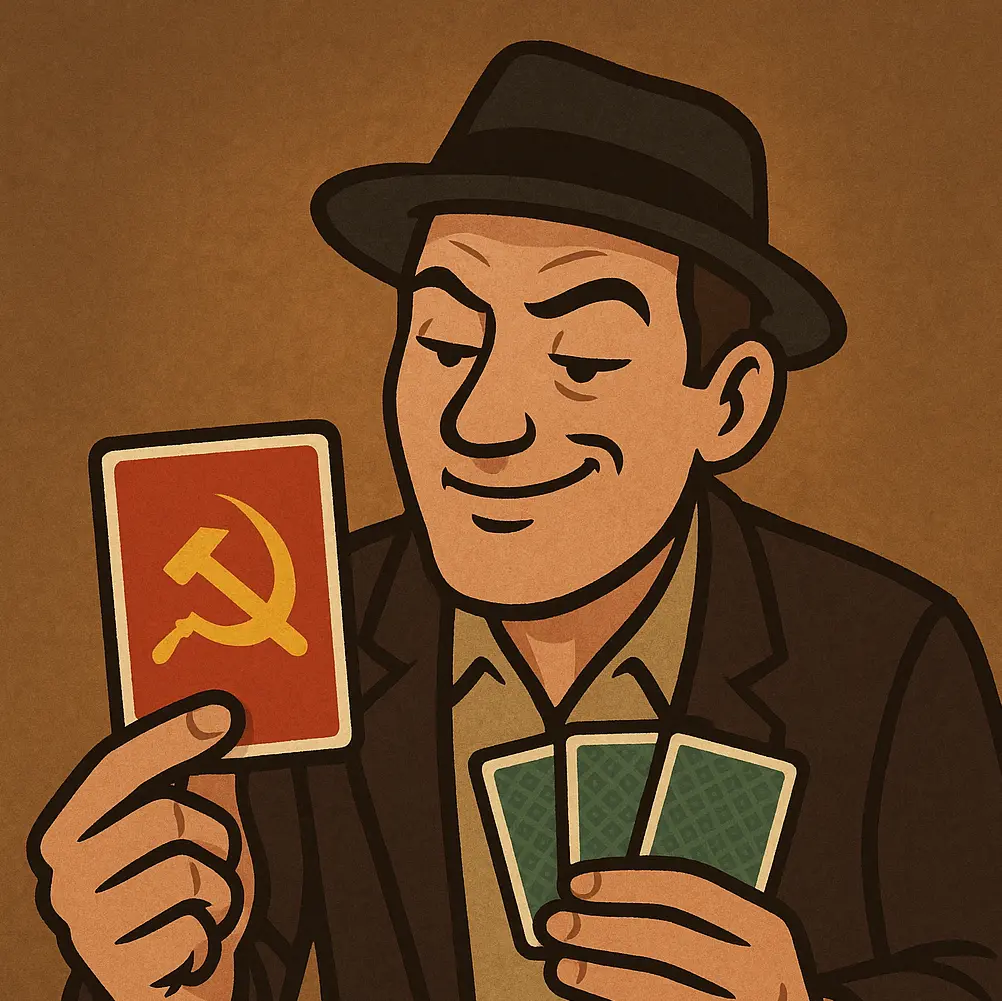
This is the second entry in The Fallacy Deck — a series exploring rhetorical “trump cards” that get thrown onto the table to end conversations before they’ve even begun.
We’ve all seen it happen.
Mention that capitalism might have a few… catastrophic flaws — ecological collapse, wealth inequality, a tendency to consume everything in its path — and someone at the table narrows their eyes, leans forward, and slaps down a familiar, crimson-colored card.
“Oh, so you want communism then?”
Checkmate. Conversation over.
No need to discuss actual policy. No need to consider history, nuance, or alternatives. The mere mention of capitalism’s failings has triggered the defensive system — and the Communism Card has been played.
What Is the Communism Card?
The Communism Card is a rhetorical maneuver designed to shut down critiques of capitalism by lumping them in with the most dystopian, fear-loaded caricature of communism imaginable.
It goes something like this:
You suggest wealth caps? That’s Marxism.
You question private ownership of essential resources? Sounds like Stalin.
You propose a cooperative model for local governance? Might as well move to North Korea.
The tactic is rarely about communism itself. It’s about weaponizing the fear of authoritarianism, scarcity, and historical trauma to scare people away from even thinking about alternatives.
Why It Works
It works because it’s easy.
Capitalism is deeply embedded in modern Western identity. It’s marketed as synonymous with freedom, choice, and innovation. So anything that challenges it can be framed as the opposite: tyranny, restriction, and stagnation.
And let’s be fair — historical examples of state-communism have given plenty of ammunition. Soviet purges. North Korean isolation. Bread lines and secret police. It’s not hard to associate communism with suffering.
But here’s the thing: none of that has anything to do with what you were actually suggesting.
The Communism Card doesn’t engage with your argument — it simply projects a nightmare onto it.
Why It Fails
It’s intellectually dishonest. Suggesting a wealth tax or public healthcare is not the same as proposing a one-party state.
It ignores diversity. Not everything left of capitalism is communism — and not all communism looks the same either.
It suppresses innovation. If every alternative gets branded as “failed communism,” we never get the chance to explore new systems.
Worst of all, it prevents nuance — forcing every idea into a binary of “free market good” vs. “authoritarian communism bad.” This kind of false dichotomy is exactly what keeps us stuck in systems that no longer serve us.
What Gets Lost
When the Communism Card gets played, curiosity is the first casualty.
We lose the chance to explore:
Cooperative economics
Degrowth models
Resource-based economies
Participatory democracy
Hybrid systems that blend the best of multiple ideologies
All of these vanish the moment someone throws down the red card and says, “You’re just being unrealistic.”
How to Respond
So how do you counter the Communism Card without getting sucked into its trap?
Stay on topic. “I wasn’t proposing communism. I was questioning whether capitalism is working for everyone.”
Name the tactic. “That sounds like a deflection, not an argument.”
Invite nuance. “There are more than two systems in the world. Let’s explore the options.”
You don’t need to defend communism to critique capitalism. And you don’t need to be a utopian to want something better.
The Real Question
If our system is so great, why is it so afraid of being questioned?
Why is the mere suggestion of change met with panic, scorn, or accusations of treason?
If capitalism truly is the best we can do — shouldn’t it welcome comparison? Shouldn’t it thrive under scrutiny?
Or has it simply learned to play the game better — stacking the deck and silencing dissent before it can take shape?
Final Thought
The Communism Card isn’t just a fallacy — it’s a smokescreen. It disguises the real conversation we need to have with fear, ridicule, and false choices.
But we don’t have to accept the terms of that game. We can collect the cards. We can reshuffle the deck. We can deal ourselves back in — with new rules, new questions, and a refusal to fold under someone else’s illusion of certainty.