The Problem With App Stores

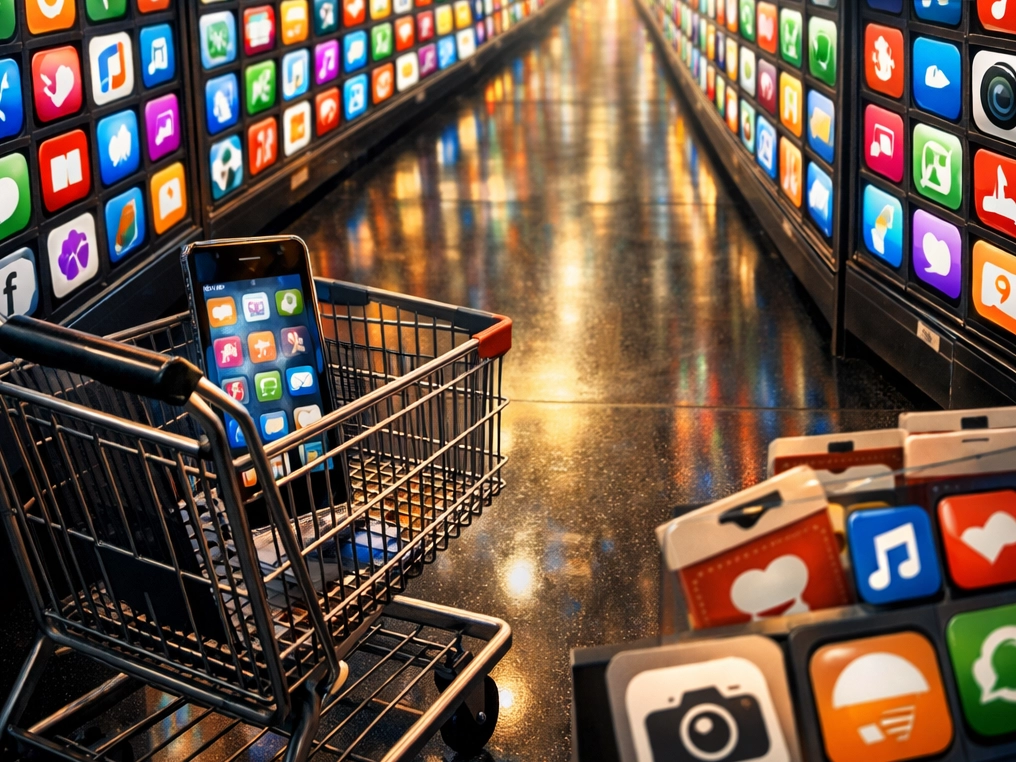
A long aisle resembling a digital store, with walls covered in colourful app icons on glowing screens. Price tags hang beside the displays, and a shopping trolley holding a smartphone sits in the foreground, suggesting apps presented as consumer goods.

A Subtle Discomfort

There is something about app stores that has never quite sat right with me. This is not a rejection of their usefulness. They are undeniably convenient, and in many cases they make installing software easier, safer, and more consistent. I use them myself.

And yet, over time, a quiet discomfort has surfaced.

It is not the obvious things that bother me. It is not the interface, or the concept of centralised updates, or even the idea of curated software in principle. The unease comes from something more subtle. A feeling that, somewhere along the way, installing software stopped being a deliberate act and became a passive one.

App stores feel less like places you go with a clear intention, and more like environments you exist within. Software presents itself whether you asked for it or not. Recommendations, rankings, and featured listings gently shift the focus away from what you set out to do, and toward what is being offered to you.

This raises a simple but important question. When installing something becomes effortless and ever present, what happens to the intentionality that once framed the act of choosing what we allow onto our machines, and by extension, into our lives?


Installing Software Used to Be an Intentional Act

There was a time when installing software required a clear decision. You did not install things casually or by accident. You identified a need or a curiosity, and then you went looking for something specific to address it.

This process involved effort. You might have purchased software on physical media, or downloaded it from a particular website after some consideration. Installation often took time. Sometimes it failed. Sometimes it conflicted with other software. None of this was especially elegant, but it created a natural pause between wanting something and acting on that desire.

That pause mattered.

It acted as a filter. You were less likely to install something unless you genuinely intended to use it. Software entered your system because you made room for it, both practically and mentally. The act of installation carried a sense of commitment.

In that context, software felt more like a tool than a presence. It existed to serve a specific purpose, and once that purpose was fulfilled, the relationship often ended. There was no expectation of ongoing engagement beyond the task at hand.

What has been lost is not simply inconvenience, but deliberation. Installing software used to be an extension of intentional choice. It reflected a moment where you decided what you needed, and acted accordingly.


App Stores and the Shift to Ambient Consumption

App stores changed more than the mechanics of installing software. They changed the context in which discovery happens. Searching for a specific solution has gradually been replaced by browsing within a curated environment.

Instead of seeking out software to meet an identified need, users are encouraged to explore what is available. Lists of popular apps, featured selections, recommendations, and rankings all invite a different mode of engagement. Software becomes something you encounter rather than something you deliberately seek.

This shift may seem minor, but its effects are significant. Browsing encourages openness, distraction, and impulse. Searching encourages focus, intention, and clarity. When browsing becomes the default, the question subtly changes from “What do I need?” to “What is being presented to me?”

Over time, this alters the relationship between the user and their tools. Installing software begins to resemble consumption rather than selection. The act becomes lighter, quicker, and less considered. The barrier to entry is lowered, but so is the sense of purpose.

In this environment, software no longer waits to be chosen. It competes for attention. Visibility becomes as important as usefulness, and sometimes more so. What rises to the surface is not always what is most appropriate, but what is most effectively positioned.

This is the point at which installation stops feeling like a conscious decision and starts to feel like a background activity. Something that happens alongside everything else, rather than as a result of a clear intention.


Curation Is Not Neutral

App stores often present themselves as neutral organisers. They appear to simply sort, categorise, and make software easier to find. In practice, curation is never passive. Decisions are being made about what is visible, what is promoted, and what is quietly pushed to the margins.

When software discovery is centralised, visibility becomes a form of power. Apps that align with the priorities of the platform are more likely to be surfaced. Those that do not may still exist, but they become harder to encounter without already knowing what you are looking for.

This has subtle but far reaching consequences. Software that is useful, thoughtful, or deliberately minimal does not always thrive in environments that reward engagement, monetisation, or scale. Meanwhile, applications designed to maximise retention or data collection are often better suited to the metrics that determine prominence.

The result is not overt censorship, but quiet shaping. Users are not told what they cannot install. Instead, they are guided toward what is most visible, most approved, or most easily integrated into the platform’s broader ecosystem.

Over time, this shapes expectations. Certain kinds of software begin to feel normal, while others feel obscure or fringe. The app store does not simply reflect demand. It actively participates in creating it.


From Tools to Ongoing Relationships

Installing software used to be a largely finite transaction. You acquired a tool, used it for a specific purpose, and moved on when that purpose was fulfilled. The relationship was clear and limited.

Many modern apps operate differently. Installation is no longer the end of the exchange, but the beginning of an ongoing relationship. Even software that appears simple often arrives with expectations attached. Requests for permissions, invitations to create accounts, prompts to enable notifications, and background activity are now common.

This creates a shift in assumptions. Software does not simply wait to be used. It checks in. It reminds. It nudges. It asks for continued attention, even when its original value has already been extracted.

What is striking is that this expectation often persists regardless of relevance. An app does not need to remain useful in order to remain present. Even when it no longer serves a meaningful purpose, it may still request updates, data, or engagement.

This changes how software feels. It stops being a passive tool and starts to resemble a claimant on attention. The boundary between use and obligation becomes blurred. What was once an object you reached for now feels like something that reaches back.


Convenience as a Mask

The appeal of app stores is not imagined. They genuinely reduce friction. They simplify updates, improve security in many cases, and make software installation accessible to people who would otherwise find it intimidating. These benefits are real, and it would be dishonest to ignore them.

However, convenience also reshapes behaviour.

When installing software becomes effortless, deliberation quietly fades. The cost of trying something drops so low that there is little reason to pause. Installing an app feels reversible and inconsequential, even when it is not.

Over time, this changes how refusal is experienced. Saying no begins to feel like unnecessary friction rather than an active choice. Declining permissions, disabling notifications, or avoiding suggested installs can start to feel like resisting the system rather than simply exercising agency.

Convenience smooths over these tensions. It presents itself as kindness, while quietly encouraging compliance. The easier something is to accept, the more unusual it feels to decline it.

In this way, convenience does not remove pressure. It relocates it. The effort is no longer in installing software, but in maintaining boundaries around it.


Why Some Platforms Feel Less Invasive

Not all app stores provoke the same level of discomfort. In some ecosystems, they function as optional conveniences rather than unavoidable gateways. This difference is not primarily technical. It is cultural.

On most Linux distributions, app stores exist alongside many other accepted ways of installing software. Package managers, direct downloads, source builds, and repositories all coexist. The presence of an app store does not imply that software outside of it is unsafe or unofficial by default. Users are still assumed to have agency, curiosity, and responsibility.

In this context, the app store feels like a shortcut rather than a rulebook. It offers convenience without defining legitimacy. If you know what you want and prefer another route, the system does not quietly punish you for that choice.

By contrast, platforms such as Windows, macOS, iOS, and Android increasingly frame their app stores as the correct and responsible way to install software. While alternatives may still exist in some cases, they are often discouraged through warnings, additional friction, or limited functionality. Installing software outside of the approved channel is subtly framed as risky, outdated, or irresponsible.

On mobile platforms in particular, the app store is not just preferred, but enforced. Discovery, installation, updates, and monetisation are tightly bound to a single gatekeeper. This centralisation gives the platform significant influence over what software is visible, viable, and economically sustainable.

The result is a clear shift in assumption. On Linux, the app store supports agency. On more tightly controlled platforms, it replaces it. The difference is not about security or ease of use alone, but about who is ultimately trusted to decide what belongs on a user’s device.


What’s Really Being Eroded

The core issue with app stores is not the loss of freedom to install software. In most cases, that freedom still exists in some form. What has changed is more subtle, and more consequential.

What is being eroded is intentionality.

When discovery is managed, when installation is effortless, and when software assumes an ongoing relationship by default, the space for deliberate choice narrows. Decisions happen faster, with less reflection. Over time, this reshapes how users relate to their devices.

There is also a quieter loss of ownership over desire. When needs are anticipated and presented in advance, it becomes harder to tell whether an action originated from a genuine requirement or from exposure. The line between choosing and being guided begins to blur.

This erosion does not announce itself as restriction. It arrives as convenience, safety, and efficiency. Nothing is taken away outright. Instead, the conditions that once encouraged pause, discernment, and commitment slowly dissolve.

The result is a digital environment where fewer choices feel consciously made, even though options appear abundant. Software multiplies, but clarity diminishes. The system becomes rich in possibility and poor in meaning.


Not Anti Progress, Pro Agency

This is not an argument against app stores as a concept. They solve real problems and, when used thoughtfully, can genuinely improve the experience of managing software. The issue is not their existence, but the role they have come to play.

When a single channel shapes discovery, defines legitimacy, and normalises ongoing extraction of attention, it stops being a neutral convenience and starts to influence behaviour. What is lost in the process is not access, but agency.

Questioning this shift is not a rejection of progress. It is a refusal to treat all change as inherently positive. Progress that reduces friction but erodes intentionality comes with costs that are easy to overlook precisely because they arrive quietly.

Tools should serve clear purposes. They should enter our systems because we invite them in, not because they are placed in our path often enough to feel inevitable. Reclaiming that distinction matters.

Being more intentional about what we install is a small act, but it reflects a larger stance. One that values conscious choice over managed exposure, and agency over convenience.
The Nameless Problem

Illustrated scene of a dimly lit institutional corridor with fluorescent ceiling lights, empty chairs along one wall, frosted glass doors on the other, and a darkened passage receding into shadow.

There is a particular kind of problem that is difficult to talk about, not because it is rare or abstract, but because it has no name.

Most people recognise the feeling. Something feels wrong, heavy, or quietly hostile in a low-grade way. It is not catastrophic or dramatic, but it is persistent. When you try to explain it, you find yourself talking for too long, reaching for examples, qualifying your statements, and pre-empting dismissal. The explanation feels clumsy, disproportionate, or as if you are overthinking something that should be simple.

Often the response is some variation of:

“You are making it a problem.”
“It is just how things are.”
“Everyone deals with that.”

And slowly, quietly, the issue retreats back into silence.

This is the nameless problem.


When Experience Outpaces Language

Language does not arrive at the same time as experience. It lags behind it.

People often live with problems for years, sometimes generations, before the vocabulary exists to describe them cleanly. Until then, those problems tend to be minimised, normalised, personalised, or reframed as individual weakness.

Without language, there is no shared reference point. Each person is left to navigate the issue alone, carrying both the discomfort and the burden of explaining why it counts as a real problem.

This creates a strange inversion. The person who notices the problem is treated as the problem.


Why Unnamed Problems Persist

Unnamed problems are uniquely resilient.

They do not need to be defended, because they are rarely challenged directly. They hide in plain sight, diffused across systems, norms, interfaces, expectations, and the familiar phrase “just the way things work”.

When harm is ambient rather than acute, cumulative rather than singular, and structural rather than intentional, it becomes easy to deny, even when its effects are everywhere.

No villain is required.
No conspiracy is needed.
Only silence.


The Cost Of Not Having Words

When a problem cannot be named, it is usually internalised.

People begin to believe that they are too sensitive, bad at coping, or failing at something everyone else seems to manage without effort.

This is especially true for neurodivergent people, disabled people, and anyone whose nervous system or perception does not align neatly with the environments they are expected to tolerate.

Without language, distress becomes private.
Private distress becomes shame.
Shame keeps systems intact.


A Brief Historical Note

Many concepts we now take for granted were once dismissed as silly, exaggerated, or unnecessary.

There was a time before terms such as burnout, gaslighting, emotional labour, and sensory overload.

People still experienced these things, often intensely, but lacked the linguistic tools to make them legible to others.

The arrival of language did not create the problem.
It revealed it.

Naming did not solve everything, but it changed the terrain. It allowed recognition to travel faster than explanation.


Naming Is Not Pedantry

There is a common suspicion that naming things is nitpicking, over-intellectualising, or making life harder than it needs to be.

In reality, naming is one of the simplest ways to reduce harm.

A word can shorten explanations, reduce self-doubt, allow shared recognition, interrupt dismissal, and make patterns visible.

Language does not have to be perfect to be useful. It only has to be good enough to hold the shape of the experience.


A Response To The Nameless Problem

Recognising the danger of unnamed problems naturally raises a question. If the absence of language allows harm to persist, what can be done about it?

One practical response is to create language deliberately.

As a way of addressing this problem, I have been working on a lexicon of terms relating to emergent issues of our era. These are not abstract theories or academic concepts. They are patterns that many people already feel and navigate, but often struggle to describe clearly or concisely.

The purpose of this work is not to dictate how people should think, but to reduce the effort required to recognise what is already happening.


The Lexicon

The Lexicon is a growing collection of terms intended to make certain classes of problems easier to see, name, and discuss.

Many of the entries describe patterns that are widely experienced yet rarely labelled. They tend to be normalised, quietly harmful, and difficult to articulate without shared language.

This project exists to shorten the distance between perception and articulation. It is a tool for recognition, not a manifesto or a claim to authority.

You can find the Lexicon here:


An Invitation

The Lexicon is not finished, and it is not closed.

Language evolves through use, refinement, disagreement, and care. If a term helps you recognise something you have struggled to explain, it has already done its job. If it does not, that is useful information too.

The most dangerous problems are often not the loudest ones. They are the ones we are trained not to name.

This project exists to make those problems speakable.

The Independent Artist in the Age of Self Commodification

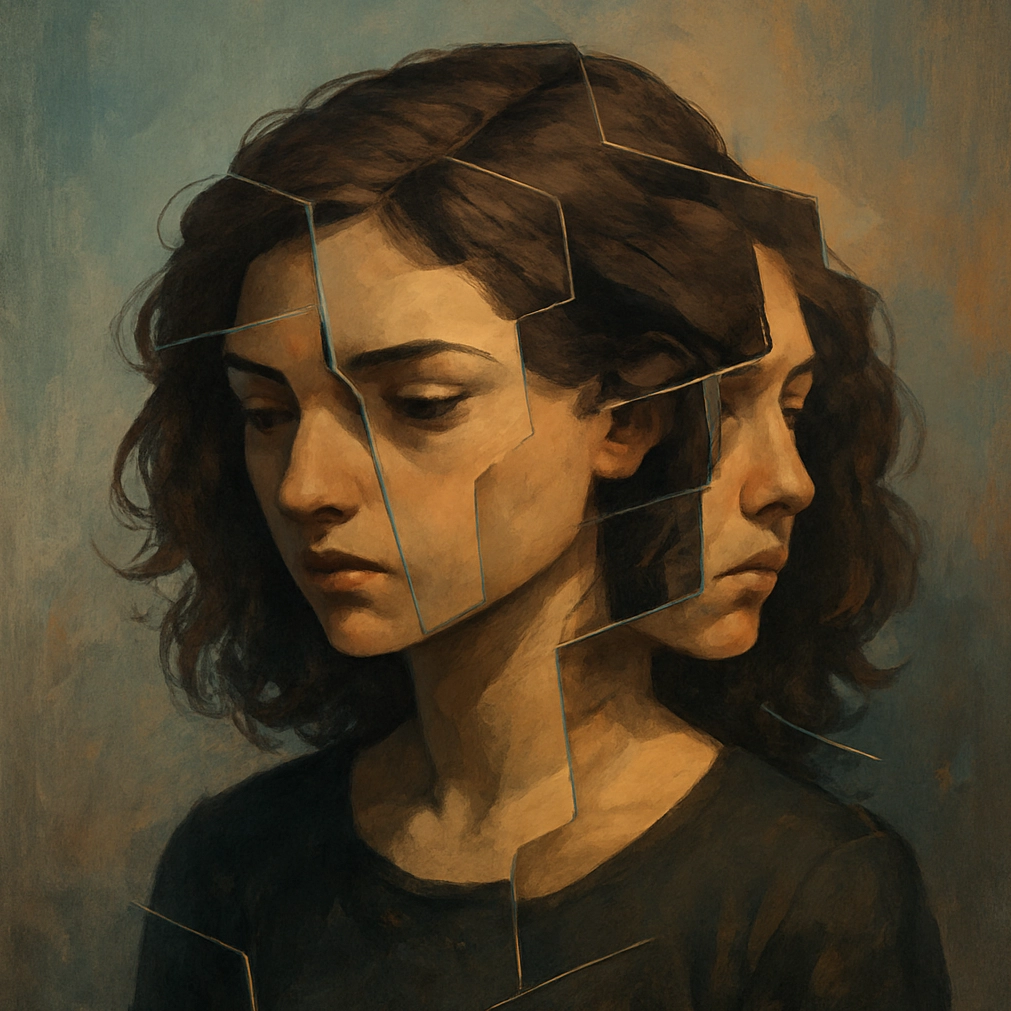
A surreal portrait of a person whose face is split into overlapping fragmented layers. Different expressions and angles of the same face float apart in soft purple and blue tones, creating a fractured sense of identity.

To be an independent artist today is to live inside a contradiction. You are encouraged to express yourself, to be authentic, to create from the depths of your experience. At the same time, you are expected to package that expression into something marketable. You are told to build a personal brand. You are taught to present your personality as a product and your creativity as something that must justify itself through metrics.

The modern artist is not merely a creator. The modern artist is expected to act as promoter, strategist, content machine, administrator, performer, market analyst, and public persona. All before they have even had the chance to explore what they want to say.

It is a strange era to be creative. The tools are abundant, but the expectations are suffocating.


The Myth We Are Sold

There is a seductive story that circulates through online creative spaces. It tells you that if you work hard enough, post consistently enough, hack the algorithm effectively enough, and sell yourself persuasively enough, you will find success. The story insists that the difference between obscurity and recognition is simply a matter of discipline and smart marketing.

You are told that you must treat your art like a business. You are told that you must treat yourself like a brand.

It sounds empowering. It feels like agency. But beneath the surface, it is a quiet form of coercion. It shifts the burden of success entirely onto the individual while ignoring the structural realities that shape visibility in the digital age.

The story offers hope, but it also plants a quiet seed of self blame.

If you do not grow, it is because you did not convert.
If you are not visible, it is because you did not sell yourself well enough.
If your work does not gain traction, it is because you failed at the game.

This narrative conveniently overlooks the fact that the game is not designed for artists. It is designed for platforms.


The Ego Trap of the Modern Artist

When artists are pushed into the role of self marketer, something subtle and damaging begins to happen. Their sense of worth becomes entangled with metrics. Their self expression becomes entangled with performance. Their identity becomes entangled with a public facing persona.

The artist is encouraged to ask questions that slowly corrode their relationship with their own work.

Will this get attention.
Will this get engagement.
Will this appeal to the algorithm.
Will this make me grow.

Instead of asking questions that protect their creative integrity.

What do I want to explore.
What do I need to express.
What feels alive.
What feels true.

The external replaces the internal.
The outcome replaces the process.
The brand replaces the artist.

This is the psychological cost of self commodification.


The Toll of Constant Performance

Creative work demands vulnerability. It asks the artist to dive into the complexities of their inner landscape and return with something worth sharing. But the digital era demands something very different. It demands relentless visibility. It demands constant output. It demands predictability in the face of a process that is inherently unpredictable.

The result is a kind of creative exhaustion that goes beyond burnout. It is not just physical or emotional fatigue. It is spiritual fatigue. The slow erosion of meaning that comes from turning something intimate into something strategic.

When everything becomes potential content, nothing feels sacred.
When everything must be shared, nothing feels fully your own.
When everything is judged by performance, the quiet joy of creation becomes harder to reach.

Artists find themselves living in a perpetual state of exposure. Their inner world becomes a public arena. Their identity becomes a commodity circulating through systems that do not care about the fragility of creative work.


The Illusion of Attainable Success

Social media creates a strange paradox. It gives artists access to opportunity, but it also creates the illusion that success is universally attainable. Thousands of creators appear to be thriving. Thousands appear to be breaking through. It is easy to believe that anyone can do the same if they simply optimise correctly.

But the truth is more complicated. Algorithms amplify only a fraction of voices. Visibility is shaped by forces that have little to do with talent or meaning. Instead of inspiration, artists are often left with a quiet sense of inadequacy. They feel as if they are failing at a game that was never designed to let more than a few players win.

This creates a subtle psychological harm. It encourages artists to internalise systemic limitations as personal shortcomings. They begin to believe that the problem is themselves.

In reality, the system is simply not built to nourish artistic diversity. It is built to maximise engagement.


What Is Lost When Art Becomes Content

Content is designed for speed.
Art is designed for depth.

Content is meant to be consumed.
Art is meant to be experienced.

Content is temporary.
Art is transformative.

When artists are pressured to create content rather than art, they often lose the slow, reflective, exploratory nature of their process. They lose the freedom to take risks. They lose the space to fail quietly. They lose the ability to grow in private before presenting something in public.

They are forced to produce quickly, often at the expense of producing honestly.

This shift in values does not only harm the artist. It harms the culture. It flattens the creative landscape into something uniform and predictable.

When visibility becomes the primary measure of success, the most unique voices struggle to survive.


Reclaiming Creative Integrity

Despite the pressures, there is a way to exist as an artist without surrendering to self commodification. It begins with rejecting the idea that your value is tied to your metrics. It requires remembering that your creative voice existed before platforms demanded your constant availability.

It means reconnecting with the reasons you create.
Not because it performs.
Not because it converts.
But because there is something inside you that needs expression.

Reclaiming creative integrity is not a refusal to engage with the world. It is a refusal to be reshaped by systems that treat humans as products and art as data.

It is a decision to remain whole in an environment that rewards fragmentation.


The Quiet Resistance of the Independent Artist

There is something quietly radical about creating art for reasons that have nothing to do with profitability. There is something subversive about making something slow, something thoughtful, something that refuses to perform. There is power in choosing depth over visibility, and sincerity over optimisation.

To be an artist in this era is to stand at the edge of two worlds. One world tells you to convert, to optimise, to brand yourself, to sell your soul one post at a time. The other world invites you to be human, to create from curiosity, to express something real and irreducible.

You do not belong to the first world.
You never have.

Your value cannot be captured by analytics.
Your impact cannot be predicted by dashboards.
Your art does not have to justify itself through numbers.

You are not a product.
You are not a brand.
You are not a conversion.

You are an independent artist in an era that keeps trying to turn everything into content. The fact that you create at all is already an act of resistance.

How the World Works

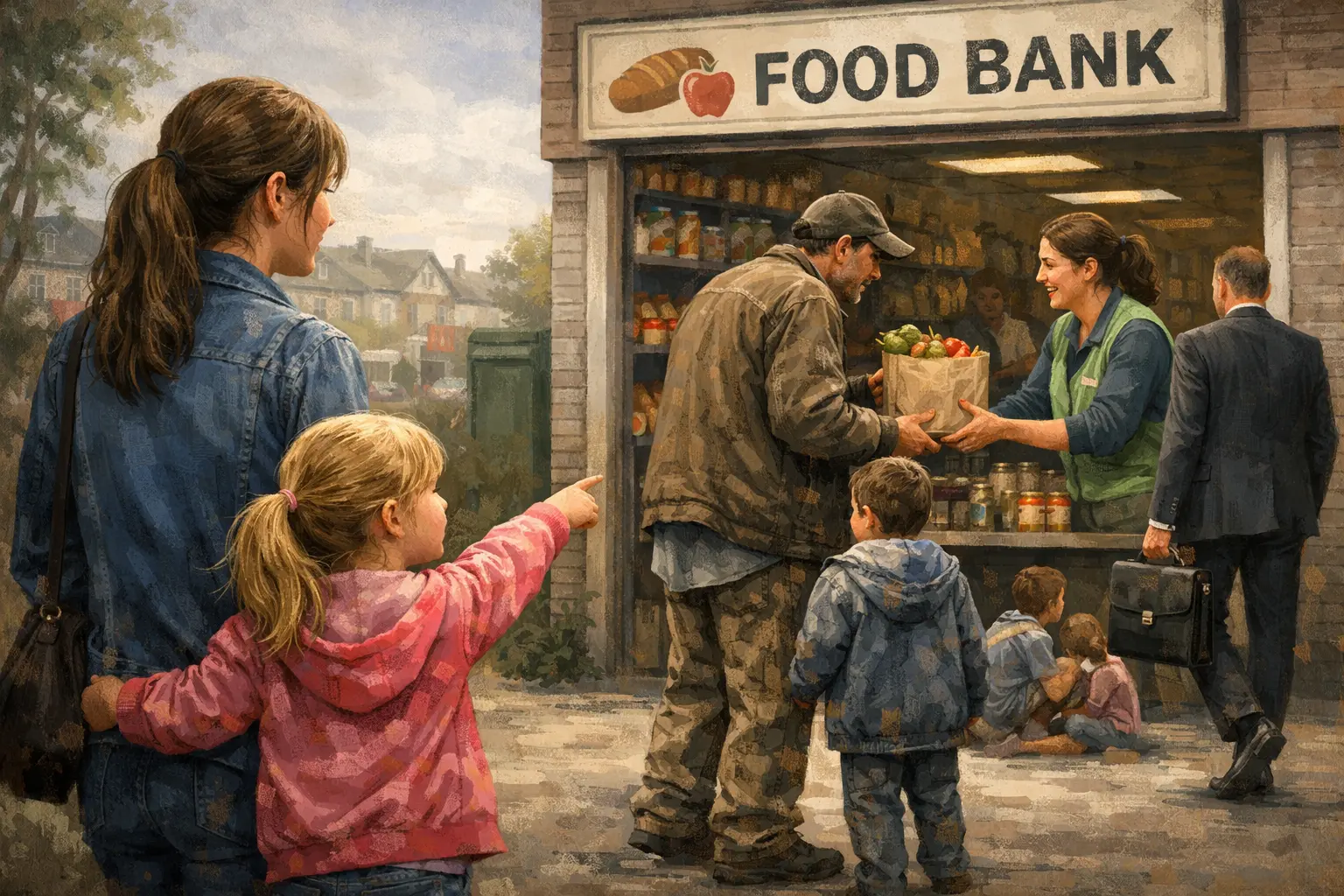
A painted illustration showing a woman and a young child standing on a pavement, the child pointing toward a food bank. In the background, volunteers hand bags of groceries to adults and children outside the food bank building, with shelves of food visible inside.

This is a real exchange I overheard between a mother and her little girl while out shopping.
I’ve reproduced it as faithfully as memory allows:

Conversion Culture: How Capitalism Turned Humans Into Measurable Events

A glowing human silhouette made of binary code stands against a dark background filled with faint charts and data graphs. The figure appears to dissolve into digital numbers, symbolising a person reduced to data.

There is a single word that quietly reveals everything wrong with modern marketing, social media strategy, influencer culture, and the strange world that independent artists must navigate. That word is conversion. It sounds clinical and neutral, as if it belongs in a quarterly report instead of in the language of human interaction. Yet behind its tidy exterior lies something far more disturbing. A conversion is not a person who connected with your work. It is not someone who felt something. It is not a supporter, a fan, or a fellow human being.

A conversion is an event.

A moment where a person becomes a measurable unit of compliance. Nothing more.

Welcome to conversion culture, where the ultimate goal is to transform human beings into behavioural outcomes that can be tracked and optimised.


What a Conversion Really Is

In marketing language, a conversion is the instant when you perform the desired action. Click. Follow. Share. Buy. Sign up. These small behaviours are treated as success metrics, but they reveal nothing about genuine engagement or emotional impact. All they show is that the funnel worked as intended. The action occurred. The individual behaved according to the predicted script.

Success is not about meaning.
Success is about compliance.

A conversion is simply the moment when the algorithm wins.


The Linguistic Violence of the Term

Language shapes how we see the world. When we adopt a word, we also inherit the worldview that produced it. The word conversion belongs in theological discourse and industrial transformation, not in the delicate terrain of human relationships. It implies that the human is the raw material and the system is the force that acts upon them.

To convert someone is to reshape them without genuine dialogue.
It is not a relationship.
It is a process.

And in modern marketing, the person is no longer the subject. The person becomes an object, a target, a data point waiting to be molded into a desired shape. The humanity of the interaction disappears, leaving only the measurable outcome.


The Microcosm of Manipulation

Once you start noticing conversion culture, it becomes impossible to unsee it. Social media platforms train creators to think in funnels and hooks. Influencers treat audiences as pipelines. Independent artists are taught to build their brand with the same logic that corporations use to advertise toothpaste.

Everywhere you look, people are encouraged to optimise their interactions for performance. Even authenticity is presented as a strategy. The self becomes a product. Communication becomes a tactic. Community becomes a marketplace where every relationship is quietly assessed for conversion potential.

This worldview does not announce itself as dehumanising. It presents itself as normal. Sensible. Professional.

I remember the first time I saw this normalisation happen in real time. It was a few years ago at a seminar I attended for a charity I volunteer for, part of a networking event focused on social media and promotion for independent artists.

The word was everywhere. Conversion. Conversion. Conversion. It was treated as self evident, as if everyone in the room already knew exactly what it meant and why it mattered. I did not immediately understand the technical definition, but I could feel what it represented, and the feeling was nauseating.

Everyone around me was nodding along. Yes. Conversions. This is what we want. This is what we are here for. It was the unspoken goal that no one thought to question.

There was no discussion about what converting a human being actually meant. Either people did not know and were afraid to admit it, or some part of them understood and quietly chose not to look too closely.

Later, the topic of AI generated music came up. The consensus was clear. This was bad. A threat to artistic integrity.

I remember finding the contrast deeply ironic. People were perfectly comfortable letting algorithms shape how their own work should be funnelled, distributed, and rewarded for the sake of hollow metrics, yet deeply uncomfortable with the idea of a machine touching the art directly.

The integrity of the artwork mattered deeply.
The integrity of the artist, far less so.

That moment stayed with me, because it revealed how completely conversion culture has embedded itself into creative spaces. It is no longer questioned. It is assumed. And once a system becomes invisible, it becomes far more powerful.


The Death of Meaning Under Conversion Logic

Conversion culture has a profound effect on creativity, connection, and selfhood. When the primary goal is to convert people, everything begins to bend around that objective. Art becomes engineered for virality instead of expression. Writing becomes designed for engagement rather than truth. Even conversation becomes structured by what might perform well.

You begin to ask the wrong questions.
Does this convert.
Does this grow the audience.
Does this feed the machine.

Instead of asking the questions that actually matter.
Does this feel true.
Does this matter to me.
Does this say something real.
Does this speak to another person with sincerity.

Meaning becomes secondary. Humanity becomes collateral damage. The system cares only about whether the action happened.


What Happens to the Artist Under This System

Independent artists face a strange and exhausting paradox. They are told to be authentic, but only if authenticity converts. They are told to build community, but only if community can be monetised. They are told to express themselves, but preferably on a rigid schedule that pleases algorithms.

Everything becomes performance. Everything becomes content. Everything becomes part of the sales funnel. The artist who once created from curiosity or passion or inner necessity slowly becomes a brand manager performing a role for an invisible audience.

The cost of this transformation is enormous. Conversion culture does not simply reshape how art is shared. It reshapes the inner landscape of the artist.


The Human Cost of Being Treated as a Metric

People can feel when they are being measured. They know when they are being treated as potential conversions rather than as whole beings. This creates a pervasive sense of distrust and exhaustion. Connection becomes transactional. Creativity becomes strained. Spaces that once felt communal begin to feel artificial and hollow.

To be viewed as a conversion is to be seen as less than human.
It is to be positioned as a means to an end.
It is to be transformed into a statistic.

No wonder so many people feel unseen in digital spaces that claim to measure engagement. The numbers may be high, but the soul is empty.


Rejecting Conversion Culture

There is another way to exist in the world. It begins with choosing meaning over metrics. Depth over efficiency. Connection over extraction. It requires refusing to treat people as potential sales and refusing to treat ourselves as brands in need of constant optimisation.

It means asking better questions.
What do I want to express.
Who do I want to reach.
What feels alive.
What feels true.

Every refusal to participate in conversion logic is an act of reclamation. It is a reminder that art, communication, and human experience have value far beyond their measurable outcomes.

It is a way of stepping out of the machine.


The Unconvertible Self

You are not a metric.
You are not a data point.
You are not a behavioural outcome to be engineered.

You are a person with a story and a mind and a capacity for connection that cannot be graphed.

Any system that reduces you to a conversion is a system that does not deserve you.

Perhaps the most radical act in the age of conversion culture is to remain human in the face of relentless pressure to become something simpler and more profitable. And perhaps the greatest act of artistic rebellion is to create something that refuses to convert at all.

Humbug! A Late-Stage Capitalism Christmas Carol

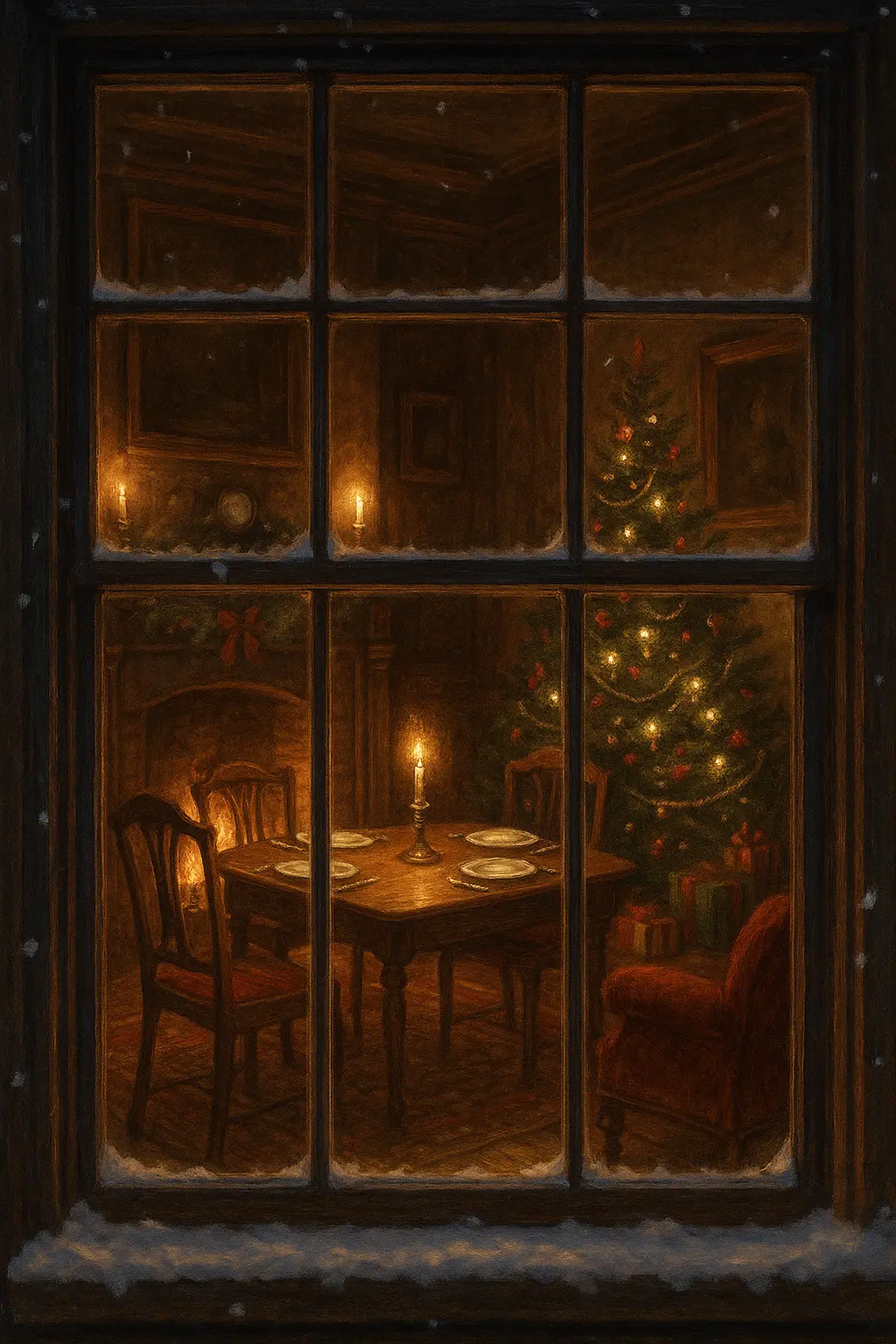
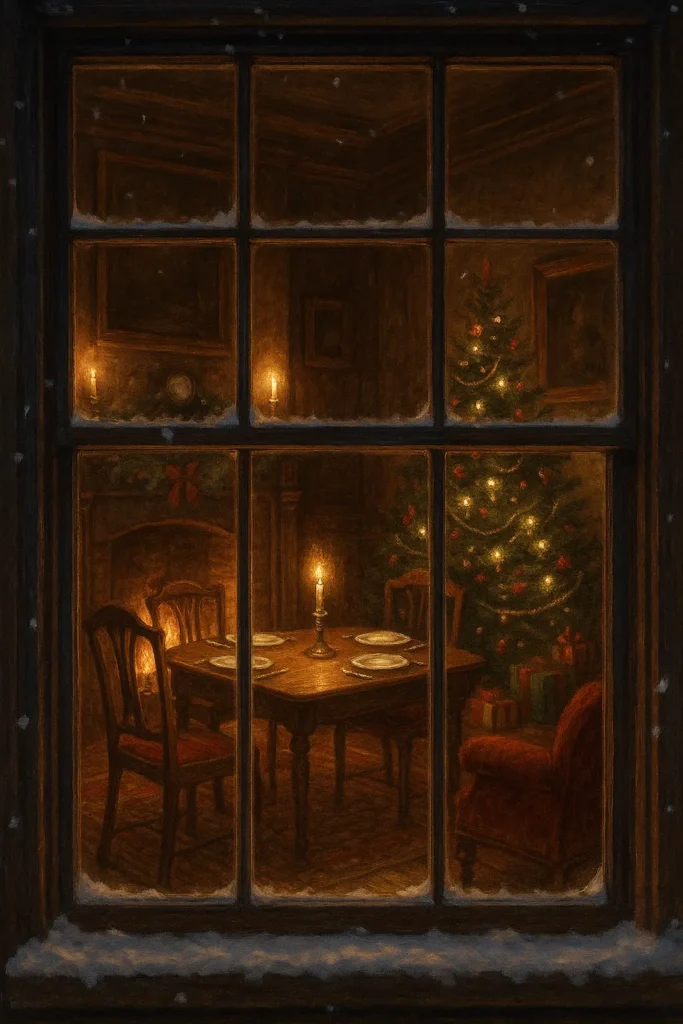
A warmly lit Victorian Christmas interior seen through a frosted window, with a candlelit table and decorated tree prepared for guests who never arrive.

Naming the Uncomfortable Truth

Let’s say the quiet part out loud.

For many people, Christmas no longer feels like a celebration. It feels like an obligation. One that grows heavier every year.

The decorations arrive earlier. The adverts start sooner. The pressure ramps up before the leaves have even finished falling. By the time December actually arrives, many of us are already tired, financially anxious, and emotionally spent. What was once a moment in the year has swollen into a season that refuses to end.

There is a strange guilt attached to admitting this. Disliking Christmas is treated as a personal failing. A lack of gratitude. A moral defect. If you are not visibly excited, if you do not participate enthusiastically, something must be wrong with you. So we smile, we comply, and we privately count the days until it is over.

Christmas now asks for more than it gives. More money. More time. More emotional labour. More performance. More resilience. For those already struggling, it does not arrive as comfort but as an additional weight. And yet it is framed as generosity. As joy. As something you should be thankful for.

This is not because people have become colder or more cynical. It is because the shape of Christmas has changed. What was once a cultural and emotional ritual has been absorbed into a system that does not understand limits. Growth is assumed. Escalation is expected. Stopping is not an option.

This article is not an attack on joy, tradition, or celebration. It is an attempt to separate what Christmas was meant to be from what it has been turned into. To name the discomfort honestly, without shame, and to ask a simple question.

If Christmas is supposed to bring warmth, why does it leave so many people exhausted?

It seems to me that what we are all in need of… is a visitation.


The Ghost of Christmas Past

The Ghost of Christmas Past does not arrive with accusations. It arrives with a candle. A quiet light held against the long dark.

It reminds us that Christmas was never meant to be loud.

Long before it became a commercial season, Christmas existed as a winter festival. Across Europe, long before Christianity formalised it, people marked the solstice as a moment of survival. The darkest days had arrived, and more importantly, they had begun to pass. Fires were lit. Food was shared. People gathered together not for spectacle, but for warmth, safety, and reassurance.

When Christianity later absorbed these older traditions, Christmas became a story of humility rather than excess. A child born in a stable. A holy event framed by simplicity, vulnerability, and care. Even for those who were not religious, the symbolism endured. This was a time to slow down, to soften, to recognise one another in the cold.

For much of history, Christmas was shaped by scarcity. In medieval Europe, winter meant hunger, isolation, and risk. A feast was meaningful because it was rare. A gift mattered because it was hard-won. Celebration was not an escape from reality, but a way of enduring it together.

Even as society industrialised, Christmas retained this character for a while. In Victorian Britain, a period that shaped much of what we still recognise today, Christmas was consciously reframed as a family-centred holiday. Charles Dickens’ A Christmas Carol itself was part of this shift, emphasising compassion, generosity, and social responsibility in response to the brutal conditions of industrial capitalism.

Importantly, Victorian Christmas was still modest. Decorations were handmade. Cards were personal. Gifts were small, often practical, sometimes homemade. Time spent together was the centrepiece, not an accessory.

What tied all these eras together was not tradition for tradition’s sake, but proportion. Christmas knew its place in the year. It was a pause, not a takeover. It was special precisely because it did not last forever.

The Ghost of Christmas Past reminds us that Christmas once understood winter. It leaned into it. It offered warmth without excess, celebration without pressure, and meaning without demand.

It knew how to be gentle.


The Ghost of Christmas Present

The Ghost of Christmas Present does not carry a candle. It arrives glowing. Loud. Overstimulating. Wrapped in tinsel and urgency.

This is Christmas as it exists now. Not as a moment, but as a system.

Somewhere along the way, Christmas stopped being a cultural ritual and became an economic event. A fiscal quarter. A growth target. The season now begins not when winter sets in, but when retailers decide it should. September becomes acceptable. October becomes normal. By November, refusal feels almost antisocial.

This did not happen overnight.

In the early twentieth century, mass production began to reshape Christmas. Department stores expanded gift-buying beyond necessity, turning abundance into aspiration. The rise of advertising reframed Christmas not as something you prepared for, but something you were sold.

Post-war consumerism accelerated the shift. The 1950s brought prosperity narratives, suburban ideals, and the modern image of the perfect family Christmas. Gifts multiplied. Expectations rose. Television beamed a single, glossy version of Christmas into millions of homes, quietly standardising what joy was supposed to look like.

By the late twentieth century, Christmas had fully aligned itself with growth logic. Black Friday crept across the Atlantic. Sales events framed restraint as foolishness. Spending was no longer just encouraged, it was positioned as civic duty. To consume was to participate. To opt out was to disrupt the economy.

Now, in late-stage capitalism, the transformation is complete. Christmas is no longer just commercialised, it is optimised. Algorithms predict our generosity. Loyalty schemes gatekeep affordability. “Limited time” offers manufacture urgency. Even nostalgia is packaged and sold back to us at scale.

This version of Christmas does not understand enough. It only understands more.

More spending. More consumption. More preparation. More performance. More emotional labour. More resilience from people who are already stretched thin. Participation is no longer optional. Opting out is treated as deviance rather than choice.

Generosity has been redefined as purchasing power. Love is measured in receipts. Thoughtfulness is outsourced to algorithms that tell us what we “should” buy for the people we already know best. Even the act of giving has been flattened into logistics.

What makes this particularly cruel is the moral framing. Christmas is still sold as kindness, warmth, and goodwill, even as it routinely produces stress, debt, exhaustion, and quiet resentment. People blame themselves for failing to enjoy it properly, rather than questioning the conditions imposed upon them.

The labour behind Christmas is unevenly distributed. Someone plans. Someone shops. Someone budgets. Someone cooks. Someone hosts. Someone absorbs the emotional fallout. This work is rarely named, rarely shared equally, and rarely acknowledged, yet it is treated as the price of admission.

And then there is the noise. Visual noise. Emotional noise. Advertising noise. A constant insistence that joy is urgent, happiness is compulsory, and dissatisfaction is a personal flaw. There is little space for grief, fatigue, neurodivergence, poverty, or simply wanting quiet.

This is Christmas as late-stage capitalism demands it. A tradition hollowed out and repurposed as an extraction engine. Not because people asked for it, but because the system rewards escalation and punishes restraint.

The Ghost of Christmas Present does not ask how we are feeling.
It assumes we will cope.
And it does not care when we don’t.


The Ghost of Christmas Yet to Come

The Ghost of Christmas Yet to Come does not speak.
It does not need to.

It shows us a future that is not imagined, only extended.

If nothing changes, Christmas does not collapse. It expands.

The season begins earlier each year, not because people want it to, but because growth demands it. What was once a few weeks becomes a quarter of the calendar. What was once anticipation becomes exhaustion before December has even arrived. Refusal becomes increasingly difficult, not through force, but through inconvenience and social pressure.

Access to affordability narrows. Discounts are no longer public. They are conditional. Loyalty schemes, apps, subscriptions, and digital profiles determine who gets to participate “properly.” Christmas becomes tiered. Those without the right accounts, the right data trail, the right compliance, pay more. Those who cannot or will not engage are quietly penalised.

Debt normalises further. Seasonal borrowing is reframed as tradition. Financial stress becomes background noise. People enter January not just tired, but already behind. The cycle resets and accelerates.

Environmental damage continues, not dramatically, but steadily. Decorations designed to last a season. Novelty gifts designed to be discarded. Packaging engineered for convenience rather than endurance. Waste becomes an accepted by-product of celebration, and responsibility is pushed onto individuals rather than systems.

Emotionally, the space contracts.

There is less room for grief. Less room for difference. Less room for opting out. Christmas becomes increasingly performative, increasingly visible, increasingly surveilled. Participation is measured. Displays of joy are documented. Absence is noticed.

What was once a pause becomes a test.

This future does not arrive through force or spectacle.
It arrives through convenience.

It arrives through updates, new terms and conditions, cheerful notifications, and subtle penalties for those who do not engage correctly. It arrives gently enough that resistance feels awkward rather than urgent. Opting out becomes friction. Compliance becomes the path of least resistance.

And perhaps most devastatingly, it arrives wrapped in familiarity. The same songs. The same imagery. The same language of warmth and goodwill. Only hollowed out further each year, until what remains is ritual without refuge.

The Ghost of Christmas Yet to Come shows us this not to frighten us, but to remove our ability to pretend we did not see it coming.

Because deep down, we already have.


A Late-Stage Capitalism Redemption

The purpose of seeing the future is not to surrender to it.

It is to remember that trajectories are not destinies.

Christmas does not need to be abolished, rescued, or reinvented from scratch. It does not belong to capitalism, even if capitalism has learned how to wear its skin. Beneath the layers of obligation, optimisation, and performance, something older and simpler still exists.

What Christmas needs now is not more effort, but less compliance.

A refusal to escalate. A refusal to compete. A refusal to treat exhaustion as the price of belonging.

A post-capitalist Christmas does not look dramatic. It looks smaller. Quieter. Intentionally bounded. It gives explicit permission to step back from traditions that cause stress, debt, or harm. It replaces obligation with consent.

Gifts stop being proof. They become gestures again. Sometimes they are handmade. Sometimes they are second-hand. Sometimes they are experiences, shared meals, long conversations, or time spent together without distraction. Sometimes they are nothing at all, and that is agreed upon in advance.

Generosity is no longer measured in spending, but in care.

Time is treated as a legitimate offering. Presence is valued more than presentation. People are allowed to say no without apology. Neurodivergent needs for quiet, pacing, and predictability are respected. Grief is not treated as an inconvenience to be hidden behind tinsel.

This version of Christmas understands winter.

It accepts darkness without trying to drown it in noise. It recognises that rest is not laziness, and that joy does not need to be loud to be real. It remembers that the point of gathering is not performance, but warmth.

Most importantly, it understands that meaning cannot be mass-produced.

A late-stage capitalism Christmas tells us that if we do not buy correctly, celebrate correctly, and feel correctly, we are failing. A post-capitalist Christmas quietly disagrees. It asks only that we be honest about what we can give, and gentle with ourselves and others when that is not much.

This is not nostalgia. It is discernment.

We do not need to save Christmas from the past or the future.
We only need to stop letting the machine decide what it is for.

And in doing so, we might find that the thing we thought we had lost was never gone at all.

‘Tis the Season to Be Manipulated: Surviving the Pop-Upocalypse

A warm Christmas living room with a decorated tree and fireplace. A laptop sits on a coffee table, surrounded by bright digital pop up ads that say SALE, LIMITED OFFER, CLICK HERE, SIGN UP, DON'T MISS OUT, and 50% OFF. The scene contrasts cosy holiday comfort with overwhelming online advertising.

It is Christmas time.
The season of giving, peace, goodwill, and apparently, weaponised pop-ups.

This morning, I opened my computer with the pure intention of doing something wholesome. I made a coffee and prepared to write this article. Instead, I was greeted by a full screen demand from my ad blocker. The very tool I rely on to protect me from digital harassment proudly informed me that it had blocked 7,085 ads, and would I like to purchase premium.

There is something almost poetic about being pressured by the software that is supposed to protect me from pressure.

It is like hiring a bodyguard who immediately holds out a hand and says, I saved your life. Pay up or next time, who knows.

And that was before I even opened a browser.

Welcome to the Pop-Upocalypse.


A Landscape of Interruption

If you have attempted Christmas shopping online in recent years, you already know the terrain.

You click onto a site.
It begins innocently enough.
And then:

  • SIGN UP FOR 10 PERCENT OFF
  • WAIT, DO NOT LEAVE
  • HAVE YOU ACCEPTED OUR COOKIES
  • CHOOSE BETWEEN FIFTY TRACKING PREFERENCES
  • LIMITED TIME OFFER JUST FOR YOU
  • ALLOW NOTIFICATIONS

It is like being assaulted by a chorus of overexcited salespeople bursting out of broom cupboards every fifteen seconds.

Most neurotypical people hate it.
Neurodivergent people find it worse.
It is a sensory gauntlet, a cognitive assault, a hostile environment built to override autonomy.

The question is why do we tolerate it.
And more importantly, why does it exist at all.


Why Pop-Ups Exist: The Gory Truth

Pop ups, overlays, cookie walls, and forced signups do not exist by accident.
They are not examples of bad design.
They are intentional psychological manipulation backed by data and defended by money.

Pop ups work.

Not on everyone.
Not even on most people.
But on enough people.

If a pop up annoys ninety five percent of visitors and successfully pressures two percent into acting, marketers celebrate. Investors approve. Designers are told to do more of that.

This is because the modern internet does not care whether you feel respected, informed, or at ease.

It cares about conversions.
A beautifully dystopian word that refers to the process of transforming a human being into a measurable event.

Click.
Signup.
Purchase.
Obedience.

That is the true currency of the online Christmas shopping season.

Not joy.
Not generosity.
Not the spirit of giving.

Conversions.


Hostile Architecture, Digital Edition

We talk about hostile architecture in public spaces. Anti homeless spikes, benches that prevent rest, gates that quietly funnel people in profitable directions.

Online shopping is built the same way.

• Dark patterns
• Time pressure tactics
• Interruptive overlays
• Intentionally confusing cookie settings
• Limited stock claims that magically reset
• Buttons designed to look like one thing but act like another

Even the fonts and colours are chosen to trigger specific instinctive responses.

This is not a marketplace.
It is a behavioural laboratory, and we are test subjects.


The Neurodivergent Problem

For neurodivergent people, autistic, ADHD, sensory sensitive, or cognitively overloaded, these interruptions are not slightly annoying.

They are disorienting.
They are overwhelming.
They are stressful.
They can be genuinely painful.

They disrupt the flow of thought.
They derail working memory.
They force unexpected decisions at high frequency.
They punish focus and reward impulsivity.

Yet it is our reactions that are treated as atypical. Not the manipulative design itself.

The truth is that the design is hostile to everyone.
Neurodivergent people are simply more honest about their discomfort.


The Bold Conclusion: This Is Not Normal, and It Is Not Benign

Somewhere along the line, the internet shifted from a tool we use to a machine that uses us.

Christmas shopping should be peaceful and even joyful.
Instead, we are treated as prey, nudged and pressured and interrupted until the system gets what it wants.

I am sickened by it.
I think we should all be.

The more we accept this digital coercion as normal, the more it becomes the baseline from which future manipulations will escalate.


How To Protect Yourself, or at Least Defend Your Sanity

A few practical strategies:

  • Use aggressive ad blockers, for example uBlock Origin rather than lightweight imitators
  • Enable cosmetic filtering to remove non ad pop ups
  • Shop via product search rather than homepages
  • Use reader mode wherever possible
  • Leave sites that treat you like a conversion target

Nothing terrifies a manipulative company more than being ignored.

Above all, recognise manipulation when you feel it.

Your disgust is not an overreaction. It is your sovereignty speaking.

During a season that is supposed to celebrate humanity, generosity, and connection, perhaps the most radical act is to reclaim your own mind from a system that keeps trying to pop up over it.

The Price of Play: How Capitalism Hijacked Gaming’s Soul

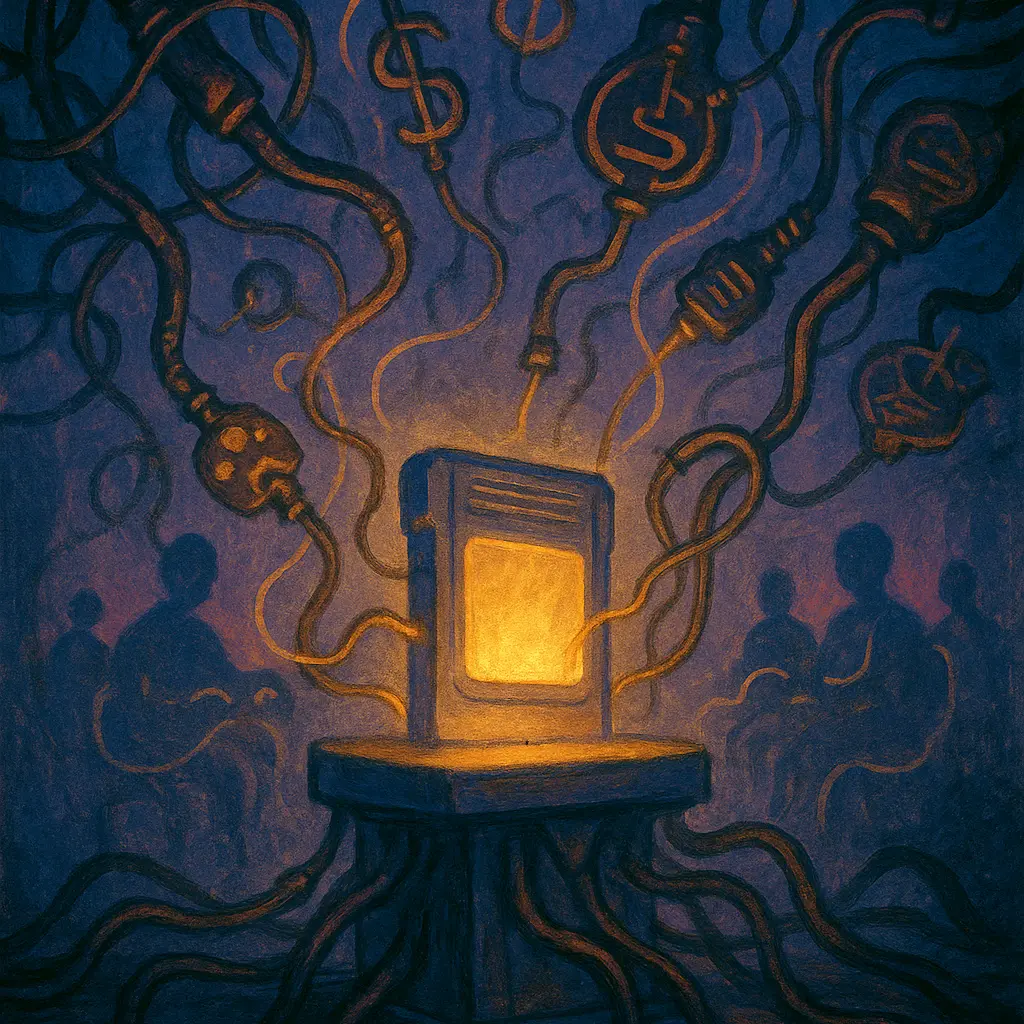
An abstract painting of a glowing old-fashioned game cartridge on a pedestal, surrounded by dark mechanical cables that siphon light from it. The cables form faint dollar symbols and stretch into shadowy figures of players in the distance. The scene glows with melancholy blues and muted golds, symbolising how capitalism drains the soul of gaming while a small core of light still resists.

Once upon a time, a game came in a box, and that box contained everything.
You bought it, you owned it, and you played it. That was the deal.
There were no online check-ins, no missing features, no “coming soon” updates, only a complete world waiting to be explored.

There was a quiet purity in that exchange.
A developer built something they were proud of.
A player paid for it because they trusted that pride.
That was the unspoken pact between creator and audience: a transaction built on honesty.

Games like Super Mario Bros. (1985) and The Legend of Zelda (1986) embodied that purity. A single cartridge held an entire universe. Doom (1993) refined the model through shareware, offering the first episode for free and the rest for purchase. It was transparent, simple, and fair. The product was complete. The deal was clear.


The first cracks in the pact

Then came the era of the expansion pack. At first, it felt generous. Players bought Warcraft II: Beyond the Dark Portal (1996) or Age of Empires: The Rise of Rome (1998) because they wanted more of something they already loved.
These were true expansions, built from creative overflow rather than withheld content.

Diablo II: Lord of Destruction (2001) remains one of the best examples, adding new classes and an entire story act. Yet this was also when the idea of the “complete” game began to fade.

Not maliciously, at first.
But the seed was planted: perhaps a game could be split, extended, resold, and repackaged.


The patch era and the illusion of care

When players first connected online, games began to live beyond the disc or cartridge.
Developers could now release updates and bug fixes directly to players. It seemed like progress.

Quake (1996) pioneered downloadable updates. Half-Life (1998) and Morrowind (2002) made patches a normal part of gaming life. Initially, this felt like a gesture of goodwill. Developers could fix mistakes, refine balance, and reward loyalty.

But convenience soon became a crutch.
By the late 2000s, games were shipping half-finished, depending on “Day One Patches” to make them playable.
Entire studios began treating release as the start of development rather than the end.

Final Fantasy XIV (2010) became a symbol of this shift. Its launch was so disastrous that it had to be destroyed and rebuilt as A Realm Reborn (2013). The resurrection was impressive, but it also marked the death of the finished game. A new age had arrived, one where imperfection was no longer a failure but a business model.


DLC, season passes, and the death of completeness

As the 2000s progressed, expansion packs evolved into downloadable content. What began as a technological innovation quickly became a financial strategy.

When The Elder Scrolls IV: Oblivion (2006) sold its infamous horse armour cosmetic, it became a joke among players but a revelation for publishers.
Suddenly, small additions could generate massive revenue.

Call of Duty 4: Modern Warfare (2007) built an empire on paid map packs. Mass Effect 2 (2010) sold essential story chapters separately, slicing its own narrative for profit.

Then came the season pass, which allowed publishers to monetise the future itself.
You were no longer buying content. You were pre-ordering potential.

Assassin’s Creed III (2012) and Mortal Kombat X (2015) made it normal to pay in advance for unseen expansions.
In Destiny (2014), the model reached full maturity. Content cycled endlessly, and earlier material was quietly retired.

The player was no longer buying a work of art. They were buying a share in an ongoing experiment.


The age of tiered access: standard versus deluxe

Next came the illusion of choice.

Every major release now arrives with multiple editions: Standard, Deluxe, Gold, Ultimate.
The Standard Edition, once the full experience, has become the stripped-down minimum.
The Deluxe Edition rarely offers genuine creative content. It usually grants early access or small digital trinkets instead.

Hogwarts Legacy (2023) gave Deluxe buyers a three-day head start. Starfield (2023) did the same. Call of Duty: Modern Warfare II (2022) tiered its editions so precisely that the system resembled an airline pricing chart.

The tactic is subtle but powerful.
It monetises excitement itself.
It divides players not by passion or skill, but by spending power.

We no longer unlock secrets through play.
We unlock content through payment.
The so-called Deluxe Edition does not make the game better. It simply makes everyone else feel lesser.


The live service era: eternal beta

By the late 2010s, games were no longer seen as products but as platforms.

Destiny (2014) led the charge. GTA Online turned it into an empire. Fortnite perfected it.
The ideal of the complete, single experience was replaced with the promise of constant evolution.

Players were told they were joining a “living world.”
In truth, they were joining an economy.

Every week brought new skins, new currencies, and new reasons to log in.
Games stopped being designed to end. They were designed to sustain.

The player became both the consumer and the unpaid quality tester.
And when the profit dried up, the world simply died.
Anthem (2019) and Marvel’s Avengers (2020) stand as cautionary tales, both collapsing within a few years.

The eternal game is not immortal. It is undead, kept alive not by creativity but by consumption.


Gacha and the monetisation of desire

When endless updates stopped being enough, the industry discovered something even more lucrative: human psychology.

Gacha systems turned the act of wanting into a business.
You no longer bought the content itself, but the hope of obtaining it.

Fate/Grand Order (2015) and Genshin Impact (2020) perfected this model, disguising gambling with beautiful music and artistry. Each pull felt like a small miracle, a spark of dopamine wrapped in digital silk.

Diablo Immortal (2022) pushed the formula to absurdity, with some estimates suggesting it could cost over $100,000 to fully upgrade a single character.
And now Infinity Nikki (2024) walks the same line, visually stunning yet built on the same manipulative architecture.

The slot machine no longer hides in the casino. It lives in your home, wearing a smile.


The counterexamples: those who still honour the pact

Yet not all is lost.
Some creators still believe in the original exchange between maker and player.

Hollow Knight (2017), Celeste (2018), Stardew Valley (2016), Undertale (2015), Hades (2020), and Disco Elysium (2019) all prove that integrity still sells.

These games are complete works, designed to be finished and remembered.
They ask for your time, not your loyalty.
They offer experiences that stay with you long after the credits roll.

You pay once.
You play forever.
That is what honesty looks like.


The real freedom

Paying upfront is not a barrier. It is a declaration of honesty.
When I buy a game, I am saying: I value your art.
When the developer accepts that, they are saying: I value your trust.

That exchange is the foundation of real freedom.
Because true freedom in gaming is not the ability to start for free.
It is the ability to finish without being owned.

Games once invited us to play.
Now they beg us to stay.
I miss when the only thing a game wanted from me was my time.

Charity Manifesto

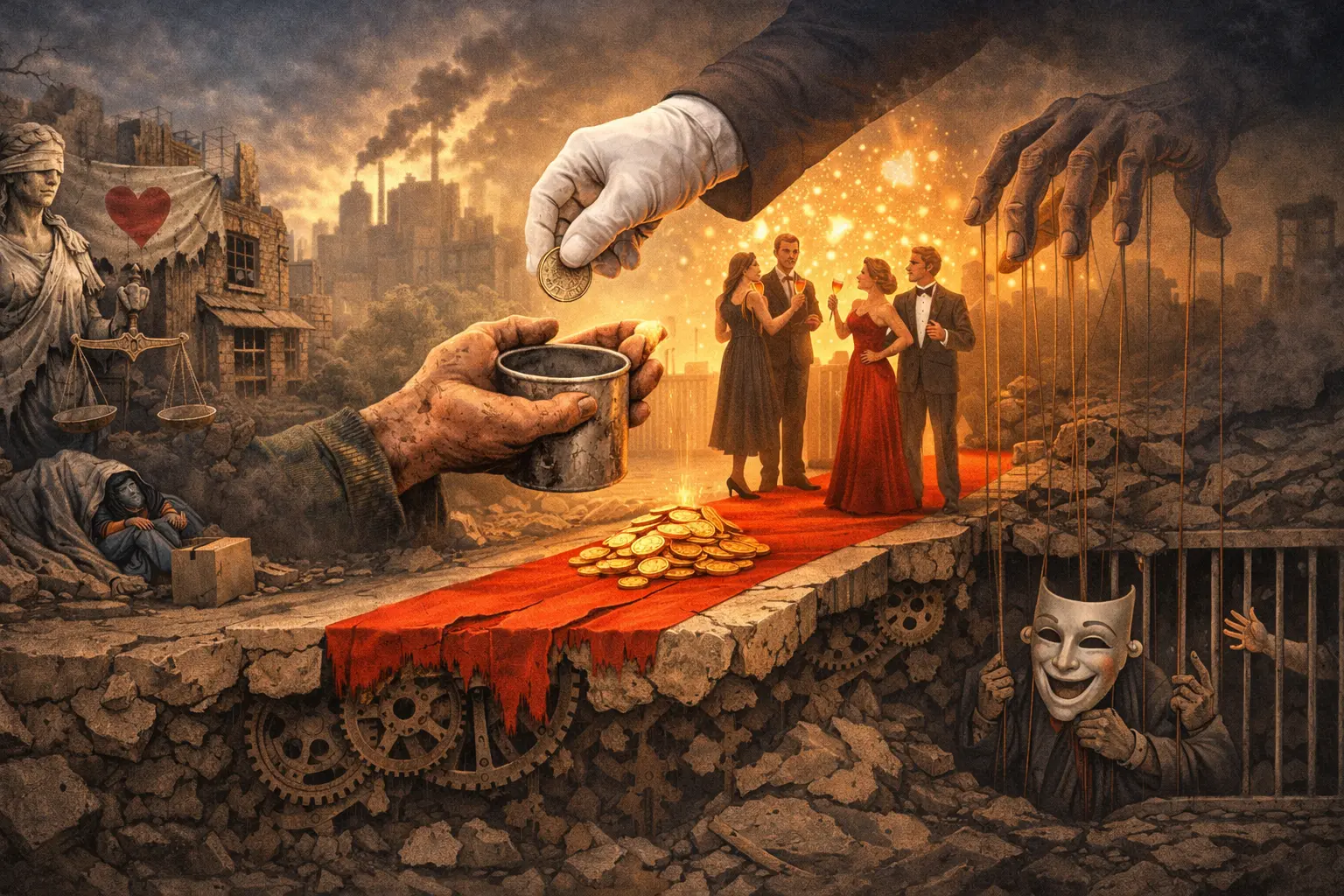
A wide, symbolic illustration showing a split environment: on the left, a ruined urban setting with a damaged statue holding broken scales beside a person sitting on rubble; in the centre, worn hands hold out a metal cup as a gloved hand drops a coin above a cracked surface; on the right, a red carpet leads to a group of well-dressed people holding drinks under warm light, with mechanical gears visible beneath the ground and a masked figure suspended by strings below.

I am ethically opposed to charity.

Charity shouldn’t have to exist. In a compassionate world, care would be woven into the fabric of daily life, not extracted as spectacle.

Charity is society’s way of appealing to the cruelty that lives in all of us, asking it to behave kindly for a moment, to purchase redemption in coins and signatures. It is the illusion of goodness performed atop the ruins of neglect.

The need for charity is proof of systemic failure, not moral success. Every donation is a confession that our structures were designed without empathy.

If kindness were inherent, there would be no charities.
If fairness were real, there would be no causes.
If love were built into law, there would be no campaigns.

Until then, charity will remain the prettiest mask cruelty ever wore.

From Announcement to Manipulation: The Evolution of Advertising

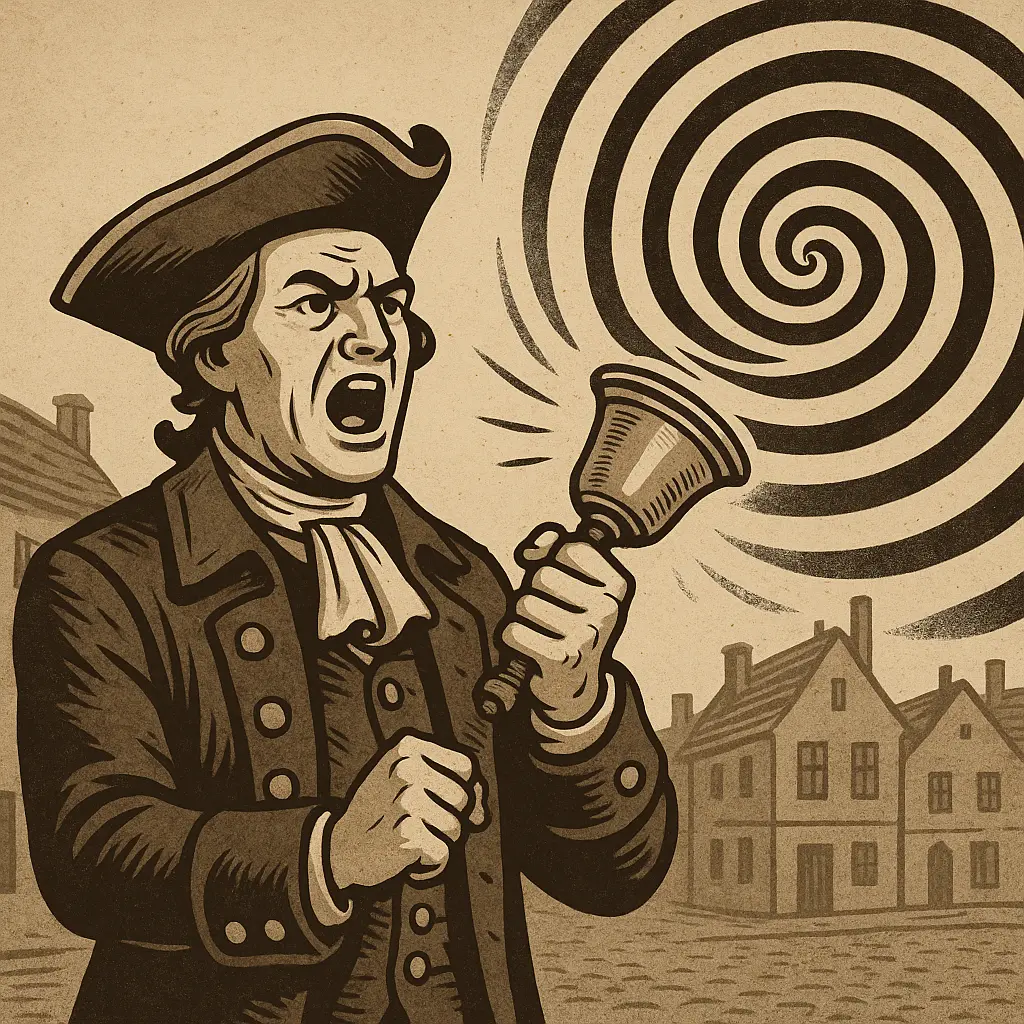
A sepia-toned illustration of a town crier ringing a bell that emits hypnotic spirals, symbolising how early advertising evolved from public announcements into psychological influence.

I grew up in the 1980s, when television advertising still had a kind of charm. I remember the jingles, the mascots, the catchy slogans that managed to lodge themselves in your head for weeks. Even as a child, I knew they were trying to sell me something, but at least they did it with some flair. They felt like part of the entertainment itself.

Something has changed since then. Advertising is no longer something that interrupts culture; it has become the culture. Every space, every platform, and every idle moment now feels colonised by a hidden intention to sell. To understand how we arrived here, it is worth tracing how advertising has evolved from a loud street-side performance to an invisible system of persuasion that shapes our sense of self.

The Loud Salesmen

The earliest form of advertising was brutally honest. Ancient merchants shouted in markets, painted signs on walls, or hung banners above their stalls. When mass printing emerged in the 1800s, advertising became more widespread but no less direct. Newspapers were filled with promises of miracle tonics, soap that made you beautiful, and pills that cured everything from toothache to heartbreak. These were primitive, manipulative, and often fraudulent, but at least you knew what you were looking at. Someone was selling, and you were free to walk away.

The Mad Men Era

The 20th century transformed advertising into an art form. With the rise of radio and television, storytelling became the new language of persuasion. Campaigns no longer sold only a product; they sold an identity, a dream, a way of life. The Coca-Cola Santa Claus, the Marlboro Man, and the perfect suburban family all came from the same creative laboratories.

This was the era of the “ad man,” immortalised in cultural artefacts like Bewitched or later Mad Men. Advertising was portrayed as a glamorous profession. These were the people who didn’t just reflect society; they helped build it. The line between commerce and culture began to blur.

The 80s and 90s: Ads as Entertainment

By the 1980s and 1990s, advertising had taken on a theatrical quality. It was playful, colourful, and memorable. Mascots like Tony the Tiger, slogans like “Just Do It,” and tunes you could hum all day made adverts feel like short pieces of performance art. They were still manipulative, of course, but they wore their intentions openly.

Looking back, perhaps this is why many people from my generation recall old ads with a strange fondness. They were transparent. They worked hard to win your attention rather than simply steal it.

The Weird and Annoying Years

Somewhere in the late 1990s and early 2000s, advertising lost its balance. It became surreal, loud, and deliberately irritating. Think of Crazy Frog, the Budweiser frogs, or the unnerving Burger King mascot. Annoyance became a marketing tool. If something got stuck in your head, even out of frustration, the job was done.

This was the period when “going viral” became a goal before social media even existed. The absurdity was the message.

The Internet Disruption

When the internet arrived, advertising was clumsy but eager. Early banner ads were brightly coloured, flashing boxes that you could easily ignore. But the industry adapted quickly. As data collection improved, advertising became personal. It stopped shouting to the crowd and began whispering to the individual.

This marked the rise of surveillance capitalism. Every click, search, and pause became a data point. You were no longer a passive audience member; you were a psychological profile to be targeted. The salesman had followed you home and was now reading your mind.

The Age of Disguise

By the 2010s, advertising learned to hide in plain sight. Sponsored posts, influencer endorsements, and “native” content made it difficult to tell where information ended and manipulation began. Search engines, news sites, and social platforms quietly filled with ads disguised as genuine results.

South Park once parodied this perfectly with its storyline about intelligent ads (Season 19). It was satire, but it was also prophecy. Today, even image searches are littered with sponsored results. The ad no longer wants to be seen; it wants to be believed.

Culture as Commerce

This is the stage we now find ourselves in. Advertising has stopped orbiting culture and instead absorbed it completely. Everything is for sale, including identity itself.

People no longer ask “What do I like?” but “What do I subscribe to?” We define ourselves through brands and platforms: Apple or Android, Nike or Adidas, Netflix or Disney Plus. Even rebellion is commercialised. You can buy “authenticity,” but only if you can afford the price tag.

Advertising has achieved what no political ideology ever could. It has replaced meaning with marketing and turned culture into a series of brand alignments.

Conclusion: From Persuasion to Colonisation

Advertising began as a voice shouting in the marketplace. It evolved into storytelling, then spectacle, then infiltration. Today it is everywhere and nowhere, woven into the fabric of our reality.

The change that occurred over the last century is more than technological. It is philosophical. Advertising no longer sells products; it sells identities. It shapes our desires before we even know we have them.

Perhaps that is why so many of us feel weary. We are not just tired of being sold to; we are tired of living inside the sale itself.