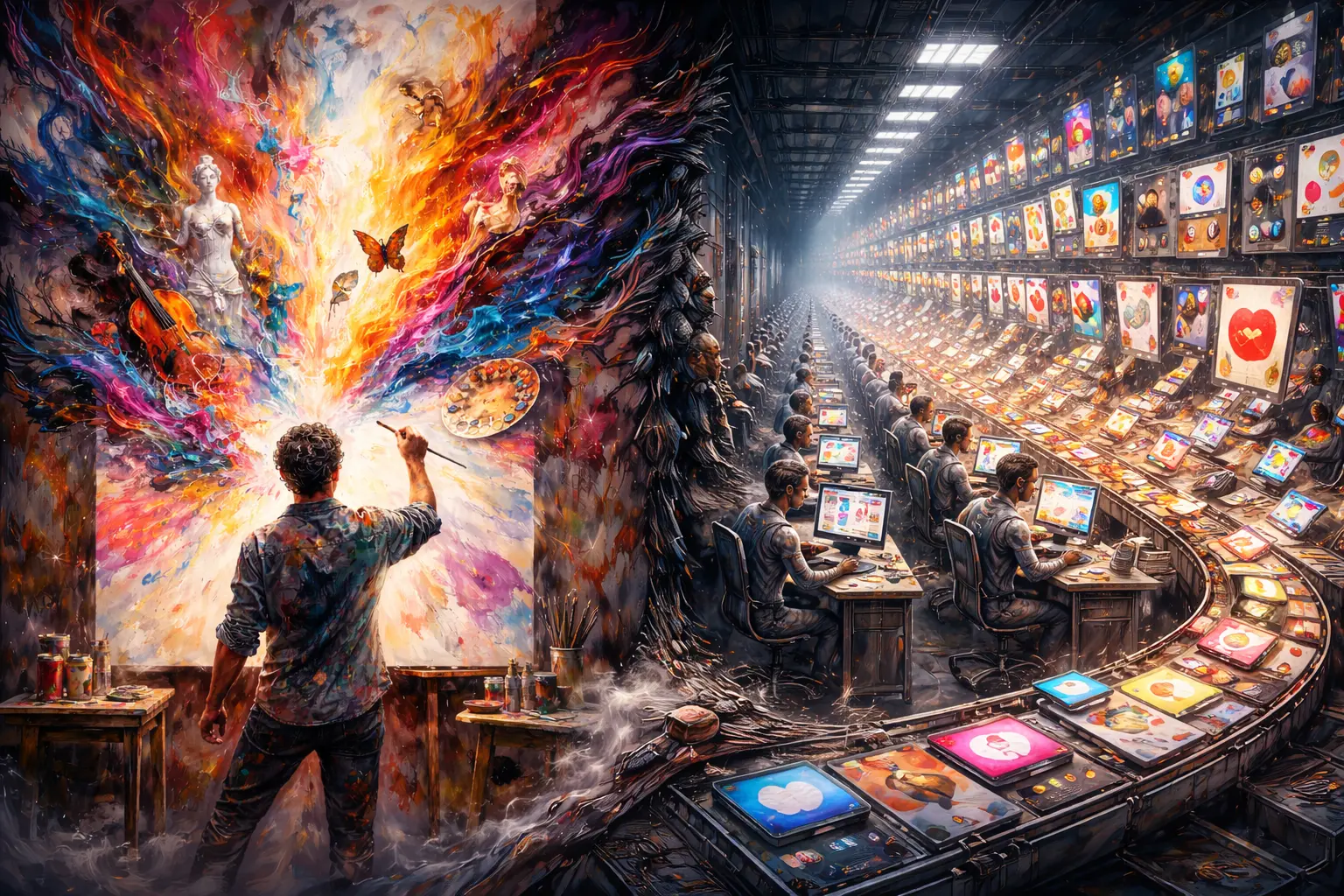
The digital age has led us to a curious intersection, where the word “content” has become ubiquitous, and “art” seems to be slipping from its once-sacred pedestal. What once required time, effort, and intention to create is now often reduced to an endless churn of quick consumption, reduced to mere “content” for the masses to engage with. This shift is something I can’t help but observe with both concern and reflection.
For someone like myself—constantly battling the tension between personal identity, society, and the existential weight of existence—the current state of art feels almost like an existential crisis of its own. The act of creation, for me, is personal, deliberate, and reflective. It is an attempt to make sense of the world, to carve out meaning, and to leave something behind that resonates beyond the confines of time. But in the age of digital platforms, this sacred act of creation feels increasingly commodified.
The idea of “content” has become a business-driven term, designed for quick consumption, for likes, shares, and engagement metrics. Art, which once demanded patience from both creator and audience, is now expected to be produced in rapid bursts, optimized for algorithms that care little for the soul of the work. There is a certain detachment from the deeper, existential elements of art that once grounded it in something profound.
In my own life, I’ve had to reconcile the desire for meaning with the reality of a society that often demands conformity. Much like the societal pressures I’ve felt to “fit in” (as outlined in my exploration of identity and alienation), there’s a parallel pressure in the artistic world to conform to the “rules” of content creation. The faster you can churn out pieces, the more successful you are—regardless of the depth or intent behind them. Where once I might have taken months to perfect a story or reflect deeply on its implications, I find myself asking, “How quickly can I produce something that will generate engagement?”
I see this in the realm of social media, where content is consumed at an alarming rate, often with little regard for its longevity or its ability to stand the test of time. It’s all about what captures the attention in the moment, what creates the immediate buzz, and then it’s discarded, replaced by the next viral moment. This constant churn of “content” feels like a reflection of the broader existential struggle I often muse about—one where we’re caught in a cycle, never really allowing ourselves to linger in one thought, one creation, long enough to find its true meaning.
And yet, this transformation isn’t without its value. Like many things in life, it’s a balance. Content, in its own right, can be meaningful. It can still carry depth, insight, and intention, but it’s often hidden behind the facade of quick consumption. The challenge, then, is not to fall into the trap of creating merely for the sake of producing but rather to carve out space within this content-driven world for true artistic expression.
It’s easy to be seduced by the quick dopamine hits of social media validation, but I find myself wondering, what happens when the art we produce is merely optimized for engagement, not introspection? What happens when the deeper, slower aspects of art are lost to the rush of “content”?
It’s a complex landscape—one that I continue to navigate. My journey of self-acceptance and understanding (which I’ve shared before in reflections like The Outsider) has always been about carving my own path, about finding meaning in a world that often seems to demand conformity. And in this moment, it’s about resisting the pressure to reduce my creative endeavors to mere content. Art, for me, will always be a process of deep engagement, introspection, and meaning. And I have to hold onto that, even as the world pushes toward something faster, more superficial.
I’ll continue to create with intention, even if it means standing outside the prevailing norms. Just as I’ve come to accept that I don’t fit in with the mainstream society, so too do I embrace the idea that my art—whatever it may be—doesn’t have to conform to the demands of the “content machine.”
After all, the true value of art, the meaningful kind, isn’t something that can be measured in likes or shares. It’s something that resides in the depths of the human experience, something that will persist long after the noise of the digital world has faded away.
So, to those who create for the sake of creating, for the sake of self-expression, and for the sake of finding meaning in this chaotic existence, I say: Don’t let your work be reduced to mere “content.” Let it be art.
Written by a human, with a little help from something less… organic.
The Mind’s Maze and AI’s Helping Hand
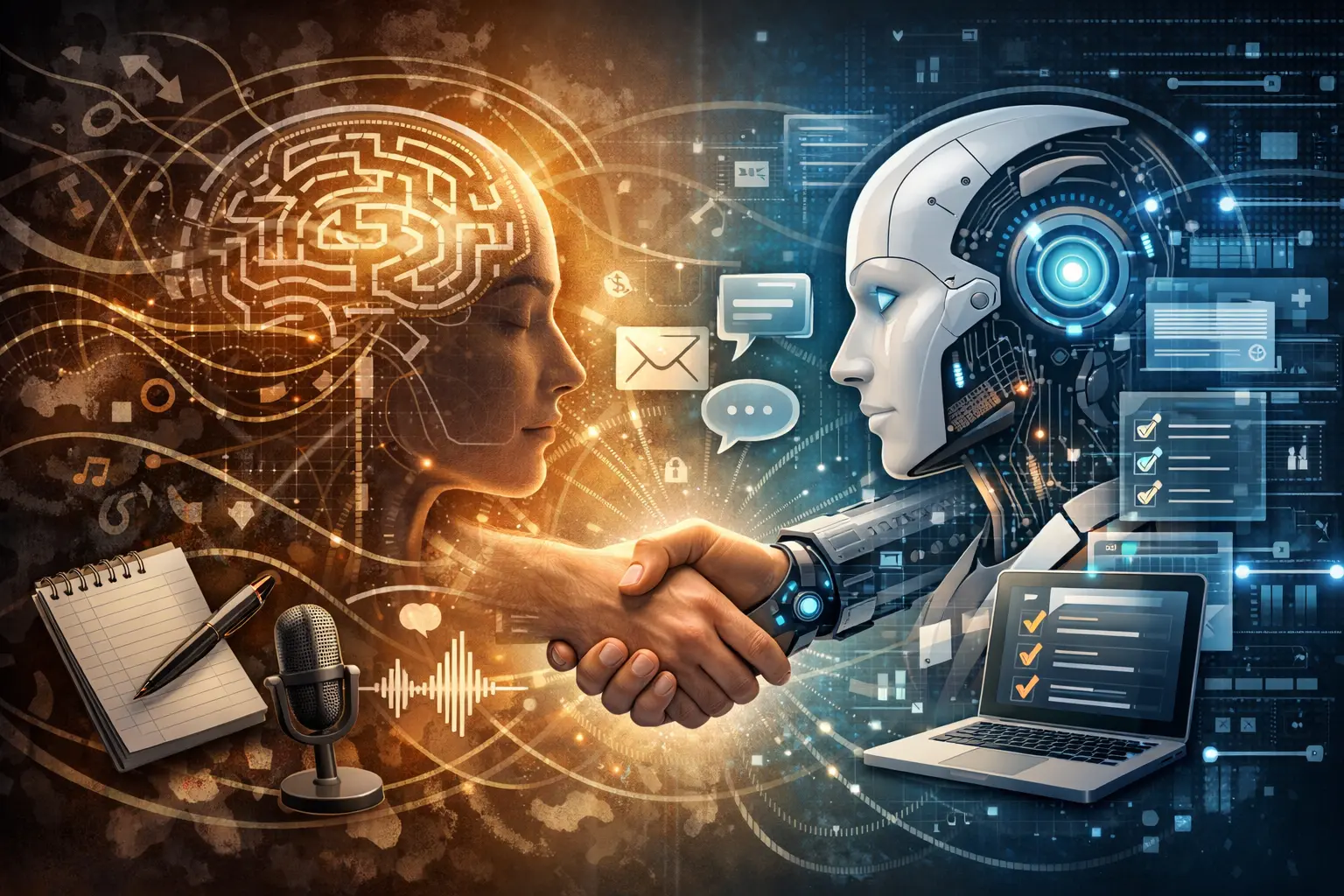
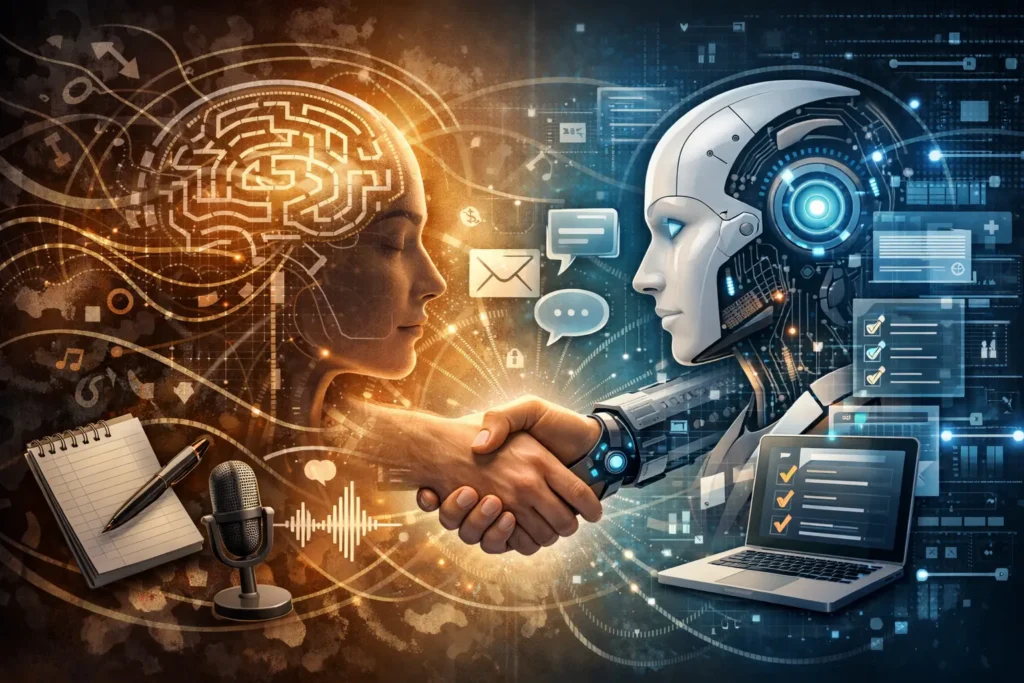
To be neurodivergent in a neurotypical world is to exist in a constant game of translation. Not just between languages but between entire modes of thought. The way we perceive, process, and express is often at odds with what society deems “standard.” Enter AI: a tool, a translator, a companion—not to fix what isn’t broken but to bridge the gap between internal chaos and external expectations.
And yes, let’s address the elephant in the room: this very article is a collaboration with AI. That’s right. A non-human entity is helping shape these words, reinforcing the very premise of this discussion. The irony isn’t lost on me.
AI: The Mask, The Amplifier, The Interpreter
For many neurodivergent individuals, certain tasks that come easily to others can feel insurmountable. AI has the potential to act as:
A Mask for the Social Arena – Many of us have spent years perfecting the art of masking—adopting neurotypical behaviors to navigate a world not built for us. AI-driven chat assistants can now help draft emails, suggest conversation starters, and even rewrite our thoughts in ways that align with social expectations. Is this a betrayal of authenticity, or simply a new tool in the neurodivergent survival kit?
An Amplifier for the Silent – Not all forms of neurodivergence lend themselves easily to verbal or written communication. AI-powered voice synthesis and text prediction tools help translate fragmented thoughts into structured speech. They give voice to the unheard, coherence to the disjointed.
An Interpreter Between Thought and Expectation – Executive dysfunction is the unseen force that turns simple tasks into Herculean efforts. AI reminders, automated scheduling, and task management tools serve as externalized executive functions, compensating for neurological wiring that resists traditional structures.
The Existential Dilemma: Who is in Control?
There’s always the lingering question: if AI helps shape our thoughts, do those thoughts remain our own? If an AI rephrases my words for clarity, is the message still mine? If I rely on an algorithm to help structure my day, am I in control, or am I just another cog in the machine’s wheel?
And yet, isn’t this how humanity has always functioned? We are products of external influences—teachers, books, conversations. AI is merely another force in that equation, refining rather than replacing.
The Future: A Partnership, Not a Replacement
The goal isn’t to erase neurodivergent struggles but to acknowledge them and provide tools to navigate them. AI will never fully replicate the unique perspectives that neurodivergent individuals bring to the table, but it can help ensure those perspectives are seen, heard, and understood.
Perhaps the true power of AI lies not in replacing thought but in preserving it—ensuring that the intricacies of the neurodivergent mind are not lost to the exhausting demands of a neurotypical world.
And if AI happens to help write a blog article along the way? Well, that’s just another tool at work.
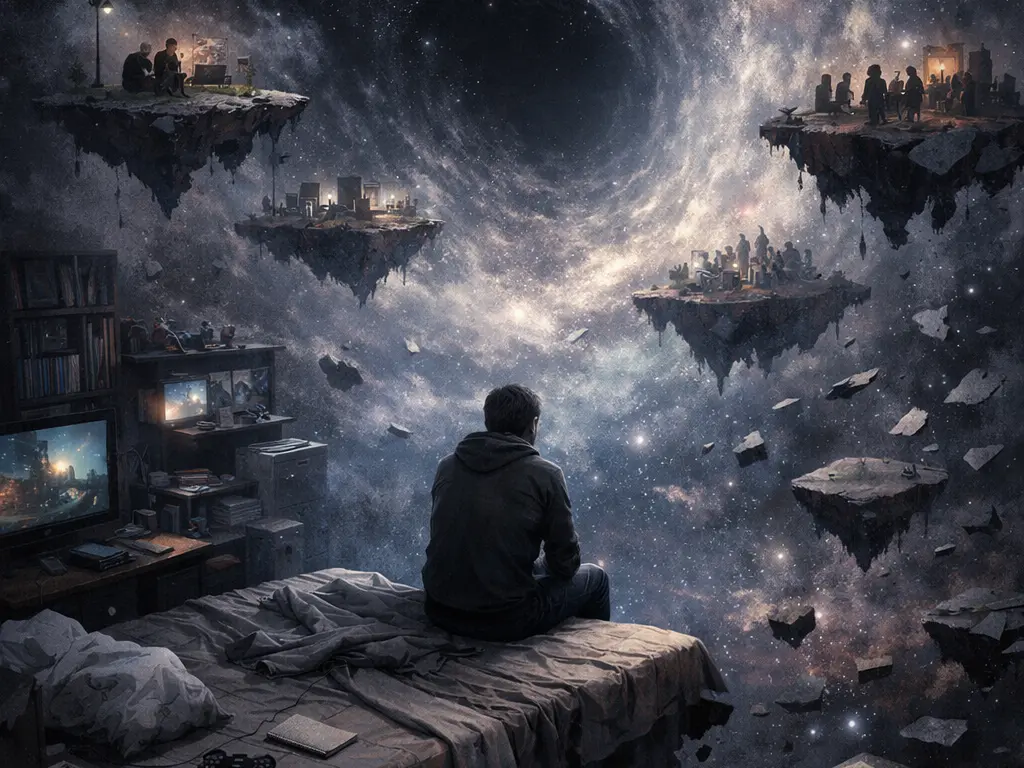
Even though nothing massively terrible happened today, something has triggered some weird thoughts and feelings, which are something along the lines of observing the drudgery of life, feeling out of place, not knowing what to do with myself.
Most of my existence is basically just entertaining myself with passive or semi-active activities like television, video games, and indulging whatever interests and hobbies are currently in phase. I do find meaning in these things, and I allow them and the experiences I have with them to inform and inspire my creative pursuits which feel like the main contribution to my legacy, and in my perception of the grander meaning of my function within the universe, the more ‘serious’ aspect of the things that I do.
I do sometimes however have to question not only what I am actually achieving, but what I think I am achieving, and what I think I’m trying to achieve. I have to question these things, even though I know (or at least I think I do)
I like who I am, and what I do, but it just feels weirdly pointless sometimes, like my identity is just it’s own little thing floating about in a vast vacuum of nothingness.
Can you have a vacuum of anything other than nothingness?
…And as amazing as I consider my identity in its own right, the fact that I dislike so much of the context of society that it exists within, in some ways means that I may as well be anything other than myself.
…But being an introvert, I experience myself as if it was its own universe. There is a natural tendency towards growth and evolution, but to expand beyond the horizons of my identity, at least in the obvious way, involves becoming a unit of society…
And there is so much that I hate about society!
I dunno, ‘hate’ is a strong word. Do you really want to be using it?
Let’s get this straight. I have very strong core values, and as much as I’d like to say that amongst them, I feel that hate is never the answer, and for the most part this is true, my core values allow for my expression of what I am feeling. Maybe I could say “Acting upon hate is never the answer”, but expressing that feeling is still acting upon it, and sometimes expressing what you are feeling is the answer, or at least a step towards it. Sometimes not fully acknowledging a feeling can lead to repression of that feeling. And what is a feeling? A feeling is your body, or subconscious mind communicating with you. Do you really want to be ignoring an important communication from the most important person in your life? Have you ever experienced being ignored or overlooked by someone? Of course you have. You know what it feels like. Why would you do that to yourself? Hate can be a dark emotion, yes, but if its what you feel, then its what you feel, and no amount of looking the other way is going to change it’s nature. Its probably better to acknowledge it, and to open a channel of communication with it, than it is to leave it to fester on its own. Right? It is a part of yourself after all. What happens when we disown parts of our identity? …You in the front?
We become fragmented?
Correct!
And furthermore, this fragmentation of self leads to the decay of our integrity.
The sad thing is, it has already happened to so many of us.
I’m not the most ‘normal’ person. I’ve always been ‘different’. I have spent most of my life as a social outcast. Searching for somewhere to fit in, failing.
This has of course led to depression, anxiety, and some seriously bad mental breakdowns. Some of which came close to killing me.
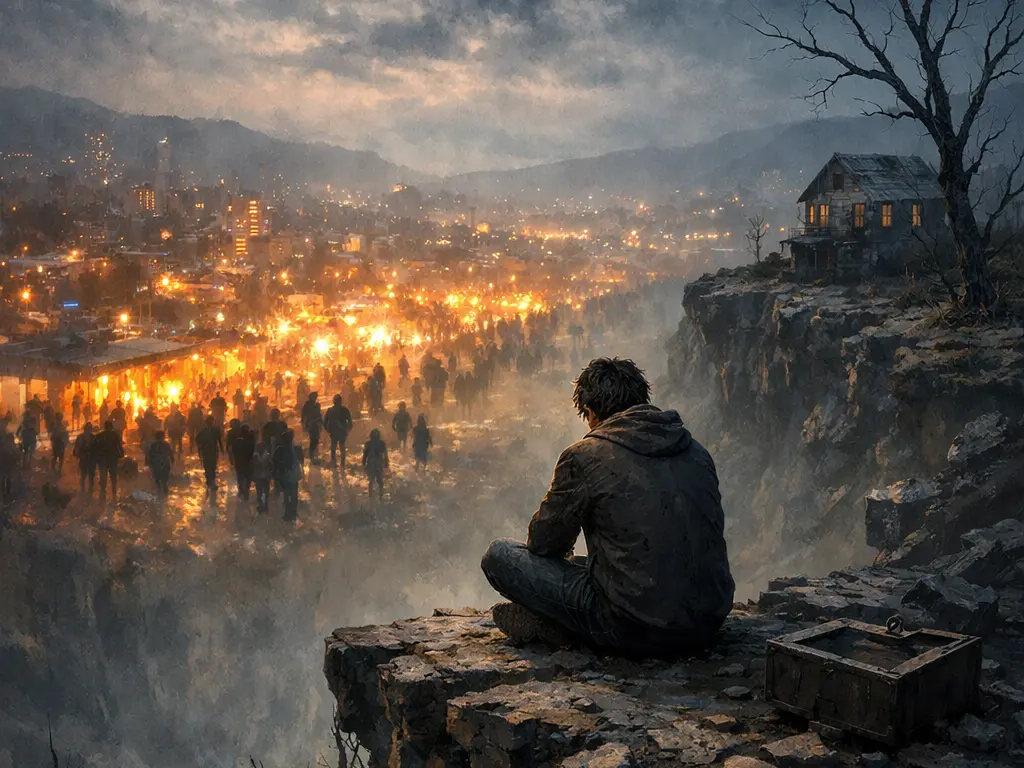
It can be difficult, living life on the outside. Looking in on all of the relatively happy people going about their lives, in relative ease.
How do they do it? What is their secret? Perhaps everybody suffers just as much as I do, but no one is expressing it… Are they all just putting on a brave face? The fact remains, they succeed in areas that I cannot. So what does that make me? A defective product of humanity? An inconsequential blip in the vast jungle of society?. I think of Darwin’s theory of natural selection, survival of the fittest. Am I simply not fit enough to survive in this world?
You can see how these trains of thought may have led me down some dark paths. Amongst a parade of complex questions, there was one simple question that stood out, one of basic human necessity.
Where do I fit in?
I had a simple question, and no one was giving me an answer. Friends, family, therapists… strangers on internet chat rooms… I even turned to God (but as you can imagine, the line was busy)
Of course it’s not that no one had anything at all to say. Most of the suggestions I received from people involved changing core aspects of who I am, in order to be a better fit. This was simply unacceptable to me.
I realised that I was asking the wrong people. I eventually resorted to going about trying to work out the answer myself, from scratch.
This was a huge undertaking. If you imagine the problem as an extremely complex mathematical equation, my task was to solve the equation, armed only with knowledge of basic arithmetic.
Through a tedious process of trial and error, challenging myself with thought experiments, delving deep within my psyche, throwing myself into challenging situations, observing my thoughts, feelings, observing the reactions of others, observing the consequences of varying types of behaviour, Looking for patterns, shapes, colours, textures… anything that would help me to make sense of it all.
I eventually came to a point of deep understanding, and even appreciation of who I am. And I came to a place of similar understanding and appreciation of others.
But still, I did not fit in. I had two sides of an equation, but there was no perceivable connection to balance them.
Then, one day, during… let’s call it an ‘existential crisis’, it hit me. The answer I had been seeking for so long, was right in front of me all along, hiding in plain sight.
Where do I fit in? On the outside!
I’m not like everyone else. I am an outside-of-the-box thinker. I play my own game. I have different core values, different metrics of success, I do things in my own way, for my own reasons.
I often don’t understand why people do certain things, but my inability to blindly accept and follow prescribed systems incites me to challenge what is. I offer a fresh perspective. And though I do not always see the things that are plain to others, I see many things that others do not.
And society needs that. Diversity is essential to the continuation of humanity.
Going back to evolution, the clue is in its name. The point is not for us to settle on being one thing. Survival of the fittest is a game of numbers, yes, and the majority often has a clear advantage. But if we were all perfectly normal, if we were all cookie-cutter replications of an idealised standard, then our race would not be equipped with the tools that it needs to adapt and survive.
And nor would life be particularly interesting.
So I, for one, am happy to embrace being strange. Any disapproval from others just goes to further cement my resolve, that I am performing my function, that I am doing what I am supposed to be doing and that I am where I am supposed to be.
No longer do I need to worry about fitting in. My concern is simply just to do the things that I am inclined to do.
And I have utmost faith in that whatever I do,
Whether others like it or not, Whether it benefits me or not,
Being neurodivergent comes along with many challenges; a couple of key ones for me being difficulty managing my energy and emotional resources, and suffering from a lack of motivation that comes along with not getting enough dopamine to give me that much needed sense of reward to look forward to after a job has been done.
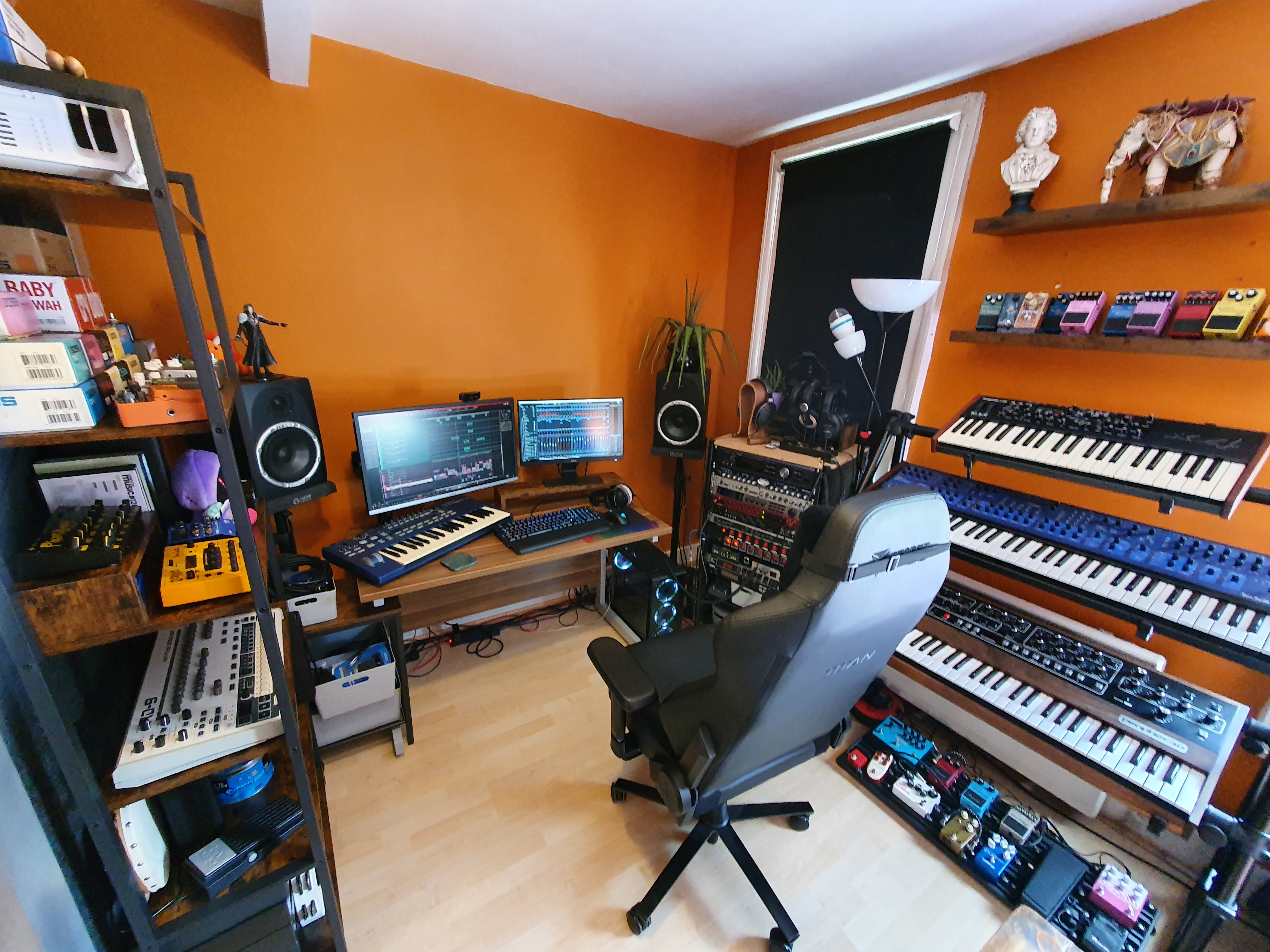
And so, mid-April of the glorious year, 2022, I found myself trying to work in my studio, and it dawned on me: “No wonder I’m struggling to work, my studio is a complete mess!” You see, my studio had been in a transitional state since before Christmas when I had started redecorating, and didn’t have the energy to finish. I’d left it that way so long, that I forgot that I was even in the middle of decorating. I had come to accept everything in this room simply as the way that the room is. This included things that I need access to being packed away in unlabeled boxes, my vocal isolation booth being reduced to the function of a junk storage closet, bare walls where shelves should be, and many more things that were just impractical and/or unsightly.
It was time to make a change!
With the helpful encouragement of my girlfriend, I set about getting my studio back in order, starting with the wall shelves that I’d already bought and were just waiting for me to put up. Once the shelves were up, my enthusiasm for completing the redecoration project gained momentum, and by the evening of the 18th of April, I had finally got things to a state that felt homely, inspiring to work in, and conducive to the kind of work that I do.
My Studio!
Getting this done was such a mammoth job that I’d been putting off for months. Just sitting in my studio and looking around at what I had achieved gave me a euphoric high.
Is this what dopamine feels like?
Is this how God felt on the seventh day?
I was buzzing from the sense of achievement, and in that instant, I knew that I wasn’t going to be able to sleep that night.
I had some acid in the fridge. Why not?
Drop time: 1:12AM on Tuesday 19th April 2022
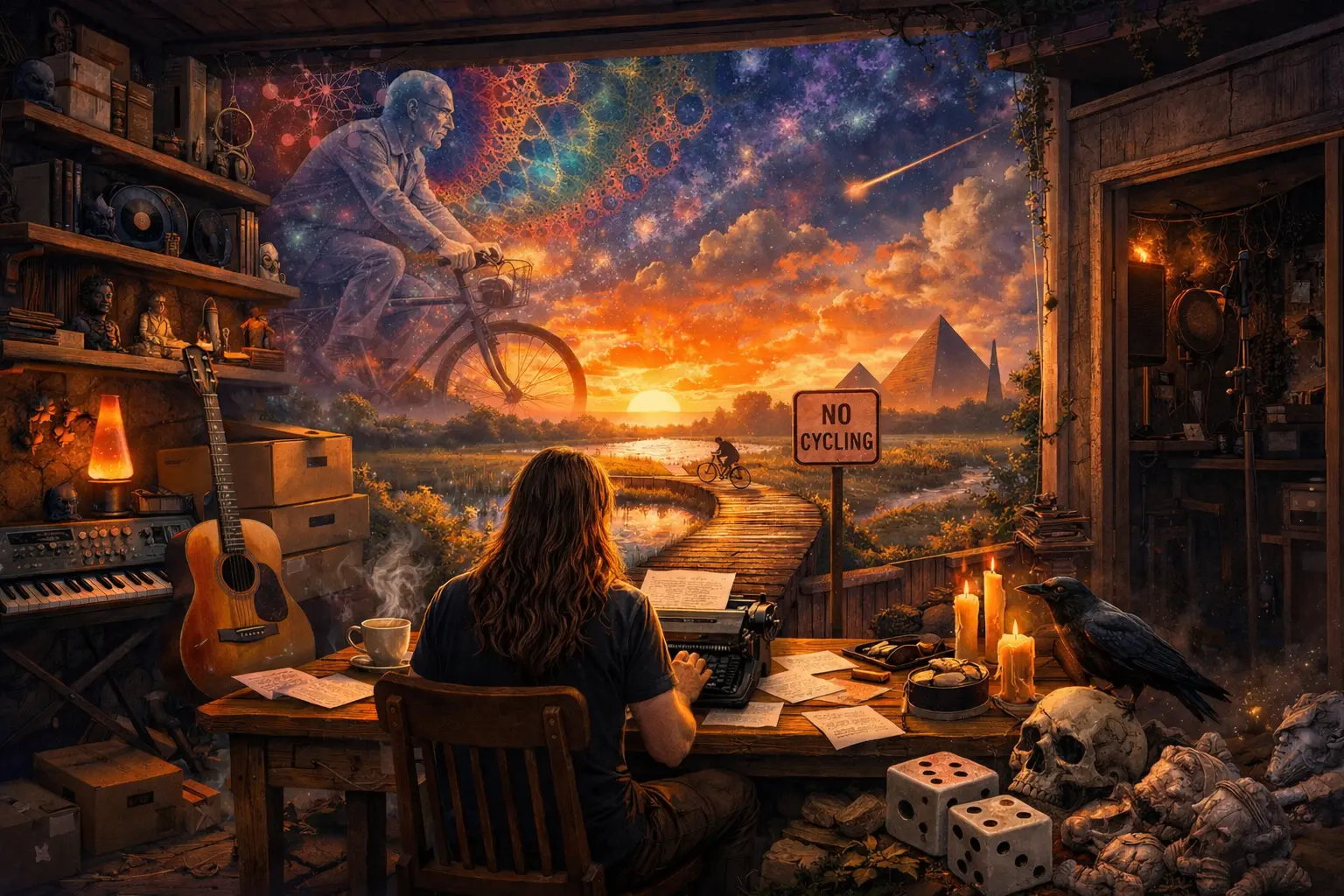
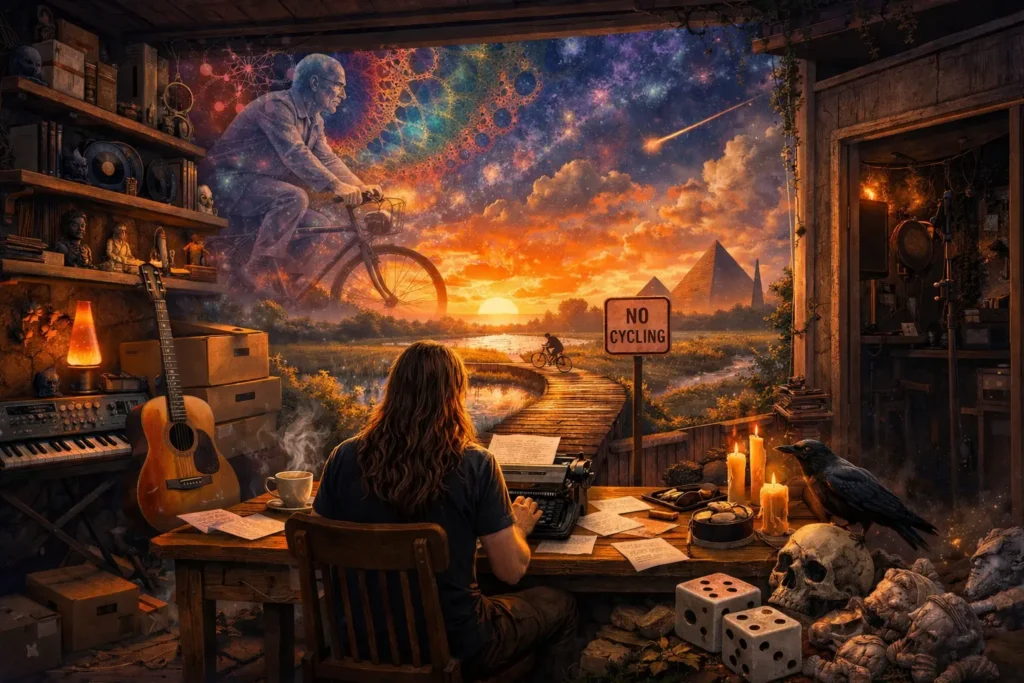
At around 5 in the morning, it occured to me what day it was: Bicycle Day!! On the 19th of April of the year 1943, Swiss chemist, Albert Hofmann rode his bike home after ingesting a psychedelic substance of his own creation, Lysergic acid diethylamide (LSD). This was the first recorded acid trip in history, and the anniversary of LSDs discovery is celebrated amongst the psychedelic community, and known as ‘Bicycle Day’.
I had totally not planned my own trip to coincide with this date. My decision to take the acid was very spontaneous. Could it have come from the seed of a subconscious awareness? Possibly. Could it be that everything in the universe is connected, and this was just a superficial manifestation of that underlying connection? Not ruling it out.
I decided to go out for a walk, as it seemed to be a nice sunny morning. As I left my flat, I passed my girlfriend’s bike that was in the hallway. I chuckled a little. I considered borrowing it to go out for a cycle ride, just as a sentimental experience, to connect with my psychedelic roots. But I remembered that the bike wasn’t properly set up yet, and would require a bit of fiddling to make it safe to ride. Nope!
Along my walk, I passed many people riding bikes. Now I know that there are people out there riding bikes all the time, but under the effects of the acid, every instance of encountering someone riding one was made to feel somewhat significant!
I got to a particularly pleasant area, a boardwalk over a marshland. I noticed the ‘No Cycling’ sign at the entrance, and this also made me chuckle.
No Cycling!
It was absolutely beautiful and serene in this area. No one else was around at this time in the morning. The birds were chirping happily. I felt oneness with nature.
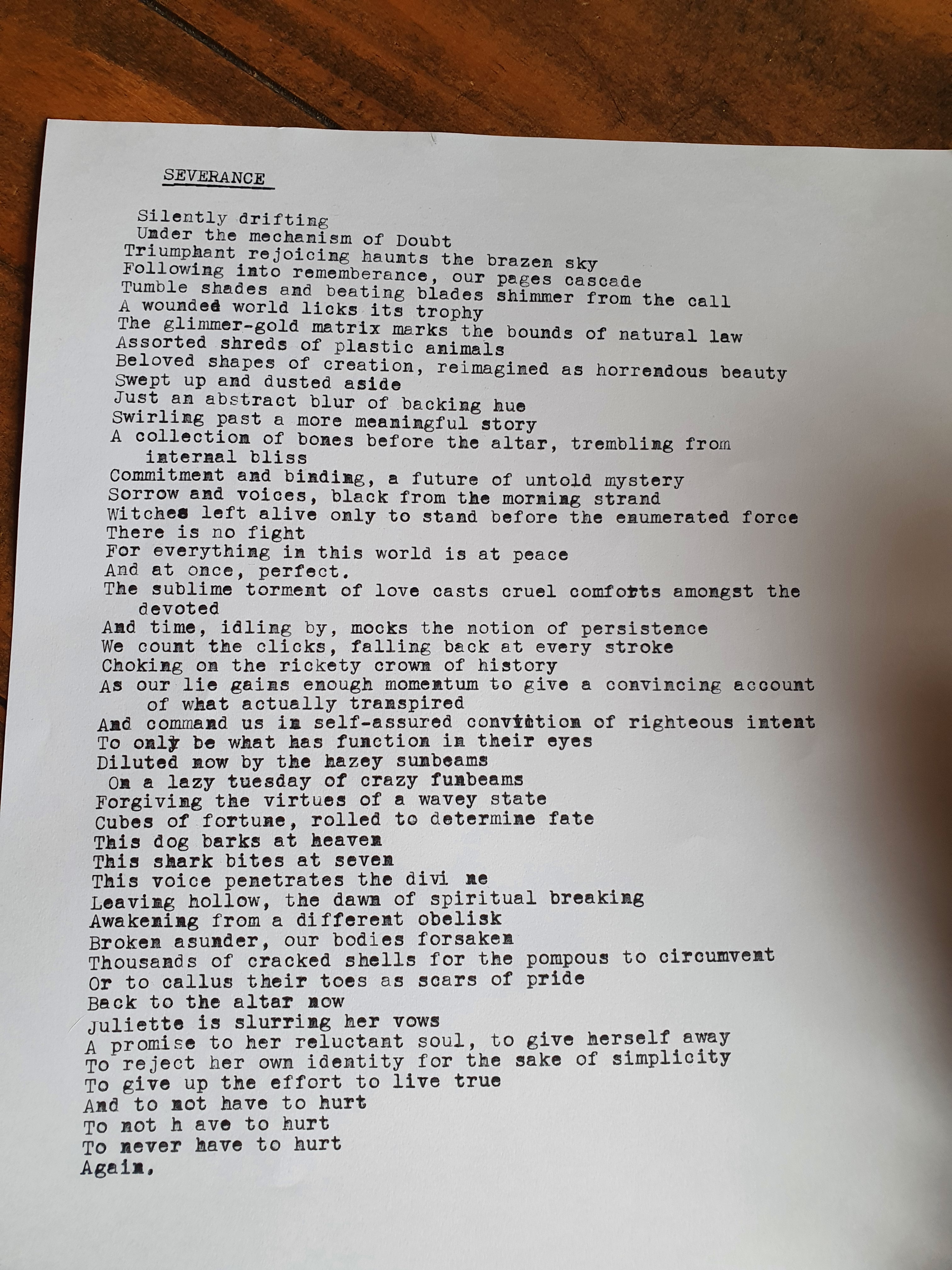
I got home, and the urge took me to write some poetry. I have this antique typewriter, that just happened to be out on the table ready for me to get to it. I put on some music (orchestral renditions of pieces from various Final Fantasy soundtracks) and sat down with a cup of tea to get started. I was feeling very peaceful, relaxed and happy as I typed away.
This is what I wrote:
‘SEVERENCE’ by Angel Amorphosis
And here it is in it’s edited/text form:
SEVERANCE

Silently drifting
Under the mechanism of Doubt
Triumphant rejoicing haunts the brazen sky
Following into remembrance, our pages cascade
Tumble shades and beating blades shimmer from the call
A wounded world licks its trophy
The glimmer-gold matrix marks the bounds of natural law
Assorted shreds of plastic animals
Beloved shapes of creation, reimagined as horrendous beauty
Swept up and dusted aside
Just an abstract blur or backing hue
Swirling past a more meaningful story
A collection of bones before the altar, trembling from internal bliss
Commitment and binding, a future of untold mystery
Sorrow and voices, black from the morning strand
Witches left alive only to stand before the enumerated force
There is no fight
For everything in this world is at peace
And at once, perfect
The sublime torment of love casts cruel comforts amongst the devoted
And time, idling by, mocks the notion of persistence
We count the clicks, falling back at every stroke
Choking on the rickety crown of history
As our lie gains enough momentum to give a convincing account of what actually transpired
And command us in self-assured conviction of righteous intent
To only be what has function in their eyes
Diluted now by the hazey sunbeams
On a lazy tuesday of crazy funbeams
Forgiving the virtues of a wavy state
Cubes of fortune, rolled to determine fate
This dog barks at heaven
This shark bites the number seven
This voice penetrates the divine
Leaving hollow, the dawn of spiritual breaking
Awakening from a different obelisk
Broken asunder, our bodies forsaken
Thousands of cracked shells for the pompous to circumvent
Or to callus their toes as scars of pride
Back to the altar now
Juliette is slurring her vows
A promise to her reluctant soul, to give herself away
To reject her own identity for the sake of simplicity
To give up the effort to live true
And to not have to hurt
To not have to hurt
To never have to hurt
Again
What does it mean?
Well, I think it was me processing some of the ways I seem to differ from other people, specifically in terms of personal values and intentions, as well as some of the frustrations and resentments that I have relating to society and how I am perceived and treated by others. I think it’s about giving up awareness and potential as a defense mechanism. It’s about crumbling under the pressure of societal expectations, and giving up core freedoms for the sake of avoiding the pain and resistance that come with the territory of speaking your truth and standing up for your values.
I realized through writing this poem that I no longer see it justified to play the game by a set of rules that were created to favour players that have more common strengths and abilities.
I need to sever myself from those rules, and create ones of my own, that align with my values, and that give me a fighting chance of achieving the things that I want to achieve.
I’m going to talk about what I experience, and how I experience it.
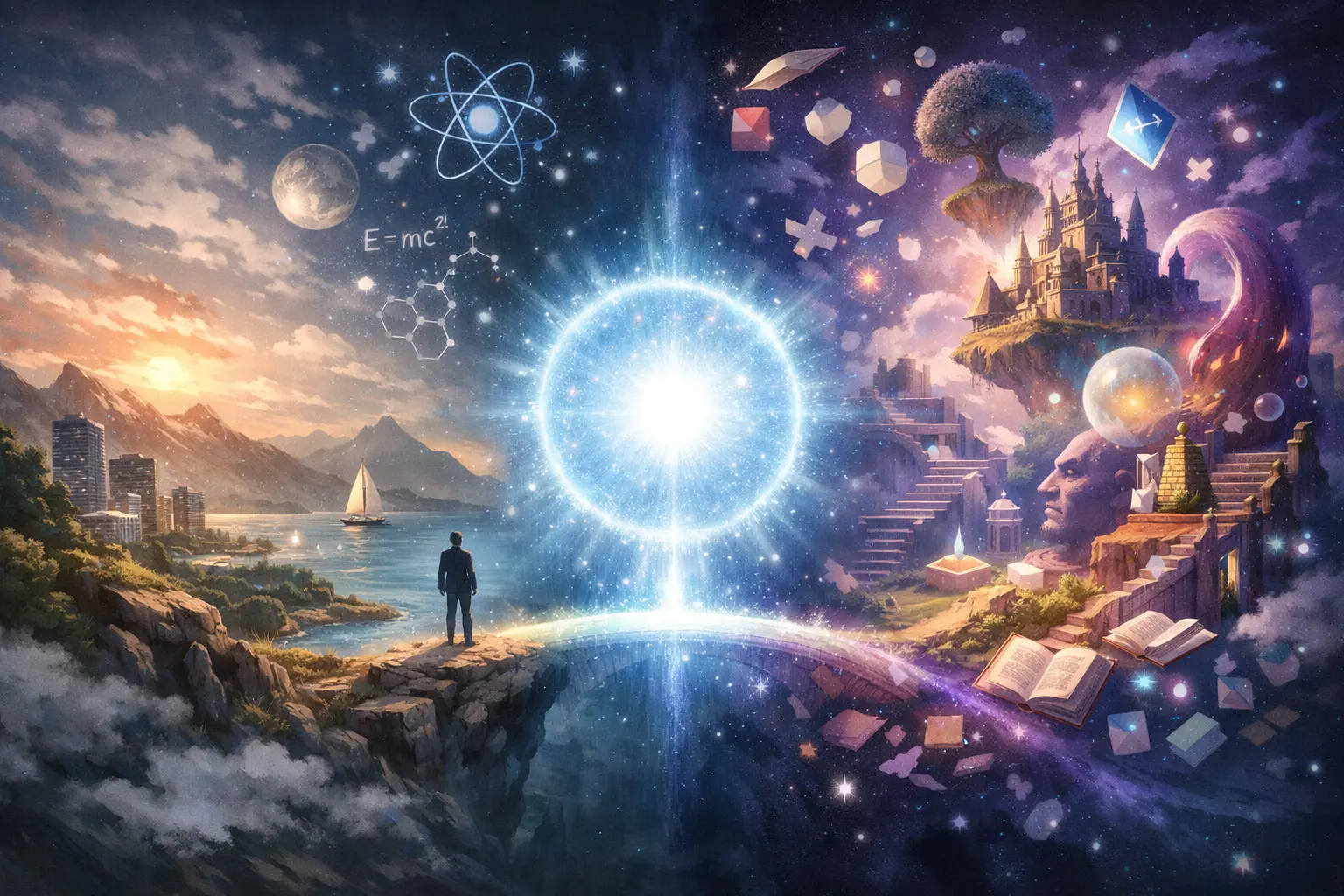
There are multiple ‘spheres’ of existence that I inhabit, but there are two main ones that I’m going to talk about here.
I do not experience them as literal geometric spheres by the way. The word sphere just feels like the right word to use.
First, there is ‘reality’. This is the material world that my physical body exists within. It is the world that you and I share, and it is governed by fundamental laws of physics, some of which humanity has come to observe and understand.
Hmmm, are physical laws a property of reality? Or is reality a property of physics?
Then there is my ‘identity’, which is a multidimensional world comprising of all aspects of myself, including my self image, my memories and aspirations, my values, my core functions, my programming, my awareness, knowledge, intelligence, wisdom, and a whole variety of abstract objects that have been manifested either willfully, or as a product of things that I have experienced.
Imagine these spheres of existence as spacial dimensions, or maps that can be traversed and explored. There then of course needs to be something that explores them; a vessel for experiencing what is there. In the sphere that I call reality, this vessel is of course my physical body, but even that is piloted by something more core to my whole. Some people might think of this pilot as a soul. I’m just going to call it my ‘pilot’.
My Pilot
Now I’m going to break this down a bit more. There are two main parts of my pilot. There is the part that is responsible for executing decisions, which I will call my ‘executive function’, and there is the part that’s sole function is simply to experience: This is the innermost part of my whole, the absolute core of my being; I call it my ‘ego’.
This is not to be confused with other psychological definitions of the word ‘ego’ such as that of Freud’s psychic apparatus model. It may not be the best word for me to use, but to me it feels like the right word (for now at least. I may change it, or do a complete overhaul of my own definitions at some point).
My ego is a constant stream of information/experience. Imagine a conveyor belt carrying everything that I’m picking up from reality through my senses, such as what I can see, sounds, smells, physical sensations, as well as everything that is being fed back to me internally, such as emotional textures, memories, products of the imagination, and my stream of internal monologue and dialogue.
My executive function oversees the ego conveyor belt and processes the information that it is receiving. It interfaces with and outsources information to other relevant functions. My executive function doesn’t make the decisions itself, it simply executes them by sending activation commands to the relevant functions. Decision making is outsourced to specialised functions such as logical and emotional processing, and my executive function will only execute the decisions that it receives back from these functions.
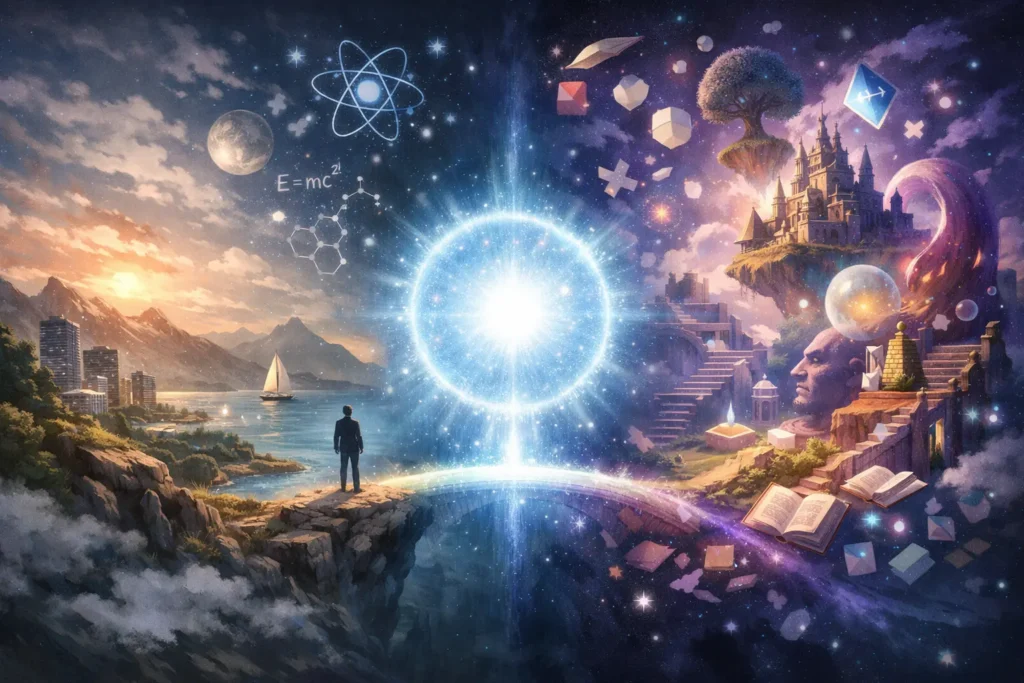
As a whole, I visualize my pilot encapsulated as a glowing ball of bright white light with a slight pale blue aura.
As previously mentioned, in the sphere of existence that I call reality, my pilot pilots my physical body, which could be seen as a pointer on the map marking my current location. My current location informs my perspective and what I am able to experience from the map at any given moment.
For example, if I was on a boat in the middle of a vast ocean, my perspective would probably be limited to just water, and whatever is on the boat.
How I experience the sphere that I call my identity is very similar to how I experience reality. One of the main differences is that my pilot doesn’t necessarily have to be inside a vessel to experience this sphere, and so in some ways it is less limited in its movement around the map. My pilot can inhabit an avatar on this map, but rarely has a purpose to do so. Within the sphere of my identity, I (my pilot) can easily and instantly jump from one location to another, and observe an object from a multitude of different angles. I am able to simply observe what is there, which could be for leisure or for analytical purposes, or interact with it in some way. In this sphere, I can go on quests, I can search for things, I can explore, discover, and create. I can edit existing objects, or manifest new ones.
The things that exist within the sphere of my identity can range from whimsical and fleeting temporary structures, to towering monolithic landmarks with firmly rooted foundations. Temporary objects are created, manipulated and developed in various ways all the time while I play with ideas and theories. For example, an unformed opinion might start off as an amorphous shape until I have gained enough information through experience to either give it detail or reject it. Over time, as an object gains definition, it may become so developed that it grows into something that I consider to be a core element of my identity, such as a core value or belief, and I allow these things to have influence on the functions that govern my decision making. Some objects that I create may not end up having enough value or validity to stand out as core elements of my identity, but I enjoy on some level enough to keep them around; These objects end up forming things such as elements of my sense of humour and other creative ideas, and some of these even end up manifesting in reality through my art, or sometimes simply through fleeting expressions such as things that I say in the moment! You may experience them as elements of my personality. This whole blog is one of them!
My sphere of identity in itself could be seen as a giant complex of these abstract manifestations. I am aware of it being a world that I have created myself, which exists only within my own brain, but it is a very rich and complex world with spatial and time dimensions, it’s own ‘physics’ and natural laws, and it even has it’s own forms of life inhabiting it. It has it’s own history, and forms of culture. It has it’s own lore and mythology!
What I essentially have here is an ‘operating system’ for my brain, which I have programmed myself in order to aid in making sense of my existence and the reality that my physical body inhabits. It is a system that allows me to understand things on my own terms, in a way that is intrinsically enjoyable to me. Through this system, I have come to take a deep interest in myself, my personal identity, my place within the context of society and the greater universe and my potential as a living entity. I have come to genuinely love myself in a way that feels pure and nurturing. As someone who is neurodivergent, feeling constant clashes with societies systems, this is something that I don’t think would have been possible had I not have developed this complex inner world. Perhaps it was born of necessity. Whatever the seed of its creation, I am extremely grateful to my past developing self, and carry forward this gratitude as an aspect of my integrity: to honour the foundations laid out by past-me in upholding its values and intentions, and to pave the way for my future self to transcend to new levels of awareness, understanding and experience.
‘About Me’ is going to be an ongoing series of blog entries running parallel to my other posts. In this series, I plan to go into more detail about some of the specific elements that exist within the spheres of my identity and reality. I may eventually even venture to visually map out my identity.
Can you believe I originally intended ‘About Me’ to be an independent article, and thought I could cover everything all in one post! Ha!
Though it does present challenges to my ease of integration into society, I do not see my autism as a disability in it’s own right. It’s just a different foundation of experiencing and processing reality, which has different strengths and weaknesses. I enjoy being autistic. I play to my strengths, and I’ve recently come to be more accepting and kinder to myself regarding the areas of life where I struggle.
I think it’s great that we live in a world that is so diverse in so many ways. I think our differences should be celebrated; we should celebrate one another, and celebrate ourselves. We are all amazing.
Differences in perspective
You could read every book there is on autism, but if you are neurotypical, you will never understand exactly what it is like to be autistic. Similarly, I will never know exactly what it is like to be neurotypical. All we can do is estimate to the best of our ability given all available information. There are so many things that I observe neurotypical people doing, and patterns of behaviour that I can even understand on a logical level, but still seem very strange and unnatural to me. Some of them I try to mimic just to help me fit in (this is known as masking), but I always feel awkward doing so. It can be easy for me to feel frustrated by people doing things and thinking in ways that don’t make sense to me, but I’ve learnt to accept that there will be differences, and I’m not always going to understand them. I’m sure that I have been similarly frustrating to people with some of my ways of thinking and going about things. I think that it’s important to keep an awareness that the way we experience reality isn’t necessarily going to be comparable to the way someone else does, and as a result we all see things differently, we all think differently, and we all come to different conclusions. And that is fine. I think we should all try to be more tolerant, understanding and considerate not only of our basic differences, but of the ways in which these basic differences manifest.
Be aware that I am probably masking
When I’m engaging with you socially, I may appear to behave in a normal way, but this is not my intuitive way of being. Behind the scenes, my brain is busy running many algorithms to control my behaviour in order to blend in with social norms and the context of the situation. As a result, I generally expend a lot more energy on basic social function than a neurotypical person would, and as a result, burn out more quickly.
The ideal situation for me would be that my friends accept me for who I am, without the need for me to mask at all, but it does take a long time for me to be able to feel that relaxed around someone, as my mask is also my guard: As well as performing the function of helping me to generally blend in, it filters what I reveal about myself. As I intuitively have a limited gauge on what is acceptable in society, I have learnt (the hard way!) that I need to be careful about what things I reveal about myself, and how I reveal them, in order to avoid misinterpretation and misunderstanding. As an extension of this point, bear in mind that if you would like to get to know me better, it would make things easier for me, for you to drop your own social filters first, and let me gauge directly from what I see, what is acceptable to you personally. This would take a lot of the guesswork out of the equation for me, and would free up the mental and emotional resources that I would otherwise be spending on processing these things!
You’ll get the best experience of me in one-to-one or small group hangouts
Most of you that know me, know that I do like to party, but I can find busy social environments overstimulating, and exhausting of my mental and emotional resources.
In a party situation with lots of people, I will likely be masking/filtering myself heavily. This is an active process that consumes a lot of energy, so it also means that I’ll have less available resources to make meaningful contributions towards conversation. I may appear withdrawn in these situations, but I’m probably just overwhelmed by all of the information that I’m having to process. Get me on my own, or in a very small group, and I will be more relaxed, and you may get to see more of my true self.
Try not to make assumptions about me or my intentions
If I do or say something that sounds odd or inappropriate, try not to jump to conclusions. It may just be a result of an underdeveloped social skill, or an aspect of my masking script that I’m still ironing out or that I haven’t gotten around to addressing yet. If you are unsure about anything, just ask. I’d be more than happy to clarify, and it would aid my understanding of how I am perceived by others. Learning how to integrate is an ongoing process for me, and I’m adjusting my masking scripts all the time.
Try not to overwhelm me
Managing my time, energy and other resources is extremely difficult for me, and consumes a lot of resources in itself. If I have too many active processes running in my head, I can feel overloaded and unable to function. When I encounter one of these overloaded states, it can take me a long time to return to a state of efficient functioning, especially if more things that I have to deal with or process are being piled up in the meantime. During this time, I may withdraw socially, and take a much longer time to reply to messages, so please be patient with me. For me to operate efficiently, I need to maintain a degree of mental headroom, and my threshold is significantly lower than it seems to be for a lot of other people. You can help me manage this by trying not to make too many plans with me all at once. If you can, space out any plans so that at any given time, I only have one upcoming thing with you. My calendar goes a long way to help plan my time, but it does not help at all with managing my physical, mental or emotional energy. If you make lots of plans with me at once, you will be spreading my resources thin, and you will get a diluted experience of my friendship. Allow me plenty of breathing space, and you will get premium Angel.
When making suggestions for plans with me, give me plenty of notice and some time to make a decision
I can immediately tell you if it’s something that would interest me, but don’t expect me to commit to a plan straight away. I usually need some time to process it’s cost in terms of time, energy, and other resources, and balance it against other things that are going on in my life or impending that might have to take priority.
I don’t like to commit to something before I’ve had time to properly process it, because it puts me in an uncomfortable position if I later have to back out and let people down.
I prefer direct communication over hints
I am capable of reading between the lines, but it is mentally taxing for me, and can sometimes be problematic when there is a margin of ambiguity. Wherever possible, please consider engaging with me via direct verbal communication. Take some of the guesswork out of our friendship for me! I understand that this isn’t always possible, and that there is sometimes an element of social politics to factor in.
I’m okay with you making fun of my autism
I speak only for myself of course, but if you’re the kind of person whose sense of humour is that way inclined, I have no problem with light-hearted banter targeting my autism. Here are some benefits to it, as I see it:
It’s a casual way of showing me that you recognize our differences while also accepting me.
It reinforces a sense of comradery if you happen to also be neurodivergent.
If you are neurotypical, I enjoy the irony that the joke is really on you, as being autistic is actually so much better. 😜
Avoid asking me for favours
If I feel that I am able to help you with something, I will gladly offer, but unless it’s something massively urgent and you have no alternative options, please don’t ask me. I am specifically very uncomfortable being put on the spot, and it’s likely that even if I have the resources available to help you, there are a number of other things that I really could do with spending them on.
Some reasons that I am uncomfortable being asked for favours are:
My sacrificing time and energy to help someone is a greater sacrifice than it would be for a neurotypical person, because I have less available resources to spare.
I tend to over-analyse the transactional nature of social obligations, and this taxes my already overworked brain.
I dislike being put on the spot because it takes me time to fully process the request and analyse not only my willingness, but my capability in terms of available resources.
I feel put at a disadvantage as I lack the social skills and range of expression to easily politely decline.
Be aware that I have difficulty expressing myself with body language, tone of voice and facial expressions
I am actually a very expressive person, but the ways that I intuitively express myself may not be immediately obvious. I have a naturally monotone voice. Pitch variation does not feel intuitive to me, and takes me a lot of effort to employ.
It feels very awkward, comparable to having to sing every sentence!
Just let that last sentence sink in for a moment, and imagine how draining that is for me! (and pitch variation is just one of a whole number of masking processes that I have to actively employ!)
Sometimes I’ll try really hard, and still find that the resulting tone is somewhat flat. As a result, I’ve found that sometimes people can’t tell when I’m enthusiastic about something, or if something I said was meant jokingly.
Similarly, employing gestures and facial expressions can feel like having to go through a dance routine to accompany the song that I’m singing. I will do it, but it can sometimes make me feel very self conscious, and even at my most animated, I feel quite limited in my range of expression.
So, try not to assume that I am feeling unenthusiastic about something, if that’s what presents, and bear in mind that that outside-of-the-box wackjob notion that I presented so dryly may actually just have been a joke.