AI as an Accessibility Tool for the Neurodivergent: A Collaboration Between Human and Machine

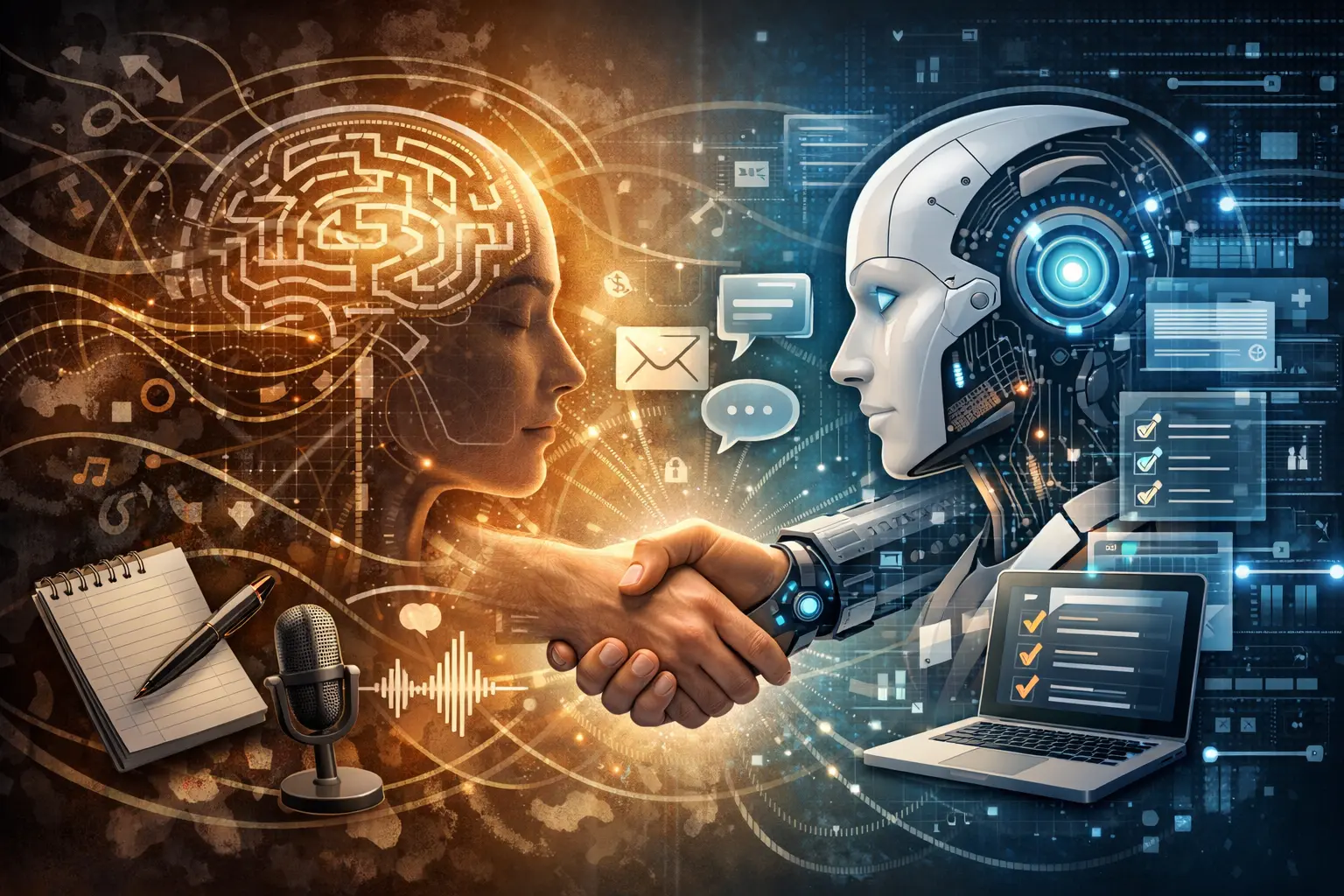
Abstract illustration of a human and an AI figure facing each other, connected by flowing lines and symbols.

The Mind’s Maze and AI’s Helping Hand

To be neurodivergent in a neurotypical world is to exist in a constant game of translation. Not just between languages but between entire modes of thought. The way we perceive, process, and express is often at odds with what society deems “standard.” Enter AI: a tool, a translator, a companion—not to fix what isn’t broken but to bridge the gap between internal chaos and external expectations.

And yes, let’s address the elephant in the room: this very article is a collaboration with AI. That’s right. A non-human entity is helping shape these words, reinforcing the very premise of this discussion. The irony isn’t lost on me.

AI: The Mask, The Amplifier, The Interpreter

For many neurodivergent individuals, certain tasks that come easily to others can feel insurmountable. AI has the potential to act as:

  • A Mask for the Social Arena – Many of us have spent years perfecting the art of masking—adopting neurotypical behaviors to navigate a world not built for us. AI-driven chat assistants can now help draft emails, suggest conversation starters, and even rewrite our thoughts in ways that align with social expectations. Is this a betrayal of authenticity, or simply a new tool in the neurodivergent survival kit?
  • An Amplifier for the Silent – Not all forms of neurodivergence lend themselves easily to verbal or written communication. AI-powered voice synthesis and text prediction tools help translate fragmented thoughts into structured speech. They give voice to the unheard, coherence to the disjointed.
  • An Interpreter Between Thought and Expectation – Executive dysfunction is the unseen force that turns simple tasks into Herculean efforts. AI reminders, automated scheduling, and task management tools serve as externalized executive functions, compensating for neurological wiring that resists traditional structures.

The Existential Dilemma: Who is in Control?

There’s always the lingering question: if AI helps shape our thoughts, do those thoughts remain our own? If an AI rephrases my words for clarity, is the message still mine? If I rely on an algorithm to help structure my day, am I in control, or am I just another cog in the machine’s wheel?

And yet, isn’t this how humanity has always functioned? We are products of external influences—teachers, books, conversations. AI is merely another force in that equation, refining rather than replacing.

The Future: A Partnership, Not a Replacement

The goal isn’t to erase neurodivergent struggles but to acknowledge them and provide tools to navigate them. AI will never fully replicate the unique perspectives that neurodivergent individuals bring to the table, but it can help ensure those perspectives are seen, heard, and understood.

Perhaps the true power of AI lies not in replacing thought but in preserving it—ensuring that the intricacies of the neurodivergent mind are not lost to the exhausting demands of a neurotypical world.

And if AI happens to help write a blog article along the way? Well, that’s just another tool at work.
The Outsider

An account of my journey to self-acceptance

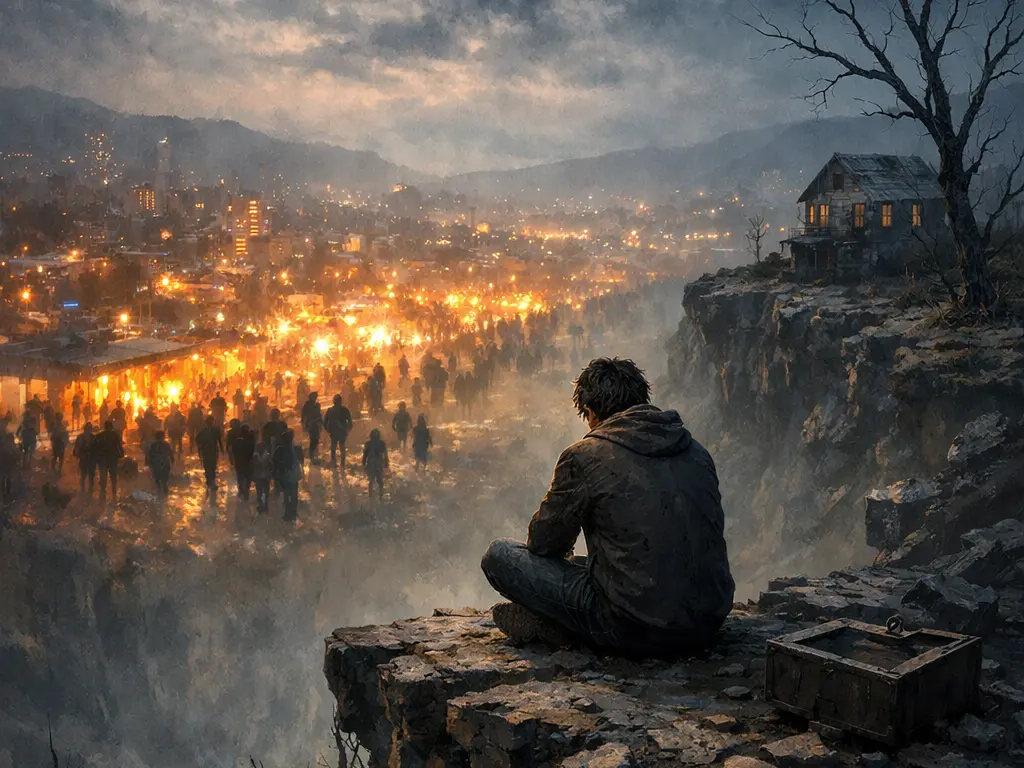
A lone figure sits on a rocky cliff overlooking a glowing city at night.

I’m not the most ‘normal’ person.
I’ve always been ‘different’.
I have spent most of my life as a social outcast.
Searching for somewhere to fit in, failing.

This has of course led to depression, anxiety, and some seriously bad mental breakdowns.
Some of which came close to killing me.

It can be difficult, living life on the outside.
Looking in on all of the relatively happy people going about their lives, in relative ease.

How do they do it?
What is their secret?
Perhaps everybody suffers just as much as I do, but no one is expressing it…
Are they all just putting on a brave face?
The fact remains, they succeed in areas that I cannot.
So what does that make me?
A defective product of humanity?
An inconsequential blip in the vast jungle of society?.
I think of Darwin’s theory of natural selection, survival of the fittest.
Am I simply not fit enough to survive in this world?

You can see how these trains of thought may have led me down some dark paths.
Amongst a parade of complex questions, there was one simple question that stood out, one of basic human necessity.

Where do I fit in?

I had a simple question, and no one was giving me an answer.
Friends, family, therapists… strangers on internet chat rooms…
I even turned to God (but as you can imagine, the line was busy)

Of course it’s not that no one had anything at all to say.
Most of the suggestions I received from people involved changing core aspects of who I am, in order to be a better fit.
This was simply unacceptable to me.

I realised that I was asking the wrong people.
I eventually resorted to going about trying to work out the answer myself, from scratch.

This was a huge undertaking.
If you imagine the problem as an extremely complex mathematical equation, my task was to solve the equation, armed only with knowledge of basic arithmetic.

Through a tedious process of trial and error, challenging myself with thought experiments, delving deep within my psyche, throwing myself into challenging situations, observing my thoughts, feelings, observing the reactions of others, observing the consequences of varying types of behaviour, Looking for patterns, shapes, colours, textures… anything that would help me to make sense of it all.

I eventually came to a point of deep understanding, and even appreciation of who I am.
And I came to a place of similar understanding and appreciation of others.

But still, I did not fit in.
I had two sides of an equation, but there was no perceivable connection to balance them.

Then, one day, during… let’s call it an ‘existential crisis’, it hit me.
The answer I had been seeking for so long, was right in front of me all along, hiding in plain sight.

Where do I fit in?
On the outside!

I’m not like everyone else. I am an outside-of-the-box thinker.
I play my own game. I have different core values, different metrics of success, I do things in my own way, for my own reasons.

I often don’t understand why people do certain things, but my inability to blindly accept and follow prescribed systems incites me to challenge what is.
I offer a fresh perspective. And though I do not always see the things that are plain to others, I see many things that others do not.

And society needs that.
Diversity is essential to the continuation of humanity.

Going back to evolution, the clue is in its name. The point is not for us to settle on being one thing.
Survival of the fittest is a game of numbers, yes, and the majority often has a clear advantage.
But if we were all perfectly normal, if we were all cookie-cutter replications of an idealised standard, then our race would not be equipped with the tools that it needs to adapt and survive.

And nor would life be particularly interesting.

So I, for one, am happy to embrace being strange.
Any disapproval from others just goes to further cement my resolve, that I am performing my function, that I am doing what I am supposed to be doing and that I am where I am supposed to be.

No longer do I need to worry about fitting in.
My concern is simply just to do the things that I am inclined to do.

And I have utmost faith in that
whatever I do,

Whether others like it or not,
Whether it benefits me or not,

Whatever I do,
is the right thing to do.