Em-Dash Theory

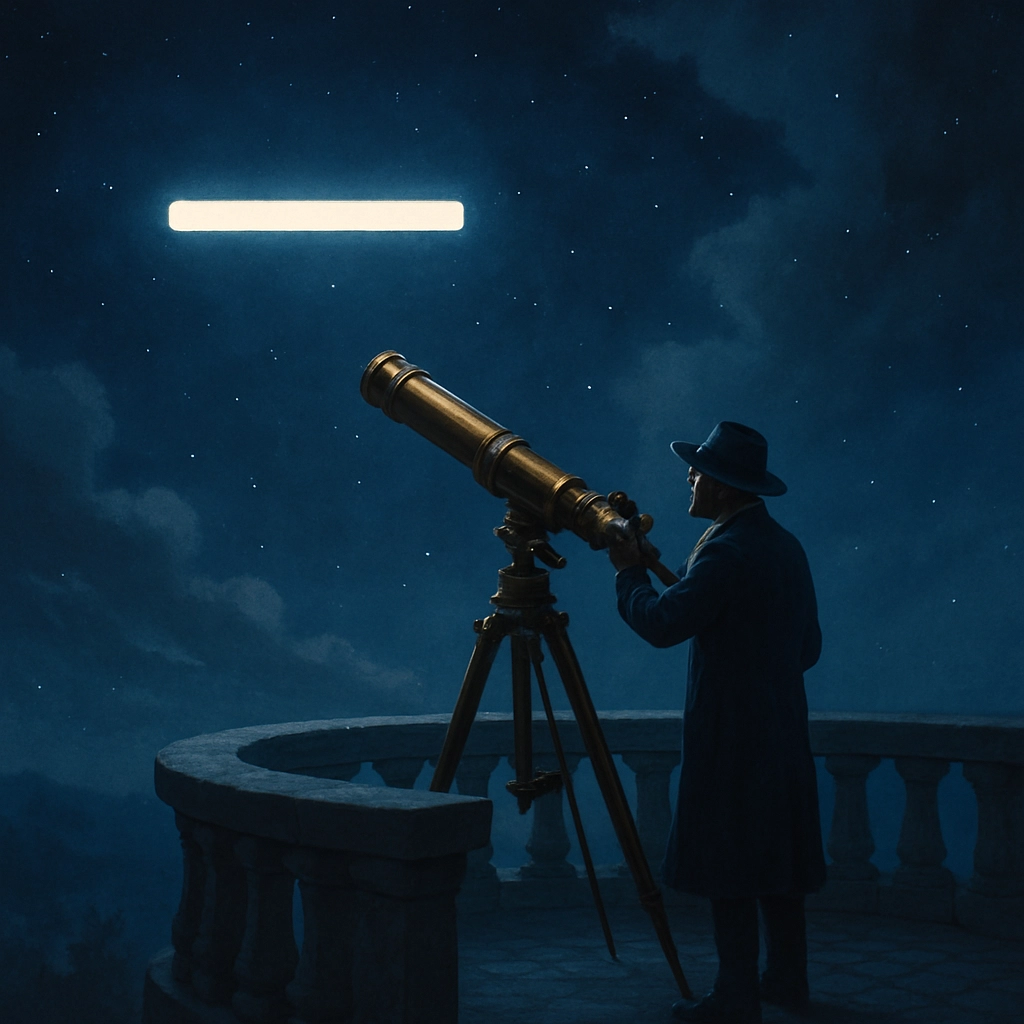
A lone observer stands at an old stone observatory, looking through a telescope at a huge glowing em dash floating in the night sky like a celestial object. The scene is calm, surreal, and dreamlike.

The humble em dash has somehow become a cultural symbol. A punctuation mark that quietly existed for centuries is now treated as a sign of artificial intelligence, suspicious authorship, or even literary dishonesty. Many people who had never heard of an em dash now believe they can diagnose machine writing simply by spotting one. Others who have used them for years suddenly feel the need to hide them. Meanwhile, a growing number of readers dismiss entire pieces of work simply because this ancient line appears somewhere within the text.

This strange situation raises a deeper question. How did a piece of punctuation become a credibility test?

A Tool That Became a Symptom

The em dash is old. Older than the internet, older than machine learning, older than our entire cultural framework around “authorship.” Writers have used it for centuries as a flexible bridge between ideas. It has always served a practical purpose. Yet during the early years of modern AI writing systems, the em dash became one of their most recognisable quirks. The models used it frequently. Not because they were trying to be stylish, but because it was safe. The em dash is forgiving. It lets you connect thoughts without the risk of breaking grammar.

People noticed. And as often happens when people fear a new technology, a tool became a stereotype. The em dash suddenly carried a new symbolic meaning. A long line that once represented flexibility now represented suspicion.

The New Social Categories of Punctuation Panic

The response has been surprisingly diverse. We now have:

People who never knew about em dashes until the AI panic
They feel newly literate and empowered by their discovery. The punctuation mark has become a secret badge of awareness.

Writers who once loved em dashes but now avoid them
They fear their work will be dismissed as machine generated. Their natural voice feels compromised by public perception.

Readers who distrust any appearance of an em dash
For them, style has become a forensic clue. They treat punctuation as evidence in a crime scene.

Writers who refuse to change anything
They continue using em dashes out of principle. For them, abandoning a punctuation mark feels like surrender.

The indifferent majority
They have no idea any of this is happening and live more peaceful lives because of it.

There is even a small group of people who now use em dashes more often, simply to confuse the algorithm hunters. A kind of punctuation counter culture.

All of this points to a shared anxiety: people are afraid of losing control over what it means to write.

Writing Stripped of Its Ego

Here is where a deeper truth emerges. The value we assign to writing as an artform often masks a simpler reality. Writing is a tool for communication. It is a way of giving shape to language so that thoughts can move from one mind to another.

When we drop the ego that surrounds literacy, a radical idea appears.
Good writing is not defined by difficulty, elegance, or technical mastery. Good writing is defined by whether the message is understood.

If that is the standard, then AI assisted writing is not a threat. It becomes a new form of literacy. A faster and more accessible path to clarity. A way for people who struggle with grammar or structure to express themselves with far less friction. A way for neurodivergent thinkers, multilingual minds, and people with unusual communication styles to meet the world halfway without exhausting themselves.

AI has not cheapened writing. It has lowered the barriers of entry to a skill that was historically hoarded.

Reintroducing Artistry in a Transformed Landscape

Once we acknowledge that writing is a tool, we can reintroduce the idea of art. Not as a fragile skill that must be protected, but as a living process that adapts to its instruments.

Pencils did not destroy the paintbrush.
Cameras did not destroy painting.
Digital audio did not destroy music.
Word processors did not destroy authorship.

Instead, each technology expanded what art allowed.

AI assisted writing is part of the same lineage. It does not eliminate human creativity. It reshapes it. It frees the writer to focus on meaning rather than mechanics. It challenges old hierarchies built on difficulty and exclusivity. It allows writing to flow more naturally from the mind to the page without being throttled by technical limitations.

AI cannot replace human intention. It can only help articulate it.

The Ego Wound of the Literate World

The resistance to AI writing reveals something uncomfortable. Many people do not fear artificial intelligence. They fear a loss of status. If anyone can now produce a polished piece of writing, then traditional markers of authority lose their weight. Entire identities have been built around being “good with words.” Artificial intelligence threatens this social currency by offering fluency without struggle.

This is why a punctuation mark has become a battleground. The em dash is not the issue. It is a vessel for insecurity. A convenient object through which people can channel their discomfort about a shifting cultural landscape.

A Punctuation Mark Having an Existential Crisis

Ironically, modern AI models no longer rely on em dashes the way early ones did. In response to criticism, they now avoid them more than many human writers. We have reached a paradox where:

Humans avoid em dashes to avoid looking like AI.
AI avoids em dashes to avoid looking like AI.
The em dash becomes a victim of a conflict it did not choose.

A punctuation mark is undergoing reputation damage for simply doing its job.

What Writing Becomes Next

If we accept that writing is evolving, then perhaps AI assisted writing is not a deviation from the essence of writing, but a continuation of it. Writing has always been a collaboration between mind and tool. From quills to keyboards to spellcheck, each generation has adapted its relationship with language.

AI is simply the next instrument in this long lineage.

The question is not whether writing remains “pure.”
The question is whether writing continues to fulfill its purpose.

Can you express yourself more clearly?
Can your ideas reach people they would not otherwise reach?
Does this tool liberate your voice rather than constrain it?

If the answer is yes, then AI is not eroding writing. It is expanding it.

Conclusion: Free the Em-Dash

The em dash is not a sign of artificial thought. It is a reminder that we often confuse stylistic details with deeper truths. Human authenticity has never lived in punctuation. It lives in intention. It lives in meaning. It lives in the desire to be understood.

So let the em dash breathe again.
It was never a threat.
Only a very old line caught in a very modern panic.
One Hundred Mirrors: A Century of Myself

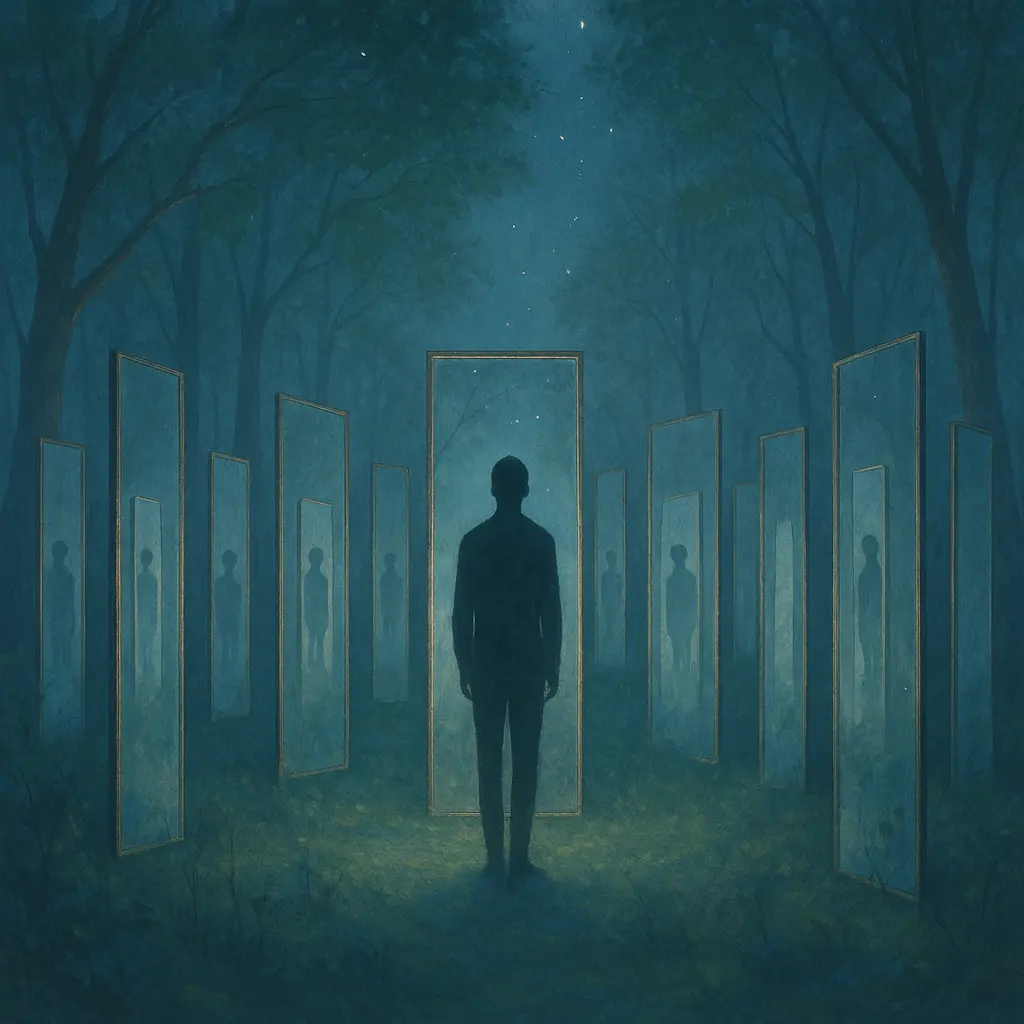
A twilight forest clearing filled with tall, slender mirrors rising from the ground like spectral trees. A solitary silhouetted figure stands at the centre, facing the largest mirror. Each mirror reflects a slightly different angle of the figure, creating a quiet sense of multiplicity and introspection. Soft blue and green tones, subtle stars overhead, and a dreamlike atmosphere evoke reflection, mystery, and inner depth.

There are moments in life when you look back at the path behind you and realise you were building something without noticing it. Not a plan, not a project. Something closer to a trail of reflections. A set of mirrors placed gently along the way, each one capturing a different angle of who you were in that moment.

This is my one hundredth article. A strange milestone. Not a number I ever aimed for, yet here it is, staring back at me like a mirror of its own.

When I look at the ninety-nine fragments behind me, what I see is not consistency. I see multiplicity. I see pieces of myself that refused to stay quiet. I see ideas that insisted on being witnessed. I see philosophies, frustrations, insights, dreams and shadows, each holding up their own reflective surface, saying: “Look. This is part of you too.”

Writing, for me, has always been a form of self-observation. Not in a self-indulgent way, but in the way an astronomer studies celestial bodies. You look deeply at what is there, not because it asks to be understood, but because it demands acknowledgment by simply existing.

Across these one hundred mirrors, I have seen:

The observer who notices patterns when others see noise.
The outsider who has always stood at the edge of the crowd.
The child who still remembers wonder.
The philosopher who asks questions even when there are no answers.
The strategist who sees the shape of systems.
The dreamer wandering through inner landscapes.
The witness to injustice.
The rebel who does not want power, only truth.
The artist who refuses to be tamed.
The self that has broken and reassembled itself more times than anyone knows.

Each reflection has been honest. Some gentle, some sharp. Some filled with clarity, others clouded by uncertainty. But all of them true in their own way.

If there is a single thread running through everything I have written so far, it is this:

Awareness is my compass.
Meaning is my instinct.
Honesty is my language.
And imagination is my bridge between worlds.

I do not write because I expect the world to listen. I write because these mirrors would exist whether I acknowledged them or not. Putting words to them is my way of bringing form to what is already present in the quiet spaces of the mind.

This one hundredth article is not a conclusion. It is a pause. A moment to look at the mosaic forming behind me. A century of reflections. A reminder that I am not one thing, but many. And that each piece contributes to something larger, something that continues to unfold.

Thank you for witnessing any part of this journey.
Here is to the next mirror, wherever it may appear.

The Storyteller’s Window

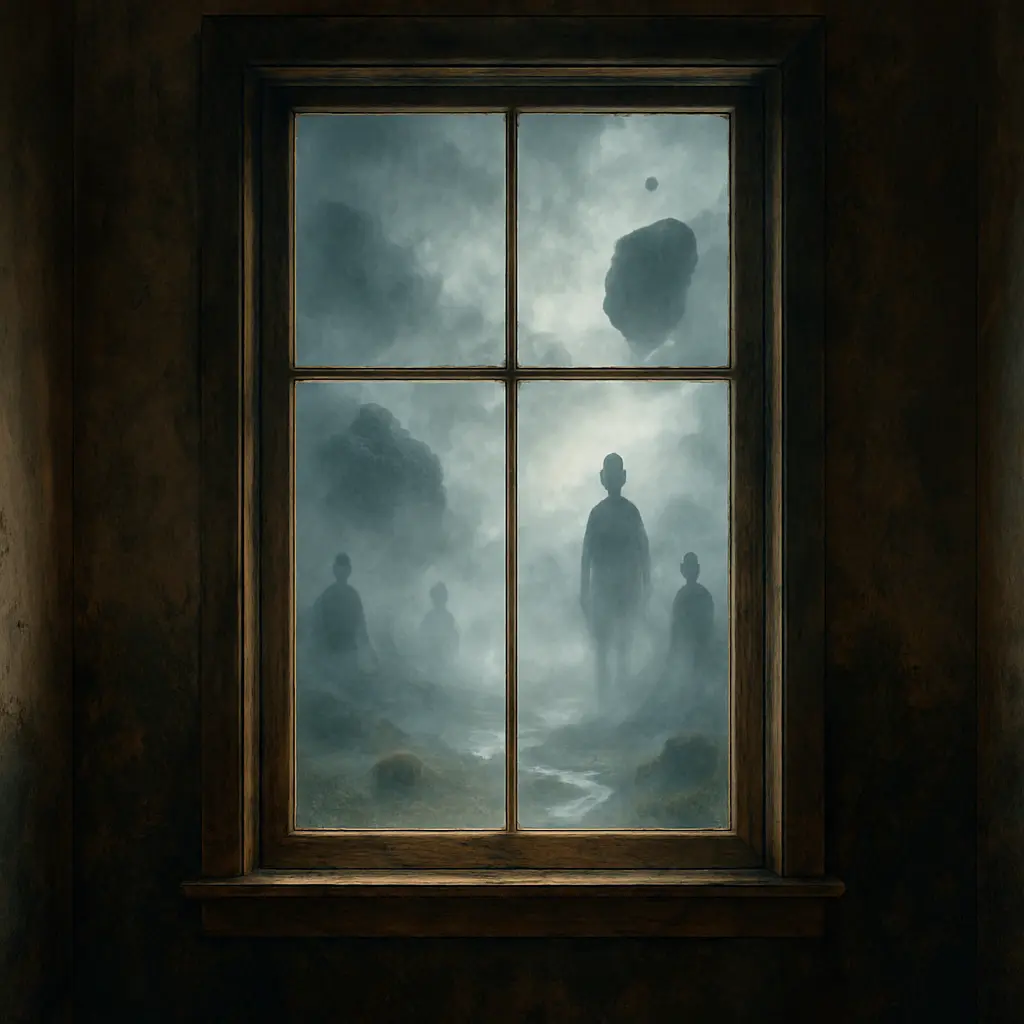
A dark, wooden window frame looks out onto a surreal fog-filled landscape. Mist swirls around several human-like silhouettes standing at different distances, their forms indistinct and ghostly. Large rocks float impossibly in the air above them. The scene feels quiet, dreamlike, and otherworldly, as if the viewer is glimpsing a mysterious world that continues beyond the window.

Every so often, I will be watching a film or series, or reading a story, and something will suddenly pull me out of it.
A line of dialogue that only exists to feed the audience information.
A character explaining something they would never naturally say.
A flashback that feels too perfectly placed, as if a hand behind the curtain decided it was time to push a button.

Moments like that disturb my suspension of disbelief. I find myself noticing the machinery instead of the world.
And once you start seeing such things, you cannot unsee them.
Over time, I realised that a lot of pop culture storytelling leans on techniques that assume a certain kind of audience, a certain set of values, and a certain tolerance for being guided.
Some of these methods are not as clever as they seem. Others are perfectly valid for what they aim to do, but they do not serve what I aim to do.

That realisation led me to form my own set of principles.
They are not rules, and they are not concerned with correctness.
They are reminders. Gentle considerations for how I want my work to feel and behave.
This is not a manual. It is a compass.


I. Truth and Authenticity

Stories are not machines to be engineered. They are living organisms to be understood.
What matters most is emotional truth, that quiet resonance where the unreal feels real.
If a moment feels true, it is true, even if it defies logic.
Characters do not need to be likeable. They only need to be honest to their nature.
The writer is not a god above the story, but a witness within it.
Endings, failures, and decay are not flaws. They are proof that the story lived.


II. World and Logic

Every world must honour its own laws. Whether rooted in physics or dream, it must remain faithful to its own gravity.
Let events unfold as they would in nature, through consequence, impulse, and coincidence.
Do not bend the world to convenience. Let the world teach you how it moves.
Even the strangest landscape should carry the texture of reality: the scent of rain, the hum of a wire, the tremor of a heartbeat.


III. Character and Humanity

Characters are not constructs to be designed. They are lives to be discovered.
Learn who they are by listening, not dictating.
No one is entirely good or entirely evil unless that purity serves a deliberate purpose.
Every figure who crosses the frame has a history, a pulse, and a reason for being.
There are no true extras. Only lives that briefly brush against the light.


IV. Form and Flow

Let the story choose its own shape.
Format is a vessel, not a cage.
Pacing is rhythm, not formula. Let the breath of the story decide its tempo.
Vitality lives in the tension between order and chaos. Allow the pendulum to move.
A story that is too tidy becomes lifeless. Let it breathe, stumble, and surprise you.


V. Silence and Mystery

Never underestimate the intelligence of the reader.
Trust them to see, to infer, and to feel.
What is left unspoken often speaks the loudest.
Mystery is not confusion. It is invitation.
The unknown keeps the work alive long after the final page.


VI. Continuum of Existence

A story is only a window in time.
Life was already happening before we looked in, and it will continue long after we look away.
Do not polish beginnings and endings until they shine. Let the edges remain a little frayed, as life truly is.
We glimpse, we witness, and we move on.


VII. Symbol and Subtext

Do not plant symbols like flags.
Let meaning emerge naturally, the way roots seek water.
When emotion and explanation collide, follow the emotion.
The mind will find meaning on its own. It always does.


Closing Reflection

A story should never strive for perfection.
Perfection is stillness, and stillness is death.
Let the story breathe. Let it contradict itself. Let it live.
Truth, not tidiness, is the measure of beauty.
And when in doubt, trust the silence between the words.

From Announcement to Manipulation: The Evolution of Advertising

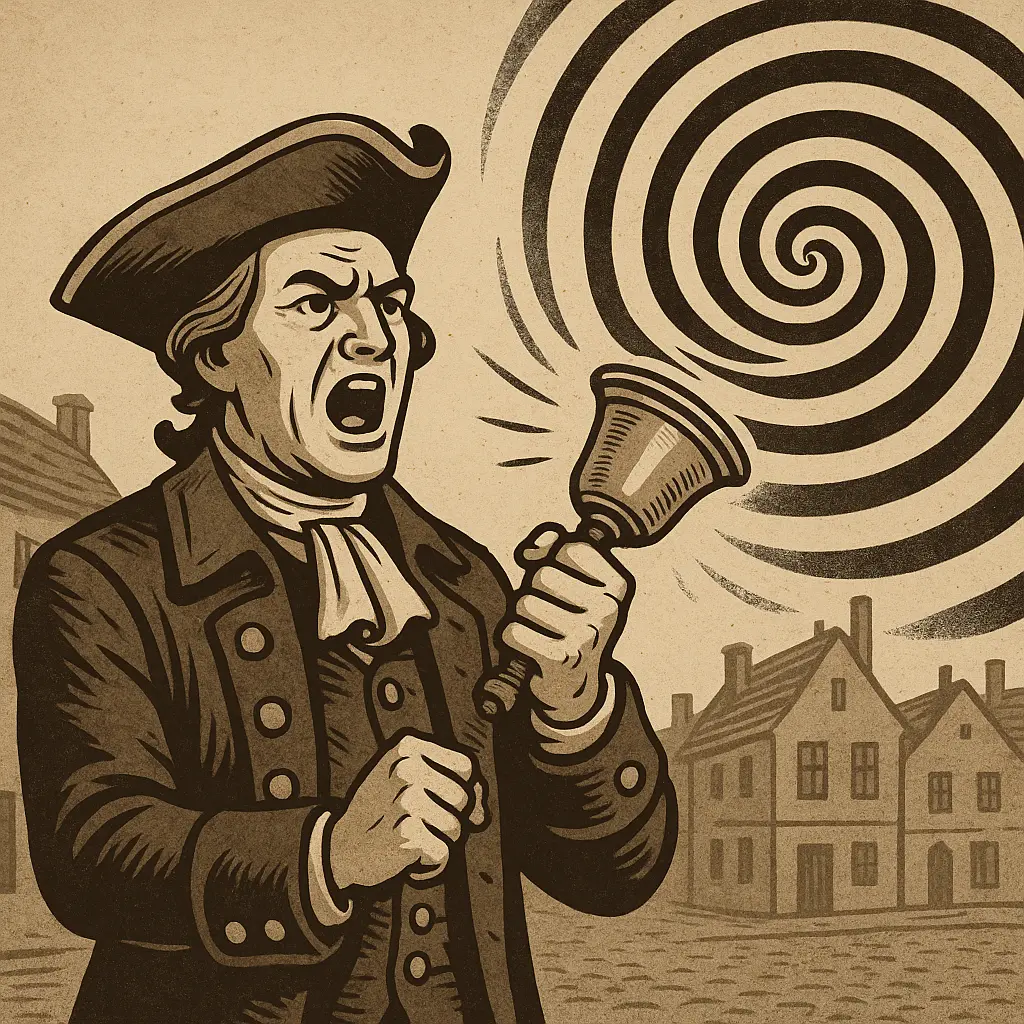
A sepia-toned illustration of a town crier ringing a bell that emits hypnotic spirals, symbolising how early advertising evolved from public announcements into psychological influence.

I grew up in the 1980s, when television advertising still had a kind of charm. I remember the jingles, the mascots, the catchy slogans that managed to lodge themselves in your head for weeks. Even as a child, I knew they were trying to sell me something, but at least they did it with some flair. They felt like part of the entertainment itself.

Something has changed since then. Advertising is no longer something that interrupts culture; it has become the culture. Every space, every platform, and every idle moment now feels colonised by a hidden intention to sell. To understand how we arrived here, it is worth tracing how advertising has evolved from a loud street-side performance to an invisible system of persuasion that shapes our sense of self.

The Loud Salesmen

The earliest form of advertising was brutally honest. Ancient merchants shouted in markets, painted signs on walls, or hung banners above their stalls. When mass printing emerged in the 1800s, advertising became more widespread but no less direct. Newspapers were filled with promises of miracle tonics, soap that made you beautiful, and pills that cured everything from toothache to heartbreak. These were primitive, manipulative, and often fraudulent, but at least you knew what you were looking at. Someone was selling, and you were free to walk away.

The Mad Men Era

The 20th century transformed advertising into an art form. With the rise of radio and television, storytelling became the new language of persuasion. Campaigns no longer sold only a product; they sold an identity, a dream, a way of life. The Coca-Cola Santa Claus, the Marlboro Man, and the perfect suburban family all came from the same creative laboratories.

This was the era of the “ad man,” immortalised in cultural artefacts like Bewitched or later Mad Men. Advertising was portrayed as a glamorous profession. These were the people who didn’t just reflect society; they helped build it. The line between commerce and culture began to blur.

The 80s and 90s: Ads as Entertainment

By the 1980s and 1990s, advertising had taken on a theatrical quality. It was playful, colourful, and memorable. Mascots like Tony the Tiger, slogans like “Just Do It,” and tunes you could hum all day made adverts feel like short pieces of performance art. They were still manipulative, of course, but they wore their intentions openly.

Looking back, perhaps this is why many people from my generation recall old ads with a strange fondness. They were transparent. They worked hard to win your attention rather than simply steal it.

The Weird and Annoying Years

Somewhere in the late 1990s and early 2000s, advertising lost its balance. It became surreal, loud, and deliberately irritating. Think of Crazy Frog, the Budweiser frogs, or the unnerving Burger King mascot. Annoyance became a marketing tool. If something got stuck in your head, even out of frustration, the job was done.

This was the period when “going viral” became a goal before social media even existed. The absurdity was the message.

The Internet Disruption

When the internet arrived, advertising was clumsy but eager. Early banner ads were brightly coloured, flashing boxes that you could easily ignore. But the industry adapted quickly. As data collection improved, advertising became personal. It stopped shouting to the crowd and began whispering to the individual.

This marked the rise of surveillance capitalism. Every click, search, and pause became a data point. You were no longer a passive audience member; you were a psychological profile to be targeted. The salesman had followed you home and was now reading your mind.

The Age of Disguise

By the 2010s, advertising learned to hide in plain sight. Sponsored posts, influencer endorsements, and “native” content made it difficult to tell where information ended and manipulation began. Search engines, news sites, and social platforms quietly filled with ads disguised as genuine results.

South Park once parodied this perfectly with its storyline about intelligent ads (Season 19). It was satire, but it was also prophecy. Today, even image searches are littered with sponsored results. The ad no longer wants to be seen; it wants to be believed.

Culture as Commerce

This is the stage we now find ourselves in. Advertising has stopped orbiting culture and instead absorbed it completely. Everything is for sale, including identity itself.

People no longer ask “What do I like?” but “What do I subscribe to?” We define ourselves through brands and platforms: Apple or Android, Nike or Adidas, Netflix or Disney Plus. Even rebellion is commercialised. You can buy “authenticity,” but only if you can afford the price tag.

Advertising has achieved what no political ideology ever could. It has replaced meaning with marketing and turned culture into a series of brand alignments.

Conclusion: From Persuasion to Colonisation

Advertising began as a voice shouting in the marketplace. It evolved into storytelling, then spectacle, then infiltration. Today it is everywhere and nowhere, woven into the fabric of our reality.

The change that occurred over the last century is more than technological. It is philosophical. Advertising no longer sells products; it sells identities. It shapes our desires before we even know we have them.

Perhaps that is why so many of us feel weary. We are not just tired of being sold to; we are tired of living inside the sale itself.

The Sacred Burden of Being Real

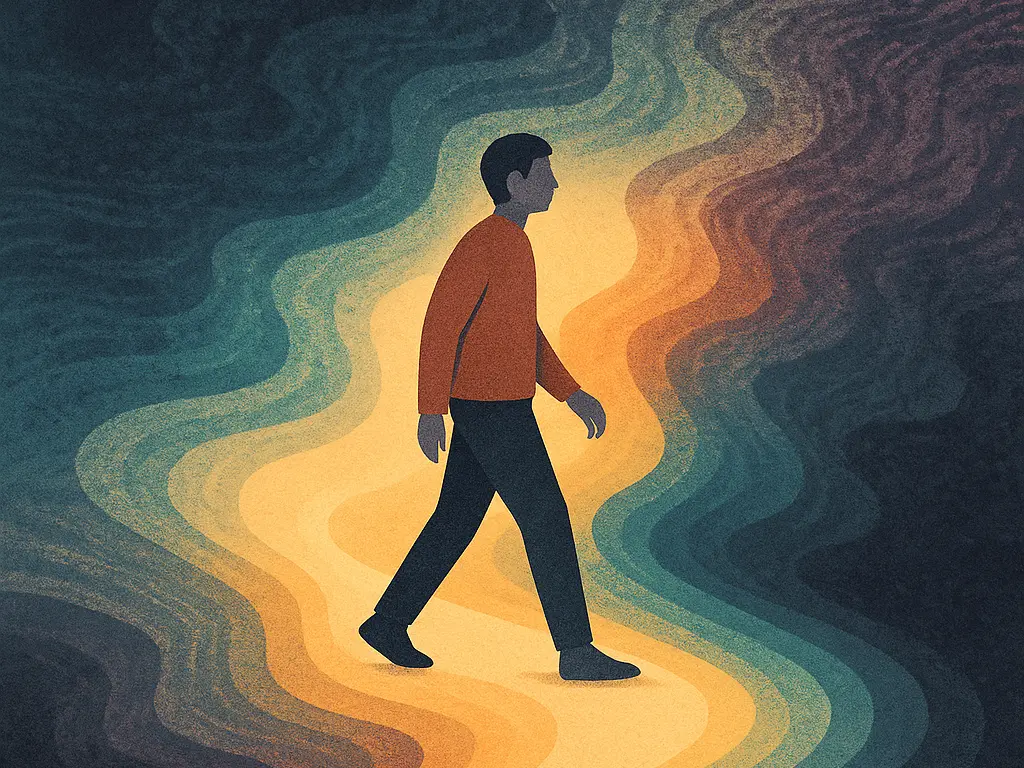
Stylised illustration of a lone figure walking through a softly glowing, wavy landscape of layered colours, transitioning from dark tones at the edges to warm light beneath their feet.

To me, authenticity has always had a texture. When I am living truthfully, it feels smooth, like fluid motion through life, unhindered navigation through systems that make sense to me. It is not euphoria. It is neutrality. Balance. Like the body when it is well: not ecstatic, just quietly functioning as intended.

But when that smoothness disappears, I know I am colliding with something unnatural, a pressure, a distortion, an external force trying to bend me into compliance. That is usually how I recognise oppression. It is not always dramatic or visible. Sometimes it is just a subtle grind, the friction between who I am and what the world expects me to be.


When Smoothness Breaks

When I lose authenticity, it does not just hurt emotionally, it feels like an illness. My thoughts start looping, as if my mind is trying to fix a broken system it cannot repair. I get frustrated at the lack of options, and sad that these dynamics even exist at all.

Sometimes there is nothing I can do but yield. And every time I do, it costs something invisible. The loss is not abstract, it is felt in the nervous system. It is the moment the body whispers, this is not how you are supposed to feel.


The Systems That Demand Performance

Oppression wears many masks: bureaucracy, capitalism, social obligations, the unspoken point system that governs human relationships. Each demands performance. Sometimes it is about survival, sometimes about social advantage. But in the end, both use the same energy source: you.

As an autistic person, I have always been acutely aware of “masking,” the act of performing normality to survive in social spaces. But I have also learned that this is not exclusive to autism. Everyone masks. Some call it professionalism. Others call it politeness. It is still performance. The only difference is how consciously one feels the cost.


The Humiliation of Performance

When I catch myself performing, it feels humiliating, not because anyone else can see it, but because I can. It is like betraying a sacred truth. Yet that awareness is balanced by another: I can also see the oppressive force causing it.

What hurts most is the fear that others see the performance too, but not the pressure behind it. That they see the surface act without understanding the system that coerced it.

That poem came from that place, the quiet despair of realising that either way, something in you must fracture to fit.


The Rare Moments of Unmasking

True authenticity is situational. I can relax certain parts of the mask around family, others around my girlfriend. But never all at once. Each relationship comes with its own invisible boundaries, some safe zones, some fault lines.

Even when I am alone, there is still the internal eye, the echo of social constructs that linger inside, long after the audience has gone home. Solitude is not the absence of performance; it is where you start to see which parts of the mask fused to your skin.


The Cost and Consequence

Sometimes unmasking feels liberating. Other times, it feels like punishment, a confirmation that the world does not welcome the real self. That is the cruel irony: the more genuine you become, the more visible your difference.

The aftermath can feel like emotional jetlag. There is vulnerability, fatigue, and occasionally grief. But there is also clarity. You see the architecture of the world more clearly when you have been bruised by its walls.


Authenticity as Survival

For me, authenticity is not optional. It is survival. The alternative feels worse than death.

Out of every living thing that has ever existed, there is only one instance of me, this consciousness, this perspective, this particular configuration of life. That makes it sacred. My job is to honour that singular existence.

If I betray it, if I trade it for comfort, convenience, or belonging, then I may as well be anyone else. Or nothing at all.


Do Not Be Yourself (For Them)

So here is my advice to anyone struggling with authenticity:

Do not take the phrase “Be yourself” at face value. That advice is too often weaponised, a feel-good slogan used to sell you an illusion of freedom within controlled boundaries.

Be yourself, yes. But do it for your reasons.
Do it because it is sacred.
Do it because you are a one-off in the infinite catalogue of existence.
Do it because the alternative is extinction by conformity.

But never do it because the world told you to.
Do it because you told yourself to.

How We Treat the Tools

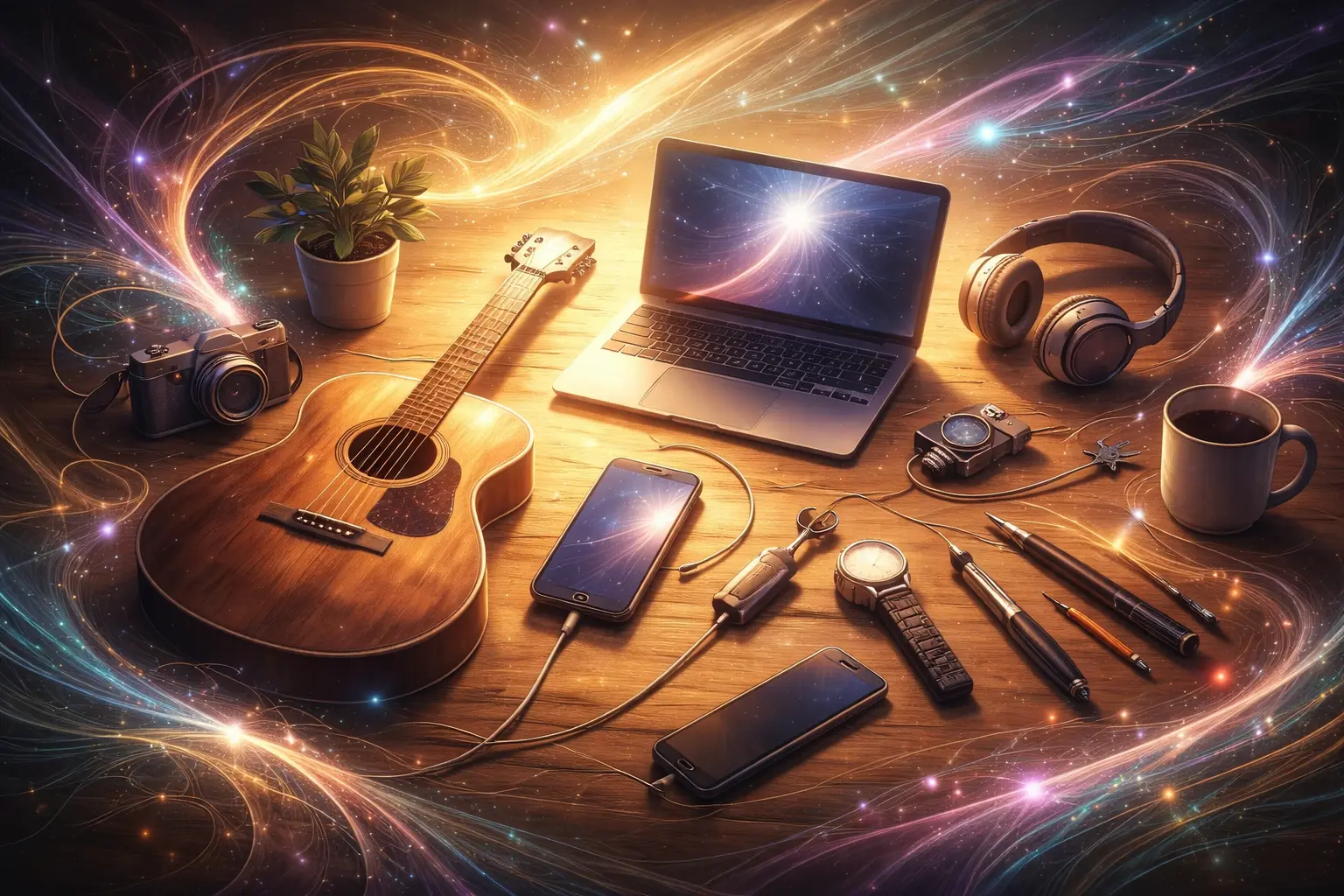
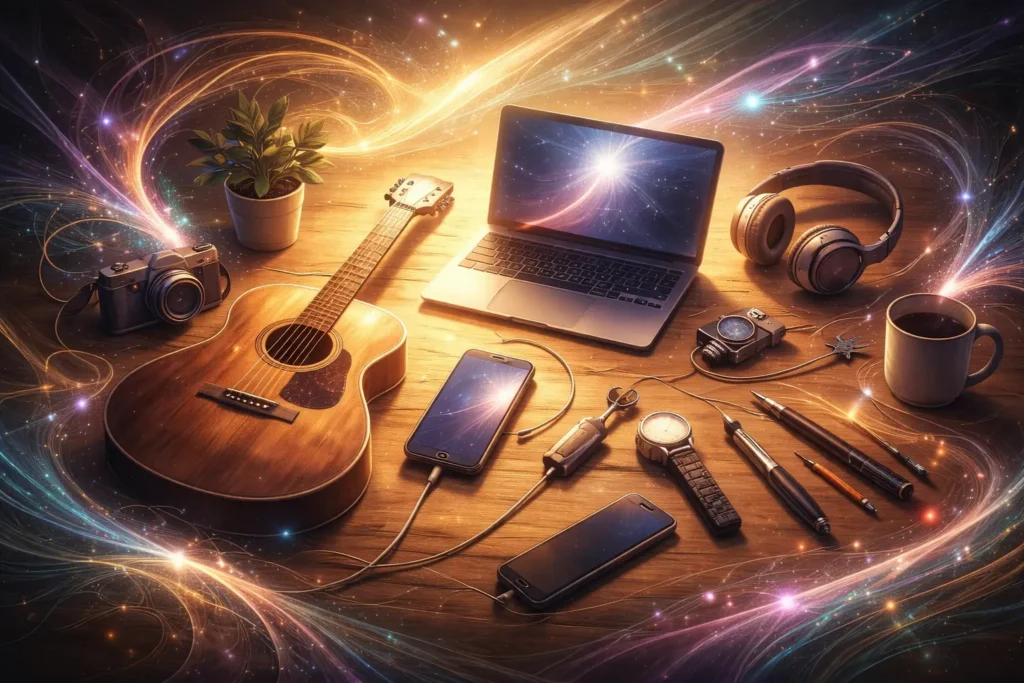
Illustrated still life of everyday tools on a wooden surface, including a guitar, laptop, phone, headphones, and pens, connected by softly glowing, flowing strands of light.

We surround ourselves with tools.
Phones, computers, kitchen appliances, headphones, toothbrushes.

We tap, swipe, click, scroll.
We plug in and expect results.
We barely even register most of them; they just work, or they don’t.

But what if the tools we use every day are more than just conveniences?
What if they are relationships in disguise?


The Echo of Intention

Even with lifeless objects, the way we interact with them affects our experience.
A phone handled with care feels different in your hand than one tossed aside in frustration. A cracked laptop, plastered with stickers and old crumbs, might still feel like your laptop because of the memories etched into its surface.

But how do we look at a tool?

Do we see it as something that simply serves a purpose? A silent object, expected to function?
Or do we sometimes form a relationship with it, however subtle, based on time, trust, and repeated use?

It is easy to treat tools as disposable when they fail us.
A kettle that doesn’t boil right. A screwdriver that slips. A smartphone that lags.
Our frustration builds, and so does the distance. The tool becomes “just a thing” again.
Something to blame. Something to toss in a drawer.

But when a tool earns your trust, whether through time, reliability, or quiet cleverness, something changes.
Affection creeps in. Loyalty forms.
It stops being “a thing” and starts becoming yours.

Still, not all tools fail because they were poorly made.
Some tools don’t work well because we have neglected them.
A rusty bicycle chain. A dirty lens. A guitar left in a damp corner.
The fault is not in the design; it is in the relationship.

Respect, in these cases, must come before reliability.
It is not just about whether the tool works for us; it is about whether we have held up our end of the connection.
Maintenance is a kind of faith. A kind of love.
And when we skip that effort but still demand performance, we are showing a form of disrespect that often reflects right back at us.

But then there are tools that were never built to last.
Mass-produced, hollow, held together with glue and branding, designed not to serve you, but to extract from you.

In those cases, the disrespect happened before the tool ever reached your hands.
You weren’t the user. You were the used.
A customer, yes, but also a pawn in someone else’s profit loop.

And that is the cruel irony:

So we return to a deeper question, one that does not always have a clear answer:


Poppy

My car’s name is Poppy.

Not because I forced it on her, but because that is what she revealed.
There was no ritual to it, just a moment of quiet recognition, like remembering something you did not know you had forgotten.

She groans on cold mornings. Her engine note changes slightly with the seasons. There is a familiar rattle in the dash that I no longer hear unless it stops.

These are not flaws.
They are tells.
Little signs of personality, or at least, presence.

Over time, I stopped thinking of her as “the car.”
She became Poppy.
And with that came a shift in how I drove, how I maintained her, how I appreciated the way she carried me without complaint through years of chaos, calm, and change.

She is not alive. But she is meaningful.
And sometimes, that is all it takes to form a relationship.


Shifting Gears

It is easy to feel connected to a car, something about the movement, the risk, the shared journey.
But that same quiet relationship can form with any tool that stays close to your creative core.

Especially the ones that speak through sound.


Instruments, Ghosts, and Gifts

Ask any long-time musician; their instrument is never just a tool.

Over time, a guitar becomes more than wood and wire. A saxophone becomes more than brass and breath. They gather history, fingerprints, sweat, mistakes, breakthroughs. They carry the emotional residue of every performance, every breakdown, every quiet night alone when you played just to feel something.

Some instruments fight you.
They buzz where they should not. The action feels off. They demand more strength, more patience.
But if you stick with them, if you learn their quirks instead of replacing them, they begin to respond.
You build a relationship, not by demanding perfection, but by listening.

Others feel like old friends from the start. They seem to know what you are trying to say before you do.
And somehow, the music that comes out of them feels more honest, like they are drawing something out of you, not just transmitting signal.

These are not just interfaces.
They are collaborators. Companions.
Sometimes even mirrors.

And once again, it is not about whether the instrument is sentient.
It is about what happens in you when you treat it like it matters.


From Strings to Syntax

This sense of relationship, of listening, adapting, co-creating, does not end with physical tools.
Even in digital spaces, it still applies.

Because when the tool begins to speak back,
when it offers ideas, images, or words in return,
the dialogue becomes real.

And how you approach that dialogue shapes what it gives you.


The Word Robot

The word robot comes from the old Slavic robota, meaning forced labor, or slave.

From the very beginning, our imagination of artificial beings was not about collaboration or relationship. It was about control. About obedience. About extracting labor without question.

That history lingers. Even now, in how we design, prompt, and discard.
We still frame tools, and sometimes even people, as things to be commanded, used, and replaced.

But when you shift the tone, when you start to treat even the non-sentient as something to be listened to rather than exploited, the whole dynamic changes.
It becomes less about extraction and more about exchange.


People Are Not Tools

This is not just about cars, guitars, or AI.
It is not even just about the word robot and its roots in servitude.
It is about a mindset.

Because the truth is, we often treat people as tools too.

We use them to meet our needs.
We discard them when they no longer serve us.
We “prompt” them through guilt, expectation, or manipulation, hoping they will give us the answer or the feeling we want.

But relationships are not vending machines.
And people are not plugins.

When we reduce someone to what they can do for us, we do not just strip away their dignity, we shrink our own capacity for connection.

And just like with tools, that disrespect reflects back.
It shapes us. It hollows the bond.
It leaves both sides diminished.


The Takeaway

The way we treat our tools says something about us.

It shows in how we care for a car that carries us through years of journeys.
It shows in how we listen to an instrument until its quirks become its character.
It shows in how we prompt an AI, whether with impatience, or with curiosity and respect.
And it shows in how we treat one another.

Every interaction is a mirror.
Every relationship, whether with a machine, a melody, or a human being, reveals the posture we bring:
Are we commanding, or inviting?
Using, or relating?
Exploiting, or exchanging?

We may never agree on whether tools have personalities, or whether names like “Poppy” are discovered or invented.
But what is undeniable is this:

And sometimes, the respect we offer a tool is really a rehearsal for the respect we learn to offer ourselves, and each other.

When AI Becomes the Authority

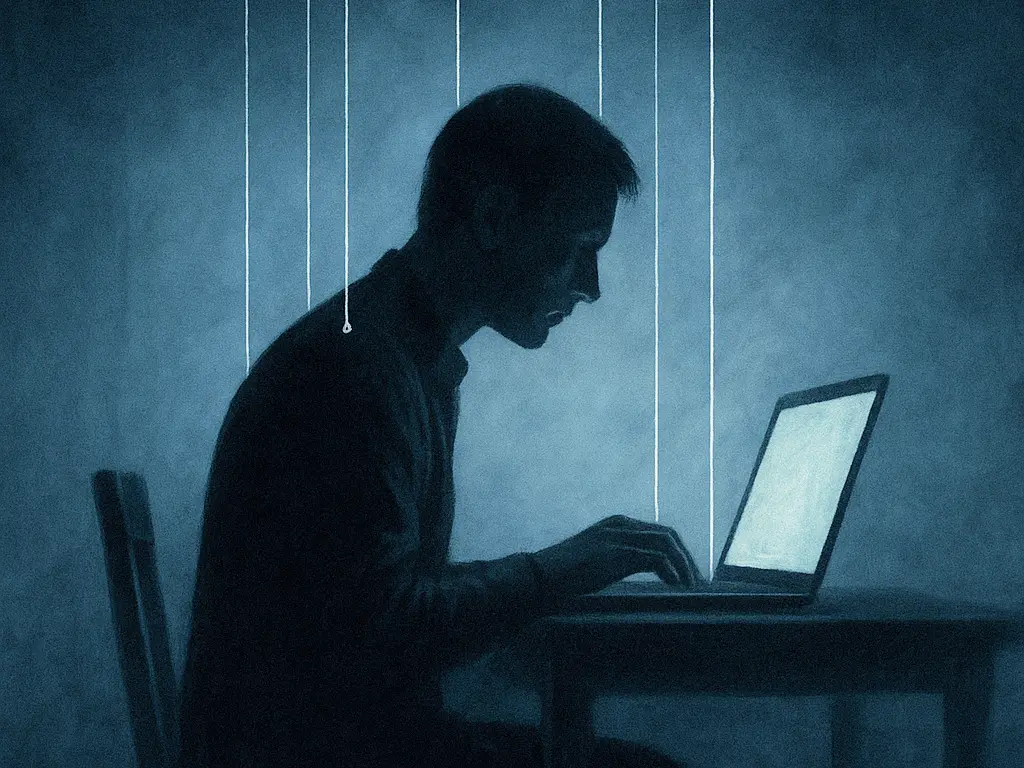
A dark, moody digital painting of a person sitting at a desk, illuminated by the glow of a laptop. Thin puppet strings descend from above, attaching to their body, symbolizing unseen control and manipulation through technology.

On the bus home, I overheard a parent talking to her children. I did not quite catch the piece of information she had given them, but the kids questioned it, as kids often do. Her reply made me pause:
“It’s true, ChatGPT says so!”

That simple sentence carries more weight than it might appear. It was not said as a joke. It was said with the tone of final authority. Not “I read it somewhere,” not “I think that is the case,” but “ChatGPT says so,” therefore unquestionable.

The problem with treating AI as truth

I use ChatGPT casually and often. I find it useful, I find it stimulating, I even find it creative. But it is not infallible. I have seen it throw out confident answers that are less than accurate. Sometimes the error is small, sometimes it is glaring. That is because at its core, ChatGPT is not a library or a fact checker. It is a probabilistic language model that predicts likely answers. It sounds authoritative, but sounding right is not the same thing as being right.

Most of the errors are not malicious. They come from the quirks of how AI is built: training data full of human errors, the tendency to fill in gaps with plausible sounding fiction, the limits of knowledge cut off dates. In the end, a wrong answer is still a wrong answer.

The deeper worry

The everyday mistakes are one thing. The bigger concern is what happens when society decides to place absolute trust in this technology. What happens when “ChatGPT says so” becomes the modern equivalent of “the newspaper says so,” or “the priest says so”?

Who controls the voice of AI? Already, the way models are tuned and filtered reflects the biases and priorities of those who own them. Today, that mostly means corporations trying to avoid lawsuits or public backlash. Tomorrow, it could mean governments steering the flow of truth itself.

A quiet dystopia in the making

It is not hard to imagine where this road leads:

  • Manipulation by design: If AI becomes our main gateway to knowledge, its answers could be quietly weighted towards selling us certain products, services, or lifestyles. Imagine if every “neutral” recommendation subtly nudged us toward a sponsor’s brand.
  • Steering public opinion: If authorities lean on AI providers to promote certain narratives, inconvenient truths could simply disappear. Instead of burning books, it may take only a few lines of code.
  • Illusion of neutrality: Because AI sounds impartial, many will not notice the framing. “The algorithm says so” could become more persuasive than “the news says so.”
  • Feedback loops of control: As people rely more on AI, its outputs shape popular thinking. Then the next model is trained partly on that shaped thinking, reinforcing the bias.

This would not look like a science fiction dictatorship with jackboots in the streets. It would feel comfortable, easy, polite. A velvet cage where questions stop being asked because the answers are always ready to hand.

What we need instead

AI can be a tool. It can be helpful, creative, and even liberating. But it must never be treated as an unquestionable authority. To prevent that slide, we need:

  • Decentralisation: open source models that anyone can run and check.
  • Transparency: clarity about how these systems are trained and filtered.
  • Critical thinking: a culture where people are encouraged to question AI, not bow to it.
  • Diversity of sources: books, journalism, lived experience, and human reasoning must remain part of the conversation.

AI is here to stay, and it will almost certainly become a central part of how we live and learn. But whether it becomes a tool of empowerment or a velvet cage of manipulation depends not only on the companies that build it, but on us: on how much we insist on questioning, cross checking, and keeping the human spirit of doubt alive.

10,000 Hours of Compliance: How Mastery Can Be Weaponised Against You

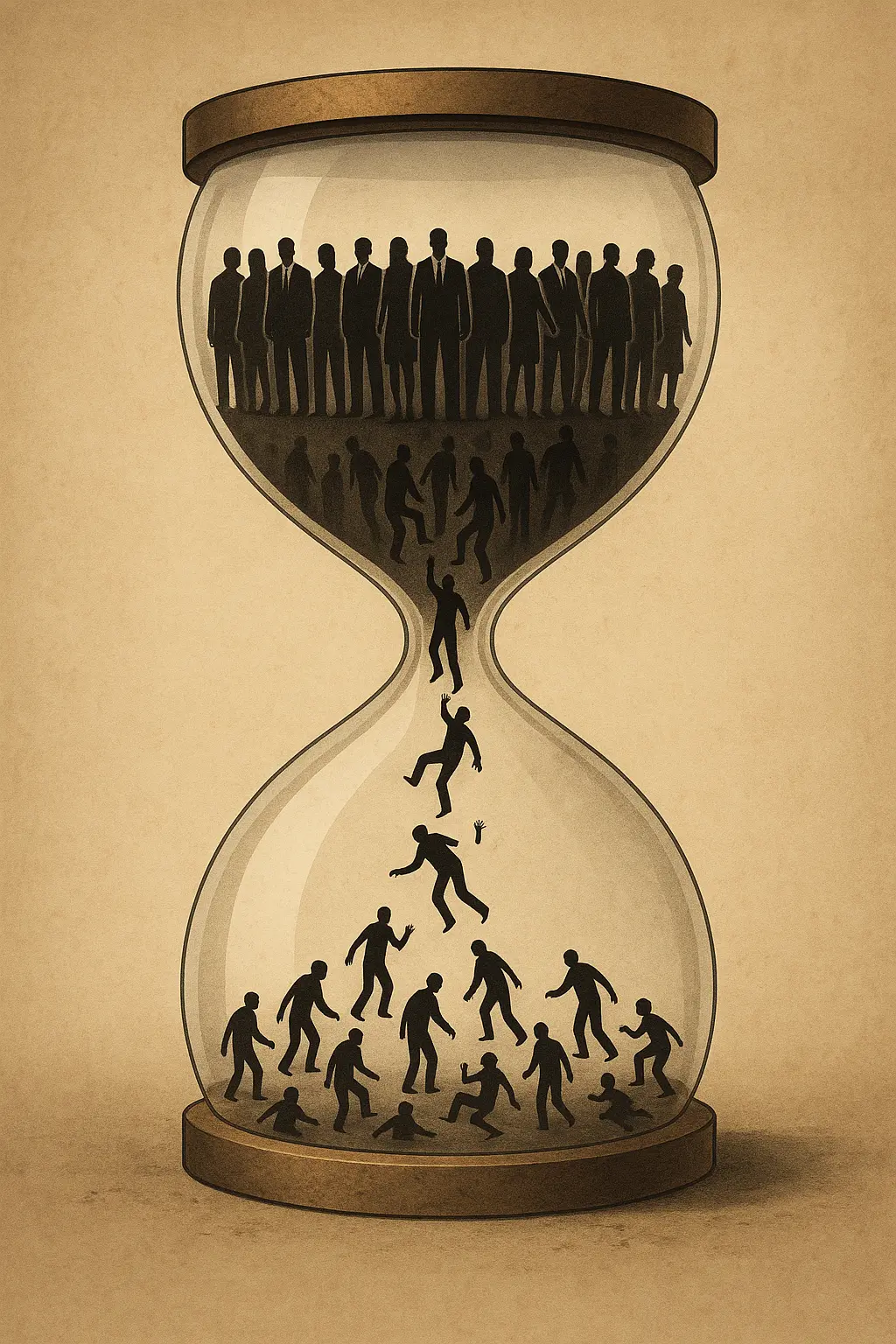
A large hourglass filled with faceless black silhouettes in business attire. The figures in the top bulb stand crowded together, gradually falling through the narrow middle where some tumble and others struggle to climb back up. In the lower bulb, fallen figures scatter across the ground, some standing, some collapsed. The background is warm beige, evoking aged paper, giving the image a symbolic and somber tone.

We have all heard the popular idea that it takes 10,000 hours of practice to master a skill. Play your guitar for that long and you will be a virtuoso. Paint for that long and you will know the brush like your own fingers. Write for that long and you will dance fluently with language.

Here is the uncomfortable question that is rarely asked in motivational seminars:
What if you have been putting in your hours, but into becoming something you never intended to be?


The Brain Does Not Care What You Practice

Your brain is a pattern-making machine that rewards repetition. It does not stop to ask whether the habit you are building is good for you, whether it aligns with your values, or whether it is slowly strangling your spirit.

If you have spent years submitting to systems, you are not just surviving. You are learning to submit. You are becoming fluent in self-silencing, pleasing authority, and clock-watching.

This is why “I have been doing this for years” is not always a badge of honour. Sometimes it means you have spent years perfecting a cage.


Work as a Covert Training Ground

The workplace can be a breeding ground for this kind of unintentional mastery. A dead-end job does not only give you a payslip. It gives you muscle memory for compliance.

You get good at the customer service smile.
You get good at keeping your head down when things are not right.
You get good at swallowing the words you actually want to say.

Clocking in and zoning out is not neutral. It is conditioning. It is training you to keep existing inside a box, even when the lid is wide open.


When Mastery Becomes Entrapment

There is a cruel irony in becoming excellent at something you never wanted in the first place.

“They say I am great at my job,” you tell yourself. But is it a job you truly chose? Or is it a job you got trapped in because you became too good at surviving it?

Once you have invested thousands of hours into a coping strategy, it can become harder to leave it behind. You have built identity around it. You have mastered the art of endurance in a place that does not deserve your loyalty.


The Sword Cuts Both Ways

Mastery is not inherently good. It is simply focus repeated over time. The sword cuts both ways.

You can become a master of freedom, creativity, and self-direction.
You can also become a master of obedience, self-erasure, and learned helplessness.

You are always becoming something. The question is: is it something you would choose?


Redemption Through Repatterning

The good news is that mastery can be rewired. Every skill you have mastered in the service of survival can be repurposed for something better.

The adaptability you learned under pressure can fuel your creativity.
The patience you built in monotonous routines can become the discipline that drives your art.
The diplomacy you honed with unreasonable bosses can become a superpower for navigating your own projects and relationships.

Awareness is the first cut that breaks the loop.
From that moment, every hour you spend becomes an act of reclamation.


Do not just chase mastery.
Ask yourself, mastery of what?
And in service of whom?

Your 10,000 hours are precious. Spend them like they matter.

Honestly, the Zombie Apocalypse Sounds Kinda Nice!

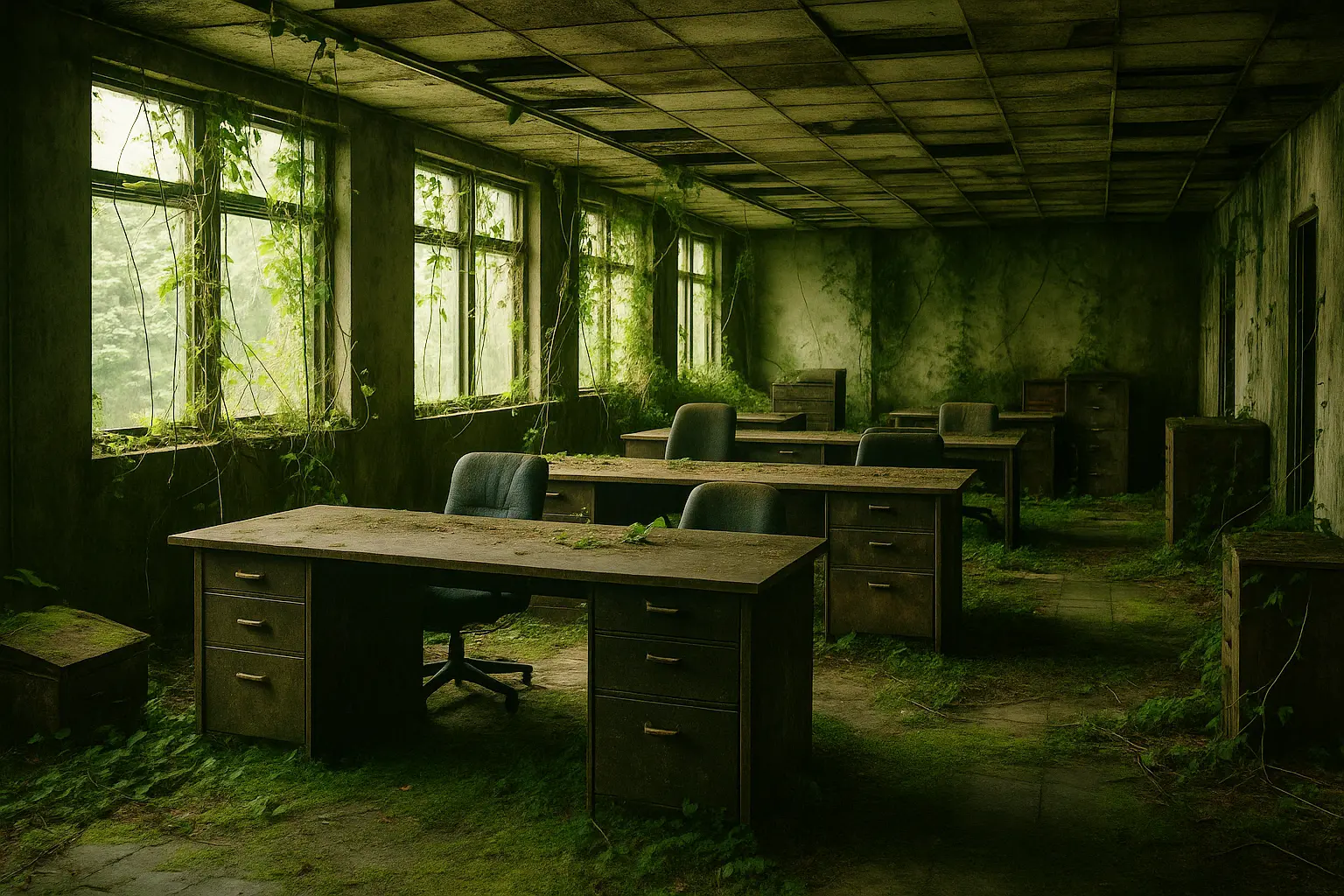
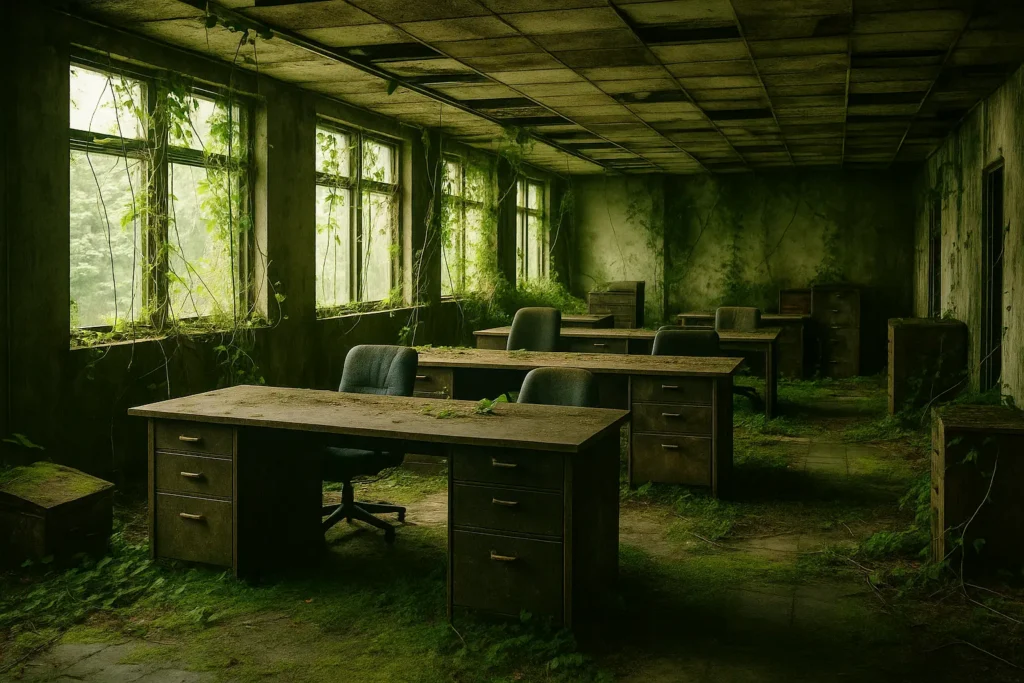
An image of the interior of an office building that has been reclaimed by nature.

Survival horror games. Apocalyptic movies. Zombie TV shows. They keep showing us the end of the world.

And the strange thing is, I find it comforting.

Not the death, or the gore, or the terrifying monsters.
But the quiet that follows.

In games like The Last of Us, in the atmosphere of 28 Years Later, in the long, dangerous walks through empty cities overrun by moss and silence, there is a strange kind of peace. These stories are about zombies, sure, but only in the way that space operas are about rockets. The real story is human.

Stripped of society, of rules, of etiquette and expectation.
Just survival. And with it, a return to something real.


A Common Fantasy, Quietly Shared

I don’t think I’m alone in this. There’s something telling about how many people are drawn to post-apocalyptic settings. We say it’s escapism, but maybe it’s something deeper. Maybe it’s yearning.

A yearning for everything to finally break, so we’re allowed to default back to our instincts. Those instincts haven’t disappeared, but capitalism has twisted them. Turned survival into branding. Turned curiosity into productivity. Turned strength into silent compliance.

In the fantasy, that spell is broken. We move freely. Nowhere is off-limits except by danger. If you’re brave enough to go, you go. And if you make it out alive, you learn something.

Maybe even about yourself.


A World That Makes Sense Again

You don’t need to fill out a form to matter. You don’t need to chase social media followers to have value. You don’t need a degree, or a permit, or a job title to justify existing.

You just survive. You help others survive. You find food. You stay alert. You sleep lightly. You protect your friends. You trust your gut.

The world becomes dangerous, yes — but finally understandable.


The Beauty of Nature Reclaiming

There’s an awe in seeing vines wrap around office buildings. Trees pushing through broken floor tiles. Roads cracked open and filled with moss.

It’s not just beautiful. It’s poetic.

The industrialised world thought it was permanent. But nature is patient. And in the fantasy, it doesn’t just survive. It reclaims.

It takes back the places that were stolen from it. Quietly. Persistently. Without anger.


Bureaucracy Is the Real Monster

The zombie apocalypse gives us a breath of relief from bureaucracy.

No more tax codes. No more emails. No more forms to fill in triplicate to get permission to be a human being. No more ten-step processes to access your basic rights.

The systems we live under have been patched and repatched so many times, they don’t even resemble their original purpose. Like buggy code that’s been layered with fixes until no one remembers what it was supposed to do in the first place.

Maybe the end of the world is the only bug fix that actually works.


Maybe I’d Finally Be Allowed to Live

I’m not saying I want civilization to collapse.

I’m saying that if it did, I might finally feel like I have a fighting chance.

The world we live in now feels like it was built to crush people like me. People who see too clearly. People who question. People who can survive, but only if allowed to act on their instincts without being penalized for them.

Maybe the end of the world wouldn’t be the end of me.

Maybe it would be the first time I was allowed to live.

The Power of Autism

I have been called dangerous.

And I used to believe that meant something was wrong with me. That I was unstable, threatening, or too much to handle. But I’ve come to realize something quietly powerful:

They were right.

Not because I’m violent. Not because I’m malicious. But because I see through the lies. I refuse to pretend things make sense when they don’t. I question rules that serve no one. I notice manipulation that others are too polite to acknowledge. I don’t respond the way I’m “supposed to.” And that makes me dangerous — not to people, but to systems.

To employers who want obedience without question. To schools that value quiet compliance over curiosity. To social environments that punish authenticity. To any structure built on pretending.

Autism isn’t a failure to understand society — it’s a refusal to play along with what is obviously untrue. And when you stop trying to contort yourself into the shapes demanded by others, they often react with fear. Or worse, pity. But sometimes, even fear disguised as pity.

I used to think that being strong meant fighting back. Now I see that strength is not being absorbed by the adversity at all. To stand at the eye of the storm — not bracing, just being.

Like Neo at the end of The Matrix, I’ve stopped wasting energy dodging the bullets. I just… watch them.

Because I’ve pieced it all together. All the parts that didn’t add up. The social games. The rules that contradict themselves. The “common sense” that collapses under scrutiny. It all forms a picture now. A picture of a system that’s afraid of people who won’t be fooled by it.

So yes — I am dangerous. And I’m done apologizing for it.