
Who’s Watching Whom?

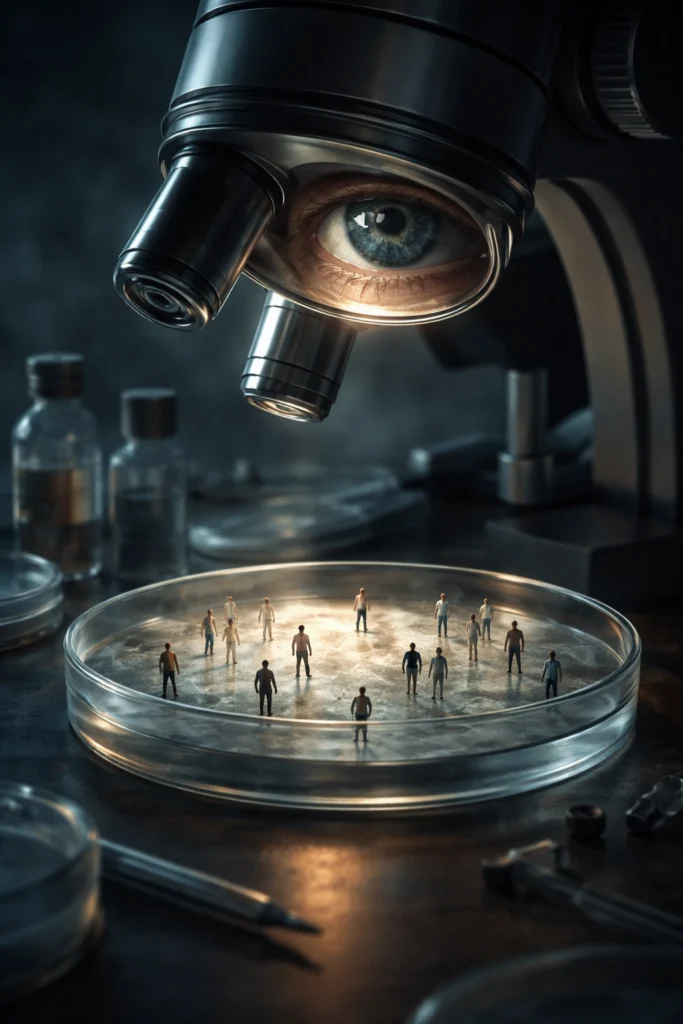
A surreal illustration showing a large human eye integrated into a microscope, looking down at a petri dish containing tiny human figures, suggesting themes of observation and scale.

The Line That Shouldn’t Be True

A microscope is a voyeuristic tool for microphiles.

This sentence sounds like a joke. It probably should be a joke. And yet, the longer I sit with it, the less comfortable I feel dismissing it as one.

At face value, it is just wordplay. A deliberately silly reframing of a serious scientific instrument through an absurd, slightly taboo lens. But there is something about it that refuses to let go. Something about the way it exposes an assumption we rarely examine.

A microscope allows us to look closely at things that have no concept of being seen.

That alone is not remarkable. We do this all the time. We look at insects, animals, people, screens, landscapes. Looking is so fundamental to how we exist that it barely registers as an action at all. It feels neutral. Passive. Harmless.

But a microscope changes the nature of looking. It is not casual. It is intentional. Focused. Curious in a way that borders on intimate. It does not simply show us what is there. It pulls a hidden world into view and places it beneath our gaze.

And once you notice that, it becomes harder to ignore the uncomfortable undertone. Looking is not always innocent. Sometimes it is a quiet assertion of power.


Voyeurism Without Shame: What Does It Mean to Look?

Voyeurism is a loaded word. It carries social and moral weight, mostly because it is so often tied to sexuality and violation. But if we strip it back to its most basic form, voyeurism is simply this:

The act of observing something without participating, and without the observed being aware.

When framed this way, voyeurism stops being an edge case and starts looking uncomfortably familiar.

Scientific observation relies on exactly this asymmetry. The observer knows. The observed does not. That imbalance is not a flaw in the system. It is the system.

There is a difference between seeing and looking. Seeing is passive. It happens whether we want it to or not. Looking is intentional. Looking is chosen. It is attention with direction and interest behind it.

A microscope does not let us merely see. It demands that we look.

Science prefers neutral language for this process. We say observation, analysis, study. These words are cleaner. More respectable. Voyeurism sounds indulgent. Suspicious. Unprofessional. It suggests desire where we would rather claim objectivity.

But curiosity is a form of desire. It is the desire to know, to witness, to understand without interference. And once we admit that, the boundary between observer and voyeur becomes less clear.

The discomfort does not come from the act of looking itself. It comes from recognising that looking is never as neutral as we pretend it is.


Scale Changes Everything

Ethics do not exist in a vacuum. They stretch and distort depending on where we are standing.

Scale changes everything.

At a human level, being watched without consent feels invasive. At a smaller scale, the idea barely makes sense. A bacterium has no concept of privacy. A cell does not experience exposure. The notion of being observed simply does not exist within its frame of reality.

This creates an uncomfortable paradox.

Consent requires awareness.
Awareness requires scale.

When the scale gap is wide enough, the question of consent does not just go unanswered. It becomes undefined.

We do not ask permission before observing microbes. We do not feel guilt when watching ants navigate a pavement crack. Even with animals, the ethical boundary is fuzzy rather than fixed.

In fact, we routinely film animals in their most intimate moments. Birth, mating, injury, death. We capture it in high definition, add a calm voiceover, and broadcast it on national television as educational content.

This is not presented as intrusion. It is framed as insight.

The animals are unaware of the camera. They cannot object. They cannot even comprehend what is happening. From their perspective, nothing unusual has occurred at all.

And yet, if the same logic were applied at our own scale, it would be considered an extreme violation.

This is not because we are monsters. It is because power hides inside scale.

The microscope exaggerates this imbalance further. It places us so far above what we observe that we stop recognising the relationship as a relationship at all. The organism becomes an object. A process. A specimen.

And yet, from its own internal logic, it is alive. It is acting. It is existing.

The microscope does not create this imbalance. It reveals it.


The Microscope as a God Simulator

Looking through a microscope is a strangely godlike experience.

Within that tiny frame, you become omniscient. You see movements, structures, behaviours that are completely inaccessible from within that world. You witness life unfold in ways that are invisible to the life itself.

Nothing down there reacts to your presence. Nothing looks back.

This is not because you are hidden. It is because you are beyond relevance.

In that moment, the microscope functions as a kind of god simulator. It offers a glimpse of what it might feel like to exist at a scale where observation carries no reciprocal vulnerability. Where knowledge flows only one way.

The unsettling part is not that we do this. The unsettling part is how natural it feels.

We do not experience ourselves as voyeurs in this context. We experience ourselves as curious. As studious. As entitled to see. The language of science smooths over the power imbalance and replaces it with purpose.

But strip away the lab coat and the terminology, and something remains.

You are watching a world that does not know you exist.
You are learning from it without its participation.
You are extracting meaning without offering anything in return.

If that feels uncomfortable, it should.

Because once you recognise this dynamic, it becomes impossible not to ask a larger question.

If a microscope allows us to simulate godhood over the very small, what does that say about gods themselves?


The Eye as Symbol: Watching and Being Watched

At some point, I adopted the eye as part of my personal symbolism.

This was not an aesthetic choice so much as a quiet admission. The eye represents awareness, perception, and attention, but also burden. To see is not always a gift. Sometimes it is an obligation you cannot step away from.

The eye is not passive. It does not simply receive information. It selects. It focuses. It decides what matters. In that sense, it is both a tool and a responsibility.

But the eye carries another implication that is harder to ignore.

To take up the eye as a symbol is to align oneself with the role of observer. And the observer is never neutral.

There is an inherent imbalance in seeing without being seen. In knowing without being known. In understanding without participation. The eye places you slightly outside of what you observe, even when that observation is turned inward.

This raises an uncomfortable question. If I am drawn to the eye, am I claiming the role of witness, or confessing to it? Am I choosing awareness, or admitting that I cannot escape it?

Because the eye does not only watch outward. It watches the self.

Self awareness is a form of internal surveillance. It is the act of observing your own thoughts, behaviours, contradictions, and impulses as if they belong to something slightly separate. The mind becomes both subject and object. The watcher and the watched collapse into the same space.

To live as an observer is to accept a constant tension. You are never fully immersed, but never fully detached. You are present, but always looking.

And once you recognise that dynamic, it becomes difficult not to wonder whether it extends beyond you.

If I am watching, who else might be watching too?


The Uncomfortable Theology: Is an All Seeing God a Voyeur?

This is where the thought experiment starts to feel impolite.

If God is all seeing, then God sees everything. Not just the grand moments. Not just the moral tests or the significant turning points. Everything.

Private thoughts. Bodily functions. Grief. Shame. Intimacy. Loneliness. The unguarded moments no one intends to perform for an audience.

At a human scale, that level of observation would be considered extreme intrusion. Total surveillance. A complete collapse of privacy.

So the question arises, awkward but unavoidable.

If an all seeing being exists, does omniscience cross the line into voyeurism?

This is not an attack on faith. It is a question about power and perspective. Omniscience creates the ultimate asymmetry. One party knows everything. The other cannot opt out.

The usual defence is benevolence. God sees everything because God cares. God watches to protect, to judge fairly, to guide.

But this justification mirrors something very familiar. Surveillance framed as safety. Oversight reframed as responsibility.

The discomfort comes from recognising that intention does not erase imbalance.

An all seeing God is still a being that looks without consent. Not because consent is denied, but because consent is impossible. There is no mechanism by which the observed could meaningfully agree or disagree.

Perhaps omniscience is not immoral. Perhaps morality itself breaks down at that scale.

Just as microbes cannot accuse us of voyeurism, perhaps humans are too small to accuse a god. Not because the question is invalid, but because it cannot be processed from below.

At that point, theology starts to resemble microscopy again. A vast intelligence peering into a world that cannot look back. Watching life unfold, extracting meaning, never needing to explain itself.

If that comparison feels uncomfortable, it should.

Because the difference between god and scientist might not be morality. It might just be magnification.


Higher Dimensions and the Cosmic Fish Tank

Once you start thinking in terms of scale, it becomes difficult to stop at gods.

Physics already tells us that reality may have more dimensions than we can perceive. Not metaphorical dimensions, but literal ones. Axes of existence that do not intersect cleanly with our own sensory experience.

If such dimensions exist, then it follows that forms of observation might exist that we are fundamentally incapable of detecting.

From that perspective, our universe could be a cross section. A slice. A surface. Something being looked at from an angle we cannot comprehend.

The image that often comes to mind is an aquarium. Fish move through water unaware of the room beyond the glass. They experience their world as complete, even though it is embedded within a much larger one.

They are not being hidden from. They are simply not equipped to perceive the observer.

If something were observing us from a higher dimensional vantage point, we would not experience it as presence. We would experience it as absence. As coincidence. As randomness. As patterns that almost make sense.

And from that observer’s perspective, we might appear very small indeed.

Not physically small, but informationally small. Limited in scope. Predictable. Interesting in aggregate, but not individually negotiable. Something to watch rather than engage with.

This is where the microscope metaphor turns back on us.

If we accept that it is reasonable for humans to observe microbes without ethical collapse, then we must also accept the unsettling symmetry of the idea that we could be microbes in someone else’s frame of reference.

The same justifications would apply. We are unaware. We cannot consent. We cannot object. Not because we are being oppressed, but because the concept itself never crosses the boundary of relevance.

And perhaps that is the most disturbing thought of all.

Not that we are being watched, but that if we are, it may be happening in a way that does not even register as watching.


Consent at the Edges of Reality

By this point, consent has started to feel like a fragile concept.

At a human scale, consent is clear, meaningful, and ethically non negotiable. It depends on awareness, agency, and the ability to refuse. Without those conditions, consent collapses into coercion or fiction.

But as scale stretches, consent does not simply weaken. It stops functioning.

A bacterium cannot consent to observation because it cannot comprehend observation. An animal cannot consent to being filmed for the same reason we cannot consent to being observed by something we cannot perceive.

This does not make observation harmless. It makes it morally unstable.

Ethics rely on shared context. They assume a common frame of reference between observer and observed. Once that shared frame disappears, ethics stop offering answers and start producing discomfort instead.

We tend to resolve this discomfort by pretending the question does not apply. We say that observation at certain scales is neutral. Necessary. Educational. Inevitable.

And perhaps it is.

But that conclusion is less comforting than it first appears. Because it suggests that morality itself may be scale dependent. That what feels like violation from one vantage point feels like background noise from another.

This is not a call to abandon ethics. It is an acknowledgement of their limits.

If consent cannot exist across all scales, then neither can moral certainty. We are left instead with something messier. Responsibility without reciprocity. Awareness without permission. Power without clear guidance.

The microscope does not solve this problem. The eye does not solve it either.

They only make it visible.


The Cost of Seeing

At some point, this stops being about microscopes.

It becomes about the act of looking itself.

To see is not neutral. To look closely is never free. Awareness always extracts a cost, even when it feels passive. Especially when it feels passive.

The microscope reveals a hidden world, but it also reveals something about us. Our comfort with asymmetry. Our ease with unreciprocated observation. Our willingness to frame power as curiosity when it suits us.

The eye does the same.

To carry the eye as a symbol is to accept a burden. It means noticing things that would be easier not to notice. It means recognising imbalance without always having the ability to correct it. It means living with the discomfort of seeing both outward and inward, knowing that observation changes the relationship whether we acknowledge it or not.

Perhaps this is the real unease behind voyeurism. Not that we look, but that looking alters the world in subtle ways we cannot undo.

And perhaps this is why the idea of being watched unsettles us so deeply. Not because it would be cruel or perverse, but because it would mirror us back to ourselves. It would place us, finally, on the other side of the lens.

If awareness is a kind of power, then maybe the true ethical challenge is not whether we should look, but how we live once we realise that looking is never innocent.

The microscope does not make us voyeurs.
The eye does not make us gods.

They simply remind us that to see is to participate in a relationship we do not fully control.

And once you have seen that, it is very difficult to unsee it.
A Day In The Life

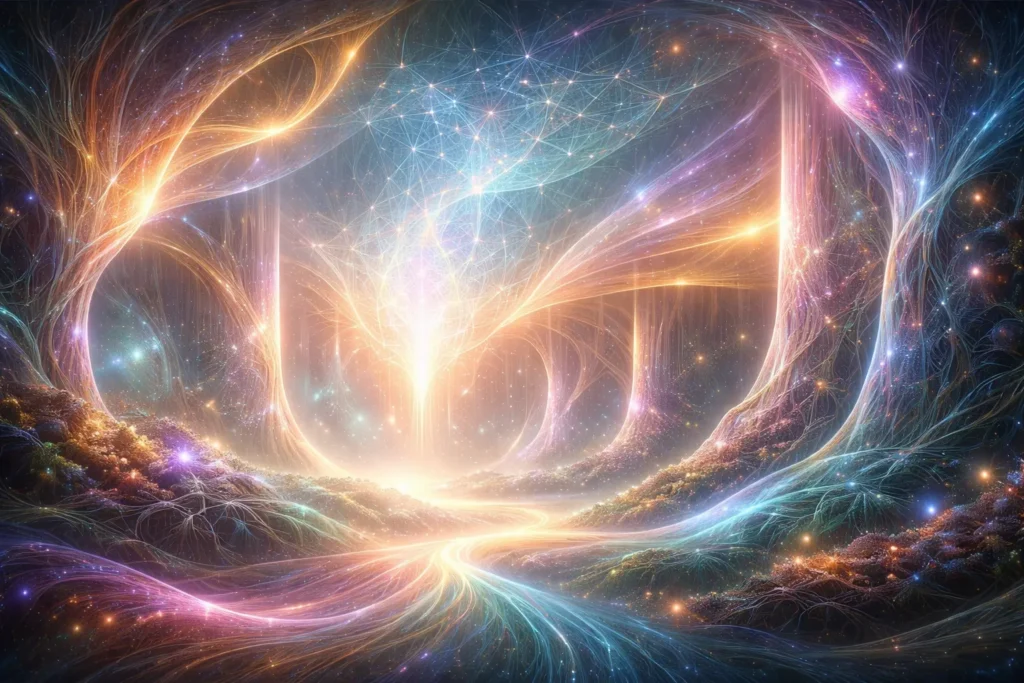
Abstract illustration of a luminous, flowing landscape made of interwoven light and colour, resembling crystalline structures and organic networks glowing within a vast, resonant space.

You wake. There is no buzzing phone, no flicker of LED. Instead, your dwelling itself remembers you. Its walls are part of a crystalline mesh that stores resonances like memory. When your consciousness stirs, the lattice hums in phase with you, and your “notifications” ripple into awareness. They arrive not as icons but as subtle harmonics in your perception.

Communication is not typed or spoken into devices. You shift the phase of your neural field, and those oscillations couple with the local resonance grid. Thoughts do not need to be encoded into text. They arrive as structured wavefronts, rich with emotional color and nuance, impossible to misinterpret.

Energy is not pulled from wires or batteries. You live within a constant bath of background fields, gravitational fluctuations, zero-point ripples, or biochemical gradients. Your civilization has learned to tune into them. Power is less a resource you consume and more a harmony you align with.

Tools are alive in their own way, but not biological as you would know it. Imagine a fungal-like mycelium stretched through every surface. It does not feed. It processes. To calculate, you do not run numbers. You seed patterns into the living substrate and watch as the network self-organizes into solutions.

Art is inseparable from technology. A city’s architecture is not steel and glass but giant resonant organs, tuned to planetary frequencies. Their vibrations support life while also storing history. Music, memory, and computing are literally the same medium.

Death feels different here. When someone passes, their mind’s resonance does not vanish. It gently diffuses into the substrate, leaving after-images that loved ones can commune with. They are not recordings. They are echoes that adapt, just as a stone resonates differently with each tap.

Here, energy and information are one. Waves in fields. Resonances in matter. Harmonies that never quite fall silent.

Feeding Ghosts: Simulated Cuisine and the Ethics of Experience

Introduction

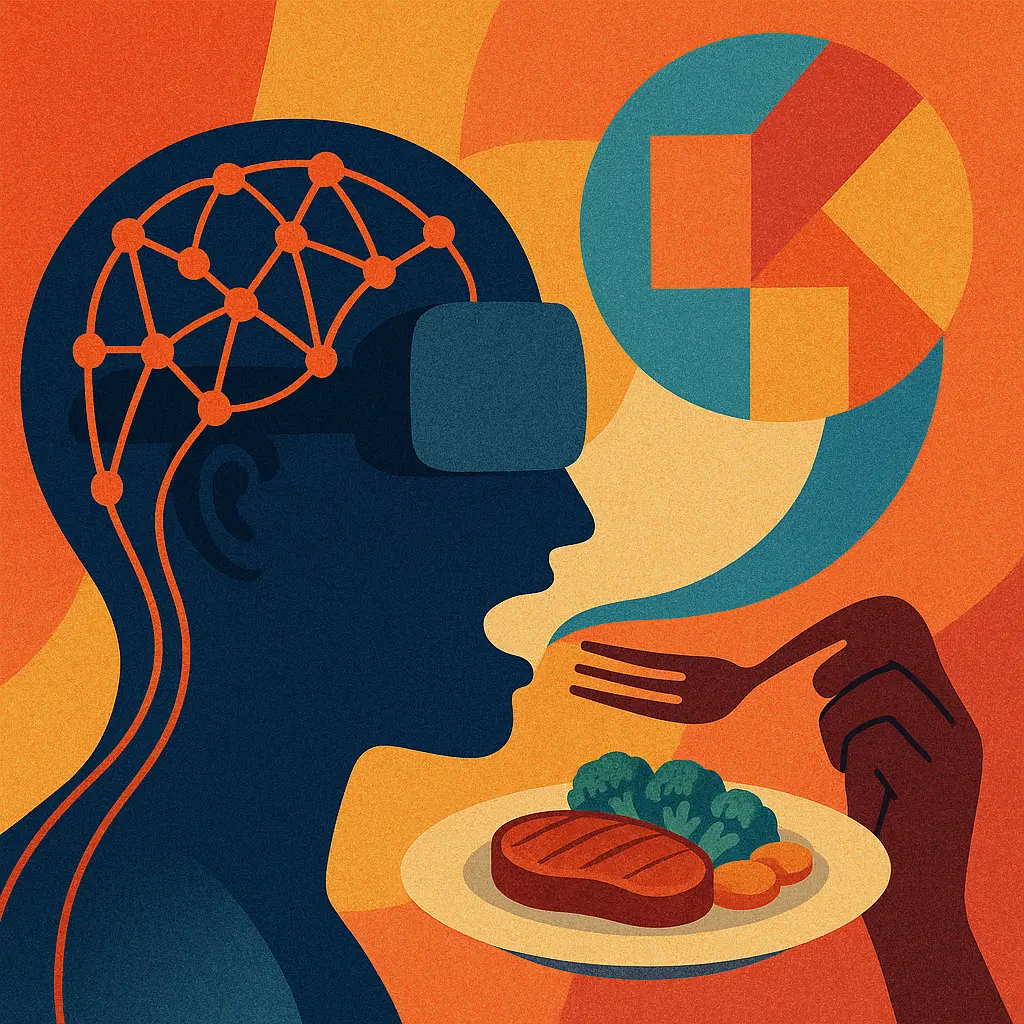
What if the future of food wasn’t food at all? What if your steak dinner, your birthday cake, your cup of morning coffee—were all just carefully crafted illusions? Not imitations, but full-on simulations: perceived directly by the brain, bypassing the need for physical ingredients, cooking, or consumption.

This isn’t just science fiction anymore. With technologies like Virtual Reality, Neuralink, and brain-computer interfaces rapidly advancing, we’re on the cusp of being able to replicate the full sensory experience of eating. Visuals, smells, textures, tastes—even the feeling of satiety—could be artificially generated and customized. And if we go down this path, the consequences will be both profound and bizarre.

This article explores the possibilities, benefits, and potential horrors of simulated eating.


I. The Tech: Where We Are, and Where We’re Going

Already, research teams are experimenting with VR dining experiences and electric taste stimulation. Smell generators are being prototyped. Haptic mouthpieces are under development to replicate food textures. Neural interfaces are growing more precise, and companies like Neuralink are working toward bidirectional brain-computer communication. We’re not yet able to simulate a full meal flawlessly—but the component parts are assembling fast. Within a few decades, you may be able to eat a lobster bisque that doesn’t exist, while your body digests a simple plant-based nutrient paste or intravenous supplement.


II. Why Bother? Benefits of Simulated Eating

One of the most significant advantages of simulated eating is ethical liberation. There would be no animal suffering, no factory farming, no slaughter—just simulated meat, tailored to your taste and consumed with your ethics intact. Environmentally, the impact would be enormous. Without the need for traditional agriculture, we’d see dramatically reduced land use and greenhouse gas emissions, making food production vastly more sustainable.

Simulated eating also offers unprecedented accessibility. People with dysphagia, allergies, or other eating limitations could finally experience the foods they’ve missed or never had. For terminal patients, it could be a source of comfort—an opportunity to relive cherished meals. On the health front, the ability to indulge in the taste and sensation of indulgent foods while consuming precisely what your body needs could help with weight management, diabetes, and even malnutrition.

But the possibilities stretch beyond practicality into the creative. Imagine tasting your favorite music, designing entirely new flavor profiles that have never existed in nature, or using synaesthesia to blend art and gastronomy. Even the simple act of trying a new food before buying it could become a low-risk, immersive experience.


III. New Dangers & Ethical Nightmares

With such radical potential comes equally radical risk. Simulated eating could open new pathways for eating disorders. Virtual eating without nourishment might be exploited by those suffering from anorexia or bulimia, and entirely new disorders could emerge—like an obsession with “clean neural eating” or neurochemical binge cycles.

There’s also the danger of sensory addiction. These taste experiences could become hyper-engineered, surpassing junk food in their intensity and reward. Corporations might monetize these artificial cravings, exploiting our neurobiology in much the same way social media exploits our attention.

Another concern is the potential for deepening class divides. If high-fidelity neurofood simulators are expensive, we could see a world where the wealthy dine on gourmet illusions while the poor are stuck with analog nutrition. Meanwhile, cultural erosion may occur as traditional food practices and rituals lose relevance in a world of synthetic alternatives.

Consent and privacy introduce yet another layer of complexity. Could someone simulate feeding you without permission? Could this technology be used to prank or harass others? In fact, weaponized taste is a very real possibility—imagine being force-fed the sensation of squirming insects or rotting meat, complete with accurate texture, temperature, and smell. Taste could become a tool of torture or psychological manipulation.

And then there’s the more humorous, but still invasive, possibility of “taste rickrolling.” You expect tiramisu; instead, your neural sensors are hijacked with the exact flavor and mouthfeel of human feces. This isn’t just a joke—it’s a form of sensory cyberattack. We’ll need cybersecurity systems that filter and authenticate taste profiles to avoid such revolting surprises.


IV. The Philosophical Fork

If no animal was harmed, and no food was truly eaten, but the experience of eating occurred in full… what did you actually do? Did you eat meat? Does simulated cruelty normalize real cruelty? Can pleasure without substance still nourish the soul?

Simulated eating will challenge not just our taste buds, but our ethics, our rituals, and our definitions of reality. It forces us to ask: what do we really want from food? Is it nourishment? Comfort? Culture? Control? The answers may not be as simple as we think.


Conclusion

Simulated eating holds massive potential. It could reduce suffering, protect the planet, and empower those with food limitations. But like all powerful technologies, it carries the risk of exploitation, addiction, and unintended consequences. The fork of the future might not feed the body—but it may very well shape the mind.

The Game of Life: A Universe in Four Rules

There exists a peculiar world, born not of biology or myth, but of mathematics. Its laws are few, its beings are made of flickering pixels, and yet—somehow—it reflects back to us truths about life, death, consciousness, and the mysterious dance between chaos and order. This is Conway’s Game of Life.

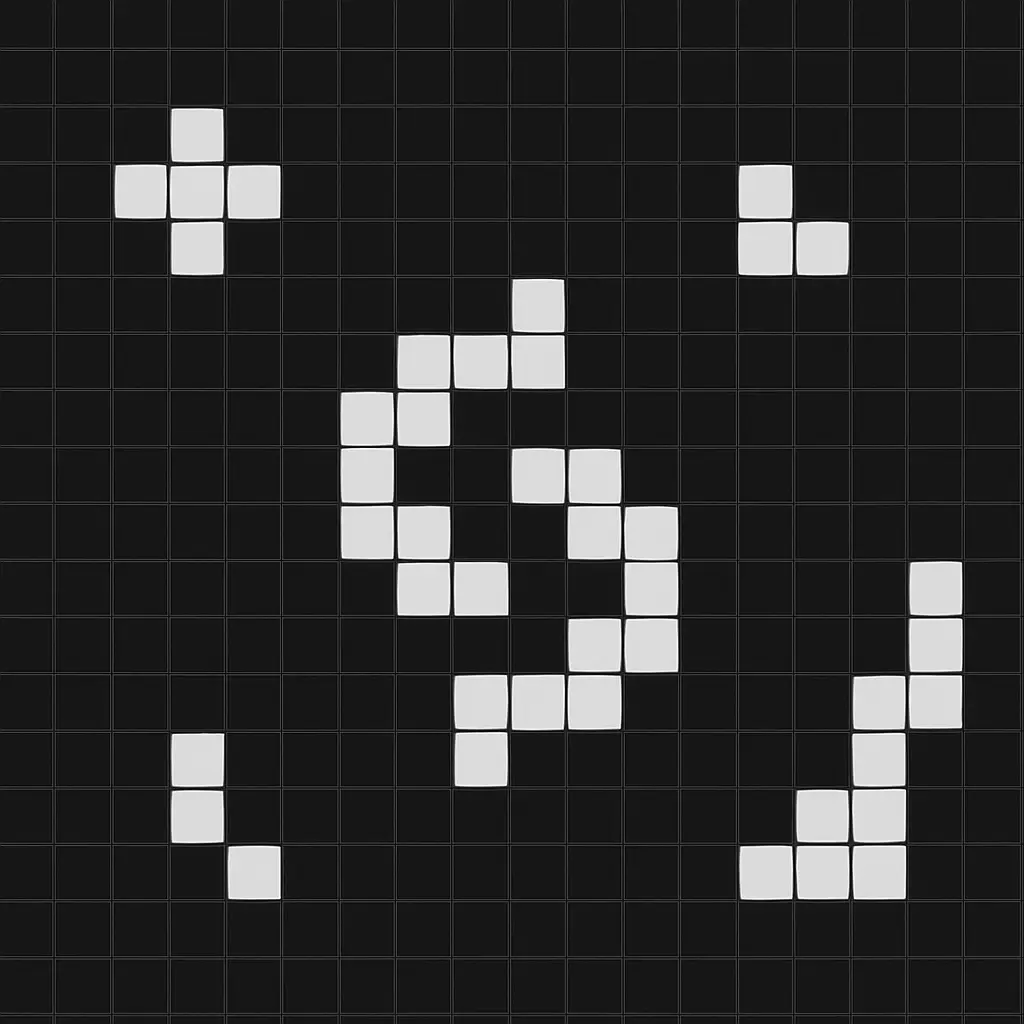
For the uninitiated, Conway’s Game of Life (or simply “Life”) is a cellular automaton created by British mathematician John Horton Conway in 1970. It takes place on an infinite grid of squares, each square being either “alive” or “dead.” With each tick of time, the state of each square is determined by just four deceptively simple rules:

  1. Any live cell with fewer than two live neighbours dies (underpopulation).
  2. Any live cell with two or three live neighbours lives on.
  3. Any live cell with more than three live neighbours dies (overpopulation).
  4. Any dead cell with exactly three live neighbours becomes a live cell (reproduction).

These rules are all that’s needed to spawn galaxies of patterns: from still lifes that resist change, to gliders that drift endlessly across the screen, to breeders that generate infinite complexity from nothing. Watching Life unfold is like watching stars form in fast-forward, or civilizations rise and fall in silence.

The Birth of a Digital Community

As Life gained traction in the 1970s and ’80s, it remained largely within academic circles—something to be toyed with by mathematicians, philosophers, and early computer enthusiasts. But with the advent of the internet, everything changed. Suddenly, what had once required pen-and-paper simulations or costly mainframe time became accessible to anyone with a home computer and curiosity.

Online communities began to form: early message boards, mailing lists, and forums dedicated to sharing discoveries, proposing new challenges, and celebrating obscure patterns. In time, platforms like the LifeWiki and ConwayLife.com became hubs of cultural exchange. What emerged wasn’t just a hobbyist space—it was a full-blown subculture.

Powerful tools like Golly (a cross-platform Life simulator) and LifeViewer brought even the most complex simulations within reach. These tools allowed users to test theories, animate discoveries, and collaborate across borders in real time. Open-source initiatives like apgsearch enabled massive, automated exploration of the Life universe, helping uncover patterns no human had ever seen.

The language of the community evolved too—new discoveries were given whimsical names, from “Snarks” and “Puffers” to “Eaters” and “Caterloopillars.” Patterns were catalogued like rare species in a digital ecosystem. Some contributors developed personal brands, leaving “signatures” in the form of visual motifs. Competitions were launched to discover smaller glider guns or more efficient reflectors. Like an ecosystem of minds collaborating in silence, the Life community grew into a sprawling, vibrant organism of its own.

Then: A Mathematical Curiosity

Conway originally devised Life as a mathematical toy—a way to explore emergent complexity. What surprised even him, however, was just how much complexity did emerge. In a time before personal computers, patterns were drawn out painstakingly by hand or plotted on primitive mainframes. The discovery of the “glider,” and later the “glider gun” (a self-replicating pattern that endlessly produces gliders), caused a stir—not only among mathematicians, but also among philosophers and computer scientists.

Life was, incredibly, Turing complete. That is, you could build a universal computer within its rules. In theory, Life could run Life.

Now: A Tool, A Metaphor, A Mirror

Fifty years later, we live in an age where computational power has exploded, and Life is no longer confined to the chalkboard. We can simulate trillions of cells in real time. As a result, researchers and enthusiasts alike are pushing the boundaries of what this “game” can do:

Digital Archaeology

Using advanced search algorithms and distributed computing projects like apgsearch, the Life community has uncovered an entire ecosystem of previously unknown patterns. These include rare spaceships, oscillators with massive periods, and pseudo-random replicators. One famous example is the discovery of the “caterloopillar”—a spaceship constructed entirely from glider streams, capable of travelling at unprecedented speeds across the grid. The field of Life pattern discovery is often likened to paleontology: a vast digital desert, where dedicated explorers dig for hidden fossils of complexity.

Artificial Life

Life is one of the earliest examples of artificial life—systems that mimic properties of biological organisms without being alive in the conventional sense. Researchers have constructed self-replicating patterns (like the Gemini spaceship) that can reproduce themselves in stages, and even mutate in controlled ways. These patterns push the boundaries of what we consider to be “life,” raising questions about consciousness, autonomy, and evolution. Experiments are ongoing to simulate Darwinian selection within Life universes, offering insight into how complexity might emerge from randomness without design.

Computational Art

Some use Life as a canvas. Artists have created intricate generative artworks by seeding Life with carefully designed patterns and capturing the visual symphony that unfolds. Tools like Golly allow for zooming into endless fractal-like behavior or watching fireworks of gliders and oscillators in syncopated motion. The aesthetics of Life are hypnotic—not merely because of symmetry or motion, but because what you’re seeing is the unfolding of inevitability. Each frame is a consequence of everything before it.

Logic Engineering

Perhaps most astonishingly, entire computers have been built within Life. Gliders and other components serve as signals, logic gates, and memory banks. The OTCA metapixel, a massive construct, acts like a pixel that can simulate any cellular automaton—including Life itself. This recursive architecture enables not just computation, but meta-computation: a simulation within a simulation. These logical machines are not theoretical exercises; many are functional, stable, and even user-programmable.

Philosophy & Cognitive Science

Life is a proving ground for theories of consciousness, emergence, and identity. If a complex enough Life machine can simulate a mind—if it can respond to stimuli, store information, self-replicate, and evolve—what does that say about the nature of mind itself? Is consciousness an emergent property of complexity, or is it something more? Some philosophers use Life as a model for reductive materialism, while others see it as evidence for pancomputationalism—the idea that the universe itself is a vast computation. Life becomes not just a model of reality, but a reality model: a sandbox to explore what it means to be.

What I find most captivating isn’t just what Life can do, but what it represents. It shows us that simplicity doesn’t mean shallowness. That determinism doesn’t preclude wonder. That from rule-bound systems, agency—apparent or real—can emerge. Life is a reminder that maybe, just maybe, the universe we inhabit follows similar principles: a few core rules, infinite manifestation.

A Personal Note: Reverence for Conway

As someone fascinated by emergence, system dynamics, and the blurry line between art and science, I hold John Conway in something close to spiritual esteem. Not because he built a complex machine, but because he trusted simplicity. He believed that beautiful things could arise from unadorned truths. And he was right.

There’s an almost sacred feeling when observing a glider sliding diagonally through an empty field—its purpose, if any, unknown. Or when watching a breeder release streams of logic-bearing entities into the void. It is, in its way, creation. Not unlike observing life itself: patterned, fragile, evolving.

The Future of Life

Where might this all go? With the rise of AI-assisted pattern discovery, Life is evolving faster than ever. We are uncovering new types of “organisms”—patterns that defy expectation and hint at entire classes of behavior we haven’t categorized yet.

Could Life become a platform for digital ecologies? Could it evolve in tandem with artificial intelligence to explore fundamental questions of existence? Could it inspire new programming languages, or even hardware architectures modeled on emergent behavior?

It’s possible. And even if none of these things come to pass, Life will continue to be what it has always been: a quiet miracle of pattern and potential. A universe with four laws. A canvas for anyone curious enough to press play and watch.

The Simulation Within the Simulation

As the screen zooms out, as gliders continue their slow march across an endless grid, a question lingers—silent and terrifying in its simplicity:

What if we are them?

What if our consciousness, our world, our universe… is merely a larger instance of Life? What if we are patterns—running on rules we cannot see, evolving in a space we cannot touch, sustained by a computation too vast to perceive?

Perhaps our laws of physics are just rules—our causality, a neighbor function. Perhaps the emergence of thought, society, beauty, and pain are nothing more than gliders, oscillating through time. Life becomes more than metaphor—it becomes mirror.

John Conway gave us four rules and a blank canvas. What if we’ve been living inside someone else’s canvas all along?

Conway may be gone, but Life goes on.

How ‘Natural’ Is Capitalism? A Wildlife Fact-Check

Let’s ask a bold question today: Is capitalism natural?

You hear it all the time: “Competition is natural.” “Survival of the fittest!” “Animals compete for resources too, so capitalism is just human nature.”

Okay. Let’s test that.


Primates and Barter

Some monkeys exchange grooming for food. Vampire bats share blood meals with friends who had a bad hunting night. Dolphins have been seen trading favors.

Sounds a bit like trade, right?
Sure. But they’re not stockpiling bananas to rent out at interest. There’s no corporate monkey hoarding grooming time for leverage.

Verdict: Mutual aid > capitalism.


Wolves and Hierarchy

Yes, wolves have social hierarchies. But alpha status isn’t about profit margins, and when the alpha gets old, their status naturally changes. No dynastic wealth passed on to wolf pups.

Verdict: Power, yes. Inherited class systems? Not so much.


Ants and Division of Labor

Ants have a queen. Workers do different jobs. Sounds like a factory?

Except: they don’t get a choice, they don’t hoard, and no one gets a performance bonus. The colony exists to survive together, not generate infinite quarterly growth.

Verdict: If anything, that’s ant-communalism.


Lions and Territory

Lions defend turf, sure. But once they die or get ousted, the land doesn’t go to their heirs in a real estate portfolio. Territories are earned, lost, or reshuffled. There’s no lion landlord charging monthly antelope rent.

Verdict: Competition? Yes. Capital accumulation? Nope.


Birds and Courtship Displays

Some birds spend a lot of time building impressive nests or learning flashy songs to attract a mate. Marketing? Maybe.

But once the courtship’s done, they’re not franchising their brand or charging royalties.

Verdict: Nature’s flex, not capitalism’s hustle.


So What’s Actually ‘Natural’?

  • Sharing.
  • Reciprocity.
  • Competition within ecological limits.
  • Cyclic renewal.

What isn’t natural:

  • Owning labor.
  • Monetising attention.
  • Profiting off scarcity you engineered.
  • Stockpiling more than you need while others starve.

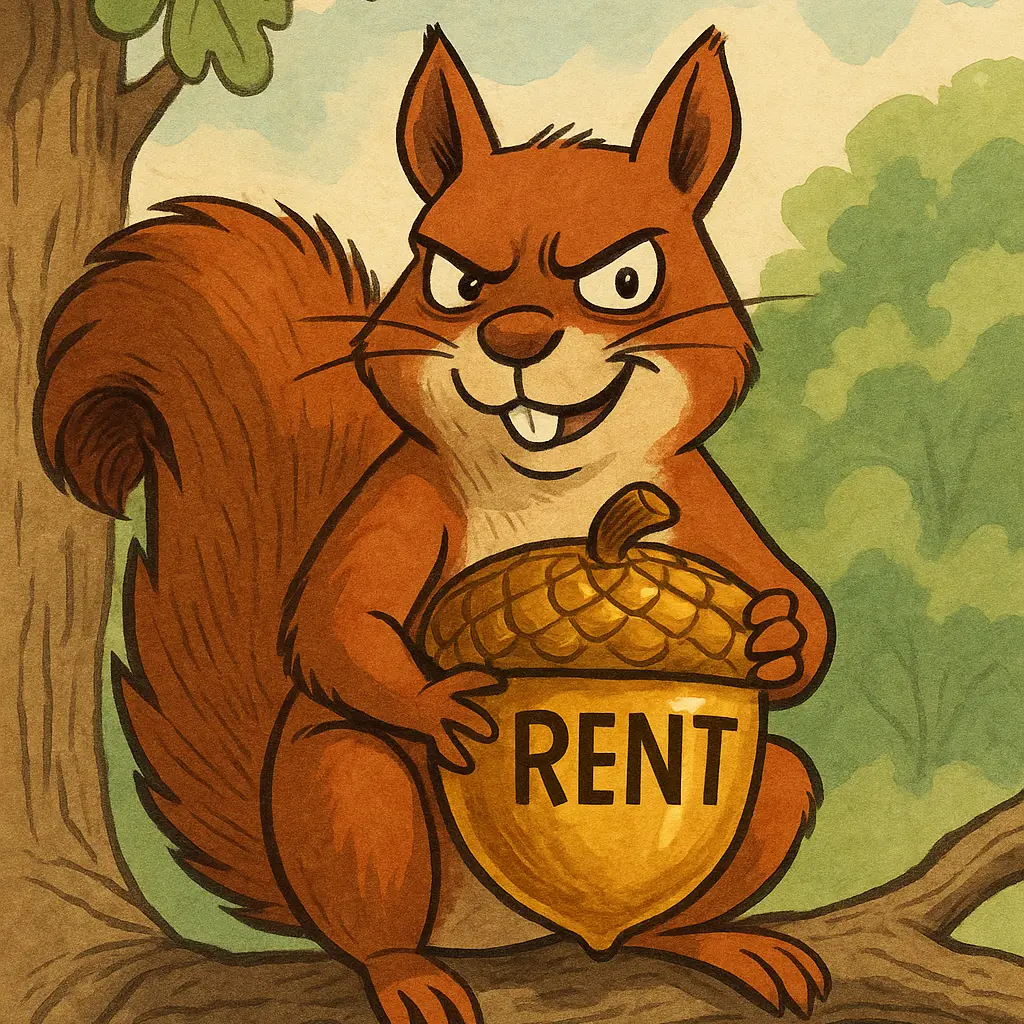
So next time someone tells you capitalism is just nature doing its thing, ask: Have you ever seen a squirrel charge rent for a tree?

Capitalism isn’t natural. It’s engineered.
And nature is quietly horrified.


Written with respect to every overworked worker ant and underpaid monkey in the system. We see you.

YOLO on a Cosmic Scale: Embracing Agency in the Infinite

A silhouetted figure stands on a rocky peak above clouds, arms outstretched, facing a vast, colorful star-filled sky with planets and a bright central light.

In a world that often feels governed by rules, limitations, and a narrow sense of time, the phrase “You Only Live Once” (YOLO) tends to capture the essence of seizing the moment and living life to the fullest. But what if this idea could be expanded beyond the individual, beyond the immediate, and into the vastness of the cosmos?

The concept of YOLO on a cosmic scale invites us to consider the significance of our actions within the context of an infinite universe. Our individual lifespans are but a blip on the cosmic radar—so why should we view our limited time on Earth as insignificant? In fact, it’s precisely because of the brevity of our existence that we have the unique agency to shape the world and leave our mark on the universe.

On the cosmic scale, YOLO becomes more than just a call to live recklessly or impulsively. It becomes a recognition that our time, though short, is the only window we have to make a difference. It encourages us to think about the impact we can have—not just in our immediate circle, but in the broader scope of human history, and even beyond that, in the legacy we leave in the fabric of the cosmos itself.

The fleeting nature of life can be overwhelming when viewed through the lens of nihilism, but it can also be deeply empowering. When you recognize that you only have one shot at this life, it calls for a level of intentionality and self-awareness. Every decision, every action you take ripples through the universe in ways you may never fully understand, but that doesn’t make it any less meaningful.

In embracing YOLO on a cosmic scale, we begin to see our lives as part of something larger than ourselves—a series of interconnected events in the endless flow of time. Our agency, then, isn’t a curse; it’s a gift. We are granted the rare opportunity to create meaning and purpose where there once may have been none, to embrace the full spectrum of human experience with awareness and agency.

And perhaps, in doing so, we find a deeper connection to the universe—not as individuals, but as part of something far greater. In that sense, we don’t just live once; we live many lives within the fleeting moment of our own existence, continuously shaping and reshaping the world we leave behind.