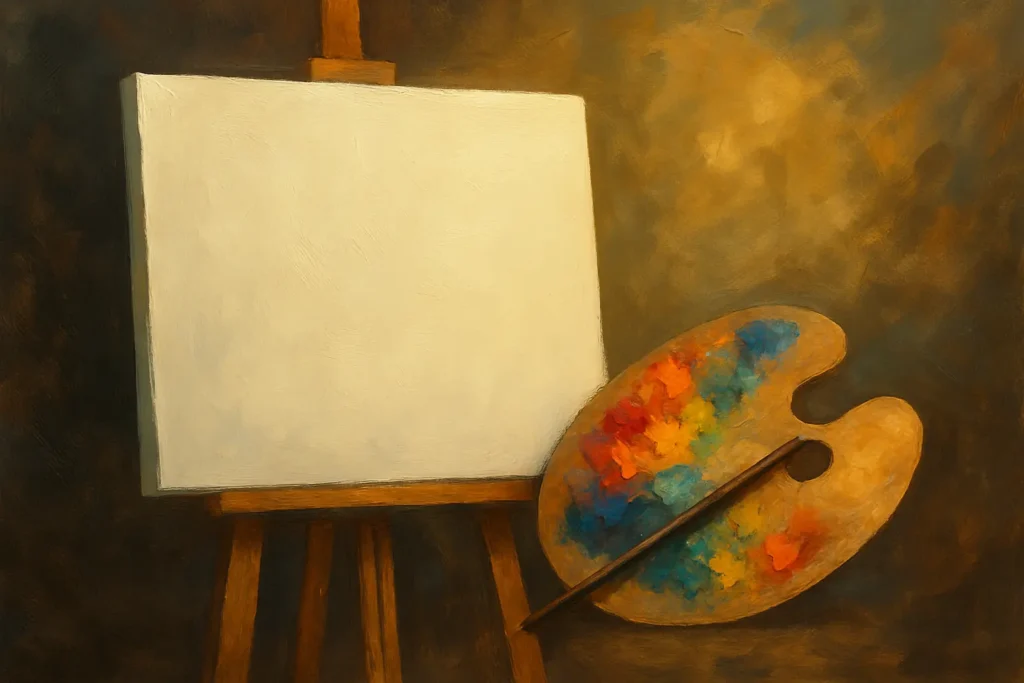
Nihilism: A Blank Canvas, Not a Dead End

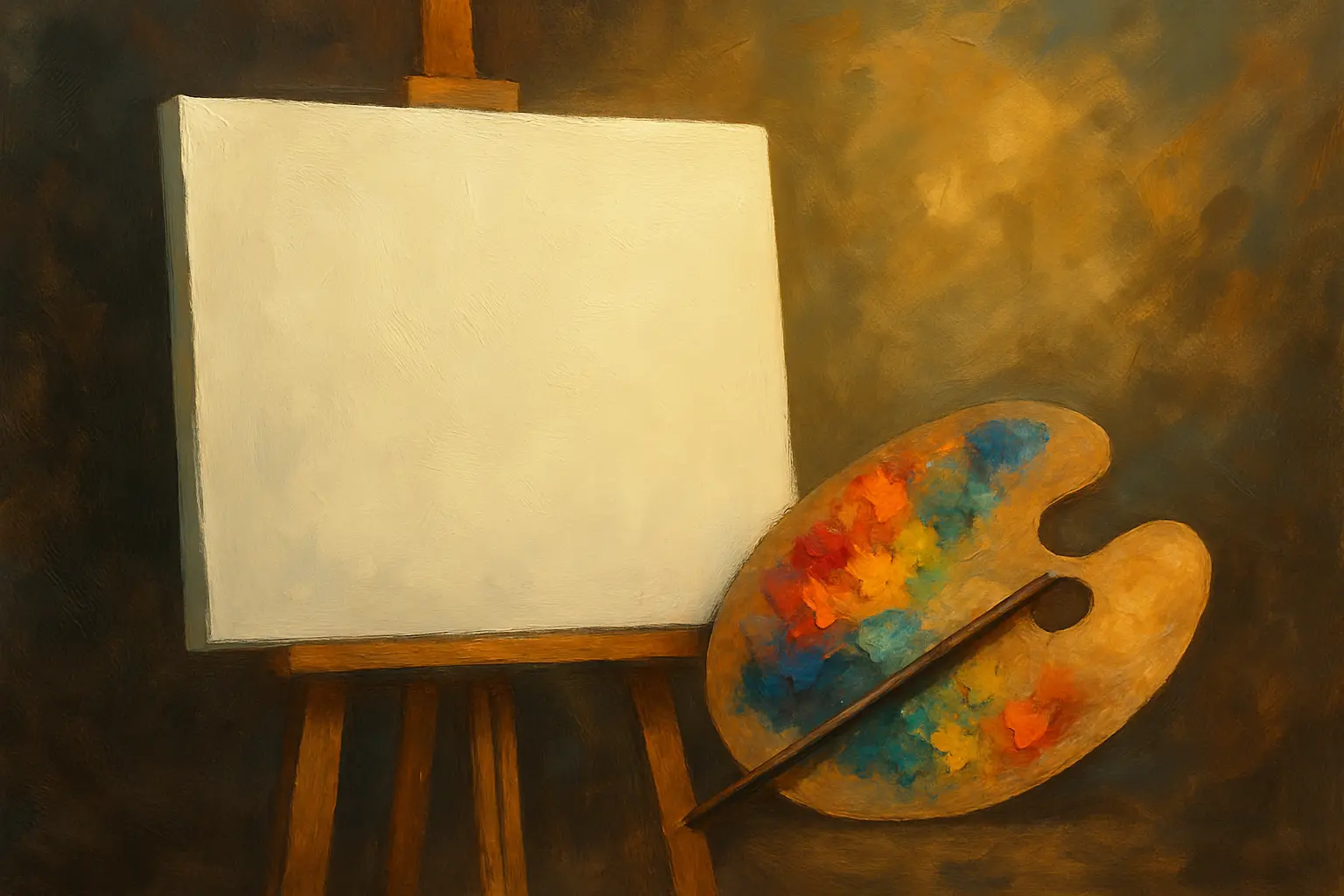
When most people think of nihilism, they often associate it with despair, emptiness, or a sense of meaninglessness. To some, it might feel like a philosophical dead end—a void where no purpose or value can exist. But for those who embrace it fully, nihilism is far from a negative or paralyzing concept. Instead, it’s an open canvas, waiting to be painted with the colors of your own choosing.

At its core, nihilism challenges the idea that inherent meaning exists in the universe. It tells us that there is no predefined purpose, no grand cosmic design, and no higher power dictating our fates. For many, this realization can be unsettling—if nothing has inherent meaning, then what’s the point of anything? But here lies the beauty of nihilism: it frees us from the chains of external expectations and allows us to define our own meaning.

Rather than seeing nihilism as a void or a dead end, it’s more productive to view it as a blank canvas. The absence of preordained meaning gives us the ultimate freedom to create our own. If the universe doesn’t hand us a purpose, then we can craft our own from scratch. This isn’t an invitation to apathy or despair; it’s an invitation to action.

Nihilism, in this light, empowers us. It tells us that we are the authors of our lives, the creators of our own values. It’s not a declaration of emptiness, but of boundless possibility. The absence of meaning can be terrifying at first, but when we shift our perspective, it becomes liberating. It’s a canvas stretched wide across our lives, ready to be filled with whatever we choose.

For many people, this shift in thinking can lead to a deeper appreciation for life. When you know that meaning isn’t handed to you but created by you, every action and every choice becomes imbued with personal significance. Rather than feeling lost in the vastness of an indifferent universe, you can find comfort in knowing that it’s up to you to shape your existence. Nihilism strips away the layers of pretense and leaves you with the raw material of life itself, allowing you to create something real and meaningful on your terms.

In a way, nihilism doesn’t leave you in the dark. It opens the door to a freedom that most people never realize they have. It’s a blank canvas, not a dead end. The question is no longer what is the meaning of life, but how will you create meaning for yourself?
The Paradox of Compassion and Oppression: Can Humanity Grow Beyond the Current System?

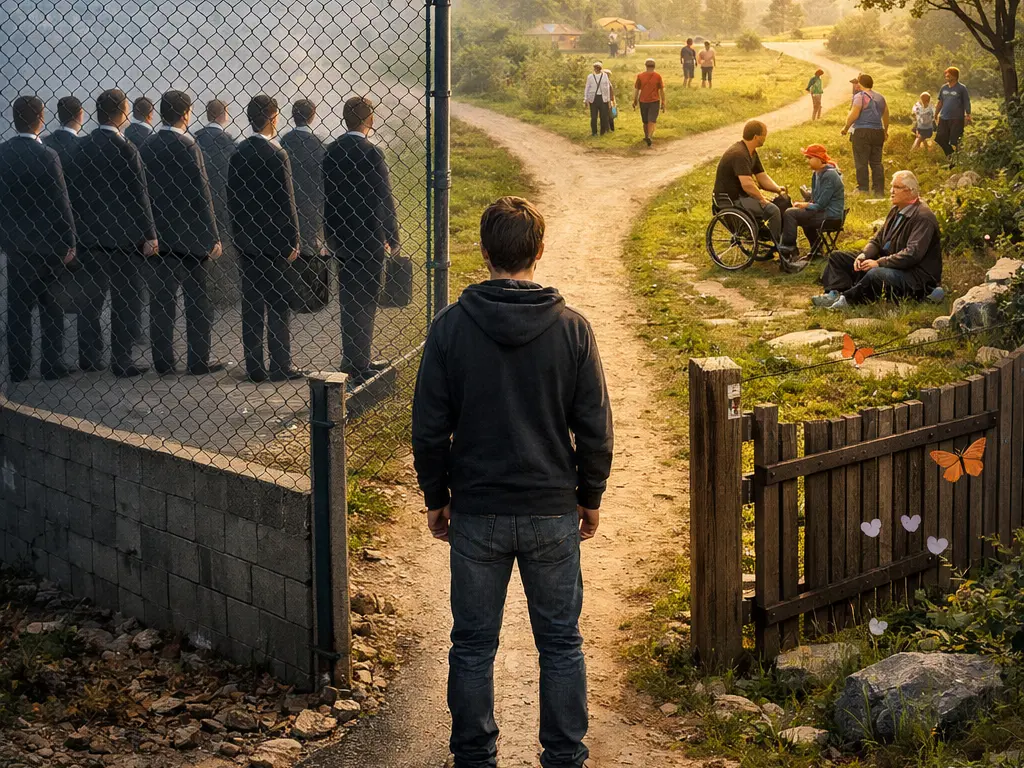
A person stands at a forked path. To the left, a fenced-off city filled with identical suited figures and tall buildings appears cold and restrictive. To the right, an open, sunlit landscape shows diverse people gathered in a natural setting, suggesting inclusion, care, and human connection.

In a world where empathy, kindness, and equality are frequently championed, it’s hard to ignore the paradox that underpins many of our societal structures. We live in a system that, on the surface, promotes compassion and understanding, yet often fails to extend these values to those who fall outside of a narrow, idealized norm. The result is a form of systemic oppression—one that may not be overt or intentional, but which still deeply affects individuals who are considered “other” by society. From neurodivergent individuals, like those with autism, to those who live with mental health conditions or psychopathy, many are faced with a system that struggles to accommodate their unique experiences, perspectives, and needs.

This paradox presents a crucial question: can humanity evolve beyond the limitations of a system built on conformity and idealized norms? How can we recognize and address the underlying contradictions within a society that claims to value compassion but fails to apply it to everyone?

The Current System: Compassion in Theory, Oppression in Practice

At its core, our current system is rooted in ideals of fairness, justice, and compassion. In theory, it promotes equality, extending kindness to others and encouraging the alleviation of suffering. Yet, when it comes to those whose behavior, identity, or neurological wiring deviates from the mainstream, the system often fails to extend this compassion in practice.

Take, for example, individuals with autism. Many of these individuals navigate a world that is not designed with their neurodivergence in mind. Social norms, communication expectations, and sensory environments can all pose challenges that society rarely accommodates. While we understand that autistic individuals experience the world differently, the societal response is often to ask them to conform, masking their true selves in order to “fit in.” This can lead to exhaustion, frustration, and even feelings of invisibility. What’s meant to be a compassionate, inclusive society, at times, becomes one that marginalizes those who cannot easily conform to established norms.

The same paradox applies when we consider the ethical implications of psychopathy. Psychopaths, individuals whose behaviors are often characterized by a lack of empathy or remorse, are frequently viewed as dangerous, immoral, or even “evil.” However, this view fails to acknowledge the possibility that their experiences of the world—shaped by neurological and psychological factors—might be radically different from the norm. The tendency to label psychopathy as inherently wrong leads to punitive systems that rarely consider the possibility of rehabilitation, accommodation, or deeper understanding.

This creates a troubling dichotomy: a system that professes compassion but is not designed to accommodate those whose ways of being differ from the mainstream. In effect, society ends up compounding the suffering of those who already find themselves on the margins, further entrenching the very issues it seeks to solve.

The Paradox of Morality: Who Decides What’s “Normal”?

At the heart of this issue is the question of what is “normal” and who gets to decide. Society often creates moral frameworks that are rooted in a shared understanding of what constitutes acceptable behavior, thought, and identity. Those who fit within this framework are generally accepted and treated with compassion, while those who fall outside of it are labeled as “wrong,” “deviant,” or even “dangerous.”

This is where the paradox deepens: In striving for compassion, we often end up perpetuating exclusion and marginalization. The very same system that advocates for inclusion and kindness can, at times, act as a gatekeeper, denying access to those who are deemed “other.” And even more troubling, this dynamic is rarely examined or questioned in mainstream discourse.

By framing difference as “wrong,” society creates an environment in which those who are perceived as different—whether due to neurodivergence, mental illness, or extreme psychological traits—are denied the right to be understood, let alone accommodated. It is an approach that focuses on the conformity of individuals rather than the evolution of society itself to accept a broader spectrum of human experience.

Can We Grow Beyond This Paradox?

The answer to whether we can grow beyond this paradox is not simple, and it may require profound shifts in the way we understand and relate to others. There are, however, several steps we can take to begin moving towards a more inclusive and compassionate world—one that doesn’t just champion kindness in theory but applies it broadly, even to those who challenge our notions of “normal.”

  1. Reframe Difference, Not Deficiency: The first step is to shift the way we view difference. Instead of framing non-normative behaviors, thoughts, or identities as “wrong” or “broken,” we can work to see them as variations of human experience. By reframing difference as a natural part of the human spectrum, we can begin to build a system that is more accommodating and understanding.
  2. Create Inclusive Systems: Instead of demanding that individuals conform to rigid societal norms, we must look at how systems—whether educational, healthcare, legal, or social—can be adapted to accommodate a wider variety of human experiences. This might mean redesigning environments to be more sensory-friendly, adjusting communication expectations, or rethinking how we define and approach mental health and psychological differences.
  3. Engage in Honest Conversations: Change begins with dialogue. We need to create spaces where challenging conversations about difference, morality, and societal expectations can take place. This includes recognizing the nuances of psychological conditions like psychopathy and autism, and moving away from simplistic labels toward deeper, more empathetic understandings. It’s about listening to marginalized voices and making space for their experiences to be heard.
  4. Acknowledge the Limits of Empathy: Our current system is built on the assumption that empathy can and should guide our actions. While empathy is a powerful force, it has its limits—particularly when it comes to understanding those whose experiences of the world are radically different from our own. Moving beyond this paradox will require a more complex understanding of human difference and the development of strategies for responding to harm that do not rely solely on empathy or moral judgment.
  5. Foster a Culture of Flexibility and Growth: In order to truly evolve, we need a cultural shift that embraces the idea of flexibility and growth. Rather than rigidly adhering to one model of behavior or identity, we need to embrace the fact that people grow, change, and experience the world in unique ways. Our systems must be able to adapt to these changes and provide pathways for everyone, even those who are perceived as “different,” to thrive.

A Path Toward True Compassion

The paradox of compassion and oppression is not an easy one to resolve. But by confronting it head-on, we have the opportunity to evolve into a society that not only values compassion but also practices it in ways that truly embrace the diversity of human experience. In doing so, we can build a future where no one is marginalized simply because they don’t fit into a narrowly defined mold.

While change may take time, the process begins with recognizing the inherent value of all individuals, even those who challenge our understanding of morality, empathy, and behavior. By expanding the boundaries of compassion to encompass the full spectrum of human experience, we can begin to create a world that is truly just, inclusive, and humane.

Art is NOT ‘Content’!

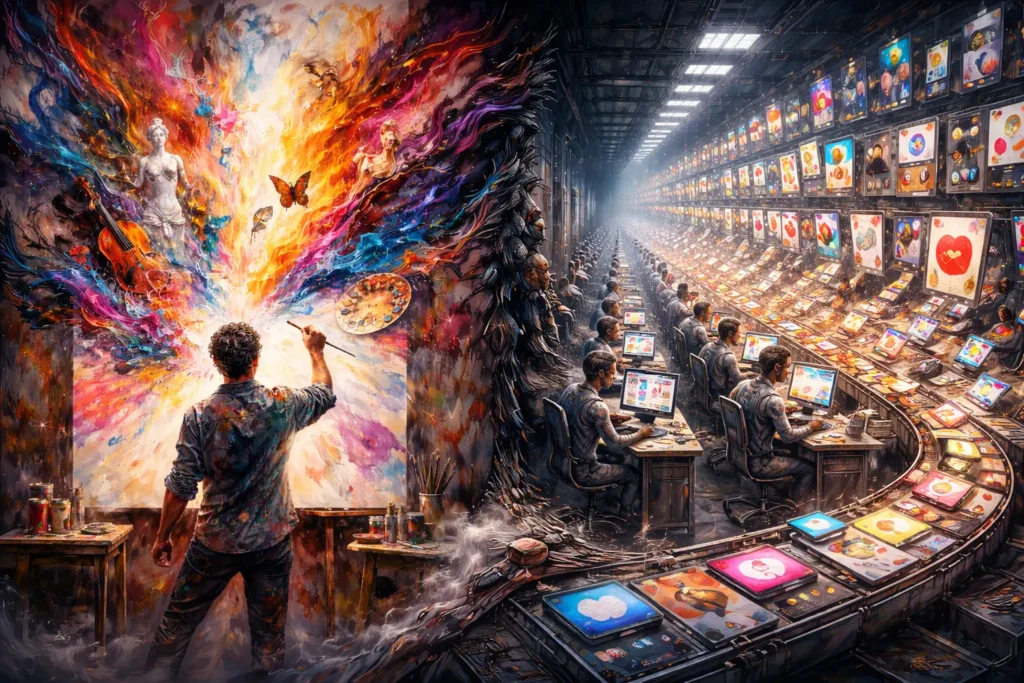
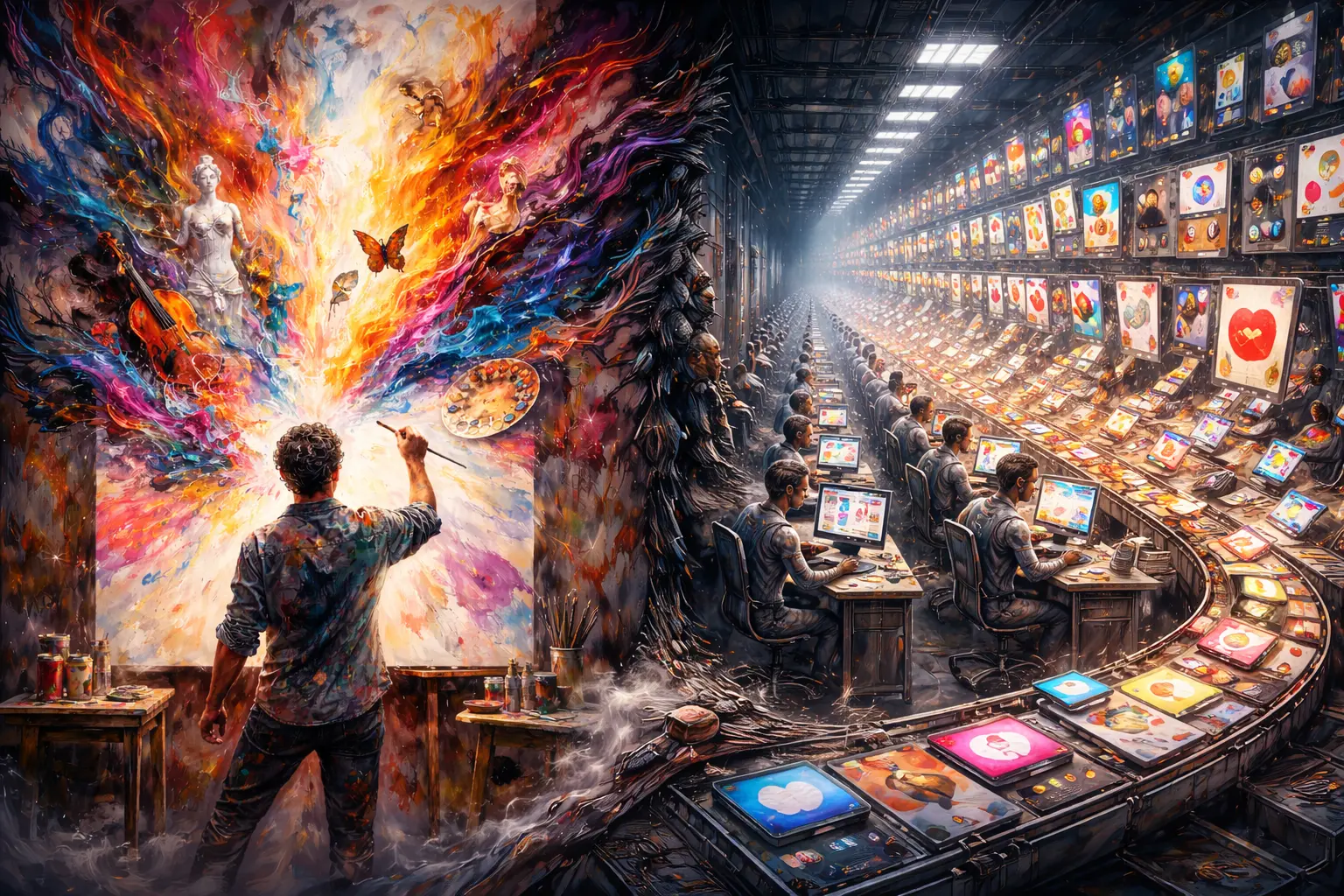
A divided image contrasting a painter creating art in a vibrant studio with a large hall filled with people producing digital content at computer stations.

The digital age has led us to a curious intersection, where the word “content” has become ubiquitous, and “art” seems to be slipping from its once-sacred pedestal. What once required time, effort, and intention to create is now often reduced to an endless churn of quick consumption, reduced to mere “content” for the masses to engage with. This shift is something I can’t help but observe with both concern and reflection.

For someone like myself—constantly battling the tension between personal identity, society, and the existential weight of existence—the current state of art feels almost like an existential crisis of its own. The act of creation, for me, is personal, deliberate, and reflective. It is an attempt to make sense of the world, to carve out meaning, and to leave something behind that resonates beyond the confines of time. But in the age of digital platforms, this sacred act of creation feels increasingly commodified.

The idea of “content” has become a business-driven term, designed for quick consumption, for likes, shares, and engagement metrics. Art, which once demanded patience from both creator and audience, is now expected to be produced in rapid bursts, optimized for algorithms that care little for the soul of the work. There is a certain detachment from the deeper, existential elements of art that once grounded it in something profound.

In my own life, I’ve had to reconcile the desire for meaning with the reality of a society that often demands conformity. Much like the societal pressures I’ve felt to “fit in” (as outlined in my exploration of identity and alienation), there’s a parallel pressure in the artistic world to conform to the “rules” of content creation. The faster you can churn out pieces, the more successful you are—regardless of the depth or intent behind them. Where once I might have taken months to perfect a story or reflect deeply on its implications, I find myself asking, “How quickly can I produce something that will generate engagement?”

I see this in the realm of social media, where content is consumed at an alarming rate, often with little regard for its longevity or its ability to stand the test of time. It’s all about what captures the attention in the moment, what creates the immediate buzz, and then it’s discarded, replaced by the next viral moment. This constant churn of “content” feels like a reflection of the broader existential struggle I often muse about—one where we’re caught in a cycle, never really allowing ourselves to linger in one thought, one creation, long enough to find its true meaning.

And yet, this transformation isn’t without its value. Like many things in life, it’s a balance. Content, in its own right, can be meaningful. It can still carry depth, insight, and intention, but it’s often hidden behind the facade of quick consumption. The challenge, then, is not to fall into the trap of creating merely for the sake of producing but rather to carve out space within this content-driven world for true artistic expression.

It’s easy to be seduced by the quick dopamine hits of social media validation, but I find myself wondering, what happens when the art we produce is merely optimized for engagement, not introspection? What happens when the deeper, slower aspects of art are lost to the rush of “content”?

It’s a complex landscape—one that I continue to navigate. My journey of self-acceptance and understanding (which I’ve shared before in reflections like The Outsider) has always been about carving my own path, about finding meaning in a world that often seems to demand conformity. And in this moment, it’s about resisting the pressure to reduce my creative endeavors to mere content. Art, for me, will always be a process of deep engagement, introspection, and meaning. And I have to hold onto that, even as the world pushes toward something faster, more superficial.

I’ll continue to create with intention, even if it means standing outside the prevailing norms. Just as I’ve come to accept that I don’t fit in with the mainstream society, so too do I embrace the idea that my art—whatever it may be—doesn’t have to conform to the demands of the “content machine.”

After all, the true value of art, the meaningful kind, isn’t something that can be measured in likes or shares. It’s something that resides in the depths of the human experience, something that will persist long after the noise of the digital world has faded away.

So, to those who create for the sake of creating, for the sake of self-expression, and for the sake of finding meaning in this chaotic existence, I say: Don’t let your work be reduced to mere “content.” Let it be art.

The Outsider

An account of my journey to self-acceptance

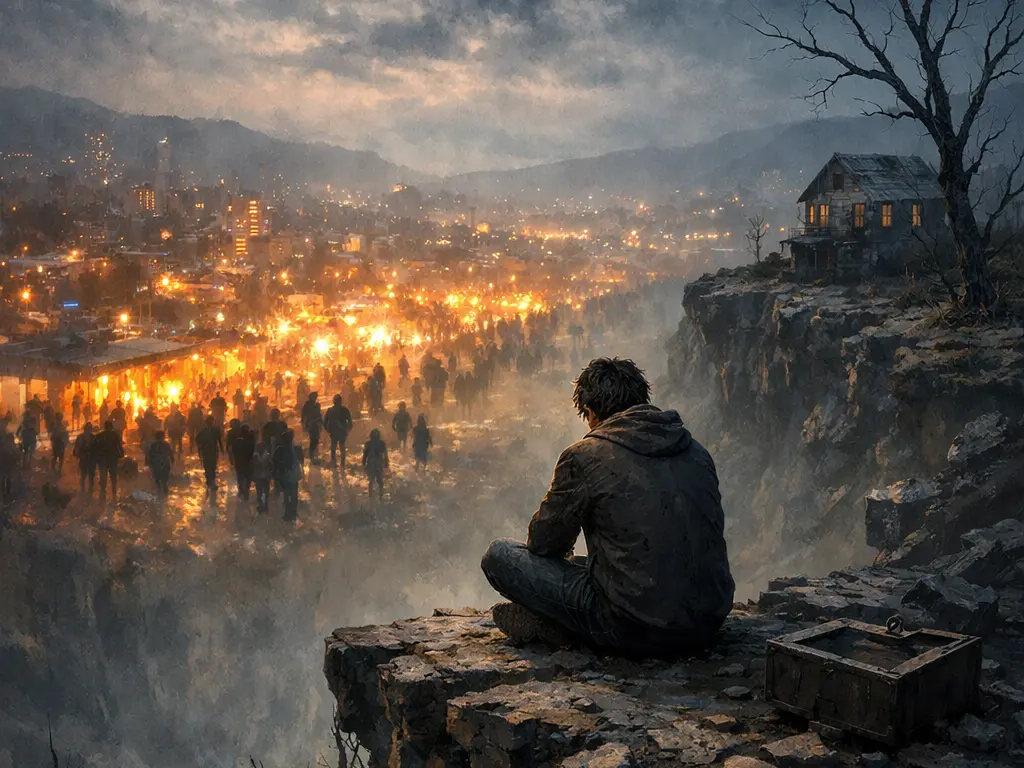
A lone figure sits on a rocky cliff overlooking a glowing city at night.

I’m not the most ‘normal’ person.
I’ve always been ‘different’.
I have spent most of my life as a social outcast.
Searching for somewhere to fit in, failing.

This has of course led to depression, anxiety, and some seriously bad mental breakdowns.
Some of which came close to killing me.

It can be difficult, living life on the outside.
Looking in on all of the relatively happy people going about their lives, in relative ease.

How do they do it?
What is their secret?
Perhaps everybody suffers just as much as I do, but no one is expressing it…
Are they all just putting on a brave face?
The fact remains, they succeed in areas that I cannot.
So what does that make me?
A defective product of humanity?
An inconsequential blip in the vast jungle of society?.
I think of Darwin’s theory of natural selection, survival of the fittest.
Am I simply not fit enough to survive in this world?

You can see how these trains of thought may have led me down some dark paths.
Amongst a parade of complex questions, there was one simple question that stood out, one of basic human necessity.

Where do I fit in?

I had a simple question, and no one was giving me an answer.
Friends, family, therapists… strangers on internet chat rooms…
I even turned to God (but as you can imagine, the line was busy)

Of course it’s not that no one had anything at all to say.
Most of the suggestions I received from people involved changing core aspects of who I am, in order to be a better fit.
This was simply unacceptable to me.

I realised that I was asking the wrong people.
I eventually resorted to going about trying to work out the answer myself, from scratch.

This was a huge undertaking.
If you imagine the problem as an extremely complex mathematical equation, my task was to solve the equation, armed only with knowledge of basic arithmetic.

Through a tedious process of trial and error, challenging myself with thought experiments, delving deep within my psyche, throwing myself into challenging situations, observing my thoughts, feelings, observing the reactions of others, observing the consequences of varying types of behaviour, Looking for patterns, shapes, colours, textures… anything that would help me to make sense of it all.

I eventually came to a point of deep understanding, and even appreciation of who I am.
And I came to a place of similar understanding and appreciation of others.

But still, I did not fit in.
I had two sides of an equation, but there was no perceivable connection to balance them.

Then, one day, during… let’s call it an ‘existential crisis’, it hit me.
The answer I had been seeking for so long, was right in front of me all along, hiding in plain sight.

Where do I fit in?
On the outside!

I’m not like everyone else. I am an outside-of-the-box thinker.
I play my own game. I have different core values, different metrics of success, I do things in my own way, for my own reasons.

I often don’t understand why people do certain things, but my inability to blindly accept and follow prescribed systems incites me to challenge what is.
I offer a fresh perspective. And though I do not always see the things that are plain to others, I see many things that others do not.

And society needs that.
Diversity is essential to the continuation of humanity.

Going back to evolution, the clue is in its name. The point is not for us to settle on being one thing.
Survival of the fittest is a game of numbers, yes, and the majority often has a clear advantage.
But if we were all perfectly normal, if we were all cookie-cutter replications of an idealised standard, then our race would not be equipped with the tools that it needs to adapt and survive.

And nor would life be particularly interesting.

So I, for one, am happy to embrace being strange.
Any disapproval from others just goes to further cement my resolve, that I am performing my function, that I am doing what I am supposed to be doing and that I am where I am supposed to be.

No longer do I need to worry about fitting in.
My concern is simply just to do the things that I am inclined to do.

And I have utmost faith in that
whatever I do,

Whether others like it or not,
Whether it benefits me or not,

Whatever I do,
is the right thing to do.