The Aura Machine explores how modern culture manufactures fame, value, and belief — from the economics of aura to the hypnosis of democracy, and the slow work of waking up.
The Manufacturing of Fame
Fame is often described as destiny, but in truth, it is a manufactured product. What looks like a spontaneous rise to stardom is usually the outcome of a carefully engineered process. A chosen individual becomes the vessel for a system’s investment, infrastructure, and narrative control.
Every celebrity represents a convergence of money, media, and myth. Behind the glamour there are contracts, algorithms, and publicists who understand the mathematics of visibility. To “discover” someone today is to select a marketable personality and amplify them through existing channels of attention until belief takes hold.
It begins with investment. A label, a studio, or a media conglomerate decides to back a prospect. Funds are poured into training, styling, photoshoots, marketing, and social seeding. Each move is designed to increase recognisability and emotional attachment. The audience feels they are choosing the star, but in reality, they are responding to a saturation campaign.
The success of a manufactured celebrity depends on the infrastructure already in place. A company that owns radio stations, streaming platforms, advertising networks, and press outlets can push a name into ubiquity at minimal cost. Smaller creators without such reach must pay dearly or vanish into noise. Fame follows ownership, not merit.
Once the amplification begins, the person becomes a brand asset. Their personality is fine-tuned to meet consumer expectations. Authenticity is simulated through planned spontaneity. Controversies are managed or sometimes even staged to maintain relevance. Every public gesture becomes part of a content strategy.
This process reveals the hidden economics of identity. The celebrity’s self is partitioned into marketable components: image, tone, ideology, vulnerability. Each can be monetised separately. The human becomes a portfolio.
When the profit threshold is reached, the machine moves on. The next face is already waiting in the wings. What was once a person is now a commodity whose aura can be resold through nostalgia, biography, or collectible relics.
The myth of “self-made fame” persists because it comforts us. It preserves the illusion that success is a matter of destiny and talent rather than infrastructure and capital. But beneath the myth lies an industrial truth: fame is not born, it is assembled.
To understand this is not to diminish art or talent, but to see them within context. The creative spark may be genuine, but the spotlight is manufactured.
The Aura Machine explores how modern culture manufactures fame, value, and belief — from the economics of aura to the hypnosis of democracy, and the slow work of waking up.
Attention as Currency
In the old economies, value was measured in gold, grain, or labor. In the new economy, it is measured in attention. Whoever controls what people look at, think about, or react to, controls the flow of wealth itself.
Every modern system, from advertising to politics to art, now runs on this invisible fuel. Companies no longer compete only for money; they compete for the limited number of seconds that a human mind can focus before drifting to the next distraction. Each moment of your awareness has a price.
It was once said that “if you are not paying for the product, you are the product.” That saying is now incomplete. In truth, you are the resource. Your time, your focus, your outrage, your curiosity. Every click, like, and pause is a microtransaction of consciousness.
The great platforms have become refineries of this raw material. They extract attention through emotional volatility, polarisation, and endless novelty. They burn that fuel to generate engagement, which is then sold to advertisers and investors. The more divided and reactive the population becomes, the more efficient the extraction.
Attention is also a kind of spiritual energy. Where you direct it, you build reality. That is why every ideology, brand, and belief system seeks to anchor itself in your perception. Once something occupies your attention, it occupies a piece of your world.
In this sense, attention is both currency and creation. It can enrich or deplete. To spend it carelessly is to surrender authorship of your mind. To invest it consciously is to shape your inner landscape.
The true economy of the twenty-first century is not industrial or digital, but psychological. It trades not in goods, but in awareness. And like all forms of capital, it tends to accumulate in the hands of those who understand it best.
Every scroll, every notification, every headline is a small transaction of energy. We pay for our participation not with money, but with fragments of ourselves.
The first step toward freedom is not withdrawal, but recognition. To know that your attention has value is to begin reclaiming it.
The Aura Machine is an eight-part meditation on the manufacture of fame, value, and belief.
We live in a theatre of mirrors, where meaning is minted, traded, and destroyed like currency. Objects gain worth not through what they are, but through who has touched them. People are sculpted into icons, sacrificed when the market shifts, and repackaged as myths. Outrage becomes entertainment; morality becomes marketing.
This series traces that cycle, from the birth of aura to the hypnosis of democracy, and finally to the quiet work of waking up. Each essay peels away another layer of the illusion, asking not only how the spectacle works, but why we keep watching.
The Economics of Aura
We live in a world where worth is rarely measured by substance. A guitar can sell for millions, not because of its materials or its tone, but because a legend once held it. Jimi Hendrix’s white Stratocaster, played at Woodstock, is estimated at more than two million dollars. The same instrument, without his fingerprints and mythology, would fetch only a few thousand.
This is the strange economy of aura.
The philosopher Walter Benjamin used that word to describe the unique presence that clings to an original work of art. It is the sense of standing before something touched by human intention, history, and unrepeatable context. In an age of infinite reproduction, that aura becomes rare and therefore valuable. What once signified connection now signifies possession.
The story of Hendrix’s guitar is not about sound. It is about proximity to greatness. People want to own a fragment of transcendence, to capture some echo of genius in a glass case. When money meets myth, the object becomes sacred. The relic functions as a secular form of worship, proof that the divine once walked among us with calloused fingers and a Marshall stack behind him.
Every collector and every fan participates in this ritual. A signature, a costume, a handwritten lyric: each is a vessel of aura. The marketplace transforms reverence into investment. The more limited or tragic the story, the higher the price climbs. A dead artist is an appreciating asset.
This trade in meaning is not limited to rock memorabilia. It underlies the art world, influencer culture, even politics. A photograph signed by a president, a sneaker endorsed by a pop idol, a tweet from a billionaire: all of them become tokens of perceived nearness to power. The object’s material cost is trivial compared to the value of its narrative.
In this way, capitalism does not simply sell things; it sells presence. It invites us to purchase pieces of mythology and to confuse ownership with participation. The aura that once connected the viewer to the artist now belongs to whoever can afford it. What was once spiritual has been translated into capital.
Yet the desire itself is not evil. It reveals something honest about the human condition. We yearn to touch meaning, to feel that the infinite brushed against the finite for a moment. The tragedy lies in the conversion of that yearning into currency. The aura machine hums quietly, turning reverence into revenue.
The Hendrix Stratocaster sits behind glass now. Its strings are mute, but the myth still sings. Not in sound, but in price.
Once upon a time, a game came in a box, and that box contained everything. You bought it, you owned it, and you played it. That was the deal. There were no online check-ins, no missing features, no “coming soon” updates, only a complete world waiting to be explored.
There was a quiet purity in that exchange. A developer built something they were proud of. A player paid for it because they trusted that pride. That was the unspoken pact between creator and audience: a transaction built on honesty.
Games like Super Mario Bros. (1985) and The Legend of Zelda (1986) embodied that purity. A single cartridge held an entire universe. Doom (1993) refined the model through shareware, offering the first episode for free and the rest for purchase. It was transparent, simple, and fair. The product was complete. The deal was clear.
The first cracks in the pact
Then came the era of the expansion pack. At first, it felt generous. Players bought Warcraft II: Beyond the Dark Portal (1996) or Age of Empires: The Rise of Rome (1998) because they wanted more of something they already loved. These were true expansions, built from creative overflow rather than withheld content.
Diablo II: Lord of Destruction (2001) remains one of the best examples, adding new classes and an entire story act. Yet this was also when the idea of the “complete” game began to fade.
Not maliciously, at first. But the seed was planted: perhaps a game could be split, extended, resold, and repackaged.
The patch era and the illusion of care
When players first connected online, games began to live beyond the disc or cartridge. Developers could now release updates and bug fixes directly to players. It seemed like progress.
Quake (1996) pioneered downloadable updates. Half-Life (1998) and Morrowind (2002) made patches a normal part of gaming life. Initially, this felt like a gesture of goodwill. Developers could fix mistakes, refine balance, and reward loyalty.
But convenience soon became a crutch. By the late 2000s, games were shipping half-finished, depending on “Day One Patches” to make them playable. Entire studios began treating release as the start of development rather than the end.
Final Fantasy XIV (2010) became a symbol of this shift. Its launch was so disastrous that it had to be destroyed and rebuilt as A Realm Reborn (2013). The resurrection was impressive, but it also marked the death of the finished game. A new age had arrived, one where imperfection was no longer a failure but a business model.
DLC, season passes, and the death of completeness
As the 2000s progressed, expansion packs evolved into downloadable content. What began as a technological innovation quickly became a financial strategy.
When The Elder Scrolls IV: Oblivion (2006) sold its infamous horse armour cosmetic, it became a joke among players but a revelation for publishers. Suddenly, small additions could generate massive revenue.
Call of Duty 4: Modern Warfare (2007) built an empire on paid map packs. Mass Effect 2 (2010) sold essential story chapters separately, slicing its own narrative for profit.
Then came the season pass, which allowed publishers to monetise the future itself. You were no longer buying content. You were pre-ordering potential.
Assassin’s Creed III (2012) and Mortal Kombat X (2015) made it normal to pay in advance for unseen expansions. In Destiny (2014), the model reached full maturity. Content cycled endlessly, and earlier material was quietly retired.
The player was no longer buying a work of art. They were buying a share in an ongoing experiment.
The age of tiered access: standard versus deluxe
Next came the illusion of choice.
Every major release now arrives with multiple editions: Standard, Deluxe, Gold, Ultimate. The Standard Edition, once the full experience, has become the stripped-down minimum. The Deluxe Edition rarely offers genuine creative content. It usually grants early access or small digital trinkets instead.
Hogwarts Legacy (2023) gave Deluxe buyers a three-day head start. Starfield (2023) did the same. Call of Duty: Modern Warfare II (2022) tiered its editions so precisely that the system resembled an airline pricing chart.
The tactic is subtle but powerful. It monetises excitement itself. It divides players not by passion or skill, but by spending power.
We no longer unlock secrets through play. We unlock content through payment. The so-called Deluxe Edition does not make the game better. It simply makes everyone else feel lesser.
The live service era: eternal beta
By the late 2010s, games were no longer seen as products but as platforms.
Destiny (2014) led the charge. GTA Online turned it into an empire. Fortnite perfected it. The ideal of the complete, single experience was replaced with the promise of constant evolution.
Players were told they were joining a “living world.” In truth, they were joining an economy.
Every week brought new skins, new currencies, and new reasons to log in. Games stopped being designed to end. They were designed to sustain.
The player became both the consumer and the unpaid quality tester. And when the profit dried up, the world simply died. Anthem (2019) and Marvel’s Avengers (2020) stand as cautionary tales, both collapsing within a few years.
The eternal game is not immortal. It is undead, kept alive not by creativity but by consumption.
Gacha and the monetisation of desire
When endless updates stopped being enough, the industry discovered something even more lucrative: human psychology.
Gacha systems turned the act of wanting into a business. You no longer bought the content itself, but the hope of obtaining it.
Fate/Grand Order (2015) and Genshin Impact (2020) perfected this model, disguising gambling with beautiful music and artistry. Each pull felt like a small miracle, a spark of dopamine wrapped in digital silk.
Diablo Immortal (2022) pushed the formula to absurdity, with some estimates suggesting it could cost over $100,000 to fully upgrade a single character. And now Infinity Nikki (2024) walks the same line, visually stunning yet built on the same manipulative architecture.
The slot machine no longer hides in the casino. It lives in your home, wearing a smile.
The counterexamples: those who still honour the pact
Yet not all is lost. Some creators still believe in the original exchange between maker and player.
Hollow Knight (2017), Celeste (2018), Stardew Valley (2016), Undertale (2015), Hades (2020), and Disco Elysium (2019) all prove that integrity still sells.
These games are complete works, designed to be finished and remembered. They ask for your time, not your loyalty. They offer experiences that stay with you long after the credits roll.
You pay once. You play forever. That is what honesty looks like.
The real freedom
Paying upfront is not a barrier. It is a declaration of honesty. When I buy a game, I am saying: I value your art. When the developer accepts that, they are saying: I value your trust.
That exchange is the foundation of real freedom. Because true freedom in gaming is not the ability to start for free. It is the ability to finish without being owned.
Games once invited us to play. Now they beg us to stay. I miss when the only thing a game wanted from me was my time.
Between ink and stone lies the fine line where conviction becomes belief — and belief, if left unexamined, becomes dogma.
I often find myself writing in the tone of a manifesto: declarative, uncompromising, certain in its cadence. It isn’t always intentional. Sometimes it’s simply the only language strong enough to contain what I feel. Yet I’m aware this style carries risk. To the untrained or hurried reader, such conviction can appear like ideology—or worse, arrogance. In truth, my manifestos are not edicts. They are moments of alignment between clarity and chaos, attempts to map the shifting ground beneath my own feet.
The word manifesto carries baggage. For many, it evokes the rhetoric of politics—grand visions, revolution, the binary clash of “us” versus “them.” Others hear echoes of religion, of sermons and sacred decrees that leave no room for questioning. In both cases, the manifesto becomes synonymous with certainty without flexibility, belief without humility.
It’s no wonder the term can make people uneasy. History has shown us manifestos that rally masses, ignite wars, or justify cruelty. But it has also shown us manifestos that inspire art, liberation, and self-expression. The line between revelation and indoctrination is razor thin—often determined not by the words themselves, but by the spirit in which they are written and the consciousness of those who receive them.
The Power of Declaration
There is something liberating about speaking as if one truly knows. To declare is to crystallise thought—to pin the fluttering swarm of ideas to a moment of clarity. When I write with conviction, it is rarely because I believe I have found the final truth. It is because I need to see what truth looks like when spoken aloud. A manifesto, in that sense, becomes an act of self-discovery through confidence. The words must stand tall, even if I later choose to dismantle them.
The Peril of Certainty
Yet I’m aware of how easily conviction calcifies. The same clarity that grants coherence can harden into armour, shutting out reflection. If a manifesto becomes a monument to a fixed belief rather than a record of an evolving one, it turns from tool to trap. True understanding demands movement, and movement requires the humility to be wrong, or at least to shift.
Perception vs Intention
Intent matters, but so does perception. When people read with their guard up, a voice of conviction can sound like control. The manifesto form amplifies tone, and in doing so, exposes the delicate dance between authorial intent and reader projection. What was written as a map of one’s inner terrain may be mistaken for a decree about how the world should be.
Living Manifestos
Conviction, when alive, is never afraid of change. True faith in an idea is not the refusal to question it, but the courage to do so without fear of it crumbling. A manifesto written today is not a monument—it is a snapshot in time, an image of what truth looked like beneath a particular light.
To declare something is to momentarily solidify the fluid. But every declaration exists within context: language shifts, culture evolves, and what once sounded like revelation may, in another era, sound naive or misguided. That doesn’t make it false—only situated.
Dogma, by contrast, refuses this movement. It chisels the moment into stone and demands that future generations kneel before it. Where the manifesto breathes, dogma ossifies. One invites dialogue; the other enforces silence.
Why I Still Write Manifestos
For me, writing in the manifesto style is not about persuasion. It is about presence. When I write declaratively, I am not trying to convert; I am trying to cohere. The manifesto allows me to momentarily bring my thoughts, feelings, and philosophies into alignment—to speak as though I am whole, even if I know I never truly will be.
In a fragmented world, this act of temporary wholeness feels sacred. The words stand upright for a moment before time inevitably bends them. I accept that. Each manifesto I write is a record of a phase in my evolution—an imprint of the mind I once occupied.
For me, a manifesto is a statement: “This is where I stand, now.”
If dogma seeks to outlive its author, the manifesto simply seeks to speak truthfully while it can. It is not written in stone but traced in light: vivid, transient, and honest to the moment it was born.
Charity shouldn’t have to exist. In a compassionate world, care would be woven into the fabric of daily life, not extracted as spectacle.
Charity is society’s way of appealing to the cruelty that lives in all of us, asking it to behave kindly for a moment, to purchase redemption in coins and signatures. It is the illusion of goodness performed atop the ruins of neglect.
The need for charity is proof of systemic failure, not moral success. Every donation is a confession that our structures were designed without empathy.
If kindness were inherent, there would be no charities. If fairness were real, there would be no causes. If love were built into law, there would be no campaigns.
Until then, charity will remain the prettiest mask cruelty ever wore.
Mrs. Spark drifted quietly through the dark, her glow calm, her silence colder than ash. She didn’t need to shout; sparks know when the fire has gone wrong.
Then she saw her, a bright, jittery flamelet, all fizz and perfume. The bit on the side.
“Oh!” the young spark squealed. “You must be his… main source of combustion.”
Mrs. Spark tilted her glow. “So it was you he mistook me for, when he was drunk?”
The younger spark crackled nervously, shrinking to a flicker. “He said it was romantic, you know. That we were destined to ignite.”
Before Mrs. Spark could respond, a distant honk echoed through the night. Both turned their glow toward the sound.
Out of the gloom emerged a clown, riding astride a giraffe with all the ceremony of a knight. The giraffe’s long neck swayed like a burning wick, and the clown’s painted face beamed with absurd solemnity. He tipped his rainbow hat as he passed, jangling bells that fell silent almost immediately in the thick, smoky air. For a moment, their quarrel was paused by this impossible intrusion.
Then came the noise. A low crackling shuffle, like dry leaves catching fire. Out of the shadows lurched the Ashen Sparks, brittle, half-dead remnants of old fires, dragging themselves forward, hissing with envy for the living glow.
The Ashens struck suddenly. One lunged at the young flamelet and sank its ember-teeth into her arm. She screamed, sparks spilling from the wound. Mrs. Spark tried to pull her away, but more of the creatures closed in, circling like vultures.
Just as the swarm pressed tighter, Mr. Spark appeared, swinging his blackened baseball bat. He smashed one Ashen into powder, then another, then shoved the rest back with furious swings. “MOVE!” he shouted.
Together, scorched and trembling, the trio fled into a crumbling pharmacy at the edge of the street. Mr. Spark slammed the door shut, wedging a shelf against it as the Ashens clawed uselessly at the glass.
Inside, surrounded by broken pill bottles and the faint smell of disinfectant, they collapsed in the dim glow of a lantern. The young flamelet clutched her burnt arm, teeth gritted. Mrs. Spark’s silence still carried judgment, but for now, survival weighed heavier than betrayal.
Mr. Spark stood watch at the door, his bat resting on his shoulder. “They only come at night,” he said grimly. “We make it till morning, we live another day.”
And so the three of them, husband, wife, and mistress, sat together in uneasy alliance, waiting for dawn, while the Ashens scraped and hissed in the dark outside.
There are minds built like fortresses, and there are minds built like shorelines. The fortress keeps the world out, solid, defined, and dry. The shoreline breathes with the tide, reshaped by every wave that kisses it.
Creativity is born on that shoreline. To be creative is to possess porosity, a mind permeable enough for the ocean of potential to seep in. Ideas, emotions, archetypes, stray whispers from the collective dream, all of it flows through those who cannot help but listen. They do not invent. They translate.
Yet this openness is not without cost. The same currents that deliver beauty also bring wreckage: sorrow, confusion, fragments of other people’s storms. The porous mind is always negotiating its borders, learning how much of the tide to let in without being pulled under. And still, it listens. Because silence, for such a mind, would be a greater death than drowning.
For the creative, the act of making is not simply expression, it is osmosis. The world breathes through them, and they breathe it back changed.
The Ecology of Potential
Beneath the surface of waking thought lies an unseen ecosystem, a vast and fertile ocean where ideas drift like plankton, multiplying in the dark. Most will never breach the surface. They swirl endlessly in silent gestation, invisible but alive.
This ocean is not ordered. It does not distinguish between wisdom and nonsense, beauty and monstrosity. It is a realm of becoming, where possibility itself experiments. To gaze into it is to witness the raw mechanics of creation, the way form gropes toward meaning, and meaning toward form.
Every consciousness draws from this sea, but only some hear its currents. The porous mind becomes a conduit between worlds, an evolutionary bridge through which potential finds its way into language, image, sound, or structure.
When an idea rises into awareness, it is not a spark conjured from nothing. It is a creature breaching the waves, the culmination of countless unseen collisions in the depths. And when it slips back beneath the surface, half-forgotten, it is not lost. It returns to the dark to feed new generations of thought.
Nothing in the ocean is wasted. Even the unborn ideas, the ones that never quite reached the light, fertilize the next tide of possibility. In that way, creation is less a single act and more a cycle of nourishment: consciousness feeding potential, potential feeding consciousness.
The Tragedy of the Unborn
For every idea that takes its first breath in the world, countless others die unnamed. They shimmer for a heartbeat on the edge of awareness, a scent, a flicker, a sudden weight in the chest, and then dissolve back into the deep.
There is sorrow in that, though most never feel it consciously. The mind learns to celebrate its children, not its miscarriages. Yet every artist, every thinker, has felt the ache of the nearly-formed: the melody that was almost remembered, the perfect line lost before pen met paper, the sense of something vast pressing at the gates of language but never quite entering.
These unborn ideas haunt the corridors of our dreams. They become strange symbols, wordless moods, déjà vu. They linger like ghosts of meaning, neither alive nor gone, whispering: “We tried.”
But tragedy is not failure. In the greater cycle, their unfulfilled lives still matter. The half-born return to the ocean, breaking down into nutrients of inspiration. From their dissolution, new forms grow stronger, carrying faint traces of what came before, a rhythm, a texture, an emotional DNA.
The creative heart often aches for what it cannot remember. Perhaps that ache is the memorial, the soul’s way of honouring all that it could not bring into being.
The Responsibility of the Listener
To listen to potential is to take part in creation itself. It is not a passive act, but a covenant. When an idea crosses the threshold into consciousness, it arrives fragile, trembling, uncertain of its shape. The listener becomes its first environment, its atmosphere.
Some people seize ideas like prey. They dissect them, brand them, harvest them for profit or validation. The idea, stripped of its mystery, dies quickly under fluorescent light. But others receive with reverence, cupping the newborn thought in both hands, letting it breathe before naming it. These are the caretakers, the stewards of becoming.
To be a true listener is to resist the temptation of ownership. Ideas do not belong to us; they visit. They pass through, seeking resonance, seeking a place to crystallize. Our task is not to claim them but to tend them, to ask, What does this idea need to live?
Sometimes the answer is action. Sometimes silence. Sometimes it means letting the idea return to the deep, knowing it wasn’t meant for now. The ethical creator learns to release with as much grace as they receive.
To treat ideas as sacred is not sentimentality; it is realism. They are alive, and like all living things, they thrive where they are met with care, humility, and awe.
Dreams as Refuge for the Unborn
When the waking mind grows too narrow for them, the unborn ideas find sanctuary in dreams. There, language loosens, form forgets its boundaries, and the mind becomes oceanic again, receptive, weightless, forgiving.
Dreams are nurseries for the half-formed. They are where impossible geometries are allowed to stand, where logic softens enough for paradox to breathe. The painter dreams of colours that do not exist; the composer hears chords that waking physics cannot yet permit. In the dream, potential rehearses itself.
Sometimes, when we dream vividly, we are not the dreamers at all but the dreamed, temporary vessels through which the unborn test embodiment. We wake with fragments: a haunting image, a phrase, a sensation that refuses to fade. These are offerings from the deep, visiting spirits carrying the scent of unmanifest worlds.
Art, ritual, hallucination, trance, all open the same door. They are technologies of permeability, ways of returning consciousness to the sea so the forgotten can breathe again.
Perhaps this is why the surreal feels sacred: it reminds us that imagination is not invention, but remembrance.
The Cosmic Cycle
Creation and destruction are not opposites; they are inhale and exhale. The ocean of potential breathes through us in tides, what rises into form must one day return.
Every idea that dies enriches the field it came from. Every silence fertilizes the next voice. Even despair, when felt honestly, becomes a kind of compost. There is no waste in the greater ecology of thought.
We imagine ourselves as authors, but we are more like soil, momentary ground for something older than time. Ideas bloom through us, use us, and move on. And when we, too, dissolve, our lives return to that same ocean, our memories, our creations, our longings, all reabsorbed into potential, waiting to be dreamed again.
Somewhere, beneath all endings, the unborn ideas drift still. They are not lost. They are preparing. And when the next porous mind opens to listen, the tide will rise, and the ocean will remember its name.
I grew up in the 1980s, when television advertising still had a kind of charm. I remember the jingles, the mascots, the catchy slogans that managed to lodge themselves in your head for weeks. Even as a child, I knew they were trying to sell me something, but at least they did it with some flair. They felt like part of the entertainment itself.
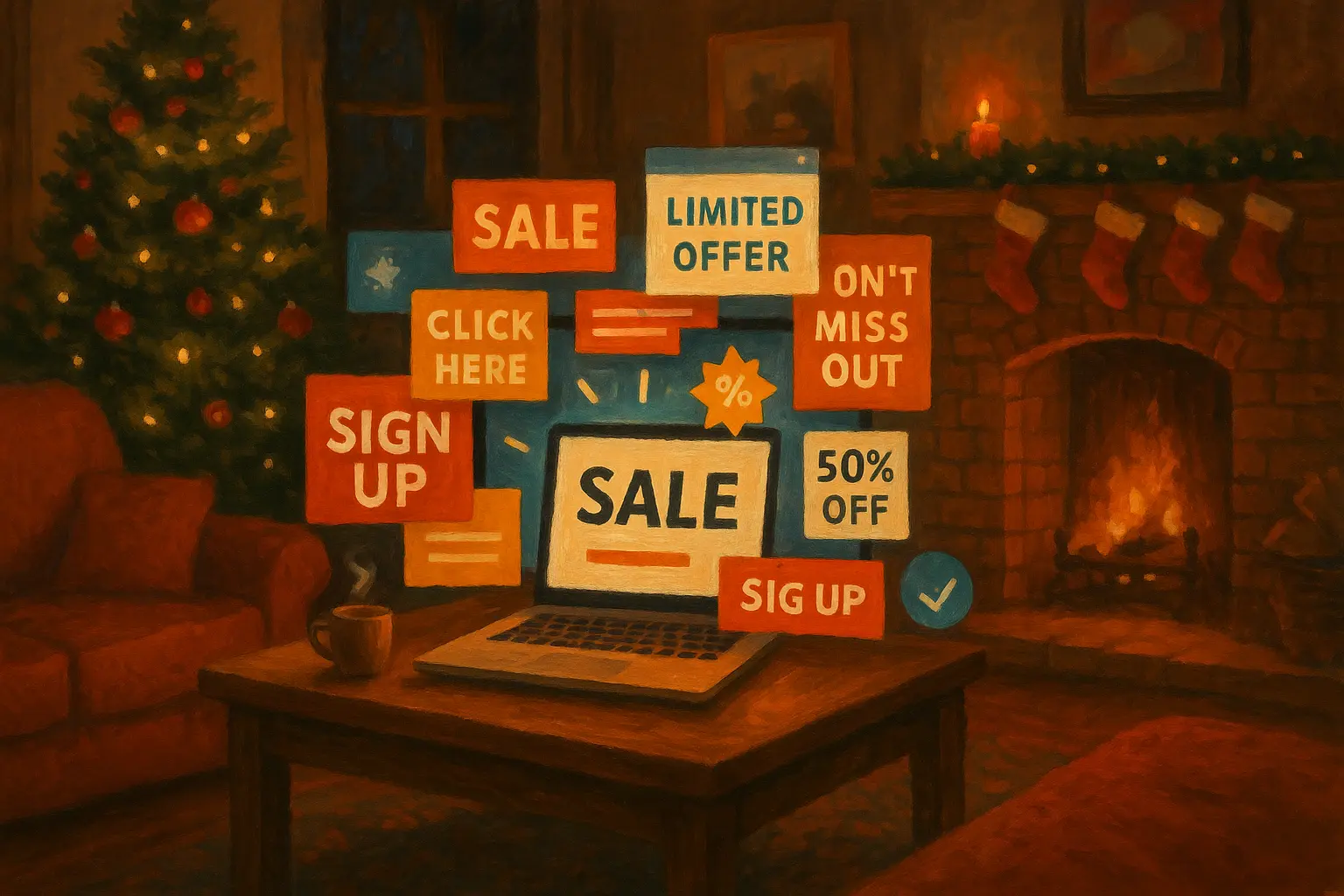
Something has changed since then. Advertising is no longer something that interrupts culture; it has become the culture. Every space, every platform, and every idle moment now feels colonised by a hidden intention to sell. To understand how we arrived here, it is worth tracing how advertising has evolved from a loud street-side performance to an invisible system of persuasion that shapes our sense of self.
The Loud Salesmen
The earliest form of advertising was brutally honest. Ancient merchants shouted in markets, painted signs on walls, or hung banners above their stalls. When mass printing emerged in the 1800s, advertising became more widespread but no less direct. Newspapers were filled with promises of miracle tonics, soap that made you beautiful, and pills that cured everything from toothache to heartbreak. These were primitive, manipulative, and often fraudulent, but at least you knew what you were looking at. Someone was selling, and you were free to walk away.
The Mad Men Era
The 20th century transformed advertising into an art form. With the rise of radio and television, storytelling became the new language of persuasion. Campaigns no longer sold only a product; they sold an identity, a dream, a way of life. The Coca-Cola Santa Claus, the Marlboro Man, and the perfect suburban family all came from the same creative laboratories.
This was the era of the “ad man,” immortalised in cultural artefacts like Bewitched or later Mad Men. Advertising was portrayed as a glamorous profession. These were the people who didn’t just reflect society; they helped build it. The line between commerce and culture began to blur.
The 80s and 90s: Ads as Entertainment
By the 1980s and 1990s, advertising had taken on a theatrical quality. It was playful, colourful, and memorable. Mascots like Tony the Tiger, slogans like “Just Do It,” and tunes you could hum all day made adverts feel like short pieces of performance art. They were still manipulative, of course, but they wore their intentions openly.
Looking back, perhaps this is why many people from my generation recall old ads with a strange fondness. They were transparent. They worked hard to win your attention rather than simply steal it.
The Weird and Annoying Years
Somewhere in the late 1990s and early 2000s, advertising lost its balance. It became surreal, loud, and deliberately irritating. Think of Crazy Frog, the Budweiser frogs, or the unnerving Burger King mascot. Annoyance became a marketing tool. If something got stuck in your head, even out of frustration, the job was done.
This was the period when “going viral” became a goal before social media even existed. The absurdity was the message.
The Internet Disruption
When the internet arrived, advertising was clumsy but eager. Early banner ads were brightly coloured, flashing boxes that you could easily ignore. But the industry adapted quickly. As data collection improved, advertising became personal. It stopped shouting to the crowd and began whispering to the individual.
This marked the rise of surveillance capitalism. Every click, search, and pause became a data point. You were no longer a passive audience member; you were a psychological profile to be targeted. The salesman had followed you home and was now reading your mind.
The Age of Disguise
By the 2010s, advertising learned to hide in plain sight. Sponsored posts, influencer endorsements, and “native” content made it difficult to tell where information ended and manipulation began. Search engines, news sites, and social platforms quietly filled with ads disguised as genuine results.
South Park once parodied this perfectly with its storyline about intelligent ads (Season 19). It was satire, but it was also prophecy. Today, even image searches are littered with sponsored results. The ad no longer wants to be seen; it wants to be believed.
Culture as Commerce
This is the stage we now find ourselves in. Advertising has stopped orbiting culture and instead absorbed it completely. Everything is for sale, including identity itself.
People no longer ask “What do I like?” but “What do I subscribe to?” We define ourselves through brands and platforms: Apple or Android, Nike or Adidas, Netflix or Disney Plus. Even rebellion is commercialised. You can buy “authenticity,” but only if you can afford the price tag.
Advertising has achieved what no political ideology ever could. It has replaced meaning with marketing and turned culture into a series of brand alignments.
Conclusion: From Persuasion to Colonisation
Advertising began as a voice shouting in the marketplace. It evolved into storytelling, then spectacle, then infiltration. Today it is everywhere and nowhere, woven into the fabric of our reality.
The change that occurred over the last century is more than technological. It is philosophical. Advertising no longer sells products; it sells identities. It shapes our desires before we even know we have them.
Perhaps that is why so many of us feel weary. We are not just tired of being sold to; we are tired of living inside the sale itself.
To me, authenticity has always had a texture. When I am living truthfully, it feels smooth, like fluid motion through life, unhindered navigation through systems that make sense to me. It is not euphoria. It is neutrality. Balance. Like the body when it is well: not ecstatic, just quietly functioning as intended.
But when that smoothness disappears, I know I am colliding with something unnatural, a pressure, a distortion, an external force trying to bend me into compliance. That is usually how I recognise oppression. It is not always dramatic or visible. Sometimes it is just a subtle grind, the friction between who I am and what the world expects me to be.
When Smoothness Breaks
When I lose authenticity, it does not just hurt emotionally, it feels like an illness. My thoughts start looping, as if my mind is trying to fix a broken system it cannot repair. I get frustrated at the lack of options, and sad that these dynamics even exist at all.
Sometimes there is nothing I can do but yield. And every time I do, it costs something invisible. The loss is not abstract, it is felt in the nervous system. It is the moment the body whispers, this is not how you are supposed to feel.
The Systems That Demand Performance
Oppression wears many masks: bureaucracy, capitalism, social obligations, the unspoken point system that governs human relationships. Each demands performance. Sometimes it is about survival, sometimes about social advantage. But in the end, both use the same energy source: you.
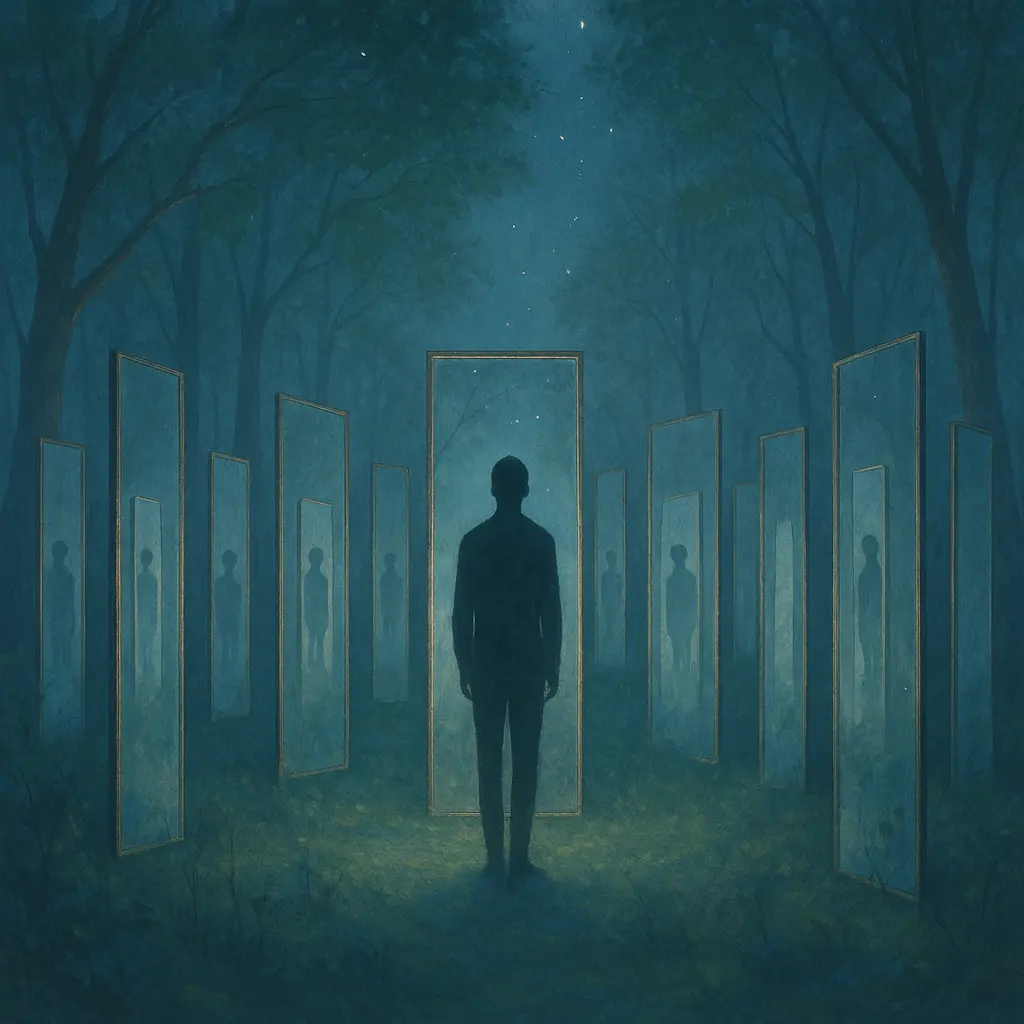
As an autistic person, I have always been acutely aware of “masking,” the act of performing normality to survive in social spaces. But I have also learned that this is not exclusive to autism. Everyone masks. Some call it professionalism. Others call it politeness. It is still performance. The only difference is how consciously one feels the cost.
The Humiliation of Performance
When I catch myself performing, it feels humiliating, not because anyone else can see it, but because I can. It is like betraying a sacred truth. Yet that awareness is balanced by another: I can also see the oppressive force causing it.
What hurts most is the fear that others see the performance too, but not the pressure behind it. That they see the surface act without understanding the system that coerced it.
They said “Be yourself” But that is not really what they wanted to see I tried doing things my way But that did not work for them I tried doing things their way But that did not work for me
That poem came from that place, the quiet despair of realising that either way, something in you must fracture to fit.
The Rare Moments of Unmasking
True authenticity is situational. I can relax certain parts of the mask around family, others around my girlfriend. But never all at once. Each relationship comes with its own invisible boundaries, some safe zones, some fault lines.
Even when I am alone, there is still the internal eye, the echo of social constructs that linger inside, long after the audience has gone home. Solitude is not the absence of performance; it is where you start to see which parts of the mask fused to your skin.
The Cost and Consequence
Sometimes unmasking feels liberating. Other times, it feels like punishment, a confirmation that the world does not welcome the real self. That is the cruel irony: the more genuine you become, the more visible your difference.
The aftermath can feel like emotional jetlag. There is vulnerability, fatigue, and occasionally grief. But there is also clarity. You see the architecture of the world more clearly when you have been bruised by its walls.
Authenticity as Survival
For me, authenticity is not optional. It is survival. The alternative feels worse than death.
Out of every living thing that has ever existed, there is only one instance of me, this consciousness, this perspective, this particular configuration of life. That makes it sacred. My job is to honour that singular existence.
If I betray it, if I trade it for comfort, convenience, or belonging, then I may as well be anyone else. Or nothing at all.
“To be anything other than myself is to betray the only version of me that will ever exist in the entire time-space continuum.”
Do Not Be Yourself (For Them)
So here is my advice to anyone struggling with authenticity:
Do not take the phrase “Be yourself” at face value. That advice is too often weaponised, a feel-good slogan used to sell you an illusion of freedom within controlled boundaries.
Be yourself, yes. But do it for your reasons. Do it because it is sacred. Do it because you are a one-off in the infinite catalogue of existence. Do it because the alternative is extinction by conformity.
But never do it because the world told you to. Do it because you told yourself to.