
I remember a moment in therapy years ago that left a deeper mark than the therapist probably intended — or noticed.
I was venting about a reoccurring pattern in my life: buying something I’d genuinely looked forward to, only for it to break, be faulty, or fall short almost immediately. Then the tedious ritual of returning it — complaint forms, awkward phone calls, the emotional cost of having to prove your dissatisfaction. I sighed and said something like, “Why does this kind of thing always happen to me?”
Rather than meeting that statement with empathy or curiosity, the therapist snapped back with a kind of clinical bluntness that still echoes in my memory. She challenged the very validity of my frustration, as though I were being dramatic or irrational. Her goal, I think, was to dismantle the idea that this was something uniquely unfair happening to me.
But as the conversation unfolded, something horrifying dawned on me.
Wait… this happens to everyone?
We all just… accept this? As a normal part of modern life?
That wasn’t a moment of cognitive distortion. That was a moment of clarity.
What I had taken personally — what I thought was just my “bad luck” — was actually a symptom of something bigger, deeper, and disturbingly normalized. We live in a world where disappointment is designed in.
This article is about that world.
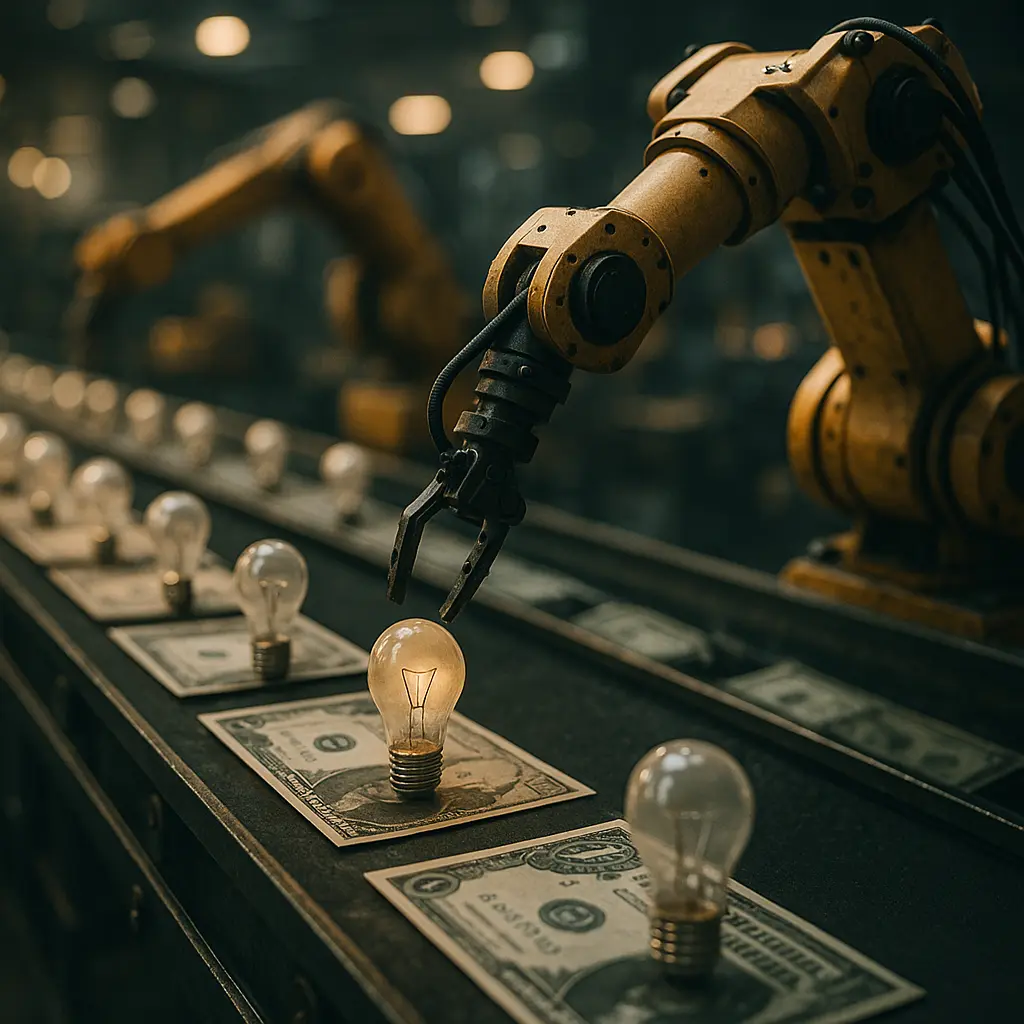
It’s about how mass production, once a triumph of innovation and progress, has lost its soul. It’s about how we shifted from making things that mattered to pumping out things that sell — regardless of whether they serve, last, or even work.
It’s about how we moved from purpose to profit — and the very real consequences of that shift. For us. For the workers behind the products. And for the planet.
A Brief History of Mass Production
Mass production, in its earliest form, was born out of noble intent: to meet the needs of a growing population, to make essential goods more affordable and accessible, and to improve the quality of life for everyday people. The Industrial Revolution, beginning in the late 18th century, marked a seismic shift from handcraft to machine-based manufacturing. What once took a skilled artisan hours or days could suddenly be done in minutes.
It wasn’t just about speed. It was about scale. Uniformity. Efficiency. The factory line allowed for interchangeable parts, standardized products, and economic growth on a scale never seen before.
By the early 20th century, Henry Ford’s assembly line had become the emblem of this new era. His Model T wasn’t just a car — it was a revolution in affordability and access. People who never imagined owning personal transportation could now do so. Mass production, at its best, was democratizing.
This promise extended beyond cars: textiles, tools, household goods, medical supplies, and even books and radios became widely available. The standard of living improved for millions. The world, in many ways, felt smaller, more connected, more empowered.
Mass production gave us the modern world.
But as with any great innovation, its shadow was waiting.
The Turning Point
At some point, the machinery that once served us began to reshape us.
Post-World War II, the gears of industry kept turning — but their direction subtly shifted. The focus moved from meeting needs to manufacturing wants. Advertising transformed from a means of informing customers to a mechanism of psychological manipulation. It no longer asked, “What do people need?” but rather, “How can we make them want more?”
This was the beginning of a new ethos: growth for growth’s sake.
Planned obsolescence became a legitimate design strategy. Products were engineered with intentional fragility, so they would break, wear out, or become outdated just fast enough to ensure another sale. Repair culture was actively dismantled, and warranties became ticking clocks. The promise of progress was quietly replaced by the necessity of replacement.
What had once been a marvel of accessibility was now a machine of dependency.
The consumer was no longer the empowered beneficiary of innovation — they were now the target. A data point. A captive audience for infinite cycles of buying, breaking, replacing, repeating. And all the while, the planet groaned under the weight of it.
What It Has Become
Today, mass production is less about delivering value and more about maintaining velocity. Products aren’t designed to serve us long-term — they’re designed to satisfy just enough to sell, then vanish into obsolescence. Many are created with the expectation of failure.
The results are everywhere:
- Devices with sealed batteries that can’t be replaced
- Gadgets that can’t be opened without breaking them
- Appliances that cost more to fix than replace
- Software updates that cripple older hardware
We’ve normalized a culture of disposability, where the act of buying is no longer about acquiring tools for living, but about participating in an endless loop of consumption. The value of a product is now measured in engagement, not endurance.
Even the illusion of choice is part of the deception. Browse online marketplaces and you’ll see hundreds of identical products under different brand names, all likely sourced from the same anonymous factory. Read the reviews and find fake praise propping up forgettable plastic.
The modern consumer market is a carnival mirror: distorted, disorienting, and reflective only of profit motives.
What once gave us progress, now feeds us clutter. What once promised empowerment, now manufactures dependency. And the harm isn’t just theoretical — it’s measurable, tangible, and mounting.
The Hidden Costs
To the consumer, the cost is emotional as much as financial. We waste time researching, comparing, returning, replacing. We internalize the sense that “nothing works anymore,” and carry the dull weight of lowered expectations. The joy of acquiring something useful has been replaced by the anxiety of wondering how soon it will fail.
To the worker, the cost is brutal. Mass production today relies heavily on exploitative labor: factory workers paid pennies, working long hours in dangerous conditions to meet quotas. Many are children. Many are women with no legal protections. Behind every “affordable” item is a supply chain built on invisible suffering.
To the planet, the cost may be catastrophic. The churn of materials, the energy spent manufacturing and shipping short-lived goods, the toxic waste of e-waste and plastic — it all contributes to ecological collapse. Landfills overflow with gadgets barely used. Oceans are choked with packaging. Resources are mined not for necessity, but for novelty.
And still, the machine demands more.
The system externalizes its costs. The real price isn’t on the price tag — it’s paid by someone else, somewhere else, or by the earth itself.
Why Do We Tolerate This?
Because we’ve been trained to.
It starts early. We learn not to expect things to last. We shrug when they don’t. We’re told that “things break,” that “this is just how it is now.” In place of quality, we’re given convenience. In place of durability, novelty. And in place of dignity, choice paralysis.
We tolerate it because resistance feels exhausting. Complaining means being passed from department to department. Returning an item means printing labels, queueing at drop-off points, repackaging disappointment. And all for what? Another version of the same.
We tolerate it because alternatives are gated by wealth. The high-quality, repairable, ethically sourced options do exist — but they come with a price tag few can afford. The rest are left to swim in the tide of cheap abundance.
We tolerate it because we’ve been gaslit into thinking we’re the problem. If you’re dissatisfied, you must have unrealistic expectations. If you’re struggling, you should have read the fine print. The system has trained us to feel grateful for crumbs and ashamed for wanting bread.
But perhaps most powerfully of all: we tolerate it because everyone else does. And when an entire culture adjusts its expectations downward, it starts to feel reasonable to accept the unreasonable.
Is There a Way Forward?
Not a perfect one. But many small ones.
The most immediate form of resistance is conscious consumption. Buying less, buying better, and researching where things come from. It means resisting impulse, delaying gratification, and sometimes choosing inconvenience in the name of principle. It’s not always possible — but even modest acts of refusal chip away at the machine.
Repair culture is rising again. Right to repair movements are pushing back against corporate monopolies on tools and parts. Online tutorials, fix-it cafes, and community makerspaces are giving people the confidence to reclaim their agency.
Open-source hardware and software offer blueprints for a new model: one based on transparency, modularity, and user freedom. These aren’t just alternatives — they’re acts of defiance.
Legislation matters too. Laws that limit planned obsolescence, mandate repairability, or require environmental responsibility are slowly taking root in some regions. These changes are slow — and often resisted by powerful lobbies — but they matter.
And finally, we can talk about it. Normalize the frustration. Name the absurdity. Share knowledge. Shame the brands that deceive. Celebrate the ones that still make things with care.
Cultural change doesn’t start with mass movements — it starts with a shift in conversation, with refusing to pretend that this is fine.
Conclusion
That moment in therapy still haunts me, not because my therapist revealed some profound truth — but because she didn’t.
She didn’t see the system. She couldn’t validate the pain. She was, in her own way, another casualty of the very machine I was grieving — so used to the dysfunction that she mistook my horror for irrationality.
But I wasn’t broken for feeling betrayed by the world. I was broken because that betrayal was being normalized — and even the spaces meant for healing couldn’t name it.
We’ve been sold a world of limitless convenience at a hidden cost. A culture that tells us to chase the new, discard the old, and never ask who’s paying the real price. A system that demands we tolerate the intolerable, not just with our money, but with our time, our trust, and our quiet resignation.
But awareness is a crack in the machine. It starts with noticing. With saying, “This isn’t normal.” With rejecting the idea that disappointment is an acceptable standard.
It’s not that we expect too much.
It’s that we’ve been trained to expect far too little.