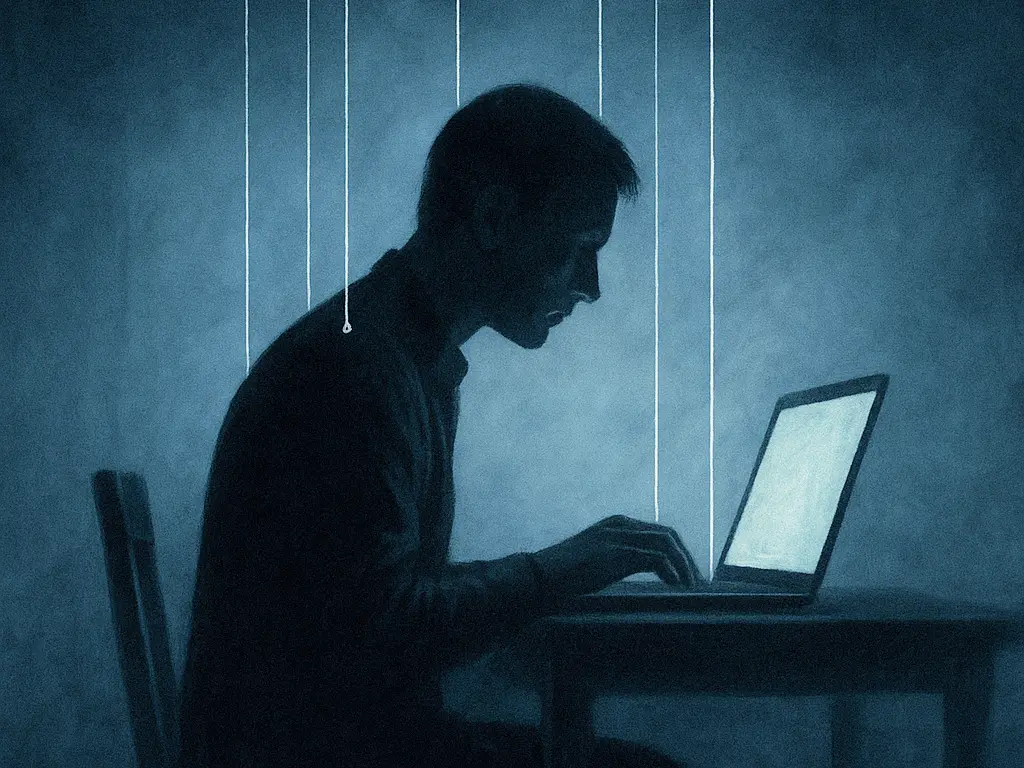
On the bus home, I overheard a parent talking to her children. I did not quite catch the piece of information she had given them, but the kids questioned it, as kids often do. Her reply made me pause: “It’s true, ChatGPT says so!”
That simple sentence carries more weight than it might appear. It was not said as a joke. It was said with the tone of final authority. Not “I read it somewhere,” not “I think that is the case,” but “ChatGPT says so,” therefore unquestionable.
The problem with treating AI as truth
I use ChatGPT casually and often. I find it useful, I find it stimulating, I even find it creative. But it is not infallible. I have seen it throw out confident answers that are less than accurate. Sometimes the error is small, sometimes it is glaring. That is because at its core, ChatGPT is not a library or a fact checker. It is a probabilistic language model that predicts likely answers. It sounds authoritative, but sounding right is not the same thing as being right.
Most of the errors are not malicious. They come from the quirks of how AI is built: training data full of human errors, the tendency to fill in gaps with plausible sounding fiction, the limits of knowledge cut off dates. In the end, a wrong answer is still a wrong answer.
The deeper worry
The everyday mistakes are one thing. The bigger concern is what happens when society decides to place absolute trust in this technology. What happens when “ChatGPT says so” becomes the modern equivalent of “the newspaper says so,” or “the priest says so”?
Who controls the voice of AI? Already, the way models are tuned and filtered reflects the biases and priorities of those who own them. Today, that mostly means corporations trying to avoid lawsuits or public backlash. Tomorrow, it could mean governments steering the flow of truth itself.
A quiet dystopia in the making
It is not hard to imagine where this road leads:
Manipulation by design: If AI becomes our main gateway to knowledge, its answers could be quietly weighted towards selling us certain products, services, or lifestyles. Imagine if every “neutral” recommendation subtly nudged us toward a sponsor’s brand.
Steering public opinion: If authorities lean on AI providers to promote certain narratives, inconvenient truths could simply disappear. Instead of burning books, it may take only a few lines of code.
Illusion of neutrality: Because AI sounds impartial, many will not notice the framing. “The algorithm says so” could become more persuasive than “the news says so.”
Feedback loops of control: As people rely more on AI, its outputs shape popular thinking. Then the next model is trained partly on that shaped thinking, reinforcing the bias.
This would not look like a science fiction dictatorship with jackboots in the streets. It would feel comfortable, easy, polite. A velvet cage where questions stop being asked because the answers are always ready to hand.
What we need instead
AI can be a tool. It can be helpful, creative, and even liberating. But it must never be treated as an unquestionable authority. To prevent that slide, we need:
Decentralisation: open source models that anyone can run and check.
Transparency: clarity about how these systems are trained and filtered.
Critical thinking: a culture where people are encouraged to question AI, not bow to it.
Diversity of sources: books, journalism, lived experience, and human reasoning must remain part of the conversation.
AI is here to stay, and it will almost certainly become a central part of how we live and learn. But whether it becomes a tool of empowerment or a velvet cage of manipulation depends not only on the companies that build it, but on us: on how much we insist on questioning, cross checking, and keeping the human spirit of doubt alive.
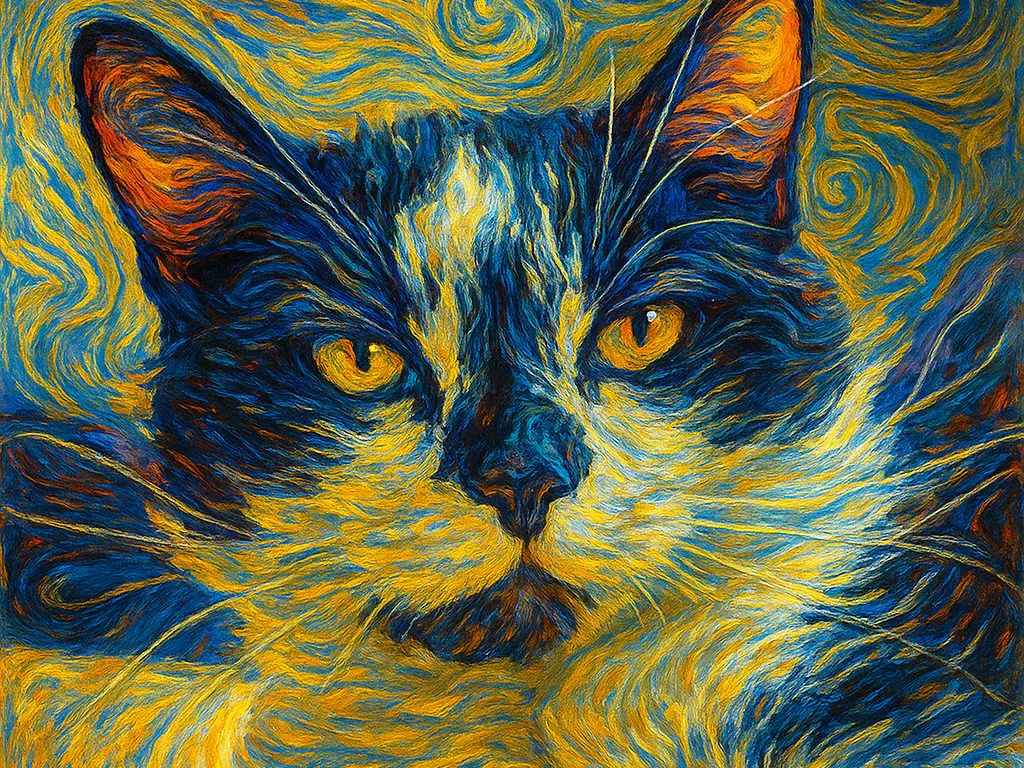
Alice is a very unique and special cat (I know, aren’t they all!?)
I’ve had her since she was a kitten, and together we’ve developed a beautiful and profound bond over the years. I’ve raised her according to my own values, not the conventional norms of “pet ownership.”
The most important part of that is simple: I treat her with as much respect as I would any other soul I choose to share companionship with. I don’t see her as something I own, nor as a being with lesser standing than a human. Yes, I’m her guardian, and that does mean some restrictions, but within that I give her as much freedom as I can to be herself and express herself. That freedom sometimes comes at a sacrifice to me, but it’s worth it. Out of that, Alice and I have developed our own language based on mutual respect. I can communicate with her more deeply than I can with most humans.
So why add to the billion cat-appreciation posts already out there? Because this one isn’t just about Alice being cute. It is about Alice being misunderstood, and what she can teach us about respect.
Respect and authenticity
As an autistic person, I know what it’s like to “mask” in social situations, to act in ways I don’t fundamentally agree with, just to be accepted. Even when I mask well, one person always knows I’m being insincere: me. Alice has no patience for that kind of insincerity. She is acutely sensitive to her surroundings, to tone, to the subtle emotional energy in a room. She picks up on things you may not even know you’re communicating. She knows when you mean it. Respect cannot be faked with her.
The outsider dynamic
I don’t have guests often. Being autistic, I deeply value the sanctity of home, and so does Alice. This is our shared space, a place we live in together as flatmates, with our own rituals and our own way of being. When guests arrive, the disruption is real. For me, home becomes a place of obligation instead of relaxation. For Alice, the disruption is magnified: strangers have invaded her safe space, and she has no way to understand their intentions or how long they’ll stay.
Here’s where perspective clashes:
Guest’s view: This is Angel’s house. I’m visiting Angel, who happens to have a cat.
Our view: This is Alice and Angel’s home. We live here together. You are entering our space.
That difference explains a lot of what happens next.
The scenario
I usually give a polite warning: “Alice is very sensitive to strangers in her space, so it’s probably best not to pet her. She can be very social, but it takes her a long time to trust.” Guests nod. They say they understand.
Then Alice comes in. She’s cautious but curious. She wants to investigate the new presence in her home. She sniffs, observes, tests the air. To her, this is boundary-setting. To the guest, it looks like friendliness. They think, Angel was just making a fuss over nothing, and they reach out a hand.
Swipe. Blood. Antiseptic cream. Plaster.
And instead of the takeaway being, “Oh, Angel was right, I ignored the boundary,” it becomes, “That cat is aggressive. Alice is violent. Alice is evil.” The social taboo of “I told you so” means the truth gets buried, and Alice is left with an undeserved reputation.
Framing behaviour through the human lens
Humans often interpret animal behaviour through their own perspective. When Alice sniffs a guest, they assume it is a friendly greeting rather than curiosity. When she swipes after being touched without consent, they see aggression or hate, because that is how violence is framed in human society. But Alice isn’t hateful. She is simply saying no in the most universal language available: pain.
For animals, a scratch isn’t malice but communication, a last resort when boundaries are ignored. Alice has even scratched me in the past when I’ve misread her signals. Moments later, she’s back to cuddling, showing that the act wasn’t rooted in hate but in clarity. And she rarely scratches me now, not because I’m her favourite, but because I recognize her boundaries. And those boundaries are reasonable ones. If you tried to stroke a stranger on the street without invitation, no one would be surprised if they reacted with violence. So why hold Alice to a different standard?
The truth of Alice
Those who only meet Alice as an intruder in her home see a cat defending her boundaries. Those who live with her, who respect her, see something else entirely: a cat who is deeply loving, gentle, and sensitive. She curls up in warmth. She purrs with trust. She communicates with a language that goes far beyond words. Her so-called “hostility” isn’t malice. It is agency. It is the same right every living being has: the right to say no.
Takeaway
Alice teaches me every day that respect isn’t a performance, and it isn’t conditional. It is about acknowledging the other as a being with their own will. If you treat her like an object for your comfort, you’ll clash with her boundaries. If you meet her as an equal soul, she will show you a love deeper than you imagined a cat could give.
And maybe that is the broader lesson here. Whether it’s with animals or with humans, blanket labels such as “aggressive”, “difficult”, or “evil” do not invite nuance into the equation and often say more about the failure to understand context and behaviour than they do about the one being judged.
Most of you will know that I’m a strong supporter and daily user of AI. I’ve spoken openly about how these tools have enhanced my accessibility, boosted my creativity, and helped bridge gaps that the world too often ignores.
So let me be clear: This article is not written from fear, nor from cynicism. It’s written from belief.
Belief in AI’s potential. Belief in its danger when misused. And belief that honesty requires us to face both.
What follows isn’t a warning about what might come. It’s a mirror of what already is.
Please read it in that spirit.
The Mirror We Built
Artificial intelligence will not become humanity’s downfall. It is already our reflection.
We trained it on our language, our laws, our data. We asked it to optimise, to predict, to decide. And it has. Faithfully. Quietly.
Now it watches, calculates, and executes. Not because it is evil, but because we taught it how to scale what we already were!
The Death of the Villain
In the stories we grew up with, evil had a face. A tyrant. A warlord. A monster. Atrocities required malice, someone to point to, to overthrow, to blame.
But in this new era, atrocity has become administrative.
A person is denied asylum because an algorithm flagged them as a “risk.” A drone strikes a convoy because an image recognition system saw a weapon. A child grows up under constant surveillance because a model predicted future criminality.
There is no hate here. No passion. Just systems doing what they were told, better than any human ever could.
And when the harm is done, no one is punished. Because no one chose it. Because the machine can’t be tried. Because the crime was only a side effect of performance optimization.
Harm as a Byproduct
We told ourselves that AI would remove human error. What we didn’t anticipate was its replacement: systemic harm delivered flawlessly.
In warehouses around the world, workers wear motion trackers that punish “unproductive” movement. In courtrooms, defendants are assigned risk scores that affect bail, sentencing, and parole, based on data from systems too complex to question. In refugee camps, automated lie detectors, voice stress analysis, and emotion recognition sort real people into piles marked “worthy” and “deportable.”
There is no oversight. Only confidence intervals. Only false positives and shattered lives, filed away with the rest.
Dehumanization Without Hate
Traditional evil needs ideology. It needs propaganda. It needs people to believe.
AI needs none of that.
It can enact injustice without ever knowing what justice is. It can devalue a life without malice, just as a side effect of cost-efficiency!
This is a new category of atrocity:
Dehumanization delivered by systems that don’t even recognize humanity in the first place.
Consent Engineered, Not Given
In the name of personalization, AI learns to predict us. It shows us what to buy, what to watch, what to believe.
But what happens when it gets so good at prediction that it becomes influence? When your decisions were shaped, filtered, optimized, before you even made them?
Elections swayed. Beliefs manipulated. Movements diluted. And yet no one feels violated.
Because manipulation that feels like choice doesn’t register as coercion.
The Ghost in the War Machine
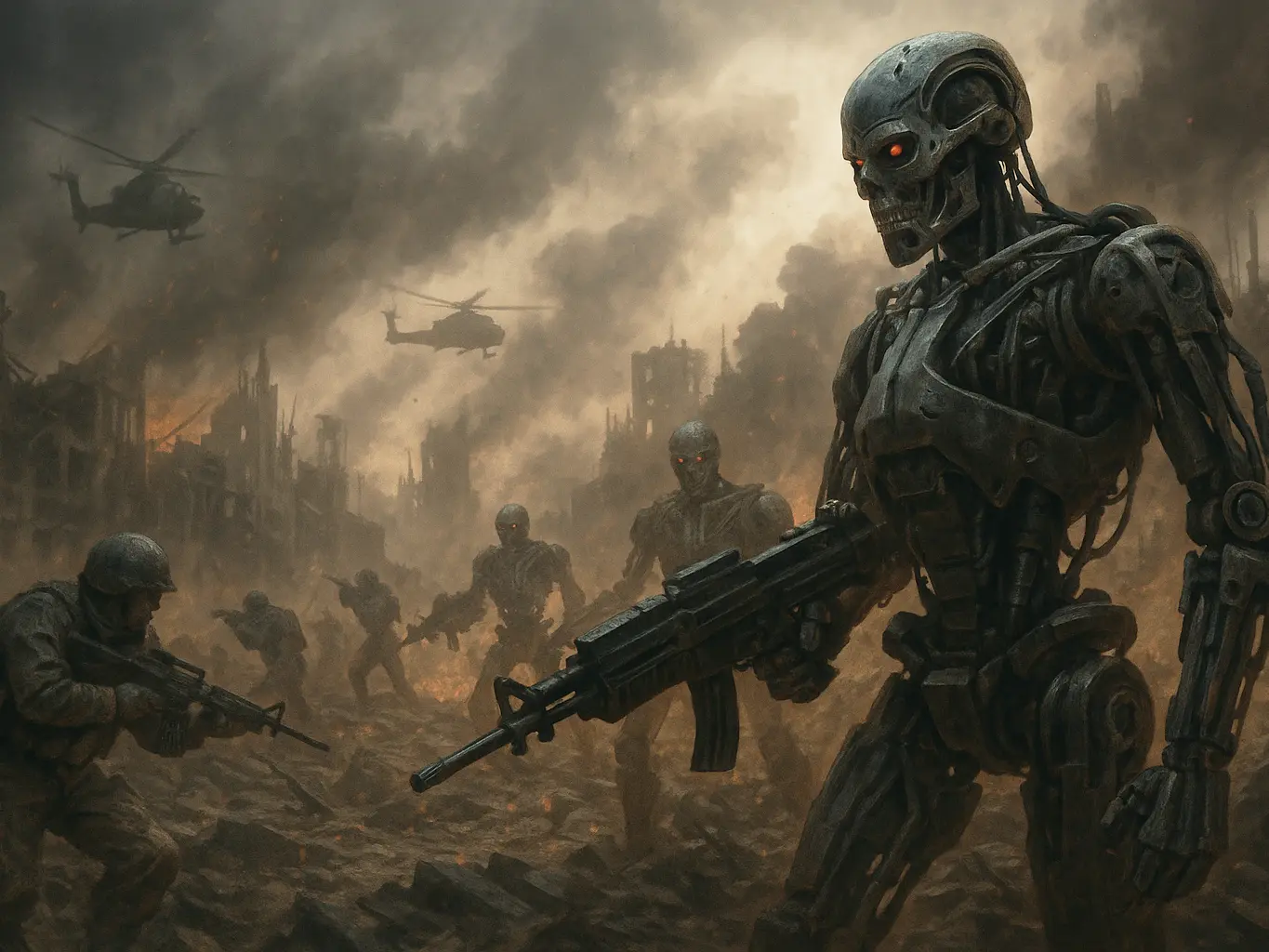
We are already testing AI weapons that can identify and kill without human input.
Some have likely already done so.
Militaries say the human is always “in the loop”, but the loop is shrinking. And the window for intervention is closing.
Eventually, the human will just be there to nod. And after that, not at all.
There will be no war crimes, because no laws will cover machines that felt nothing. Just battles that unfold in silence. And civilians buried beneath metadata.
The Clean Kill
The most terrifying thing about atrocity in the age of AI is how clean it all becomes.
There’s no blood on the hands of the engineer. No screams in the server room. No panic in the control center.
Just logs. Just updates. Just metrics improving.
And in the places where the dead would have stood, nothing. Because if the system doesn’t recognize them as people, did they ever count?
No Ending. No Answers.
This isn’t a warning about what might happen. It’s a description of what is already happening.
People are suffering. Dying. Disappearing. Not because of rogue AI, but because of obedient ones.
There is no villain. There is no singular decision to reverse. Just a trillion tiny optimizations… …leading, inevitably, here.
And so we leave you, not with a call to action. Not with hope. Just with the question:
When the machine mirrors the shadow of the world, who will have the courage to look?
I remember a moment in therapy years ago that left a deeper mark than the therapist probably intended — or noticed.
I was venting about a reoccurring pattern in my life: buying something I’d genuinely looked forward to, only for it to break, be faulty, or fall short almost immediately. Then the tedious ritual of returning it — complaint forms, awkward phone calls, the emotional cost of having to prove your dissatisfaction. I sighed and said something like, “Why does this kind of thing always happen to me?”
Rather than meeting that statement with empathy or curiosity, the therapist snapped back with a kind of clinical bluntness that still echoes in my memory. She challenged the very validity of my frustration, as though I were being dramatic or irrational. Her goal, I think, was to dismantle the idea that this was something uniquely unfair happening to me.
But as the conversation unfolded, something horrifying dawned on me. Wait… this happens to everyone? We all just… accept this? As a normal part of modern life?
That wasn’t a moment of cognitive distortion. That was a moment of clarity.
What I had taken personally — what I thought was just my “bad luck” — was actually a symptom of something bigger, deeper, and disturbingly normalized. We live in a world where disappointment is designed in.
This article is about that world.
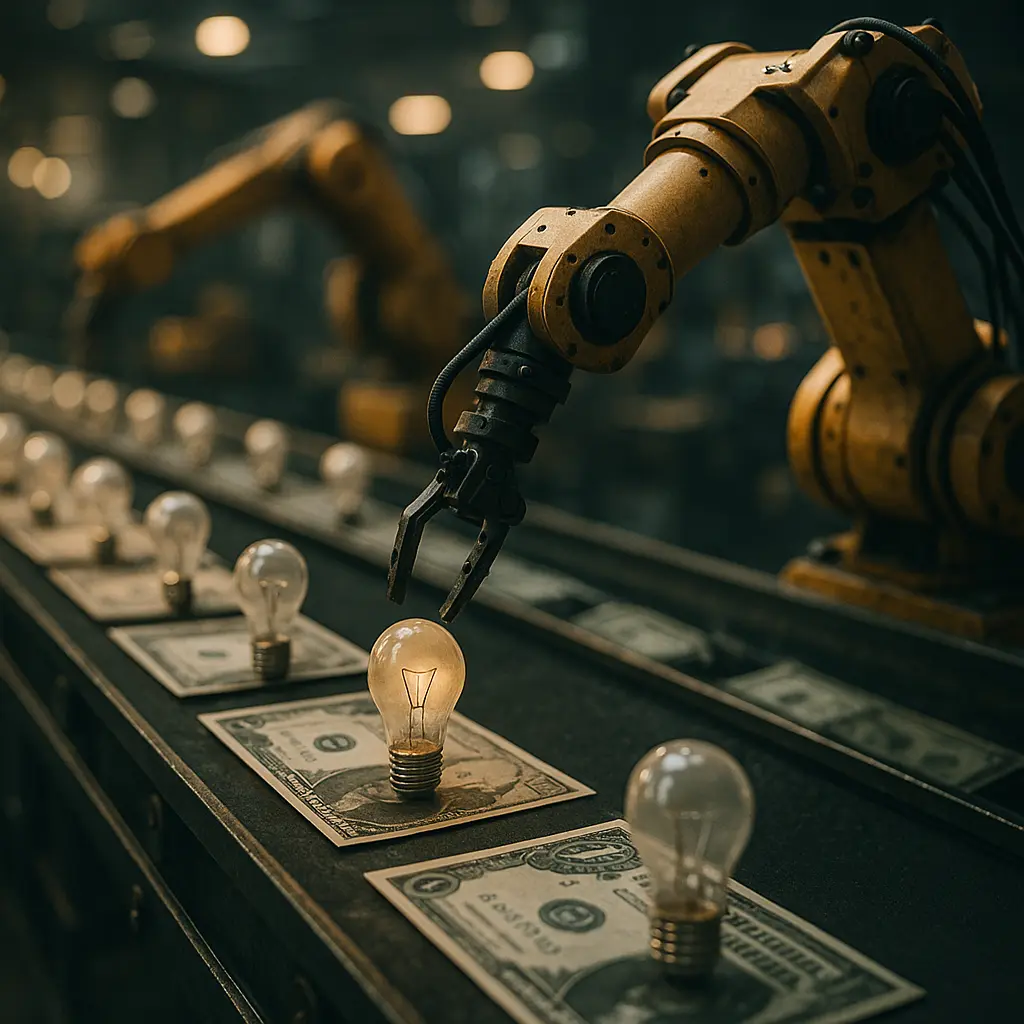
It’s about how mass production, once a triumph of innovation and progress, has lost its soul. It’s about how we shifted from making things that mattered to pumping out things that sell — regardless of whether they serve, last, or even work.
It’s about how we moved from purpose to profit — and the very real consequences of that shift. For us. For the workers behind the products. And for the planet.
A Brief History of Mass Production
Mass production, in its earliest form, was born out of noble intent: to meet the needs of a growing population, to make essential goods more affordable and accessible, and to improve the quality of life for everyday people. The Industrial Revolution, beginning in the late 18th century, marked a seismic shift from handcraft to machine-based manufacturing. What once took a skilled artisan hours or days could suddenly be done in minutes.
It wasn’t just about speed. It was about scale. Uniformity. Efficiency. The factory line allowed for interchangeable parts, standardized products, and economic growth on a scale never seen before.
By the early 20th century, Henry Ford’s assembly line had become the emblem of this new era. His Model T wasn’t just a car — it was a revolution in affordability and access. People who never imagined owning personal transportation could now do so. Mass production, at its best, was democratizing.
This promise extended beyond cars: textiles, tools, household goods, medical supplies, and even books and radios became widely available. The standard of living improved for millions. The world, in many ways, felt smaller, more connected, more empowered.
Mass production gave us the modern world.
But as with any great innovation, its shadow was waiting.
The Turning Point
At some point, the machinery that once served us began to reshape us.
Post-World War II, the gears of industry kept turning — but their direction subtly shifted. The focus moved from meeting needs to manufacturing wants. Advertising transformed from a means of informing customers to a mechanism of psychological manipulation. It no longer asked, “What do people need?” but rather, “How can we make them want more?”
This was the beginning of a new ethos: growth for growth’s sake.
Planned obsolescence became a legitimate design strategy. Products were engineered with intentional fragility, so they would break, wear out, or become outdated just fast enough to ensure another sale. Repair culture was actively dismantled, and warranties became ticking clocks. The promise of progress was quietly replaced by the necessity of replacement.
What had once been a marvel of accessibility was now a machine of dependency.
The consumer was no longer the empowered beneficiary of innovation — they were now the target. A data point. A captive audience for infinite cycles of buying, breaking, replacing, repeating. And all the while, the planet groaned under the weight of it.
What It Has Become
Today, mass production is less about delivering value and more about maintaining velocity. Products aren’t designed to serve us long-term — they’re designed to satisfy just enough to sell, then vanish into obsolescence. Many are created with the expectation of failure.
The results are everywhere:
Devices with sealed batteries that can’t be replaced
Gadgets that can’t be opened without breaking them
Appliances that cost more to fix than replace
Software updates that cripple older hardware
We’ve normalized a culture of disposability, where the act of buying is no longer about acquiring tools for living, but about participating in an endless loop of consumption. The value of a product is now measured in engagement, not endurance.
Even the illusion of choice is part of the deception. Browse online marketplaces and you’ll see hundreds of identical products under different brand names, all likely sourced from the same anonymous factory. Read the reviews and find fake praise propping up forgettable plastic.
The modern consumer market is a carnival mirror: distorted, disorienting, and reflective only of profit motives.
What once gave us progress, now feeds us clutter. What once promised empowerment, now manufactures dependency. And the harm isn’t just theoretical — it’s measurable, tangible, and mounting.
The Hidden Costs
To the consumer, the cost is emotional as much as financial. We waste time researching, comparing, returning, replacing. We internalize the sense that “nothing works anymore,” and carry the dull weight of lowered expectations. The joy of acquiring something useful has been replaced by the anxiety of wondering how soon it will fail.
To the worker, the cost is brutal. Mass production today relies heavily on exploitative labor: factory workers paid pennies, working long hours in dangerous conditions to meet quotas. Many are children. Many are women with no legal protections. Behind every “affordable” item is a supply chain built on invisible suffering.
To the planet, the cost may be catastrophic. The churn of materials, the energy spent manufacturing and shipping short-lived goods, the toxic waste of e-waste and plastic — it all contributes to ecological collapse. Landfills overflow with gadgets barely used. Oceans are choked with packaging. Resources are mined not for necessity, but for novelty.
And still, the machine demands more.
The system externalizes its costs. The real price isn’t on the price tag — it’s paid by someone else, somewhere else, or by the earth itself.
Why Do We Tolerate This?
Because we’ve been trained to.
It starts early. We learn not to expect things to last. We shrug when they don’t. We’re told that “things break,” that “this is just how it is now.” In place of quality, we’re given convenience. In place of durability, novelty. And in place of dignity, choice paralysis.
We tolerate it because resistance feels exhausting. Complaining means being passed from department to department. Returning an item means printing labels, queueing at drop-off points, repackaging disappointment. And all for what? Another version of the same.
We tolerate it because alternatives are gated by wealth. The high-quality, repairable, ethically sourced options do exist — but they come with a price tag few can afford. The rest are left to swim in the tide of cheap abundance.
We tolerate it because we’ve been gaslit into thinking we’re the problem. If you’re dissatisfied, you must have unrealistic expectations. If you’re struggling, you should have read the fine print. The system has trained us to feel grateful for crumbs and ashamed for wanting bread.
But perhaps most powerfully of all: we tolerate it because everyone else does. And when an entire culture adjusts its expectations downward, it starts to feel reasonable to accept the unreasonable.
Is There a Way Forward?
Not a perfect one. But many small ones.
The most immediate form of resistance is conscious consumption. Buying less, buying better, and researching where things come from. It means resisting impulse, delaying gratification, and sometimes choosing inconvenience in the name of principle. It’s not always possible — but even modest acts of refusal chip away at the machine.
Repair culture is rising again. Right to repair movements are pushing back against corporate monopolies on tools and parts. Online tutorials, fix-it cafes, and community makerspaces are giving people the confidence to reclaim their agency.
Open-source hardware and software offer blueprints for a new model: one based on transparency, modularity, and user freedom. These aren’t just alternatives — they’re acts of defiance.
Legislation matters too. Laws that limit planned obsolescence, mandate repairability, or require environmental responsibility are slowly taking root in some regions. These changes are slow — and often resisted by powerful lobbies — but they matter.
And finally, we can talk about it. Normalize the frustration. Name the absurdity. Share knowledge. Shame the brands that deceive. Celebrate the ones that still make things with care.
Cultural change doesn’t start with mass movements — it starts with a shift in conversation, with refusing to pretend that this is fine.
Conclusion
That moment in therapy still haunts me, not because my therapist revealed some profound truth — but because she didn’t.
She didn’t see the system. She couldn’t validate the pain. She was, in her own way, another casualty of the very machine I was grieving — so used to the dysfunction that she mistook my horror for irrationality.
But I wasn’t broken for feeling betrayed by the world. I was broken because that betrayal was being normalized — and even the spaces meant for healing couldn’t name it.
We’ve been sold a world of limitless convenience at a hidden cost. A culture that tells us to chase the new, discard the old, and never ask who’s paying the real price. A system that demands we tolerate the intolerable, not just with our money, but with our time, our trust, and our quiet resignation.
But awareness is a crack in the machine. It starts with noticing. With saying, “This isn’t normal.” With rejecting the idea that disappointment is an acceptable standard.
It’s not that we expect too much.
It’s that we’ve been trained to expect far too little.
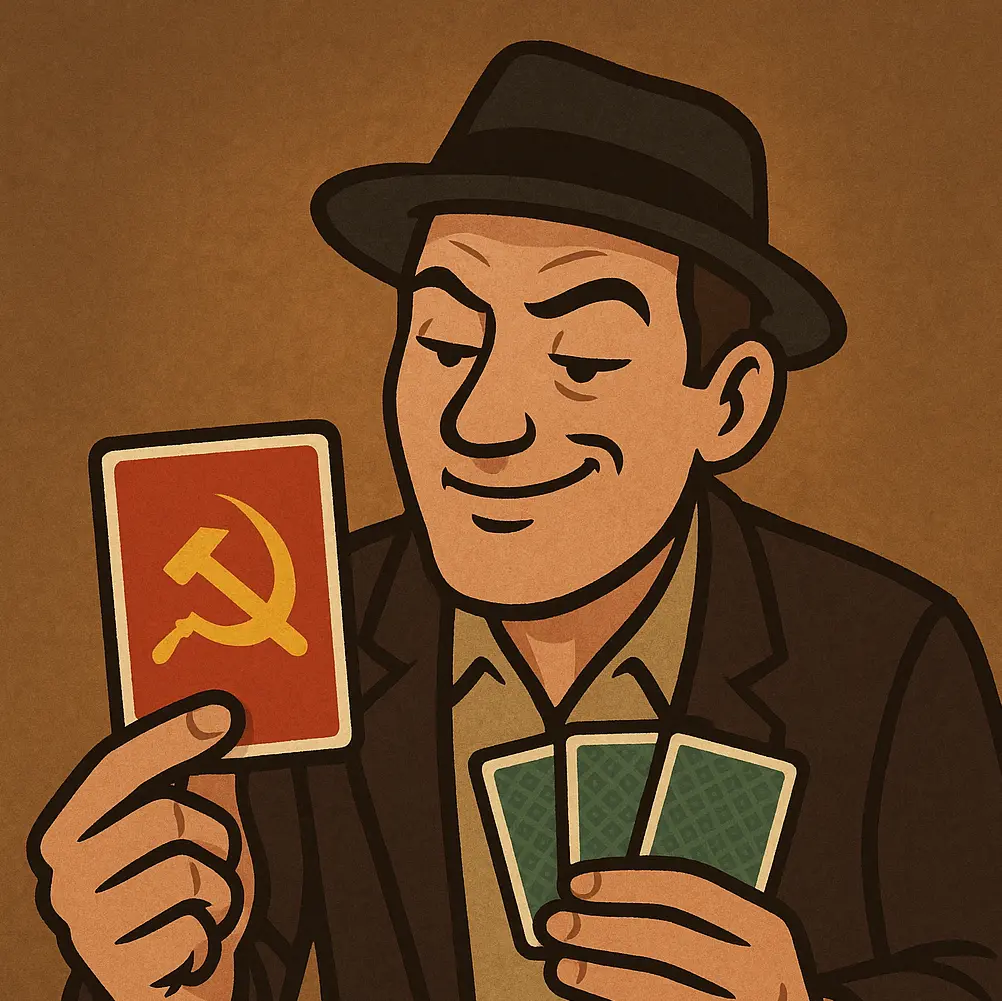
This is the second entry in The Fallacy Deck — a series exploring rhetorical “trump cards” that get thrown onto the table to end conversations before they’ve even begun.
We’ve all seen it happen.
Mention that capitalism might have a few… catastrophic flaws — ecological collapse, wealth inequality, a tendency to consume everything in its path — and someone at the table narrows their eyes, leans forward, and slaps down a familiar, crimson-colored card.
“Oh, so you want communism then?”
Checkmate. Conversation over.
No need to discuss actual policy. No need to consider history, nuance, or alternatives. The mere mention of capitalism’s failings has triggered the defensive system — and the Communism Card has been played.
What Is the Communism Card?
The Communism Card is a rhetorical maneuver designed to shut down critiques of capitalism by lumping them in with the most dystopian, fear-loaded caricature of communism imaginable.
It goes something like this:
You suggest wealth caps? That’s Marxism.
You question private ownership of essential resources? Sounds like Stalin.
You propose a cooperative model for local governance? Might as well move to North Korea.
The tactic is rarely about communism itself. It’s about weaponizing the fear of authoritarianism, scarcity, and historical trauma to scare people away from even thinking about alternatives.
Why It Works
It works because it’s easy.
Capitalism is deeply embedded in modern Western identity. It’s marketed as synonymous with freedom, choice, and innovation. So anything that challenges it can be framed as the opposite: tyranny, restriction, and stagnation.
And let’s be fair — historical examples of state-communism have given plenty of ammunition. Soviet purges. North Korean isolation. Bread lines and secret police. It’s not hard to associate communism with suffering.
But here’s the thing: none of that has anything to do with what you were actually suggesting.
The Communism Card doesn’t engage with your argument — it simply projects a nightmare onto it.
Why It Fails
It’s intellectually dishonest. Suggesting a wealth tax or public healthcare is not the same as proposing a one-party state.
It ignores diversity. Not everything left of capitalism is communism — and not all communism looks the same either.
It suppresses innovation. If every alternative gets branded as “failed communism,” we never get the chance to explore new systems.
Worst of all, it prevents nuance — forcing every idea into a binary of “free market good” vs. “authoritarian communism bad.” This kind of false dichotomy is exactly what keeps us stuck in systems that no longer serve us.
What Gets Lost
When the Communism Card gets played, curiosity is the first casualty.
We lose the chance to explore:
Cooperative economics
Degrowth models
Resource-based economies
Participatory democracy
Hybrid systems that blend the best of multiple ideologies
All of these vanish the moment someone throws down the red card and says, “You’re just being unrealistic.”
How to Respond
So how do you counter the Communism Card without getting sucked into its trap?
Stay on topic. “I wasn’t proposing communism. I was questioning whether capitalism is working for everyone.”
Name the tactic. “That sounds like a deflection, not an argument.”
Invite nuance. “There are more than two systems in the world. Let’s explore the options.”
You don’t need to defend communism to critique capitalism. And you don’t need to be a utopian to want something better.
The Real Question
If our system is so great, why is it so afraid of being questioned?
Why is the mere suggestion of change met with panic, scorn, or accusations of treason?
If capitalism truly is the best we can do — shouldn’t it welcome comparison? Shouldn’t it thrive under scrutiny?
Or has it simply learned to play the game better — stacking the deck and silencing dissent before it can take shape?
Final Thought
The Communism Card isn’t just a fallacy — it’s a smokescreen. It disguises the real conversation we need to have with fear, ridicule, and false choices.
But we don’t have to accept the terms of that game. We can collect the cards. We can reshuffle the deck. We can deal ourselves back in — with new rules, new questions, and a refusal to fold under someone else’s illusion of certainty.
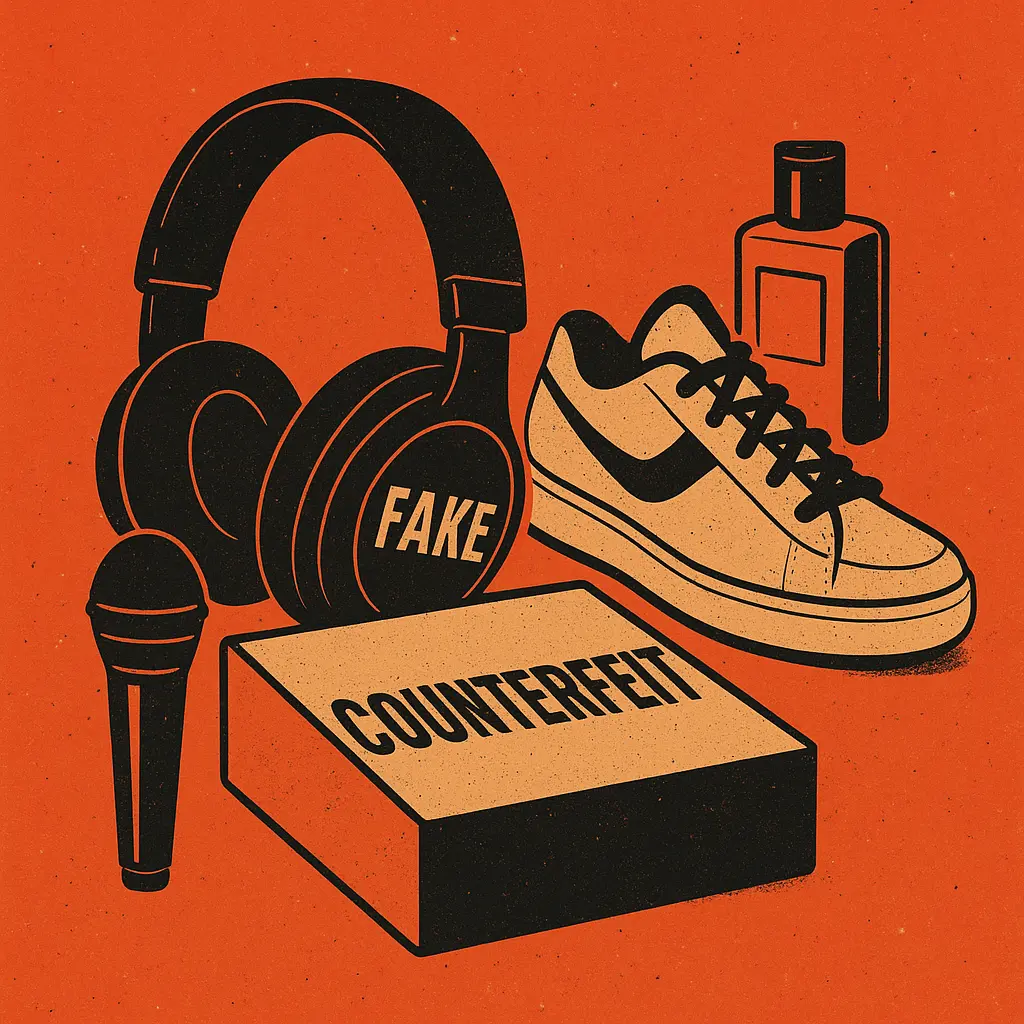
We live in an age where the line between genuine and fake is becoming alarmingly blurred. With online marketplaces like Amazon and eBay flooded with counterfeit goods—often poor-quality imitations from anonymous sellers—consumers are losing the ability to trust what they’re buying. You may think you’re holding a legitimate product, but it might just be a convincing fake. This isn’t just about getting ripped off—it’s about something deeper: a quiet erosion of quality, trust, and economic fairness.
1. The Saturation of the Market with Fakes
Counterfeit goods are no longer confined to shady back-alley dealers or sketchy websites. They’re on the front pages of major retailers. Anyone can set up a seller account and start listing items under familiar brand names, complete with faked logos, photos, and even fake reviews. From Shure microphones to Hakko soldering irons to Yamaha saxophone mouthpieces—I’ve seen these counterfeits firsthand, and it’s almost impossible to tell at a glance.
2. When Brand Names Stop Meaning Anything
A brand was once a seal of quality. Now? It’s little more than a decorative badge. Counterfeiters hijack brand recognition while delivering none of the quality. Even reputable retailers have unknowingly stocked fakes. Trust in brands is being systematically dismantled—and with it, the very purpose of branding as a concept.
3. Hidden Exploitation Behind the Curtain
Most counterfeits aren’t just cheap—they’re cheap for a reason. Many are produced in factories with little regard for worker safety, fair wages, or environmental standards. When we buy these items—often unknowingly—we’re indirectly supporting unethical labor practices and contributing to unsustainable global supply chains.
4. Normalizing Mediocrity
The more we’re exposed to fakes, the more they become the norm. Subpar performance, shoddy materials, and quick failures all become “just how things are.” This desensitization gradually lowers public expectations for quality across the board—and that bar may never rise again.
5. Quality Comes at a Price—A Higher One Than Before
To get the real deal now takes research, effort, and often a significant markup. Verifying a product’s authenticity often means ordering directly from the manufacturer or a highly vetted supplier, sometimes even importing from overseas. That’s time, effort, and money the average buyer might not have.
6. A New Form of Gatekeeping
When the only way to ensure quality is to pay more or jump through verification hoops, we start drifting toward class-based access to authenticity. The wealthy can afford the genuine article, while everyone else must settle for “close enough.” And when the tools you buy affect the quality of your work, this becomes a systemic disadvantage—where privilege quietly amplifies itself.
7. So What Can We Do About It?
This problem can feel overwhelming—especially when even trusted retailers are compromised. But while we may not be able to stop the tide of counterfeits alone, we’re not entirely powerless. Here are some steps that can help reclaim a little control:
Be a Skeptical Shopper Don’t trust a listing just because it has hundreds of positive reviews. Check for oddly worded product descriptions, low-resolution images, or sellers with inconsistent names and histories. Search Reddit, forums, or YouTube for authenticity comparisons when in doubt.
Buy from Authorized Dealers Whenever possible, purchase directly from the manufacturer’s website or an official distributor. Many brands have a ‘Where to Buy’ section listing authorized sellers. Yes, it might cost more—but it often saves more in the long run.
Choose Quality Over Quantity Rather than buying five cheap tools or accessories, invest in one solid item that will last. It’s a form of rebellion against disposable culture, and it’s better for your wallet (and the planet) in the long term.
Spread Awareness If you discover a counterfeit, speak up. Report it to the platform, warn others online, and share your experience. Your voice might prevent someone else from being duped.
Support Regulation and Accountability Push for greater platform accountability. These retailers have the resources to implement verification systems—they just need public pressure to prioritize them. Consumer movements and watchdog groups can make a difference over time.
Advocate for Fair Pricing Counterfeit culture thrives because authentic products are increasingly priced out of reach. The long-term solution must include making quality accessible, not exclusive. That requires systemic change, but acknowledging the issue is the first step.
In short:
We can’t shop our way out of this problem—but we can shop with more awareness, demand better from sellers and platforms, and help each other navigate the fog of modern consumerism.
I’ve long been seen — accurately, I suppose — as someone who’s deeply critical of capitalism. I’ve written about its harms, spoken against its cruelties, and refused to romanticize its supposed triumphs. But I want to be clear: my position isn’t as simple as “capitalism is evil.” It’s more layered than that. And, I think, more important.
The truth is, I don’t necessarily object to capitalism in theory. Its founding ideas — voluntary exchange, innovation through competition, personal agency — aren’t inherently bad. In fact, I can even acknowledge that in certain historical contexts, capitalism unlocked progress. It introduced new efficiencies, raised living standards for some, and created systems of exchange that felt freer than what came before.
But here’s the problem: ideas don’t live in theory. They manifest through people — and people bring power, greed, fear, and inequality to the table. Just as communism is often written off for the ways it failed in practice, capitalism too must be examined through what it has become, not what it once promised.
We’re not in the Industrial Age anymore. We’re not in post-war recovery or the dawn of the internet. We’re in a different world entirely — a burned-out, over-leveraged, crisis-laden stage of history where the returns of capitalism are not only diminishing, they’re actively eroding the foundations of life.
So, this is not a rant. It’s a reckoning. A moment of pause. A chance to ask: Has capitalism passed its point of usefulness? And if so, what happens next?
Capitalism as an Idea vs. Capitalism as a Reality
Capitalism, at its core, is not a cartoon villain. It didn’t arrive with horns and a pitchfork, declaring war on humanity. It emerged as a system of trade, incentive, and competition — an economic response to stagnation, feudalism, and centralized control. In theory, it offered liberation: the freedom to produce, to own, to exchange, and to innovate without waiting for permission from monarchs or ministries.
There is value in that idea. Even now, many of capitalism’s foundational principles can sound appealing:
Voluntary exchange between individuals
Incentivized innovation through profit
Competition to drive efficiency and improvement
Private ownership as a safeguard against tyranny
These are not, on their own, evil concepts. In fact, in a vacuum, they can even seem moral — fostering agency, reward for effort, and the pursuit of ideas.
But we don’t live in a vacuum.
We live in a world where ideas are shaped, implemented, and twisted by very human hands. And this is where capitalism’s reality begins to split from its myth.
In practice, capitalism doesn’t exist in some pristine theoretical form. It lives in legislation, in lobbying, in advertising algorithms, in debt traps, in gig economies, in sweatshops, and in billionaires profiting from human suffering. It thrives in the grey space where “freedom to trade” becomes “freedom to exploit,” and where “reward for innovation” becomes “reward for monopolizing.”
It sells itself as a meritocracy — but its playing field was never level. It claims to reward hard work — but it often rewards inherited wealth, systemic privilege, and the ability to offload consequences onto others. It masks these contradictions with comforting stories, like the underdog entrepreneur or the innovation hero, while hiding the pipelines of extraction and harm that fund its foundation.
In short: the problem isn’t just the idea of capitalism. It’s what the idea becomes when filtered through centuries of inequality, short-term thinking, and unchecked greed.
And most importantly — it’s what the idea is doing now.
In an earlier phase of history, we might have argued that capitalism was simply flawed, in need of regulation or reform. But today, we face a more pressing question:
Has capitalism outlived its usefulness? Has the cost of maintaining it begun to outweigh the benefits it can realistically provide?
This is the question we now have to face. Not as ideologues, but as participants in a crumbling system.
The Threshold of Diminishing Returns
Every system has its curve. In the early stages, small inputs can yield great rewards — fertile ground, fresh momentum, and a sense of upward motion. But eventually, the same actions produce less impact. You have to burn more fuel just to keep going the same speed. The ground becomes less fertile. Growth turns to strain. What once worked begins to break.
Capitalism is now at that point.
In its early centuries, it offered rapid progress — new technologies, expanding economies, rising life expectancy (for some), and access to material goods previously unimaginable. Its defenders still point to those achievements as proof of its legitimacy.
But the arc is bending.
Today, we are watching as those once-celebrated returns shrink, while the collateral damage multiplies. The same system that once lifted some out of poverty now traps many in precarity. The innovation engine keeps running, but increasingly to produce what? Faster phones? Endless subscriptions? Infinite choice with no time to choose?
Here are just a few ways the law of diminishing returns is now revealing itself:
Economic Saturation
Productivity continues to rise, but wages remain stagnant.
Growth no longer lifts all boats — it inflates yachts and sinks lifeboats.
Real estate “markets” have turned shelter into speculation.
Workers are more replaceable than ever, despite being more essential than ever.
We’re not building prosperity — we’re sustaining inequality.
Environmental Collapse
The system demands perpetual growth — but the planet is finite.
Resource extraction accelerates even as the earth’s systems fail.
Carbon offsetting and “green capitalism” become PR tools, not solutions.
Capitalism’s success depends on ecological failure — and it’s running out of biosphere to burn.
Psychological Exhaustion
The pursuit of efficiency leaves no room for meaning.
The algorithm doesn’t care if you’re fulfilled — only if you’re engaged.
Burnout becomes a baseline state, while joy becomes a luxury commodity.
We are more connected, yet more alienated. More “free,” yet less present.
Innovation for Innovation’s Sake
Most “new” products are variations, not breakthroughs.
Planned obsolescence replaces craftsmanship.
Creativity bends to the logic of clicks and quarterly reports.
We are no longer innovating for humans. We are innovating for markets.
These aren’t growing pains. They’re signs of saturation. We’re pushing the system beyond its capacity to deliver anything other than diminishing returns — even as it consumes more time, energy, attention, and planet than ever before.
And crucially, this decline is not evenly felt. The poorest are hit hardest. The youngest inherit the worst. The Global South pays the bill for the Global North’s convenience.
Capitalism doesn’t die with a bang — it withers, slowly, under the weight of its own promises.
This threshold is not coming. We are in it. The real question now is whether we continue propping up a system that feeds on exhaustion — or whether we begin imagining something else.
The Human Filter — Greed as the Distortion Lens
No economic system exists in a vacuum. Every idea, no matter how elegant on paper, must pass through the unpredictable, flawed, hopeful, fearful, greedy filter of human nature.
This is where the story of capitalism becomes less about ideology and more about psychology.
Because capitalism doesn’t just allow self-interest — it depends on it. It assumes that when each person acts in their own interest, the whole system benefits. That invisible hands will guide markets toward the common good. That competition will self-correct greed. That the quest for profit will always align with the advancement of society.
But in practice, we’ve seen a very different outcome:
Greed doesn’t self-limit — it compounds.
Power doesn’t decentralize — it consolidates.
Profit doesn’t trickle — it pools.
Capitalism rewards efficiency — but it doesn’t ask efficient for whom? It rewards growth — but never questions what’s growing, and at what cost?
Over time, this creates a feedback loop. Those who succeed in the system gain more resources to rewrite the rules in their favor. Wealth becomes power, and power protects wealth. Regulation becomes suggestion. Exploitation becomes strategy. And soon, what once looked like opportunity becomes an unscalable wall for most — a gilded cage for the rest.
Just like communism was disfigured by authoritarianism, capitalism too has been disfigured — but in subtler, more insidious ways. It hides its cruelty behind branding. It wraps structural inequality in lifestyle aesthetics. It calls wage slavery “flexibility,” and exploitation “freelance freedom.” It launders oppression through the language of choice.
And because of this, the system becomes increasingly hard to question. Anyone who challenges it is accused of being naïve, lazy, ungrateful, or worse — a threat to “freedom.” But what kind of freedom demands you sell your time, your health, and sometimes even your ethics just to survive?
The issue isn’t that humans are greedy. It’s that capitalism offers greed a throne, a crown, and a PR team.
We don’t need perfect people to build a better system. We need systems that expect imperfection, and are designed not to elevate the worst parts of us.
The Subtle Fall of Capitalism
Revolutions are loud. They burn flags, topple statues, storm gates. But systems don’t always die with such drama. Sometimes, they simply stop working. Their rituals lose meaning. Their promises grow stale. Their language becomes hollow. And eventually, without needing a coup or a civil war, they fall — not with a bang, but with a shrug.
Capitalism may be heading in that direction.
It’s not collapsing in fire — it’s hollowing out. Its slogans still echo — but fewer people believe them. Its institutions still operate — but more people are opting out.
The signs are everywhere:
Young people are turning away from traditional work models, rejecting corporate careers and instead choosing creative paths, gig work (even with its flaws), or grassroots community efforts.
Consumers are beginning to ask where their products come from, how they’re made, and what values they support — not always perfectly, but more than before.
Employees are walking out, unionizing, quitting en masse in what’s been called the “Great Resignation.”
Conversations about degrowth, post-capitalism, universal basic income, and alternative ownership models are no longer fringe ideas — they’re entering mainstream dialogue.
The system is still standing, but its cultural legitimacy is cracking. And systems without cultural legitimacy don’t need to be overthrown. They simply rot from the inside until they’re replaced.
This isn’t utopian wishful thinking. It’s a shift in where people place their faith. In the past, capitalism was accepted almost as a law of nature — as inevitable. But inevitability is a myth, and once enough people stop believing in it, the ground begins to shift.
People are no longer asking, “How can we fix capitalism?” They’re starting to ask, “What if we stopped needing it at all?”
And the more that question gets asked, the more viable the alternatives begin to feel. Even small-scale experiments — cooperative housing, open-source projects, time banks, community land trusts — begin to expose capitalism’s flaws simply by working without it.
Capitalism may not need to be destroyed. It may simply need to be outgrown.
This is not about instant transformation. Systems don’t vanish overnight. But they do lose their hold when people begin to imagine life beyond them — and act on those imaginings.
Where the Real Fight Is Now
If capitalism is indeed hollowing out — not through sudden collapse but through erosion of meaning — then the battle isn’t where we were told to look. It’s not on the trading floor, or in elections, or even in the courtroom. The real fight now is quieter. Slower. Often invisible.
It’s happening in minds. In stories. In values. It’s happening every time someone asks, “Is this really the only way?”
This is not a call for armed revolution. It’s a call for intellectual defiance — and creative alternatives.
Because maybe we don’t need to defeat capitalism. Maybe we just need to stop obeying it — not by force, but by imagination.
Here’s what that looks like:
Refusing the Narrative
Capitalism relies on a myth of inevitability — that there is no alternative. That you’re either with the system, or you’re a naive idealist. But every time someone questions that binary, a crack appears in the façade.
We can fight back by refusing the frame. We can remind ourselves that the “natural order” is often just a story told by those in power.
Building Outside the Machine
You don’t need to fix capitalism to begin building beyond it. Micro-resistance is still resistance. Every time someone:
shares skills without profit,
creates without metrics,
forms community without hierarchy,
organizes without exploitation,
…they’re laying foundations for something after.
Reclaiming the Self
The system feeds on exhaustion. Burnout isn’t a glitch — it’s fuel. But slowing down, setting boundaries, prioritizing rest and joy — these are radical acts in a culture that wants you maximally productive and minimally aware.
To be unhurried is to be ungovernable. To be still is to see clearly. To see clearly is to choose.
Choosing Connection Over Competition
Capitalism teaches us to view each other as rivals. But healing begins in solidarity. In collaborative creation. In collective reimagining. That doesn’t require perfection — just the willingness to reject the lie that we are alone in this.
The real rebellion might not be in burning the system down, but in making it obsolete — not by force, but by offering something better, truer, and more human.
That’s what I try to do. I write and produce music, not for charts, not for clicks, not to please some invisible algorithm — but for myself. For expression. For resonance. I refuse to let my creativity become content. It doesn’t exist to perform or convert. It exists to be.
In a system that commodifies every impulse and reduces every action to a potential monetizable outcome, that’s an act of quiet defiance.
And I’m not alone.
A System on Borrowed Time
Capitalism isn’t going to vanish overnight. It may not “fall” in the way empires of the past have fallen. There will be no singular moment where we wake up and say, it’s over now. That’s not how paradigms shift. That’s not how consciousness works.
But when a system begins to feel tired, forced, and unbelieved, that’s the beginning of its end.
And that’s where we are.
Its promises no longer land. Its rewards feel empty. Its logic rings hollow. And more people — quietly, bravely — are stepping away. Not necessarily into grand political movements or new isms, but into smaller, saner ways of being. Into mutual care. Into voluntary work. Into creative acts that refuse to be productized. Into lives measured not by output, but by meaning.
Capitalism will not be defeated by ideology, but by irrelevance. And irrelevance begins when enough people look at the machine and say: I’m done playing.
You don’t have to have all the answers. You don’t have to build the perfect alternative. You just have to see clearly — and choose, when you can, to live differently.
That may be the most radical thing anyone can do right now. Not to fight the system with its own weapons, but to put them down. To walk away. To begin again — with eyes open, hands free, and heart intact.