
Counterfeit Culture: How Fake Products Are Eroding Trust, Value, and Accessibility

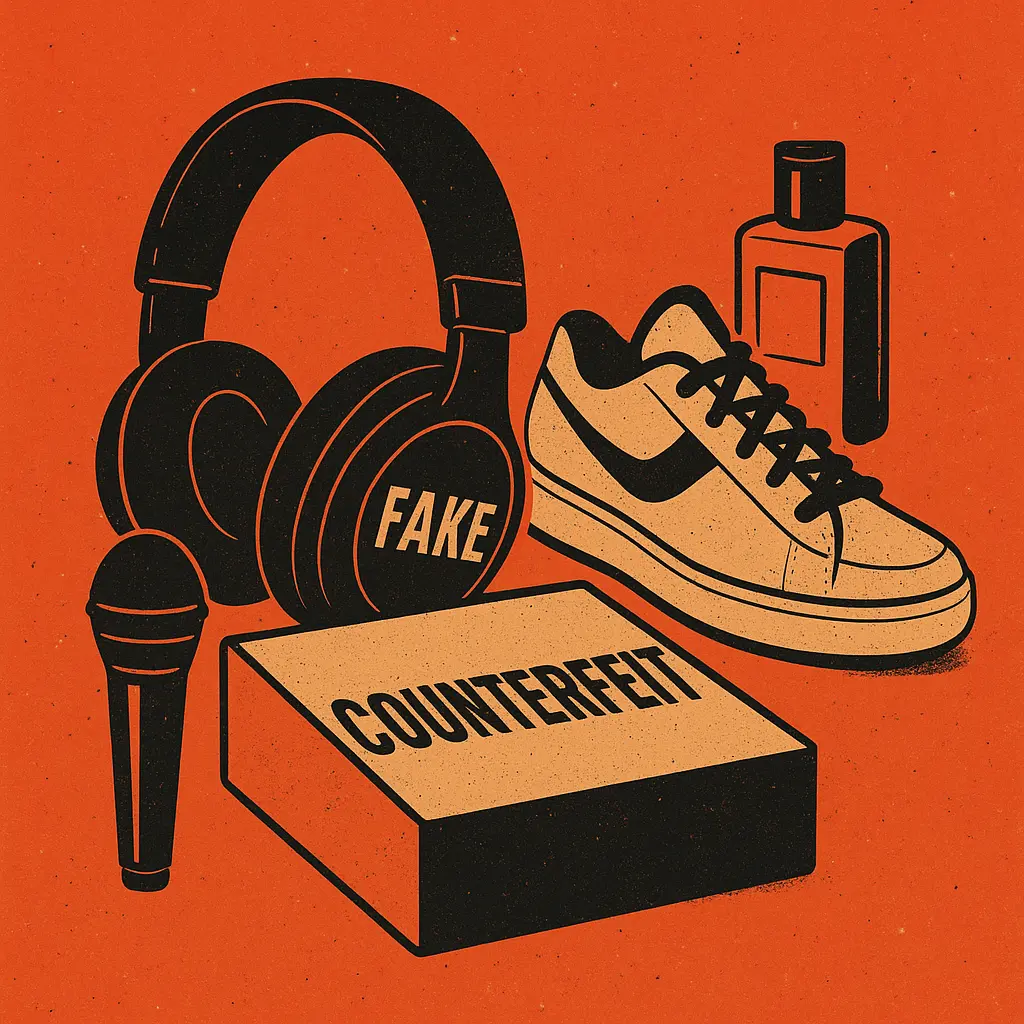
An abstract digital illustration featuring generic consumer items like headphones, a shoe, a microphone, and a box labeled “counterfeit,” all stylized in a bold, retro-inspired design with a red-orange background.

Introduction

We live in an age where the line between genuine and fake is becoming alarmingly blurred. With online marketplaces like Amazon and eBay flooded with counterfeit goods—often poor-quality imitations from anonymous sellers—consumers are losing the ability to trust what they’re buying. You may think you’re holding a legitimate product, but it might just be a convincing fake. This isn’t just about getting ripped off—it’s about something deeper: a quiet erosion of quality, trust, and economic fairness.


1. The Saturation of the Market with Fakes

Counterfeit goods are no longer confined to shady back-alley dealers or sketchy websites. They’re on the front pages of major retailers. Anyone can set up a seller account and start listing items under familiar brand names, complete with faked logos, photos, and even fake reviews. From Shure microphones to Hakko soldering irons to Yamaha saxophone mouthpieces—I’ve seen these counterfeits firsthand, and it’s almost impossible to tell at a glance.


2. When Brand Names Stop Meaning Anything

A brand was once a seal of quality. Now? It’s little more than a decorative badge. Counterfeiters hijack brand recognition while delivering none of the quality. Even reputable retailers have unknowingly stocked fakes. Trust in brands is being systematically dismantled—and with it, the very purpose of branding as a concept.


3. Hidden Exploitation Behind the Curtain

Most counterfeits aren’t just cheap—they’re cheap for a reason. Many are produced in factories with little regard for worker safety, fair wages, or environmental standards. When we buy these items—often unknowingly—we’re indirectly supporting unethical labor practices and contributing to unsustainable global supply chains.


4. Normalizing Mediocrity

The more we’re exposed to fakes, the more they become the norm. Subpar performance, shoddy materials, and quick failures all become “just how things are.” This desensitization gradually lowers public expectations for quality across the board—and that bar may never rise again.


5. Quality Comes at a Price—A Higher One Than Before

To get the real deal now takes research, effort, and often a significant markup. Verifying a product’s authenticity often means ordering directly from the manufacturer or a highly vetted supplier, sometimes even importing from overseas. That’s time, effort, and money the average buyer might not have.


6. A New Form of Gatekeeping

When the only way to ensure quality is to pay more or jump through verification hoops, we start drifting toward class-based access to authenticity. The wealthy can afford the genuine article, while everyone else must settle for “close enough.” And when the tools you buy affect the quality of your work, this becomes a systemic disadvantage—where privilege quietly amplifies itself.


7. So What Can We Do About It?

This problem can feel overwhelming—especially when even trusted retailers are compromised. But while we may not be able to stop the tide of counterfeits alone, we’re not entirely powerless. Here are some steps that can help reclaim a little control:

Be a Skeptical Shopper
Don’t trust a listing just because it has hundreds of positive reviews. Check for oddly worded product descriptions, low-resolution images, or sellers with inconsistent names and histories. Search Reddit, forums, or YouTube for authenticity comparisons when in doubt.

Buy from Authorized Dealers
Whenever possible, purchase directly from the manufacturer’s website or an official distributor. Many brands have a ‘Where to Buy’ section listing authorized sellers. Yes, it might cost more—but it often saves more in the long run.

Choose Quality Over Quantity
Rather than buying five cheap tools or accessories, invest in one solid item that will last. It’s a form of rebellion against disposable culture, and it’s better for your wallet (and the planet) in the long term.

Spread Awareness
If you discover a counterfeit, speak up. Report it to the platform, warn others online, and share your experience. Your voice might prevent someone else from being duped.

Support Regulation and Accountability
Push for greater platform accountability. These retailers have the resources to implement verification systems—they just need public pressure to prioritize them. Consumer movements and watchdog groups can make a difference over time.

Advocate for Fair Pricing
Counterfeit culture thrives because authentic products are increasingly priced out of reach. The long-term solution must include making quality accessible, not exclusive. That requires systemic change, but acknowledging the issue is the first step.


In short:

We can’t shop our way out of this problem—but we can shop with more awareness, demand better from sellers and platforms, and help each other navigate the fog of modern consumerism.
The Shadow of the Mob: How Cancel Culture Reveals Humanity’s Repressed Self

Introduction

Cancel culture is a loaded term—invoked with fury by some, defended as justice by others, and dismissed as overblown by many. But what if we viewed it not as a purely political or cultural phenomenon, but as a psychological one? From a Jungian perspective, cancel culture may be less about individual accountability and more about the collective shadow—humanity’s unconscious darkness—emerging in a digital age that doesn’t yet know how to process it.

What if the mob isn’t merely punishing transgression, but projecting its own repressed qualities onto a convenient scapegoat?

The Collective Shadow and the Archetypal Scapegoat

Carl Jung proposed the concept of the shadow—the unconscious repository of traits we deem undesirable, immoral, or shameful. What we refuse to integrate within ourselves doesn’t vanish; it festers in the dark and seeks expression, often through projection. On a societal level, this becomes a collective shadow, surfacing as we displace our unacknowledged inner material onto others.

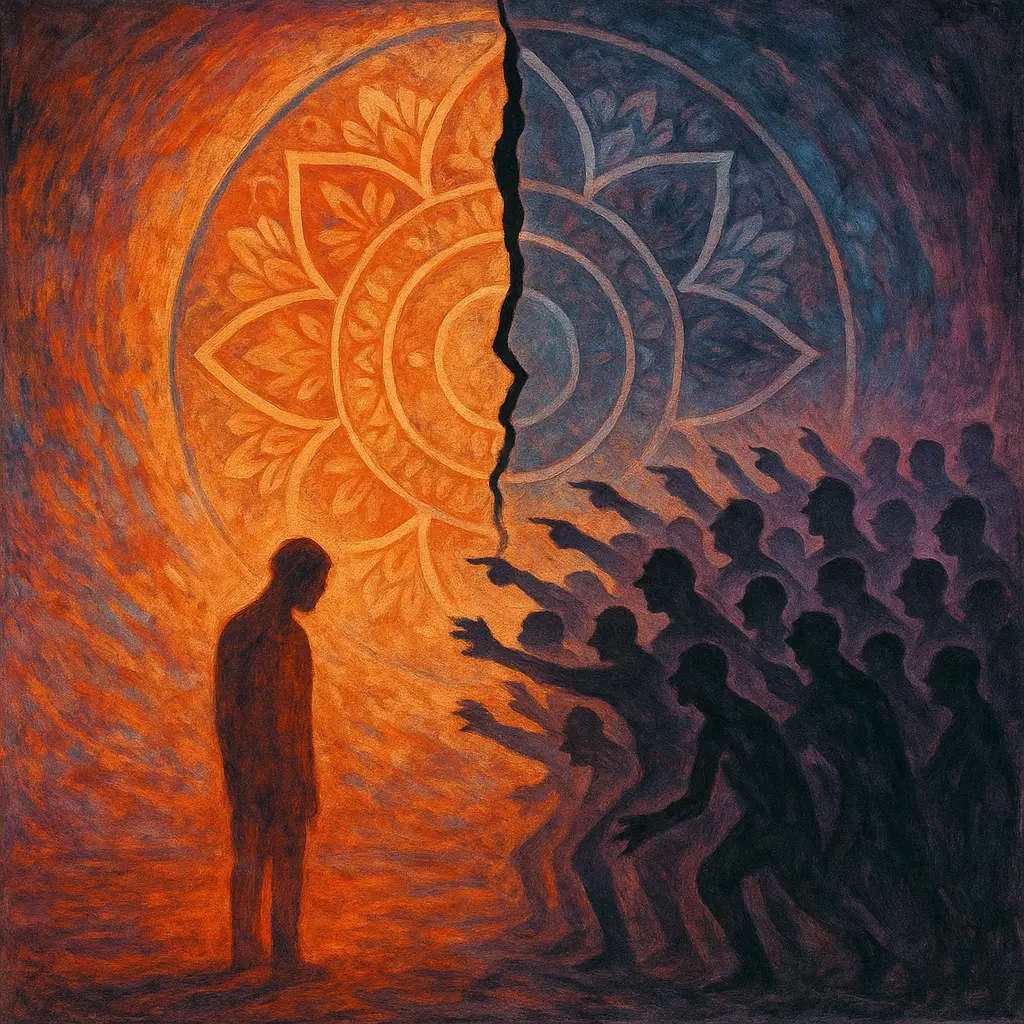
The target of a cancellation—a public figure, a peer, an online stranger—often becomes an archetypal scapegoat. In myth and ritual, the scapegoat bears the sins of the tribe and is sacrificed or exiled to restore social equilibrium. Today, the ritual takes place online. The digital firepit is the comment thread. The sin is moral impurity.

But the fervor? That’s religious. Archetypal. Shadow-fueled.

Why Now? The Rise of the Unprocessed Psyche

We live in an age of hyper-visibility and deep fragmentation. Everyone is their own brand, their own broadcaster, their own PR department. Meanwhile, the tools for authentic psychological integration—community, ritual, introspection—have eroded.

Cancel culture thrives in this vacuum. It provides a synthetic moral high. A hit of certainty in a morally ambiguous world. A way to feel good without having to face the disturbing truth: that we, too, contain capacity for cruelty, ignorance, prejudice, and contradiction.

Instead of saying “This reminds me of something in myself I haven’t dealt with,” the unconscious says, “That person is disgusting. Get rid of them.”

The Performance of Virtue and the Fear of Exile

Much of cancel culture is driven by fear—of being next. As a result, virtue is often performed, not lived. We denounce to demonstrate that we are clean, correct, on the right side of history. It’s the modern equivalent of burning a witch to prove you’re not one.

This makes it difficult to speak honestly, to question the herd, or to show nuance—qualities vital for a psychologically healthy society. If one mistake marks you as irredeemable, then redemption as a concept is dead. Growth is irrelevant. All that remains is punishment.

But the shadow requires growth. It demands confrontation, not exile.

Cancel Culture as a Mirror

If we zoom out, cancel culture may be seen as an evolutionary pressure—a flawed but inevitable attempt by the collective psyche to regulate moral boundaries in a new digital terrain. It points to real traumas, power abuses, and social injustices that need redress.

But when we cancel rather than converse, when we exile rather than integrate, we repeat the very cycles we claim to oppose. We become the tyrant we sought to dismantle.

In this light, cancel culture is not the problem—it is the symptom of a deeper, unresolved issue: the collective failure to do shadow work.

Toward a New Integration

If cancel culture is a symptom of shadow repression, then the cure isn’t more silencing. It’s more integration.

This means:

  • Encouraging inner reflection, especially when we feel reactive.
  • Distinguishing between justice and vengeance—they may feel similar, but arise from different places.
  • Valuing growth over purity, recognizing that fallibility is universal, and transformation is possible.
  • Creating space for difficult conversations, where people can be accountable and human.

If humanity is to evolve beyond this recursive purge cycle, we must learn to see our enemies not only as threats, but as mirrors. Not to excuse harm—but to understand where it originates, in them and in us.

Conclusion

We are all being asked to grow up psychologically. The digital age has exposed us to ourselves in ways no previous generation has had to face. The question isn’t whether cancel culture is justified—it’s whether we are ready to look into the mirror it holds up and ask: What am I seeing in them that I refuse to see in myself?

Until we can answer that, the shadow will keep casting new scapegoats for the mob to burn.