The Storyteller’s Window

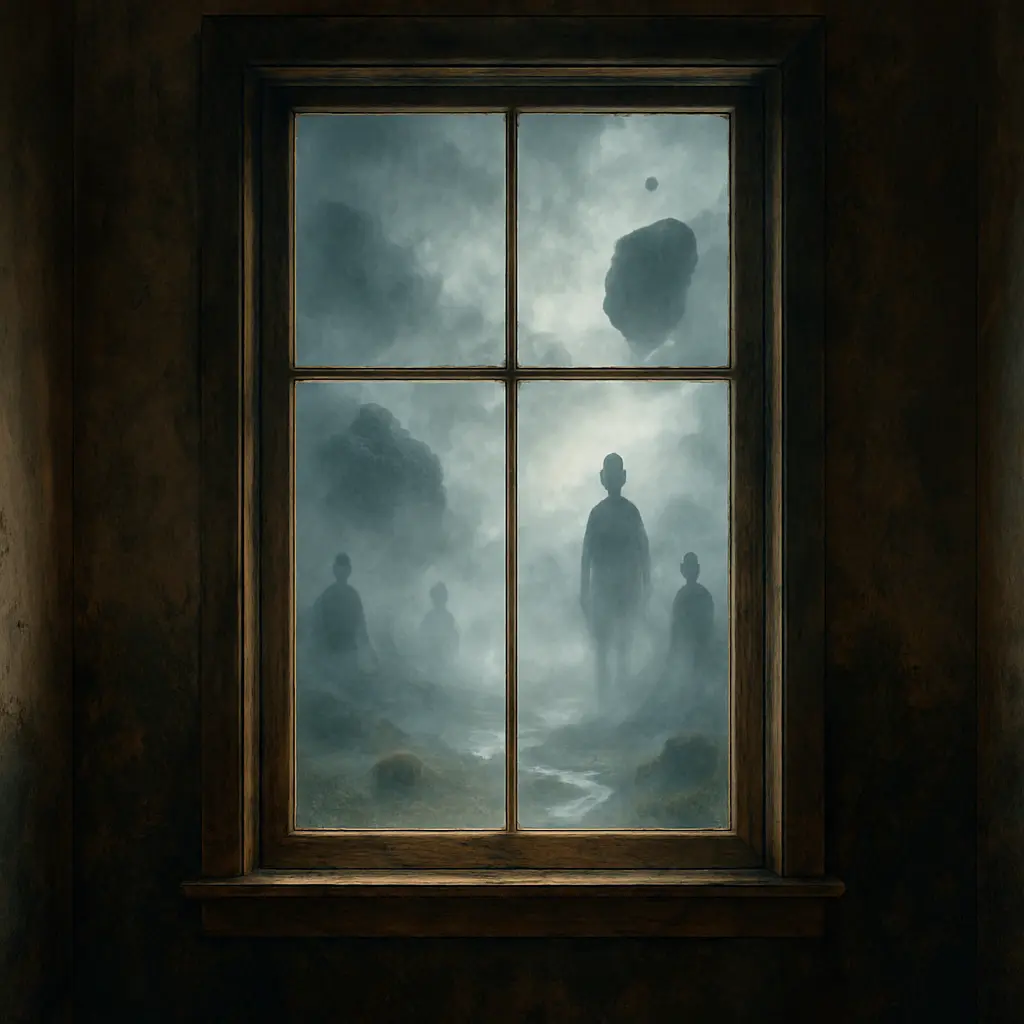
A dark, wooden window frame looks out onto a surreal fog-filled landscape. Mist swirls around several human-like silhouettes standing at different distances, their forms indistinct and ghostly. Large rocks float impossibly in the air above them. The scene feels quiet, dreamlike, and otherworldly, as if the viewer is glimpsing a mysterious world that continues beyond the window.

Every so often, I will be watching a film or series, or reading a story, and something will suddenly pull me out of it.
A line of dialogue that only exists to feed the audience information.
A character explaining something they would never naturally say.
A flashback that feels too perfectly placed, as if a hand behind the curtain decided it was time to push a button.

Moments like that disturb my suspension of disbelief. I find myself noticing the machinery instead of the world.
And once you start seeing such things, you cannot unsee them.
Over time, I realised that a lot of pop culture storytelling leans on techniques that assume a certain kind of audience, a certain set of values, and a certain tolerance for being guided.
Some of these methods are not as clever as they seem. Others are perfectly valid for what they aim to do, but they do not serve what I aim to do.

That realisation led me to form my own set of principles.
They are not rules, and they are not concerned with correctness.
They are reminders. Gentle considerations for how I want my work to feel and behave.
This is not a manual. It is a compass.


I. Truth and Authenticity

Stories are not machines to be engineered. They are living organisms to be understood.
What matters most is emotional truth, that quiet resonance where the unreal feels real.
If a moment feels true, it is true, even if it defies logic.
Characters do not need to be likeable. They only need to be honest to their nature.
The writer is not a god above the story, but a witness within it.
Endings, failures, and decay are not flaws. They are proof that the story lived.


II. World and Logic

Every world must honour its own laws. Whether rooted in physics or dream, it must remain faithful to its own gravity.
Let events unfold as they would in nature, through consequence, impulse, and coincidence.
Do not bend the world to convenience. Let the world teach you how it moves.
Even the strangest landscape should carry the texture of reality: the scent of rain, the hum of a wire, the tremor of a heartbeat.


III. Character and Humanity

Characters are not constructs to be designed. They are lives to be discovered.
Learn who they are by listening, not dictating.
No one is entirely good or entirely evil unless that purity serves a deliberate purpose.
Every figure who crosses the frame has a history, a pulse, and a reason for being.
There are no true extras. Only lives that briefly brush against the light.


IV. Form and Flow

Let the story choose its own shape.
Format is a vessel, not a cage.
Pacing is rhythm, not formula. Let the breath of the story decide its tempo.
Vitality lives in the tension between order and chaos. Allow the pendulum to move.
A story that is too tidy becomes lifeless. Let it breathe, stumble, and surprise you.


V. Silence and Mystery

Never underestimate the intelligence of the reader.
Trust them to see, to infer, and to feel.
What is left unspoken often speaks the loudest.
Mystery is not confusion. It is invitation.
The unknown keeps the work alive long after the final page.


VI. Continuum of Existence

A story is only a window in time.
Life was already happening before we looked in, and it will continue long after we look away.
Do not polish beginnings and endings until they shine. Let the edges remain a little frayed, as life truly is.
We glimpse, we witness, and we move on.


VII. Symbol and Subtext

Do not plant symbols like flags.
Let meaning emerge naturally, the way roots seek water.
When emotion and explanation collide, follow the emotion.
The mind will find meaning on its own. It always does.


Closing Reflection

A story should never strive for perfection.
Perfection is stillness, and stillness is death.
Let the story breathe. Let it contradict itself. Let it live.
Truth, not tidiness, is the measure of beauty.
And when in doubt, trust the silence between the words.
Honestly, the Zombie Apocalypse Sounds Kinda Nice!

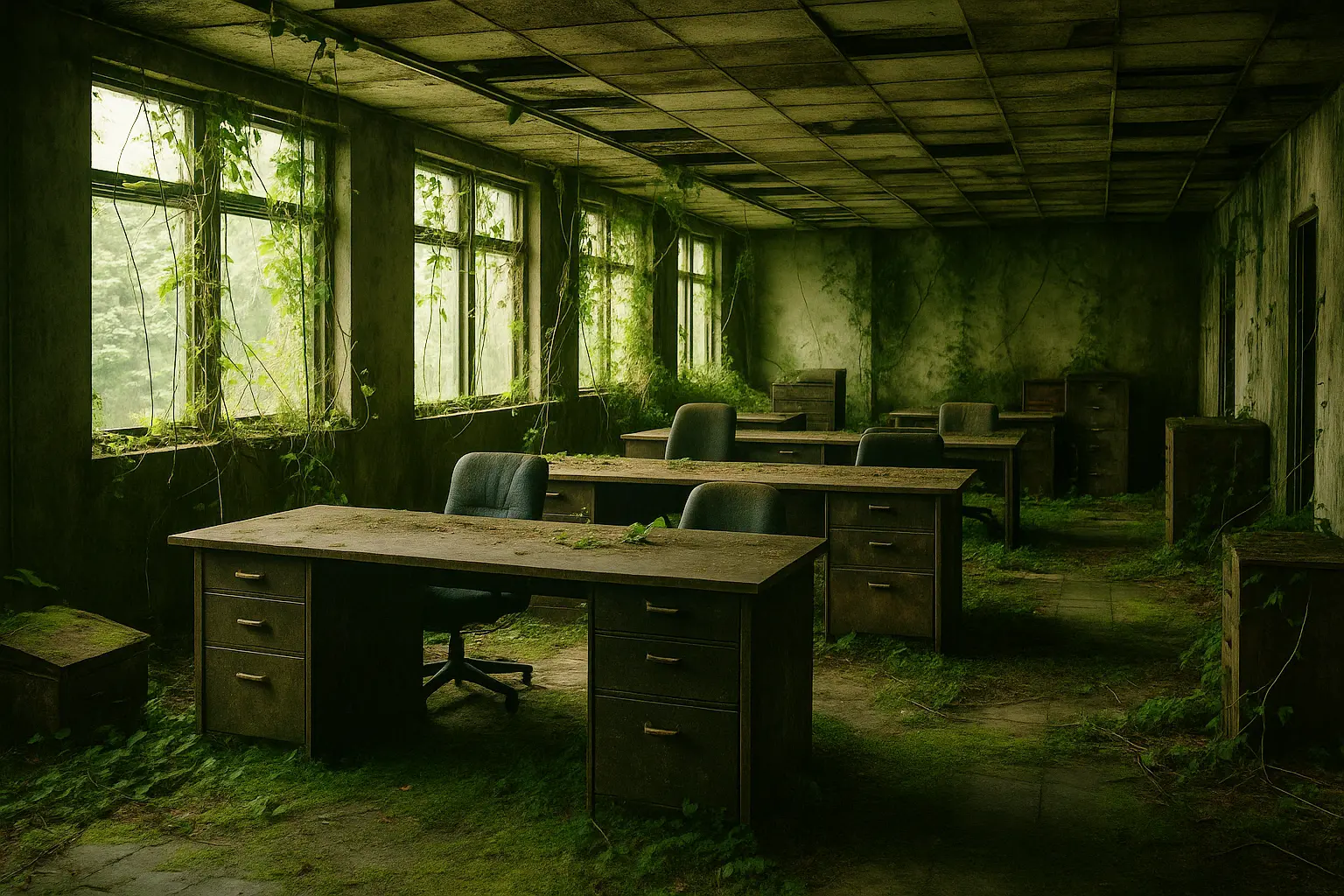
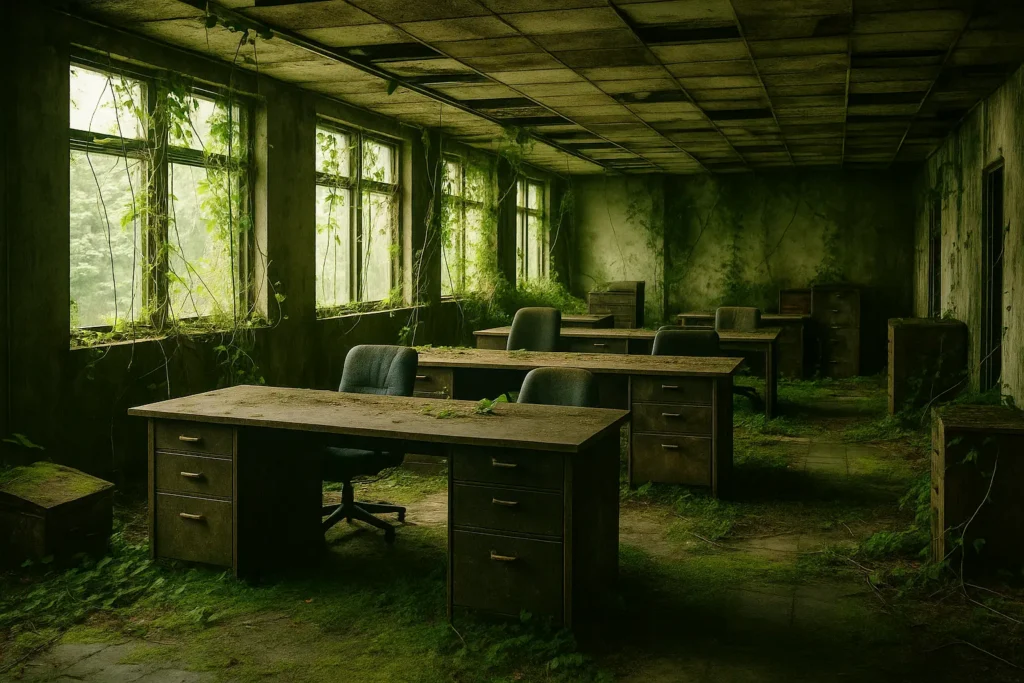
An image of the interior of an office building that has been reclaimed by nature.

Survival horror games. Apocalyptic movies. Zombie TV shows. They keep showing us the end of the world.

And the strange thing is, I find it comforting.

Not the death, or the gore, or the terrifying monsters.
But the quiet that follows.

In games like The Last of Us, in the atmosphere of 28 Years Later, in the long, dangerous walks through empty cities overrun by moss and silence, there is a strange kind of peace. These stories are about zombies, sure, but only in the way that space operas are about rockets. The real story is human.

Stripped of society, of rules, of etiquette and expectation.
Just survival. And with it, a return to something real.


A Common Fantasy, Quietly Shared

I don’t think I’m alone in this. There’s something telling about how many people are drawn to post-apocalyptic settings. We say it’s escapism, but maybe it’s something deeper. Maybe it’s yearning.

A yearning for everything to finally break, so we’re allowed to default back to our instincts. Those instincts haven’t disappeared, but capitalism has twisted them. Turned survival into branding. Turned curiosity into productivity. Turned strength into silent compliance.

In the fantasy, that spell is broken. We move freely. Nowhere is off-limits except by danger. If you’re brave enough to go, you go. And if you make it out alive, you learn something.

Maybe even about yourself.


A World That Makes Sense Again

You don’t need to fill out a form to matter. You don’t need to chase social media followers to have value. You don’t need a degree, or a permit, or a job title to justify existing.

You just survive. You help others survive. You find food. You stay alert. You sleep lightly. You protect your friends. You trust your gut.

The world becomes dangerous, yes — but finally understandable.


The Beauty of Nature Reclaiming

There’s an awe in seeing vines wrap around office buildings. Trees pushing through broken floor tiles. Roads cracked open and filled with moss.

It’s not just beautiful. It’s poetic.

The industrialised world thought it was permanent. But nature is patient. And in the fantasy, it doesn’t just survive. It reclaims.

It takes back the places that were stolen from it. Quietly. Persistently. Without anger.


Bureaucracy Is the Real Monster

The zombie apocalypse gives us a breath of relief from bureaucracy.

No more tax codes. No more emails. No more forms to fill in triplicate to get permission to be a human being. No more ten-step processes to access your basic rights.

The systems we live under have been patched and repatched so many times, they don’t even resemble their original purpose. Like buggy code that’s been layered with fixes until no one remembers what it was supposed to do in the first place.

Maybe the end of the world is the only bug fix that actually works.


Maybe I’d Finally Be Allowed to Live

I’m not saying I want civilization to collapse.

I’m saying that if it did, I might finally feel like I have a fighting chance.

The world we live in now feels like it was built to crush people like me. People who see too clearly. People who question. People who can survive, but only if allowed to act on their instincts without being penalized for them.

Maybe the end of the world wouldn’t be the end of me.

Maybe it would be the first time I was allowed to live.

How ‘Natural’ Is Capitalism? A Wildlife Fact-Check

Let’s ask a bold question today: Is capitalism natural?

You hear it all the time: “Competition is natural.” “Survival of the fittest!” “Animals compete for resources too, so capitalism is just human nature.”

Okay. Let’s test that.


Primates and Barter

Some monkeys exchange grooming for food. Vampire bats share blood meals with friends who had a bad hunting night. Dolphins have been seen trading favors.

Sounds a bit like trade, right?
Sure. But they’re not stockpiling bananas to rent out at interest. There’s no corporate monkey hoarding grooming time for leverage.

Verdict: Mutual aid > capitalism.


Wolves and Hierarchy

Yes, wolves have social hierarchies. But alpha status isn’t about profit margins, and when the alpha gets old, their status naturally changes. No dynastic wealth passed on to wolf pups.

Verdict: Power, yes. Inherited class systems? Not so much.


Ants and Division of Labor

Ants have a queen. Workers do different jobs. Sounds like a factory?

Except: they don’t get a choice, they don’t hoard, and no one gets a performance bonus. The colony exists to survive together, not generate infinite quarterly growth.

Verdict: If anything, that’s ant-communalism.


Lions and Territory

Lions defend turf, sure. But once they die or get ousted, the land doesn’t go to their heirs in a real estate portfolio. Territories are earned, lost, or reshuffled. There’s no lion landlord charging monthly antelope rent.

Verdict: Competition? Yes. Capital accumulation? Nope.


Birds and Courtship Displays

Some birds spend a lot of time building impressive nests or learning flashy songs to attract a mate. Marketing? Maybe.

But once the courtship’s done, they’re not franchising their brand or charging royalties.

Verdict: Nature’s flex, not capitalism’s hustle.


So What’s Actually ‘Natural’?

  • Sharing.
  • Reciprocity.
  • Competition within ecological limits.
  • Cyclic renewal.

What isn’t natural:

  • Owning labor.
  • Monetising attention.
  • Profiting off scarcity you engineered.
  • Stockpiling more than you need while others starve.

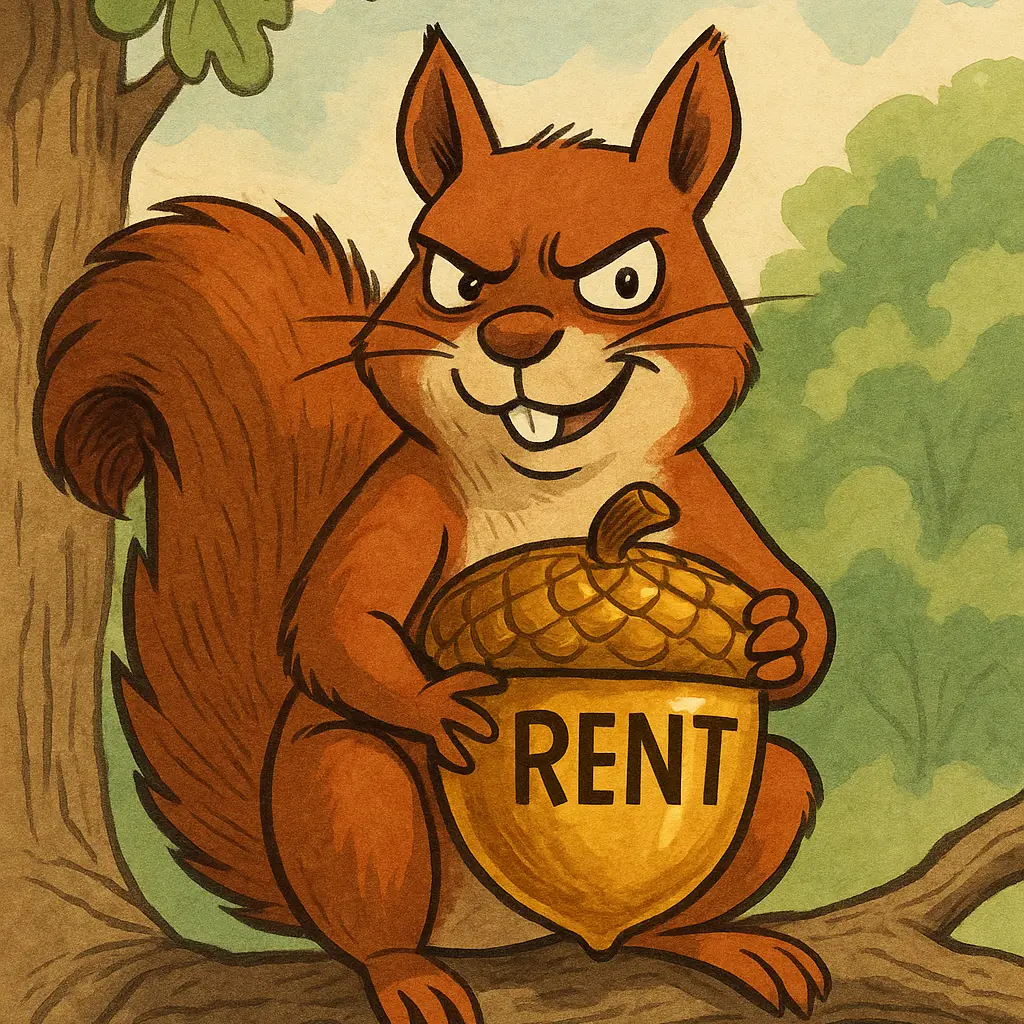
So next time someone tells you capitalism is just nature doing its thing, ask: Have you ever seen a squirrel charge rent for a tree?

Capitalism isn’t natural. It’s engineered.
And nature is quietly horrified.


Written with respect to every overworked worker ant and underpaid monkey in the system. We see you.

Carnival Dream: The Storm

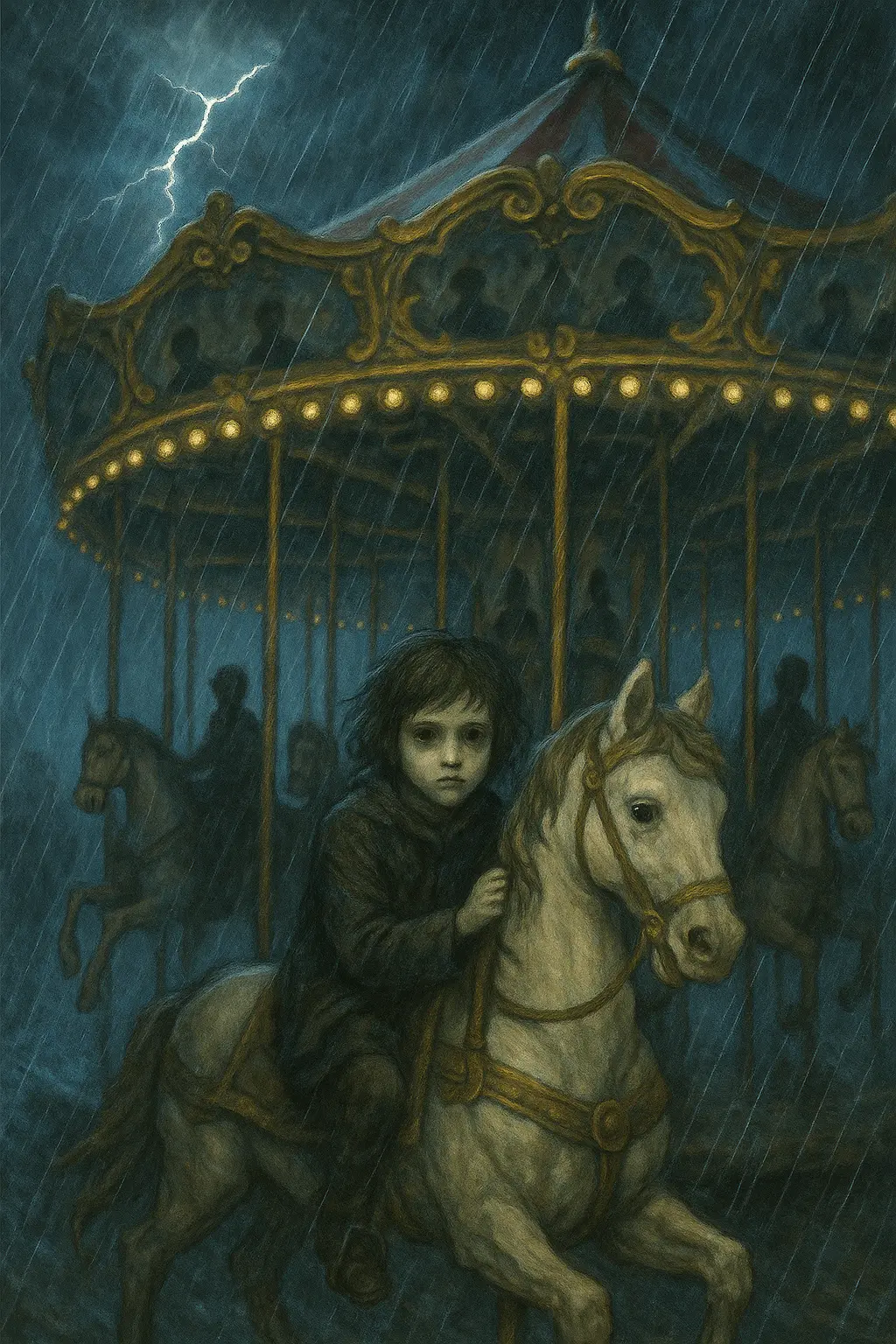
The carousel groaned as it turned, its golden poles smeared with the fingerprints of a thousand forgotten riders. Painted horses reared in frozen delight, their glass eyes glinting with a happiness that had long since curdled.

The child climbed on.

Not because he wanted to—but because he’d forgotten how to say no.

A quiet organ tune clinked out through a crackling speaker. 3/4 time. Always 3/4 time.

He chose the horse with a cracked smile and a nameplate that had been scratched blank.

His name had been Matthew, once.

As the platform began to spin, so too did the sky.

It started with a breeze—cool and damp—then a sudden curtain of rain, thick as syrup. Thunder cracked so loud the carousel jolted beneath it. Children screamed. Adults ran for cover.

But the ride did not stop.

Lightning flashed, strobing the carnival into a series of still photographs:

  • A balloon let go
  • A face smeared with candy and tears
  • A clown’s makeup melting in the downpour

The carousel spun faster. And then slower. And then… wrong.

The mirrors at its center reflected not the riders, but versions of them—distorted, grown-up, bitter, bored. One child saw themselves in a suit and tie, crying at a desk. Another, pushing a pram with hollow eyes. Another, screaming into a microphone to a crowd that wasn’t listening.

Matthew looked into the glass and saw nothing at all.

Just a flickering silhouette, undefined—unformed but watching.

Then—CRACK—lightning struck the iron arch above. The carousel jolted. The horses’ eyes blinked once.

And the dream tilted.

Somewhere beneath the floor, gears began to grind a different rhythm.

Something was waking.

And somewhere, in a layer just outside the dream, Angel remembered.

Not everything. Not yet. But enough.

Enough to know that the carousel wasn’t just a ride. It was a ritual. A loop. A lie.

And Matthew had ridden it long enough.

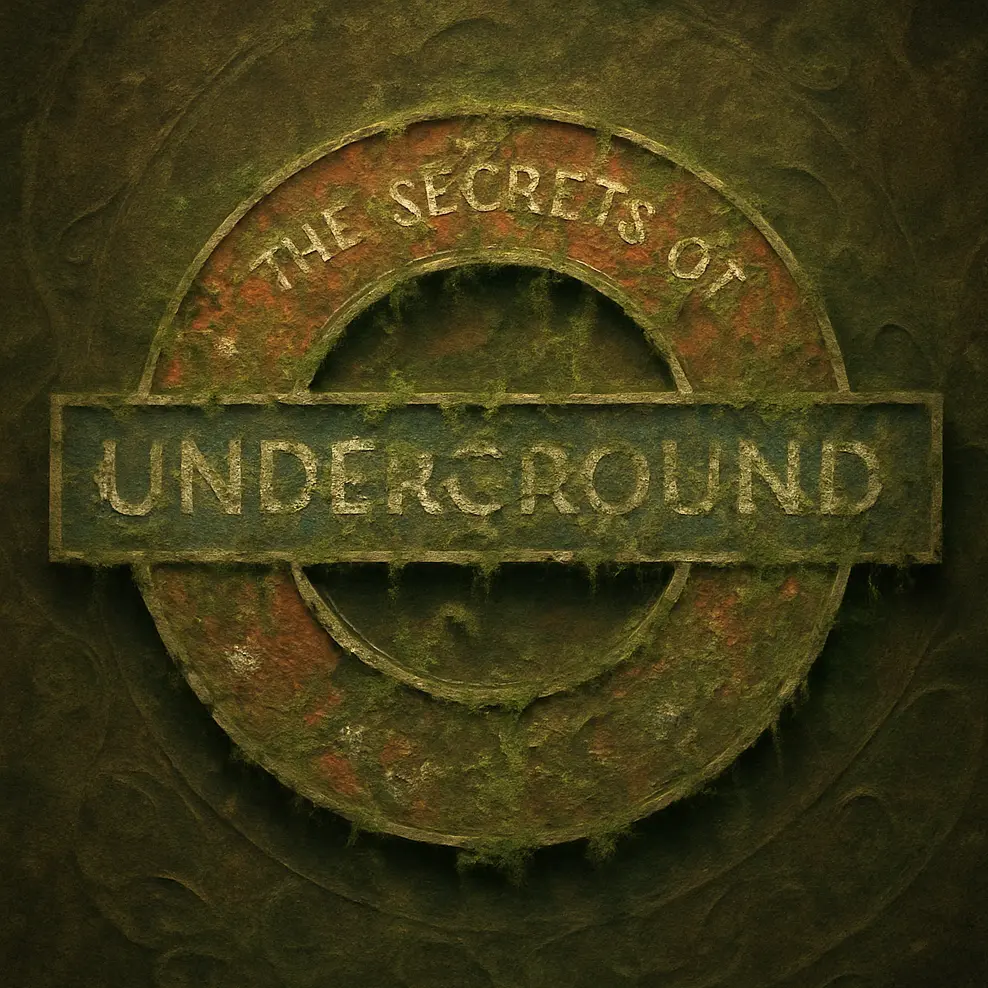
The Secrets of London’s Subterranean Infrastructure

Introduction

Have you ever wondered what’s going on right beneath our feet? London isn’t just a city above ground; it’s a vast, layered world below the surface, with an intricate network of infrastructure woven through soil, clay, and history. From gas pipes and fibre optics to ancient sewers and deep-level Tube tunnels, every layer tells a story of innovation, adaptation, and necessity. Join us on a journey down through the depths, as we explore the hidden city below.


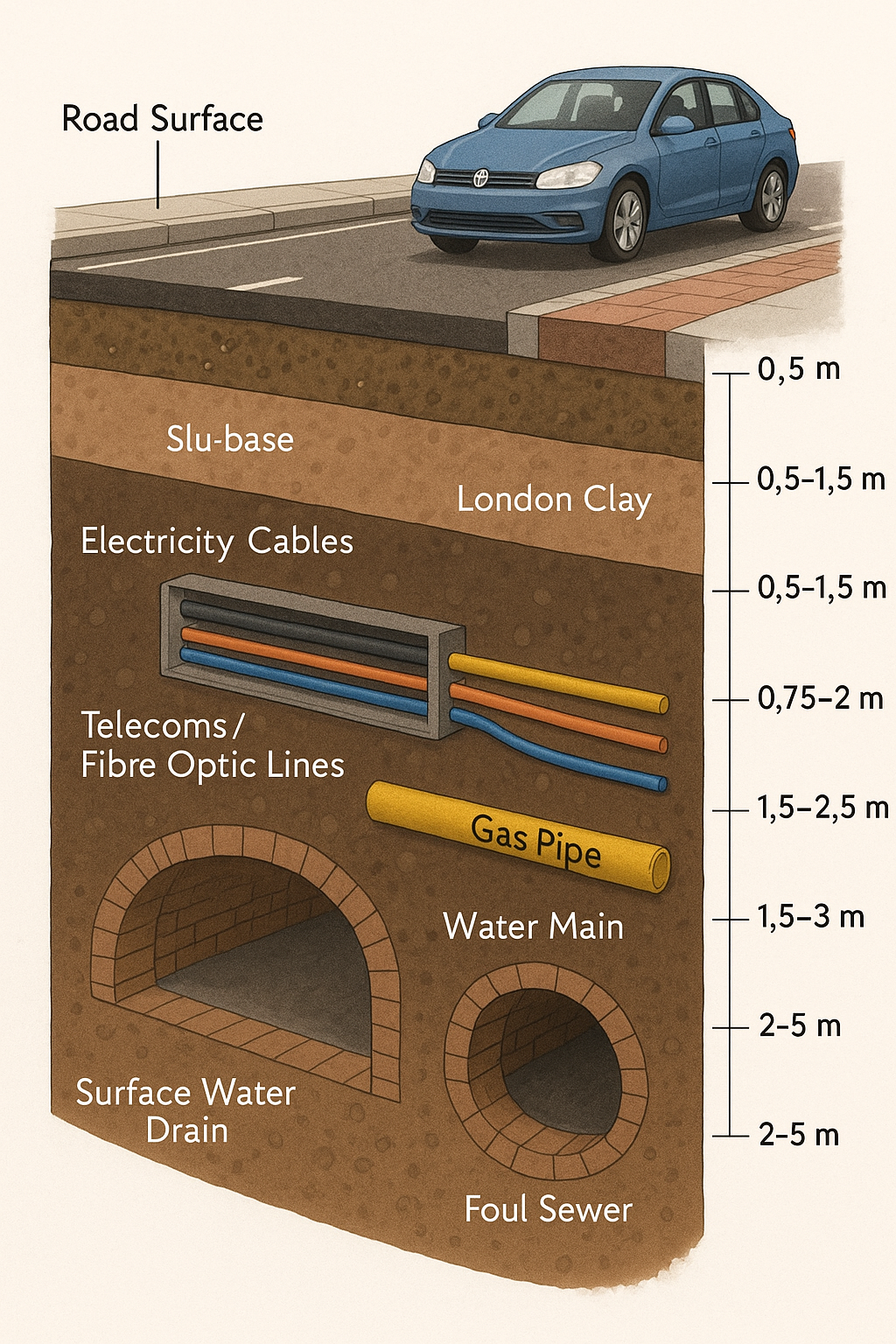
1. Road Surface and Sub-base (0–0.3m)

This is the topmost layer, the one we walk and drive on daily. It’s made up of asphalt (tarmac) and a crushed stone sub-base that helps distribute weight and provides structural integrity. Maintained by local councils, these layers are frequently resurfaced to repair potholes and wear from traffic.


2. Utility Lines: Electricity and Telecoms (0.3–1.5m)

Just beneath the surface lies a web of electricity cables and telecom/fibre optic lines, often housed in conduits. These are installed by utility companies like BT Openreach, Virgin Media, or UK Power Networks. Regular upgrades mean this layer is dynamic, adapting constantly to our growing digital and energy needs.


3. Gas Pipes (0.75–2m)

Gas infrastructure, typically made from yellow plastic or metal, delivers energy for heating and cooking. These pipes are managed by providers such as Cadent or SGN. Their depth helps protect against accidental damage from surface work.


4. Water Mains (1.5–3m)

Water mains, often the oldest parts of London’s infrastructure, supply clean water to homes and businesses. Thames Water oversees most of this system. Some mains still date back to the Victorian era—testaments to the durability of cast iron and early civil engineering.


5. Sewer Systems (2–5m)

London’s sewer network includes foul sewers (wastewater) and surface drains (rainwater), often large brick tunnels from the mid-1800s. Built under the guidance of Sir Joseph Bazalgette, this system saved the city from deadly cholera outbreaks and “The Great Stink” of 1858. Many of these tunnels are still in use today.


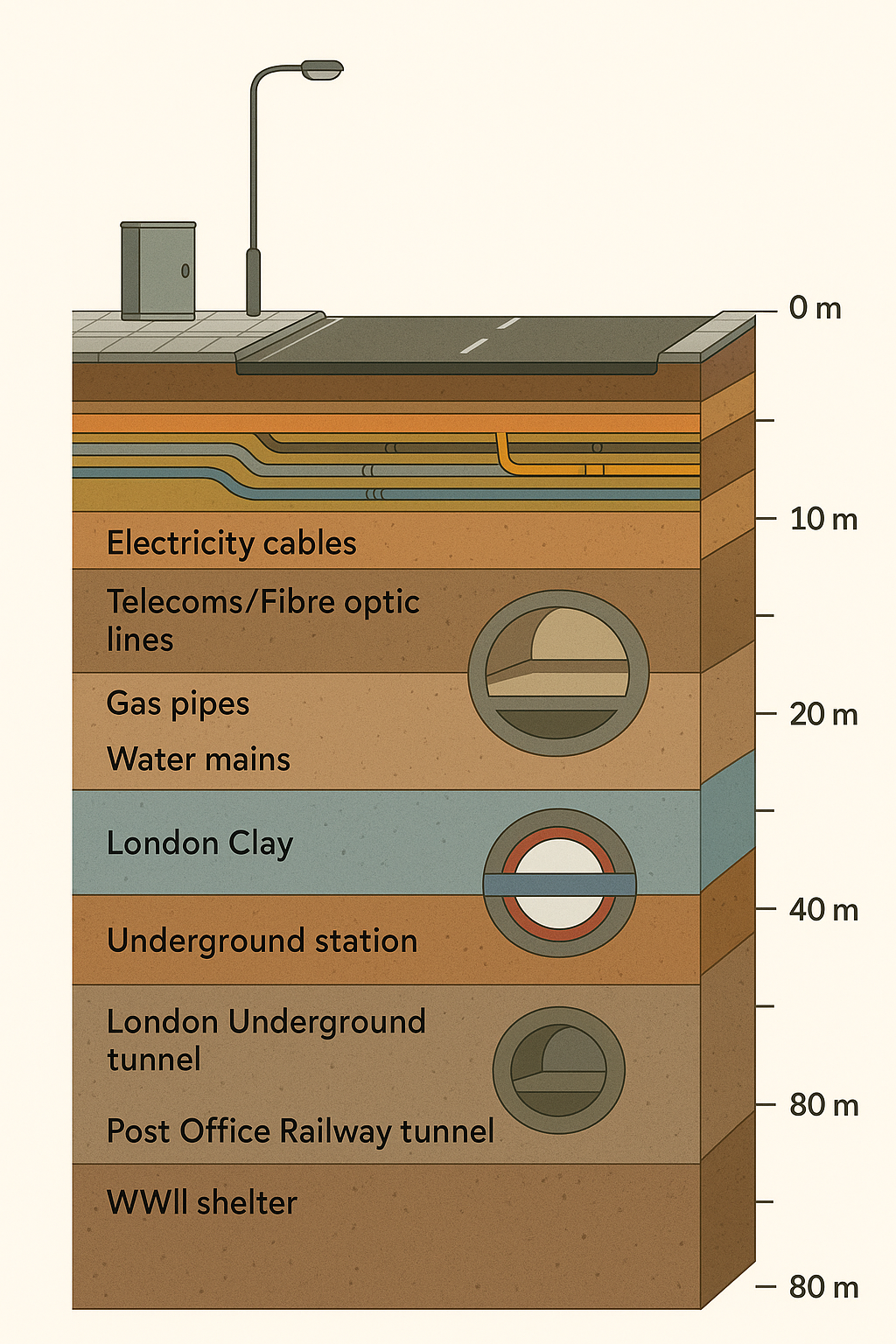
6. London Clay (varies ~4–40m)

Below the engineered layers lies London Clay, a dense, bluish sediment that’s perfect for tunneling. Its stability has enabled much of London’s deeper infrastructure, including Tube tunnels and bunkers. This natural geological layer has shaped how and where infrastructure can be safely placed.


7. Underground Stations (approx. 20–60m)

Deeper still are the London Underground stations. Subsurface stations (e.g., on the District line) are closer to the surface, while deep-level stations like Angel or Hampstead require long escalators or lifts to reach. Construction of these began in the late 19th and early 20th centuries, revolutionising city transport.

8. Tube Tunnels (20–40m)

Deep Tube lines such as the Northern and Piccadilly were created using tunnel boring machines, carving clean arcs through London Clay. These tunnels form a distinct ring in cross-section, and are reinforced with concrete or cast iron. They’ve been essential for commuting since the early 1900s.


9. Post Office Railway (aka Mail Rail, ~20m)

An often-forgotten relic, the Mail Rail was a driverless electric railway that shuttled post between sorting offices from 1927 to 2003. Now partially open as a museum, it runs even deeper than some Underground lines and offers a glimpse into the hidden logistics of old London.


10. WWII Bunkers and Shelters (40–80m)

During WWII, deep shelters were constructed as protection from aerial bombings. These included repurposed Tube stations and specially built chambers like the Clapham deep-level shelters. Some have since been used for secure storage, data centres, or even hydroponic farms.


Conclusion

Beneath the bustling streets of London lies a hidden, multilayered marvel of engineering and adaptation. Each level, from the surface to the deep clay, represents a chapter in the city’s history—of how it grew, coped, evolved, and prepared for the future. From the vital arteries of electricity and water to the silent corridors of the Tube and wartime bunkers, London’s subterranean infrastructure is a testament to human ingenuity. Next time you step onto a pavement, pause for a moment. Beneath your feet lies an entire hidden city.

Nihilism: A Blank Canvas, Not a Dead End

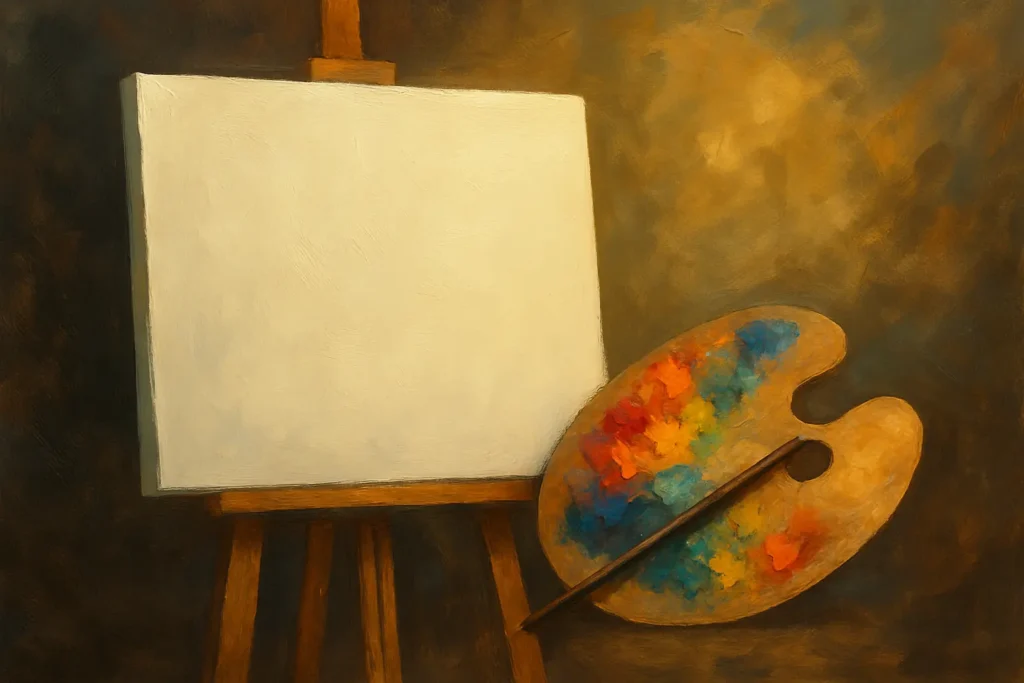
When most people think of nihilism, they often associate it with despair, emptiness, or a sense of meaninglessness. To some, it might feel like a philosophical dead end—a void where no purpose or value can exist. But for those who embrace it fully, nihilism is far from a negative or paralyzing concept. Instead, it’s an open canvas, waiting to be painted with the colors of your own choosing.

At its core, nihilism challenges the idea that inherent meaning exists in the universe. It tells us that there is no predefined purpose, no grand cosmic design, and no higher power dictating our fates. For many, this realization can be unsettling—if nothing has inherent meaning, then what’s the point of anything? But here lies the beauty of nihilism: it frees us from the chains of external expectations and allows us to define our own meaning.

Rather than seeing nihilism as a void or a dead end, it’s more productive to view it as a blank canvas. The absence of preordained meaning gives us the ultimate freedom to create our own. If the universe doesn’t hand us a purpose, then we can craft our own from scratch. This isn’t an invitation to apathy or despair; it’s an invitation to action.

Nihilism, in this light, empowers us. It tells us that we are the authors of our lives, the creators of our own values. It’s not a declaration of emptiness, but of boundless possibility. The absence of meaning can be terrifying at first, but when we shift our perspective, it becomes liberating. It’s a canvas stretched wide across our lives, ready to be filled with whatever we choose.

For many people, this shift in thinking can lead to a deeper appreciation for life. When you know that meaning isn’t handed to you but created by you, every action and every choice becomes imbued with personal significance. Rather than feeling lost in the vastness of an indifferent universe, you can find comfort in knowing that it’s up to you to shape your existence. Nihilism strips away the layers of pretense and leaves you with the raw material of life itself, allowing you to create something real and meaningful on your terms.

In a way, nihilism doesn’t leave you in the dark. It opens the door to a freedom that most people never realize they have. It’s a blank canvas, not a dead end. The question is no longer what is the meaning of life, but how will you create meaning for yourself?