
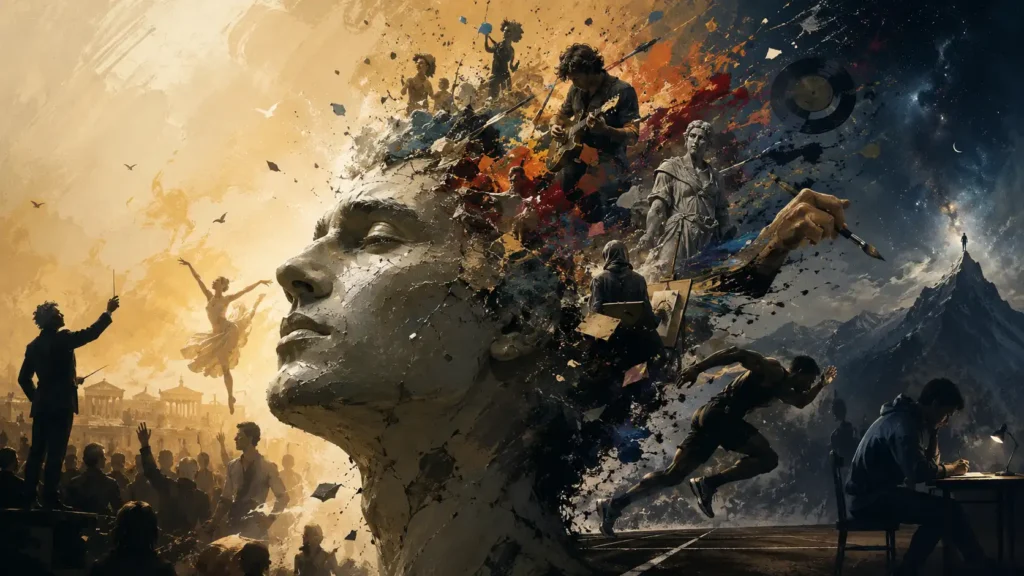
The Mark We Leave
The word impress comes from the Latin imprimere, meaning “to press into.” Originally, it referred to something physical: a seal pressed into wax, a footprint left in mud, or a coin stamped with the face of authority. In every case, something leaves part of itself behind upon another surface. Over time, the meaning became psychological and cultural. Human beings no longer merely impress marks into objects. We impress ourselves into memory, into history, into one another.
The word approval comes from the Latin approbare, meaning “to prove as good” or “to judge worthy.” Hidden inside the language itself is an important distinction. An impression is not the same thing as approval. To impress is to affect. To approve is to judge.
This distinction matters more than it may first appear. You can leave a powerful impression while earning disapproval. Many great artists, philosophers, and revolutionaries have done exactly that. Likewise, someone can gain approval without leaving much of an impression at all. Society approves of people every day for safely meeting expectations, blending into systems, and producing exactly what is required of them. Approval often rewards conformity, while impression tends to emerge from impact.
Much of culture seems to revolve around the uneasy relationship between these two forces. We want to leave marks on the world, but we also want those marks to be welcomed, admired, or validated. Art, music, performance, sport, and even everyday social behavior are filled with this tension between impact and acceptance.
The Ancient Need to Be Seen
Human beings have always tried to impress one another. Long before modern celebrity culture, before social media, before even written language, humans decorated themselves, performed rituals, displayed strength, danced, painted cave walls, hunted dangerous animals, and told stories around fires. At first glance, this can appear superficial, as though culture is simply an elaborate extension of vanity and showing off. But the deeper you look, the more fundamental the impulse begins to feel.
Nature itself is full of displays. Peacocks spread their feathers, deer clash antlers, birds perform intricate dances, and countless species engage in rituals of attraction, intimidation, or status signaling. Human beings did not escape this evolutionary framework. We expanded it into symbolic territory. Rather than merely displaying physical strength, humans began displaying creativity, intelligence, endurance, spirituality, taste, and imagination.
To impress others can serve very practical purposes. It can attract allies, mates, opportunities, protection, and status within a group. But human beings also transformed impressiveness into something existential. We no longer merely want to survive. We want to matter. We want evidence that our existence reached beyond itself and affected the minds of others.
This may explain why creative culture carries such emotional intensity. Artistic expression is rarely just about producing objects. It is often bound up with identity, significance, and the fear of invisibility.
The Creative World and the Audience Problem
Artists often speak as though they create purely for themselves, but reality is usually more complicated than that. Most creators exist within a network of audiences, both real and imagined, and the nature of the audience often shapes the kind of impressiveness being pursued.
Some artists seem primarily driven by impressing non-artists. Their attention is directed outward toward audiences, fans, consumers, or the public at large. The goal may be emotional impact, popularity, admiration, or spectacle. There is nothing inherently shallow about this. Human beings naturally enjoy recognition, and entertainment itself can be an art form requiring enormous skill.
Other artists appear far more interested in impressing peers. In music, this can often be seen in technically demanding performances, obscure experimentation, or stylistic innovation aimed at fellow musicians rather than casual listeners. Similar dynamics exist in literature, painting, film, and athletics. Sometimes creators are not trying to impress the masses at all. They are attempting to push the boundaries of the form itself, earning recognition from those who understand the craft most intimately.
Some creators seem to orient themselves toward the future. They work not merely for contemporary approval, but in the hope of planting seeds for later generations. They want to leave foundations behind. They want future artists to discover their work and build upon it.
Then there are artists who seem primarily concerned with impressing themselves. This may be one of the purest and harshest forms of creative striving because the standard exists internally rather than socially. The artist attempts to close the gap between imagination and reality, chasing a personal ideal that nobody else can fully see. In these cases, the work becomes a confrontation between the creator and their own limitations.
There are stranger motivations too. Some people create in pursuit of family approval. Some create to honor the memory of someone who has died. Some work toward an imagined audience they will never meet, hoping that a distant figure, whether real or symbolic, would somehow understand or approve of what they have done.
And then there is perhaps the oldest audience of all.
Impressing the Divine
Throughout history, enormous amounts of art, music, architecture, and ritual were created not primarily for human applause, but as offerings to the divine. Cathedrals stretching upward toward heaven, sacred chants echoing through stone halls, ceremonial dances, acts of devotion, and feats of discipline were often framed as attempts to honor gods, spirits, or cosmic principles rather than ordinary spectators.
In this context, impressiveness takes on a different quality. It becomes less about social recognition and more about transcendence. The creator is no longer simply saying, “Look at me,” but instead offering something upward toward an ideal beyond themselves.
What is fascinating about this form of impressiveness is that it can bypass ordinary systems of approval entirely. An artist may be rejected by society while still believing they are aligned with something sacred, eternal, or spiritually meaningful. Even outside formal religion, traces of this dynamic remain everywhere. Many artists speak about creativity in mystical language, describing themselves as “called” toward certain work or feeling responsible to inspiration itself. The audience becomes something larger than human approval alone.
Perhaps this is why some creative acts carry an almost ritualistic intensity. They are not merely performances. They are offerings.
Competition and the Tension Between Creators
Impressiveness almost inevitably creates hierarchy. The moment human beings begin comparing achievements, competition emerges. Who is the fastest, strongest, smartest, most skilled, most innovative, or most authentic? Even in fields that claim to reject competition, subtle hierarchies tend to form.
This creates an uncomfortable tension within creative culture because artists often simultaneously admire and compete with one another. Musicians praise each other while quietly studying one another’s weaknesses. Writers celebrate originality while fearing irrelevance. Athletes inspire one another while battling for victory. Artists support one another while also struggling for visibility within limited cultural attention spans.
Human beings want others to be impressed by them, yet they also fear being overshadowed by those same people. Admiration and rivalry often coexist within the same emotional space.
This may explain why genuinely secure creators feel so rare and compelling. There is something deeply impressive about someone who can sincerely admire greatness in others without feeling personally diminished by it.
The Trap of Approval
One of the great dangers within all of this is the tendency to confuse approval with meaning. Approval is socially addictive. Human beings are highly responsive to praise, applause, status, awards, and recognition, and entire industries have learned how to exploit this vulnerability.
But approval is unstable. What one generation praises, another may reject. Many artists celebrated in their lifetime fade into obscurity, while others who were ignored or ridiculed become deeply influential long after their deaths.
Impressions behave differently. An impression can survive disapproval because impact and acceptance are not the same thing. Some works disturb culture before eventually shaping it. Some ideas initially repel audiences precisely because they force confrontation with uncomfortable truths. Some creators become important because they refused to pursue approval at all.
This does not mean approval is meaningless. Encouragement matters. Community matters. Human beings are social creatures, and recognition can nourish creativity in healthy ways. But approval alone is not proof of depth, just as rejection alone is not proof of genius. The relationship is far more complicated than culture often pretends.
Refusing to Impress
Interestingly, some of the most culturally influential movements emerged from deliberate attempts to reject conventional impressiveness. Punk rejected polished virtuosity. Minimalism rejected excess. Outsider art rejected institutional approval. Certain spiritual traditions reject ego-driven performance altogether.
And yet this creates a strange paradox. The refusal to impress often becomes impressive in itself. The person who appears unconcerned with status gains status through seeming free from it. The artist who rejects mainstream validation can become fascinating precisely because so many others are visibly chasing it.
This suggests something slightly unsettling about human nature. Perhaps we are almost incapable of existing entirely outside impression dynamics. Even rejecting the game can become part of the game.
The Marks We Leave Behind
At its core, impressiveness may simply reflect the desire to leave traces of ourselves behind. Human beings want evidence that their existence touched something beyond their own isolated experience. Another mind. Another heart. Culture. History. God. Even the self.
Some impressions vanish almost immediately. Others linger for decades. A few survive long enough to outlive the people who made them.