
The Pleasure of Being Uncomfortable
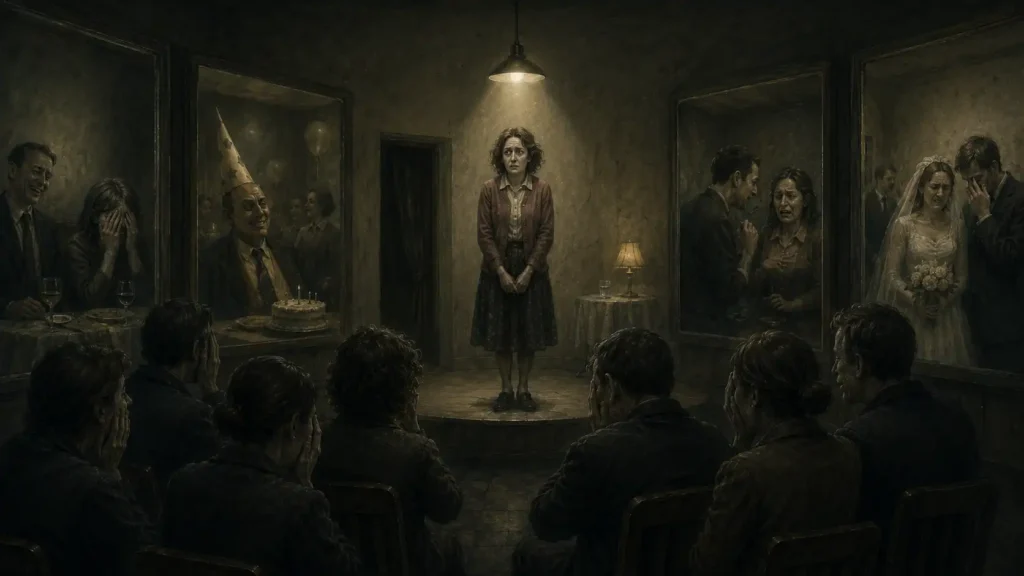
There is a peculiar category of comedy that I find fascinating, partly because it seems to contradict some of our most basic assumptions about why we enjoy humour in the first place. Rather than making us feel relaxed, cheerful, or pleasantly amused, it deliberately places us in situations that are uncomfortable to experience. We might find ourselves feeling embarrassed on behalf of a fictional character, becoming increasingly anxious about an impending social disaster, or watching an interaction unfold with a growing sense of horror.
And yet, somehow, we are entertained.
Sometimes the discomfort becomes so intense that we have to look away, pause what we are watching, or momentarily leave the room. Nevertheless, we often return voluntarily, knowing perfectly well that the experience is likely to become uncomfortable again.
This seems like a strange relationship to have with something we ostensibly watch for enjoyment. If a comedy makes us feel anxious, embarrassed, or distressed, why do we continue watching it? And perhaps more intriguingly, why might those unpleasant feelings be an essential part of what makes the experience rewarding?
The Anatomy of Cringe
Cringe comedy frequently relies upon our ability to recognise social situations that are going badly wrong, sometimes long before the characters themselves become aware of the problem. We watch somebody misunderstand an interaction, behave inappropriately, reveal something embarrassing, or persist with a course of action that is almost certainly going to end badly.
The discomfort often arises from our awareness of the social consequences that the character cannot see, or refuses to acknowledge. We understand the expectations governing the situation and can anticipate the embarrassment, humiliation, or conflict that is likely to follow.
In some ways, this makes the audience unusually active participants in the experience. We are not simply waiting for a punchline, but continuously interpreting the social dynamics and anticipating the consequences of each new development. The longer the situation continues without resolving itself, the more uncomfortable our position as observers can become.
There is also an important difference between laughing at somebody’s embarrassment and experiencing embarrassment on their behalf. The latter involves a degree of identification with the character, even when we strongly disapprove of their behaviour. We may recognise something of our own social vulnerabilities in their mistakes, or imagine how unbearable the situation would feel if we were personally involved.
This makes cringe comedy an interesting mixture of humour and empathy. Our discomfort may arise precisely because we understand the situation too well.
When Comedy Becomes Social Horror
Few comedy writers explore this territory quite as relentlessly as Julia Davis.
In programmes such as Nighty Night and Sally4Ever, Davis creates situations in which ordinary social conventions become instruments of psychological torment. Her characters frequently behave with astonishing selfishness, dishonesty, delusion, or emotional insensitivity, while the people around them struggle to respond within the boundaries of acceptable social behaviour.
What I find particularly interesting is the way these situations often resist the usual rhythms of comedy. In more conventional sitcoms, an awkward misunderstanding might build towards a punchline before being resolved or temporarily forgotten. Davis frequently allows the discomfort to continue well beyond the point at which an audience might reasonably expect relief.
The characters may refuse to acknowledge the obvious, exploit another person’s politeness, or continue behaving inappropriately despite mounting evidence of the damage they are causing. The audience becomes trapped in an escalating situation where the normal mechanisms of social correction appear to have stopped working.
There is something almost horrifying about this, particularly because the situations are often rooted in recognisable human behaviour rather than anything supernatural or fantastical.
The horror comes from watching ordinary social expectations become unreliable. Politeness no longer protects people from exploitation, honesty fails to resolve misunderstandings, and the assumption that others will behave with reasonable consideration becomes increasingly difficult to maintain.
It is possible to find these scenes extraordinarily funny while simultaneously experiencing a genuine desire for them to end.
The Uncomfortable Recognition of Ourselves
I suspect part of the appeal of this kind of comedy lies in the uncomfortable recognition that the behaviours being exaggerated are not entirely alien to us.
Most people have experienced moments of selfishness, insecurity, jealousy, dishonesty, or social misjudgement, even if they would prefer not to acknowledge them. We may recognise these qualities in ourselves, in people we know, or in the unspoken tensions that occasionally emerge during ordinary interactions.
Comedy can exaggerate these tendencies until they become grotesque, but the exaggeration often remains connected to something psychologically recognisable.
A character who is completely oblivious to their own selfishness may be funny partly because we have encountered similar behaviour in real life. Equally, their behaviour may remind us of occasions when we have failed to recognise the effect of our own actions upon others.
This creates a complicated emotional relationship between the audience and the characters. We may feel superior to them, sympathise with them, despise them, or recognise something disturbingly familiar in their behaviour, sometimes within the same scene.
And perhaps this is one reason uncomfortable comedy can remain compelling even when it offers little conventional warmth or reassurance. It allows us to encounter aspects of human behaviour that we might otherwise prefer to keep at a comfortable distance.
The Importance of Not Being There
There is an obvious distinction between witnessing an uncomfortable situation through fiction and experiencing it directly.
If somebody behaved like a particularly unpleasant comedy character towards us in real life, we might find the experience distressing rather than entertaining. The fact that we are watching from a position of relative safety changes our relationship with what is happening.
This distance allows us to engage with situations that might otherwise feel intolerable. We can anticipate social disaster without being personally responsible for preventing it, and experience embarrassment without having to endure its real-world consequences.
However, I think it would be too simplistic to suggest that the pleasure comes entirely from knowing that we are safe. After all, people differ considerably in their tolerance for uncomfortable comedy, and some fictional situations can feel almost unbearable despite our awareness that they are not real.
Perhaps what matters is the particular relationship between distance and involvement. We need enough emotional investment for the situation to affect us, but sufficient separation to make the experience manageable.
Too little involvement, and the scene may simply feel uninteresting. Too much, and the discomfort may overwhelm whatever amusement it might otherwise produce.
The most effective uncomfortable comedy seems capable of maintaining us somewhere between those extremes.
Catharsis Without Comfort
This brings us to catharsis, a concept traditionally associated with the emotional effects of tragedy but equally interesting when applied to comedy.
We often imagine catharsis as a process in which tension builds before eventually being released, leaving us feeling relieved or emotionally restored. Some comedy certainly follows this pattern, particularly when an uncomfortable situation finally resolves itself and the audience can laugh at the absurdity of what has occurred.
But I wonder whether catharsis always requires such a clear resolution.
Some of the most unsettling comedy offers very little reassurance that the world has returned to normal. The characters may learn nothing from their experiences, the social damage may remain unresolved, and the audience may be left with a lingering sense of discomfort long after the scene has ended.
Nevertheless, the experience can still feel strangely satisfying.
Perhaps the value lies partly in having encountered difficult emotions within a context where they can be explored rather than immediately avoided. The audience has been allowed to experience embarrassment, anxiety, disgust, or social vulnerability without needing to find a practical solution to the situation.
There may also be something liberating about seeing the less flattering aspects of human behaviour represented so openly. Social life frequently requires us to maintain appearances, conceal uncomfortable feelings, and participate in conventions that discourage direct acknowledgement of certain truths.
Comedy can temporarily suspend some of those expectations, allowing us to recognise the absurdity, cruelty, or fragility that sometimes exists beneath ordinary social behaviour.
The resulting satisfaction may not resemble happiness in any conventional sense, but it can still feel psychologically valuable.
The Limits of Enjoyment
Of course, none of this means that uncomfortable humour is inherently profound, or that greater discomfort necessarily produces better comedy.
There are situations where embarrassment becomes tedious, cruelty feels gratuitous, or the emotional demands placed upon the audience simply outweigh whatever artistic or comedic value the material might offer.
Individual experience also matters enormously. A scene that one person finds deliciously uncomfortable may remind another of a genuinely distressing experience. What feels like an entertaining confrontation with social instability to one viewer may feel uncomfortably close to reality for somebody else.
There is no universal threshold at which discomfort becomes enjoyable, and I would be suspicious of any attempt to establish one.
Nor do I think that finding something unpleasant automatically gives it artistic depth. Sometimes a scene is uncomfortable simply because it is badly conceived, poorly performed, or unnecessarily cruel. The presence of discomfort tells us very little about whether the work has successfully done anything interesting with it.
What matters is how the discomfort functions within the experience, and whether it contributes to something that the audience finds compelling, revealing, or otherwise worthwhile.
Why We Return
The more I think about uncomfortable comedy, the more it seems to challenge the assumption that enjoyment must involve feeling good throughout an experience.
We regularly seek out art that makes us sad, frightened, anxious, or emotionally unsettled. Tragedy, horror, and disturbing fiction can all provide experiences that we value despite, and sometimes because of, the unpleasant emotions they provoke.
Cringe comedy occupies an interesting position within this broader relationship between art and discomfort. It allows us to encounter the fragility of social behaviour, the unpredictability of other people, and the uncomfortable aspects of ourselves through a medium that somehow makes these experiences amusing.
Perhaps the satisfaction comes partly from discovering that we can tolerate feelings we would ordinarily try to avoid. Perhaps it comes from recognising uncomfortable truths, or from the peculiar freedom of watching social conventions collapse without having to repair them.
I suspect the answer varies according to the work, the audience, and the circumstances in which it is encountered.
What interests me most is that the discomfort does not necessarily need to disappear for the experience to become worthwhile. We may leave a particularly unsettling comedy feeling embarrassed, disturbed, or even slightly exhausted, while still considering the experience deeply enjoyable.
And perhaps that reveals something important about our relationship with art more generally. We do not always seek experiences that make us comfortable, nor do we necessarily measure their value by how pleasant they feel. Sometimes we are drawn towards things that challenge our emotional equilibrium because the encounter itself offers something we cannot obtain through comfort alone.
There is something wonderfully peculiar about a form of entertainment that can make us desperately wish for an experience to end, while simultaneously leaving us wanting more.