Why I Don’t Use Social Media, Part III: From Expression to Exploitation

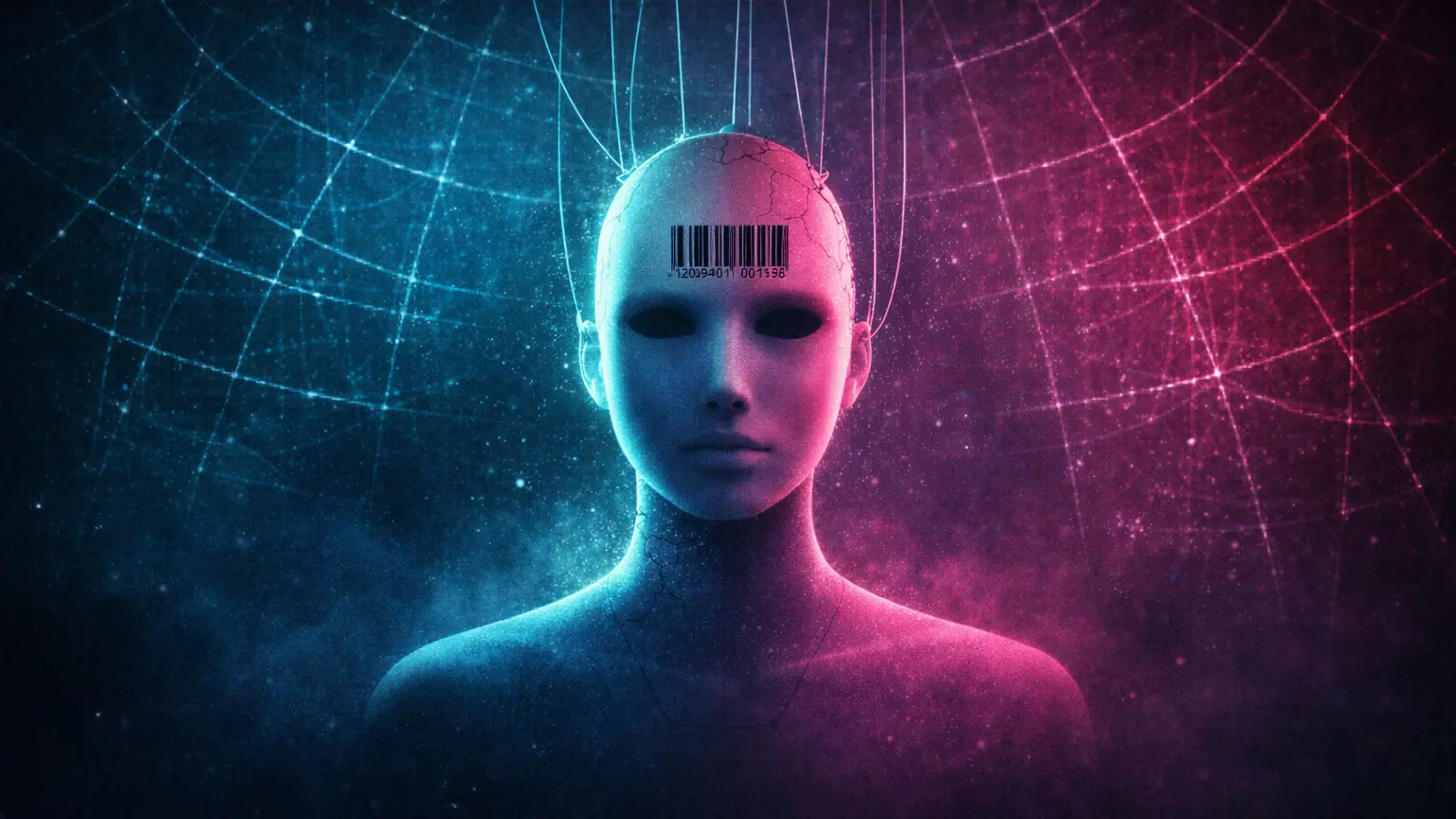
A mannequin-like human figure lit in cyan and magenta, with a barcode on its forehead and puppet strings above, standing in front of a faint web-grid background.

In Part II, I looked back at a time when online social spaces felt like rooms. Chat rooms, forums, and even MySpace had their own cultures, their own pace, and their own sense of community. Even when things weren’t perfect, it still felt like people were meeting each other on relatively human terms.

But somewhere along the timeline, the entire purpose of being online began to shift.

Connection started turning into visibility. Expression started turning into optimisation. People stopped showing up to talk, and started showing up to be seen. It’s hard to pinpoint exactly when this became the default, partly because it happened gradually, and partly because it was sold to us as progress.

But the end result is obvious.

“Social networking” didn’t simply evolve into “social media”. It was quietly redesigned into it. The language changed, the priorities changed, and most people barely noticed because it didn’t arrive as an announcement. It arrived as a new normal, shaped by platforms whose incentives were never neutral.


Memes and the Compression of Thought

Not long after Facebook became globally dominant, memes started becoming a major part of online culture. Memes, at least in the modern sense, are basically humour condensed into a single image, often paired with a caption. They spread quickly, they evolve through repetition, and they offer easy social hooks for people to build on.

Some memes are genuinely funny. Some are clever. Some are even oddly insightful in a compressed, sideways sort of way. But early on, I found myself uneasy with the format.

It wasn’t that I didn’t understand the humour. It wasn’t even that I disliked the jokes themselves. I just didn’t like what the format was doing to communication. It felt like conversation being flattened into a template, and personality being squeezed through pre-approved shapes.

I remember posting on Facebook when memes were first becoming common, basically asking if it was just me, or if they were making the world stupider. I wasn’t trying to be edgy, and I wasn’t trying to provoke anyone. I was reacting to something I found culturally strange and trying to put it into words.

I got shouted down instantly. My opinion was wildly unpopular.

Looking back, what stands out isn’t even the disagreement, it’s the speed and certainty of the backlash. It felt like a warning shot. Like certain kinds of critical thought were becoming socially unwelcome, especially if they threatened the fun, the vibe, or the collective agreement that keeps a platform frictionless.

Memes were not the worst thing to happen to the internet, but they were a sign of the direction things were moving in. Communication was being compressed, simplified, and optimised for rapid sharing rather than meaningful exchange.


When “Social Networking” Quietly Became “Social Media”

For a while, the shift was subtle. Different platforms emerged with different vibes, and people migrated depending on what suited them. Twitter was a big one, and to me it always looked like a fast-moving update stream, with a heavy focus on public figures and bite-sized commentary. I never signed up for it, not because I thought I was above it, but because I could already feel what kind of mental environment it would create for me.

Then came Instagram, and that was the point where the whole thing started to feel truly alien.

Instagram is social media built around images. On paper, I understand the appeal. People like visuals. People like documenting moments. People like sharing aesthetics. The problem isn’t the existence of photos, it’s what the platform encourages people to do with them.

The Instagram era felt like a cultural intensifier. It encouraged self-commodification, validation traps, and constant identity management centred around appearance. It rewarded the performance of a life, rather than the living of one. And it wasn’t just “look at this cool thing I did”, it increasingly became “look at me being the type of person who does cool things”.

I’ve seen people go to events purely to produce proof-of-attendance. Not to experience the event, but to capture the event. Not to have a night, but to extract a post.

And this is where the rebranding matters. “Social networking” didn’t shift into “social media” because people collectively decided they wanted something shallower. It became “social media” because platforms restructured online interaction into something that could be consumed, measured, targeted, and monetised. The design rewarded broadcasting over conversation, and performance over connection, and the culture followed the incentives.

Once that happened, the internet began to feel less like a network of people and more like a marketplace of identities.


The Artist Becomes a Product

As social media tightened its grip on everyday social life, it also tightened its grip on creative life. Somewhere along the way, there started becoming pressure on artists and musicians to promote themselves through social platforms, as if it was simply part of the job now.

If you wanted people to hear your music, you were expected to be present. To post constantly. To engage. To feed the algorithm. To build a “brand”. To become discoverable by playing the game.

I never successfully adopted that mindset, for a number of reasons. Partly because the workload felt absurd, especially for someone with ADHD and autism. The extra resources required to manage a constant online presence felt like an investment in something I was not good at, not interested in, and not capable of sustaining without burning out.

But more than that, it felt wrong.

I’m not comfortable pushing myself as a product. Even when I tried to treat it as “just marketing”, something in me resisted. It felt like I was being asked to flatten myself into something palatable and promotable, and then repeatedly present that version to the world until it started generating numbers.

At one point, my girlfriend even offered to manage my social media accounts for my music projects on my behalf, which was incredibly kind. But even then, it didn’t really work, because the problem wasn’t just the time commitment. The problem was what the whole process demanded of me.

It didn’t just want me to be an artist.

It wanted me to be a personality.

It wanted charisma as an output. It wanted a steady flow of “content” that was only partly related to the music itself. It wanted my life, my face, my social identity, my accessibility, my likeability, my relatability, all packaged into an ongoing performance alongside the creative work.

And if that is the price of visibility, then visibility starts to look less like opportunity and more like coercion.

I explored this more directly in my other articles The Independent Artist in the Age of Self Commodification and Art is NOT ‘Content’! because I don’t think this pressure is only damaging to artists. I think it is damaging to art itself. It changes what people make, how they present it, and what they feel allowed to be.


Going Viral as the New Goal

Somewhere along this timeline, and I struggle to pinpoint exactly when, “going viral” stopped being a rare accident and became a goal. Not just a possible path to attention, but the path that everyone was aiming for.

And when virality becomes the goal, content changes. Depth becomes a liability. Context becomes a burden. Nuance becomes inefficient. Intelligence becomes optional. The system rewards what spreads, not what’s true, not what’s meaningful, and not what’s human.

That’s why the rise of short-form video content, platforms like TikTok and everything that followed in its wake, felt like the endpoint of the process. I haven’t even bothered to explore it properly myself because I can already see what it represents from the outside. Communication reduced to bite-sized bursts designed to hijack attention, recycle trends, and keep people scrolling.

It all feels so shallow that it becomes hard to even call it “social” anymore.

To me, it looks like a world where people behave like idiots to entertain more idiots, because the reward structure is built around immediate reaction and maximum spread. And if that becomes the default route to success, it becomes obvious why culture itself starts to degrade. I’ve explored that wider attention economy more directly in Are You Paying Attention?, and the way platforms subtly train people out of nuance in Trained Not to Think: The Slow Death of Nuance.

At some point, the question stops being “Why don’t you use social media?”

And becomes “Why would you?”

Because once expression becomes exploitation, the healthiest move isn’t to optimise yourself for the system.

It’s to refuse the system entirely.

Why I Don’t Use Social Media, Part II: When Social Networking Was Actually Social

A cozy retro computer workstation with a glowing CRT monitor on a desk, surrounded by headphones and discs, set against a cyan and magenta web-grid background with a nostalgic, early-internet atmosphere.

In Part I, I talked about stepping away from social media without making a scene, and what I gained by simply stopping logging on. After that, I found myself thinking about why social media felt so draining in the first place. Part of it was personal, but part of it was historical. I remember an earlier version of the internet that felt more like a collection of places you chose to visit, rather than one endless feed you were expected to live inside.

There’s a particular kind of nostalgia people have for the early internet, and it’s often dismissed as the usual “back in my day” sentiment. The assumption is that if you miss it, you must be resisting change, failing to adapt, or romanticising a past that wasn’t as good as you remember.

But when I look back at the early years of social networking, the thing I miss isn’t the technology itself. It isn’t the graphics, or the clunky interfaces, or the fact that everything took longer. What I miss is the atmosphere. The texture. The feeling that the internet was made of smaller rooms rather than one giant stage.

Before “social media” became a thing, online socialising felt closer to real socialising. You turned up somewhere because you wanted to be there. You joined a space because you had something in common with the people inside it. You weren’t being funnelled into a feed and trained to scroll until your brain turned into static.

In a strange way, it felt more human.


Chat Rooms: Digital Rooms With Real People In Them

Some of my earliest experiences of social networking were in chat rooms, long before social media profiles became a default part of existing online. IRC, Yahoo! Chat, and other platforms like them were simple, almost blunt in design. You chose a topic, joined a room, and you were immediately dropped into a live conversation with strangers who were also there at that moment.

It sounds almost primitive now, but that simplicity was the entire point.

A chat room felt like walking into a pub or a cafe where you didn’t know anyone yet, but everyone had at least one shared interest. The rooms I found myself drawn to were usually related to computer games or music, and the magic was in the immediacy of it. People were talking because they were present. Conversations unfolded in real time. You’d meet strangers, then meet them again, and eventually they stopped being strangers.

And just like real social spaces, you’d get friendships and arguments, drama and in-jokes, and occasionally even romance, because human beings are human beings no matter what interface they happen to be using.

For me, as someone who didn’t have much of a real social life at the time, those spaces mattered. I was autistic, and face-to-face socialising often felt like walking through a minefield of invisible rules. Chat rooms felt safer. More manageable. More contained. There was still risk, because social interaction is always a risk, but it felt like a space where I could engage at my own pace without the same pressure of physical presence.

I genuinely loved those days.

Internet chat rooms still exist, and I even tried revisiting some of them years later out of curiosity. But the atmosphere was different, and so was the wider context. The people who once lived in those spaces had largely been pulled elsewhere.


Forums: Slower Conversation, Deeper Community

After chat rooms, another major era of online social networking came in the form of interest-based forums. These were often independent websites, running their own forum engines, with their own cultures, in-jokes, and long-standing community dynamics. If chat rooms were like pubs, forums were more like community halls with noticeboards, ongoing debates, and familiar faces.

The difference was tempo.

Chat was live and fast. Forums were slower, but that slowness was a strength. You could read a thread, think about it, come back later, and reply thoughtfully. You could contribute without needing to be “on” in the moment. That made discussions richer, and it also made them easier to engage with on your own terms.

Forums were also multi-purpose spaces. They weren’t just social hubs, they were information archives. If you wanted advice on something niche, you could ask a question and get answers from people who actually cared. Over time, the forum became a living reference library shaped by the interests of the people inside it.

Private messages mattered too. You could form genuine friendships through forums, and then take those friendships into quieter, more personal spaces. It wasn’t all public performance. There was a sense of layered social reality, where community existed in public threads, and connection could deepen privately.

Some of my strongest memories of that era include the Sinclair ZX Spectrum forum World of Spectrum, which felt like a gathering place for people who shared a specific kind of love for retro computing. I was also a member of a forum for a goth nightclub I used to frequent, Slimelight, which acted as an extension of the real-world scene. These weren’t faceless platforms. They were social worlds with their own gravity.

Looking back, what strikes me is that these spaces encouraged a kind of social continuity. People weren’t reduced to content, they were regular posters. Not followers, but familiar presences.


MySpace: Personality, Expression, and Casual Connection

Then came MySpace, and with it, something began to shift. It was still social networking, but it was more focused on the individual. MySpace gave you a space to customise, decorate, and shape. It wasn’t just a profile, it was a little public bedroom wall. A collage of taste and identity.

For me, the MySpace era felt like a bridge between my online persona and my real-life social world. It arrived during a time when the internet was becoming mainstream in a way it hadn’t been before. Suddenly, people who were never “computer people” were creating profiles, sharing their personality publicly, and expressing themselves online.

It was eye-opening, and it also made social connection feel oddly casual. People could add you, you could add them, and it didn’t necessarily feel like a desperate plea for approval. It felt more like saying hello across a room. You might not become close friends, but you were present in the same ecosystem.

It wasn’t perfect, and it had its own problems, but it still felt like something built around expression rather than optimisation. It felt messy in a human way.

This is also where I started noticing that the internet was becoming more centred on the individual, rather than purely on shared spaces. Not necessarily as a bad thing, but as a shift in emphasis.


The First Friction: Facebook and the Beginning of the Shift

Facebook entered my life while I was at university, and I still remember how strange its early rollout felt. For a while, it wasn’t even a global platform. It was introduced as something limited to university students, almost like it was trying to brand itself as a more “professional” or curated version of social networking.

What I remember most vividly is the social pressure. MySpace started being treated as outdated, and Facebook was framed as the thing everyone had to move to. It wasn’t presented as an optional new space, it was presented as the new default. If you wanted to maintain social contact online, you were expected to switch.

In its early years, Facebook wasn’t the worst, but I immediately felt a reduction in self-expression compared to MySpace. It was cleaner, more structured, and more uniform. Less personality. Less chaos. Less individuality. You were no longer decorating a space, you were occupying one, and the boundaries of that space weren’t yours to define.

In hindsight, this is where the larger shift began. Not necessarily because Facebook was uniquely evil, but because it marked the beginning of consolidation. Fewer independent rooms. Fewer niche communities with their own culture. More people funnelled into the same centralised ecosystem, following the same rules, shaped by the same interface.

Ironically, some of those “smaller rooms” did come back again later, but as part of the Facebook ecosystem itself. Things like Facebook Groups recreated the idea of smaller interest-based spaces, but the difference was that they weren’t independent anymore. They existed inside a single corporate environment with its own priorities, its own architecture, and its own invisible incentives.

The early internet felt like a collection of places you could choose to visit.

Facebook felt like a place you were expected to live.


Next: When Connection Became Content

This is where the timeline becomes less nostalgic and more unsettling. Because once social networking became centralised, and online identity became something you maintained publicly, the next step was almost inevitable.

In Part III, I’m going to explore what happened after this shift accelerated: the rise of memes and compressed communication, the arrival of image-based platforms like Instagram, the pressure on artists to become brands, and the moment “going viral” quietly transformed from an accident into a goal.

Why I Don’t Use Social Media, Part I: The Quiet Exit

A retro computer desk in a dark room with an open glowing doorway, cyan and magenta light spilling into mist, and faint notification icons drifting away across a web-like grid background.

For years now, I’ve watched the same social media ritual play out again and again.

Someone decides they’ve had enough. Social media is making them miserable, exhausting them, dragging them into drama, or pulling them into patterns that don’t feel healthy anymore. They write a long post explaining why they’re leaving, disable their accounts, and disappear.

Then, sooner or later, they come back.

Sometimes they quietly reactivate their old profile. Sometimes they make a new one and call it a fresh start. Sometimes they re-emerge without comment, as if nothing ever happened. It’s such a familiar pattern that it’s become a cultural joke.

I’m not judging those people. I understand it. Social media can genuinely damage your wellbeing, and sometimes a dramatic exit is the only way someone can break out of a cycle that feels addictive or emotionally chaotic.

But the reason I’ve titled this series Why I Don’t Use Social Media is partly because it echoes that familiar pattern in a slightly post-ironic way. The difference is that my truth isn’t that pattern at all.

I didn’t rage-quit. I didn’t announce my departure. I didn’t even delete my accounts.

I simply stopped logging on.


The Quiet Exit

If you ask most people what it means to “leave social media”, they picture something dramatic. Deleting apps. Deactivating accounts. Making a statement. Cutting people off. A digital detox that looks like a breakup.

For me, it wasn’t like that. I didn’t burn anything down, and I didn’t even choose a symbolic “last post”. I just stopped feeding it. I stopped posting. I stopped checking. I stopped scrolling. I unsubscribed from notifications, and stopped treating the feed like it had any claim on my attention.

At first, it didn’t feel like much. There was no cinematic moment of liberation. It was simply quieter, and then quieter again. The social urgency began to fade, and the pressure to keep up, stay visible, react, and maintain presence slowly lost its grip.


Feeds Aren’t Friendships

One of the strangest things about stepping away from social media is what it reveals about relationships.

A feed can create the illusion of connection. You know what people are doing, what they’re thinking, who they’re dating, what they ate, what they’re outraged about this week, what they’re celebrating, and what version of themselves they’re presenting. Even if you haven’t spoken to someone directly in months or years, the steady drip of updates can make it feel like they’re still part of your life.

But once you stop logging on, you realise how much of that closeness was simulated.

A lot of what we call “friendship” online is really just passive proximity. It’s not a relationship, it’s a feed. It’s information that creates the sensation of connection without the substance of it.

When that stream disappears, you see who still exists in your life outside the platform. The people that matter still show up. The people that matter still message you. The people that matter still tell you what’s going on, directly, in their own words, without filtering it through a public performance.

I don’t need to see what people are up to on a feed. The people that matter, tell me in person.


Connection vs Performance

Social media doesn’t only host social life. It trains it. The longer you stay in it, the more it reshapes your instincts about what social contact is supposed to look like.

It starts out as communication, but over time it becomes presence management. You’re not just living, you’re maintaining visibility. You’re not just sharing, you’re curating. Even if you’re not actively posting, you’re still living under the logic of an invisible audience.

There’s a psychological weight that comes with being constantly “seen”, or at least constantly available to be seen. For me, that weight never felt natural. It felt like a constant demand to be interpretable, presentable, and legible in a way that real life doesn’t require.

And this is the trap. Being seen is not the same thing as being known.

Logging off was the first time in years I realised how much of my social energy wasn’t being spent on relationships. It was being spent on being visible to the feed.


What I Gained (And What I Lost)

To be fair, stepping away from social media does come with trade-offs. You miss updates. You find out things later than everyone else. You lose that effortless sense of being “in the loop”. Sometimes you realise entire social circles now exist almost entirely inside an app, and if you’re not there, you are quietly absent.

Honestly, one of the biggest practical benefits I’ve lost is the news feed on releases and gigs from my favourite artists. Social media is very good at keeping you informed, especially in music scenes where things can be underground or informal.

But even that loss hasn’t been a disaster. In a strange way, it’s reclaimed some intentionality. Instead of being told that something exists, often framed as urgent, limited, and time-sensitive, I now tend to stumble upon a new release when I’m actively looking an artist up. It turns buying music back into something deliberate rather than reactive.

The same applies to events. Rather than being trapped in a constant churn of one-off nights that must be attended, I look up what’s on as and when I actually feel like doing something, and when resources allow.

And overall, what I gained was more valuable. Life became quieter. Less urgent. Less noisy. I had more mental space to focus on what I actually wanted to do, instead of having my attention constantly pulled sideways into other people’s broadcasts. I didn’t feel like I had to keep up with the constant churn of opinions, jokes, arguments, and declarations that social media rewards.

Over time, I also noticed something else. I felt less invested in friendships that were never really friendships in the first place. Not because I became cold or isolated, but because I could see more clearly what was real and what was just platform proximity.

I still keep in touch with people. I still care about people. I just don’t need a constant stream of updates to feel connected. The people who matter, and the relationships that matter, survive just fine outside the algorithm.

I’m not here to tell anyone else what they should do. Some people genuinely thrive on social media. Some people find community through it, and I don’t want to dismiss that. But it’s worth asking whether the platform is serving you, or whether you’re serving the platform.

Because if social media is making you feel anxious, drained, pressured, or performative, you don’t necessarily need a dramatic exit. You don’t have to rage-quit. You don’t have to announce it. You can simply stop feeding it.

And you might be surprised by how much of your life returns when you stop living part of it for an invisible audience.


Part of the reason I stepped away from social media is that I remember an earlier version of the internet, one that felt less like a stage and more like a collection of rooms. In Part II, I’m going to revisit those spaces, chat rooms, forums, and the MySpace era, and trace the point where connection began to shift into something more performative.