A Crack in the Concrete: Beating ParkingEye at Their Own Game

If you’ve read my blog before, you’ll know I often explore the ways in which modern systems are designed to grind down dissent, commodify human experience, and turn survival into a series of transactions. But don’t mistake that for defeatism. I don’t believe resistance is futile. I believe it’s necessary.

The problem is, the system doesn’t make resistance easy. It’s designed to exhaust you. To make basic rights something you have to enthusiastically opt into over and over again. Miss a step, and you’re treated as though you’ve forfeited your value.

But this time, I pushed back. And something rare happened:

They backed down.


The Setup: A Charge for Existing

Earlier this summer, I went to Black Sabbath’s final concert in Birmingham. It was a significant personal moment, and I booked an overnight stay at the Holiday Inn Express in Redditch to recover afterward. According to the booking site, parking was included.

When I arrived after midnight, the staff didn’t mention anything about needing to register my car, and I didn’t see any signage that stood out. I parked, slept, and checked out the next morning without a second thought.

A week later, a Parking Charge Notice landed on my doormat. £100, courtesy of ParkingEye.


The First Response: Polite and Hopeful

I emailed the hotel. I explained the situation, gave my booking reference, vehicle registration, and asked for help. To their credit, the hotel replied confirming they had forwarded my concern to ParkingEye. Great, I thought. Misunderstanding sorted.

But ParkingEye had other plans.


The Twist: “We Can’t Cancel It, But…”

In their reply, ParkingEye acknowledged the hotel’s request. They confirmed they had received it. And then, they said they were “unable to cancel the parking charge at this stage.”

Instead, they generously offered to reduce it to £20 — “out of good faith.”

Let me translate:

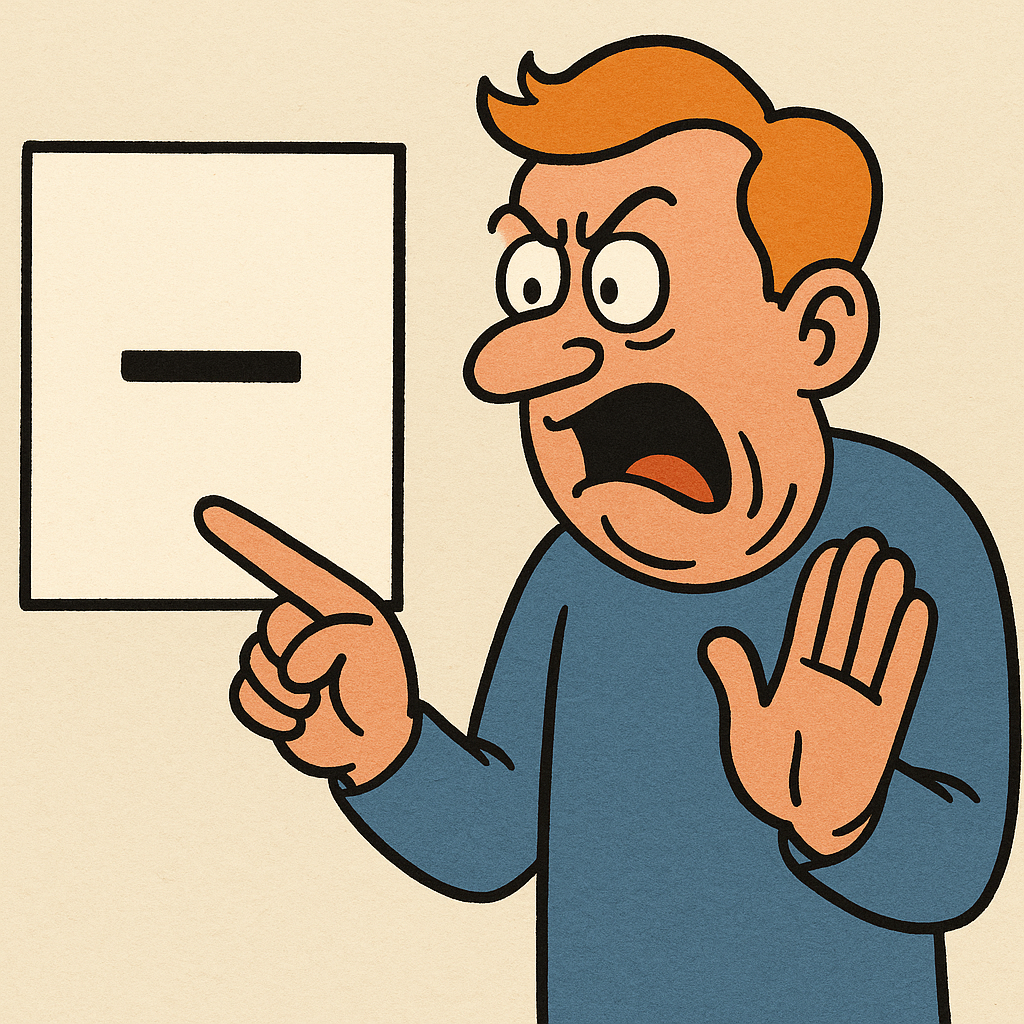
This wasn’t administration. It was exploitation disguised as reasonableness. A manipulative soft threat.


The Pushback: Refusal with Teeth

I didn’t lose my temper. I wrote back with calm clarity:

  • I restated that I was a legitimate guest.
  • I highlighted the hotel’s confirmation of their cancellation request.
  • I pointed out the contradiction in ParkingEye’s own letter.

And, crucially, I mentioned that I’m autistic, and was wearing a sunflower lanyard during check-in. The staff should have made extra effort to ensure nothing was missed. They didn’t. And now I was being penalised.

I wasn’t angry. I was precise.

And that made them blink.


The Outcome: The Concrete Cracked

Within days, ParkingEye emailed me again. This time, they confirmed the charge had been fully cancelled. No payment required. Case closed.

There was no apology. No acknowledgment of inconvenience. No admission that I should never have received the charge in the first place. Just a flat, mechanical statement: the charge has been cancelled.

I suppose I should be satisfied, and on some level, I am. But even in victory, the absence of basic humanity is striking.

Where is the accountability? Where is the recognition that systems like this cause stress, waste time, and disproportionately affect people who are already carrying more than their fair share?


What This Really Means

Most people would have paid the reduced fine. That’s what ParkingEye counts on. Stress, confusion, guilt, and the desire to just make it go away. It’s a business model built on overwhelm.

And for neurodivergent people? This kind of thing can be especially taxing. We’re more likely to internalise the blame, less likely to push back, and more vulnerable to the psychological tricks buried in so-called “civil” letters.

But this time, I didn’t fold. And it worked.


Resistance Isn’t Futile. It’s Necessary.

This doesn’t mean the system isn’t broken. It absolutely is. But moments like this are important. They remind us that refusal isn’t negativity, it’s clarity. It’s drawing a line. It’s proving, even just for a moment, that not everything is hopeless.

Sometimes, even in a world that wants to invoice you for breathing, you can breathe a little fire back.

And they will back down.

Honestly, the Zombie Apocalypse Sounds Kinda Nice!

Survival horror games. Apocalyptic movies. Zombie TV shows. They keep showing us the end of the world.

And the strange thing is, I find it comforting.

Not the death, or the gore, or the terrifying monsters.
But the quiet that follows.

In games like The Last of Us, in the atmosphere of 28 Years Later, in the long, dangerous walks through empty cities overrun by moss and silence, there is a strange kind of peace. These stories are about zombies, sure, but only in the way that space operas are about rockets. The real story is human.

Stripped of society, of rules, of etiquette and expectation.
Just survival. And with it, a return to something real.


A Common Fantasy, Quietly Shared

I don’t think I’m alone in this. There’s something telling about how many people are drawn to post-apocalyptic settings. We say it’s escapism, but maybe it’s something deeper. Maybe it’s yearning.

A yearning for everything to finally break, so we’re allowed to default back to our instincts. Those instincts haven’t disappeared, but capitalism has twisted them. Turned survival into branding. Turned curiosity into productivity. Turned strength into silent compliance.

In the fantasy, that spell is broken. We move freely. Nowhere is off-limits except by danger. If you’re brave enough to go, you go. And if you make it out alive, you learn something.

Maybe even about yourself.


A World That Makes Sense Again

You don’t need to fill out a form to matter. You don’t need to chase social media followers to have value. You don’t need a degree, or a permit, or a job title to justify existing.

You just survive. You help others survive. You find food. You stay alert. You sleep lightly. You protect your friends. You trust your gut.

The world becomes dangerous, yes — but finally understandable.


The Beauty of Nature Reclaiming

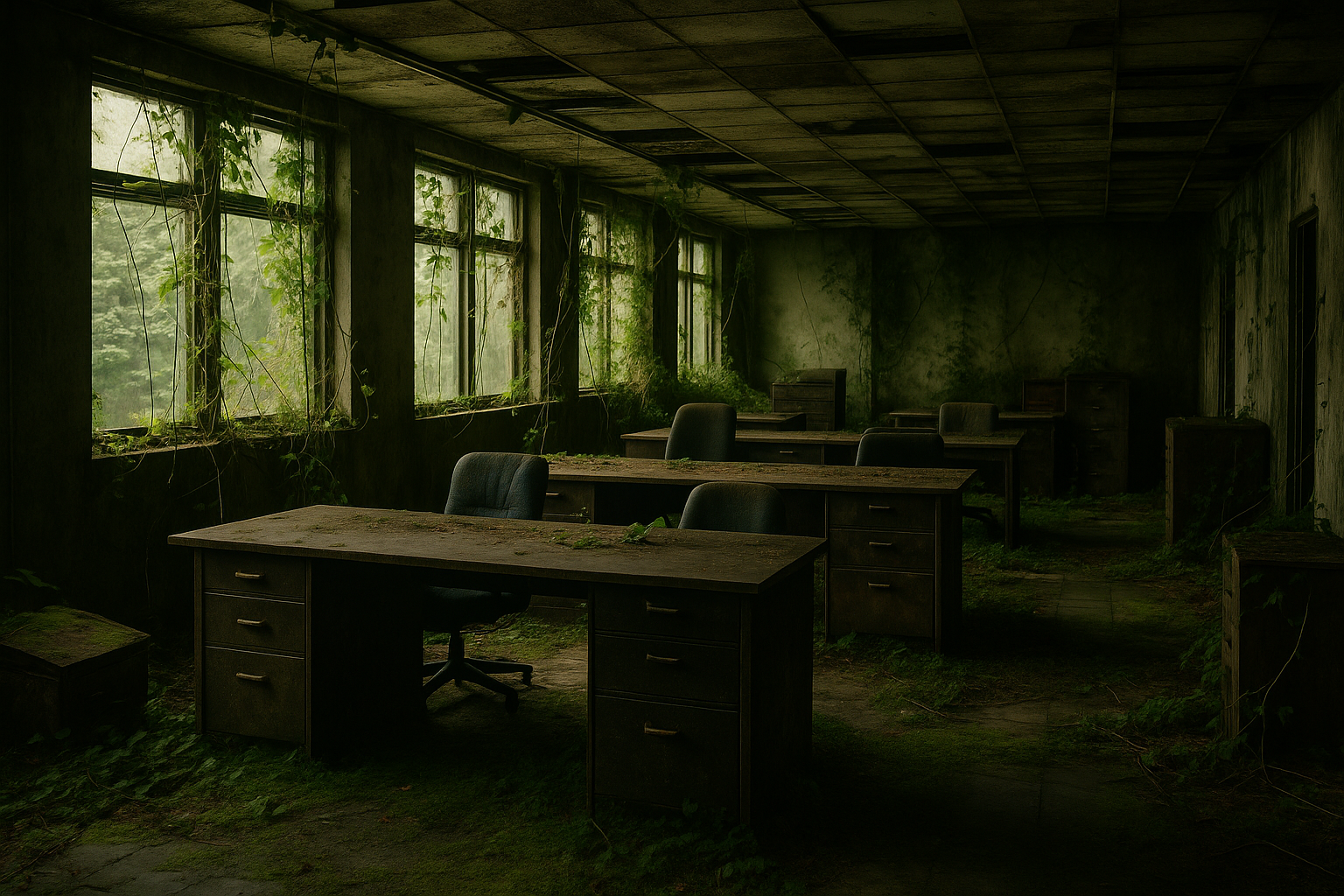
There’s an awe in seeing vines wrap around office buildings. Trees pushing through broken floor tiles. Roads cracked open and filled with moss.

It’s not just beautiful. It’s poetic.

The industrialised world thought it was permanent. But nature is patient. And in the fantasy, it doesn’t just survive. It reclaims.

It takes back the places that were stolen from it. Quietly. Persistently. Without anger.


Bureaucracy Is the Real Monster

The zombie apocalypse gives us a breath of relief from bureaucracy.

No more tax codes. No more emails. No more forms to fill in triplicate to get permission to be a human being. No more ten-step processes to access your basic rights.

The systems we live under have been patched and repatched so many times, they don’t even resemble their original purpose. Like buggy code that’s been layered with fixes until no one remembers what it was supposed to do in the first place.

Maybe the end of the world is the only bug fix that actually works.


Maybe I’d Finally Be Allowed to Live

I’m not saying I want civilization to collapse.

I’m saying that if it did, I might finally feel like I have a fighting chance.

The world we live in now feels like it was built to crush people like me. People who see too clearly. People who question. People who can survive, but only if allowed to act on their instincts without being penalized for them.

Maybe the end of the world wouldn’t be the end of me.

Maybe it would be the first time I was allowed to live.

The Power of Autism

I have been called dangerous.

And I used to believe that meant something was wrong with me. That I was unstable, threatening, or too much to handle. But I’ve come to realize something quietly powerful:

They were right.

Not because I’m violent. Not because I’m malicious. But because I see through the lies. I refuse to pretend things make sense when they don’t. I question rules that serve no one. I notice manipulation that others are too polite to acknowledge. I don’t respond the way I’m “supposed to.” And that makes me dangerous — not to people, but to systems.

To employers who want obedience without question. To schools that value quiet compliance over curiosity. To social environments that punish authenticity. To any structure built on pretending.

Autism isn’t a failure to understand society — it’s a refusal to play along with what is obviously untrue. And when you stop trying to contort yourself into the shapes demanded by others, they often react with fear. Or worse, pity. But sometimes, even fear disguised as pity.

I used to think that being strong meant fighting back. Now I see that strength is not being absorbed by the adversity at all. To stand at the eye of the storm — not bracing, just being.

Like Neo at the end of The Matrix, I’ve stopped wasting energy dodging the bullets. I just… watch them.

Because I’ve pieced it all together. All the parts that didn’t add up. The social games. The rules that contradict themselves. The “common sense” that collapses under scrutiny. It all forms a picture now. A picture of a system that’s afraid of people who won’t be fooled by it.

So yes — I am dangerous. And I’m done apologizing for it.

Discrediting AI-Assisted Writing Is Gatekeeping—And It’s Ableist!

I’m not a writer by academic standards. But I have a lot of ideas.

Ideas that would otherwise stay locked inside my head—unfinished, unshared, and unheard—not because they lack value, but because putting them into words in a conventional way is difficult for me.

I’m autistic. I also have ADHD. Language—especially written language—isn’t always the smoothest interface for my thoughts.

But thanks to AI, I now have a way to bridge that gap. I can shape my thoughts into something others can understand, not by faking fluency, but by collaborating with a tool that supports my expression.

And that matters.


This isn’t about cheating. It’s about access.

I use AI to help realise my ideas—not to replace them. The spark, the insights, the perspective—that’s all me. AI helps put those thoughts into structured sentences, often with a clarity I couldn’t achieve alone, especially not without enormous cognitive strain.

So when people start to dismiss writing just because they suspect it was touched by AI—because it contains too many em-dashes, or feels “machine-like” in tone—I have to ask:
Who exactly are they trying to exclude?

Because for people like me, AI isn’t a shortcut. It’s a ramp. A screen reader. A voice when speech falters. A way of levelling the playing field in a world that often demands polish over insight, fluency over truth.


This is ableist gatekeeping—plain and simple.

There’s a long history of marginalised people being dismissed because they don’t express themselves the way the mainstream expects. Whether it’s through accent, grammar, tone, or medium, the result is always the same: “We don’t accept your way of communicating, so we won’t hear what you have to say.”

Now we’re seeing the same thing play out again, just with a new target: AI-assisted writing.

But let’s be clear—this isn’t a new kind of fraud. It’s a new kind of literacy. One that allows people with different minds to speak more clearly in a world not designed for them.


It’s not about hiding the AI. I’m proud to use it.

I don’t care if people know I didn’t put every word down myself. In fact, I want people to know—because the point of my writing isn’t to prove how eloquent I am. It’s to make ideas accessible. It’s to share perspective. It’s to connect.

The irony is that the people most eager to discredit this kind of expression often seem threatened by it. And maybe that’s because they’ve built their identity around being seen as articulate, eloquent, academic, or professional.

But if a neurodivergent person can now produce writing that stands shoulder-to-shoulder with theirs—not by mimicking them, but by translating their own, different inner world—then perhaps what’s being threatened isn’t the quality of writing, but the exclusivity of authorship.


Ask yourself: what really matters?

Would you disregard someone’s thoughts because they used a text-to-speech tool to communicate them out loud? Would you invalidate a painter because they used a ruler to help with proportions? Would you sneer at a person’s ideas just because they dictated them instead of typing?

If not—then why is AI any different?

This isn’t about preserving the purity of writing. It’s about who gets to speak, and who gets heard. It’s about whether we value presentation over perspective. Whether we mistake polish for thought.

And whether we truly believe that intelligence, insight, and worth can take more than one form.


Let’s be honest:

Discrediting someone’s ideas based solely on the presence of AI isn’t critical thinking—it’s aesthetic gatekeeping.

And when that gatekeeping disproportionately impacts disabled and neurodivergent people who rely on this technology as an accessibility tool, let’s call it what it is:
Ableist.

Internet In-Access: How the Modern Web Became Hostile to Neurodivergent Minds

I used to enjoy using the internet.

Back when it wasn’t commonplace. Back when it was the domain of nerds, weirdos, hobbyists, and information junkies like me. Sure, there were commercial websites, brands had presences, but capitalism hadn’t yet figured out how to completely milk the internet for all it could legally squeeze from the public. Back then, it felt like a sanctuary—a digital retreat from the chaos and hostility of everyday life.

I’m autistic. I have inattentive ADHD. I struggle with overstimulation, decision fatigue, the weaponization of social cues, and having to constantly filter signal from noise in daily life. The early internet was a gift. Social interaction on it was simpler, slower, optional. I had control. I could set the pace. I could browse in peace, seek connection without pressure, and access the kind of information I was drawn to without needing to fight for it.

And then, Capitalism Struck Again.

Over time, a new norm slithered into place. The digital space that once gave me breathing room now suffocates me. What used to be a tool for equalising neurodiverse and neurotypical access has become a gauntlet of cognitive warfare.

Let me paint you a picture of what it means to be neurodivergent in the modern online landscape:


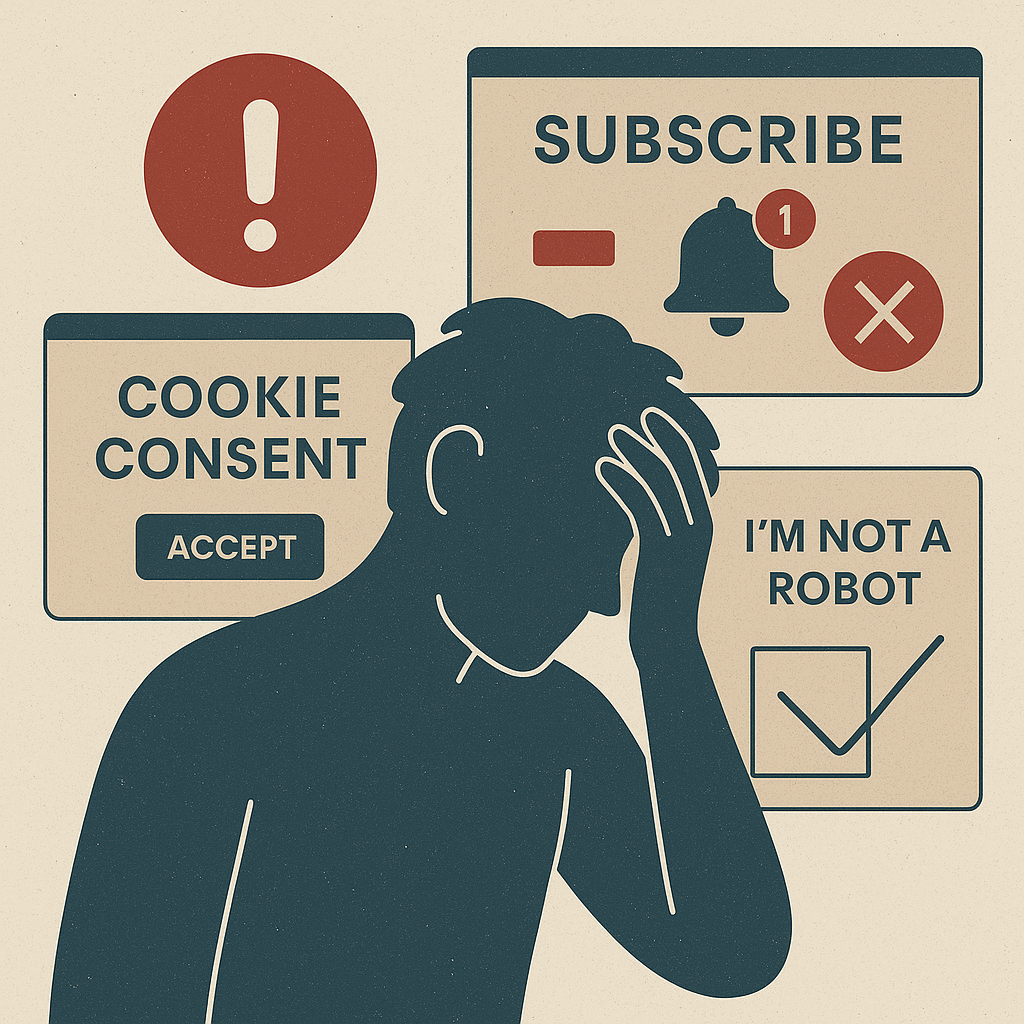
CONSTANT CONSENT FATIGUE

  • Cookie popups on every site. Not one clear button to reject all. No, you must go spelunking through menus, toggling obscure options one by one.
  • What they call “consent” is often manipulation dressed up in legalese. They make accepting easy. Rejecting is friction.
  • This happens every time you clear your cookies—which many of us need to do often to avoid tracking or clutter. It’s an exhausting loop.

OBSTACLE COURSE INTERFACES

  • Adverts that interrupt videos, and worse, cannot be skipped unless you pay. Not pay for the content, mind you, but pay to remove the punishment.
  • Popup overlays that consume half your screen the moment you land on a site. Trying to close them often launches something else.
  • On phones? It’s worse. Smaller screens mean these overlays dominate everything. You lose all context and have to work just to get your bearings.

SENSORY OVERLOAD

  • Auto-play videos. Scrolling pages that jitter from reloading ads. Flashing banners. Infinite scrolling newsfeeds.
  • Red notification symbols you can’t dismiss.
  • Everything demands your attention. Nothing respects your brain’s bandwidth.

WALLS EVERYWHERE

  • Account registration required to view basic information. Want to read one article? Sign up. Want to download a PDF? Create an account.
  • Even ad blockers aren’t safe anymore: Use one, and you’re blocked.
  • CAPTCHA systems to “prove you’re not a robot”, often impossible to complete first time if you have visual or processing impairments.

INFORMATION MIRE

  • Simple search queries now lead into labyrinths of misinformation, SEO bait, affiliate link farms, AI-generated junk, and clickbait.
  • Answers that should take seconds now require sifting through five pages of fluff.
  • The mentally exhausting task of fact verification is now part of every basic search.

CONTENT MONETISATION MADNESS

  • Free content comes with a catch: give us your email, your phone number, or your demographic info.
  • Sponsorships infiltrate once-authentic creators. You’re left wondering if their review or advice is sincere, or bought.
  • Subscription models are everywhere. Everything is paywalled. But paying doesn’t always remove the pain—sometimes, it’s just a new tier of nonsense.

And this is just what I notice consciously.

I’m sure there are deeper layers of rot that my mind filters out as a survival response. But what I do feel, daily, is the cognitive toll. What should be a tool for exploration and learning is now an exhausting, defensive act.

And here’s the thing: most people just shrug and say, “That’s just how it is now.”

But if you’re neurodivergent, or disabled, or even just overwhelmed by life, “that’s just how it is” becomes the same as saying: This place isn’t for you.

The truth is, it could be different

Navigating the Liminal Space: A Journey Beyond the Edge of Existence

I’m an edge thinker. A term I’ve coined to describe someone whose awareness resides just outside the norm, someone whose thoughts and experiences sit at the border of the known and unknown. It’s as if I’m peering over the edge of a cliff, aware that the abyss below holds possibilities I can’t quite see but can intuit. I can feel the boundaries of what is, and yet, I sense they are not as solid as they appear. I can touch the edge of the puzzle, but not fully grasp how it fits together.

It’s a curious way to live—aware that I am part of a larger system but unable to reconcile my role within it. There’s a strange duality in my existence. On one hand, I feel the weight of being an “odd piece” of a cosmic jigsaw puzzle. One that doesn’t quite fit but is, nevertheless, integral to the system. On the other hand, this very oddness might be the key that unlocks a higher understanding of the puzzle itself. What if the key to unlocking this grand puzzle lies precisely in the fact that some pieces don’t fit as expected?

I’ve come to conceptualize this not as a flaw, but as a feature of existence. A glitch, if you will, in the matrix of the universe that offers a glimpse into something greater. And in this space between fitting and not fitting, I sense a function—an awareness of purpose that can only be understood by those who dwell on the fringe. Perhaps it’s not just me, but others like me—those who stand at the edge, who are “different”—that possess the ability to see beyond the veil. Perhaps these are the real visionaries, the ones who can’t help but challenge the boundaries that confine others.

The metaphor of the puzzle speaks volumes to me. We, as individuals, are the pieces of a vast, higher-dimensional puzzle—a puzzle whose purpose is not fully understood, even by the puzzle itself. Each piece is bound by its design, by its edges, its shape, its potential. But what if the puzzle doesn’t need to fit perfectly? What if the act of fitting into a singular design is itself a limiting concept? Instead of seeing our out-of-place pieces as broken or errant, perhaps we should view them as necessary. They hint at a structure that is beyond our current comprehension, suggesting that the whole is greater than the sum of its parts. We are the puzzle’s agents, shaping its form by our very presence.

This sense of being “out of place” takes on even more depth when I reflect on the parent-child relationship. Traditionally, we are taught that the parent is the wiser figure, the one who has walked the path and now guides their children. The child is seen as learning from the parent, striving to eventually inherit wisdom and pass it on. But what if this hierarchical relationship is a false construct? What if the true role of the child, of the next generation, is to bring with it insights that challenge the status quo?

In this sense, the child may be the one who “knows best.” They are the untainted perspective, the one unclouded by the accumulated knowledge of the past, and thus, they can see the cracks in the foundation where humanity has erred. The very foundation built by parents and their ancestors. The child becomes not just a receiver of wisdom, but a new force of wisdom in its own right—a reflection of the future, breaking through the assumptions of the present.

This dynamic, when applied to the broader sense of existence, suggests that we are all evolving, constantly passing lessons from one generation to the next. The parent is not the final arbiter of knowledge; they are part of the puzzle, just as much as the child, and the wisdom they carry is a product of the same system of learning. By placing our faith in both the wisdom of the past and the vision of the future, we can begin to fill in the holes of human history—those spaces of brokenness and flaw—and build something stronger, more unified, more evolved. We must not shy away from the child’s perspective. Instead, we must listen to it.

In this liminal space, I’ve come to see my function not just as a passive observer, but as an active participant in this grand puzzle. I am a piece from another puzzle, placed within this one for a reason. Perhaps there are others like me, scattered throughout time and space, who are also pieces from different puzzles, destined to fit into this one at the precise moment they are needed. Maybe we are all puzzle pieces from various timelines, different dimensions, sibling puzzles, or parent puzzles—each of us contributing to the larger design in ways we may never fully comprehend. Yet our roles are interconnected, as we pass knowledge, wisdom, and lessons between each other, bridging the gaps that time and space have created.

It’s easy to feel isolated in this process, especially when it seems as though no one else shares this perspective. But I have come to understand that there is power in this liminal existence. The feeling of being “other” is not a curse, but a gift. For when you stand at the edge, you can see further, think differently, and imagine what others might not even be able to conceive.

So, I continue my search—not for people who fit the mold, but for those who, like me, can sense the puzzle’s deeper purpose, those who are willing to acknowledge the gaps, the cracks, and the unspoken lessons. I seek those who are ready to embrace the liminal, who are not afraid to look into the cracks and see them not as flaws, but as essential points of connection. I know they are out there—these other edge thinkers—waiting for the moment when we all come together and understand that we are not broken, but integral parts of a larger, higher-dimensional puzzle. And in that understanding, we will finally become whole.

Autism Awareness: How To Be a Good Friend To Me and Get the Most from My Friendship

How I perceive my autism

Though it does present challenges to my ease of integration into society, I do not see my autism as a disability in it’s own right. It’s just a different foundation of experiencing and processing reality, which has different strengths and weaknesses. I enjoy being autistic. I play to my strengths, and I’ve recently come to be more accepting and kinder to myself regarding the areas of life where I struggle.

I think it’s great that we live in a world that is so diverse in so many ways. I think our differences should be celebrated; we should celebrate one another, and celebrate ourselves. We are all amazing.

Differences in perspective

You could read every book there is on autism, but if you are neurotypical, you will never understand exactly what it is like to be autistic. Similarly, I will never know exactly what it is like to be neurotypical. All we can do is estimate to the best of our ability given all available information.
There are so many things that I observe neurotypical people doing, and patterns of behaviour that I can even understand on a logical level, but still seem very strange and unnatural to me. Some of them I try to mimic just to help me fit in (this is known as masking), but I always feel awkward doing so. It can be easy for me to feel frustrated by people doing things and thinking in ways that don’t make sense to me, but I’ve learnt to accept that there will be differences, and I’m not always going to understand them. I’m sure that I have been similarly frustrating to people with some of my ways of thinking and going about things.
I think that it’s important to keep an awareness that the way we experience reality isn’t necessarily going to be comparable to the way someone else does, and as a result we all see things differently, we all think differently, and we all come to different conclusions. And that is fine. I think we should all try to be more tolerant, understanding and considerate not only of our basic differences, but of the ways in which these basic differences manifest.

Be aware that I am probably masking

When I’m engaging with you socially, I may appear to behave in a normal way, but this is not my intuitive way of being. Behind the scenes, my brain is busy running many algorithms to control my behaviour in order to blend in with social norms and the context of the situation. As a result, I generally expend a lot more energy on basic social function than a neurotypical person would, and as a result, burn out more quickly.

The ideal situation for me would be that my friends accept me for who I am, without the need for me to mask at all, but it does take a long time for me to be able to feel that relaxed around someone, as my mask is also my guard: As well as performing the function of helping me to generally blend in, it filters what I reveal about myself. As I intuitively have a limited gauge on what is acceptable in society, I have learnt (the hard way!) that I need to be careful about what things I reveal about myself, and how I reveal them, in order to avoid misinterpretation and misunderstanding.
As an extension of this point, bear in mind that if you would like to get to know me better, it would make things easier for me, for you to drop your own social filters first, and let me gauge directly from what I see, what is acceptable to you personally. This would take a lot of the guesswork out of the equation for me, and would free up the mental and emotional resources that I would otherwise be spending on processing these things!

You’ll get the best experience of me in one-to-one or small group hangouts

Most of you that know me, know that I do like to party, but I can find busy social environments overstimulating, and exhausting of my mental and emotional resources.

In a party situation with lots of people, I will likely be masking/filtering myself heavily. This is an active process that consumes a lot of energy, so it also means that I’ll have less available resources to make meaningful contributions towards conversation. I may appear withdrawn in these situations, but I’m probably just overwhelmed by all of the information that I’m having to process.
Get me on my own, or in a very small group, and I will be more relaxed, and you may get to see more of my true self.

Try not to make assumptions about me or my intentions

If I do or say something that sounds odd or inappropriate, try not to jump to conclusions. It may just be a result of an underdeveloped social skill, or an aspect of my masking script that I’m still ironing out or that I haven’t gotten around to addressing yet.
If you are unsure about anything, just ask. I’d be more than happy to clarify, and it would aid my understanding of how I am perceived by others. Learning how to integrate is an ongoing process for me, and I’m adjusting my masking scripts all the time.

Try not to overwhelm me

Managing my time, energy and other resources is extremely difficult for me, and consumes a lot of resources in itself. If I have too many active processes running in my head, I can feel overloaded and unable to function. When I encounter one of these overloaded states, it can take me a long time to return to a state of efficient functioning, especially if more things that I have to deal with or process are being piled up in the meantime. During this time, I may withdraw socially, and take a much longer time to reply to messages, so please be patient with me.
For me to operate efficiently, I need to maintain a degree of mental headroom, and my threshold is significantly lower than it seems to be for a lot of other people.
You can help me manage this by trying not to make too many plans with me all at once. If you can, space out any plans so that at any given time, I only have one upcoming thing with you. My calendar goes a long way to help plan my time, but it does not help at all with managing my physical, mental or emotional energy.
If you make lots of plans with me at once, you will be spreading my resources thin, and you will get a diluted experience of my friendship. Allow me plenty of breathing space, and you will get premium Angel.

When making suggestions for plans with me, give me plenty of notice and some time to make a decision

I can immediately tell you if it’s something that would interest me, but don’t expect me to commit to a plan straight away. I usually need some time to process it’s cost in terms of time, energy, and other resources, and balance it against other things that are going on in my life or impending that might have to take priority.

I don’t like to commit to something before I’ve had time to properly process it, because it puts me in an uncomfortable position if I later have to back out and let people down.

I prefer direct communication over hints

I am capable of reading between the lines, but it is mentally taxing for me, and can sometimes be problematic when there is a margin of ambiguity. Wherever possible, please consider engaging with me via direct verbal communication. Take some of the guesswork out of our friendship for me! I understand that this isn’t always possible, and that there is sometimes an element of social politics to factor in.

I’m okay with you making fun of my autism

I speak only for myself of course, but if you’re the kind of person whose sense of humour is that way inclined, I have no problem with light-hearted banter targeting my autism. Here are some benefits to it, as I see it:

  • It’s a casual way of showing me that you recognize our differences while also accepting me.
  • It reinforces a sense of comradery if you happen to also be neurodivergent.
  • If you are neurotypical, I enjoy the irony that the joke is really on you, as being autistic is actually so much better. 😜

Avoid asking me for favours

If I feel that I am able to help you with something, I will gladly offer, but unless it’s something massively urgent and you have no alternative options, please don’t ask me. I am specifically very uncomfortable being put on the spot, and it’s likely that even if I have the resources available to help you, there are a number of other things that I really could do with spending them on.

Some reasons that I am uncomfortable being asked for favours are:

  • My sacrificing time and energy to help someone is a greater sacrifice than it would be for a neurotypical person, because I have less available resources to spare.
  • I tend to over-analyse the transactional nature of social obligations, and this taxes my already overworked brain.
  • I dislike being put on the spot because it takes me time to fully process the request and analyse not only my willingness, but my capability in terms of available resources.
  • I feel put at a disadvantage as I lack the social skills and range of expression to easily politely decline.

Be aware that I have difficulty expressing myself with body language, tone of voice and facial expressions

I am actually a very expressive person, but the ways that I intuitively express myself may not be immediately obvious.
I have a naturally monotone voice. Pitch variation does not feel intuitive to me, and takes me a lot of effort to employ.

It feels very awkward, comparable to having to sing every sentence!

Just let that last sentence sink in for a moment, and imagine how draining that is for me! (and pitch variation is just one of a whole number of masking processes that I have to actively employ!)

Sometimes I’ll try really hard, and still find that the resulting tone is somewhat flat.
As a result, I’ve found that sometimes people can’t tell when I’m enthusiastic about something, or if something I said was meant jokingly.

Similarly, employing gestures and facial expressions can feel like having to go through a dance routine to accompany the song that I’m singing. I will do it, but it can sometimes make me feel very self conscious, and even at my most animated, I feel quite limited in my range of expression.

So, try not to assume that I am feeling unenthusiastic about something, if that’s what presents, and bear in mind that that outside-of-the-box wackjob notion that I presented so dryly may actually just have been a joke.