
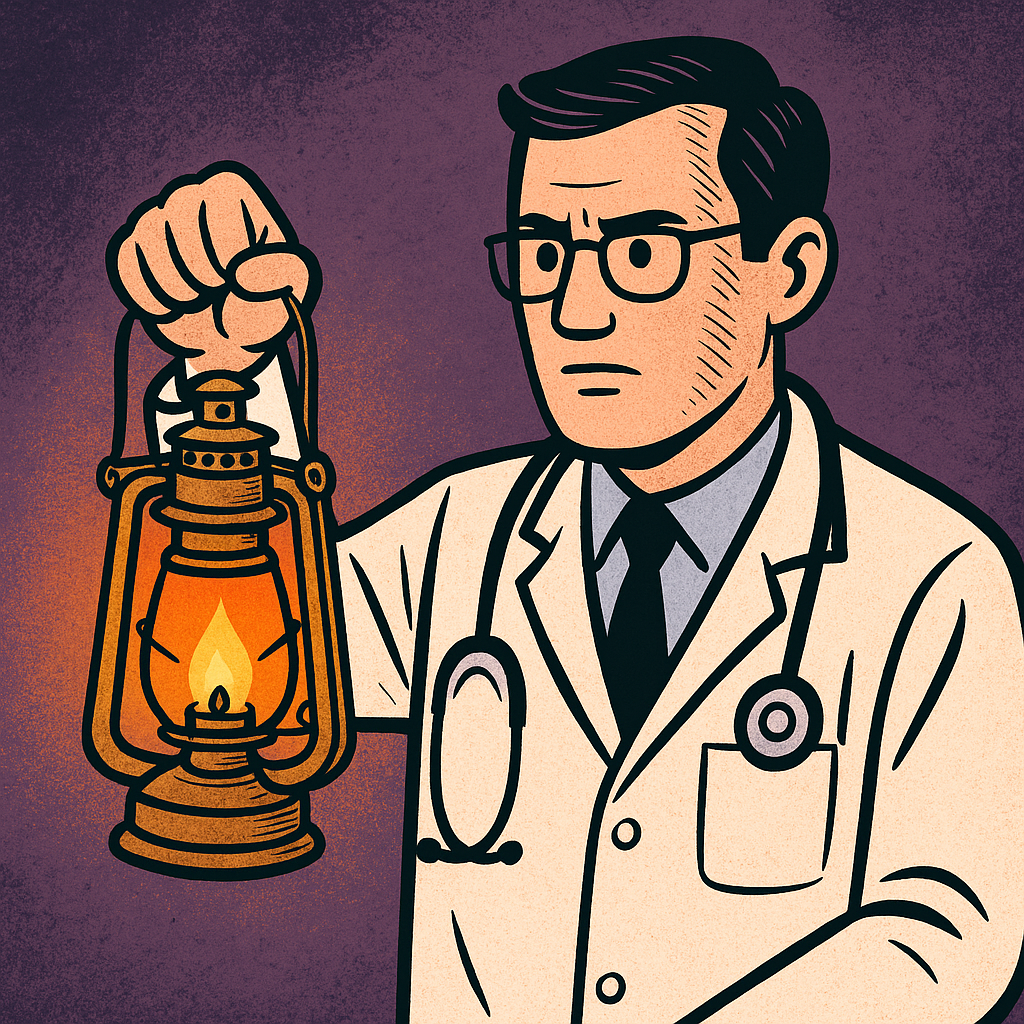
You Know It, I Know It: Systemic Gaslighting Is Real
Let’s stop pretending this isn’t happening.
You know the feeling. You go to the GP or A&E with something serious, something that’s quite literally threatening your health or your life—and you get fobbed off. Not just dismissed, but unacknowledged. It’s as if your suffering never even entered the room. I once went through a period where due to my dysphagia (difficulty swallowing foods), I couldn’t swallow anything—not even liquids—and three different doctors didn’t just ignore the urgency. They didn’t even acknowledge that not eating or drinking might be life-threatening.
That’s not a misunderstanding. That’s gaslighting at a structural level.
We don’t always use that word in this context, but maybe it’s time we did. Because the plausible deniability this system thrives on? It’s wearing thin. It’s implausible now. And yet the more glaring the denial becomes, the more we’re made to feel crazy for seeing it.
When the system fails you repeatedly, when it actively erodes your trust in your own perception, it doesn’t feel like negligence. It feels like being crushed. Slowly, deliberately. With no admission of force.
And if you’re neurodivergent? It’s a whole extra layer of hell. I’m autistic. I have social phobia. I don’t perform distress the way they expect. I don’t cry on cue. I don’t shout. I process. And because I process, I’m read as cold, or fine, or “not that bad.”
So I mask. I over-explain. I try to predict what they want from me, how to appear distressed in a way they’ll believe. But it always feels off. Like I’m being baited into dishonesty just to prove my honesty. And that makes them feel justified in writing me off.
This is what systemic gaslighting looks like:
- They act like they care.
- They position themselves as your advocate.
- But every policy, every interaction, every flicker of body language says: “We’re not spending money on you if we can help it.”
I’ve warned others before. Told them: don’t be fooled by the performance of care. If you have the strength, call it out in the moment. Name the evasion. Ask for honesty. Demand respect. But know that they have tactics too. And they’re good at them.
So what keeps me going? Partly survival instinct. Partly the sheer disgust at how far we’ve allowed this to go. But mostly: the knowledge that it doesn’t have to be this way. That somewhere under the mountains of bureaucracy and gluttony and cruelty, there’s a version of the world where institutions actually listen. Where they respond with compassion, not scripts. Where people aren’t punished for needing help.
And until that world is real, I’ll keep writing. Even if no one hears it right now, the truth is here, in black and white.
You know it. I know it. Let’s stop pretending.