

I’m Tired of Being Tired

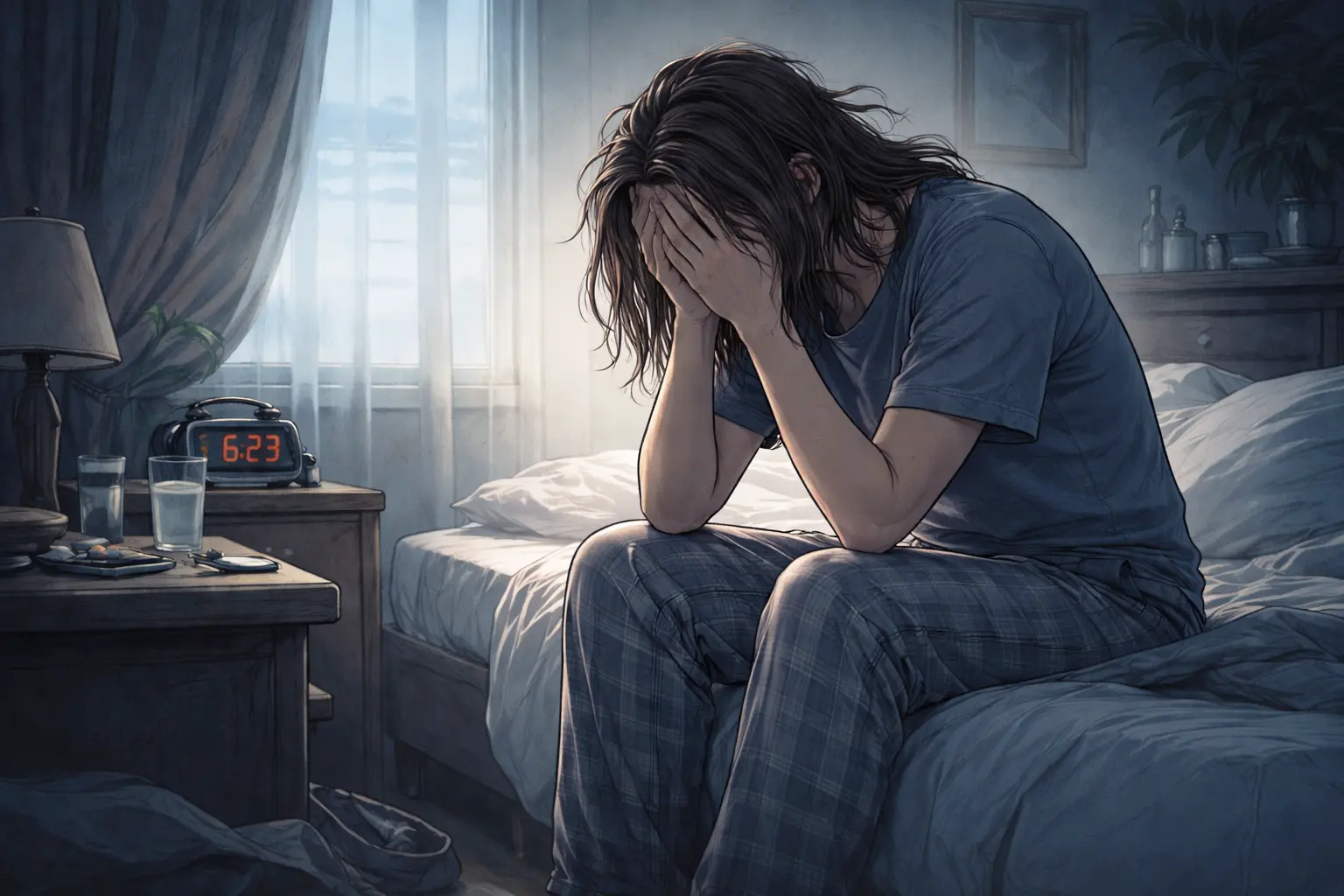
Illustration of a long-haired man sitting on the edge of an unmade bed, leaning forward with his face covered by his hands in a dimly lit bedroom at dawn.

One morning last month, I woke up foggy-headed, sleep-deprived, and emotionally worn out before the day had even started. I felt like I was coming down with the flu: achy, heavy, slow. I just wanted to cancel a dentist appointment, but even that became a drawn-out ordeal of waiting for phone lines to open, phoning, queueing, and managing social expectations. And when I finally got through, I was told that I should give more notice next time. That one short sentence landed like a weight. Not because it was rude, but because it reminded me that in this world, even exhaustion must be scheduled politely.

But this wasn’t about a dentist appointment. It never is. This was about everything.

I was tired of being tired.

Not sleepy tired. Not lazy tired. I’m talking about the deep, ambient fatigue of living in a world that constantly asks more of you than you have to give, then punishes you for not delivering. A world where empathy is rationed, where the illusion of stability depends on the silence of those who are struggling, and where rest is treated like an indulgence rather than a human need.

Housing insecurity. Chronic health issues. Endless bureaucracy. The guilt of receiving welfare benefits. The pressure to perform gratitude while navigating systems that barely see you as human. I carry these weights quietly most days, but some days they all speak at once.

And then comes the guilt for even feeling it. The voice that says: “Others have it worse. Be thankful. Don’t complain.” But that voice is part of the problem. It doesn’t come from compassion. It comes from conditioning. From a culture that sees resilience as moral currency and suffering as a contest.

But I am not in competition with anyone. I am simply tired.

I don’t want pity. I want space. I want systems that don’t require people to collapse in order to be heard. I want fewer apologies for being overwhelmed. I want to live in a world that doesn’t confuse survival with success.

So yes, I cancelled a dentist appointment that day. I did it politely. I even felt bad about it.

But what I really want to cancel is the idea that my exhaustion is a personal failing. It isn’t.

It’s my body, my mind, my soul, telling me to recuperate.

And I’m not the only one hearing that message.
Systemic Gaslighting: Let’s Finally Say It Out Loud

You Know It, I Know It: Systemic Gaslighting Is Real

Let’s stop pretending this isn’t happening.

You know the feeling. You go to the GP or A&E with something serious, something that’s quite literally threatening your health or your life—and you get fobbed off. Not just dismissed, but unacknowledged. It’s as if your suffering never even entered the room. I once went through a period where due to my dysphagia (difficulty swallowing foods), I couldn’t swallow anything—not even liquids—and three different doctors didn’t just ignore the urgency. They didn’t even acknowledge that not eating or drinking might be life-threatening.

That’s not a misunderstanding. That’s gaslighting at a structural level.

We don’t always use that word in this context, but maybe it’s time we did. Because the plausible deniability this system thrives on? It’s wearing thin. It’s implausible now. And yet the more glaring the denial becomes, the more we’re made to feel crazy for seeing it.

When the system fails you repeatedly, when it actively erodes your trust in your own perception, it doesn’t feel like negligence. It feels like being crushed. Slowly, deliberately. With no admission of force.

And if you’re neurodivergent? It’s a whole extra layer of hell. I’m autistic. I have social phobia. I don’t perform distress the way they expect. I don’t cry on cue. I don’t shout. I process. And because I process, I’m read as cold, or fine, or “not that bad.”

So I mask. I over-explain. I try to predict what they want from me, how to appear distressed in a way they’ll believe. But it always feels off. Like I’m being baited into dishonesty just to prove my honesty. And that makes them feel justified in writing me off.

This is what systemic gaslighting looks like:

  • They act like they care.
  • They position themselves as your advocate.
  • But every policy, every interaction, every flicker of body language says: “We’re not spending money on you if we can help it.”

I’ve warned others before. Told them: don’t be fooled by the performance of care. If you have the strength, call it out in the moment. Name the evasion. Ask for honesty. Demand respect. But know that they have tactics too. And they’re good at them.

So what keeps me going? Partly survival instinct. Partly the sheer disgust at how far we’ve allowed this to go. But mostly: the knowledge that it doesn’t have to be this way. That somewhere under the mountains of bureaucracy and gluttony and cruelty, there’s a version of the world where institutions actually listen. Where they respond with compassion, not scripts. Where people aren’t punished for needing help.

And until that world is real, I’ll keep writing. Even if no one hears it right now, the truth is here, in black and white.

You know it. I know it. Let’s stop pretending.