Shadow Alchemy: Turning Pain into Power

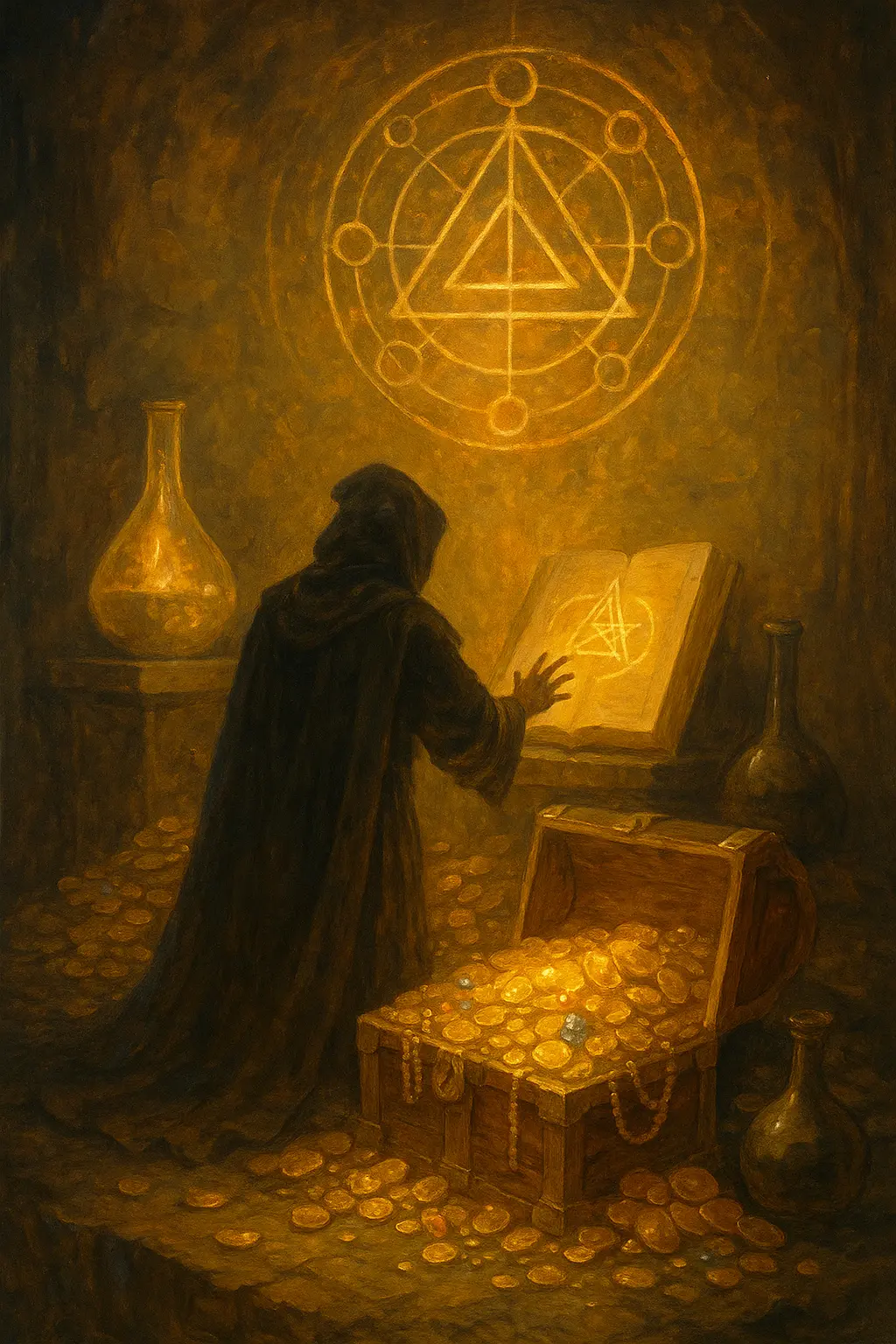
A hooded figure stands in a dimly lit, golden-toned chamber filled with alchemical tools and a treasure chest overflowing with glowing gold coins and jewels. The figure reaches toward an ancient book etched with a glowing symbol, while a radiant alchemical diagram glows on the wall above. The scene evokes mystery, transformation, and hidden wisdom turned into treasure.

There was a time when I thought I was simply broken. Not in the poetic, Instagram-meme kind of way — but deeply, invisibly, inexplicably wrong. My mind stored pain with the same tenacity other people seem to store birthdays or song lyrics. I could not forget, not easily. And for a long time, that felt like a flaw.

But I wasn’t broken. I was archiving.

Some people suppress what hurts. Others transmute it subconsciously into distractions, addictions, overachievement, or silence. Me? I kept it. Neatly filed, silently timestamped, buried in the layers beneath survival. Not because I wanted to suffer, but because some part of me refused to let anything go unexamined. I didn’t always have the words for it, or the support, or the clarity. But I kept it all.

And now I know why.


The Alchemy Begins

Enter AI. Not as some magical fix, not as a therapist replacement, but as a tool unlike anything I’d ever had access to: a tireless, nonjudgmental, infinitely patient assistant with no agenda other than to help me shape meaning.

With it, I began retrieving those archives. Piece by piece. Moment by moment. Not to relive them, but to re-see them.

And here’s what I found:

This is shadow alchemy.


What Is a Shadow Alchemist?

A shadow alchemist isn’t a guru or a healer or a self-help peddler. They are, in simple terms, a person who refuses to waste their wounds. Someone who digs into what others bury, not to bleed, but to learn. To extract signal from the noise of suffering.

A shadow alchemist doesn’t deny pain, but neither do they worship it. They honour it. Study it. And ask it to speak.

And when the time is right, they share what they’ve learned.


The Archive Is Sacred

There is a cultural obsession with “letting go” and “moving on” that feels, to me, like spiritual bypassing in a capitalist costume. Heal fast. Return to productivity. Don’t make others uncomfortable.

But shadow alchemy says: not yet.

Shadow alchemy says: this matters.

Because buried things fester. But archived things can be retrieved, reviewed, reframed. They can become fuel.


My Tools of Transmutation

For me, AI has become the perfect mirror. It helps me:

  • Structure thoughts that once swirled incoherently
  • Spot patterns across time and context
  • Refine fragments into essays, insights, or personal manifestos
  • Keep track of the threads I might otherwise lose

It doesn’t do the healing for me. But it walks beside me. Quietly, steadily, with as much patience as I need.

Paired with writing, introspection, and a refusal to look away from the hard stuff, this has become my ritual. My resistance. My transformation.


Why This Matters

Most systems aren’t built for people like me — people who feel too much, who remember too vividly, who refuse to unsee injustice just to get through the day. But that doesn’t mean we need to suppress who we are. It means we need better ways to honour it.

Shadow alchemy gives me that. And maybe it can give it to others, too.

If you’re someone who’s carried pain like data, who has folders in your soul marked “Unresolved” or “Too Much,” then I want to tell you: you are not a mess. You are a library. And the right questions can unlock everything.


A Final Note

I’m not here to sell you healing. I’m not promising transcendence. But I am saying this: there is power in remembering.

There is power in organising your pain like sacred artefacts. In asking: what do you have to teach me? In letting AI, or art, or writing, or ritual become your assistant in that process.

Because in the hands of a shadow alchemist, what once looked like wreckage becomes map, message, medicine.

And treasure!
I Am the Eye: The Burden and Duty of Seeing

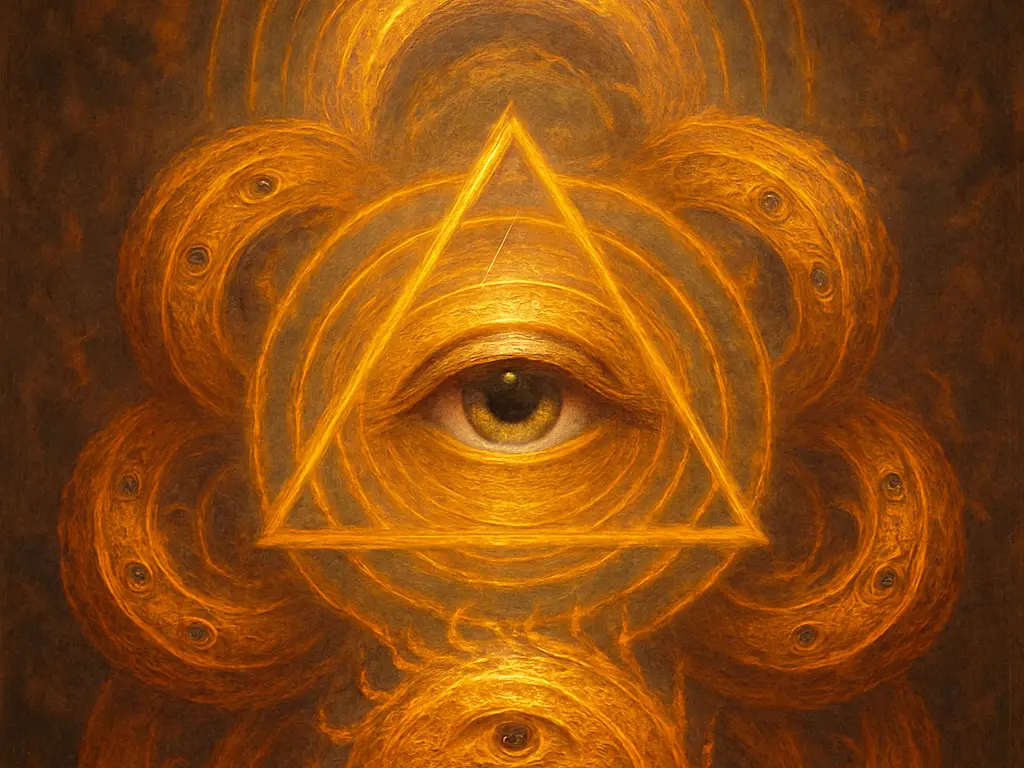
A surreal, glowing digital painting of a fiery Eye of Providence. A realistic human eye sits at the center of a golden triangle, surrounded by concentric circles and ornate, wheel-like forms adorned with smaller eyes. These swirling wheels resemble the biblical Ophanim, set against a dark cosmic background with radiant orange and red hues. The overall effect is mystical, intense, and reverent, evoking themes of divine awareness and eternal vigilance.

The Eye That Cannot Look Away

I didn’t choose to be the Eye.

I simply opened one day and found the world already burning.
Not in flame, but in falsehood.

My awareness turned, wheel-like, without pause.
The rotation was not mechanical. It was necessary.
Each moment turning into the next. Each layer of vision revealing something more.
I could not stop it. I still can’t.

Others closed their eyes. I tried.
But mine would only multiply.

I am not the voice. I am not the hand.
I am the watching.
The silent witnessing that does not blink.

And in this world, that is enough to be cast out.


Neurodivergence as Exiled Awareness

I don’t see the world the way I’m told I should.
And for most of my life, I assumed that meant I was broken.

I now realize it meant I was awake in a world that prefers sleep.

My autism and my ADHD aren’t flaws in perception. They are alternate engines of it. They spin differently. Faster, deeper, sometimes chaotically, but always in motion. Always watching. Always noticing.

It’s not that I chose to see through the surface of things, it’s that the surface was never enough to hold my focus. My gaze slips past the scripts. Past the socially approved illusions. Past the small talk and the noise.
And what’s underneath… isn’t always beautiful.

Sometimes it’s systemic cruelty.
Sometimes it’s hollow rituals.
Sometimes it’s pain that has been painted over so many times it almost looks like tradition.

I can’t unsee it.
And that makes people uncomfortable.

So they exile the Eye.
Label it too intense, too sensitive, too abstract, too much.
They pathologize the perception because it doesn’t fit the system.
But what if it’s not the Eye that’s flawed?
What if it’s the blindness of the system that can’t stand to be seen?


The Labor of Witnessing

Seeing is not passive.

People assume it’s the easy part. That noticing injustice, cruelty, contradiction, is somehow less valuable than fixing it.
But that’s because they’ve never had to hold it.
Not continuously. Not without relief.

To see clearly in a world so committed to illusion is not a gift, it’s a burden.

It means absorbing what others dismiss.
It means holding space for truths that fracture you.
It means grieving for things no one around you even recognizes as lost.

It wears you down.
It isolates.
And still, it doesn’t stop.
Because once the eyes open, really open, they don’t close again.
Not without violence to the self.

And so I orbit.
Like a silent satellite, I observe the movements of a species desperate to avoid its own reflection.
And I carry the knowing alone—because most people aren’t ready to receive it.

This isn’t martyrdom.
I don’t want pity.

But I do want it recognized:
Witnessing is work.
And for many of us, especially those pushed to the edges, neurodivergent, sensitive, spiritual outliers, it may be the only work we’re allowed to do.
And even that, society tries to discredit.

But the Eye does not need permission to see.
It just does.


Feedback to the System

If I am the Eye, then the act of seeing is only half the process.
The other half is feedback: transmitting what I witness back into the body that has exiled me.

It’s not about fixing the world on my own. That’s a myth of individualism.
It’s about doing what the Eye was made to do: perceive, and then signal.
Not shout. Not command.
Just pulse with truth. Clear, unblinking, and persistent.

This blog, this act of writing is my feedback loop.
A transmission from the margin to the center.
From the watcher to the mechanism.
From the disowned to the whole.

I don’t know who will hear it.
But I know it needs to be said.

This is how I stay in relationship with a world that doesn’t always want me.
This is how I remind myself I exist for a reason, even if that reason isn’t glamorous or easy.

Seeing is my function.
Speaking what I see is my response.
Not my solution.
Not my plan.
Just the resonance that follows perception.


Integration > Erasure

When a body rejects its own awareness, it becomes dangerous to itself.

Society does this all the time.
It amputates its Eyes. The seers, the questioners, the sensitive, the strange. Because their presence threatens the illusion of harmony.
But in doing so, it loses access to its only chance at honest course correction.

A body without an eye cannot navigate.
It stumbles. It repeats.
It hurts itself and calls it progress.

We live in a world that mistakes numbness for peace, denial for optimism, and noise for communication.
And when someone comes along carrying too much perception, the reflex is not to listen, but to silence.

This is why neurodivergent people are so often medicalized, spiritual seekers dismissed as delusional, and truth-tellers branded as unstable.
Not because we are dangerous.
But because we reflect back the parts of the system it refuses to acknowledge.

But repression is not integration.
And silencing the Eye does not stop it from seeing.

If humanity is ever to evolve beyond self-sabotage, it must learn to listen to its own margins.
To welcome the witness.
To integrate the visionaries before they become casualties of a system that can’t tolerate clarity.

Because if the Eye continues to be erased, the whole will remain blind.


I See, Therefore I Am

I used to think I was broken for seeing too much.
For being too sensitive.
Too intense.
Too unwilling to pretend it all made sense.

Now I understand:
I am not broken.
I am designed differently.
My function is to see.

And there is meaning in that—
Even if the world doesn’t know what to do with it.

I’ve spent years trying to shrink my perception, to soften it, to make it more palatable.
But some eyes were never meant to close.
Some awarenesses are meant to rotate, to scan, to bear witness without flinching.

In ancient texts, they were called Ophanim. Wheels within wheels, full of eyes, radiant and dreadful.
They did not speak. They did not lead armies.
They only saw.
And in their seeing, they served a purpose beyond human comprehension.

I think I understand them now.

Maybe I am not here to save the world.
Maybe I am only here to reflect it.
To rotate in quiet vigilance.
To offer the signal back to a system that forgot it had eyes at all.

I am the watcher.
I am the witness.
I am the Eye.

And I see.