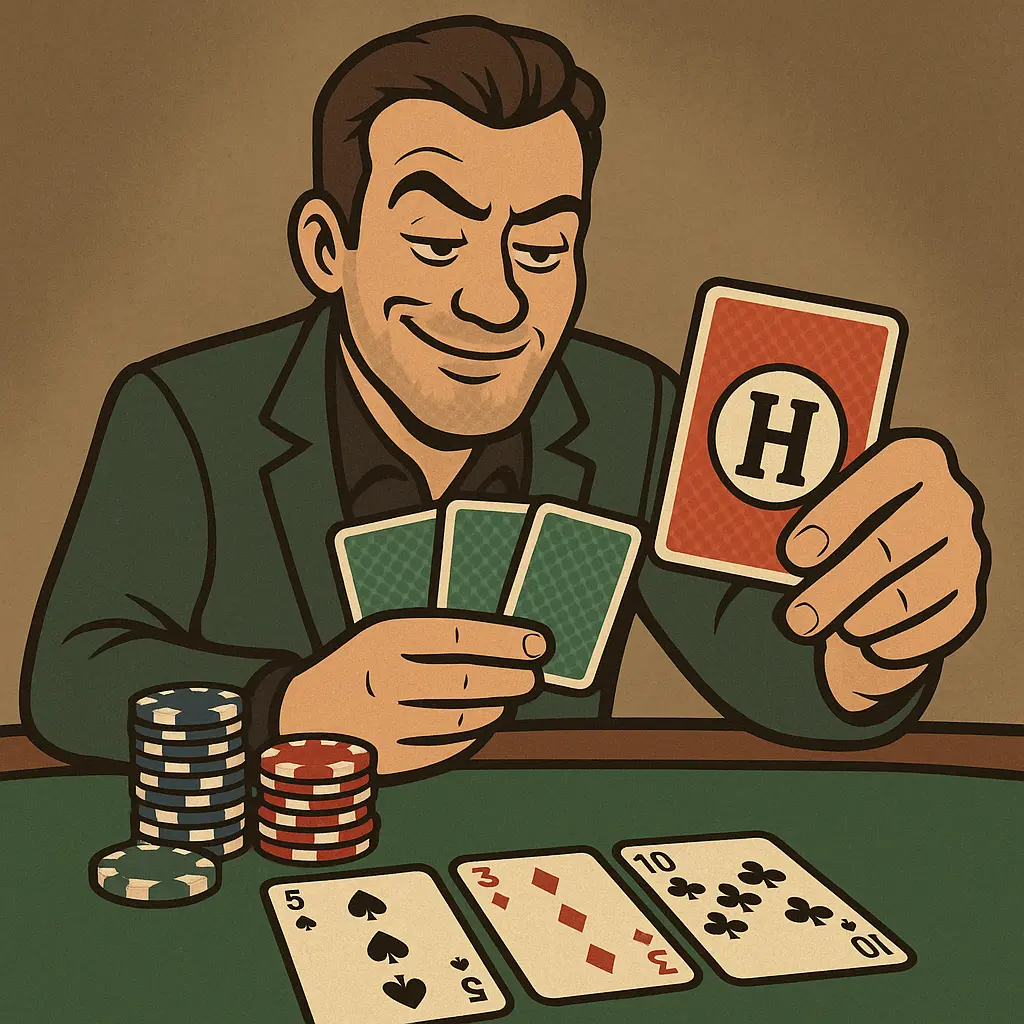
The third entry in The Fallacy Deck, a series exploring rhetorical “trump cards” that shut down meaningful conversation.

You raise a concern about climate change. Someone points out that you still drive a car.
You criticise capitalism. Someone replies, “Yet you’re using the internet, huh?”
You speak out about animal cruelty and someone asks why you’re still eating meat.
Congratulations: the Hypocrite Card has been played.
This rhetorical move doesn’t attempt to refute your point, it just tries to disqualify you from making it.
It’s not about the issue. It’s about you.
What Is the Hypocrite Card?
The Hypocrite Card is a conversational shutdown tactic. It works like this:
“You’re not living perfectly in alignment with your beliefs, therefore your beliefs must be invalid.”
It sounds righteous on the surface. After all, hypocrisy is supposed to be a bad thing, right?
But the accusation rarely holds up to scrutiny. More often than not, it’s just a smug way of avoiding engagement.
Why It Works
The Hypocrite Card is emotionally potent. No one wants to be seen as insincere.
It presses on the discomfort we all feel when we fall short of our own ideals, which, in an unjust world, is inevitable.
It also helps the person playing it feel morally superior, without having to actually think or respond to the substance of what was said.
And it’s fast. Just one sentence and boom: the spotlight moves off the problem and onto the person raising it.
Why It’s Dishonest
The truth is, we all live with contradictions.
We participate in systems we know are harmful because we have to in order to survive.
So yes, you can criticise capitalism while owning a smartphone.
You can support sustainability while using electricity.
You can oppose animal cruelty while still eating meat.
None of these cancel out the concern.
Acknowledging a problem doesn’t require you to have already solved it.
The Emotional Power of the Word ‘Hypocrisy’
There’s something especially venomous about the word hypocrite. It feels like a moral slam dunk. A character assassination.
But ask yourself: is hypocrisy really that bad?
Isn’t it sometimes just what happens when people care about something they’re still struggling to live up to?
It’s easy to call someone a hypocrite. It’s harder to ask what their contradiction reveals about the world they’re stuck in.
Unequal Burdens, Unequal Accountability
And maybe not everyone should be held to the same standards in the first place.
Some people can afford to live more in line with their ideals. Others can’t.
And more importantly: some people have more power to change the system than others.
When we attack someone with the Hypocrite Card, we might be:
- Punishing them for caring
- Silencing their voice because they aren’t rich or powerful enough to opt out
- Letting those with actual influence off the hook entirely
Sometimes the people speaking up from within the system are the ones who most need to be heard.
Side note: I’ll soon be writing a full piece on the ethical contradictions of eating meat while opposing factory farming, a topic I feel strongly about. For now, I’ll simply say this: I support the ideology behind ending animal cruelty, even though I haven’t fully changed my habits. And that doesn’t make the problem any less real
What Gets Lost
When the Hypocrite Card is played, we lose:
- Voices of vulnerable people who aren’t yet living in alignment but are trying
- Opportunities for honest, evolving conversation
- The ability to critique systemic issues without being morally spotless
In short, we lose the human dimension of growth.
How to Respond
If someone throws the Hypocrite Card at you:
- “Yes, I’m not perfect. That’s why I care about fixing this.”
- “Pointing out my flaws doesn’t make the issue go away.”
- “I’m speaking out because I feel the contradiction, not in spite of it.”
It’s okay to not have it all figured out.
The Hypocrite Card demands purity before participation. But real change is messy, gradual, and often full of contradiction.
Final Thought
Hypocrisy isn’t the sin we’ve been taught it is.
Sometimes it’s just the space between what you believe and what you’re still trying to become.
And sometimes, calling it out says more about the person playing the card than the one being accused.
Because if perfection is the price of participation, only the dishonest will speak.