
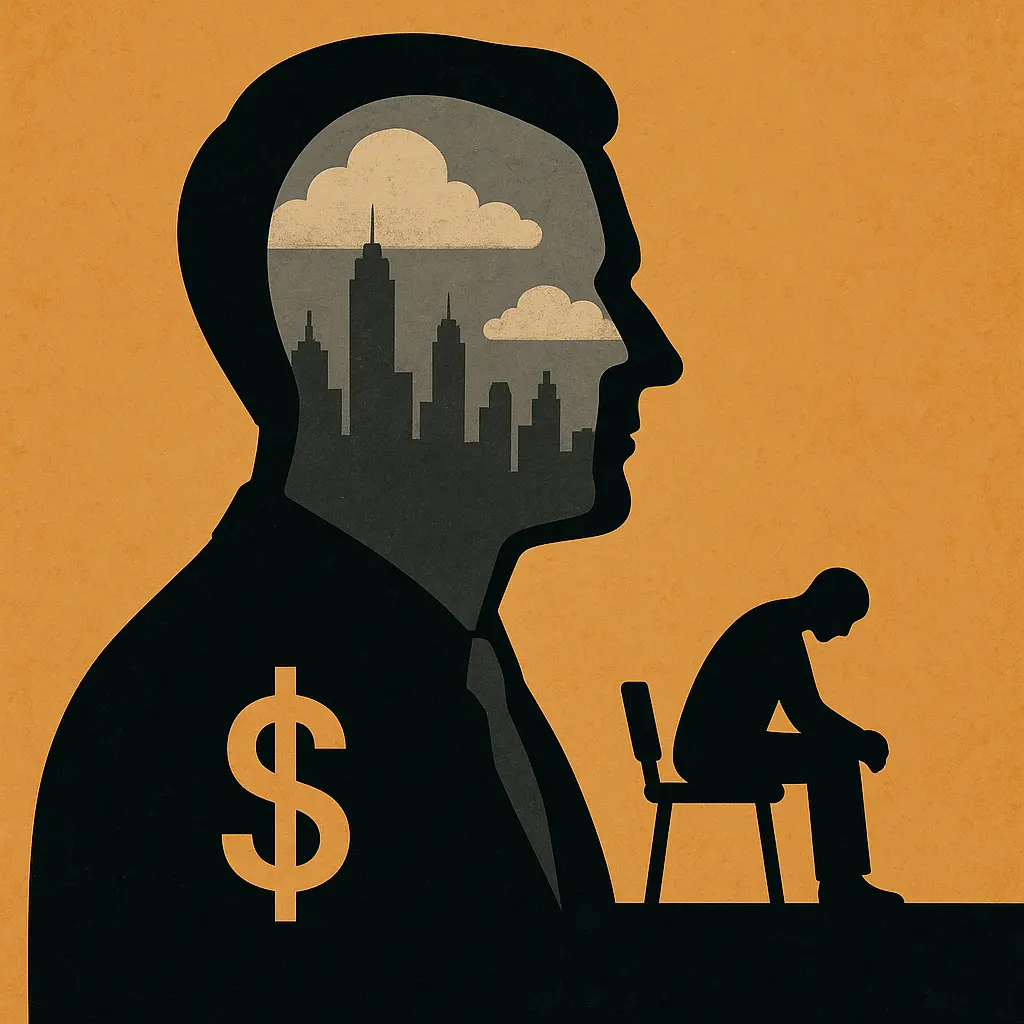
Reclaiming Empathy as a Tool for Understanding, Not Excuse
Let’s get the obvious out of the way first:
No, billionaires do not need your sympathy.
They’re not starving. They’re not being evicted. They’re not deciding between heating and food.
So, should we feel bad for them? No. That’s not what this is about.
But that’s the trap, isn’t it?
When we hear the word empathy, we often hear sympathy — as if empathy means letting someone off the hook, or feeling sorry for them. But empathy isn’t about deciding whether someone’s life is hard enough to deserve our concern. It’s about trying to see how they experience the world — and what that might teach us.
And when it comes to billionaires, there’s a lot to learn.
Empathy ≠ Sympathy
Empathy is the capacity to understand the state of another mind.
It doesn’t mean agreeing, condoning, or comforting.
It means observing, listening, inferring — without letting our emotions cloud the process.
Sympathy is emotional. Empathy is perceptive.
We tend to empathise most easily with those who suffer in ways we can relate to. But this leaves out entire swaths of human experience — including the very people who shape our economies, our policies, our futures. Understanding them isn’t an act of kindness. It’s an act of awareness.
Inside the Billionaire Psyche
Here’s the thing about billionaires: they are still human.
We might like to think of them as cartoon villains, hoarding gold and twirling mustaches — but that’s a convenient simplification. Real people are messier. More conflicted. Often unaware of their own contradictions.
What drives someone to accumulate more wealth than they could ever need?
What fears or beliefs keep them doing it?
What worldview do you have to adopt to justify stepping over others to get there — or to sincerely believe you’re helping?
We don’t have to like the answers. But we do need to ask the questions. Because without understanding, we can’t meaningfully respond.
Dehumanisation Is a Blunt Instrument
When we reduce billionaires to monsters, we make them less real — and in doing so, we rob ourselves of clarity.
We miss the psychological patterns, the system enablers, the personal histories that created them.
Yes, they may live in gated communities, surrounded by yes-men and soft lighting. But that doesn’t mean they’re free of fear, self-deception, or trauma. They just have the money to cover it in designer fabric.
Dehumanising them doesn’t dismantle their power. It just stops us from seeing how that power actually works.
Empathy as Strategy, Not Surrender
So no, we don’t owe billionaires forgiveness.
But we do owe ourselves insight.
If we ever want to redesign the system — or even just survive it — we have to understand the people at its apex. Not mythologise them. Not moralise. Understand.
Because once we see clearly, we can begin to respond intelligently. Strategically. Even subversively.
Empathy is not a soft virtue. It’s a sharp tool — one that can carve through illusion and reveal the truth beneath.
Final Thought
Empathy is not a tool for sympathetic evaluation.
It is a tool for our own understanding.