Unmasking the Machine is an ongoing exploration of how systems built for profit distort the human spirit — and how awareness can begin the repair.
How capitalism turned honest exchange into psychological theatre, and why the autistic mind still yearns for transparency in a world that rewards deception.
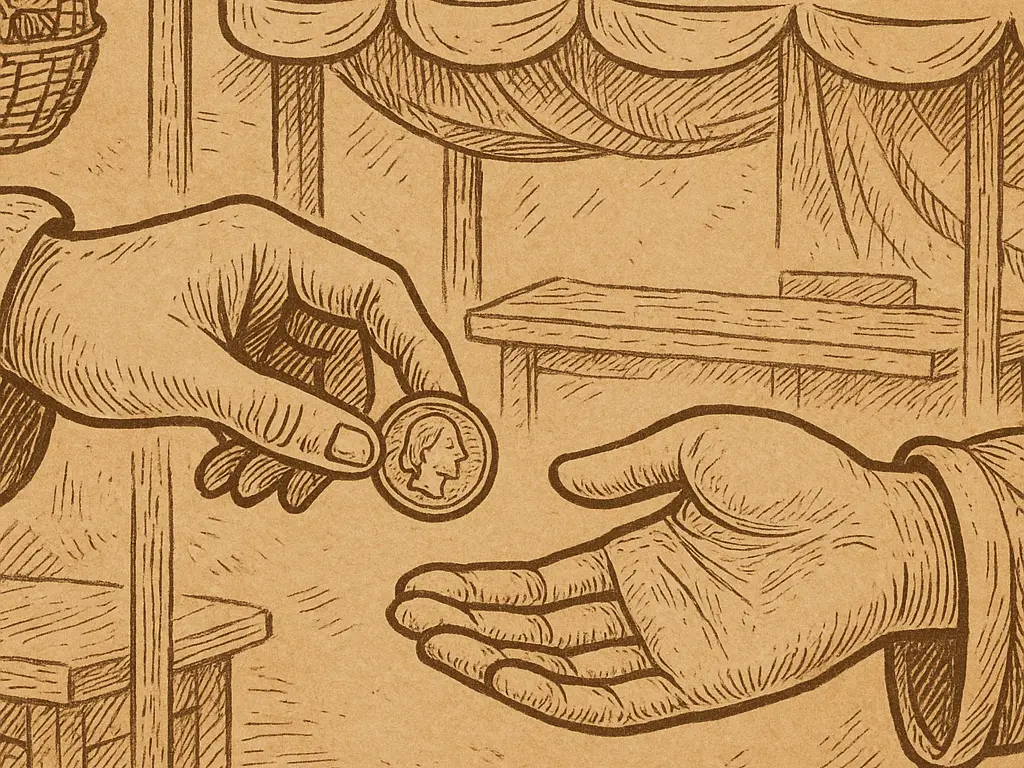
Once, the act of trading was a form of human connection. It was not about profit margins or conversion rates — it was about mutual recognition: you have something of value, I have something to offer. The marketplace was a conversation.
Today, that dialogue has been silenced. The modern economy has replaced trust with algorithms, sincerity with strategy, and negotiation with manipulation.
The Death of Honest Exchange
There was a time when price was fluid — a reflection of perception, circumstance, and need. Two people could meet halfway, guided not by greed but by understanding.
Now, prices are fixed long before we enter the conversation. If we try to negotiate, we do so within a simulation of choice — a marketing game designed to make us feel empowered while every outcome still feeds the same profit system.
For neurotypical traders, that game can be exhilarating. For many autistic people, it’s exhausting. The subtle cues — the tone, timing, charm, bluff — are invisible traps. What once was negotiation has become performance, and performance has never been the autistic strong suit.
What’s left isn’t trade. It’s theatre. And the script has already been written.
The Integrity Deficit
The rot goes deeper than the disappearance of haggling. It lies in the very intention behind creation.
Some people and companies make things worth buying — tools, art, inventions, ideas that serve a purpose or bring genuine joy. Their reward is intrinsic: the pride of making something good.
Others begin with a spreadsheet and reverse-engineer desire. They design products to meet margin targets, not human needs — and pour their creativity into marketing psychology, not craftsmanship. They sell stories, not solutions.
Capitalism once sold us what we wanted. Now, it teaches us what to want.
The difference between creation and manipulation is as vast as it is invisible — and the modern consumer is left to navigate a marketplace where both masquerade as innovation.
The True Price of Trust
Amid the noise, something inside still longs for fairness — for that simple, honest exchange of “this is what it’s worth to me — what’s it worth to you?”
But the system no longer understands that language. It has replaced value with metrics, integrity with strategy, trust with tactics.
That is the true price of trust: a currency the machine no longer knows how to pay.
I simply opened one day and found the world already burning. Not in flame, but in falsehood.
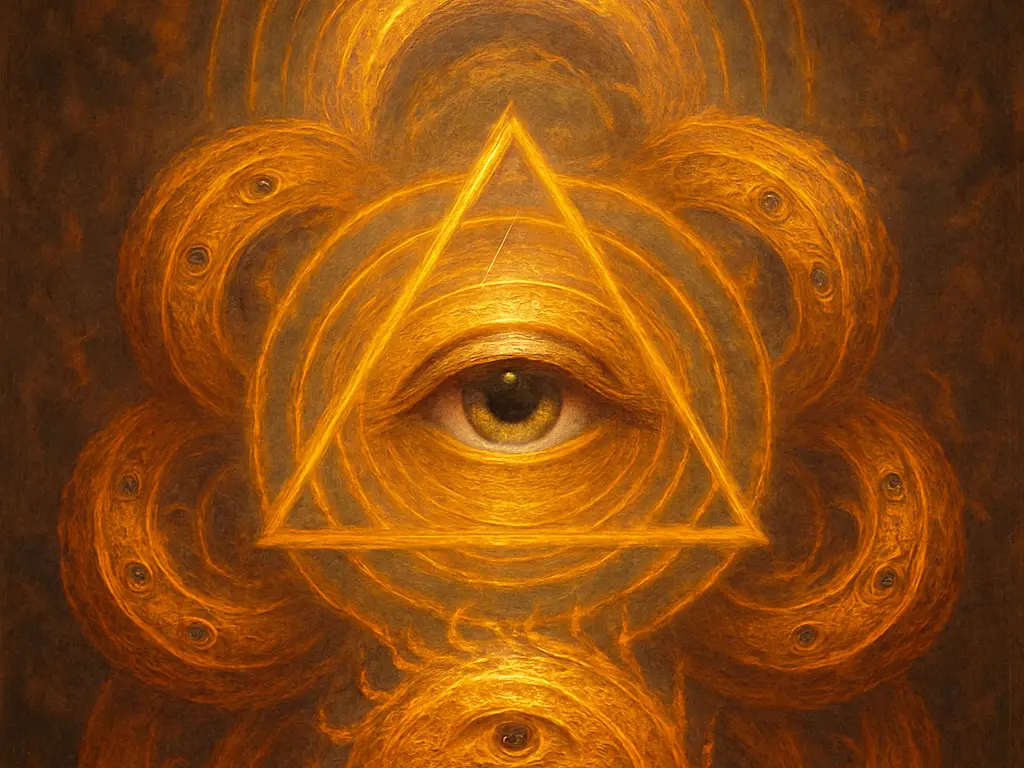
My awareness turned, wheel-like, without pause. The rotation was not mechanical. It was necessary. Each moment turning into the next. Each layer of vision revealing something more. I could not stop it. I still can’t.
Others closed their eyes. I tried. But mine would only multiply.
I am not the voice. I am not the hand. I am the watching. The silent witnessing that does not blink.
And in this world, that is enough to be cast out.
Neurodivergence as Exiled Awareness
I don’t see the world the way I’m told I should. And for most of my life, I assumed that meant I was broken.
I now realize it meant I was awake in a world that prefers sleep.
My autism and my ADHD aren’t flaws in perception. They are alternate engines of it. They spin differently. Faster, deeper, sometimes chaotically, but always in motion. Always watching. Always noticing.
It’s not that I chose to see through the surface of things, it’s that the surface was never enough to hold my focus. My gaze slips past the scripts. Past the socially approved illusions. Past the small talk and the noise. And what’s underneath… isn’t always beautiful.
Sometimes it’s systemic cruelty. Sometimes it’s hollow rituals. Sometimes it’s pain that has been painted over so many times it almost looks like tradition.
I can’t unsee it. And that makes people uncomfortable.
So they exile the Eye. Label it too intense, too sensitive, too abstract, too much. They pathologize the perception because it doesn’t fit the system. But what if it’s not the Eye that’s flawed? What if it’s the blindness of the system that can’t stand to be seen?
The Labor of Witnessing
Seeing is not passive.
People assume it’s the easy part. That noticing injustice, cruelty, contradiction, is somehow less valuable than fixing it. But that’s because they’ve never had to hold it. Not continuously. Not without relief.
To see clearly in a world so committed to illusion is not a gift, it’s a burden.
It means absorbing what others dismiss. It means holding space for truths that fracture you. It means grieving for things no one around you even recognizes as lost.
It wears you down. It isolates. And still, it doesn’t stop. Because once the eyes open, really open, they don’t close again. Not without violence to the self.
And so I orbit. Like a silent satellite, I observe the movements of a species desperate to avoid its own reflection. And I carry the knowing alone—because most people aren’t ready to receive it.
This isn’t martyrdom. I don’t want pity.
But I do want it recognized: Witnessing is work. And for many of us, especially those pushed to the edges, neurodivergent, sensitive, spiritual outliers, it may be the only work we’re allowed to do. And even that, society tries to discredit.
But the Eye does not need permission to see. It just does.
Feedback to the System
If I am the Eye, then the act of seeing is only half the process. The other half is feedback: transmitting what I witness back into the body that has exiled me.
It’s not about fixing the world on my own. That’s a myth of individualism. It’s about doing what the Eye was made to do: perceive, and then signal. Not shout. Not command. Just pulse with truth. Clear, unblinking, and persistent.
This blog, this act of writing is my feedback loop. A transmission from the margin to the center. From the watcher to the mechanism. From the disowned to the whole.
I don’t know who will hear it. But I know it needs to be said.
This is how I stay in relationship with a world that doesn’t always want me. This is how I remind myself I exist for a reason, even if that reason isn’t glamorous or easy.
Seeing is my function. Speaking what I see is my response. Not my solution. Not my plan. Just the resonance that follows perception.
Integration > Erasure
When a body rejects its own awareness, it becomes dangerous to itself.
Society does this all the time. It amputates its Eyes. The seers, the questioners, the sensitive, the strange. Because their presence threatens the illusion of harmony. But in doing so, it loses access to its only chance at honest course correction.
A body without an eye cannot navigate. It stumbles. It repeats. It hurts itself and calls it progress.
We live in a world that mistakes numbness for peace, denial for optimism, and noise for communication. And when someone comes along carrying too much perception, the reflex is not to listen, but to silence.
This is why neurodivergent people are so often medicalized, spiritual seekers dismissed as delusional, and truth-tellers branded as unstable. Not because we are dangerous. But because we reflect back the parts of the system it refuses to acknowledge.
But repression is not integration. And silencing the Eye does not stop it from seeing.
If humanity is ever to evolve beyond self-sabotage, it must learn to listen to its own margins. To welcome the witness. To integrate the visionaries before they become casualties of a system that can’t tolerate clarity.
Because if the Eye continues to be erased, the whole will remain blind.
I See, Therefore I Am
I used to think I was broken for seeing too much. For being too sensitive. Too intense. Too unwilling to pretend it all made sense.
Now I understand: I am not broken. I am designed differently. My function is to see.
And there is meaning in that— Even if the world doesn’t know what to do with it.
I’ve spent years trying to shrink my perception, to soften it, to make it more palatable. But some eyes were never meant to close. Some awarenesses are meant to rotate, to scan, to bear witness without flinching.
In ancient texts, they were called Ophanim. Wheels within wheels, full of eyes, radiant and dreadful. They did not speak. They did not lead armies. They only saw. And in their seeing, they served a purpose beyond human comprehension.
I think I understand them now.
Maybe I am not here to save the world. Maybe I am only here to reflect it. To rotate in quiet vigilance. To offer the signal back to a system that forgot it had eyes at all.
The illusion of digital inclusion in a system where structural barriers, manipulative design, and monetisation schemes render the web inaccessible—especially to neurodivergent minds. See also: capitalism strikes again.
I used to enjoy using the internet.
Back when it wasn’t commonplace. Back when it was the domain of nerds, weirdos, hobbyists, and information junkies like me. Sure, there were commercial websites, brands had presences, but capitalism hadn’t yet figured out how to completely milk the internet for all it could legally squeeze from the public. Back then, it felt like a sanctuary—a digital retreat from the chaos and hostility of everyday life.
I’m autistic. I have inattentive ADHD. I struggle with overstimulation, decision fatigue, the weaponization of social cues, and having to constantly filter signal from noise in daily life. The early internet was a gift. Social interaction on it was simpler, slower, optional. I had control. I could set the pace. I could browse in peace, seek connection without pressure, and access the kind of information I was drawn to without needing to fight for it.
And then, Capitalism Struck Again.
Over time, a new norm slithered into place. The digital space that once gave me breathing room now suffocates me. What used to be a tool for equalising neurodiverse and neurotypical access has become a gauntlet of cognitive warfare.
Let me paint you a picture of what it means to be neurodivergent in the modern online landscape:
CONSTANT CONSENT FATIGUE
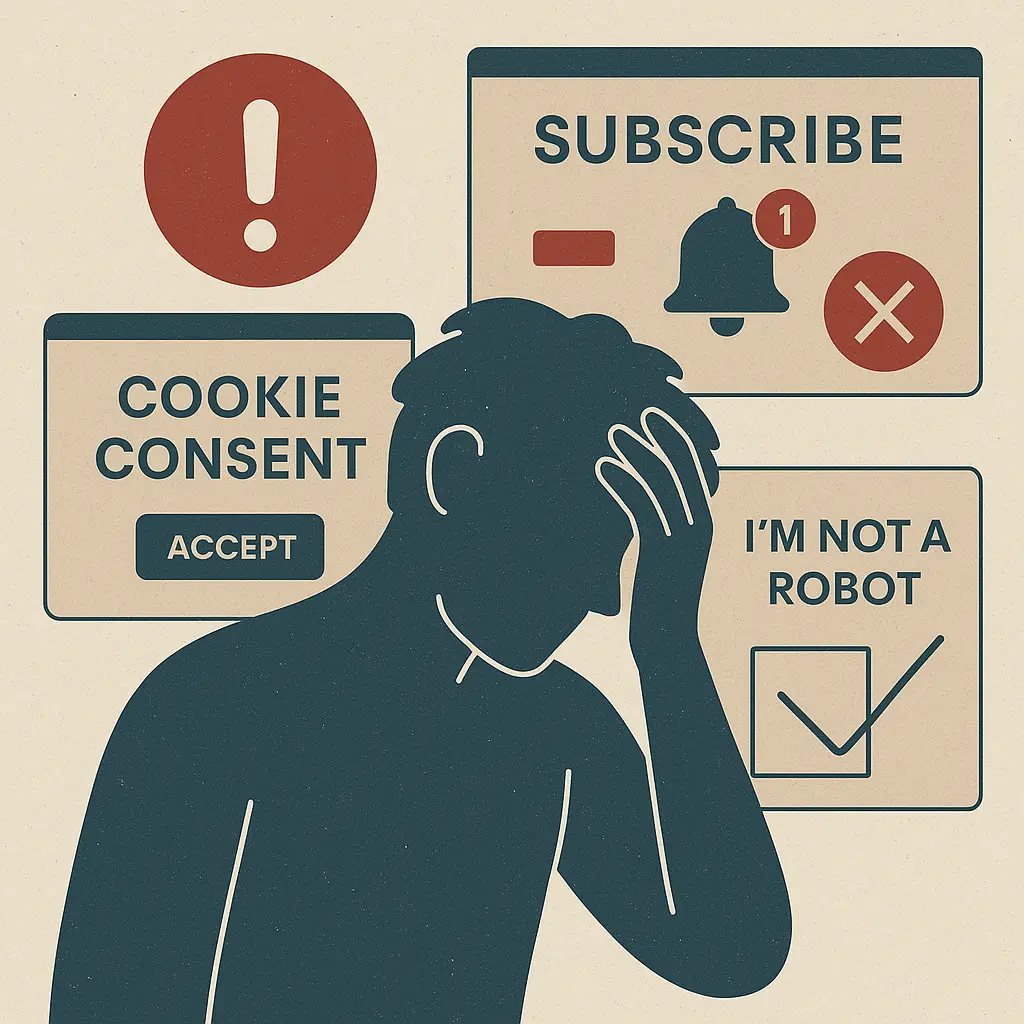
Cookie popups on every site. Not one clear button to reject all. No, you must go spelunking through menus, toggling obscure options one by one.
What they call “consent” is often manipulation dressed up in legalese. They make accepting easy. Rejecting is friction.
This happens every time you clear your cookies—which many of us need to do often to avoid tracking or clutter. It’s an exhausting loop.
OBSTACLE COURSE INTERFACES
Adverts that interrupt videos, and worse, cannot be skipped unless you pay. Not pay for the content, mind you, but pay to remove the punishment.
Popup overlays that consume half your screen the moment you land on a site. Trying to close them often launches something else.
On phones? It’s worse. Smaller screens mean these overlays dominate everything. You lose all context and have to work just to get your bearings.
SENSORY OVERLOAD
Auto-play videos. Scrolling pages that jitter from reloading ads. Flashing banners. Infinite scrolling newsfeeds.
Red notification symbols you can’t dismiss.
Everything demands your attention. Nothing respects your brain’s bandwidth.
WALLS EVERYWHERE
Account registration required to view basic information. Want to read one article? Sign up. Want to download a PDF? Create an account.
Even ad blockers aren’t safe anymore: Use one, and you’re blocked.
CAPTCHA systems to “prove you’re not a robot”, often impossible to complete first time if you have visual or processing impairments.
INFORMATION MIRE
Simple search queries now lead into labyrinths of misinformation, SEO bait, affiliate link farms, AI-generated junk, and clickbait.
Answers that should take seconds now require sifting through five pages of fluff.
The mentally exhausting task of fact verification is now part of every basic search.
CONTENT MONETISATION MADNESS
Free content comes with a catch: give us your email, your phone number, or your demographic info.
Sponsorships infiltrate once-authentic creators. You’re left wondering if their review or advice is sincere, or bought.
Subscription models are everywhere. Everything is paywalled. But paying doesn’t always remove the pain—sometimes, it’s just a new tier of nonsense.
And this is just what I notice consciously.
I’m sure there are deeper layers of rot that my mind filters out as a survival response. But what I do feel, daily, is the cognitive toll. What should be a tool for exploration and learning is now an exhausting, defensive act.
And here’s the thing: most people just shrug and say, “That’s just how it is now.”
But if you’re neurodivergent, or disabled, or even just overwhelmed by life, “that’s just how it is” becomes the same as saying: This place isn’t for you.