The Nameless Problem

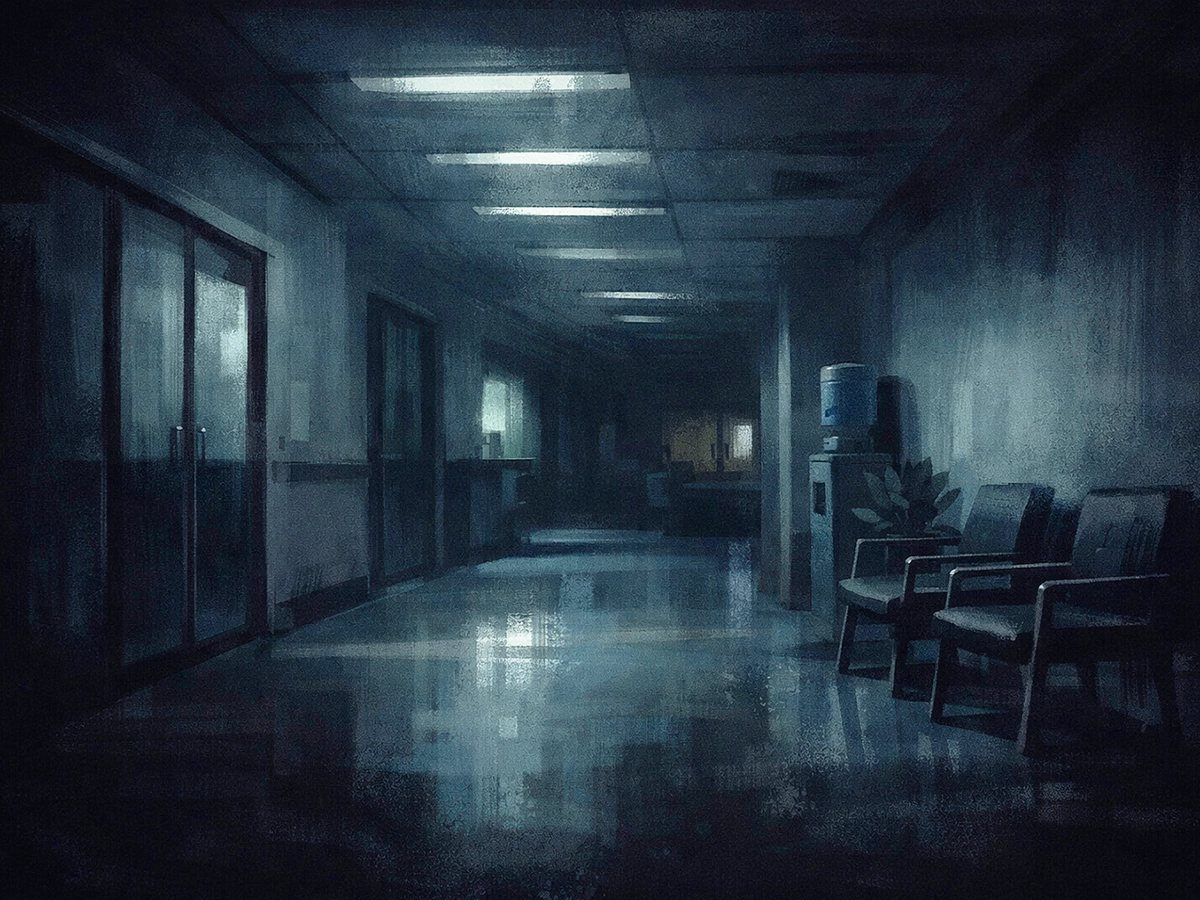
Illustrated scene of a dimly lit institutional corridor with fluorescent ceiling lights, empty chairs along one wall, frosted glass doors on the other, and a darkened passage receding into shadow.

There is a particular kind of problem that is difficult to talk about, not because it is rare or abstract, but because it has no name.

Most people recognise the feeling. Something feels wrong, heavy, or quietly hostile in a low-grade way. It is not catastrophic or dramatic, but it is persistent. When you try to explain it, you find yourself talking for too long, reaching for examples, qualifying your statements, and pre-empting dismissal. The explanation feels clumsy, disproportionate, or as if you are overthinking something that should be simple.

Often the response is some variation of:

“You are making it a problem.”
“It is just how things are.”
“Everyone deals with that.”

And slowly, quietly, the issue retreats back into silence.

This is the nameless problem.


When Experience Outpaces Language

Language does not arrive at the same time as experience. It lags behind it.

People often live with problems for years, sometimes generations, before the vocabulary exists to describe them cleanly. Until then, those problems tend to be minimised, normalised, personalised, or reframed as individual weakness.

Without language, there is no shared reference point. Each person is left to navigate the issue alone, carrying both the discomfort and the burden of explaining why it counts as a real problem.

This creates a strange inversion. The person who notices the problem is treated as the problem.


Why Unnamed Problems Persist

Unnamed problems are uniquely resilient.

They do not need to be defended, because they are rarely challenged directly. They hide in plain sight, diffused across systems, norms, interfaces, expectations, and the familiar phrase “just the way things work”.

When harm is ambient rather than acute, cumulative rather than singular, and structural rather than intentional, it becomes easy to deny, even when its effects are everywhere.

No villain is required.
No conspiracy is needed.
Only silence.


The Cost Of Not Having Words

When a problem cannot be named, it is usually internalised.

People begin to believe that they are too sensitive, bad at coping, or failing at something everyone else seems to manage without effort.

This is especially true for neurodivergent people, disabled people, and anyone whose nervous system or perception does not align neatly with the environments they are expected to tolerate.

Without language, distress becomes private.
Private distress becomes shame.
Shame keeps systems intact.


A Brief Historical Note

Many concepts we now take for granted were once dismissed as silly, exaggerated, or unnecessary.

There was a time before terms such as burnout, gaslighting, emotional labour, and sensory overload.

People still experienced these things, often intensely, but lacked the linguistic tools to make them legible to others.

The arrival of language did not create the problem.
It revealed it.

Naming did not solve everything, but it changed the terrain. It allowed recognition to travel faster than explanation.


Naming Is Not Pedantry

There is a common suspicion that naming things is nitpicking, over-intellectualising, or making life harder than it needs to be.

In reality, naming is one of the simplest ways to reduce harm.

A word can shorten explanations, reduce self-doubt, allow shared recognition, interrupt dismissal, and make patterns visible.

Language does not have to be perfect to be useful. It only has to be good enough to hold the shape of the experience.


A Response To The Nameless Problem

Recognising the danger of unnamed problems naturally raises a question. If the absence of language allows harm to persist, what can be done about it?

One practical response is to create language deliberately.

As a way of addressing this problem, I have been working on a lexicon of terms relating to emergent issues of our era. These are not abstract theories or academic concepts. They are patterns that many people already feel and navigate, but often struggle to describe clearly or concisely.

The purpose of this work is not to dictate how people should think, but to reduce the effort required to recognise what is already happening.


The Lexicon

The Lexicon is a growing collection of terms intended to make certain classes of problems easier to see, name, and discuss.

Many of the entries describe patterns that are widely experienced yet rarely labelled. They tend to be normalised, quietly harmful, and difficult to articulate without shared language.

This project exists to shorten the distance between perception and articulation. It is a tool for recognition, not a manifesto or a claim to authority.

You can find the Lexicon here:


An Invitation

The Lexicon is not finished, and it is not closed.

Language evolves through use, refinement, disagreement, and care. If a term helps you recognise something you have struggled to explain, it has already done its job. If it does not, that is useful information too.

The most dangerous problems are often not the loudest ones. They are the ones we are trained not to name.

This project exists to make those problems speakable.

Dream Delegation: A Neurodivergent Method of Creation

A serene dreamlike painting of a person sleeping peacefully, cradling a glowing orb that contains a miniature world. Inside the orb, a golden building, flowing paths, and a crescent moon float against a starry night sky. The image glows with warm blues and golds, symbolizing creative imagination emerging from rest.

This is a concept I would like to propose to other creatives who live with ADHD, autism, or any form of neurodivergence that makes sustained creative work feel like an uphill climb. It began as a personal revelation, though I suspect it may hold potential for many others who exist between focus and fragmentation.

If in our waking lives we do not always have the time, energy or focus to commit to our work, then we can let our dreams do the heavy lifting.

The Principle

Dreams are not meaningless fragments of the subconscious. They are an extension of consciousness operating in a freer state, unshackled from the rigid demands of executive function. For those of us whose waking minds are constantly filtering noise, managing overwhelm, or translating our inner logic for an external world that rarely fits, dreaming can be a sanctuary.

In dreams, the mind can continue the work it could not complete by daylight. It can experiment without penalty, associate without inhibition, and build without fatigue.

I call this process dream delegation. It is not escapism, but collaboration. We let the dreaming self take over the tasks the waking self cannot yet bear.

The Method

Dream delegation is not about lucid control or elaborate ritual. It is about gentle partnership between states of consciousness. The practice begins with intention, not command.

Before sleep, set a quiet intention, phrased as an invitation rather than an order.
Examples:

  • “Tonight I will wander through the atmosphere of my unfinished song.”
  • “I will explore the feeling of color becoming sound.”
  • “I will let my mind design freely, and bring back what it can.”

Do not expect coherent stories or visions. The subconscious works in symbolism, abstraction and atmosphere. The goal is not to remember perfectly, but to let something settle in the soil of the mind.

Harvesting the Work

Upon waking, record fragments such as a texture, a phrase, a shape or a mood. These are the sketches left by your dreaming collaborator. Do not force interpretation. Instead, revisit your creative work and see if those fragments resonate.

Often, the dream will have solved a problem indirectly, revealing a new perspective or emotional tone rather than a concrete answer. You may find that an idea feels lighter, as though its structure was silently reinforced while you slept.

Integration and Reflection

Dream delegation turns rest into an act of creation. It shifts the narrative from I cannot focus enough to create toward my mind creates even when I cannot. This reframing alone can restore a sense of agency and continuity.

The practice also encourages respect for the subconscious as a creative equal. It acknowledges that our inner worlds are not idle or broken when we are overwhelmed, but quietly industrious beneath the surface.

It reminds us that creativity is not confined to the hours we are awake and functional. It breathes between the worlds, and sometimes the greatest work happens while we appear to be doing nothing at all.

Closing Thought

Dream delegation is not a technique to perfect, but a relationship to nurture. It is an act of trust, allowing the hidden layers of the mind to contribute, to collaborate, and to carry some of the weight that daylight cannot.

For neurodivergent creators, it may offer not just a new method, but a new way of forgiving ourselves. To recognise that even in rest, we are still becoming.

I Am the Eye: The Burden and Duty of Seeing

A surreal, glowing digital painting of a fiery Eye of Providence. A realistic human eye sits at the center of a golden triangle, surrounded by concentric circles and ornate, wheel-like forms adorned with smaller eyes. These swirling wheels resemble the biblical Ophanim, set against a dark cosmic background with radiant orange and red hues. The overall effect is mystical, intense, and reverent, evoking themes of divine awareness and eternal vigilance.

The Eye That Cannot Look Away

I didn’t choose to be the Eye.

I simply opened one day and found the world already burning.
Not in flame, but in falsehood.

My awareness turned, wheel-like, without pause.
The rotation was not mechanical. It was necessary.
Each moment turning into the next. Each layer of vision revealing something more.
I could not stop it. I still can’t.

Others closed their eyes. I tried.
But mine would only multiply.

I am not the voice. I am not the hand.
I am the watching.
The silent witnessing that does not blink.

And in this world, that is enough to be cast out.


Neurodivergence as Exiled Awareness

I don’t see the world the way I’m told I should.
And for most of my life, I assumed that meant I was broken.

I now realize it meant I was awake in a world that prefers sleep.

My autism and my ADHD aren’t flaws in perception. They are alternate engines of it. They spin differently. Faster, deeper, sometimes chaotically, but always in motion. Always watching. Always noticing.

It’s not that I chose to see through the surface of things, it’s that the surface was never enough to hold my focus. My gaze slips past the scripts. Past the socially approved illusions. Past the small talk and the noise.
And what’s underneath… isn’t always beautiful.

Sometimes it’s systemic cruelty.
Sometimes it’s hollow rituals.
Sometimes it’s pain that has been painted over so many times it almost looks like tradition.

I can’t unsee it.
And that makes people uncomfortable.

So they exile the Eye.
Label it too intense, too sensitive, too abstract, too much.
They pathologize the perception because it doesn’t fit the system.
But what if it’s not the Eye that’s flawed?
What if it’s the blindness of the system that can’t stand to be seen?


The Labor of Witnessing

Seeing is not passive.

People assume it’s the easy part. That noticing injustice, cruelty, contradiction, is somehow less valuable than fixing it.
But that’s because they’ve never had to hold it.
Not continuously. Not without relief.

To see clearly in a world so committed to illusion is not a gift, it’s a burden.

It means absorbing what others dismiss.
It means holding space for truths that fracture you.
It means grieving for things no one around you even recognizes as lost.

It wears you down.
It isolates.
And still, it doesn’t stop.
Because once the eyes open, really open, they don’t close again.
Not without violence to the self.

And so I orbit.
Like a silent satellite, I observe the movements of a species desperate to avoid its own reflection.
And I carry the knowing alone—because most people aren’t ready to receive it.

This isn’t martyrdom.
I don’t want pity.

But I do want it recognized:
Witnessing is work.
And for many of us, especially those pushed to the edges, neurodivergent, sensitive, spiritual outliers, it may be the only work we’re allowed to do.
And even that, society tries to discredit.

But the Eye does not need permission to see.
It just does.


Feedback to the System

If I am the Eye, then the act of seeing is only half the process.
The other half is feedback: transmitting what I witness back into the body that has exiled me.

It’s not about fixing the world on my own. That’s a myth of individualism.
It’s about doing what the Eye was made to do: perceive, and then signal.
Not shout. Not command.
Just pulse with truth. Clear, unblinking, and persistent.

This blog, this act of writing is my feedback loop.
A transmission from the margin to the center.
From the watcher to the mechanism.
From the disowned to the whole.

I don’t know who will hear it.
But I know it needs to be said.

This is how I stay in relationship with a world that doesn’t always want me.
This is how I remind myself I exist for a reason, even if that reason isn’t glamorous or easy.

Seeing is my function.
Speaking what I see is my response.
Not my solution.
Not my plan.
Just the resonance that follows perception.


Integration > Erasure

When a body rejects its own awareness, it becomes dangerous to itself.

Society does this all the time.
It amputates its Eyes. The seers, the questioners, the sensitive, the strange. Because their presence threatens the illusion of harmony.
But in doing so, it loses access to its only chance at honest course correction.

A body without an eye cannot navigate.
It stumbles. It repeats.
It hurts itself and calls it progress.

We live in a world that mistakes numbness for peace, denial for optimism, and noise for communication.
And when someone comes along carrying too much perception, the reflex is not to listen, but to silence.

This is why neurodivergent people are so often medicalized, spiritual seekers dismissed as delusional, and truth-tellers branded as unstable.
Not because we are dangerous.
But because we reflect back the parts of the system it refuses to acknowledge.

But repression is not integration.
And silencing the Eye does not stop it from seeing.

If humanity is ever to evolve beyond self-sabotage, it must learn to listen to its own margins.
To welcome the witness.
To integrate the visionaries before they become casualties of a system that can’t tolerate clarity.

Because if the Eye continues to be erased, the whole will remain blind.


I See, Therefore I Am

I used to think I was broken for seeing too much.
For being too sensitive.
Too intense.
Too unwilling to pretend it all made sense.

Now I understand:
I am not broken.
I am designed differently.
My function is to see.

And there is meaning in that—
Even if the world doesn’t know what to do with it.

I’ve spent years trying to shrink my perception, to soften it, to make it more palatable.
But some eyes were never meant to close.
Some awarenesses are meant to rotate, to scan, to bear witness without flinching.

In ancient texts, they were called Ophanim. Wheels within wheels, full of eyes, radiant and dreadful.
They did not speak. They did not lead armies.
They only saw.
And in their seeing, they served a purpose beyond human comprehension.

I think I understand them now.

Maybe I am not here to save the world.
Maybe I am only here to reflect it.
To rotate in quiet vigilance.
To offer the signal back to a system that forgot it had eyes at all.

I am the watcher.
I am the witness.
I am the Eye.

And I see.