
The Ocean of Unborn Ideas

A tranquil moonlit shoreline beneath a star-filled sky. Gentle waves wash softly against the sand, reflecting the silver glow of a full moon. The scene is empty and still, evoking a feeling of solitude, reverence, and infinite calm.

The Porous Mind

There are minds built like fortresses, and there are minds built like shorelines.
The fortress keeps the world out, solid, defined, and dry.
The shoreline breathes with the tide, reshaped by every wave that kisses it.

Creativity is born on that shoreline.
To be creative is to possess porosity, a mind permeable enough for the ocean of potential to seep in.
Ideas, emotions, archetypes, stray whispers from the collective dream, all of it flows through those who cannot help but listen.
They do not invent. They translate.

Yet this openness is not without cost.
The same currents that deliver beauty also bring wreckage: sorrow, confusion, fragments of other people’s storms.
The porous mind is always negotiating its borders, learning how much of the tide to let in without being pulled under.
And still, it listens. Because silence, for such a mind, would be a greater death than drowning.

For the creative, the act of making is not simply expression, it is osmosis.
The world breathes through them, and they breathe it back changed.


The Ecology of Potential

Beneath the surface of waking thought lies an unseen ecosystem, a vast and fertile ocean where ideas drift like plankton, multiplying in the dark. Most will never breach the surface. They swirl endlessly in silent gestation, invisible but alive.

This ocean is not ordered. It does not distinguish between wisdom and nonsense, beauty and monstrosity. It is a realm of becoming, where possibility itself experiments. To gaze into it is to witness the raw mechanics of creation, the way form gropes toward meaning, and meaning toward form.

Every consciousness draws from this sea, but only some hear its currents. The porous mind becomes a conduit between worlds, an evolutionary bridge through which potential finds its way into language, image, sound, or structure.

When an idea rises into awareness, it is not a spark conjured from nothing. It is a creature breaching the waves, the culmination of countless unseen collisions in the depths. And when it slips back beneath the surface, half-forgotten, it is not lost. It returns to the dark to feed new generations of thought.

Nothing in the ocean is wasted. Even the unborn ideas, the ones that never quite reached the light, fertilize the next tide of possibility. In that way, creation is less a single act and more a cycle of nourishment: consciousness feeding potential, potential feeding consciousness.


The Tragedy of the Unborn

For every idea that takes its first breath in the world, countless others die unnamed.
They shimmer for a heartbeat on the edge of awareness, a scent, a flicker, a sudden weight in the chest, and then dissolve back into the deep.

There is sorrow in that, though most never feel it consciously.
The mind learns to celebrate its children, not its miscarriages. Yet every artist, every thinker, has felt the ache of the nearly-formed: the melody that was almost remembered, the perfect line lost before pen met paper, the sense of something vast pressing at the gates of language but never quite entering.

These unborn ideas haunt the corridors of our dreams.
They become strange symbols, wordless moods, déjà vu. They linger like ghosts of meaning, neither alive nor gone, whispering: “We tried.”

But tragedy is not failure. In the greater cycle, their unfulfilled lives still matter. The half-born return to the ocean, breaking down into nutrients of inspiration. From their dissolution, new forms grow stronger, carrying faint traces of what came before, a rhythm, a texture, an emotional DNA.

The creative heart often aches for what it cannot remember. Perhaps that ache is the memorial, the soul’s way of honouring all that it could not bring into being.


The Responsibility of the Listener

To listen to potential is to take part in creation itself.
It is not a passive act, but a covenant. When an idea crosses the threshold into consciousness, it arrives fragile, trembling, uncertain of its shape. The listener becomes its first environment, its atmosphere.

Some people seize ideas like prey. They dissect them, brand them, harvest them for profit or validation. The idea, stripped of its mystery, dies quickly under fluorescent light.
But others receive with reverence, cupping the newborn thought in both hands, letting it breathe before naming it. These are the caretakers, the stewards of becoming.

To be a true listener is to resist the temptation of ownership. Ideas do not belong to us; they visit. They pass through, seeking resonance, seeking a place to crystallize.
Our task is not to claim them but to tend them, to ask, What does this idea need to live?

Sometimes the answer is action. Sometimes silence.
Sometimes it means letting the idea return to the deep, knowing it wasn’t meant for now.
The ethical creator learns to release with as much grace as they receive.

To treat ideas as sacred is not sentimentality; it is realism.
They are alive, and like all living things, they thrive where they are met with care, humility, and awe.


Dreams as Refuge for the Unborn

When the waking mind grows too narrow for them, the unborn ideas find sanctuary in dreams.
There, language loosens, form forgets its boundaries, and the mind becomes oceanic again, receptive, weightless, forgiving.

Dreams are nurseries for the half-formed.
They are where impossible geometries are allowed to stand, where logic softens enough for paradox to breathe. The painter dreams of colours that do not exist; the composer hears chords that waking physics cannot yet permit. In the dream, potential rehearses itself.

Sometimes, when we dream vividly, we are not the dreamers at all but the dreamed, temporary vessels through which the unborn test embodiment.
We wake with fragments: a haunting image, a phrase, a sensation that refuses to fade. These are offerings from the deep, visiting spirits carrying the scent of unmanifest worlds.

Art, ritual, hallucination, trance, all open the same door.
They are technologies of permeability, ways of returning consciousness to the sea so the forgotten can breathe again.

Perhaps this is why the surreal feels sacred: it reminds us that imagination is not invention, but remembrance.


The Cosmic Cycle

Creation and destruction are not opposites; they are inhale and exhale.
The ocean of potential breathes through us in tides, what rises into form must one day return.

Every idea that dies enriches the field it came from. Every silence fertilizes the next voice. Even despair, when felt honestly, becomes a kind of compost. There is no waste in the greater ecology of thought.

We imagine ourselves as authors, but we are more like soil, momentary ground for something older than time. Ideas bloom through us, use us, and move on. And when we, too, dissolve, our lives return to that same ocean, our memories, our creations, our longings, all reabsorbed into potential, waiting to be dreamed again.

Somewhere, beneath all endings, the unborn ideas drift still.
They are not lost. They are preparing.
And when the next porous mind opens to listen,
the tide will rise,
and the ocean will remember its name.
What They Don’t Tell You About Gigging: The Quiet Cost of Being an Unsigned Artist

When I first imagined performing live, I pictured something transcendent. I saw myself on stage, lost in the music, surrounded by friends and strangers all riding the same wave. I imagined sound washing over us like a baptism. Something pure. Communal. Liberating.

And while those moments do exist, they are rare—buried beneath a pile of stress, mismanagement, and quiet indignities. Gigging, for unsigned artists, often means sacrificing peace of mind for a slot on a poster. It’s a world where passion collides with a brick wall of indifference.

Let’s talk about it.


The Environment They Don’t Talk About

You turn up to the venue and there’s no green room. No safe place to relax or focus. You’re balancing nerves and gear in a room that wasn’t built for either.

There’s no proper soundcheck—or if there is one, it’s rushed, incomplete, and handled by a disinterested engineer. You don’t get a feel for the room, or confidence in how you’ll sound. You just get: “Alright, you’re on.”

Your expensive equipment? It lives in fear. There’s no secure lockup, no backstage, no assurance. Just watch it like a hawk and pray it doesn’t disappear while you try to catch your breath.

You finish your set and you’re ushered off-stage like livestock in a holding pen, with barely enough time to speak to friends who came to see you play.

And money? If you get anything at all, it won’t come close to covering travel, time, gear maintenance, or the emotional cost. But you’re told to be grateful. Exposure is your reward.


“But at least you get to play live, right?”

Here’s what they don’t tell you:

  • You won’t even be considered unless you’ve racked up enough social media followers—not talent, not originality, just metrics.
  • Promoters often don’t listen to your music. You’re not curated—you’re slotted into a lineup like stock on a shelf.
  • Genre cohesion? Forget it. You might play sludge doom between bubblegum punk and comedy folk. Audiences scatter. Nobody wins.
  • You’ll be expected to promote and sell your own tickets, as if you’re the promoter now. If ticket sales are poor, you take the blame.
  • In city venues: no parking. You load in through a narrow alley, then drive three streets away and hope for the best.
  • Your rider? One drink. One. And if you’re lucky, it might not be warm beer in a plastic cup.
  • The sound system might be hanging on by a thread. Drum kits with stripped lugs, guitar amps with mystery hums. Monitors that don’t monitor.
  • Cramped stages mean you can’t move. You play like statues because there’s nowhere else to go.
  • Lighting? Maybe a flickering bulb or a half-dead strobe. Energy comes from you, not the room.

A Moment of Contrast

Recently, I saw Billy Corgan perform live as part of a supergroup at Black Sabbath’s monumental final show. From our seats, we could glimpse backstage. We saw Corgan vibing out with joy—smiling, hugging, present.

That’s what music should feel like.

And yes, there’s still stress at higher levels. But at least there’s infrastructure. Roadies to carry the weight. Engineers who care. A system that catches you when you fall.

For us, the unsigned, there is no such safety net. And sometimes, the dream of playing live gets eroded by the conditions we’re forced to endure.


Why I’m Still Here

I’m not writing this to whine. I’m writing it because someone has to say it: it shouldn’t have to be this hard to share something sacred.

I still believe in the core of it—in the magic of a note ringing out, in connection, in that moment where the world stops and music takes over.

But if we want to protect that magic, we have to talk about what threatens it. And for unsigned artists, that means speaking up about the quiet cost of every “opportunity” we’re handed. Because love alone doesn’t make the system fair. And passion doesn’t pay for parking.

We deserve better.

The Sound of Graceful Thunder – A Tribute to Tony Iommi

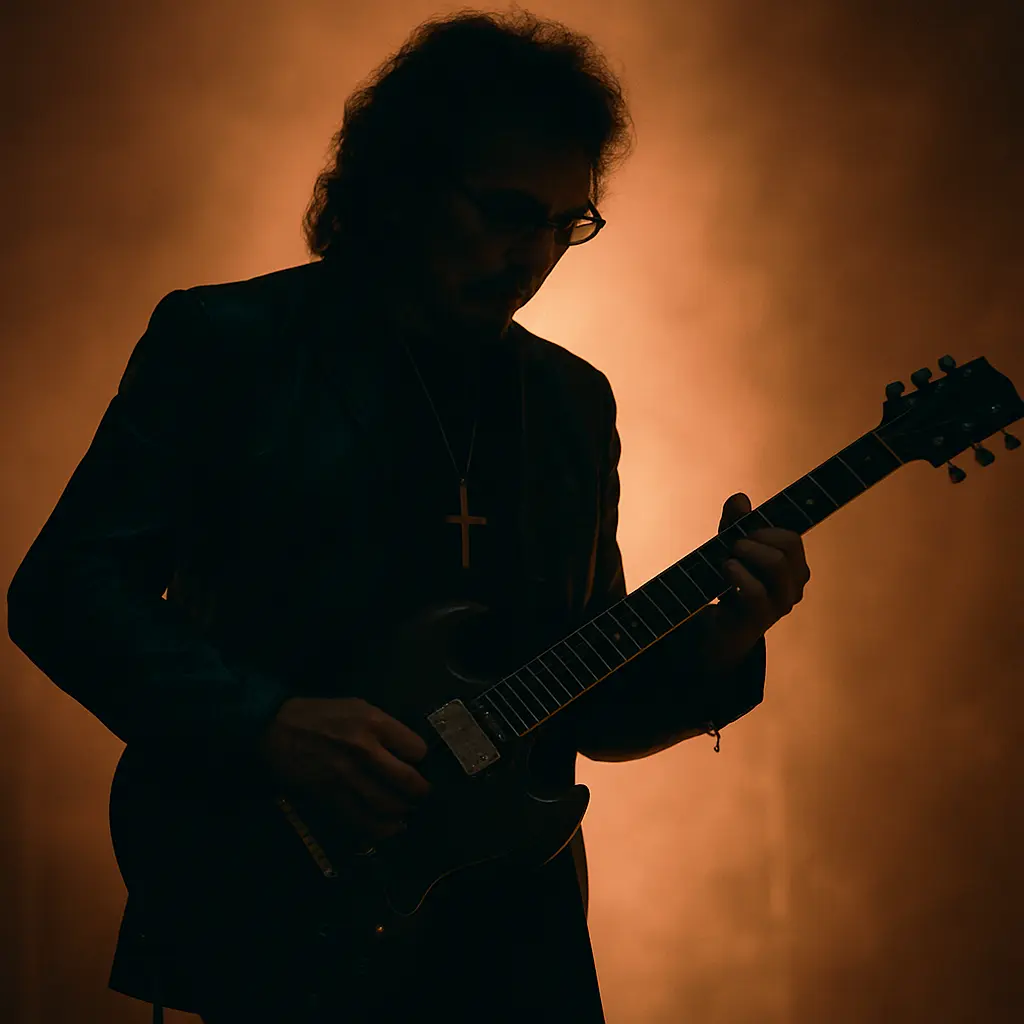
I have a great deal of respect for Tony Iommi. Not just because he invented a genre — though let’s not brush past that too quickly — but because of how he did it, and who he continues to be.

Iommi is the architect of doom, the father of the riff. But more than that, he’s one of the most down-to-earth rock icons I’ve ever witnessed. There’s no ego in his playing. No posturing. Just pure love for the guitar, expressed with grace, power, and an unmistakable sense of tone and timing. His playing is heavy, not just in sound, but in soul.

My journey with Black Sabbath began like many of my generation — online. Late 1990s or early 2000s, downloading mp3s from Napster, not even sure what I was about to hear. And yet, the moment those dark, slow riffs hit, even through compressed files and computer speakers, I felt it. Sabbath didn’t need hi-fi to shake you — they existed in pure riff form, demanding to be heard.

Not long after, something even more personal happened: my dad gave me his original vinyl copy of Black Sabbath — their debut album — the very same one he bought when Sabbath first emerged. That record became more than just an object. It was a shared artifact, holding decades of reverence. Every scratch in the vinyl felt like part of a legacy now passed on.

In 2005, I saw Black Sabbath live for the first time — and not just anywhere. It was at the Aylesbury Civic Centre, an incredibly intimate venue, especially for a band of their stature. I shared that night with my dad and my brother, and the intimacy of the performance made it feel like Sabbath was playing directly to us. A few weeks later, the contrast was stark — we saw them again at Download Festival, this time in front of a massive crowd. Yet even on that enormous stage, the same energy pulsed through. It was less about scale and more about truth. Sabbath always deliver the truth.

In 2023, my girlfriend and I went to see the opening night of ‘Black Sabbath – The Ballet’ in London — a surreal, genre-fusing experience in itself. The juxtaposition of ballet and doom metal shouldn’t work on paper, but it did. Deeply. It was theatrical, poetic, and profoundly moving. The music of Sabbath, reinterpreted through movement and form, felt like watching thunder take shape.

Then came the surprise. Tony Iommi himself stepped onto the stage for the climax.

We were sitting in the second row — second row — and suddenly, the music folded back into its origin point. There he was: the man who wrote the soundtrack to so many people’s lives, quietly commanding the stage. When our eyes met, even briefly, it felt like a personal acknowledgment. Not just of our presence, but of everyone who’s ever connected with the frequencies he’s sent into the world.

That wasn’t the only moment my girlfriend and I shared over Sabbath. Another cherished memory: the two of us curled up, watching a concert video from their ‘The End’ tour. We listened through my Sennheiser HD800s headphones and Schiit Valhalla 2 tube amp — letting the tone soak into us, every nuance. It wasn’t just watching a performance; it was a private, reverent listening ritual. Sabbath as communion.

That night stayed with me. It still does.

But even that wasn’t the pinnacle. That came when I saw Black Sabbath perform their final ever show, ‘Back to the Beginning’ — the end of an era. There was a weight in the air that night, a kind of reverent silence between songs, as if everyone in the crowd knew they were witnessing something historic. And in the middle of it all, there was Tony. His playing that night didn’t just sound good — it sounded final, essential, eternal. Every note was oozing with soul and history. He wasn’t just playing riffs — he was channeling decades of meaning through his fingers. Watching him perform in that context, I felt the full depth of what he gives to the music. It wasn’t just sound; it was legacy embodied. And as I’ve been working on my own playing — particularly learning and revisiting “Iron Man” — I’m realising just how expressive Tony’s playing truly is. The subtleties are everything. A little side-to-side vibrato. Letting the chord decay all the way down, with just a whisper of slide noise. Palm muting not for silence, but for tension. These aren’t flashy tricks — they’re soulful choices. They speak of someone who feels every note.

I can feel myself learning to listen, not just play. To make the guitar breathe. That, to me, is the spirit of Iommi. And every time I pick up my SG, it’s with a little bit of that spirit in my fingers.

Tony Iommi didn’t just invent a sound. He also overcame what could have been a permanent wall between him and his instrument — losing the tips of two fingers on his fretting hand in an industrial accident. For most, that would have meant the end of a dream. But for Tony, it became the beginning of a new path. He crafted homemade prosthetic fingertips, adjusted his technique, and in doing so, created a new kind of sound — one that shaped a genre. That story is more than inspiring — it’s a testament not only to his love for guitar and music, but to his indomitable spirit. It tells you everything you need to know about who he is, and why his playing carries the weight that it does. He proved that sound can carry soul without screaming for attention. That resilience, authenticity, and sheer love of music can resonate louder than any amp.

This is why I got an SG. This is why I play.

And this is why, when I think of guitar heroes, I don’t think of the fastest or flashiest. I think of the quiet architect of thunder, standing center stage — no ego, no flash — just grace, tone, and fire.

Thank you, Tony.

The Age-Old Question: Why Do Guitarists Always Want Another Guitar?

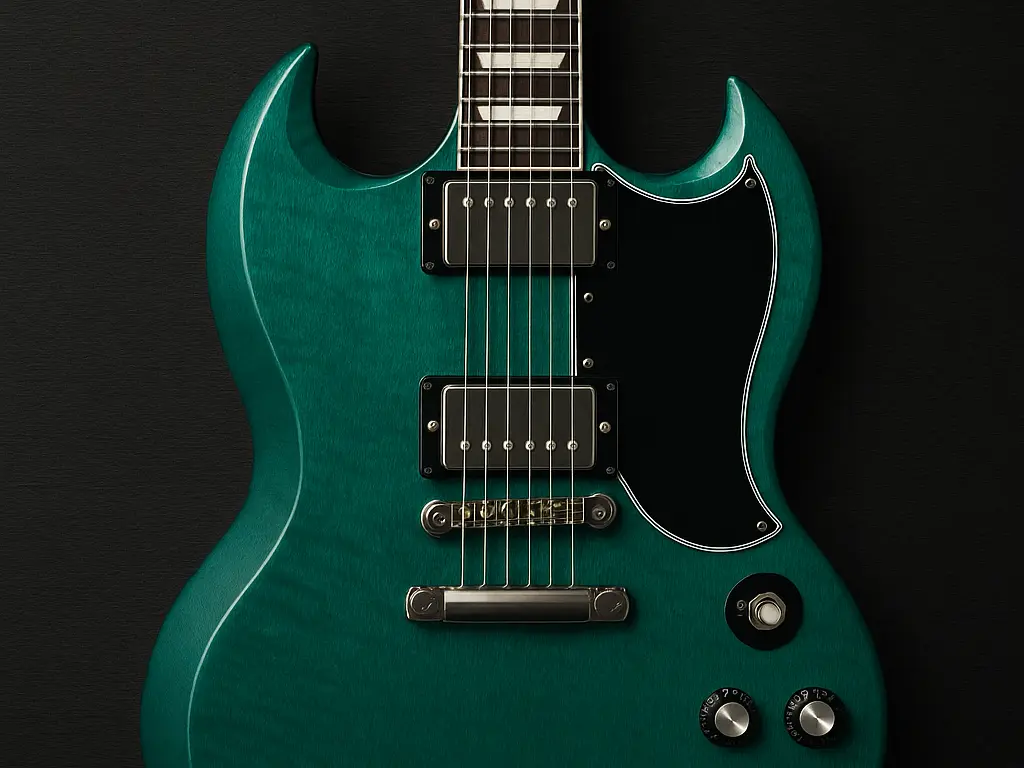
It’s a running joke in the music world—guitarists always want just one more guitar. To outsiders, it might seem like indulgence or even madness. But ask any player, and they’ll tell you: there’s always a reason. Or at least, a feeling. So what is it about guitars that makes them so addictive? Why do even players with ten instruments feel like something’s missing?

Let’s unpack it.


1. Tone Variety = Expression Variety

Every guitar sounds and feels different. And for a guitarist, that means it changes the way you play.

  • A Strat encourages subtle phrasing and clean dynamics.
  • A Les Paul delivers weighty, sustained power.
  • A Telecaster snaps and twangs in a way that begs for rhythmic nuance.
  • A hollowbody invites you into clean jazz voicings or ambient washes.

Even two identical models can feel different in the hands—due to weight, neck profile, finish, or even just vibe. Guitars aren’t just tools—they’re muses. And sometimes, you need a new muse.


2. Each Guitar is a Palette

Just like painters use different brushes for different textures, guitarists use different guitars for different tones.

  • That P-90 SG for raw, punky rhythm.
  • A Burstbucker Les Paul for creamy, sustaining leads.
  • A Stratocaster for sparkling clean tones.
  • A baritone for dark, cinematic layers.

Owning multiple guitars doesn’t feel like excess. It feels like owning a range of voices. And in the studio—where tones layer and need to occupy distinct sonic spaces—variety is essential.


3. Guitars Represent Potential

Buying a new guitar often feels like buying a new you.

Even if it’s partly an illusion, it feels real. A new guitar is like a time capsule of hope, creativity, and untapped ideas. And for many, that’s a powerful emotional driver.


4. Guitars Are Comfort Objects

Beyond tone, guitars are physical companions. The shape against your body, the neck in your hand, the subtle vibrations as you play—they’re tactile, grounding, and soothing.

For many neurodivergent players (and plenty of others), guitars offer a regulated sensory ritual. The act of holding and playing becomes a safe, meditative space.

And some guitars? They just feel like home.


5. Sometimes… It’s Just a Rabbit Hole

Let’s be honest. The modern guitar world—YouTube demos, signature models, endless gear forums—creates an infinite treadmill of desire. There’s always a new feature, finish, or tonewood to obsess over. And some guitarists just enjoy the chase.

  • Searching for “the one.”
  • Filling tonal gaps.
  • Rewarding themselves.
  • Just… having fun with it.

And that’s okay, too.


Final Thoughts

Wanting another guitar isn’t just about having more gear. It’s about feeling, expression, possibility, and sometimes nostalgia. It’s about bonding with objects that help us articulate emotions too subtle for words.

Yes, sometimes it’s just capitalism wearing a flamed maple top. But more often, it’s about a deep, human desire to discover new corners of ourselves.

So next time a guitarist says they need another guitar? Don’t roll your eyes. They’re chasing something real—even if they can’t quite explain it.

(And yes… they probably will buy another one.)