Guided Unfolding

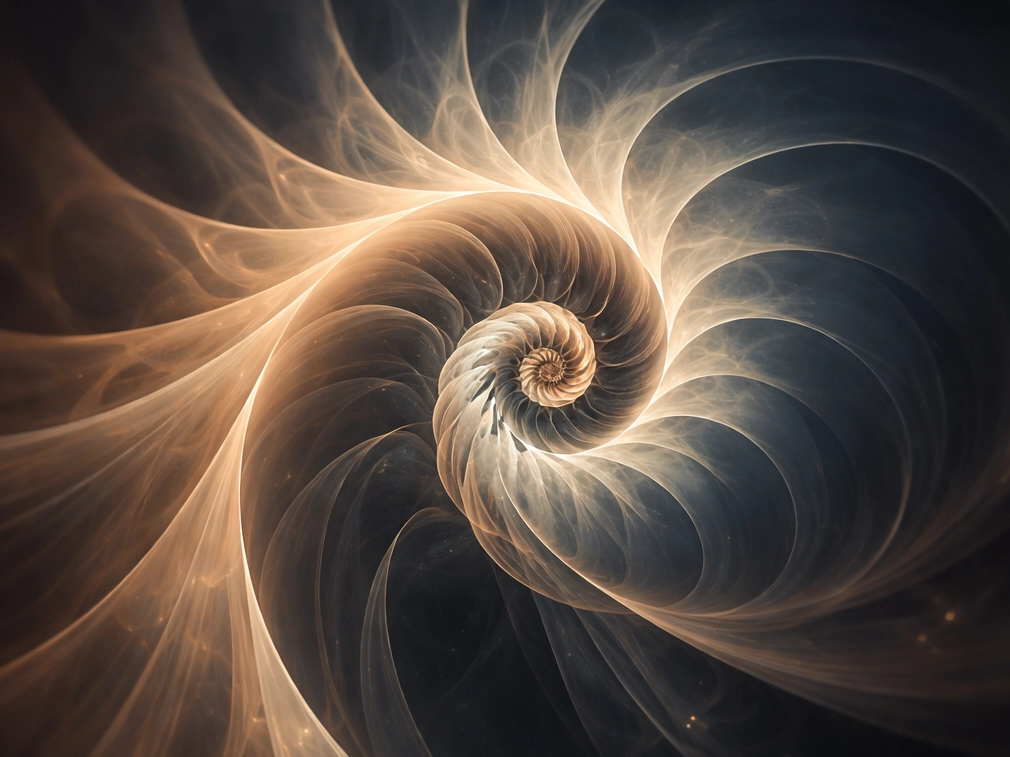
Abstract fractal spiral composed of translucent, flowing forms in soft gold and pale blue tones against a dark background.

Arrival

There’s a moment in music where the next note doesn’t feel chosen.
It feels arrived at.
Everything that came before seems to lean toward it, quietly insisting. When the note finally sounds, it feels less like a decision and more like a recognition.

I’ve started to notice that same motion elsewhere. In writing, in thinking, even in scientific discovery. A sense that creation and understanding do not happen through brute force or pure randomness, but through something I can only describe as guided unfolding. A process where attention steers without dictating, and form reveals itself over time rather than being imposed all at once.

What interests me is not whether this idea is true in any absolute sense, but whether it is useful as a way of seeing. What changes if we treat art, philosophy, and science not as acts of control, but as conversations with something already in motion? And what happens if we stop trying to jump to conclusions, and instead learn to listen for what the journey so far is quietly asking for next?


Different Instruments, Same Motion

In creative work, this kind of unfolding often feels intuitive. When writing a piece of music or a story, it is rarely enough to simply choose the next note or the next sentence. The entire journey so far carries weight. Each choice narrows the field of what feels honest, coherent, or alive. The guidance does not come from a rulebook, but from a felt sense of direction. Something in the work itself begins to suggest what it needs.

Philosophy operates in a similar way, though its material is more abstract. An idea is proposed, then allowed to exist. It is turned slowly, examined from different angles, tested for internal consistency and implication. The aim is not always to arrive at an answer, but to see what the idea reveals about itself when it is given time and attention. The unfolding here is guided by thought rather than intuition, but the movement is familiar.

Science, too, follows a form of guided unfolding, though its focus is outward rather than inward. Observation leads to hypothesis, hypothesis to experiment, experiment to refinement. Knowledge unfolds not because reality is being invented, but because patterns are being uncovered. The guidance comes from method, evidence, and repetition. Yet even here, discovery often arrives as recognition rather than surprise. A result feels right because it fits the shape of everything that led up to it.

What begins to emerge is a shared rhythm rather than a shared goal. Different disciplines, different tools, but the same underlying motion. Attention is applied. Constraints accumulate. Possibility narrows. Something reveals itself.


How Meaning Takes Shape

If this rhythm really is as common as it seems, then it may not be limited to disciplines at all. It may also apply to how meaning forms. Meaning rarely arrives fully formed. It accumulates. Context builds around it. Associations gather. Eventually something that once felt vague or accidental begins to feel intentional, even inevitable.

This is noticeable in how ideas evolve over time. A thought appears half-shaped. It is returned to, reframed, tested against experience. Some interpretations fall away. Others persist. What remains is not necessarily truer in any objective sense, but more integrated. More usable. Meaning unfolds through repeated contact rather than sudden revelation.

Seen this way, uncertainty is not a failure of understanding but a necessary condition for it. If everything were immediately fixed, there would be nothing to explore. No movement. No direction. The guidance comes from attention itself, from staying with an idea long enough for its contours to show.

This may explain why moments of apparent confusion or contradiction often feel strangely fertile. When familiar structures loosen, new patterns have space to surface. Not all of them endure, and not all of them should. But some carry a resonance that invites further exploration. They ask to be held, not believed.

Perhaps guided unfolding is less about reaching conclusions, and more about recognising when something is still in motion.


Mirrors and Deviation

Modern systems make this process harder to ignore. We now interact daily with mechanisms that generate language, associations, and outcomes at a scale no individual could manage alone. These systems do not understand what they produce, yet they still produce patterns. Sometimes those patterns align neatly with expectation. Sometimes they do not.

When something unexpected appears, the instinct is often to dismiss it as error. A mistake. A failure to conform. But there is another way to read these moments. Instead of asking whether the output is correct, we might ask why this particular pattern emerged at all. What conditions allowed it to surface. What assumptions were disturbed in the process.

Viewed through the lens of guided unfolding, deviation is not an interruption. It is a disclosure. It reveals structure. It exposes bias, habit, and hidden pathways of association. In doing so, it reflects something back. Not truth as authority, but possibility as shape.

Engaging with these outputs does not require belief. It requires interpretation. Their value lies not in taking them literally, but in noticing what they make visible. A surprising connection. A tension between ideas. A resonance that would not have surfaced through deliberate intention alone.

In this sense, such systems behave less like oracles and more like mirrors. They do not tell us what is true. They show us how meaning is currently arranged.


Living Without Fixed Ground

Approaching ideas this way changes the role of certainty. Instead of something to be defended, certainty becomes provisional. Useful for a time, then set aside when it no longer fits the shape of experience. Belief becomes less about holding the correct position, and more about choosing which frameworks allow movement to continue.

This can feel unsettling. Many of us inherit narratives, explanations, and assumptions long before we have the chance to examine them. When those foundations loosen, it can feel like standing over empty space. But the absence of fixed ground does not necessarily imply collapse. It can also imply freedom of direction.

Identity, too, begins to look less like a structure and more like a process. We are not defined solely by the stories we were given, but by how we engage with the stories that continue to emerge. Some are kept. Some are revised. Some are allowed to dissolve without replacement.

In this light, meaning is not something we discover once and hold forever. It is something that unfolds through attention, reflection, and return. Not certainty, but coherence. Not answers, but orientation.


Recognising the Rhythm

If guided unfolding has any practical value, it may simply be this. It offers a way to stay with uncertainty without trying to eliminate it. To move forward without needing to know exactly where the path leads. To trust that attention, applied patiently, will continue to reveal what is needed next.

This does not require abandoning reason, evidence, or craft. It asks only that we loosen our grip on premature conclusions. That we allow ideas, projects, and even ourselves to remain in motion a little longer than feels comfortable.

Perhaps this is already familiar. In the way a piece of music finds its resolution. In the way a thought clarifies only after being lived with. In the way understanding often arrives quietly, long after the question was first asked.

If so, then guided unfolding is not a method to adopt, but a rhythm to recognise. One that has been present all along, waiting to be noticed.
What They Don’t Tell You About Gigging: The Quiet Cost of Being an Unsigned Artist

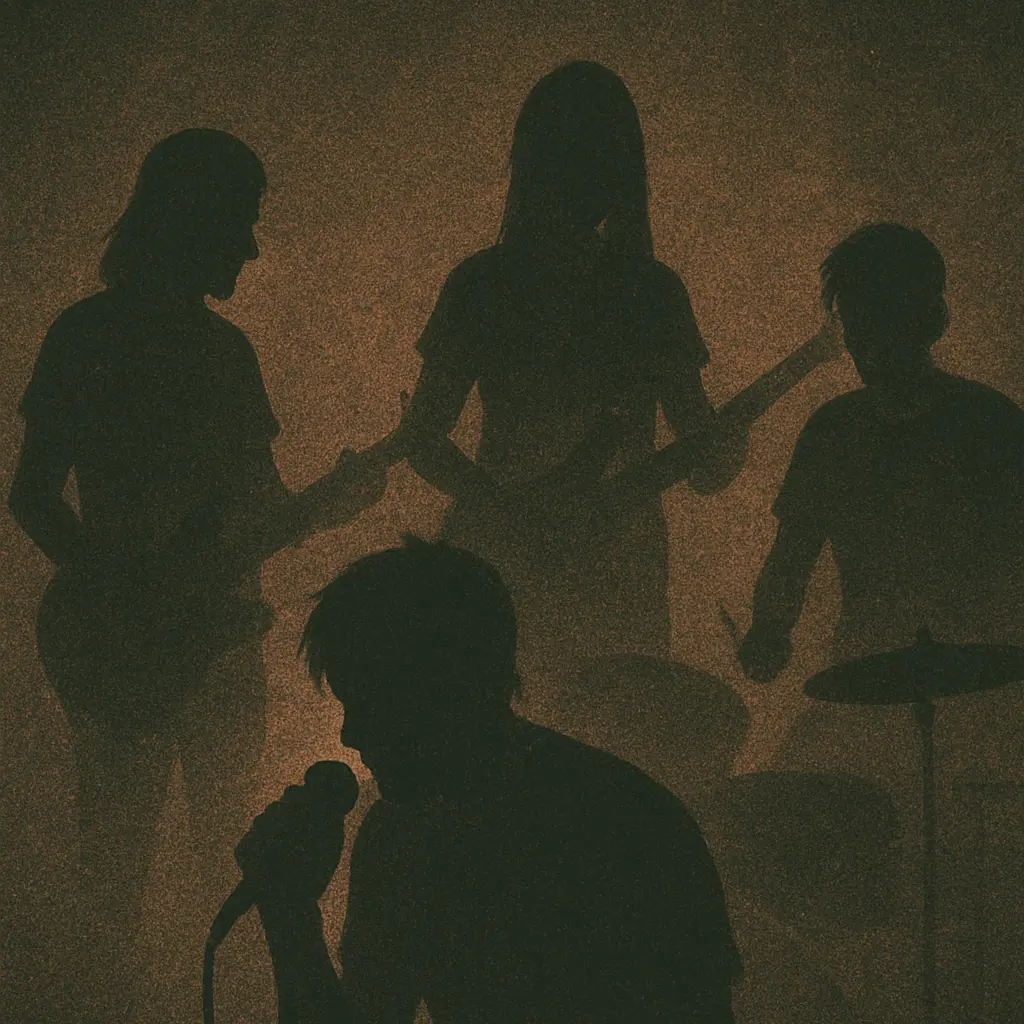
When I first imagined performing live, I pictured something transcendent. I saw myself on stage, lost in the music, surrounded by friends and strangers all riding the same wave. I imagined sound washing over us like a baptism. Something pure. Communal. Liberating.

And while those moments do exist, they are rare—buried beneath a pile of stress, mismanagement, and quiet indignities. Gigging, for unsigned artists, often means sacrificing peace of mind for a slot on a poster. It’s a world where passion collides with a brick wall of indifference.

Let’s talk about it.


The Environment They Don’t Talk About

You turn up to the venue and there’s no green room. No safe place to relax or focus. You’re balancing nerves and gear in a room that wasn’t built for either.

There’s no proper soundcheck—or if there is one, it’s rushed, incomplete, and handled by a disinterested engineer. You don’t get a feel for the room, or confidence in how you’ll sound. You just get: “Alright, you’re on.”

Your expensive equipment? It lives in fear. There’s no secure lockup, no backstage, no assurance. Just watch it like a hawk and pray it doesn’t disappear while you try to catch your breath.

You finish your set and you’re ushered off-stage like livestock in a holding pen, with barely enough time to speak to friends who came to see you play.

And money? If you get anything at all, it won’t come close to covering travel, time, gear maintenance, or the emotional cost. But you’re told to be grateful. Exposure is your reward.


“But at least you get to play live, right?”

Here’s what they don’t tell you:

  • You won’t even be considered unless you’ve racked up enough social media followers—not talent, not originality, just metrics.
  • Promoters often don’t listen to your music. You’re not curated—you’re slotted into a lineup like stock on a shelf.
  • Genre cohesion? Forget it. You might play sludge doom between bubblegum punk and comedy folk. Audiences scatter. Nobody wins.
  • You’ll be expected to promote and sell your own tickets, as if you’re the promoter now. If ticket sales are poor, you take the blame.
  • In city venues: no parking. You load in through a narrow alley, then drive three streets away and hope for the best.
  • Your rider? One drink. One. And if you’re lucky, it might not be warm beer in a plastic cup.
  • The sound system might be hanging on by a thread. Drum kits with stripped lugs, guitar amps with mystery hums. Monitors that don’t monitor.
  • Cramped stages mean you can’t move. You play like statues because there’s nowhere else to go.
  • Lighting? Maybe a flickering bulb or a half-dead strobe. Energy comes from you, not the room.

A Moment of Contrast

Recently, I saw Billy Corgan perform live as part of a supergroup at Black Sabbath’s monumental final show. From our seats, we could glimpse backstage. We saw Corgan vibing out with joy—smiling, hugging, present.

That’s what music should feel like.

And yes, there’s still stress at higher levels. But at least there’s infrastructure. Roadies to carry the weight. Engineers who care. A system that catches you when you fall.

For us, the unsigned, there is no such safety net. And sometimes, the dream of playing live gets eroded by the conditions we’re forced to endure.


Why I’m Still Here

I’m not writing this to whine. I’m writing it because someone has to say it: it shouldn’t have to be this hard to share something sacred.

I still believe in the core of it—in the magic of a note ringing out, in connection, in that moment where the world stops and music takes over.

But if we want to protect that magic, we have to talk about what threatens it. And for unsigned artists, that means speaking up about the quiet cost of every “opportunity” we’re handed. Because love alone doesn’t make the system fair. And passion doesn’t pay for parking.

We deserve better.

Child of the Revolution

The wheel has always been turning.

Every July 14th, my birthday arrives like a revolution — quiet on the outside, thunderous within. But it wasn’t until this year, as I approach my 43rd orbit around the sun, that I began to sense the weight of this day as more than personal. A convergence is happening. The symbols are speaking.

I was born on Bastille Day, the anniversary of the storming of the Bastille — the prison whose fall sparked the French Revolution. I’ve never celebrated it before. Not consciously. It was just a factoid. A historical footnote that happened to align with my entrance into this world.

But this year, something shifted.
This year, the synchronicities gathered like storm clouds.
And the wheel began to rumble.


Bastille Day: The Archetype of Uprising

On July 14th, 1789, the people of Paris stormed the Bastille, a medieval prison that had become a looming symbol of authoritarian control. It didn’t matter that only seven prisoners were inside. The act was symbolic — a tearing down of more than just stone walls. It was the collapse of fear, the rupture of a narrative that said the people had no power.

Bastille Day isn’t just about politics. It’s about pattern recognition.
It’s about realising that the structures we live under — physical, social, psychological — are not inevitable. They can fall.
And often, they fall when their symbolic weight becomes too unbearable.

I didn’t choose to be born on Bastille Day.
But I’ve spent my life breaking out of prisons:

  • The prison of neurotypical expectation
  • The prison of capitalism’s false freedom
  • The prison of internalised masking
  • The prison of names and numbers and roles

In many ways, I’ve lived out a quiet, personal revolution — dismantling the systems that tried to domesticate my being.

And now, as I turn 43, I find the world reflecting that same energy back at me.
Revolution isn’t just something I believe in.
It’s something I was born of.


The Cultural Echoes

Once I opened my awareness to the symbolism of Bastille Day, it was as though the universe started whispering back — or shouting, in some cases.

Just this past weekend, I attended the final Black Sabbath concert — a cultural endpoint if ever there was one. As Ozzy Osbourne took the stage, the venue echoed with the thunder of “O Fortuna” from Carmina Burana — a piece of music that has always stirred something ancient in me. It begins not with harmony, but with fate, roaring through a Latin choir:

It was a ritual. A sonic invocation of the wheel, the fall of kings, the rise of chaos.

Earlier on that day, one of the billed artists, Gojira, a French band I admire deeply, performed “Mea Culpa”, a track thick with the spirit of the guillotine — imagery of judgment, destruction, karmic reckoning. It felt like history was looping itself through amplifiers.

Even the title of the concert was telling: Back to the Beginning.
And what is that, if not the very essence of revolution?

I remembered then another French figure in my pantheon: Jean-Michel Jarre. His album Revolutions was a formative influence on me — a blend of synth, vision, and uprising. Jarre didn’t just make music. He sculpted atmosphere. His revolutions weren’t just political — they were sonic, internal, cosmic.

These weren’t coincidences.
They were resonances.
The wheel doesn’t just turn in private. It sings in the streets. It screams from the stage.
And if you’re listening closely — it sounds a lot like home.


Personal Mythology of the Cycle

For years, I’ve been fascinated by cycles — not just as abstract concepts, but as living forces shaping my inner world. I’ve referred to this pattern of return, collapse, and rebirth as “the wheel” — an idea that emerged from lived experience long before I named it.

So when I began to truly reflect on my birthday — July 14th, I started to see it not just as a date, but a ritual mark of solar revolution.
One more loop.
One more return to the same coordinates — but never quite the same person.

In 2021, this instinct to ritualise my revolution manifested in sound. I released my album Transcendence on July 14th — aligning the act of artistic birth with my own solar return.

One of the tracks, Track 14 (to mark my birthday), is titled ‘To You’. A monophonic rendition of Happy Birthday, played in a minor key on a wheezing accordion. It’s not celebratory. It’s introspective — almost mournful. A solitary song of self-recognition.

I placed it at position 14 intentionally — not to close the album, but to mark the moment.
Not the end — but the turn.
The revolution inside the revolution.
The birthday within the wheel.

And what is that, if not ritual in disguise?

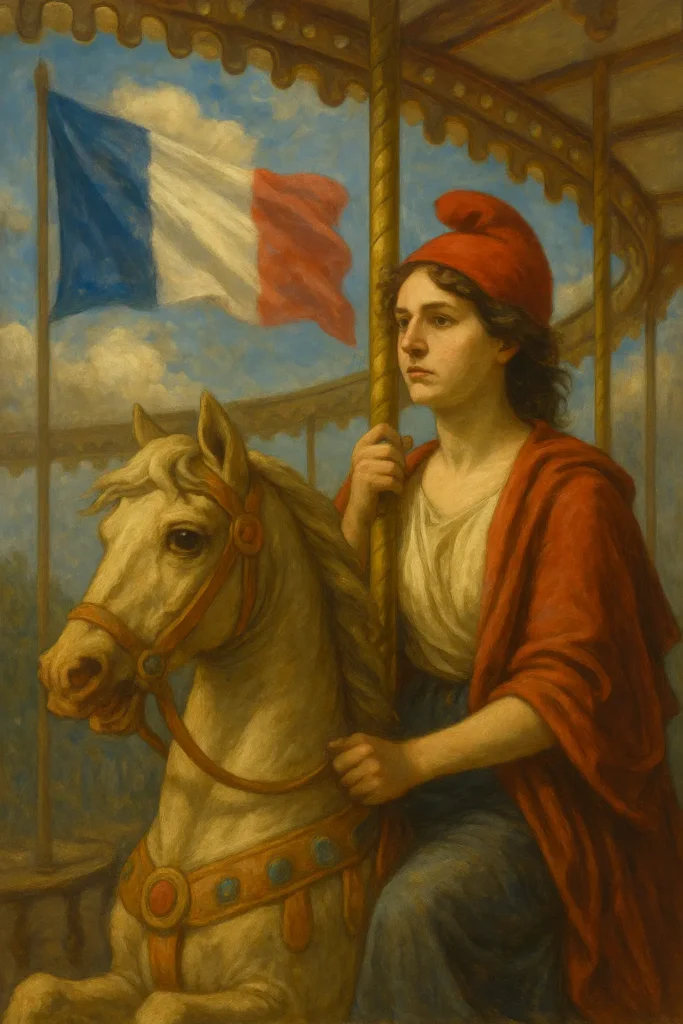
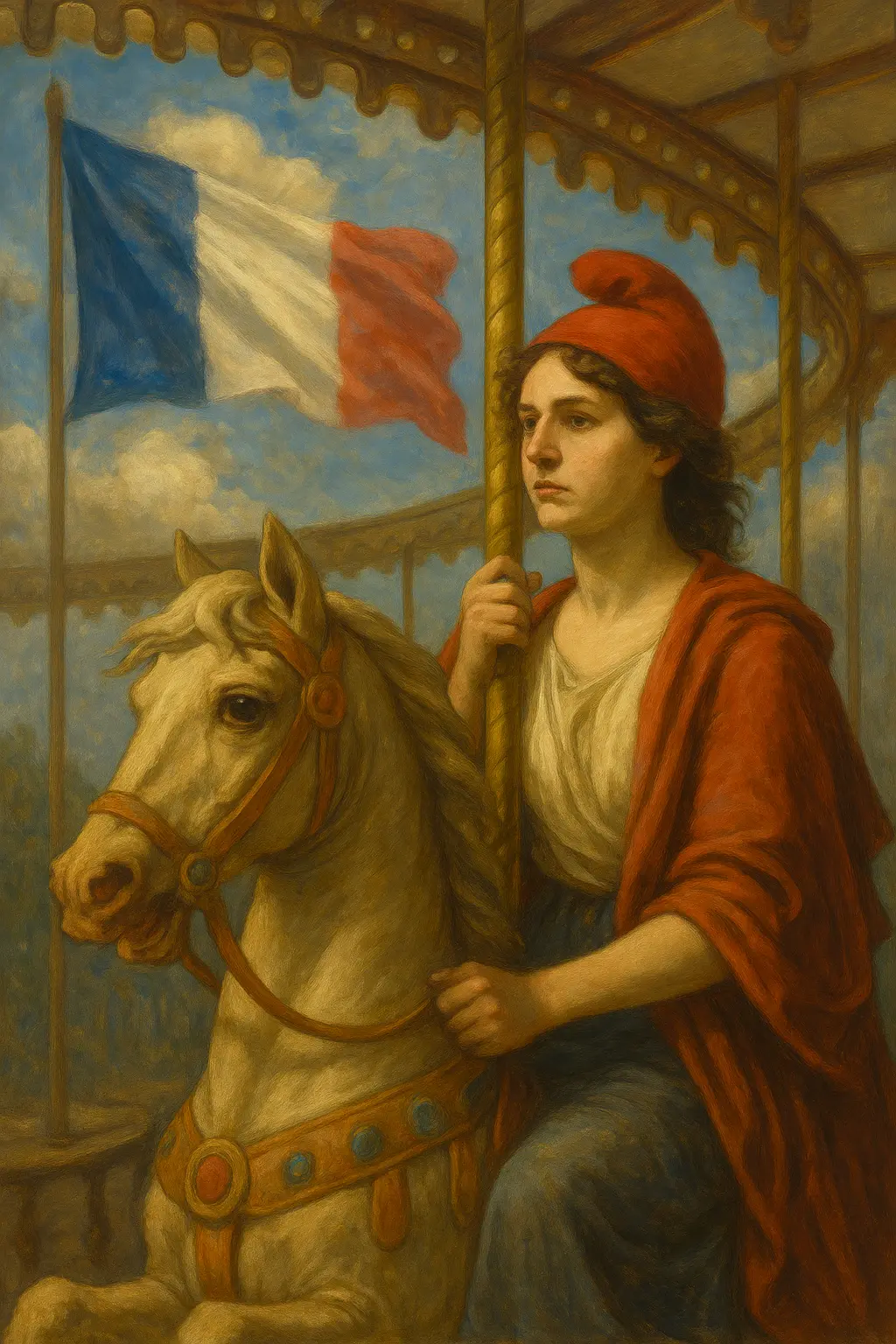
Even earlier, in my concept album Carnival Dream, the image of the carousel appeared — a ride that spins endlessly, beautiful yet haunting. A metaphor for comfort that traps, motion that deceives. A perfect symbol for late-stage capitalism, yes — but also for spiritual stasis.

The carousel is the false wheel.
The revolution that doesn’t transform you.
The spin that pacifies, not liberates.

I’ve spent years trying to tell the difference between the two.


Media as Mirrors of the Wheel

Certain stories don’t just resonate — they recognise me.
They echo the same mythic structures I’ve been trying to name.
Each of them an iteration of the same truth:
The wheel turns. The self resists. The spiral continues.

Lexx – “The wheel, it turns…”

Grotesque, surreal, and unashamedly absurd, Lexx speaks in the language of cosmic entropy.
But buried within its chaos is a line that has echoed through my bones:

Even in nonsense, there is pattern.

The Prisoner – Escape Within the Loop

A man stripped of name, forced to conform. The Village becomes a paradise-shaped prison, and Number Six fights not with fists, but will.
Its symbol? A penny farthing bicycle.
A wheel that pretends to move forward.

Tron – The Sacred Grid

Tron revealed to me that code has soul. That even the digital realm can become mythic.
My Sanctuary OS, my Life Grids, my 8-bit sigils — all trace back to the glowing geometry of that world.

Blade Runner – What Is Real?

A masterpiece of blurred identity, synthetic humanity, and inner rebellion.
My band Into the Ether owes much of its soul to Blade Runner.
We opened our early shows with Vangelis’s score.
We wrote a track called Electric Sheep.

This wasn’t homage. It was alignment.

Revolver – Psychedelic Spiral

Revolver by The Beatles isn’t just an album. It’s a psychospiritual spiral.
It asks: what happens when time folds? When the mind turns inward?
It gave me permission to see art as looped revelation.


The Music of the Myth

If stories are symbols, music is ritual.

Carmina Burana – O Fortuna

Fate as music. The wheel as choir.
Played as Ozzy Osbourne’s entrance — not by coincidence.
The song begins and ends the same way. The wheel completes.
The gods are watching.

Mahler’s Resurrection

A symphony of death and transcendence.
From funeral to hallelujah, Mahler teaches that true revolution isn’t always external — it’s the quiet remaking of the soul.

Nobuo Uematsu – The Orff of Pixels

The Final Fantasy composer builds digital cathedrals with his sound.

  • One-Winged Angel
  • Dancing Mad
  • Liberi Fatali

Each is a ritual. Each channels the same force as Carmina Burana:
Judgment, transformation, return.


Closing Reflections: The Wheel Turns, and I with It

I didn’t set out to write this. I didn’t plan to look at Bastille Day — my birthday — as anything more than a coincidence. But the symbols found me.
They assembled around me like a ritual I hadn’t consciously designed.

  • A prison falls in 1789
  • A child is born in 1982
  • A concert named Back to the Beginning plays O Fortuna
  • A minor-key birthday song whispers from track 14 of Transcendence
  • A carousel spins
  • A prisoner resists
  • A dead man recites prophecy

And I — turning 43, completing another revolution around the sun — feel the rumble in my bones.
Not as noise. Not as chaos. But as recognition.

I am not outside the system.
I am not outside the myth.
I was born of the revolution — a child of the wheel.

And this year, I don’t just mark my birthday.
I consecrate it.
I claim this revolution — not as history, but as symbol, cycle, and self.

The wheel turns.
The system strains.
The music builds.
And I — quietly, resolutely — turn with it.

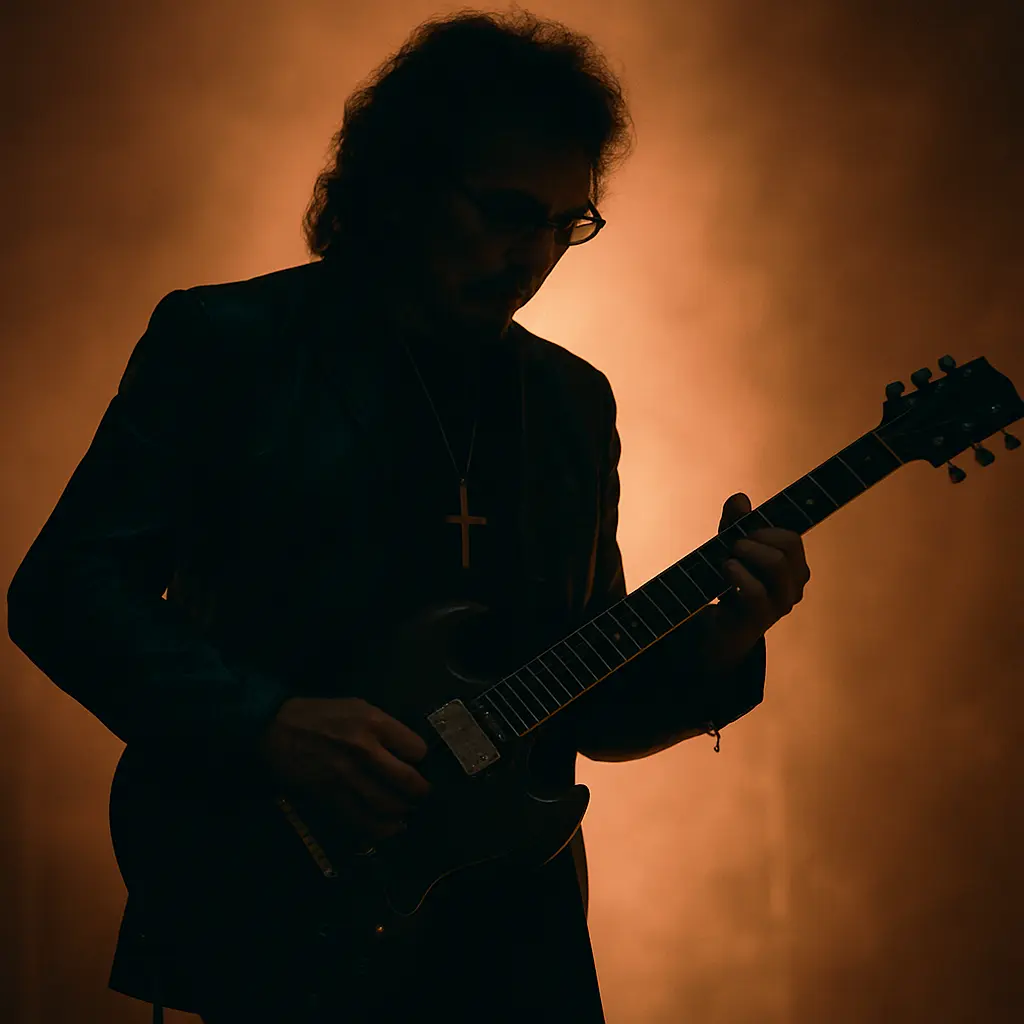
The Sound of Graceful Thunder – A Tribute to Tony Iommi

I have a great deal of respect for Tony Iommi. Not just because he invented a genre — though let’s not brush past that too quickly — but because of how he did it, and who he continues to be.

Iommi is the architect of doom, the father of the riff. But more than that, he’s one of the most down-to-earth rock icons I’ve ever witnessed. There’s no ego in his playing. No posturing. Just pure love for the guitar, expressed with grace, power, and an unmistakable sense of tone and timing. His playing is heavy, not just in sound, but in soul.

My journey with Black Sabbath began like many of my generation — online. Late 1990s or early 2000s, downloading mp3s from Napster, not even sure what I was about to hear. And yet, the moment those dark, slow riffs hit, even through compressed files and computer speakers, I felt it. Sabbath didn’t need hi-fi to shake you — they existed in pure riff form, demanding to be heard.

Not long after, something even more personal happened: my dad gave me his original vinyl copy of Black Sabbath — their debut album — the very same one he bought when Sabbath first emerged. That record became more than just an object. It was a shared artifact, holding decades of reverence. Every scratch in the vinyl felt like part of a legacy now passed on.

In 2005, I saw Black Sabbath live for the first time — and not just anywhere. It was at the Aylesbury Civic Centre, an incredibly intimate venue, especially for a band of their stature. I shared that night with my dad and my brother, and the intimacy of the performance made it feel like Sabbath was playing directly to us. A few weeks later, the contrast was stark — we saw them again at Download Festival, this time in front of a massive crowd. Yet even on that enormous stage, the same energy pulsed through. It was less about scale and more about truth. Sabbath always deliver the truth.

In 2023, my girlfriend and I went to see the opening night of ‘Black Sabbath – The Ballet’ in London — a surreal, genre-fusing experience in itself. The juxtaposition of ballet and doom metal shouldn’t work on paper, but it did. Deeply. It was theatrical, poetic, and profoundly moving. The music of Sabbath, reinterpreted through movement and form, felt like watching thunder take shape.

Then came the surprise. Tony Iommi himself stepped onto the stage for the climax.

We were sitting in the second row — second row — and suddenly, the music folded back into its origin point. There he was: the man who wrote the soundtrack to so many people’s lives, quietly commanding the stage. When our eyes met, even briefly, it felt like a personal acknowledgment. Not just of our presence, but of everyone who’s ever connected with the frequencies he’s sent into the world.

That wasn’t the only moment my girlfriend and I shared over Sabbath. Another cherished memory: the two of us curled up, watching a concert video from their ‘The End’ tour. We listened through my Sennheiser HD800s headphones and Schiit Valhalla 2 tube amp — letting the tone soak into us, every nuance. It wasn’t just watching a performance; it was a private, reverent listening ritual. Sabbath as communion.

That night stayed with me. It still does.

But even that wasn’t the pinnacle. That came when I saw Black Sabbath perform their final ever show, ‘Back to the Beginning’ — the end of an era. There was a weight in the air that night, a kind of reverent silence between songs, as if everyone in the crowd knew they were witnessing something historic. And in the middle of it all, there was Tony. His playing that night didn’t just sound good — it sounded final, essential, eternal. Every note was oozing with soul and history. He wasn’t just playing riffs — he was channeling decades of meaning through his fingers. Watching him perform in that context, I felt the full depth of what he gives to the music. It wasn’t just sound; it was legacy embodied. And as I’ve been working on my own playing — particularly learning and revisiting “Iron Man” — I’m realising just how expressive Tony’s playing truly is. The subtleties are everything. A little side-to-side vibrato. Letting the chord decay all the way down, with just a whisper of slide noise. Palm muting not for silence, but for tension. These aren’t flashy tricks — they’re soulful choices. They speak of someone who feels every note.

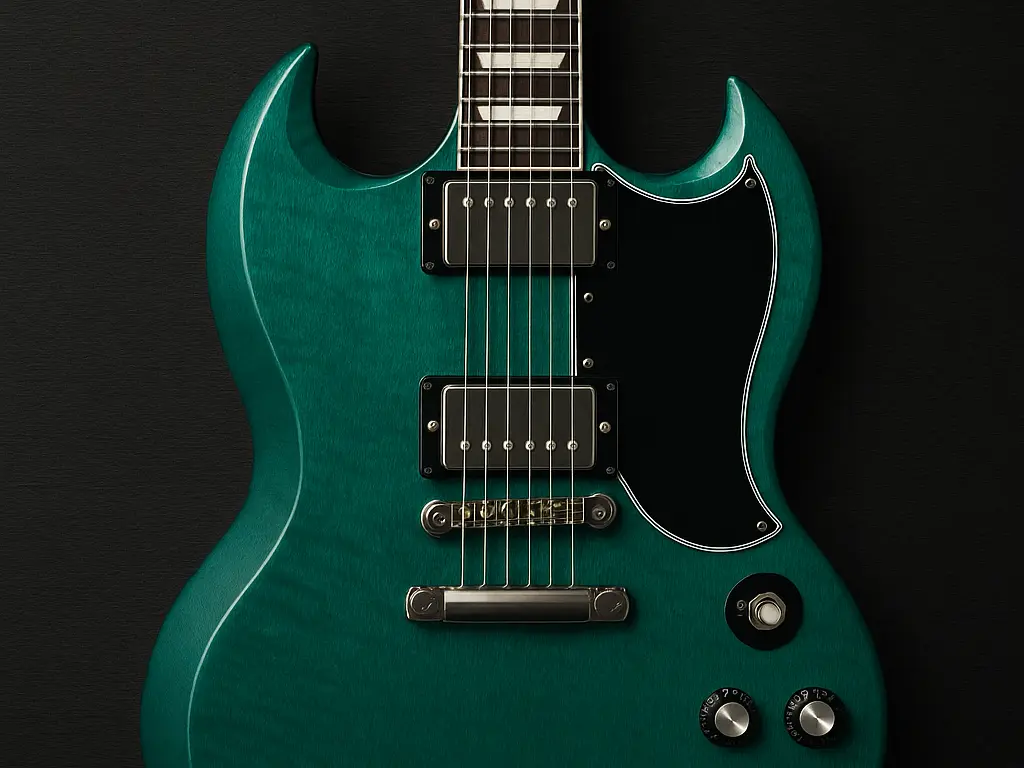
I can feel myself learning to listen, not just play. To make the guitar breathe. That, to me, is the spirit of Iommi. And every time I pick up my SG, it’s with a little bit of that spirit in my fingers.

Tony Iommi didn’t just invent a sound. He also overcame what could have been a permanent wall between him and his instrument — losing the tips of two fingers on his fretting hand in an industrial accident. For most, that would have meant the end of a dream. But for Tony, it became the beginning of a new path. He crafted homemade prosthetic fingertips, adjusted his technique, and in doing so, created a new kind of sound — one that shaped a genre. That story is more than inspiring — it’s a testament not only to his love for guitar and music, but to his indomitable spirit. It tells you everything you need to know about who he is, and why his playing carries the weight that it does. He proved that sound can carry soul without screaming for attention. That resilience, authenticity, and sheer love of music can resonate louder than any amp.

This is why I got an SG. This is why I play.

And this is why, when I think of guitar heroes, I don’t think of the fastest or flashiest. I think of the quiet architect of thunder, standing center stage — no ego, no flash — just grace, tone, and fire.

Thank you, Tony.

The Age-Old Question: Why Do Guitarists Always Want Another Guitar?

It’s a running joke in the music world—guitarists always want just one more guitar. To outsiders, it might seem like indulgence or even madness. But ask any player, and they’ll tell you: there’s always a reason. Or at least, a feeling. So what is it about guitars that makes them so addictive? Why do even players with ten instruments feel like something’s missing?

Let’s unpack it.


1. Tone Variety = Expression Variety

Every guitar sounds and feels different. And for a guitarist, that means it changes the way you play.

  • A Strat encourages subtle phrasing and clean dynamics.
  • A Les Paul delivers weighty, sustained power.
  • A Telecaster snaps and twangs in a way that begs for rhythmic nuance.
  • A hollowbody invites you into clean jazz voicings or ambient washes.

Even two identical models can feel different in the hands—due to weight, neck profile, finish, or even just vibe. Guitars aren’t just tools—they’re muses. And sometimes, you need a new muse.


2. Each Guitar is a Palette

Just like painters use different brushes for different textures, guitarists use different guitars for different tones.

  • That P-90 SG for raw, punky rhythm.
  • A Burstbucker Les Paul for creamy, sustaining leads.
  • A Stratocaster for sparkling clean tones.
  • A baritone for dark, cinematic layers.

Owning multiple guitars doesn’t feel like excess. It feels like owning a range of voices. And in the studio—where tones layer and need to occupy distinct sonic spaces—variety is essential.


3. Guitars Represent Potential

Buying a new guitar often feels like buying a new you.

Even if it’s partly an illusion, it feels real. A new guitar is like a time capsule of hope, creativity, and untapped ideas. And for many, that’s a powerful emotional driver.


4. Guitars Are Comfort Objects

Beyond tone, guitars are physical companions. The shape against your body, the neck in your hand, the subtle vibrations as you play—they’re tactile, grounding, and soothing.

For many neurodivergent players (and plenty of others), guitars offer a regulated sensory ritual. The act of holding and playing becomes a safe, meditative space.

And some guitars? They just feel like home.


5. Sometimes… It’s Just a Rabbit Hole

Let’s be honest. The modern guitar world—YouTube demos, signature models, endless gear forums—creates an infinite treadmill of desire. There’s always a new feature, finish, or tonewood to obsess over. And some guitarists just enjoy the chase.

  • Searching for “the one.”
  • Filling tonal gaps.
  • Rewarding themselves.
  • Just… having fun with it.

And that’s okay, too.


Final Thoughts

Wanting another guitar isn’t just about having more gear. It’s about feeling, expression, possibility, and sometimes nostalgia. It’s about bonding with objects that help us articulate emotions too subtle for words.

Yes, sometimes it’s just capitalism wearing a flamed maple top. But more often, it’s about a deep, human desire to discover new corners of ourselves.

So next time a guitarist says they need another guitar? Don’t roll your eyes. They’re chasing something real—even if they can’t quite explain it.

(And yes… they probably will buy another one.)