The Hollow Game: When Effort Meets Editable Reality

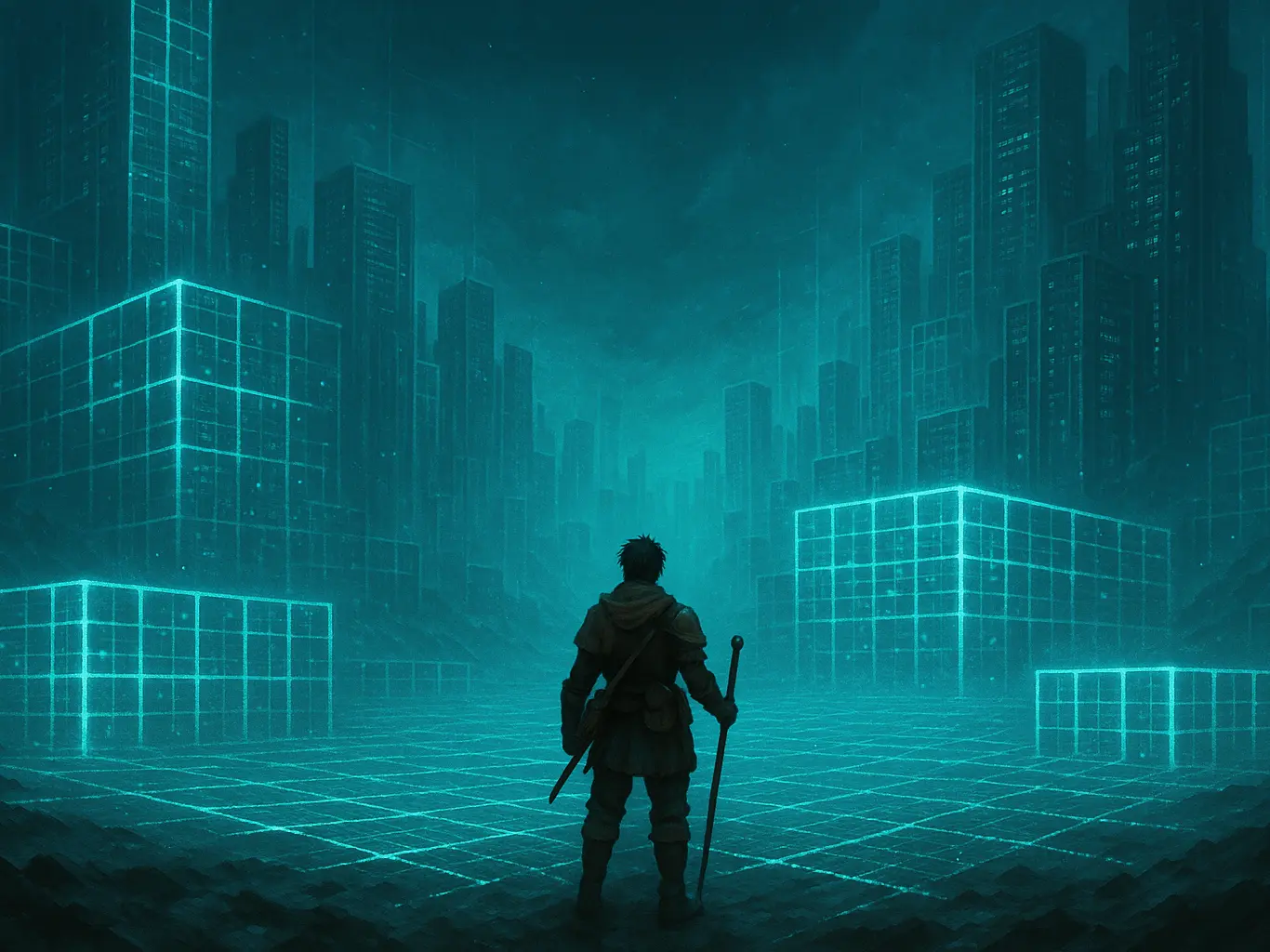
A lone adventurer in a cloak stands on a glowing digital grid, holding a sword and staff. Towering server-like structures and illuminated data cubes stretch into the distance, creating a surreal fusion of fantasy and cybernetic landscape bathed in teal light.

A World That Never Ends

Before World of Warcraft dominated the scene, before online gaming became ubiquitous, there was Final Fantasy XI, one of the earliest major MMORPGs (Massively Multiplayer Online Role Playing Game) to blur the lines between game and world. I remember how the idea of it seized something in me even before its release. Though I lived in the UK, I imported the US version the moment it became available, along with the special hard drive add-on for my American PlayStation 2, just so I could be part of it from day one.

It was not just a new game. It was a new model of what games could be. Suddenly, instead of a finite quest to be completed, I found myself inside a living, breathing world. A world that grew over time, filled with other real people. A place where my character was not simply a tool to “beat the game” but an avatar of long-term investment.

It changed the landscape of gaming in my head. There was no final “you win” screen. There was only progression, always something new to achieve, a job level to grind, a rare item to chase, a skill to refine. Every hour spent felt like I was building something lasting. Each goal achieved hit me with the unmistakable reward of earned dopamine.

I played loyally for eleven years. Eleven years of effort, of routine, of building meaning inside a system that was never meant to end. Until one day, it struck me that while I had been grinding in-game, I had been neglecting another kind of progress, the one in real life.

That moment of awareness cracked something open. And in the years since, a quiet, deeper thought has stayed with me:

And so began a slow unraveling of faith, not in the game, but in the very nature of systems we pour ourselves into.

I want to be clear, this is not a criticism of Final Fantasy XI. I have nothing but fond memories of the time I spent in Vana’diel, and I still feel a certain warmth when I think back on it. For me, it was more than a game. It was a formative experience that showed me what interactive worlds could become.

What follows is not about faulting the game itself, but about exploring a thought that began with it: the fragile, almost surreal nature of achievement in systems where meaning depends on someone else’s code.


The Quiet Dread

As much joy as Final Fantasy XI brought me, there was always a subtle, nagging awareness in the back of my mind. No matter how many hours I invested, no matter how many victories I earned through persistence and effort, every achievement ultimately existed at the mercy of a database.

All the battles fought, all the rare loot claimed, all the hard-earned levels, they felt monumental when I achieved them. But at the same time, I knew, at least on some level, that the same result could be produced in an instant by someone with access to the code. A single byte changed, a line of data edited, and what took me months or even years could appear as if it had always been there.

That thought never dominated my experience, but it haunted the edges of it. A quiet dread that whispered:

And while that sense first came to me in the artificial world of a game, the longer I sat with it, the more I began to feel its resonance in real life too.


Reality as Interface

The more I reflected on that uneasy truth from playing Final Fantasy XI, the more I began to notice echoes of it in the so-called “real world.” Our society presents us with achievements, milestones, and systems of value that feel as solid as granite, until you peer behind the curtain and realise how fragile, or even arbitrary, they really are.

Take careers. You can spend decades working your way up, accumulating titles, qualifications, and prestige, only for an institution to collapse, or for a shift in economic winds to render your expertise suddenly obsolete. One change in policy, one boardroom decision, one entry in a digital record, and years of effort can be redefined overnight.

Take money. We treat it as the universal metric of value, yet it is nothing more than numbers in a system most of us will never touch directly. Accounts can be frozen, balances can evaporate with inflation, currencies can crash, all while the deeper structures of power that govern them remain invisible.

Even identity itself can fall prey to this fragility. Credit scores, medical records, citizenship documents, so much of what makes up our “official self” exists only as data fields in a system. All it takes is an error, an exploit, or a shift in bureaucratic rules to alter who we are permitted to be.

The more I thought about it, the more I began to see:

But just like in a MMORPG, there are those with access to the code beneath the surface. And for them, what feels monumental to us may be nothing more than a line in a database.


Who Owns the Code?

In Final Fantasy XI, it was obvious who owned the code: the developers at Square Enix. They designed the rules, patched the glitches, introduced new content, and decided what was valuable within the world. My job as a player was to operate within the framework they provided.

But in the real world, the question of who “owns the code” is far murkier.

Governments write laws and policies, redefining what is legal, valuable, or even real. Corporations set the standards of employment, consumption, and credit. Financial institutions hold the levers that determine who can participate in the economy, and who is locked out. Media platforms curate the flow of information, amplifying some voices while muting others.

These systems are presented to us as neutral, inevitable, or even natural, yet they are as artificial as any game engine. They are designed, maintained, and, crucially, modifiable by those with access.

And just like game developers, those with control can decide:

  • What counts as an “achievement.”
  • Who gets rewarded.
  • Who gets excluded.
  • And when the rules suddenly change.

To live in society is to be a player in someone else’s world. We may grind away at goals that feel monumental to us, but ultimately, the meaning of those goals depends on recognition from structures outside our control.

It raises a sobering question:


The Hollow Game in Society

Once you see the pattern, it becomes difficult to unsee. The “hollow game” is not confined to fantasy worlds. It is baked into the very structures of modern society.

In capitalism, the grind is relentless. We are told to work hard, climb ladders, and accumulate wealth, yet the distribution of reward is rarely tied directly to effort. The system is designed so that some climb easily while others spend their lives grinding without ever escaping the starting zone. And just as in an MMO, the value of our currency, the cost of our goods, even the worth of our labor, can shift overnight with no input from us.

In academia, years of study and dedication may earn you a degree, but its value is only as stable as the institution’s reputation, the economy’s demand, or the government’s shifting criteria. A whole career path can be invalidated not by lack of effort, but by someone higher up rewriting the rules.

Even social status plays by the hollow game’s logic. Reputation, followers, clout, all can be accumulated, but just as easily stripped away by the invisible hand of algorithms, policy changes, or a sudden shift in collective opinion. You may invest years in cultivating a “profile,” only to watch it vanish in the blink of an update.

And underlying it all is the same uneasy truth I once felt in Vana’diel:

We live, in other words, inside someone else’s code.


The Illusion of Awareness as Power

My years playing Final Fantasy XI taught me something I did not fully understand at the time: the difference between what feels real to us and what is defined by the system. The grind, the friendships, the victories, those were mine. But the framework that measured, validated, or erased them was never mine to control.

The same is true in life. We live within systems that hand out points, titles, currencies, and reputations as though they are the bedrock of reality. But behind every number is a database, and behind every database is a hand on the code.

And perhaps that is the cruelest part. Even when we see the hollowness of the game, most of us keep playing anyway. We grind for points we know are fragile, chase achievements that could be rewritten at a keystroke, and cling to meaning that might never have been ours to begin with.

Maybe that is what it means to live in a hollow game: not that nothing matters, but that meaning is always conditional, always corruptible, always subject to erasure.

I’m Tired of Being Tired

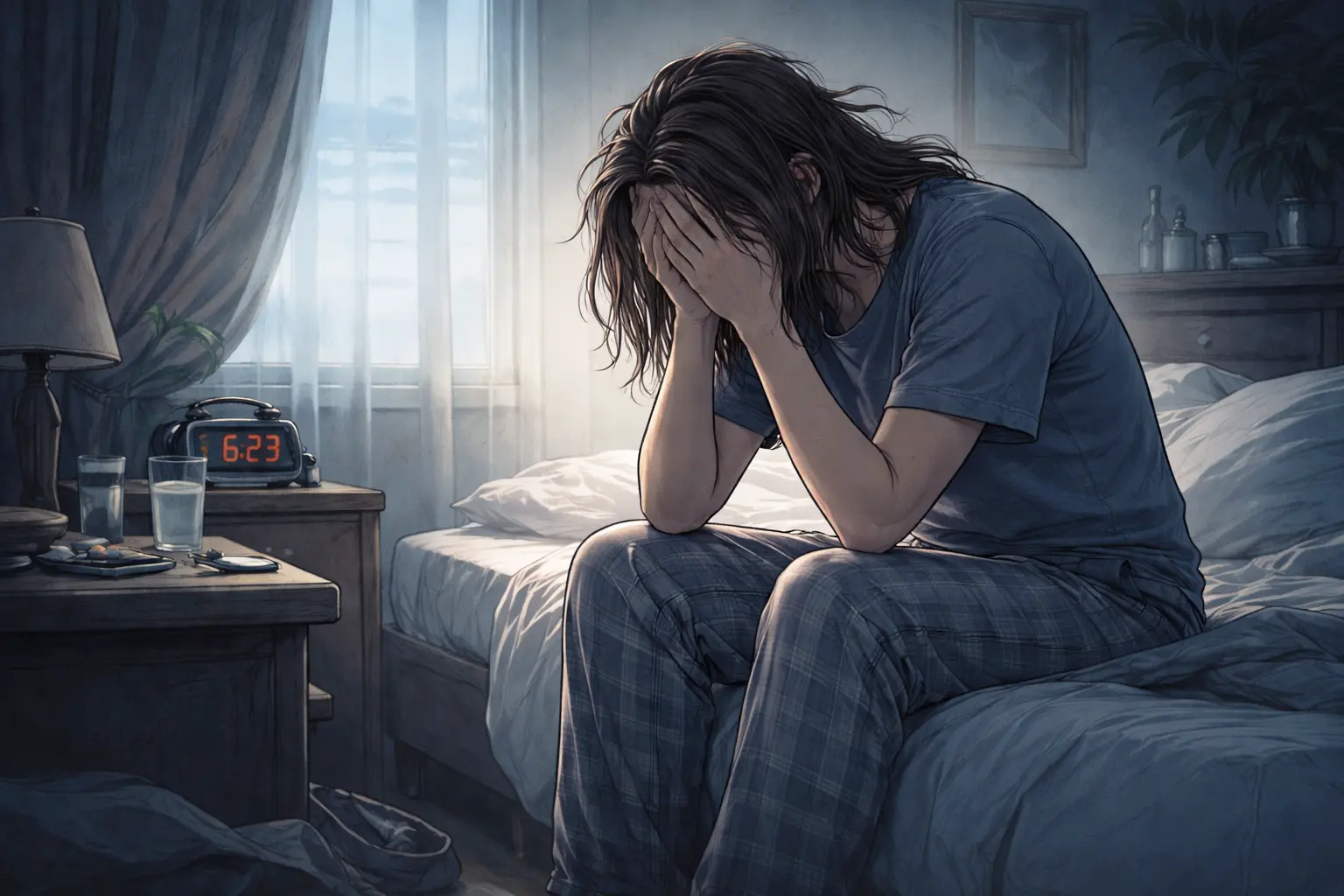
Illustration of a long-haired man sitting on the edge of an unmade bed, leaning forward with his face covered by his hands in a dimly lit bedroom at dawn.

One morning last month, I woke up foggy-headed, sleep-deprived, and emotionally worn out before the day had even started. I felt like I was coming down with the flu: achy, heavy, slow. I just wanted to cancel a dentist appointment, but even that became a drawn-out ordeal of waiting for phone lines to open, phoning, queueing, and managing social expectations. And when I finally got through, I was told that I should give more notice next time. That one short sentence landed like a weight. Not because it was rude, but because it reminded me that in this world, even exhaustion must be scheduled politely.

But this wasn’t about a dentist appointment. It never is. This was about everything.

I was tired of being tired.

Not sleepy tired. Not lazy tired. I’m talking about the deep, ambient fatigue of living in a world that constantly asks more of you than you have to give, then punishes you for not delivering. A world where empathy is rationed, where the illusion of stability depends on the silence of those who are struggling, and where rest is treated like an indulgence rather than a human need.

Housing insecurity. Chronic health issues. Endless bureaucracy. The guilt of receiving welfare benefits. The pressure to perform gratitude while navigating systems that barely see you as human. I carry these weights quietly most days, but some days they all speak at once.

And then comes the guilt for even feeling it. The voice that says: “Others have it worse. Be thankful. Don’t complain.” But that voice is part of the problem. It doesn’t come from compassion. It comes from conditioning. From a culture that sees resilience as moral currency and suffering as a contest.

But I am not in competition with anyone. I am simply tired.

I don’t want pity. I want space. I want systems that don’t require people to collapse in order to be heard. I want fewer apologies for being overwhelmed. I want to live in a world that doesn’t confuse survival with success.

So yes, I cancelled a dentist appointment that day. I did it politely. I even felt bad about it.

But what I really want to cancel is the idea that my exhaustion is a personal failing. It isn’t.

It’s my body, my mind, my soul, telling me to recuperate.

And I’m not the only one hearing that message.

The Idiots Aren’t the Problem: Misdirected Misanthropy in an Engineered Divide

Let’s start with something raw and uncomfortable:

Not because I want to. Not because it makes me feel good. But because it often feels true — especially in a world flooded with shallow opinions, regurgitated slogans, wilful ignorance, and a collective refusal to look beyond the surface of anything.

But here’s the deeper truth—one that hurts far more:

And if we don’t understand that, we risk becoming exactly what the system wants us to be: angry, superior, divided.


Weaponized Disdain

There’s a quiet kind of relief in misanthropy. It gives you someone to blame.
You look around and see a world on fire—and people watching it burn while arguing about which brand of lighter fluid to buy next.

It’s tempting to direct your rage downward:

  • “Why won’t they wake up?”
  • “Why do they fall for propaganda?”
  • “Why don’t they care?”

But what if they were trained not to?

What if distraction, ignorance, and tribalism aren’t signs of stupidity, but symptoms of psychological warfare?


The Architecture of Blame

Everything about modern society is designed to fragment us.
We’re not just encouraged to fight amongst ourselves—we’re engineered to.

  • Left vs Right
  • Poor vs poorer
  • Neurodivergent vs “lazy”
  • Ethical vs indulgent
  • Educated vs “sheeple”
  • Every micro-identity in endless battle for moral superiority

And while we tear each other apart, the architects of our suffering float untouched above the fray—untouchable, unblamed, and richer by the minute.


The Illusion of Choice

Yes, people parrot nonsense. Yes, they deny science. Yes, they post horrifying things on the internet.

But behind every foolish comment is a person shaped by years of manipulation:

  • An underfunded education system
  • Stress-induced tunnel vision
  • Algorithmic feedback loops
  • Culture soaked in shame, punishment, and performance

So when we mock the “idiots,” we’re often mocking the symptoms of systemic collapse.
And in doing so, we absolve the system of responsibility.


Awake, and Alone

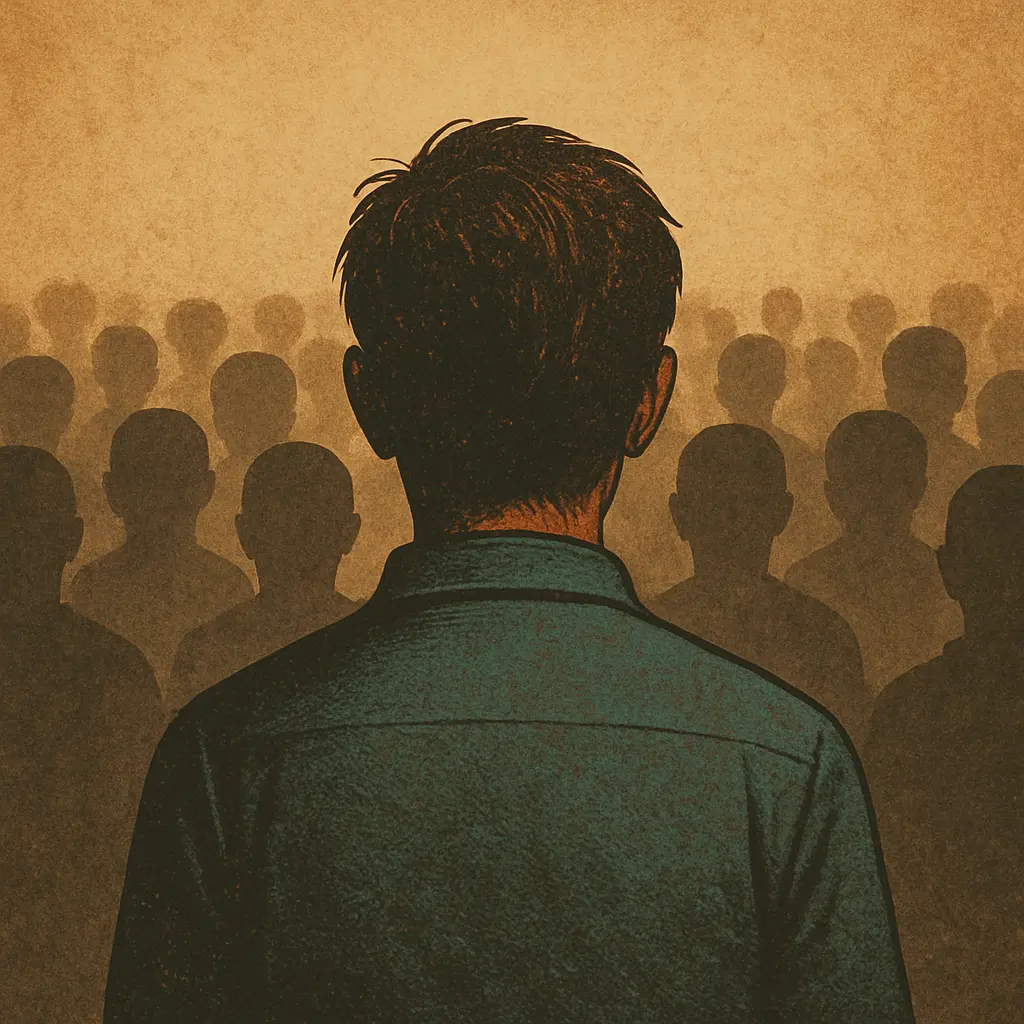
Those of us who see the manipulation clearly can feel isolated. It’s lonely to be awake in a room full of sleepers. The temptation to feel superior is strong—especially when your insight is met with mockery or silence.

But superiority is a trap.

It doesn’t lead to change. It doesn’t inspire connection. It only deepens the divide.

And worst of all? It makes you easier to control.

Because if you believe everyone else is the problem, you’ll never reach for collective liberation. You’ll wall yourself off. You’ll give up.


The Real Enemy

So let’s be brutally clear:
The enemy is not the unaware individual.
The enemy is the machine that benefits from that unawareness.

The corporations, politicians, media empires, and algorithmic puppeteers who:

  • Profit from ignorance
  • Weaponize distraction
  • Silence nuance
  • Turn suffering into spectacle

These are the forces that deserve our outrage.
Not the broken, numbed, hypnotised humans trapped beneath them.


Reclaiming Compassion Without Losing Fire

This isn’t a call to softness. It’s a call to precision.

We don’t need to stop being angry—we need to point our anger in the right direction.

That means:

  • Calling out manipulation, not just compliance
  • Critiquing systems, not just symptoms
  • Building solidarity across the fractures we’ve been taught to defend

Because the truth is: we’ve all been trained.
Some of us just noticed sooner.

The Shadow of the Mob: How Cancel Culture Reveals Humanity’s Repressed Self

Introduction

Cancel culture is a loaded term—invoked with fury by some, defended as justice by others, and dismissed as overblown by many. But what if we viewed it not as a purely political or cultural phenomenon, but as a psychological one? From a Jungian perspective, cancel culture may be less about individual accountability and more about the collective shadow—humanity’s unconscious darkness—emerging in a digital age that doesn’t yet know how to process it.

What if the mob isn’t merely punishing transgression, but projecting its own repressed qualities onto a convenient scapegoat?

The Collective Shadow and the Archetypal Scapegoat

Carl Jung proposed the concept of the shadow—the unconscious repository of traits we deem undesirable, immoral, or shameful. What we refuse to integrate within ourselves doesn’t vanish; it festers in the dark and seeks expression, often through projection. On a societal level, this becomes a collective shadow, surfacing as we displace our unacknowledged inner material onto others.

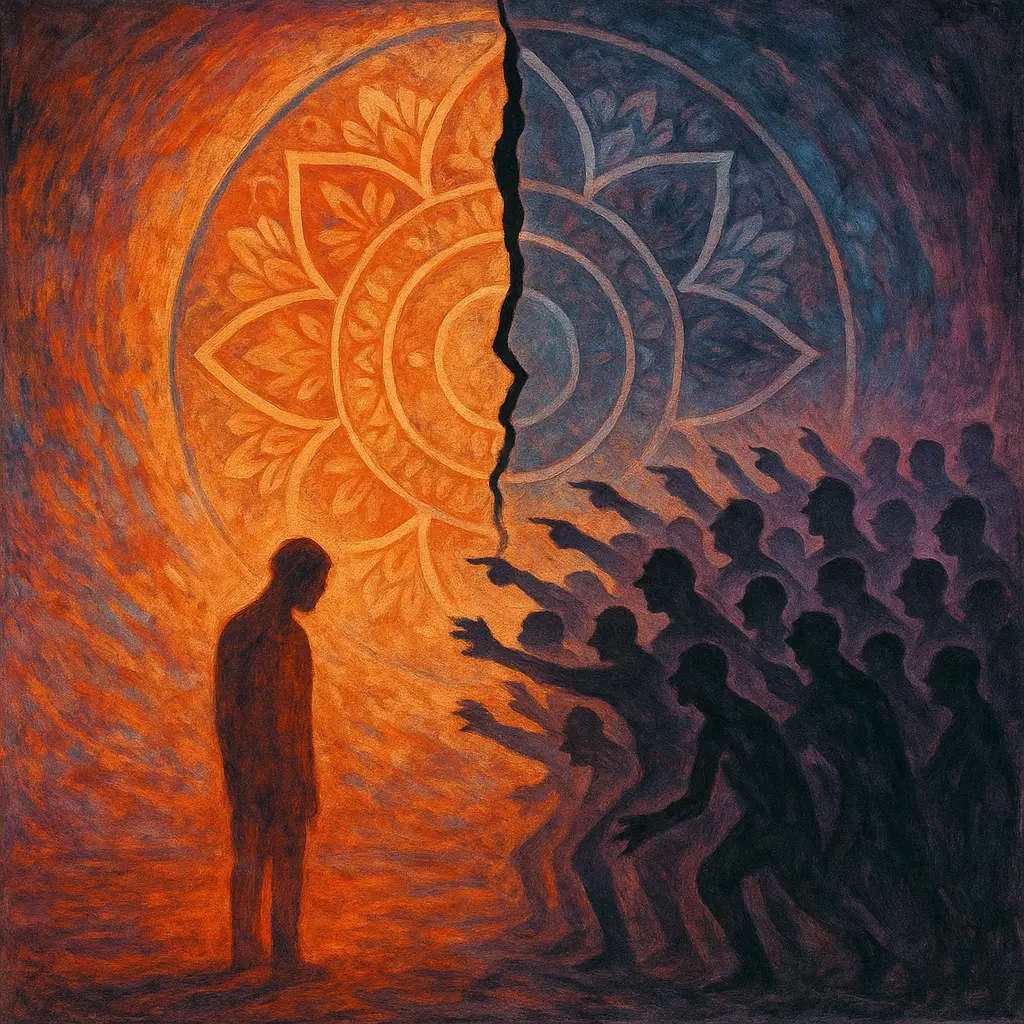
The target of a cancellation—a public figure, a peer, an online stranger—often becomes an archetypal scapegoat. In myth and ritual, the scapegoat bears the sins of the tribe and is sacrificed or exiled to restore social equilibrium. Today, the ritual takes place online. The digital firepit is the comment thread. The sin is moral impurity.

But the fervor? That’s religious. Archetypal. Shadow-fueled.

Why Now? The Rise of the Unprocessed Psyche

We live in an age of hyper-visibility and deep fragmentation. Everyone is their own brand, their own broadcaster, their own PR department. Meanwhile, the tools for authentic psychological integration—community, ritual, introspection—have eroded.

Cancel culture thrives in this vacuum. It provides a synthetic moral high. A hit of certainty in a morally ambiguous world. A way to feel good without having to face the disturbing truth: that we, too, contain capacity for cruelty, ignorance, prejudice, and contradiction.

Instead of saying “This reminds me of something in myself I haven’t dealt with,” the unconscious says, “That person is disgusting. Get rid of them.”

The Performance of Virtue and the Fear of Exile

Much of cancel culture is driven by fear—of being next. As a result, virtue is often performed, not lived. We denounce to demonstrate that we are clean, correct, on the right side of history. It’s the modern equivalent of burning a witch to prove you’re not one.

This makes it difficult to speak honestly, to question the herd, or to show nuance—qualities vital for a psychologically healthy society. If one mistake marks you as irredeemable, then redemption as a concept is dead. Growth is irrelevant. All that remains is punishment.

But the shadow requires growth. It demands confrontation, not exile.

Cancel Culture as a Mirror

If we zoom out, cancel culture may be seen as an evolutionary pressure—a flawed but inevitable attempt by the collective psyche to regulate moral boundaries in a new digital terrain. It points to real traumas, power abuses, and social injustices that need redress.

But when we cancel rather than converse, when we exile rather than integrate, we repeat the very cycles we claim to oppose. We become the tyrant we sought to dismantle.

In this light, cancel culture is not the problem—it is the symptom of a deeper, unresolved issue: the collective failure to do shadow work.

Toward a New Integration

If cancel culture is a symptom of shadow repression, then the cure isn’t more silencing. It’s more integration.

This means:

  • Encouraging inner reflection, especially when we feel reactive.
  • Distinguishing between justice and vengeance—they may feel similar, but arise from different places.
  • Valuing growth over purity, recognizing that fallibility is universal, and transformation is possible.
  • Creating space for difficult conversations, where people can be accountable and human.

If humanity is to evolve beyond this recursive purge cycle, we must learn to see our enemies not only as threats, but as mirrors. Not to excuse harm—but to understand where it originates, in them and in us.

Conclusion

We are all being asked to grow up psychologically. The digital age has exposed us to ourselves in ways no previous generation has had to face. The question isn’t whether cancel culture is justified—it’s whether we are ready to look into the mirror it holds up and ask: What am I seeing in them that I refuse to see in myself?

Until we can answer that, the shadow will keep casting new scapegoats for the mob to burn.