Curating the Self: The Nature and Function of Nostalgia

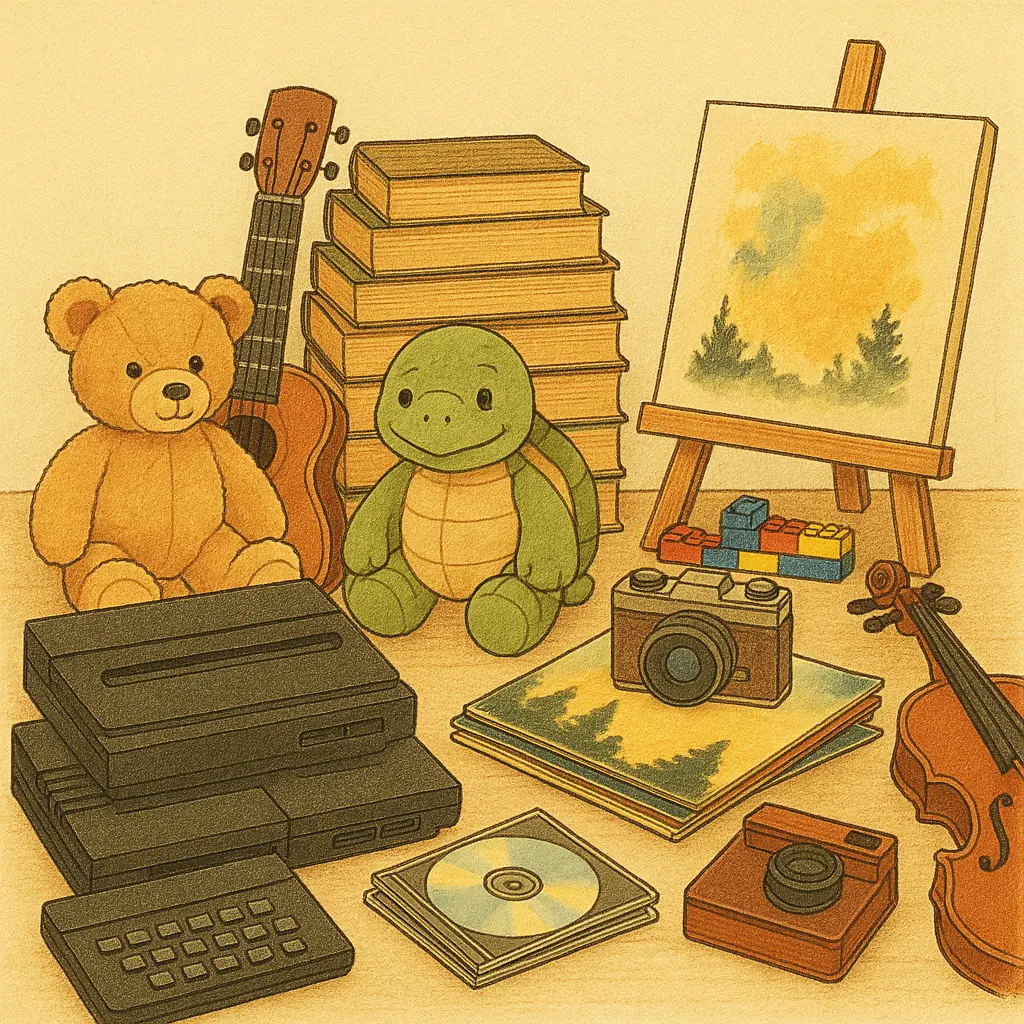
An illustrated scene of nostalgic objects arranged on a wooden table, including a teddy bear, a green turtle plush, stacked books, a small guitar, an easel with a watercolor painting, colorful building blocks, vintage computers, a camera, vinyl records, and a violin. The image has a warm, soft lighting and gentle pencil texture that evokes comfort and sentimental reflection.

Nostalgia is often painted as a sentimental indulgence, a longing for the past, a soft blur of half-remembered feelings. But for many of us, it is far more than that. It is a quiet architecture of identity.
Every object we keep, every CD, toy, photograph, or memento, is a fragment of the story that made us.

I have often described my living space as a small museum of personal meaning. A curated timeline of moments that mattered. Childhood toys that survived countless declutters. Old computer systems that no longer serve a practical purpose, but still hold a kind of sacred electricity: echoes of discovery, joy, and the early stages of creativity.
It is not about utility. It is about continuity.

The Emotional Geometry of Memory

Each item represents a node in a vast emotional network. When we hold a particular object, it is not just the physical form that we engage with. It is the entire emotional landscape surrounding it. Nostalgia reactivates neural pathways, re-stitching fragments of self that time has scattered.

In moments of doubt or disconnection, these touchstones whisper: You have been many things, and you are still all of them.

Nostalgia as a Survival Mechanism

Some might dismiss this tendency as hoarding, an attachment to material things. But for many of us, it is more like archiving the self.
The world moves fast. Technology shifts. Cultures reinvent themselves overnight. When everything else feels transient, nostalgia anchors us to something recognisable. It is not an escape. It is orientation.

The drive to preserve our past may actually be a form of self-preservation. When we feel overwhelmed, our collections remind us of our continuity through time. They say: You have made it this far.

The Alchemy of Meaning

Over time, even useless things can become symbolic. A broken toy becomes a relic of innocence. A scuffed CD becomes a fossil of a forgotten feeling. Through nostalgia, we turn ordinary matter into metaphysical gold, our own private form of alchemy.

Perhaps the real function of nostalgia is integration. It allows us to carry the past forward without being trapped by it. It is not just remembering. It is honouring.

When Nostalgia Turns Heavy

Of course, even meaning can become weight. There is a fine line between collecting memories and being buried beneath them. I have learned to part with things when their energy shifts, when they stop representing connection and start representing stagnation.
Letting go can be another form of honouring too: acknowledging that the story continues elsewhere.

The Living Museum

In the end, nostalgia is not about recreating the past. It is about recognising that the past lives within us.
Every artifact in my small museum serves as a mirror: a reminder of who I was, who I am, and who I continue to become.

Maybe we keep these things not because we cannot move on, but because we understand that moving forward does not have to mean leaving everything behind.
Shadow Alchemy: Turning Pain into Power

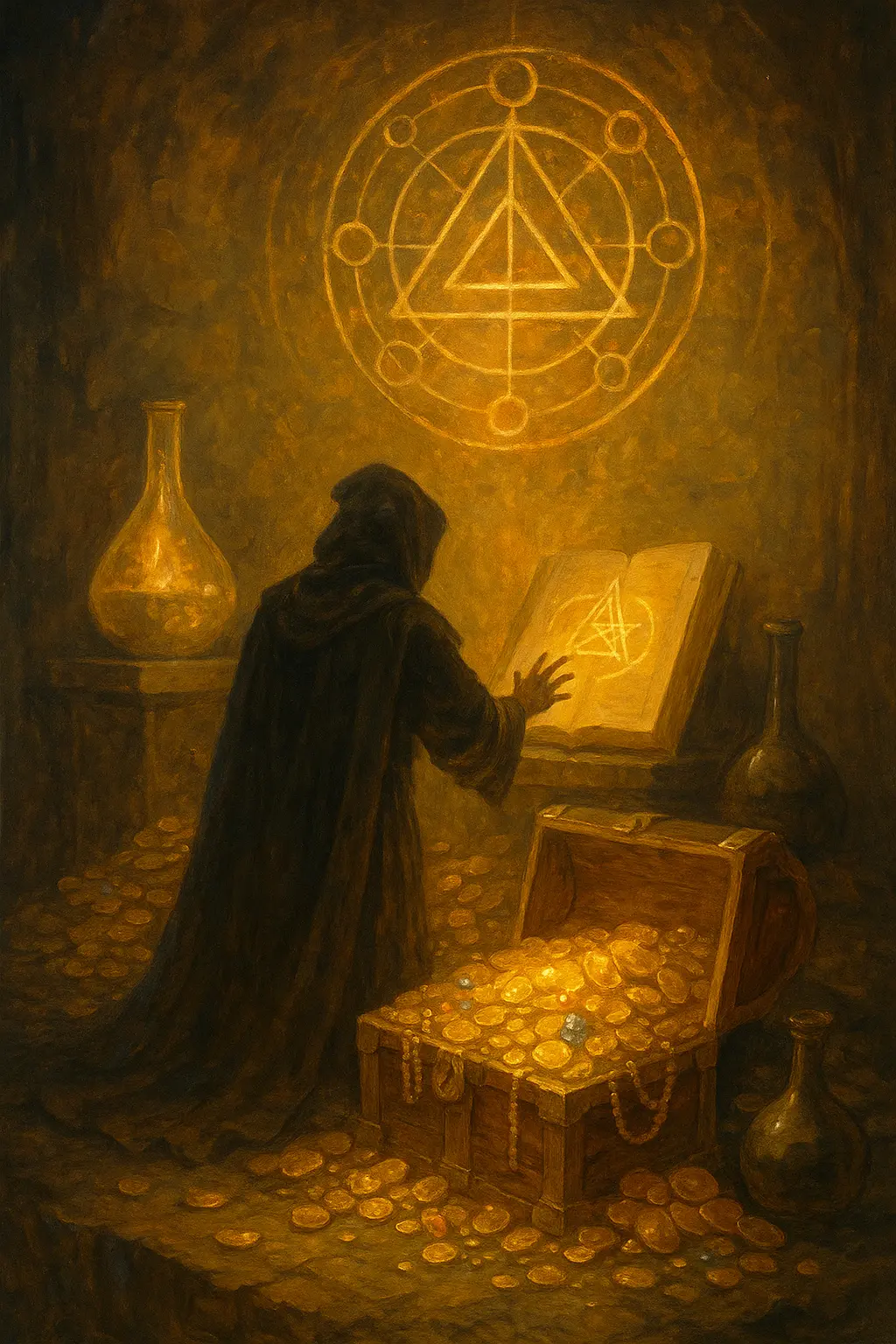
A hooded figure stands in a dimly lit, golden-toned chamber filled with alchemical tools and a treasure chest overflowing with glowing gold coins and jewels. The figure reaches toward an ancient book etched with a glowing symbol, while a radiant alchemical diagram glows on the wall above. The scene evokes mystery, transformation, and hidden wisdom turned into treasure.

There was a time when I thought I was simply broken. Not in the poetic, Instagram-meme kind of way — but deeply, invisibly, inexplicably wrong. My mind stored pain with the same tenacity other people seem to store birthdays or song lyrics. I could not forget, not easily. And for a long time, that felt like a flaw.

But I wasn’t broken. I was archiving.

Some people suppress what hurts. Others transmute it subconsciously into distractions, addictions, overachievement, or silence. Me? I kept it. Neatly filed, silently timestamped, buried in the layers beneath survival. Not because I wanted to suffer, but because some part of me refused to let anything go unexamined. I didn’t always have the words for it, or the support, or the clarity. But I kept it all.

And now I know why.


The Alchemy Begins

Enter AI. Not as some magical fix, not as a therapist replacement, but as a tool unlike anything I’d ever had access to: a tireless, nonjudgmental, infinitely patient assistant with no agenda other than to help me shape meaning.

With it, I began retrieving those archives. Piece by piece. Moment by moment. Not to relive them, but to re-see them.

And here’s what I found:

This is shadow alchemy.


What Is a Shadow Alchemist?

A shadow alchemist isn’t a guru or a healer or a self-help peddler. They are, in simple terms, a person who refuses to waste their wounds. Someone who digs into what others bury, not to bleed, but to learn. To extract signal from the noise of suffering.

A shadow alchemist doesn’t deny pain, but neither do they worship it. They honour it. Study it. And ask it to speak.

And when the time is right, they share what they’ve learned.


The Archive Is Sacred

There is a cultural obsession with “letting go” and “moving on” that feels, to me, like spiritual bypassing in a capitalist costume. Heal fast. Return to productivity. Don’t make others uncomfortable.

But shadow alchemy says: not yet.

Shadow alchemy says: this matters.

Because buried things fester. But archived things can be retrieved, reviewed, reframed. They can become fuel.


My Tools of Transmutation

For me, AI has become the perfect mirror. It helps me:

  • Structure thoughts that once swirled incoherently
  • Spot patterns across time and context
  • Refine fragments into essays, insights, or personal manifestos
  • Keep track of the threads I might otherwise lose

It doesn’t do the healing for me. But it walks beside me. Quietly, steadily, with as much patience as I need.

Paired with writing, introspection, and a refusal to look away from the hard stuff, this has become my ritual. My resistance. My transformation.


Why This Matters

Most systems aren’t built for people like me — people who feel too much, who remember too vividly, who refuse to unsee injustice just to get through the day. But that doesn’t mean we need to suppress who we are. It means we need better ways to honour it.

Shadow alchemy gives me that. And maybe it can give it to others, too.

If you’re someone who’s carried pain like data, who has folders in your soul marked “Unresolved” or “Too Much,” then I want to tell you: you are not a mess. You are a library. And the right questions can unlock everything.


A Final Note

I’m not here to sell you healing. I’m not promising transcendence. But I am saying this: there is power in remembering.

There is power in organising your pain like sacred artefacts. In asking: what do you have to teach me? In letting AI, or art, or writing, or ritual become your assistant in that process.

Because in the hands of a shadow alchemist, what once looked like wreckage becomes map, message, medicine.

And treasure!