
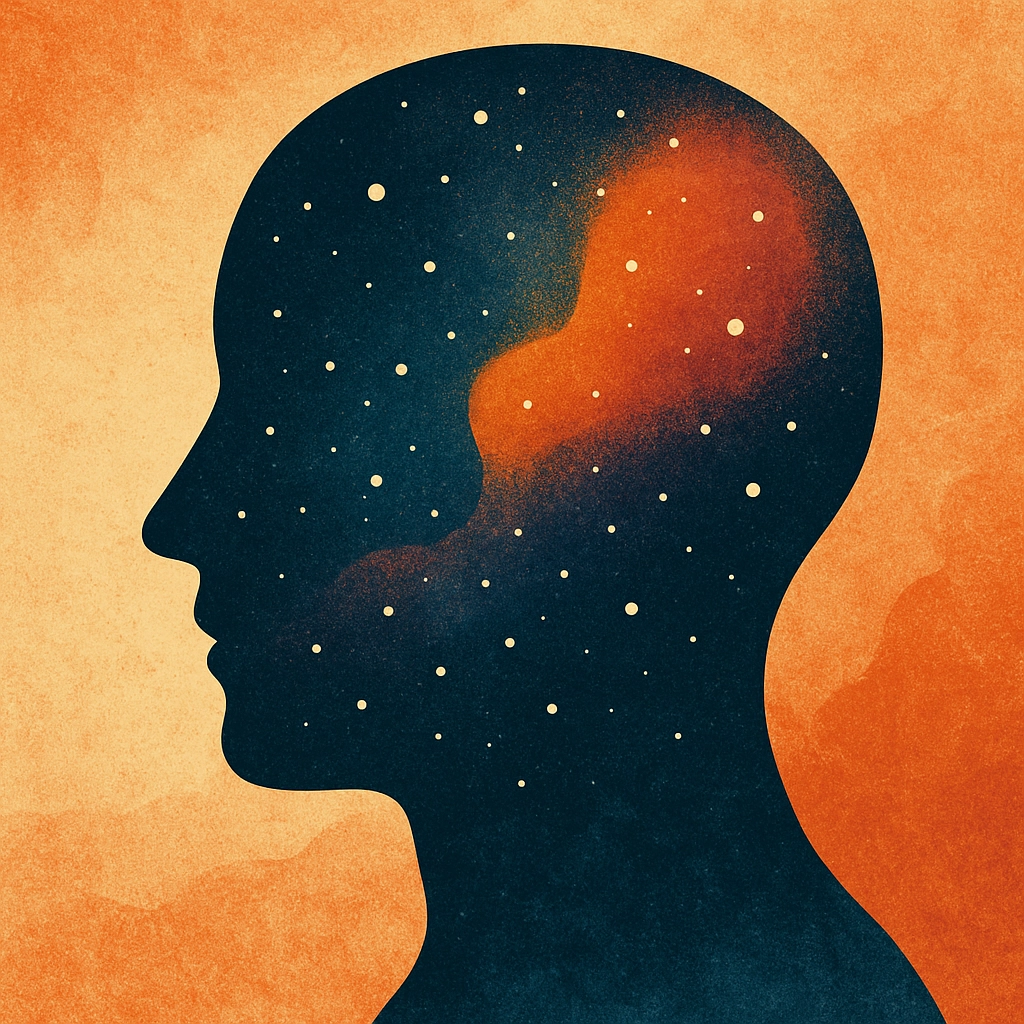
We all think.
And we can think about anything.
So perhaps philosophy is everything.
Philosophy is not limited to scholars, theories, or ancient books. It is the undercurrent of awareness that flows through every human mind. To think is to philosophize, even when we do not name it as such. Every thought, however ordinary or fleeting, is an act of participation in the great experiment of consciousness.
In philosophy, thought is the subject. What we think about is only the vehicle that carries our observation of thought itself. Every question, every argument, and every belief is a reflection of the thinker. Through philosophy, we turn the gaze inward and study the machinery of the mind that produces the world as we know it.
What do we think? How do we think? Why do we think?
What influences the way we think?
What types of thoughts exist, and what are their functions?
How do we relate to our own thoughts, and how do others relate to theirs?
How do others relate to ours?
These questions are not just abstract curiosities. They are the foundation of self-awareness.
Does a thought need to be thought in order to exist?
Does a thought need a brain?
Do undocumented thoughts cease to exist if their host dies?
What does it mean to exist at all?
Are there thoughts that are impossible to manifest?
We often associate thought with language, as though words are its birthplace. But can a thought exist before language finds it? Can it move through the mind as a feeling, an image, a knowing, or a pattern? Some thoughts may live only as impressions, others as sensations waiting to be translated. Perhaps language is not the origin of thought, but its reflection.
Our brains are far more powerful and versatile than our most advanced computers. Each one is capable of infinite exploration, learning, and creation. Yet we often invest more time exploring our external machines than our internal ones. We study code and circuitry while neglecting the living network within ourselves.
If we approached the mind with the same curiosity we bring to technology, we might rediscover the vast landscapes of awareness that lie hidden behind habit and distraction. We might see that thought itself is the original virtual world, a boundless realm of possibilities.
Philosophy, then, is not a subject we study. It is the act of studying itself. It is the ongoing conversation between the observer and the observed, the thinker and the thought, the mind and its mirror.
To live philosophically is not to know all the answers. It is to remain awake to the mystery of thinking, and to recognise that every moment of reflection, however small, is part of the greatest inquiry there is.