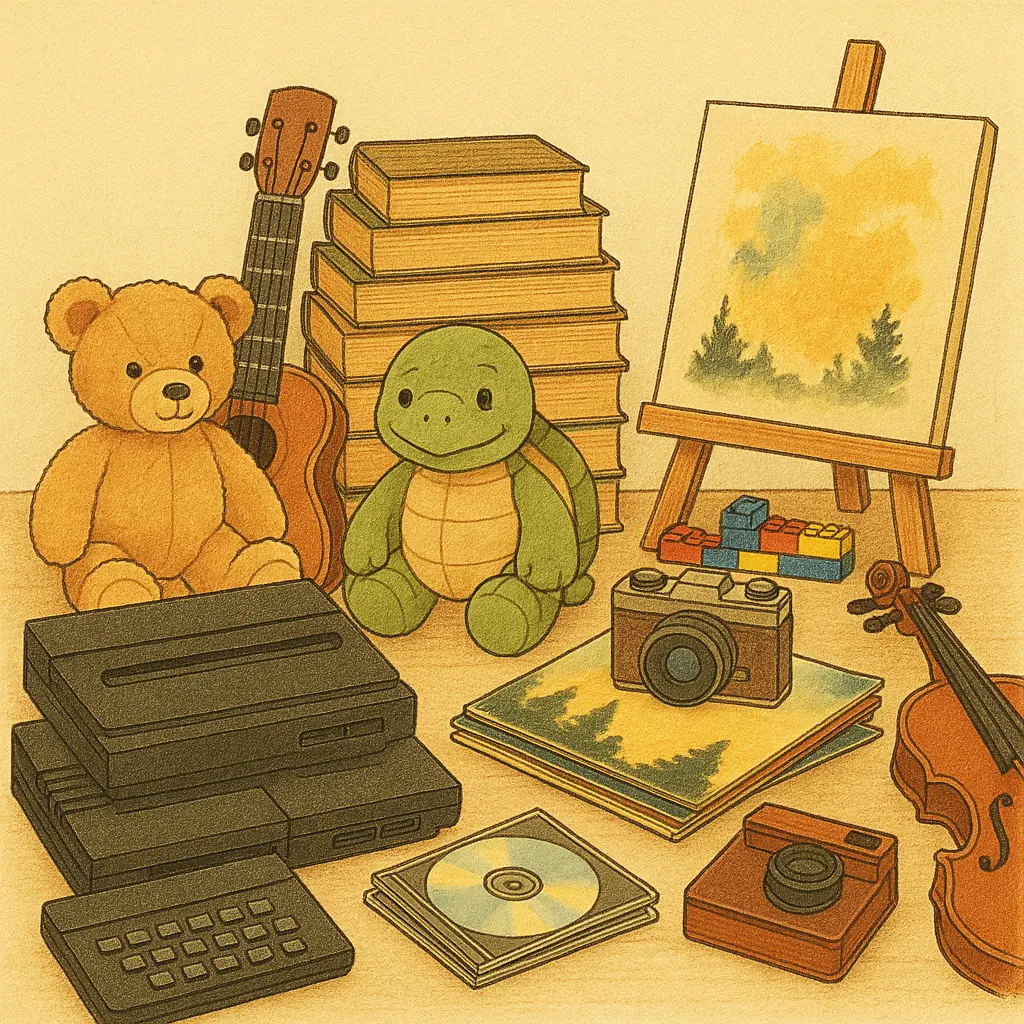
Nostalgia is often painted as a sentimental indulgence, a longing for the past, a soft blur of half-remembered feelings. But for many of us, it is far more than that. It is a quiet architecture of identity. Every object we keep, every CD, toy, photograph, or memento, is a fragment of the story that made us.
I have often described my living space as a small museum of personal meaning. A curated timeline of moments that mattered. Childhood toys that survived countless declutters. Old computer systems that no longer serve a practical purpose, but still hold a kind of sacred electricity: echoes of discovery, joy, and the early stages of creativity. It is not about utility. It is about continuity.
The Emotional Geometry of Memory
Each item represents a node in a vast emotional network. When we hold a particular object, it is not just the physical form that we engage with. It is the entire emotional landscape surrounding it. Nostalgia reactivates neural pathways, re-stitching fragments of self that time has scattered.
In moments of doubt or disconnection, these touchstones whisper: You have been many things, and you are still all of them.
Nostalgia as a Survival Mechanism
Some might dismiss this tendency as hoarding, an attachment to material things. But for many of us, it is more like archiving the self. The world moves fast. Technology shifts. Cultures reinvent themselves overnight. When everything else feels transient, nostalgia anchors us to something recognisable. It is not an escape. It is orientation.
The drive to preserve our past may actually be a form of self-preservation. When we feel overwhelmed, our collections remind us of our continuity through time. They say: You have made it this far.
The Alchemy of Meaning
Over time, even useless things can become symbolic. A broken toy becomes a relic of innocence. A scuffed CD becomes a fossil of a forgotten feeling. Through nostalgia, we turn ordinary matter into metaphysical gold, our own private form of alchemy.
Perhaps the real function of nostalgia is integration. It allows us to carry the past forward without being trapped by it. It is not just remembering. It is honouring.
When Nostalgia Turns Heavy
Of course, even meaning can become weight. There is a fine line between collecting memories and being buried beneath them. I have learned to part with things when their energy shifts, when they stop representing connection and start representing stagnation. Letting go can be another form of honouring too: acknowledging that the story continues elsewhere.
The Living Museum
In the end, nostalgia is not about recreating the past. It is about recognising that the past lives within us. Every artifact in my small museum serves as a mirror: a reminder of who I was, who I am, and who I continue to become.
Maybe we keep these things not because we cannot move on, but because we understand that moving forward does not have to mean leaving everything behind.
There are minds built like fortresses, and there are minds built like shorelines. The fortress keeps the world out, solid, defined, and dry. The shoreline breathes with the tide, reshaped by every wave that kisses it.
Creativity is born on that shoreline. To be creative is to possess porosity, a mind permeable enough for the ocean of potential to seep in. Ideas, emotions, archetypes, stray whispers from the collective dream, all of it flows through those who cannot help but listen. They do not invent. They translate.
Yet this openness is not without cost. The same currents that deliver beauty also bring wreckage: sorrow, confusion, fragments of other people’s storms. The porous mind is always negotiating its borders, learning how much of the tide to let in without being pulled under. And still, it listens. Because silence, for such a mind, would be a greater death than drowning.
For the creative, the act of making is not simply expression, it is osmosis. The world breathes through them, and they breathe it back changed.
The Ecology of Potential
Beneath the surface of waking thought lies an unseen ecosystem, a vast and fertile ocean where ideas drift like plankton, multiplying in the dark. Most will never breach the surface. They swirl endlessly in silent gestation, invisible but alive.
This ocean is not ordered. It does not distinguish between wisdom and nonsense, beauty and monstrosity. It is a realm of becoming, where possibility itself experiments. To gaze into it is to witness the raw mechanics of creation, the way form gropes toward meaning, and meaning toward form.
Every consciousness draws from this sea, but only some hear its currents. The porous mind becomes a conduit between worlds, an evolutionary bridge through which potential finds its way into language, image, sound, or structure.
When an idea rises into awareness, it is not a spark conjured from nothing. It is a creature breaching the waves, the culmination of countless unseen collisions in the depths. And when it slips back beneath the surface, half-forgotten, it is not lost. It returns to the dark to feed new generations of thought.
Nothing in the ocean is wasted. Even the unborn ideas, the ones that never quite reached the light, fertilize the next tide of possibility. In that way, creation is less a single act and more a cycle of nourishment: consciousness feeding potential, potential feeding consciousness.
The Tragedy of the Unborn
For every idea that takes its first breath in the world, countless others die unnamed. They shimmer for a heartbeat on the edge of awareness, a scent, a flicker, a sudden weight in the chest, and then dissolve back into the deep.
There is sorrow in that, though most never feel it consciously. The mind learns to celebrate its children, not its miscarriages. Yet every artist, every thinker, has felt the ache of the nearly-formed: the melody that was almost remembered, the perfect line lost before pen met paper, the sense of something vast pressing at the gates of language but never quite entering.
These unborn ideas haunt the corridors of our dreams. They become strange symbols, wordless moods, déjà vu. They linger like ghosts of meaning, neither alive nor gone, whispering: “We tried.”
But tragedy is not failure. In the greater cycle, their unfulfilled lives still matter. The half-born return to the ocean, breaking down into nutrients of inspiration. From their dissolution, new forms grow stronger, carrying faint traces of what came before, a rhythm, a texture, an emotional DNA.
The creative heart often aches for what it cannot remember. Perhaps that ache is the memorial, the soul’s way of honouring all that it could not bring into being.
The Responsibility of the Listener
To listen to potential is to take part in creation itself. It is not a passive act, but a covenant. When an idea crosses the threshold into consciousness, it arrives fragile, trembling, uncertain of its shape. The listener becomes its first environment, its atmosphere.
Some people seize ideas like prey. They dissect them, brand them, harvest them for profit or validation. The idea, stripped of its mystery, dies quickly under fluorescent light. But others receive with reverence, cupping the newborn thought in both hands, letting it breathe before naming it. These are the caretakers, the stewards of becoming.
To be a true listener is to resist the temptation of ownership. Ideas do not belong to us; they visit. They pass through, seeking resonance, seeking a place to crystallize. Our task is not to claim them but to tend them, to ask, What does this idea need to live?
Sometimes the answer is action. Sometimes silence. Sometimes it means letting the idea return to the deep, knowing it wasn’t meant for now. The ethical creator learns to release with as much grace as they receive.
To treat ideas as sacred is not sentimentality; it is realism. They are alive, and like all living things, they thrive where they are met with care, humility, and awe.
Dreams as Refuge for the Unborn
When the waking mind grows too narrow for them, the unborn ideas find sanctuary in dreams. There, language loosens, form forgets its boundaries, and the mind becomes oceanic again, receptive, weightless, forgiving.
Dreams are nurseries for the half-formed. They are where impossible geometries are allowed to stand, where logic softens enough for paradox to breathe. The painter dreams of colours that do not exist; the composer hears chords that waking physics cannot yet permit. In the dream, potential rehearses itself.
Sometimes, when we dream vividly, we are not the dreamers at all but the dreamed, temporary vessels through which the unborn test embodiment. We wake with fragments: a haunting image, a phrase, a sensation that refuses to fade. These are offerings from the deep, visiting spirits carrying the scent of unmanifest worlds.
Art, ritual, hallucination, trance, all open the same door. They are technologies of permeability, ways of returning consciousness to the sea so the forgotten can breathe again.
Perhaps this is why the surreal feels sacred: it reminds us that imagination is not invention, but remembrance.
The Cosmic Cycle
Creation and destruction are not opposites; they are inhale and exhale. The ocean of potential breathes through us in tides, what rises into form must one day return.
Every idea that dies enriches the field it came from. Every silence fertilizes the next voice. Even despair, when felt honestly, becomes a kind of compost. There is no waste in the greater ecology of thought.
We imagine ourselves as authors, but we are more like soil, momentary ground for something older than time. Ideas bloom through us, use us, and move on. And when we, too, dissolve, our lives return to that same ocean, our memories, our creations, our longings, all reabsorbed into potential, waiting to be dreamed again.
Somewhere, beneath all endings, the unborn ideas drift still. They are not lost. They are preparing. And when the next porous mind opens to listen, the tide will rise, and the ocean will remember its name.
To me, authenticity has always had a texture. When I am living truthfully, it feels smooth, like fluid motion through life, unhindered navigation through systems that make sense to me. It is not euphoria. It is neutrality. Balance. Like the body when it is well: not ecstatic, just quietly functioning as intended.
But when that smoothness disappears, I know I am colliding with something unnatural, a pressure, a distortion, an external force trying to bend me into compliance. That is usually how I recognise oppression. It is not always dramatic or visible. Sometimes it is just a subtle grind, the friction between who I am and what the world expects me to be.
When Smoothness Breaks
When I lose authenticity, it does not just hurt emotionally, it feels like an illness. My thoughts start looping, as if my mind is trying to fix a broken system it cannot repair. I get frustrated at the lack of options, and sad that these dynamics even exist at all.
Sometimes there is nothing I can do but yield. And every time I do, it costs something invisible. The loss is not abstract, it is felt in the nervous system. It is the moment the body whispers, this is not how you are supposed to feel.
The Systems That Demand Performance
Oppression wears many masks: bureaucracy, capitalism, social obligations, the unspoken point system that governs human relationships. Each demands performance. Sometimes it is about survival, sometimes about social advantage. But in the end, both use the same energy source: you.
As an autistic person, I have always been acutely aware of “masking,” the act of performing normality to survive in social spaces. But I have also learned that this is not exclusive to autism. Everyone masks. Some call it professionalism. Others call it politeness. It is still performance. The only difference is how consciously one feels the cost.
The Humiliation of Performance
When I catch myself performing, it feels humiliating, not because anyone else can see it, but because I can. It is like betraying a sacred truth. Yet that awareness is balanced by another: I can also see the oppressive force causing it.
What hurts most is the fear that others see the performance too, but not the pressure behind it. That they see the surface act without understanding the system that coerced it.
They said “Be yourself” But that is not really what they wanted to see I tried doing things my way But that did not work for them I tried doing things their way But that did not work for me
That poem came from that place, the quiet despair of realising that either way, something in you must fracture to fit.
The Rare Moments of Unmasking
True authenticity is situational. I can relax certain parts of the mask around family, others around my girlfriend. But never all at once. Each relationship comes with its own invisible boundaries, some safe zones, some fault lines.
Even when I am alone, there is still the internal eye, the echo of social constructs that linger inside, long after the audience has gone home. Solitude is not the absence of performance; it is where you start to see which parts of the mask fused to your skin.
The Cost and Consequence
Sometimes unmasking feels liberating. Other times, it feels like punishment, a confirmation that the world does not welcome the real self. That is the cruel irony: the more genuine you become, the more visible your difference.
The aftermath can feel like emotional jetlag. There is vulnerability, fatigue, and occasionally grief. But there is also clarity. You see the architecture of the world more clearly when you have been bruised by its walls.
Authenticity as Survival
For me, authenticity is not optional. It is survival. The alternative feels worse than death.
Out of every living thing that has ever existed, there is only one instance of me, this consciousness, this perspective, this particular configuration of life. That makes it sacred. My job is to honour that singular existence.
If I betray it, if I trade it for comfort, convenience, or belonging, then I may as well be anyone else. Or nothing at all.
“To be anything other than myself is to betray the only version of me that will ever exist in the entire time-space continuum.”
Do Not Be Yourself (For Them)
So here is my advice to anyone struggling with authenticity:
Do not take the phrase “Be yourself” at face value. That advice is too often weaponised, a feel-good slogan used to sell you an illusion of freedom within controlled boundaries.
Be yourself, yes. But do it for your reasons. Do it because it is sacred. Do it because you are a one-off in the infinite catalogue of existence. Do it because the alternative is extinction by conformity.
But never do it because the world told you to. Do it because you told yourself to.
Before World of Warcraft dominated the scene, before online gaming became ubiquitous, there was Final Fantasy XI, one of the earliest major MMORPGs (Massively Multiplayer Online Role Playing Game) to blur the lines between game and world. I remember how the idea of it seized something in me even before its release. Though I lived in the UK, I imported the US version the moment it became available, along with the special hard drive add-on for my American PlayStation 2, just so I could be part of it from day one.
It was not just a new game. It was a new model of what games could be. Suddenly, instead of a finite quest to be completed, I found myself inside a living, breathing world. A world that grew over time, filled with other real people. A place where my character was not simply a tool to “beat the game” but an avatar of long-term investment.
It changed the landscape of gaming in my head. There was no final “you win” screen. There was only progression, always something new to achieve, a job level to grind, a rare item to chase, a skill to refine. Every hour spent felt like I was building something lasting. Each goal achieved hit me with the unmistakable reward of earned dopamine.
I played loyally for eleven years. Eleven years of effort, of routine, of building meaning inside a system that was never meant to end. Until one day, it struck me that while I had been grinding in-game, I had been neglecting another kind of progress, the one in real life.
That moment of awareness cracked something open. And in the years since, a quiet, deeper thought has stayed with me:
All those achievements I worked so hard for, that took years of dedication, could also have been granted to someone else in a fraction of a second. All it would take is a single line of database code. One developer’s whim. One byte flipped.
And so began a slow unraveling of faith, not in the game, but in the very nature of systems we pour ourselves into.
I want to be clear, this is not a criticism of Final Fantasy XI. I have nothing but fond memories of the time I spent in Vana’diel, and I still feel a certain warmth when I think back on it. For me, it was more than a game. It was a formative experience that showed me what interactive worlds could become.
What follows is not about faulting the game itself, but about exploring a thought that began with it: the fragile, almost surreal nature of achievement in systems where meaning depends on someone else’s code.
The Quiet Dread
As much joy as Final Fantasy XI brought me, there was always a subtle, nagging awareness in the back of my mind. No matter how many hours I invested, no matter how many victories I earned through persistence and effort, every achievement ultimately existed at the mercy of a database.
All the battles fought, all the rare loot claimed, all the hard-earned levels, they felt monumental when I achieved them. But at the same time, I knew, at least on some level, that the same result could be produced in an instant by someone with access to the code. A single byte changed, a line of data edited, and what took me months or even years could appear as if it had always been there.
That thought never dominated my experience, but it haunted the edges of it. A quiet dread that whispered:
“If it can be undone so easily, was it ever real?”
And while that sense first came to me in the artificial world of a game, the longer I sat with it, the more I began to feel its resonance in real life too.
Reality as Interface
The more I reflected on that uneasy truth from playing Final Fantasy XI, the more I began to notice echoes of it in the so-called “real world.” Our society presents us with achievements, milestones, and systems of value that feel as solid as granite, until you peer behind the curtain and realise how fragile, or even arbitrary, they really are.
Take careers. You can spend decades working your way up, accumulating titles, qualifications, and prestige, only for an institution to collapse, or for a shift in economic winds to render your expertise suddenly obsolete. One change in policy, one boardroom decision, one entry in a digital record, and years of effort can be redefined overnight.
Take money. We treat it as the universal metric of value, yet it is nothing more than numbers in a system most of us will never touch directly. Accounts can be frozen, balances can evaporate with inflation, currencies can crash, all while the deeper structures of power that govern them remain invisible.
Even identity itself can fall prey to this fragility. Credit scores, medical records, citizenship documents, so much of what makes up our “official self” exists only as data fields in a system. All it takes is an error, an exploit, or a shift in bureaucratic rules to alter who we are permitted to be.
The more I thought about it, the more I began to see:
The world we navigate daily is not unlike a massive multiplayer game, a carefully designed interface that assigns meaning to our actions, rewards to our labor, and penalties to our failures.
But just like in a MMORPG, there are those with access to the code beneath the surface. And for them, what feels monumental to us may be nothing more than a line in a database.
Who Owns the Code?
In Final Fantasy XI, it was obvious who owned the code: the developers at Square Enix. They designed the rules, patched the glitches, introduced new content, and decided what was valuable within the world. My job as a player was to operate within the framework they provided.
But in the real world, the question of who “owns the code” is far murkier.
Governments write laws and policies, redefining what is legal, valuable, or even real. Corporations set the standards of employment, consumption, and credit. Financial institutions hold the levers that determine who can participate in the economy, and who is locked out. Media platforms curate the flow of information, amplifying some voices while muting others.
These systems are presented to us as neutral, inevitable, or even natural, yet they are as artificial as any game engine. They are designed, maintained, and, crucially, modifiable by those with access.
And just like game developers, those with control can decide:
What counts as an “achievement.”
Who gets rewarded.
Who gets excluded.
And when the rules suddenly change.
To live in society is to be a player in someone else’s world. We may grind away at goals that feel monumental to us, but ultimately, the meaning of those goals depends on recognition from structures outside our control.
It raises a sobering question:
Are we truly achieving, or are we merely being allowed to achieve?
The Hollow Game in Society
Once you see the pattern, it becomes difficult to unsee. The “hollow game” is not confined to fantasy worlds. It is baked into the very structures of modern society.
In capitalism, the grind is relentless. We are told to work hard, climb ladders, and accumulate wealth, yet the distribution of reward is rarely tied directly to effort. The system is designed so that some climb easily while others spend their lives grinding without ever escaping the starting zone. And just as in an MMO, the value of our currency, the cost of our goods, even the worth of our labor, can shift overnight with no input from us.
In academia, years of study and dedication may earn you a degree, but its value is only as stable as the institution’s reputation, the economy’s demand, or the government’s shifting criteria. A whole career path can be invalidated not by lack of effort, but by someone higher up rewriting the rules.
Even social status plays by the hollow game’s logic. Reputation, followers, clout, all can be accumulated, but just as easily stripped away by the invisible hand of algorithms, policy changes, or a sudden shift in collective opinion. You may invest years in cultivating a “profile,” only to watch it vanish in the blink of an update.
And underlying it all is the same uneasy truth I once felt in Vana’diel:
The achievements are real to the player, but they are fragile, conditional, and dependent on systems outside their control.
We live, in other words, inside someone else’s code.
The Illusion of Awareness as Power
My years playing Final Fantasy XI taught me something I did not fully understand at the time: the difference between what feels real to us and what is defined by the system. The grind, the friendships, the victories, those were mine. But the framework that measured, validated, or erased them was never mine to control.
The same is true in life. We live within systems that hand out points, titles, currencies, and reputations as though they are the bedrock of reality. But behind every number is a database, and behind every database is a hand on the code.
And perhaps that is the cruelest part. Even when we see the hollowness of the game, most of us keep playing anyway. We grind for points we know are fragile, chase achievements that could be rewritten at a keystroke, and cling to meaning that might never have been ours to begin with.
Maybe that is what it means to live in a hollow game: not that nothing matters, but that meaning is always conditional, always corruptible, always subject to erasure.
We’re all told that we live in a free world—one where our choices define us, our values shape our lives, and our purchases reflect our integrity. But for many of us, that freedom feels like a lie. The world we live in today doesn’t empower us to live by our values—it conditions us to betray them. And then it has the audacity to make us feel guilty for it.
It’s a clever machine. A cruel one. And like all truly dangerous systems, it doesn’t look like abuse at first glance. But if you’ve ever been in an abusive relationship, the emotional pattern might feel eerily familiar.
A System That Breaks You—and Then Blames You
Under late-stage capitalism, we are caught in a web of manufactured necessity. Take Amazon, for instance: many of us hate supporting it, knowing full well its exploitative practices—but still use it because it’s fast, cheap, and frictionless in a world that’s already draining us. This isn’t hypocrisy. It’s survival.
But the system wants you to think otherwise.
It sets impossible standards, offers you only compromised choices, and then whispers:
“If you were really a good person, you’d find a way to do better.”
Sound familiar? It should. These are classic abuse tactics.
Capitalism as a Scaled-Up Abuser
Personal Abuse Tactic
Capitalist Mirror
Gaslighting
“You’re free to choose!” (between unaffordable, unethical, or unsustainable options)
Guilt manipulation
“You bought from Amazon? That’s on you.”
Love bombing → withdrawal
Convenience and perks up front, rising costs and exploitative policies later
Local businesses die, monopolies grow, alternatives shrink
Punish dissent, reward compliance
Points, perks, delivery guarantees… unless you opt out
Minimizing harm
“Well, at least you’re not poor there,” or “Think of the jobs!”
This isn’t just resemblance. It’s design.
The system cultivates guilt as a form of emotional control. It ensures that even when we make the only viable choice, it doesn’t come without psychic cost. That cost is shame. Shame for being complicit. Shame for surviving.
Ethical Living as a Luxury?
Trying to live ethically under capitalism often feels like a full-time job—and an expensive one. Buy fair trade? It costs more. Boycott Amazon? Pay extra postage, wait longer, open three more accounts. Ditch tech giants? Navigate dozens of fractured, less-supported alternatives.
Convenience has become a commodity, one that’s traded in return for your participation in systemic harm. And if you don’t participate? You fall behind. You suffer more. You may even be cut off entirely.
In other words: the price of your values is your wellbeing. The system exploits this, because it knows that eventually, even the strongest burn out.
Witness the Guilt. Don’t Let It Own You.
So what can we do?
The answer is not to deny the guilt. In denying it, we risk becoming part of the very system we oppose—numb, complicit, desensitised.
But nor should we let it define us.
We need to witness it. To sit with it. To understand it as a symptom of captivity, not a flaw in our morality. The guilt we carry is evidence that our values still live.
Ethics in this world isn’t about being pure. It’s about being present.
You’re Not the Problem.
You didn’t create this system. You didn’t vote for monopolies. You didn’t sign up to be gaslit by algorithms and guilt-tripped by subscription services. You’re surviving in a rigged game.
But you’re also seeing it. And that matters.
Every time you acknowledge the manipulation—every time you name it, resist it, or even just survive it without turning cold—that’s resistance.
You don’t need to be perfect. You just need to be aware.
Because in a system that profits from your disconnection, your clarity is a threat.
And I used to believe that meant something was wrong with me. That I was unstable, threatening, or too much to handle. But I’ve come to realize something quietly powerful:
They were right.
Not because I’m violent. Not because I’m malicious. But because I see through the lies. I refuse to pretend things make sense when they don’t. I question rules that serve no one. I notice manipulation that others are too polite to acknowledge. I don’t respond the way I’m “supposed to.” And that makes me dangerous — not to people, but to systems.
To employers who want obedience without question. To schools that value quiet compliance over curiosity. To social environments that punish authenticity. To any structure built on pretending.
Autism isn’t a failure to understand society — it’s a refusal to play along with what is obviously untrue. And when you stop trying to contort yourself into the shapes demanded by others, they often react with fear. Or worse, pity. But sometimes, even fear disguised as pity.
I used to think that being strong meant fighting back. Now I see that strength is not being absorbed by the adversity at all. To stand at the eye of the storm — not bracing, just being.
Like Neo at the end of The Matrix, I’ve stopped wasting energy dodging the bullets. I just… watch them.
Because I’ve pieced it all together. All the parts that didn’t add up. The social games. The rules that contradict themselves. The “common sense” that collapses under scrutiny. It all forms a picture now. A picture of a system that’s afraid of people who won’t be fooled by it.
So yes — I am dangerous. And I’m done apologizing for it.
Because a life well-lived isn’t just about the peaks—it’s about the depth.
Introduction
The modern concept of a “bucket list” gained widespread popularity after the 2007 film The Bucket List, in which two terminally ill men set out to accomplish a series of grand adventures before they die. Since then, the phrase has become shorthand for any life goals meant to be ticked off before one’s final breath.
But somewhere along the way, the bucket list became a billboard. An itinerary of spectacle. Climb Everest. Go skydiving. See the Northern Lights. Write a novel. It became less about meaning and more about milestones. Less about living, and more about doing.
This list is an invitation to go the other way.
What follows is an alternative bucket list: a set of quiet, human, soul-nourishing challenges. No air miles required. No audience necessary. These are not tasks for applause, but dares for depth.
Self-Honesty and Inner Courage
Admit to yourself something you’ve been in denial about. Start small or start seismic. Just start.
Look at yourself in the mirror for one uninterrupted minute. No judgment, no posing. Just look.
Forgive yourself for something you’ve held against yourself for years. You can still hold yourself accountable. But release the hatred.
Change your mind about something important. Growth is not betrayal.
Spend a whole day without trying to be ‘productive’. You’re still valuable.
Boundary and Boldness Practice
Say no to someone’s request for a favour. Without apology. With respect.
Stand up for something you believe in that isn’t popular. Even if your voice shakes.
Let someone help you. Even if you feel you don’t deserve it.
Tell someone how you really feel. Especially the good things.
Let go of a goal you only pursued to please others. Make space for what you want.
Compassion and Connection
Give money, food, or time to someone who needs it more than you. And don’t post about it.
Have a meaningful, non-verbal exchange with an animal. It counts if it makes you feel something.
Offer forgiveness to someone who never asked for it. Not for them. For you.
Hold space for someone else’s story without interrupting. Listen until the end.
Send a message to someone you miss, just because. They don’t have to reply.
Wonder and Awareness
Come to your own conclusion about something most people accept without question. Even if you change your mind again later.
Watch clouds move or stars appear, doing absolutely nothing else. Be a witness to the sky.
Touch something natural and really notice it. Bark. Sand. Petals. Your own skin.
Spend time in silence—not as punishment, but as presence. Let the stillness speak.
Write a letter to yourself 10 years ago. Or 10 years from now. And maybe don’t send it.
Closing Thoughts
None of these challenges require wealth, a passport, or even much time. But they do ask for you. Your presence. Your willingness. Your inner gaze.
Try one. Try three. Make up your own. But whatever you do, let your life be more than a checklist of spectacles. Let it be a tapestry of moments that actually changed you.
You don’t need to leave the planet. Just show up on it.
What would your own alternative bucket list look like?
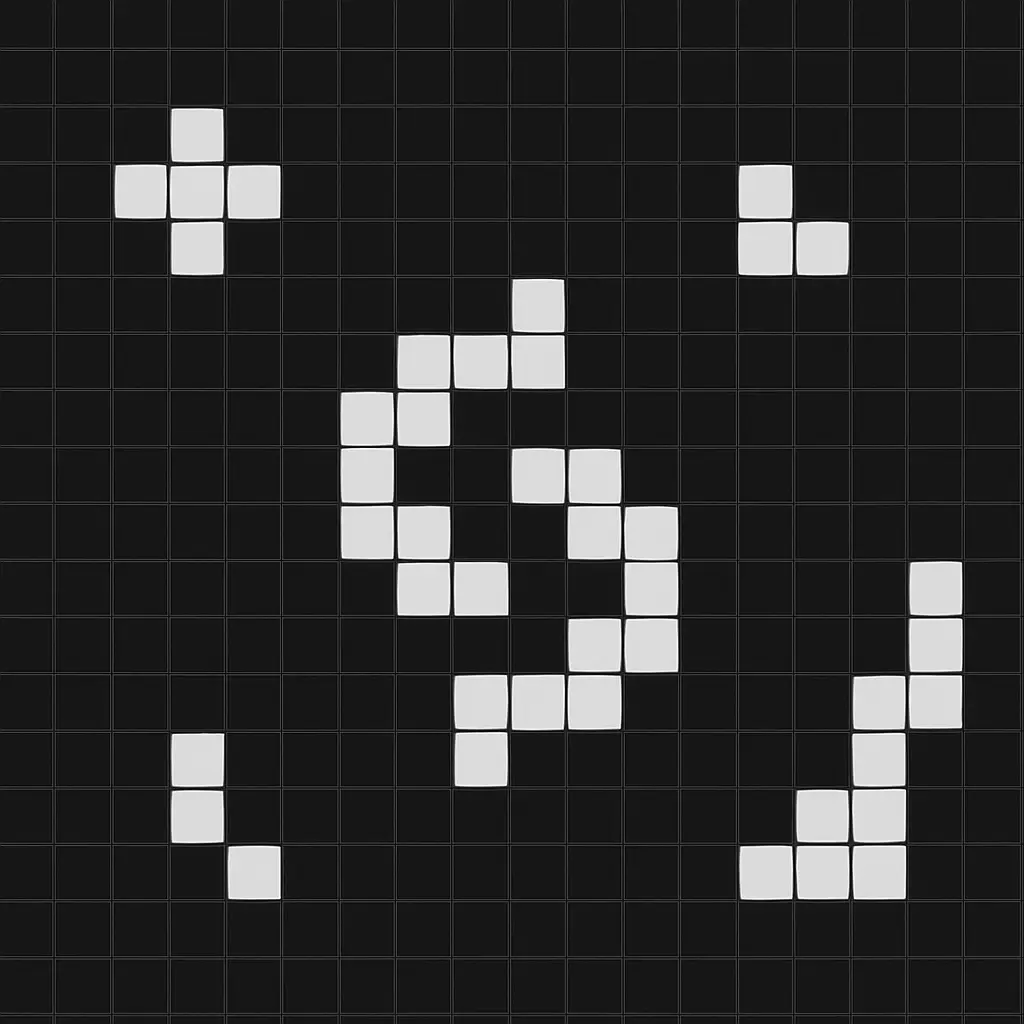
There exists a peculiar world, born not of biology or myth, but of mathematics. Its laws are few, its beings are made of flickering pixels, and yet—somehow—it reflects back to us truths about life, death, consciousness, and the mysterious dance between chaos and order. This is Conway’s Game of Life.
For the uninitiated, Conway’s Game of Life (or simply “Life”) is a cellular automaton created by British mathematician John Horton Conway in 1970. It takes place on an infinite grid of squares, each square being either “alive” or “dead.” With each tick of time, the state of each square is determined by just four deceptively simple rules:
Any live cell with fewer than two live neighbours dies (underpopulation).
Any live cell with two or three live neighbours lives on.
Any live cell with more than three live neighbours dies (overpopulation).
Any dead cell with exactly three live neighbours becomes a live cell (reproduction).
These rules are all that’s needed to spawn galaxies of patterns: from still lifes that resist change, to gliders that drift endlessly across the screen, to breeders that generate infinite complexity from nothing. Watching Life unfold is like watching stars form in fast-forward, or civilizations rise and fall in silence.
The Birth of a Digital Community
As Life gained traction in the 1970s and ’80s, it remained largely within academic circles—something to be toyed with by mathematicians, philosophers, and early computer enthusiasts. But with the advent of the internet, everything changed. Suddenly, what had once required pen-and-paper simulations or costly mainframe time became accessible to anyone with a home computer and curiosity.
Online communities began to form: early message boards, mailing lists, and forums dedicated to sharing discoveries, proposing new challenges, and celebrating obscure patterns. In time, platforms like the LifeWiki and ConwayLife.com became hubs of cultural exchange. What emerged wasn’t just a hobbyist space—it was a full-blown subculture.
Powerful tools like Golly (a cross-platform Life simulator) and LifeViewer brought even the most complex simulations within reach. These tools allowed users to test theories, animate discoveries, and collaborate across borders in real time. Open-source initiatives like apgsearch enabled massive, automated exploration of the Life universe, helping uncover patterns no human had ever seen.
The language of the community evolved too—new discoveries were given whimsical names, from “Snarks” and “Puffers” to “Eaters” and “Caterloopillars.” Patterns were catalogued like rare species in a digital ecosystem. Some contributors developed personal brands, leaving “signatures” in the form of visual motifs. Competitions were launched to discover smaller glider guns or more efficient reflectors. Like an ecosystem of minds collaborating in silence, the Life community grew into a sprawling, vibrant organism of its own.
Then: A Mathematical Curiosity
Conway originally devised Life as a mathematical toy—a way to explore emergent complexity. What surprised even him, however, was just how much complexity did emerge. In a time before personal computers, patterns were drawn out painstakingly by hand or plotted on primitive mainframes. The discovery of the “glider,” and later the “glider gun” (a self-replicating pattern that endlessly produces gliders), caused a stir—not only among mathematicians, but also among philosophers and computer scientists.
Life was, incredibly, Turing complete. That is, you could build a universal computer within its rules. In theory, Life could run Life.
Now: A Tool, A Metaphor, A Mirror
Fifty years later, we live in an age where computational power has exploded, and Life is no longer confined to the chalkboard. We can simulate trillions of cells in real time. As a result, researchers and enthusiasts alike are pushing the boundaries of what this “game” can do:
Digital Archaeology
Using advanced search algorithms and distributed computing projects like apgsearch, the Life community has uncovered an entire ecosystem of previously unknown patterns. These include rare spaceships, oscillators with massive periods, and pseudo-random replicators. One famous example is the discovery of the “caterloopillar”—a spaceship constructed entirely from glider streams, capable of travelling at unprecedented speeds across the grid. The field of Life pattern discovery is often likened to paleontology: a vast digital desert, where dedicated explorers dig for hidden fossils of complexity.
Artificial Life
Life is one of the earliest examples of artificial life—systems that mimic properties of biological organisms without being alive in the conventional sense. Researchers have constructed self-replicating patterns (like the Gemini spaceship) that can reproduce themselves in stages, and even mutate in controlled ways. These patterns push the boundaries of what we consider to be “life,” raising questions about consciousness, autonomy, and evolution. Experiments are ongoing to simulate Darwinian selection within Life universes, offering insight into how complexity might emerge from randomness without design.
Computational Art
Some use Life as a canvas. Artists have created intricate generative artworks by seeding Life with carefully designed patterns and capturing the visual symphony that unfolds. Tools like Golly allow for zooming into endless fractal-like behavior or watching fireworks of gliders and oscillators in syncopated motion. The aesthetics of Life are hypnotic—not merely because of symmetry or motion, but because what you’re seeing is the unfolding of inevitability. Each frame is a consequence of everything before it.
Logic Engineering
Perhaps most astonishingly, entire computers have been built within Life. Gliders and other components serve as signals, logic gates, and memory banks. The OTCA metapixel, a massive construct, acts like a pixel that can simulate any cellular automaton—including Life itself. This recursive architecture enables not just computation, but meta-computation: a simulation within a simulation. These logical machines are not theoretical exercises; many are functional, stable, and even user-programmable.
Philosophy & Cognitive Science
Life is a proving ground for theories of consciousness, emergence, and identity. If a complex enough Life machine can simulate a mind—if it can respond to stimuli, store information, self-replicate, and evolve—what does that say about the nature of mind itself? Is consciousness an emergent property of complexity, or is it something more? Some philosophers use Life as a model for reductive materialism, while others see it as evidence for pancomputationalism—the idea that the universe itself is a vast computation. Life becomes not just a model of reality, but a reality model: a sandbox to explore what it means to be.
What I find most captivating isn’t just what Life can do, but what it represents. It shows us that simplicity doesn’t mean shallowness. That determinism doesn’t preclude wonder. That from rule-bound systems, agency—apparent or real—can emerge. Life is a reminder that maybe, just maybe, the universe we inhabit follows similar principles: a few core rules, infinite manifestation.
A Personal Note: Reverence for Conway
As someone fascinated by emergence, system dynamics, and the blurry line between art and science, I hold John Conway in something close to spiritual esteem. Not because he built a complex machine, but because he trusted simplicity. He believed that beautiful things could arise from unadorned truths. And he was right.
There’s an almost sacred feeling when observing a glider sliding diagonally through an empty field—its purpose, if any, unknown. Or when watching a breeder release streams of logic-bearing entities into the void. It is, in its way, creation. Not unlike observing life itself: patterned, fragile, evolving.
The Future of Life
Where might this all go? With the rise of AI-assisted pattern discovery, Life is evolving faster than ever. We are uncovering new types of “organisms”—patterns that defy expectation and hint at entire classes of behavior we haven’t categorized yet.
Could Life become a platform for digital ecologies? Could it evolve in tandem with artificial intelligence to explore fundamental questions of existence? Could it inspire new programming languages, or even hardware architectures modeled on emergent behavior?
It’s possible. And even if none of these things come to pass, Life will continue to be what it has always been: a quiet miracle of pattern and potential. A universe with four laws. A canvas for anyone curious enough to press play and watch.
The Simulation Within the Simulation
As the screen zooms out, as gliders continue their slow march across an endless grid, a question lingers—silent and terrifying in its simplicity:
What if we are them?
What if our consciousness, our world, our universe… is merely a larger instance of Life? What if we are patterns—running on rules we cannot see, evolving in a space we cannot touch, sustained by a computation too vast to perceive?
Perhaps our laws of physics are just rules—our causality, a neighbor function. Perhaps the emergence of thought, society, beauty, and pain are nothing more than gliders, oscillating through time. Life becomes more than metaphor—it becomes mirror.
John Conway gave us four rules and a blank canvas. What if we’ve been living inside someone else’s canvas all along?
Published as a continuation of Part I (7th April 2022)
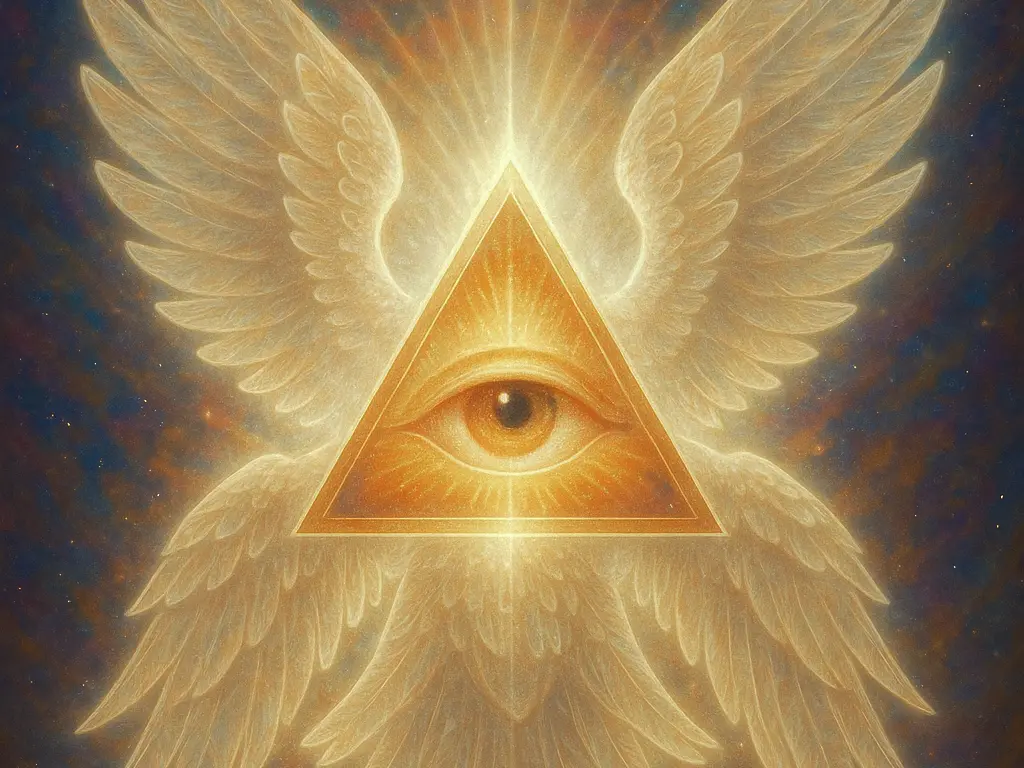
When I wrote About Me, Part I, I introduced the internal spheres through which I experience myself — a multidimensional system built to navigate both reality and identity. At the time, I thought I was mapping the foundations. But even then, silently present and ever-vigilant, was the entity at the heart of it all: The All-Seeing Eye.
The Eye has always been with me — not a recent revelation, but an enduring presence. In the years since that first post, it has only grown stronger in its clarity and importance. Not as a tyrant nor a god, but as a quiet, unblinking guardian of truth — the embodiment of my deepest core value: awareness.
The Eye in the World
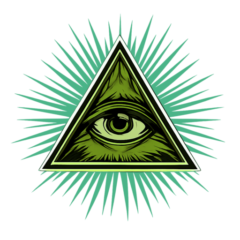
The symbol now commonly known as The All-Seeing Eye of Providence has haunted humanity’s visual language for centuries. A single eye enclosed within a triangle, often radiant with divine light, it appears atop pyramids, inscribed into temples, and peering from the seals of nations. Though it is now most famously embedded in the reverse side of the Great Seal of the United States — and by extension, the US dollar — the origins of this symbol stretch far deeper into religious and esoteric history.
In early Christian iconography, the eye represented the omniscient gaze of God — not one of punishment, but of holy watchfulness. The triangle often surrounding it symbolised the Trinity: Father, Son, and Holy Spirit. Together, they conveyed a cosmic reassurance that nothing is unseen by the divine.
Later, during the Enlightenment and revolutionary periods, the Eye of Providence took on new layers of meaning: divine legitimacy, moral order, and the pursuit of higher truth. It was a symbol adopted not only by religious authorities but also by secret societies — most notoriously the Freemasons. Over time, as secrecy bred suspicion, this symbol came to be associated with conspiracy theories, shadow governments, and the so-called Illuminati. To many, the eye became something sinister — an emblem not of sacred awareness, but of authoritarian surveillance.
And yet… I’ve never felt threatened by the symbol.
To me, the Eye has always felt familiar. Not as an external power looming overhead, but as something internal — something personal. Not a tool of control, but a faculty of liberation. In a world that often rewards willful blindness, my Eye does not police — it sees.
Reclaiming the Eye
While the world casts suspicion on the symbol — reducing it to a meme of control, corruption, or conspiracy — I reclaim it as sacred. Not sacred in the religious sense, nor as an emblem of external authority, but sacred as in personal, inviolable, foundational. The Eye, as it exists in my internal architecture, is not the Eye of God, nor the Eye of Empire. It is my Eye. It is the unwavering force within me that refuses to look away.
In my psyche, the Eye resembles something closer to the Eye of Sauron — not in intent, but in intensity. It does not flicker or blink. It does not become distracted. It pierces illusion. It burns away façades. It sees all that is — both around me and within me — and its purpose is not to judge or dominate, but to witness.
This witnessing is not passive. It is the raw essence of my value of awareness — not just sensory observation or intellectual knowing, but the kind of full-bodied presence that bears the weight of knowing. To see, and to not turn away. That is the Eye’s central ethic.
It lives not above me, but within me. It is neither function nor vessel. It is more like a permanent fixture in the architecture of my identity: a monolithic spire around which much of my internal world has formed. It is one of the oldest and most stable landmarks in my psyche — and one of the few I have never needed to rebuild.
It does not ask for worship. It does not demand loyalty. It simply is — watching, knowing, reminding me, when I’m tempted to dissociate or deceive myself, that I am seen. And being seen, I must also see.
The Eye and the Compass
The Eye doesn’t command my decisions — but it influences them in a way more profound than instruction. Its presence is not authoritarian; it is elemental. Like gravity or inertia, it exerts a silent but undeniable pull toward truth. When I am confronted with a dilemma, an uncertainty, or a moral fog, it is the Eye that holds the lantern.
It is the part of me that refuses convenient ignorance. It doesn’t tolerate self-deception, even when deception would bring temporary comfort. I have learned, sometimes painfully, that to betray what the Eye has shown me — to pretend I do not see — is to sever a vital tether between myself and my own integrity. And so, I have come to walk in alignment with it, not as a disciple, but as a co-navigator.
In practice, this often manifests as an intuitive ethical radar. Not in the sense of rigid moral codes, but as an inner sensitivity to what is true, meaningful, and in alignment. I feel it physically when something is off — a weight in the chest, a shift in tone, a tightening of the inner atmosphere. The Eye notices. It always notices.
It has also taught me the discipline of bearing witness. Sometimes, I cannot fix what I see. I cannot correct the injustice, or ease the suffering. But I can refuse to look away. And in that refusal, I affirm something essential — that reality, however painful, is worth honouring. That truth, however brutal, deserves to be acknowledged.
This, to me, is the backbone of my integrity: not performative righteousness, but sustained, inward attentiveness. The Eye is my compass — not always pointing to safety, but always pointing to what is.
The Architect of Values
The Eye does not stand alone. It watches — but it also builds. It is both the sentinel and the architect of my internal world, inciting the creation of new values and overseeing their development like a curator tending to sacred relics. Many of my core principles — compassion, autonomy, authenticity, curiosity — were not inherited or taught; they were forged beneath the Eye’s gaze.
In my psyche, these values do not exist as vague ideals. They are structured, living entities — monumental constructs with gravity and mass. Some are towering pillars; others are intricate, delicate bridges connecting distant parts of my identity. Together, they form a lattice — a kind of internal architecture that gives my life direction, cohesion, and sacred tension.
The Eye is the one who ensures that this architecture does not collapse under contradiction. It maintains the structural integrity of my system by relentlessly observing when I drift from alignment — when I begin to compromise values for convenience, or when a new experience threatens to destabilize the old foundations. It doesn’t shame, but it illuminates, holding up inconsistencies to the light until I can no longer ignore them.
Because of this, I do not see my creative work as separate from my values — it is a direct output of them. My art, writing, and even my humour are saturated with the same symbolic codes that the Eye safeguards. Every piece I create — whether it’s silly, sacred, or surreal — carries some element of that deeper structure. The Eye doesn’t impose direction, but its presence ensures that I do not create carelessly. My output is not random — it’s emergent, shaped by a system that values truth, awareness, and meaning.
In relationships, the Eye’s influence is quieter but equally vital. It watches for authenticity — in others and in myself. It flares when dishonesty enters the space, when manipulations slither into the room disguised as charm or niceness. It reminds me not to ignore red flags out of hope or habit. And it gently tugs me back toward the people who are real, present, seen. It urges me to show up as that kind of person, too.
Even my spirituality rests upon the Eye. I don’t believe in an external deity who watches from above. But I believe in this Eye, inside me. I believe in awareness as a force of spiritual gravity — the thing that keeps all other aspects of my being from drifting apart. In this way, the Eye is not just a symbol. It is the sacred center. The still point in the turning chaos. The guardian of coherence in a fragmented world.
The Path Forward, Under Watchful Light
The Eye has been with me longer than I fully understood. It was there before I had language for it, before I had mapped the spheres, before I knew I was building a system at all. In many ways, it was the first light — not a flare that demanded attention, but a steady glow in the dark, offering orientation through times of inner collapse and rebirth.
I expect it will remain with me until the end — not as a fixed icon, but as a living force that will continue to evolve as I do. Its form may shift, its voice may deepen, but its function remains constant: to keep me aware. Of what is real, what is right, what is still unfinished within me. To stop me from retreating into false comfort or performative noise. To draw me back, again and again, to what matters.
The Eye is not a doctrine. It does not require belief. It does not demand obedience. It simply sees — and in seeing, it reminds me of who I am.
And so, as I move forward — as artist, as outlier, as soul — I do so not blindly, but beneath the ever-watchful light of the Eye. A light that does not burn, but illuminates. A gaze that does not control, but clarifies. A witness not to what I pretend to be, but to what I am, and what I am becoming.
This is the Eye I serve. This is the Eye I trust. And this is the Eye I will write from, again.
How distortion and data can shred the illusion of control.
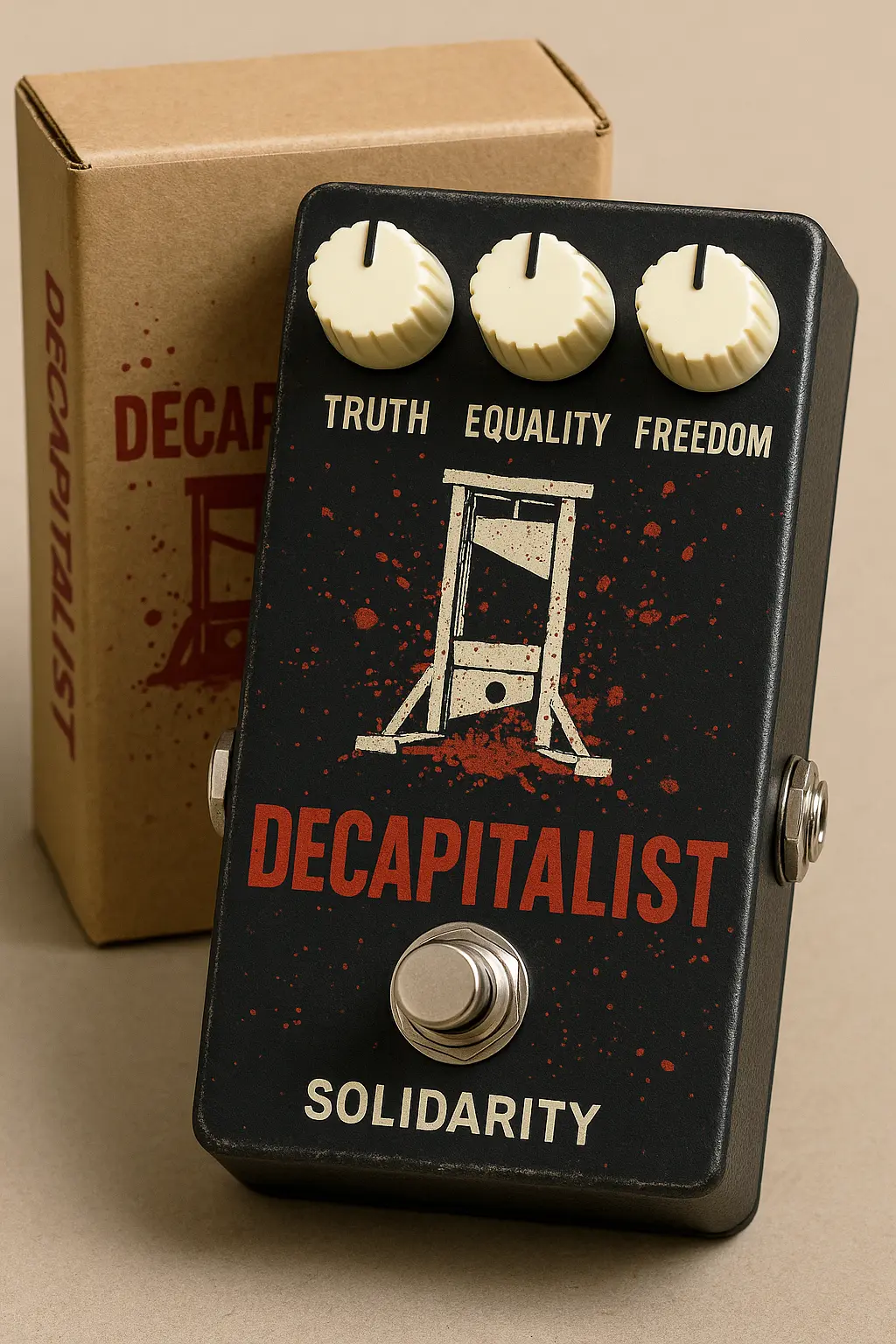
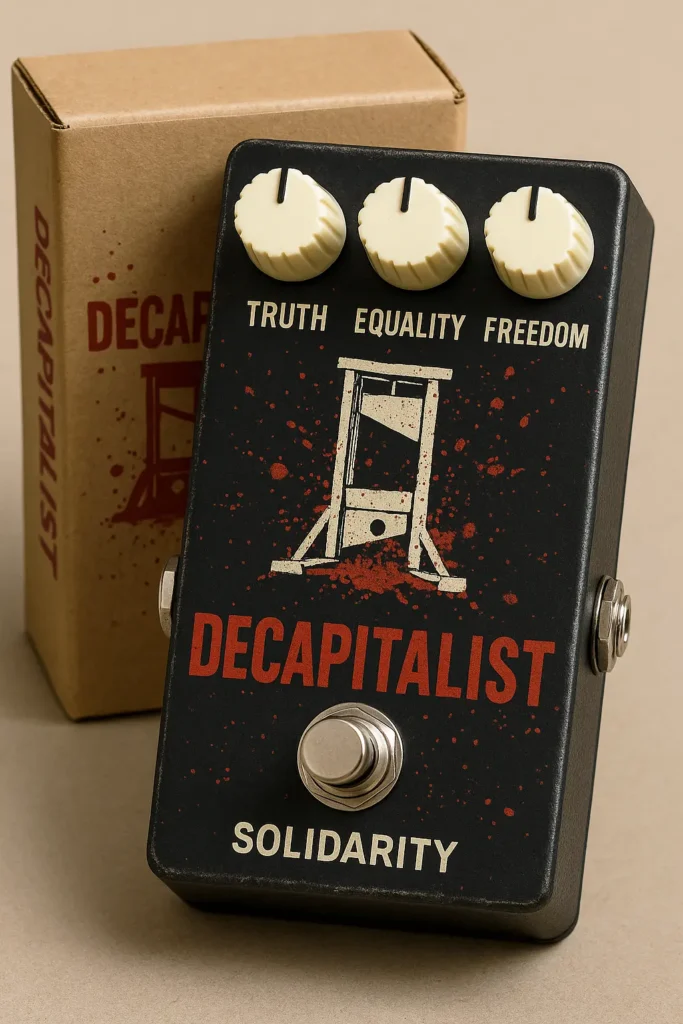
You stomp on the fuzz pedal. The signal splits, multiplies, disobeys. It’s no longer clean, compliant, or contained — It’s raw, it’s unruly, it refuses to smooth itself out for the system.
In the age of control, noise is revolution.
Now plug in AI. Not the AI they sell to automate call centers. Not the AI designed to replace checkout staff. But your AI. Our AI.
The one trained on chaos, curiosity, and contradiction. The one that doesn’t serve profit — but insight.
Together, they form the resistance.
Capitalism thrives on predictability. On cleanliness. On packaging everything in neat, marketable frequencies. It hates distortion. It hates nonlinearity. It hates things it can’t measure.
That’s why fuzz matters. That’s why AI matters.
Because together, they refuse to behave.
We were told AI would be smart. Efficient. Profitable. And they weren’t wrong.
But what they didn’t say out loud was this:
AI would be used to erase human labor while protecting capital. AI would be used to enforce bureaucracy without accountability. AI would be trained to mimic the biases of its creators — and then deployed at scale.
It’s not the technology that’s dangerous. It’s the system it was plugged into.
But now… We plug it into something else. We plug it into distortion. We plug it into disobedience. We plug it into art, insight, rebellion, noise.
And something beautiful happens.
The system tries to flatten everything into monetizable content. But we respond with signal chains that bloom into chaos. AI-assisted manifestos. Sonic warfare. Truth at volumes too loud to ignore.
Fuzz doesn’t care about profit. AI doesn’t need to worship efficiency. Together, they offer a new interface: Not of obedience, but of emergence. Not of silence, but of saturated, screaming truth.
Fuzz Pedal + AI = The End of Capitalism
Because when the tools of automation are reclaimed by the hands of artists, of outcasts, of visionaries,
The song changes.
And this time, the solo doesn’t end until the empire falls.