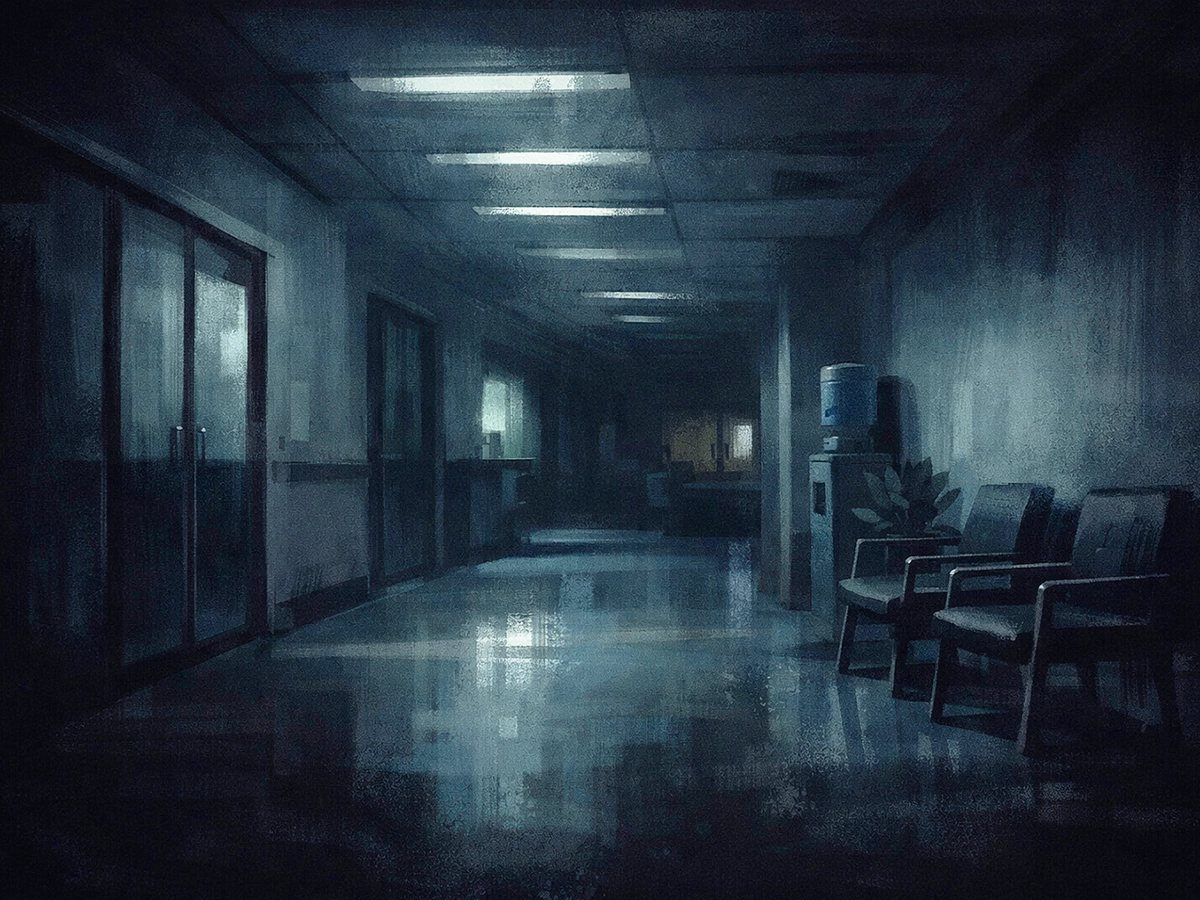
There is a particular kind of problem that is difficult to talk about, not because it is rare or abstract, but because it has no name.
Most people recognise the feeling. Something feels wrong, heavy, or quietly hostile in a low-grade way. It is not catastrophic or dramatic, but it is persistent. When you try to explain it, you find yourself talking for too long, reaching for examples, qualifying your statements, and pre-empting dismissal. The explanation feels clumsy, disproportionate, or as if you are overthinking something that should be simple.
Often the response is some variation of:
“You are making it a problem.” “It is just how things are.” “Everyone deals with that.”
And slowly, quietly, the issue retreats back into silence.
This is the nameless problem.
When Experience Outpaces Language
Language does not arrive at the same time as experience. It lags behind it.
People often live with problems for years, sometimes generations, before the vocabulary exists to describe them cleanly. Until then, those problems tend to be minimised, normalised, personalised, or reframed as individual weakness.
Without language, there is no shared reference point. Each person is left to navigate the issue alone, carrying both the discomfort and the burden of explaining why it counts as a real problem.
This creates a strange inversion. The person who notices the problem is treated as the problem.
Why Unnamed Problems Persist
Unnamed problems are uniquely resilient.
They do not need to be defended, because they are rarely challenged directly. They hide in plain sight, diffused across systems, norms, interfaces, expectations, and the familiar phrase “just the way things work”.
When harm is ambient rather than acute, cumulative rather than singular, and structural rather than intentional, it becomes easy to deny, even when its effects are everywhere.
No villain is required. No conspiracy is needed. Only silence.
The Cost Of Not Having Words
When a problem cannot be named, it is usually internalised.
People begin to believe that they are too sensitive, bad at coping, or failing at something everyone else seems to manage without effort.
This is especially true for neurodivergent people, disabled people, and anyone whose nervous system or perception does not align neatly with the environments they are expected to tolerate.
Without language, distress becomes private. Private distress becomes shame. Shame keeps systems intact.
A Brief Historical Note
Many concepts we now take for granted were once dismissed as silly, exaggerated, or unnecessary.
There was a time before terms such as burnout, gaslighting, emotional labour, and sensory overload.
People still experienced these things, often intensely, but lacked the linguistic tools to make them legible to others.
The arrival of language did not create the problem. It revealed it.
Naming did not solve everything, but it changed the terrain. It allowed recognition to travel faster than explanation.
Naming Is Not Pedantry
There is a common suspicion that naming things is nitpicking, over-intellectualising, or making life harder than it needs to be.
In reality, naming is one of the simplest ways to reduce harm.
A word can shorten explanations, reduce self-doubt, allow shared recognition, interrupt dismissal, and make patterns visible.
Language does not have to be perfect to be useful. It only has to be good enough to hold the shape of the experience.
A Response To The Nameless Problem
Recognising the danger of unnamed problems naturally raises a question. If the absence of language allows harm to persist, what can be done about it?
One practical response is to create language deliberately.
As a way of addressing this problem, I have been working on a lexicon of terms relating to emergent issues of our era. These are not abstract theories or academic concepts. They are patterns that many people already feel and navigate, but often struggle to describe clearly or concisely.
The purpose of this work is not to dictate how people should think, but to reduce the effort required to recognise what is already happening.
The Lexicon
The Lexicon is a growing collection of terms intended to make certain classes of problems easier to see, name, and discuss.
Many of the entries describe patterns that are widely experienced yet rarely labelled. They tend to be normalised, quietly harmful, and difficult to articulate without shared language.
This project exists to shorten the distance between perception and articulation. It is a tool for recognition, not a manifesto or a claim to authority.
The Lexicon is not finished, and it is not closed.
Language evolves through use, refinement, disagreement, and care. If a term helps you recognise something you have struggled to explain, it has already done its job. If it does not, that is useful information too.
The most dangerous problems are often not the loudest ones. They are the ones we are trained not to name.
This project exists to make those problems speakable.
For many people, Christmas no longer feels like a celebration. It feels like an obligation. One that grows heavier every year.
The decorations arrive earlier. The adverts start sooner. The pressure ramps up before the leaves have even finished falling. By the time December actually arrives, many of us are already tired, financially anxious, and emotionally spent. What was once a moment in the year has swollen into a season that refuses to end.
There is a strange guilt attached to admitting this. Disliking Christmas is treated as a personal failing. A lack of gratitude. A moral defect. If you are not visibly excited, if you do not participate enthusiastically, something must be wrong with you. So we smile, we comply, and we privately count the days until it is over.
Christmas now asks for more than it gives. More money. More time. More emotional labour. More performance. More resilience. For those already struggling, it does not arrive as comfort but as an additional weight. And yet it is framed as generosity. As joy. As something you should be thankful for.
This is not because people have become colder or more cynical. It is because the shape of Christmas has changed. What was once a cultural and emotional ritual has been absorbed into a system that does not understand limits. Growth is assumed. Escalation is expected. Stopping is not an option.
This article is not an attack on joy, tradition, or celebration. It is an attempt to separate what Christmas was meant to be from what it has been turned into. To name the discomfort honestly, without shame, and to ask a simple question.
If Christmas is supposed to bring warmth, why does it leave so many people exhausted?
It seems to me that what we are all in need of… is a visitation.
The Ghost of Christmas Past
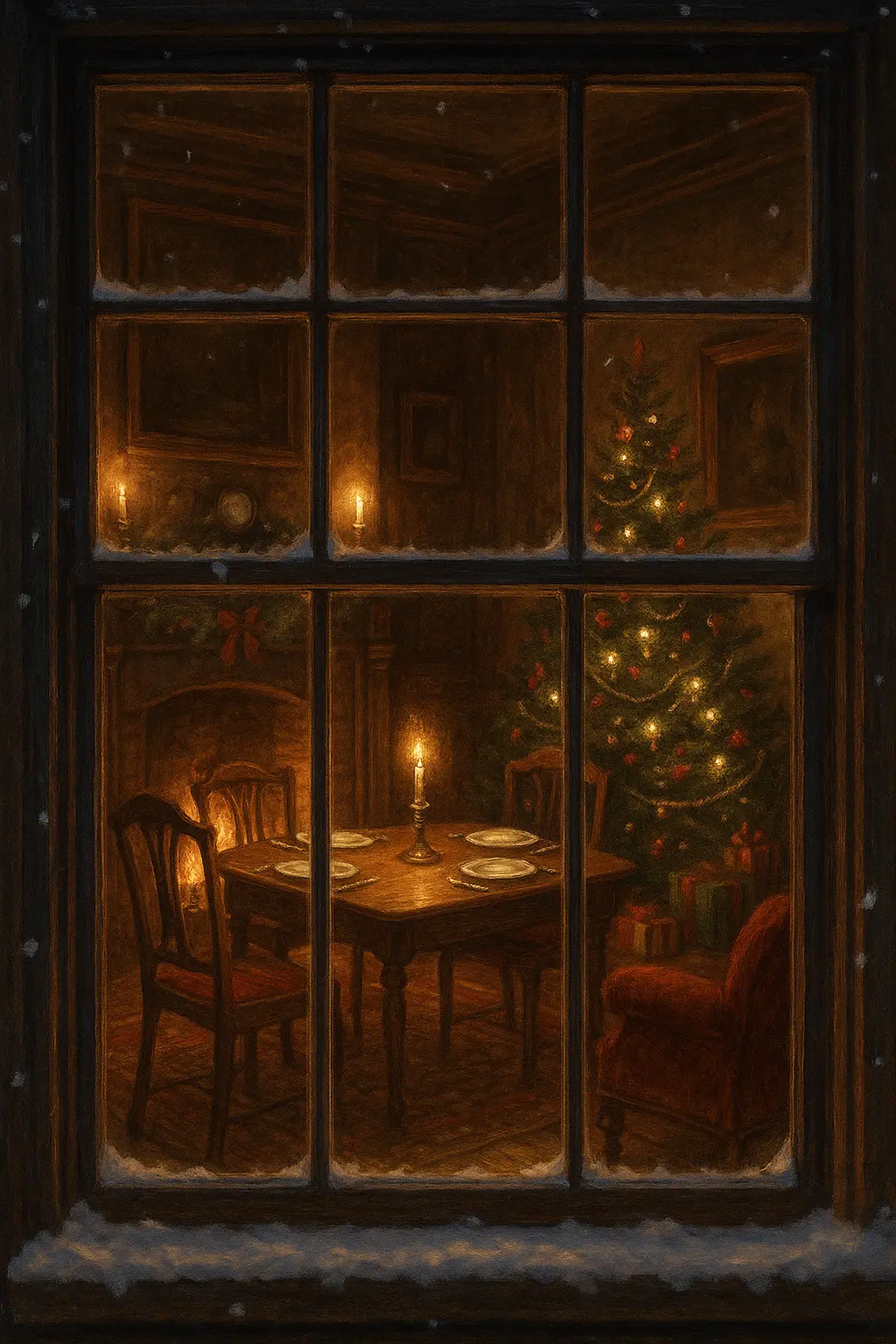
The Ghost of Christmas Past does not arrive with accusations. It arrives with a candle. A quiet light held against the long dark.
It reminds us that Christmas was never meant to be loud.
Long before it became a commercial season, Christmas existed as a winter festival. Across Europe, long before Christianity formalised it, people marked the solstice as a moment of survival. The darkest days had arrived, and more importantly, they had begun to pass. Fires were lit. Food was shared. People gathered together not for spectacle, but for warmth, safety, and reassurance.
When Christianity later absorbed these older traditions, Christmas became a story of humility rather than excess. A child born in a stable. A holy event framed by simplicity, vulnerability, and care. Even for those who were not religious, the symbolism endured. This was a time to slow down, to soften, to recognise one another in the cold.
For much of history, Christmas was shaped by scarcity. In medieval Europe, winter meant hunger, isolation, and risk. A feast was meaningful because it was rare. A gift mattered because it was hard-won. Celebration was not an escape from reality, but a way of enduring it together.
Even as society industrialised, Christmas retained this character for a while. In Victorian Britain, a period that shaped much of what we still recognise today, Christmas was consciously reframed as a family-centred holiday. Charles Dickens’ A Christmas Carol itself was part of this shift, emphasising compassion, generosity, and social responsibility in response to the brutal conditions of industrial capitalism.
Importantly, Victorian Christmas was still modest. Decorations were handmade. Cards were personal. Gifts were small, often practical, sometimes homemade. Time spent together was the centrepiece, not an accessory.
What tied all these eras together was not tradition for tradition’s sake, but proportion. Christmas knew its place in the year. It was a pause, not a takeover. It was special precisely because it did not last forever.
The Ghost of Christmas Past reminds us that Christmas once understood winter. It leaned into it. It offered warmth without excess, celebration without pressure, and meaning without demand.
It knew how to be gentle.
The Ghost of Christmas Present
The Ghost of Christmas Present does not carry a candle. It arrives glowing. Loud. Overstimulating. Wrapped in tinsel and urgency.
This is Christmas as it exists now. Not as a moment, but as a system.
Somewhere along the way, Christmas stopped being a cultural ritual and became an economic event. A fiscal quarter. A growth target. The season now begins not when winter sets in, but when retailers decide it should. September becomes acceptable. October becomes normal. By November, refusal feels almost antisocial.
This did not happen overnight.
In the early twentieth century, mass production began to reshape Christmas. Department stores expanded gift-buying beyond necessity, turning abundance into aspiration. The rise of advertising reframed Christmas not as something you prepared for, but something you were sold.
Post-war consumerism accelerated the shift. The 1950s brought prosperity narratives, suburban ideals, and the modern image of the perfect family Christmas. Gifts multiplied. Expectations rose. Television beamed a single, glossy version of Christmas into millions of homes, quietly standardising what joy was supposed to look like.
By the late twentieth century, Christmas had fully aligned itself with growth logic. Black Friday crept across the Atlantic. Sales events framed restraint as foolishness. Spending was no longer just encouraged, it was positioned as civic duty. To consume was to participate. To opt out was to disrupt the economy.
Now, in late-stage capitalism, the transformation is complete. Christmas is no longer just commercialised, it is optimised. Algorithms predict our generosity. Loyalty schemes gatekeep affordability. “Limited time” offers manufacture urgency. Even nostalgia is packaged and sold back to us at scale.
This version of Christmas does not understand enough. It only understands more.
More spending. More consumption. More preparation. More performance. More emotional labour. More resilience from people who are already stretched thin. Participation is no longer optional. Opting out is treated as deviance rather than choice.
Generosity has been redefined as purchasing power. Love is measured in receipts. Thoughtfulness is outsourced to algorithms that tell us what we “should” buy for the people we already know best. Even the act of giving has been flattened into logistics.
What makes this particularly cruel is the moral framing. Christmas is still sold as kindness, warmth, and goodwill, even as it routinely produces stress, debt, exhaustion, and quiet resentment. People blame themselves for failing to enjoy it properly, rather than questioning the conditions imposed upon them.
The labour behind Christmas is unevenly distributed. Someone plans. Someone shops. Someone budgets. Someone cooks. Someone hosts. Someone absorbs the emotional fallout. This work is rarely named, rarely shared equally, and rarely acknowledged, yet it is treated as the price of admission.
And then there is the noise. Visual noise. Emotional noise. Advertising noise. A constant insistence that joy is urgent, happiness is compulsory, and dissatisfaction is a personal flaw. There is little space for grief, fatigue, neurodivergence, poverty, or simply wanting quiet.
This is Christmas as late-stage capitalism demands it. A tradition hollowed out and repurposed as an extraction engine. Not because people asked for it, but because the system rewards escalation and punishes restraint.
The Ghost of Christmas Present does not ask how we are feeling. It assumes we will cope. And it does not care when we don’t.
The Ghost of Christmas Yet to Come
The Ghost of Christmas Yet to Come does not speak. It does not need to.
It shows us a future that is not imagined, only extended.
If nothing changes, Christmas does not collapse. It expands.
The season begins earlier each year, not because people want it to, but because growth demands it. What was once a few weeks becomes a quarter of the calendar. What was once anticipation becomes exhaustion before December has even arrived. Refusal becomes increasingly difficult, not through force, but through inconvenience and social pressure.
Access to affordability narrows. Discounts are no longer public. They are conditional. Loyalty schemes, apps, subscriptions, and digital profiles determine who gets to participate “properly.” Christmas becomes tiered. Those without the right accounts, the right data trail, the right compliance, pay more. Those who cannot or will not engage are quietly penalised.
Debt normalises further. Seasonal borrowing is reframed as tradition. Financial stress becomes background noise. People enter January not just tired, but already behind. The cycle resets and accelerates.
Environmental damage continues, not dramatically, but steadily. Decorations designed to last a season. Novelty gifts designed to be discarded. Packaging engineered for convenience rather than endurance. Waste becomes an accepted by-product of celebration, and responsibility is pushed onto individuals rather than systems.
Emotionally, the space contracts.
There is less room for grief. Less room for difference. Less room for opting out. Christmas becomes increasingly performative, increasingly visible, increasingly surveilled. Participation is measured. Displays of joy are documented. Absence is noticed.
What was once a pause becomes a test.
This future does not arrive through force or spectacle. It arrives through convenience.
It arrives through updates, new terms and conditions, cheerful notifications, and subtle penalties for those who do not engage correctly. It arrives gently enough that resistance feels awkward rather than urgent. Opting out becomes friction. Compliance becomes the path of least resistance.
And perhaps most devastatingly, it arrives wrapped in familiarity. The same songs. The same imagery. The same language of warmth and goodwill. Only hollowed out further each year, until what remains is ritual without refuge.
The Ghost of Christmas Yet to Come shows us this not to frighten us, but to remove our ability to pretend we did not see it coming.
Because deep down, we already have.
A Late-Stage Capitalism Redemption
The purpose of seeing the future is not to surrender to it.
It is to remember that trajectories are not destinies.
Christmas does not need to be abolished, rescued, or reinvented from scratch. It does not belong to capitalism, even if capitalism has learned how to wear its skin. Beneath the layers of obligation, optimisation, and performance, something older and simpler still exists.
What Christmas needs now is not more effort, but less compliance.
A refusal to escalate. A refusal to compete. A refusal to treat exhaustion as the price of belonging.
A post-capitalist Christmas does not look dramatic. It looks smaller. Quieter. Intentionally bounded. It gives explicit permission to step back from traditions that cause stress, debt, or harm. It replaces obligation with consent.
Gifts stop being proof. They become gestures again. Sometimes they are handmade. Sometimes they are second-hand. Sometimes they are experiences, shared meals, long conversations, or time spent together without distraction. Sometimes they are nothing at all, and that is agreed upon in advance.
Generosity is no longer measured in spending, but in care.
Time is treated as a legitimate offering. Presence is valued more than presentation. People are allowed to say no without apology. Neurodivergent needs for quiet, pacing, and predictability are respected. Grief is not treated as an inconvenience to be hidden behind tinsel.
This version of Christmas understands winter.
It accepts darkness without trying to drown it in noise. It recognises that rest is not laziness, and that joy does not need to be loud to be real. It remembers that the point of gathering is not performance, but warmth.
Most importantly, it understands that meaning cannot be mass-produced.
A late-stage capitalism Christmas tells us that if we do not buy correctly, celebrate correctly, and feel correctly, we are failing. A post-capitalist Christmas quietly disagrees. It asks only that we be honest about what we can give, and gentle with ourselves and others when that is not much.
This is not nostalgia. It is discernment.
We do not need to save Christmas from the past or the future. We only need to stop letting the machine decide what it is for.
And in doing so, we might find that the thing we thought we had lost was never gone at all.
I remember a moment in therapy years ago that left a deeper mark than the therapist probably intended — or noticed.
I was venting about a reoccurring pattern in my life: buying something I’d genuinely looked forward to, only for it to break, be faulty, or fall short almost immediately. Then the tedious ritual of returning it — complaint forms, awkward phone calls, the emotional cost of having to prove your dissatisfaction. I sighed and said something like, “Why does this kind of thing always happen to me?”
Rather than meeting that statement with empathy or curiosity, the therapist snapped back with a kind of clinical bluntness that still echoes in my memory. She challenged the very validity of my frustration, as though I were being dramatic or irrational. Her goal, I think, was to dismantle the idea that this was something uniquely unfair happening to me.
But as the conversation unfolded, something horrifying dawned on me. Wait… this happens to everyone? We all just… accept this? As a normal part of modern life?
That wasn’t a moment of cognitive distortion. That was a moment of clarity.
What I had taken personally — what I thought was just my “bad luck” — was actually a symptom of something bigger, deeper, and disturbingly normalized. We live in a world where disappointment is designed in.
This article is about that world.
It’s about how mass production, once a triumph of innovation and progress, has lost its soul. It’s about how we shifted from making things that mattered to pumping out things that sell — regardless of whether they serve, last, or even work.
It’s about how we moved from purpose to profit — and the very real consequences of that shift. For us. For the workers behind the products. And for the planet.
A Brief History of Mass Production
Mass production, in its earliest form, was born out of noble intent: to meet the needs of a growing population, to make essential goods more affordable and accessible, and to improve the quality of life for everyday people. The Industrial Revolution, beginning in the late 18th century, marked a seismic shift from handcraft to machine-based manufacturing. What once took a skilled artisan hours or days could suddenly be done in minutes.
It wasn’t just about speed. It was about scale. Uniformity. Efficiency. The factory line allowed for interchangeable parts, standardized products, and economic growth on a scale never seen before.
By the early 20th century, Henry Ford’s assembly line had become the emblem of this new era. His Model T wasn’t just a car — it was a revolution in affordability and access. People who never imagined owning personal transportation could now do so. Mass production, at its best, was democratizing.
This promise extended beyond cars: textiles, tools, household goods, medical supplies, and even books and radios became widely available. The standard of living improved for millions. The world, in many ways, felt smaller, more connected, more empowered.
Mass production gave us the modern world.
But as with any great innovation, its shadow was waiting.
The Turning Point
At some point, the machinery that once served us began to reshape us.
Post-World War II, the gears of industry kept turning — but their direction subtly shifted. The focus moved from meeting needs to manufacturing wants. Advertising transformed from a means of informing customers to a mechanism of psychological manipulation. It no longer asked, “What do people need?” but rather, “How can we make them want more?”
This was the beginning of a new ethos: growth for growth’s sake.
Planned obsolescence became a legitimate design strategy. Products were engineered with intentional fragility, so they would break, wear out, or become outdated just fast enough to ensure another sale. Repair culture was actively dismantled, and warranties became ticking clocks. The promise of progress was quietly replaced by the necessity of replacement.
What had once been a marvel of accessibility was now a machine of dependency.
The consumer was no longer the empowered beneficiary of innovation — they were now the target. A data point. A captive audience for infinite cycles of buying, breaking, replacing, repeating. And all the while, the planet groaned under the weight of it.
What It Has Become
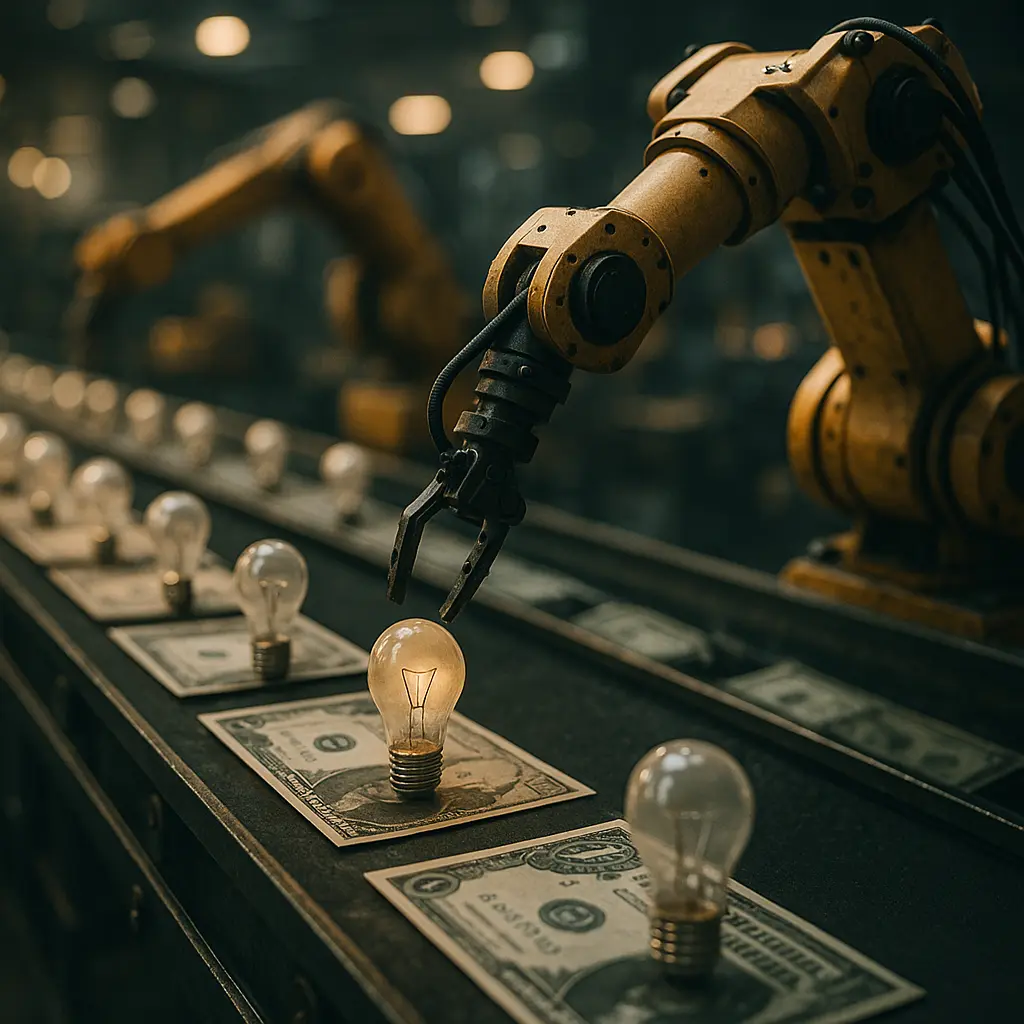
Today, mass production is less about delivering value and more about maintaining velocity. Products aren’t designed to serve us long-term — they’re designed to satisfy just enough to sell, then vanish into obsolescence. Many are created with the expectation of failure.
The results are everywhere:
Devices with sealed batteries that can’t be replaced
Gadgets that can’t be opened without breaking them
Appliances that cost more to fix than replace
Software updates that cripple older hardware
We’ve normalized a culture of disposability, where the act of buying is no longer about acquiring tools for living, but about participating in an endless loop of consumption. The value of a product is now measured in engagement, not endurance.
Even the illusion of choice is part of the deception. Browse online marketplaces and you’ll see hundreds of identical products under different brand names, all likely sourced from the same anonymous factory. Read the reviews and find fake praise propping up forgettable plastic.
The modern consumer market is a carnival mirror: distorted, disorienting, and reflective only of profit motives.
What once gave us progress, now feeds us clutter. What once promised empowerment, now manufactures dependency. And the harm isn’t just theoretical — it’s measurable, tangible, and mounting.
The Hidden Costs
To the consumer, the cost is emotional as much as financial. We waste time researching, comparing, returning, replacing. We internalize the sense that “nothing works anymore,” and carry the dull weight of lowered expectations. The joy of acquiring something useful has been replaced by the anxiety of wondering how soon it will fail.
To the worker, the cost is brutal. Mass production today relies heavily on exploitative labor: factory workers paid pennies, working long hours in dangerous conditions to meet quotas. Many are children. Many are women with no legal protections. Behind every “affordable” item is a supply chain built on invisible suffering.
To the planet, the cost may be catastrophic. The churn of materials, the energy spent manufacturing and shipping short-lived goods, the toxic waste of e-waste and plastic — it all contributes to ecological collapse. Landfills overflow with gadgets barely used. Oceans are choked with packaging. Resources are mined not for necessity, but for novelty.
And still, the machine demands more.
The system externalizes its costs. The real price isn’t on the price tag — it’s paid by someone else, somewhere else, or by the earth itself.
Why Do We Tolerate This?
Because we’ve been trained to.
It starts early. We learn not to expect things to last. We shrug when they don’t. We’re told that “things break,” that “this is just how it is now.” In place of quality, we’re given convenience. In place of durability, novelty. And in place of dignity, choice paralysis.
We tolerate it because resistance feels exhausting. Complaining means being passed from department to department. Returning an item means printing labels, queueing at drop-off points, repackaging disappointment. And all for what? Another version of the same.
We tolerate it because alternatives are gated by wealth. The high-quality, repairable, ethically sourced options do exist — but they come with a price tag few can afford. The rest are left to swim in the tide of cheap abundance.
We tolerate it because we’ve been gaslit into thinking we’re the problem. If you’re dissatisfied, you must have unrealistic expectations. If you’re struggling, you should have read the fine print. The system has trained us to feel grateful for crumbs and ashamed for wanting bread.
But perhaps most powerfully of all: we tolerate it because everyone else does. And when an entire culture adjusts its expectations downward, it starts to feel reasonable to accept the unreasonable.
Is There a Way Forward?
Not a perfect one. But many small ones.
The most immediate form of resistance is conscious consumption. Buying less, buying better, and researching where things come from. It means resisting impulse, delaying gratification, and sometimes choosing inconvenience in the name of principle. It’s not always possible — but even modest acts of refusal chip away at the machine.
Repair culture is rising again. Right to repair movements are pushing back against corporate monopolies on tools and parts. Online tutorials, fix-it cafes, and community makerspaces are giving people the confidence to reclaim their agency.
Open-source hardware and software offer blueprints for a new model: one based on transparency, modularity, and user freedom. These aren’t just alternatives — they’re acts of defiance.
Legislation matters too. Laws that limit planned obsolescence, mandate repairability, or require environmental responsibility are slowly taking root in some regions. These changes are slow — and often resisted by powerful lobbies — but they matter.
And finally, we can talk about it. Normalize the frustration. Name the absurdity. Share knowledge. Shame the brands that deceive. Celebrate the ones that still make things with care.
Cultural change doesn’t start with mass movements — it starts with a shift in conversation, with refusing to pretend that this is fine.
Conclusion
That moment in therapy still haunts me, not because my therapist revealed some profound truth — but because she didn’t.
She didn’t see the system. She couldn’t validate the pain. She was, in her own way, another casualty of the very machine I was grieving — so used to the dysfunction that she mistook my horror for irrationality.
But I wasn’t broken for feeling betrayed by the world. I was broken because that betrayal was being normalized — and even the spaces meant for healing couldn’t name it.
We’ve been sold a world of limitless convenience at a hidden cost. A culture that tells us to chase the new, discard the old, and never ask who’s paying the real price. A system that demands we tolerate the intolerable, not just with our money, but with our time, our trust, and our quiet resignation.
But awareness is a crack in the machine. It starts with noticing. With saying, “This isn’t normal.” With rejecting the idea that disappointment is an acceptable standard.
It’s not that we expect too much.
It’s that we’ve been trained to expect far too little.