Divide and Distract: How We’ve Been Trained to Fight the Wrong Enemy

There’s a trick being played on all of us.

Not a sleight of hand with cards or coins—but with narratives, identities, and emotional levers. It’s a trick so seamless that most people never realise they’re part of the performance. And even those who do see the misdirection often struggle to escape its grasp.

Here it is:


Manufactured Enemies

Scroll any social feed. Watch any televised debate. Eavesdrop on a crowded train. You’ll see it:

  • Left vs right
  • Boomers vs millennials
  • Masked vs unmasked
  • Rural vs urban
  • Vegans vs carnivores
  • iPhone vs Android

The content shifts, but the structure remains the same: us vs them.

The modern attention economy thrives on tribalism. It doesn’t matter if the war is over vaccines, identity politics, language, or lunch orders—what matters is that we’re constantly fighting someone. And more importantly, that we believe the other side is the reason things are broken.

But they’re not.

The real culprits are watching from above—largely invisible, fully protected, and often laughing.


When Rage is Rerouted

Righteous anger is one of the most powerful forces in existence. It can topple empires, end injustice, and forge solidarity across continents.

But misdirected?
It becomes a tool of oppression.

When we pour our outrage into culture wars, internet spats, and shallow memes, we expend real energy on phantom battles. We feel like we’re doing something—but in reality, we’re spinning our wheels while the real machinery of exploitation grinds on, uninterrupted.


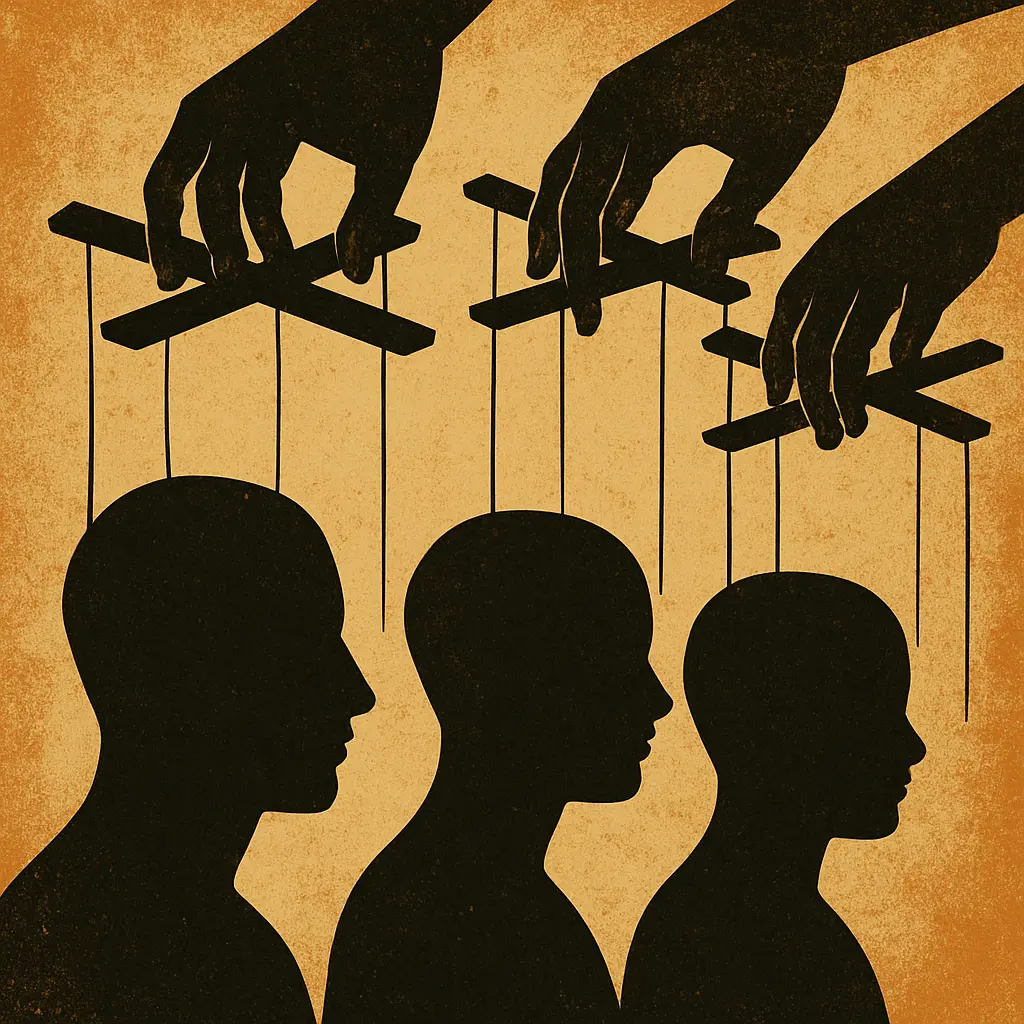
The Puppet Masters

Let’s name some of the true antagonists:

  • Mega-corporations extracting resources and dodging tax
  • Lobbyists writing laws behind closed doors
  • Surveillance firms profiling us under the guise of convenience
  • Billionaires hoarding wealth in a world that can’t feed itself
  • Algorithmic platforms radicalising users for ad revenue

These forces aren’t hidden in shadows. They’re right out in the open, but rarely seen as the enemy—because we’re too busy arguing over pronouns or pineapple on pizza.


But What About Accountability?

Yes, people still make harmful choices.
Yes, individuals can be complicit in cruelty.
Yes, ignorance can do real damage.

But focusing only on the individual is like blaming the leaf for falling when the whole tree is being poisoned. Systems shape behaviour. Narratives shape perception. And we are all shaped—whether we like it or not.


The Role of the “Smart Ones”

If you’re someone who sees the manipulation clearly, your role isn’t to stand above others—it’s to help redirect the lens.

Not with superiority. Not with contempt. But with precision.
Call out the sleight of hand.
Pull back the curtain.
Refocus the conversation.

Because right now, many of the smartest, most perceptive people are caught in the same web—burning themselves out arguing with reflections instead of breaking the mirror.


Solidarity Is a Threat

Here’s what terrifies the system:

  • When a poor conservative farmer and a leftist city renter both realise they’re being screwed by the same landlord class.
  • When neurodivergent people across ideologies start recognising shared patterns of exploitation.
  • When the working class, the disabled, the artists, the overworked and overlooked stop fighting each other and start asking, together:
    “Who’s benefiting from all of this?”

That kind of cross-factional awareness? That’s dangerous.

Because solidarity is hard to control.


The End of the Trick

We don’t all have to agree on everything.
We don’t need to form some utopian consensus.

But we do need to see the stage.
Recognise the magicians.
Refuse to be the props in their show.

Because when the people stop fighting each other, they might finally start fighting back.
The Idiots Aren’t the Problem: Misdirected Misanthropy in an Engineered Divide

Let’s start with something raw and uncomfortable:

Not because I want to. Not because it makes me feel good. But because it often feels true — especially in a world flooded with shallow opinions, regurgitated slogans, wilful ignorance, and a collective refusal to look beyond the surface of anything.

But here’s the deeper truth—one that hurts far more:

And if we don’t understand that, we risk becoming exactly what the system wants us to be: angry, superior, divided.


Weaponized Disdain

There’s a quiet kind of relief in misanthropy. It gives you someone to blame.
You look around and see a world on fire—and people watching it burn while arguing about which brand of lighter fluid to buy next.

It’s tempting to direct your rage downward:

  • “Why won’t they wake up?”
  • “Why do they fall for propaganda?”
  • “Why don’t they care?”

But what if they were trained not to?

What if distraction, ignorance, and tribalism aren’t signs of stupidity, but symptoms of psychological warfare?


The Architecture of Blame

Everything about modern society is designed to fragment us.
We’re not just encouraged to fight amongst ourselves—we’re engineered to.

  • Left vs Right
  • Poor vs poorer
  • Neurodivergent vs “lazy”
  • Ethical vs indulgent
  • Educated vs “sheeple”
  • Every micro-identity in endless battle for moral superiority

And while we tear each other apart, the architects of our suffering float untouched above the fray—untouchable, unblamed, and richer by the minute.


The Illusion of Choice

Yes, people parrot nonsense. Yes, they deny science. Yes, they post horrifying things on the internet.

But behind every foolish comment is a person shaped by years of manipulation:

  • An underfunded education system
  • Stress-induced tunnel vision
  • Algorithmic feedback loops
  • Culture soaked in shame, punishment, and performance

So when we mock the “idiots,” we’re often mocking the symptoms of systemic collapse.
And in doing so, we absolve the system of responsibility.


Awake, and Alone

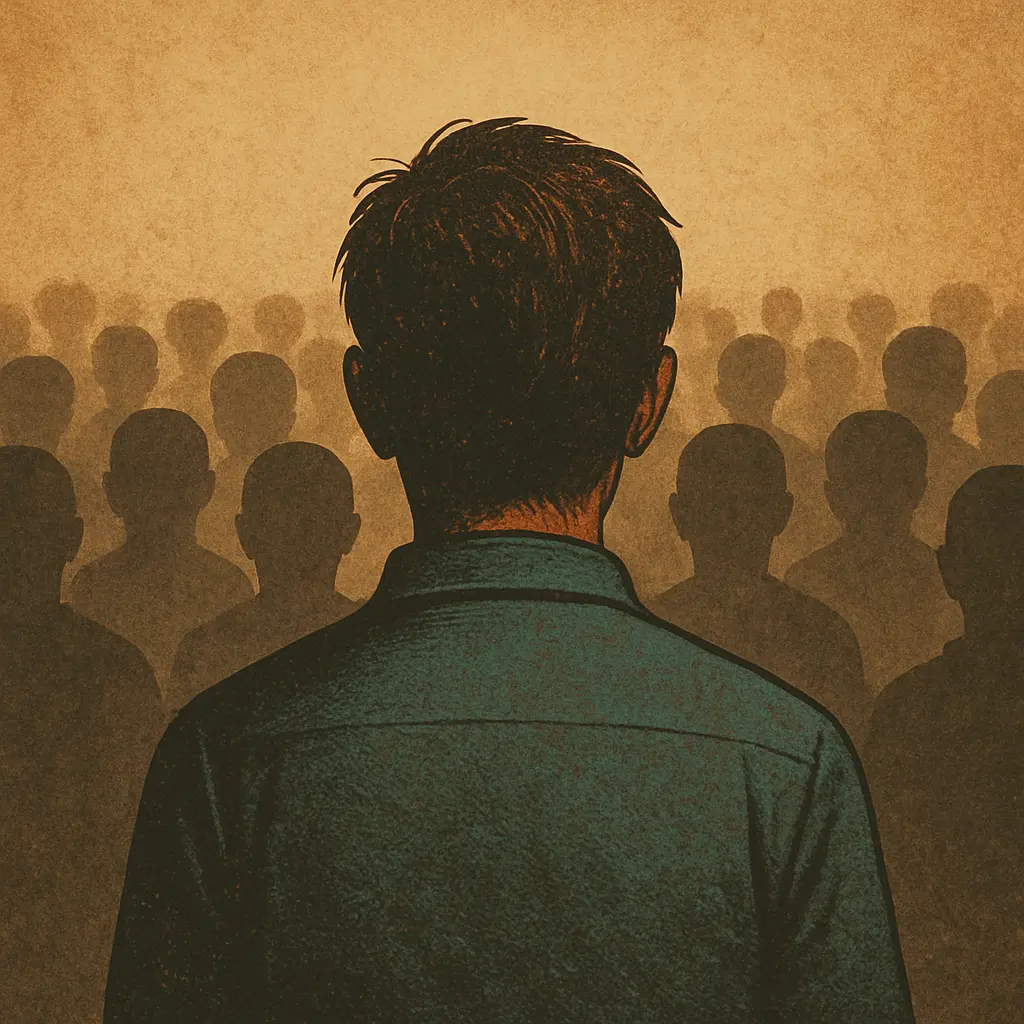
Those of us who see the manipulation clearly can feel isolated. It’s lonely to be awake in a room full of sleepers. The temptation to feel superior is strong—especially when your insight is met with mockery or silence.

But superiority is a trap.

It doesn’t lead to change. It doesn’t inspire connection. It only deepens the divide.

And worst of all? It makes you easier to control.

Because if you believe everyone else is the problem, you’ll never reach for collective liberation. You’ll wall yourself off. You’ll give up.


The Real Enemy

So let’s be brutally clear:
The enemy is not the unaware individual.
The enemy is the machine that benefits from that unawareness.

The corporations, politicians, media empires, and algorithmic puppeteers who:

  • Profit from ignorance
  • Weaponize distraction
  • Silence nuance
  • Turn suffering into spectacle

These are the forces that deserve our outrage.
Not the broken, numbed, hypnotised humans trapped beneath them.


Reclaiming Compassion Without Losing Fire

This isn’t a call to softness. It’s a call to precision.

We don’t need to stop being angry—we need to point our anger in the right direction.

That means:

  • Calling out manipulation, not just compliance
  • Critiquing systems, not just symptoms
  • Building solidarity across the fractures we’ve been taught to defend

Because the truth is: we’ve all been trained.
Some of us just noticed sooner.

Trained Not to Think: The Slow Death of Nuance

There’s something quietly catastrophic happening right under our noses.

It’s not a sudden event, not a single explosion we can point to and say there, that’s when it all changed. It’s more like a slow leak—an unseen corrosion of the collective psyche. A subtle but systematic dismantling of our ability to think deeply, question meaningfully, and sit with complexity long enough to understand it.

We are being trained not to think.

And worst of all? Most people don’t even realise it’s happening.


The Bite-Sized Brain

Our media landscape is increasingly dominated by short-form, low-commitment content. TikToks. Reels. Shorts. Endless scrolls of 15-second fragments, memes, and dopamine loops. Each piece designed not to provoke reflection, but to maintain momentum—keep you scrolling, laughing, liking, and forgetting.

There’s nothing inherently wrong with snack-sized entertainment. The issue arises when it becomes the default diet.

Over time, this steady stream of shallowness erodes the mental muscles required to engage with anything else. Articles become “too long.” Books become intimidating. Complex discussions become “boring” or “too much.” Even conversations that require nuance—about ethics, identity, politics, the planet—begin to fall apart because we no longer have the patience or attention span to hold the thread.


Algorithmic Amnesia

This isn’t just cultural drift—it’s a structural phenomenon. Social media platforms don’t just reward short-form content; they require it to thrive. Their algorithms are finely tuned to promote content that triggers reaction, not reflection. Engagement is king, and what engages is rarely what enlightens.

The platforms want us scrolling, not thinking. They want clicks, not contemplation. And over time, that design reshapes us.

We become addicted to novelty. Impatient with depth. Emotionally reactive. Distrustful of grey areas.
Nuance, in this environment, is not just inconvenient—it’s unprofitable.


The Disappearing Platform

As someone who writes longform, reflective articles—things that actually take time to absorb—I’ve noticed the shift personally. The number of people willing to engage with an argument from start to finish has shrunk dramatically. It’s not that people disagree with the ideas, necessarily—it’s that they no longer have the bandwidth to even hear them.

That should terrify us.

Because the issues that most desperately require attention—climate change, economic inequality, systemic manipulation, the future of AI—are complex. They require space. They demand nuance.
And yet, the public platform capable of holding that nuance is being eroded. The vessel for critical discussion is being shattered. What’s left are fragments: tweets, comments, outrage clips, soundbites.

And you cannot build collective understanding out of fragments.


Why This Matters

Some will argue: “This is just how things evolve. People want things quick and simple. It’s not that deep.”

But that’s exactly the point—it is that deep. Our appetite for oversimplification is being engineered, not chosen. We are not naturally allergic to nuance—we’re being trained to flinch from it.

This isn’t about elitism. It’s not about being “too clever” for the current world. It’s about being human. We are creatures of story, complexity, contradiction. We need space to explore, to change our minds, to hold two opposing truths at once.

When we lose that, we lose our grip on reality itself.
We become easy to manipulate.
We become unable to resist.
We become exactly what the system needs us to be: docile, distracted, divided.


Staying Awake

So what do we do?

We resist, in small ways at first:

  • Choose to read the full article.
  • Pause after a video and actually think about it.
  • Engage with things that challenge you, not just affirm you.
  • Support creators who give you substance, not just sugar.

And most importantly, when the world tries to shrink your attention span down to a goldfish loop of clicks and kicks—notice it. Name it. Fight it.

Because the death of nuance isn’t just the death of intelligent discourse.
It’s the death of our ability to understand anything at all.