
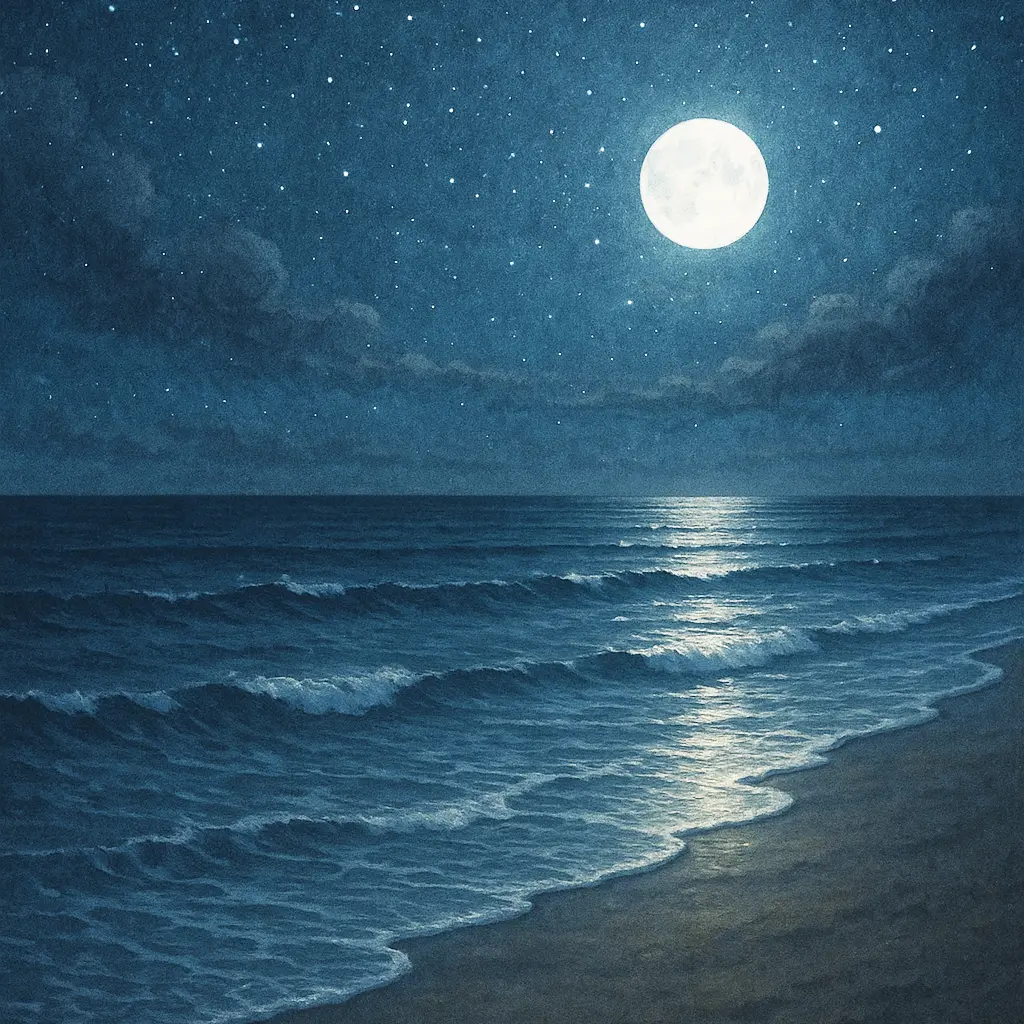
The Porous Mind
There are minds built like fortresses, and there are minds built like shorelines.
The fortress keeps the world out, solid, defined, and dry.
The shoreline breathes with the tide, reshaped by every wave that kisses it.
Creativity is born on that shoreline.
To be creative is to possess porosity, a mind permeable enough for the ocean of potential to seep in.
Ideas, emotions, archetypes, stray whispers from the collective dream, all of it flows through those who cannot help but listen.
They do not invent. They translate.
Yet this openness is not without cost.
The same currents that deliver beauty also bring wreckage: sorrow, confusion, fragments of other people’s storms.
The porous mind is always negotiating its borders, learning how much of the tide to let in without being pulled under.
And still, it listens. Because silence, for such a mind, would be a greater death than drowning.
For the creative, the act of making is not simply expression, it is osmosis.
The world breathes through them, and they breathe it back changed.
The Ecology of Potential
Beneath the surface of waking thought lies an unseen ecosystem, a vast and fertile ocean where ideas drift like plankton, multiplying in the dark. Most will never breach the surface. They swirl endlessly in silent gestation, invisible but alive.
This ocean is not ordered. It does not distinguish between wisdom and nonsense, beauty and monstrosity. It is a realm of becoming, where possibility itself experiments. To gaze into it is to witness the raw mechanics of creation, the way form gropes toward meaning, and meaning toward form.
Every consciousness draws from this sea, but only some hear its currents. The porous mind becomes a conduit between worlds, an evolutionary bridge through which potential finds its way into language, image, sound, or structure.
When an idea rises into awareness, it is not a spark conjured from nothing. It is a creature breaching the waves, the culmination of countless unseen collisions in the depths. And when it slips back beneath the surface, half-forgotten, it is not lost. It returns to the dark to feed new generations of thought.
Nothing in the ocean is wasted. Even the unborn ideas, the ones that never quite reached the light, fertilize the next tide of possibility. In that way, creation is less a single act and more a cycle of nourishment: consciousness feeding potential, potential feeding consciousness.
The Tragedy of the Unborn
For every idea that takes its first breath in the world, countless others die unnamed.
They shimmer for a heartbeat on the edge of awareness, a scent, a flicker, a sudden weight in the chest, and then dissolve back into the deep.
There is sorrow in that, though most never feel it consciously.
The mind learns to celebrate its children, not its miscarriages. Yet every artist, every thinker, has felt the ache of the nearly-formed: the melody that was almost remembered, the perfect line lost before pen met paper, the sense of something vast pressing at the gates of language but never quite entering.
These unborn ideas haunt the corridors of our dreams.
They become strange symbols, wordless moods, déjà vu. They linger like ghosts of meaning, neither alive nor gone, whispering: “We tried.”
But tragedy is not failure. In the greater cycle, their unfulfilled lives still matter. The half-born return to the ocean, breaking down into nutrients of inspiration. From their dissolution, new forms grow stronger, carrying faint traces of what came before, a rhythm, a texture, an emotional DNA.
The creative heart often aches for what it cannot remember. Perhaps that ache is the memorial, the soul’s way of honouring all that it could not bring into being.
The Responsibility of the Listener
To listen to potential is to take part in creation itself.
It is not a passive act, but a covenant. When an idea crosses the threshold into consciousness, it arrives fragile, trembling, uncertain of its shape. The listener becomes its first environment, its atmosphere.
Some people seize ideas like prey. They dissect them, brand them, harvest them for profit or validation. The idea, stripped of its mystery, dies quickly under fluorescent light.
But others receive with reverence, cupping the newborn thought in both hands, letting it breathe before naming it. These are the caretakers, the stewards of becoming.
To be a true listener is to resist the temptation of ownership. Ideas do not belong to us; they visit. They pass through, seeking resonance, seeking a place to crystallize.
Our task is not to claim them but to tend them, to ask, What does this idea need to live?
Sometimes the answer is action. Sometimes silence.
Sometimes it means letting the idea return to the deep, knowing it wasn’t meant for now.
The ethical creator learns to release with as much grace as they receive.
To treat ideas as sacred is not sentimentality; it is realism.
They are alive, and like all living things, they thrive where they are met with care, humility, and awe.
Dreams as Refuge for the Unborn
When the waking mind grows too narrow for them, the unborn ideas find sanctuary in dreams.
There, language loosens, form forgets its boundaries, and the mind becomes oceanic again, receptive, weightless, forgiving.
Dreams are nurseries for the half-formed.
They are where impossible geometries are allowed to stand, where logic softens enough for paradox to breathe. The painter dreams of colours that do not exist; the composer hears chords that waking physics cannot yet permit. In the dream, potential rehearses itself.
Sometimes, when we dream vividly, we are not the dreamers at all but the dreamed, temporary vessels through which the unborn test embodiment.
We wake with fragments: a haunting image, a phrase, a sensation that refuses to fade. These are offerings from the deep, visiting spirits carrying the scent of unmanifest worlds.
Art, ritual, hallucination, trance, all open the same door.
They are technologies of permeability, ways of returning consciousness to the sea so the forgotten can breathe again.
Perhaps this is why the surreal feels sacred: it reminds us that imagination is not invention, but remembrance.
The Cosmic Cycle
Creation and destruction are not opposites; they are inhale and exhale.
The ocean of potential breathes through us in tides, what rises into form must one day return.
Every idea that dies enriches the field it came from. Every silence fertilizes the next voice. Even despair, when felt honestly, becomes a kind of compost. There is no waste in the greater ecology of thought.
We imagine ourselves as authors, but we are more like soil, momentary ground for something older than time. Ideas bloom through us, use us, and move on. And when we, too, dissolve, our lives return to that same ocean, our memories, our creations, our longings, all reabsorbed into potential, waiting to be dreamed again.
Somewhere, beneath all endings, the unborn ideas drift still.
They are not lost. They are preparing.
And when the next porous mind opens to listen,
the tide will rise,
and the ocean will remember its name.