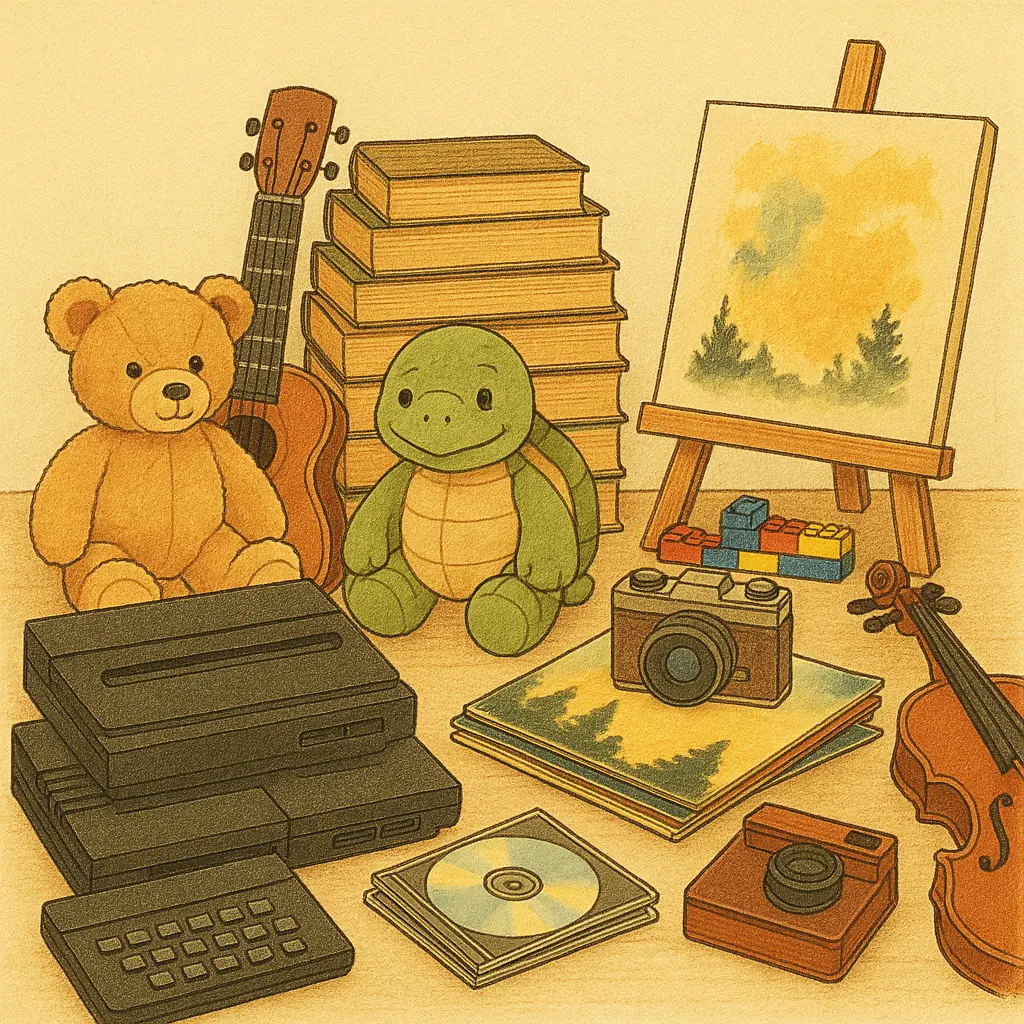
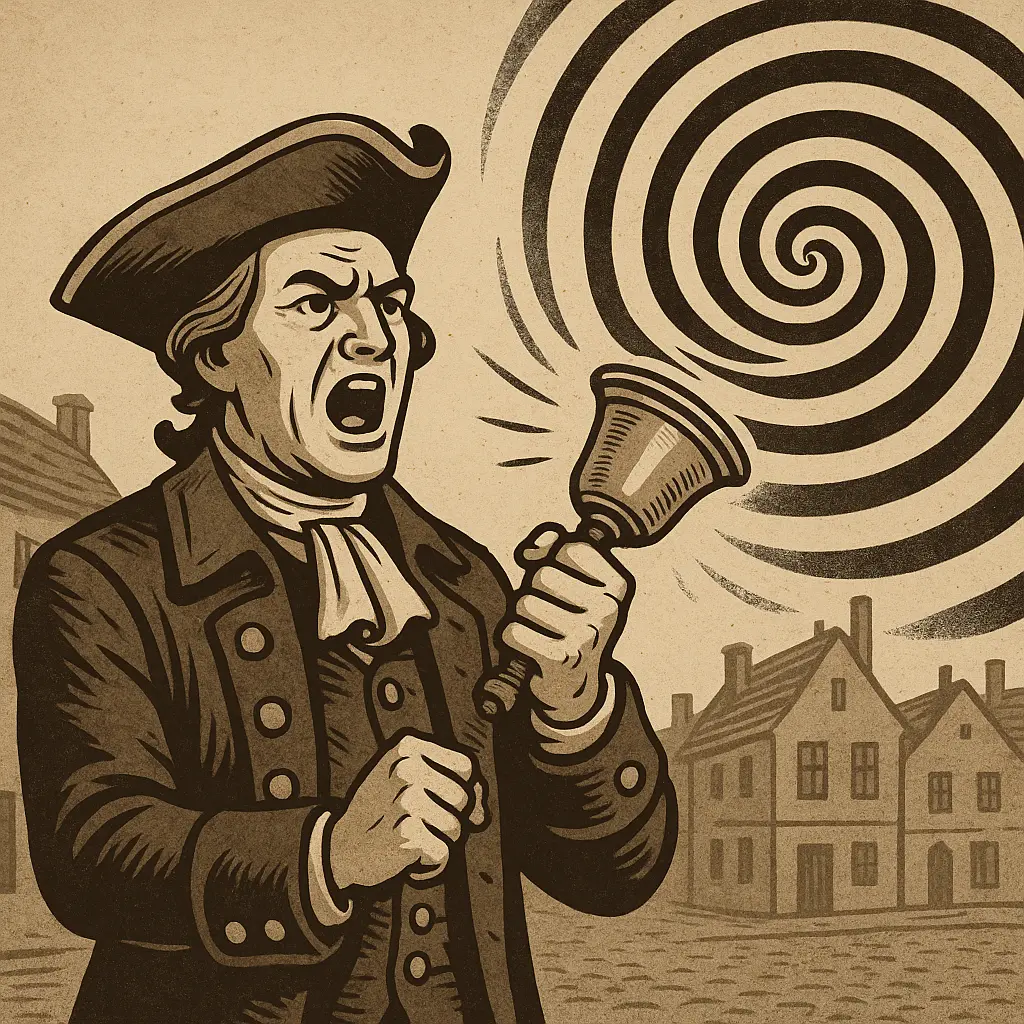
Nostalgia is often painted as a sentimental indulgence, a longing for the past, a soft blur of half-remembered feelings. But for many of us, it is far more than that. It is a quiet architecture of identity. Every object we keep, every CD, toy, photograph, or memento, is a fragment of the story that made us.
I have often described my living space as a small museum of personal meaning. A curated timeline of moments that mattered. Childhood toys that survived countless declutters. Old computer systems that no longer serve a practical purpose, but still hold a kind of sacred electricity: echoes of discovery, joy, and the early stages of creativity. It is not about utility. It is about continuity.
The Emotional Geometry of Memory
Each item represents a node in a vast emotional network. When we hold a particular object, it is not just the physical form that we engage with. It is the entire emotional landscape surrounding it. Nostalgia reactivates neural pathways, re-stitching fragments of self that time has scattered.
In moments of doubt or disconnection, these touchstones whisper: You have been many things, and you are still all of them.
Nostalgia as a Survival Mechanism
Some might dismiss this tendency as hoarding, an attachment to material things. But for many of us, it is more like archiving the self. The world moves fast. Technology shifts. Cultures reinvent themselves overnight. When everything else feels transient, nostalgia anchors us to something recognisable. It is not an escape. It is orientation.
The drive to preserve our past may actually be a form of self-preservation. When we feel overwhelmed, our collections remind us of our continuity through time. They say: You have made it this far.
The Alchemy of Meaning
Over time, even useless things can become symbolic. A broken toy becomes a relic of innocence. A scuffed CD becomes a fossil of a forgotten feeling. Through nostalgia, we turn ordinary matter into metaphysical gold, our own private form of alchemy.
Perhaps the real function of nostalgia is integration. It allows us to carry the past forward without being trapped by it. It is not just remembering. It is honouring.
When Nostalgia Turns Heavy
Of course, even meaning can become weight. There is a fine line between collecting memories and being buried beneath them. I have learned to part with things when their energy shifts, when they stop representing connection and start representing stagnation. Letting go can be another form of honouring too: acknowledging that the story continues elsewhere.
The Living Museum
In the end, nostalgia is not about recreating the past. It is about recognising that the past lives within us. Every artifact in my small museum serves as a mirror: a reminder of who I was, who I am, and who I continue to become.
Maybe we keep these things not because we cannot move on, but because we understand that moving forward does not have to mean leaving everything behind.
I grew up in the 1980s, when television advertising still had a kind of charm. I remember the jingles, the mascots, the catchy slogans that managed to lodge themselves in your head for weeks. Even as a child, I knew they were trying to sell me something, but at least they did it with some flair. They felt like part of the entertainment itself.
Something has changed since then. Advertising is no longer something that interrupts culture; it has become the culture. Every space, every platform, and every idle moment now feels colonised by a hidden intention to sell. To understand how we arrived here, it is worth tracing how advertising has evolved from a loud street-side performance to an invisible system of persuasion that shapes our sense of self.
The Loud Salesmen
The earliest form of advertising was brutally honest. Ancient merchants shouted in markets, painted signs on walls, or hung banners above their stalls. When mass printing emerged in the 1800s, advertising became more widespread but no less direct. Newspapers were filled with promises of miracle tonics, soap that made you beautiful, and pills that cured everything from toothache to heartbreak. These were primitive, manipulative, and often fraudulent, but at least you knew what you were looking at. Someone was selling, and you were free to walk away.
The Mad Men Era
The 20th century transformed advertising into an art form. With the rise of radio and television, storytelling became the new language of persuasion. Campaigns no longer sold only a product; they sold an identity, a dream, a way of life. The Coca-Cola Santa Claus, the Marlboro Man, and the perfect suburban family all came from the same creative laboratories.
This was the era of the “ad man,” immortalised in cultural artefacts like Bewitched or later Mad Men. Advertising was portrayed as a glamorous profession. These were the people who didn’t just reflect society; they helped build it. The line between commerce and culture began to blur.
The 80s and 90s: Ads as Entertainment
By the 1980s and 1990s, advertising had taken on a theatrical quality. It was playful, colourful, and memorable. Mascots like Tony the Tiger, slogans like “Just Do It,” and tunes you could hum all day made adverts feel like short pieces of performance art. They were still manipulative, of course, but they wore their intentions openly.
Looking back, perhaps this is why many people from my generation recall old ads with a strange fondness. They were transparent. They worked hard to win your attention rather than simply steal it.
The Weird and Annoying Years
Somewhere in the late 1990s and early 2000s, advertising lost its balance. It became surreal, loud, and deliberately irritating. Think of Crazy Frog, the Budweiser frogs, or the unnerving Burger King mascot. Annoyance became a marketing tool. If something got stuck in your head, even out of frustration, the job was done.
This was the period when “going viral” became a goal before social media even existed. The absurdity was the message.
The Internet Disruption
When the internet arrived, advertising was clumsy but eager. Early banner ads were brightly coloured, flashing boxes that you could easily ignore. But the industry adapted quickly. As data collection improved, advertising became personal. It stopped shouting to the crowd and began whispering to the individual.
This marked the rise of surveillance capitalism. Every click, search, and pause became a data point. You were no longer a passive audience member; you were a psychological profile to be targeted. The salesman had followed you home and was now reading your mind.
The Age of Disguise
By the 2010s, advertising learned to hide in plain sight. Sponsored posts, influencer endorsements, and “native” content made it difficult to tell where information ended and manipulation began. Search engines, news sites, and social platforms quietly filled with ads disguised as genuine results.
South Park once parodied this perfectly with its storyline about intelligent ads (Season 19). It was satire, but it was also prophecy. Today, even image searches are littered with sponsored results. The ad no longer wants to be seen; it wants to be believed.
Culture as Commerce
This is the stage we now find ourselves in. Advertising has stopped orbiting culture and instead absorbed it completely. Everything is for sale, including identity itself.
People no longer ask “What do I like?” but “What do I subscribe to?” We define ourselves through brands and platforms: Apple or Android, Nike or Adidas, Netflix or Disney Plus. Even rebellion is commercialised. You can buy “authenticity,” but only if you can afford the price tag.
Advertising has achieved what no political ideology ever could. It has replaced meaning with marketing and turned culture into a series of brand alignments.
Conclusion: From Persuasion to Colonisation
Advertising began as a voice shouting in the marketplace. It evolved into storytelling, then spectacle, then infiltration. Today it is everywhere and nowhere, woven into the fabric of our reality.
The change that occurred over the last century is more than technological. It is philosophical. Advertising no longer sells products; it sells identities. It shapes our desires before we even know we have them.
Perhaps that is why so many of us feel weary. We are not just tired of being sold to; we are tired of living inside the sale itself.
I’ve long been seen — accurately, I suppose — as someone who’s deeply critical of capitalism. I’ve written about its harms, spoken against its cruelties, and refused to romanticize its supposed triumphs. But I want to be clear: my position isn’t as simple as “capitalism is evil.” It’s more layered than that. And, I think, more important.
The truth is, I don’t necessarily object to capitalism in theory. Its founding ideas — voluntary exchange, innovation through competition, personal agency — aren’t inherently bad. In fact, I can even acknowledge that in certain historical contexts, capitalism unlocked progress. It introduced new efficiencies, raised living standards for some, and created systems of exchange that felt freer than what came before.
But here’s the problem: ideas don’t live in theory. They manifest through people — and people bring power, greed, fear, and inequality to the table. Just as communism is often written off for the ways it failed in practice, capitalism too must be examined through what it has become, not what it once promised.
We’re not in the Industrial Age anymore. We’re not in post-war recovery or the dawn of the internet. We’re in a different world entirely — a burned-out, over-leveraged, crisis-laden stage of history where the returns of capitalism are not only diminishing, they’re actively eroding the foundations of life.
So, this is not a rant. It’s a reckoning. A moment of pause. A chance to ask: Has capitalism passed its point of usefulness? And if so, what happens next?
Capitalism as an Idea vs. Capitalism as a Reality
Capitalism, at its core, is not a cartoon villain. It didn’t arrive with horns and a pitchfork, declaring war on humanity. It emerged as a system of trade, incentive, and competition — an economic response to stagnation, feudalism, and centralized control. In theory, it offered liberation: the freedom to produce, to own, to exchange, and to innovate without waiting for permission from monarchs or ministries.
There is value in that idea. Even now, many of capitalism’s foundational principles can sound appealing:
Voluntary exchange between individuals
Incentivized innovation through profit
Competition to drive efficiency and improvement
Private ownership as a safeguard against tyranny
These are not, on their own, evil concepts. In fact, in a vacuum, they can even seem moral — fostering agency, reward for effort, and the pursuit of ideas.
But we don’t live in a vacuum.
We live in a world where ideas are shaped, implemented, and twisted by very human hands. And this is where capitalism’s reality begins to split from its myth.
In practice, capitalism doesn’t exist in some pristine theoretical form. It lives in legislation, in lobbying, in advertising algorithms, in debt traps, in gig economies, in sweatshops, and in billionaires profiting from human suffering. It thrives in the grey space where “freedom to trade” becomes “freedom to exploit,” and where “reward for innovation” becomes “reward for monopolizing.”
It sells itself as a meritocracy — but its playing field was never level. It claims to reward hard work — but it often rewards inherited wealth, systemic privilege, and the ability to offload consequences onto others. It masks these contradictions with comforting stories, like the underdog entrepreneur or the innovation hero, while hiding the pipelines of extraction and harm that fund its foundation.
In short: the problem isn’t just the idea of capitalism. It’s what the idea becomes when filtered through centuries of inequality, short-term thinking, and unchecked greed.
And most importantly — it’s what the idea is doing now.
In an earlier phase of history, we might have argued that capitalism was simply flawed, in need of regulation or reform. But today, we face a more pressing question:
Has capitalism outlived its usefulness? Has the cost of maintaining it begun to outweigh the benefits it can realistically provide?
This is the question we now have to face. Not as ideologues, but as participants in a crumbling system.
The Threshold of Diminishing Returns
Every system has its curve. In the early stages, small inputs can yield great rewards — fertile ground, fresh momentum, and a sense of upward motion. But eventually, the same actions produce less impact. You have to burn more fuel just to keep going the same speed. The ground becomes less fertile. Growth turns to strain. What once worked begins to break.
Capitalism is now at that point.
In its early centuries, it offered rapid progress — new technologies, expanding economies, rising life expectancy (for some), and access to material goods previously unimaginable. Its defenders still point to those achievements as proof of its legitimacy.
But the arc is bending.
Today, we are watching as those once-celebrated returns shrink, while the collateral damage multiplies. The same system that once lifted some out of poverty now traps many in precarity. The innovation engine keeps running, but increasingly to produce what? Faster phones? Endless subscriptions? Infinite choice with no time to choose?
Here are just a few ways the law of diminishing returns is now revealing itself:
Economic Saturation
Productivity continues to rise, but wages remain stagnant.
Growth no longer lifts all boats — it inflates yachts and sinks lifeboats.
Real estate “markets” have turned shelter into speculation.
Workers are more replaceable than ever, despite being more essential than ever.
We’re not building prosperity — we’re sustaining inequality.
Environmental Collapse
The system demands perpetual growth — but the planet is finite.
Resource extraction accelerates even as the earth’s systems fail.
Carbon offsetting and “green capitalism” become PR tools, not solutions.
Capitalism’s success depends on ecological failure — and it’s running out of biosphere to burn.
Psychological Exhaustion
The pursuit of efficiency leaves no room for meaning.
The algorithm doesn’t care if you’re fulfilled — only if you’re engaged.
Burnout becomes a baseline state, while joy becomes a luxury commodity.
We are more connected, yet more alienated. More “free,” yet less present.
Innovation for Innovation’s Sake
Most “new” products are variations, not breakthroughs.
Planned obsolescence replaces craftsmanship.
Creativity bends to the logic of clicks and quarterly reports.
We are no longer innovating for humans. We are innovating for markets.
These aren’t growing pains. They’re signs of saturation. We’re pushing the system beyond its capacity to deliver anything other than diminishing returns — even as it consumes more time, energy, attention, and planet than ever before.
And crucially, this decline is not evenly felt. The poorest are hit hardest. The youngest inherit the worst. The Global South pays the bill for the Global North’s convenience.
Capitalism doesn’t die with a bang — it withers, slowly, under the weight of its own promises.
This threshold is not coming. We are in it. The real question now is whether we continue propping up a system that feeds on exhaustion — or whether we begin imagining something else.
The Human Filter — Greed as the Distortion Lens
No economic system exists in a vacuum. Every idea, no matter how elegant on paper, must pass through the unpredictable, flawed, hopeful, fearful, greedy filter of human nature.
This is where the story of capitalism becomes less about ideology and more about psychology.
Because capitalism doesn’t just allow self-interest — it depends on it. It assumes that when each person acts in their own interest, the whole system benefits. That invisible hands will guide markets toward the common good. That competition will self-correct greed. That the quest for profit will always align with the advancement of society.
But in practice, we’ve seen a very different outcome:
Greed doesn’t self-limit — it compounds.
Power doesn’t decentralize — it consolidates.
Profit doesn’t trickle — it pools.
Capitalism rewards efficiency — but it doesn’t ask efficient for whom? It rewards growth — but never questions what’s growing, and at what cost?
Over time, this creates a feedback loop. Those who succeed in the system gain more resources to rewrite the rules in their favor. Wealth becomes power, and power protects wealth. Regulation becomes suggestion. Exploitation becomes strategy. And soon, what once looked like opportunity becomes an unscalable wall for most — a gilded cage for the rest.
Just like communism was disfigured by authoritarianism, capitalism too has been disfigured — but in subtler, more insidious ways. It hides its cruelty behind branding. It wraps structural inequality in lifestyle aesthetics. It calls wage slavery “flexibility,” and exploitation “freelance freedom.” It launders oppression through the language of choice.
And because of this, the system becomes increasingly hard to question. Anyone who challenges it is accused of being naïve, lazy, ungrateful, or worse — a threat to “freedom.” But what kind of freedom demands you sell your time, your health, and sometimes even your ethics just to survive?
The issue isn’t that humans are greedy. It’s that capitalism offers greed a throne, a crown, and a PR team.
We don’t need perfect people to build a better system. We need systems that expect imperfection, and are designed not to elevate the worst parts of us.
The Subtle Fall of Capitalism
Revolutions are loud. They burn flags, topple statues, storm gates. But systems don’t always die with such drama. Sometimes, they simply stop working. Their rituals lose meaning. Their promises grow stale. Their language becomes hollow. And eventually, without needing a coup or a civil war, they fall — not with a bang, but with a shrug.
Capitalism may be heading in that direction.
It’s not collapsing in fire — it’s hollowing out. Its slogans still echo — but fewer people believe them. Its institutions still operate — but more people are opting out.
The signs are everywhere:
Young people are turning away from traditional work models, rejecting corporate careers and instead choosing creative paths, gig work (even with its flaws), or grassroots community efforts.
Consumers are beginning to ask where their products come from, how they’re made, and what values they support — not always perfectly, but more than before.
Employees are walking out, unionizing, quitting en masse in what’s been called the “Great Resignation.”
Conversations about degrowth, post-capitalism, universal basic income, and alternative ownership models are no longer fringe ideas — they’re entering mainstream dialogue.
The system is still standing, but its cultural legitimacy is cracking. And systems without cultural legitimacy don’t need to be overthrown. They simply rot from the inside until they’re replaced.
This isn’t utopian wishful thinking. It’s a shift in where people place their faith. In the past, capitalism was accepted almost as a law of nature — as inevitable. But inevitability is a myth, and once enough people stop believing in it, the ground begins to shift.
People are no longer asking, “How can we fix capitalism?” They’re starting to ask, “What if we stopped needing it at all?”
And the more that question gets asked, the more viable the alternatives begin to feel. Even small-scale experiments — cooperative housing, open-source projects, time banks, community land trusts — begin to expose capitalism’s flaws simply by working without it.
Capitalism may not need to be destroyed. It may simply need to be outgrown.
This is not about instant transformation. Systems don’t vanish overnight. But they do lose their hold when people begin to imagine life beyond them — and act on those imaginings.
Where the Real Fight Is Now
If capitalism is indeed hollowing out — not through sudden collapse but through erosion of meaning — then the battle isn’t where we were told to look. It’s not on the trading floor, or in elections, or even in the courtroom. The real fight now is quieter. Slower. Often invisible.
It’s happening in minds. In stories. In values. It’s happening every time someone asks, “Is this really the only way?”
This is not a call for armed revolution. It’s a call for intellectual defiance — and creative alternatives.
Because maybe we don’t need to defeat capitalism. Maybe we just need to stop obeying it — not by force, but by imagination.
Here’s what that looks like:
Refusing the Narrative
Capitalism relies on a myth of inevitability — that there is no alternative. That you’re either with the system, or you’re a naive idealist. But every time someone questions that binary, a crack appears in the façade.
We can fight back by refusing the frame. We can remind ourselves that the “natural order” is often just a story told by those in power.
Building Outside the Machine
You don’t need to fix capitalism to begin building beyond it. Micro-resistance is still resistance. Every time someone:
shares skills without profit,
creates without metrics,
forms community without hierarchy,
organizes without exploitation,
…they’re laying foundations for something after.
Reclaiming the Self
The system feeds on exhaustion. Burnout isn’t a glitch — it’s fuel. But slowing down, setting boundaries, prioritizing rest and joy — these are radical acts in a culture that wants you maximally productive and minimally aware.
To be unhurried is to be ungovernable. To be still is to see clearly. To see clearly is to choose.
Choosing Connection Over Competition
Capitalism teaches us to view each other as rivals. But healing begins in solidarity. In collaborative creation. In collective reimagining. That doesn’t require perfection — just the willingness to reject the lie that we are alone in this.
The real rebellion might not be in burning the system down, but in making it obsolete — not by force, but by offering something better, truer, and more human.
That’s what I try to do. I write and produce music, not for charts, not for clicks, not to please some invisible algorithm — but for myself. For expression. For resonance. I refuse to let my creativity become content. It doesn’t exist to perform or convert. It exists to be.
In a system that commodifies every impulse and reduces every action to a potential monetizable outcome, that’s an act of quiet defiance.
And I’m not alone.
A System on Borrowed Time
Capitalism isn’t going to vanish overnight. It may not “fall” in the way empires of the past have fallen. There will be no singular moment where we wake up and say, it’s over now. That’s not how paradigms shift. That’s not how consciousness works.
But when a system begins to feel tired, forced, and unbelieved, that’s the beginning of its end.
And that’s where we are.
Its promises no longer land. Its rewards feel empty. Its logic rings hollow. And more people — quietly, bravely — are stepping away. Not necessarily into grand political movements or new isms, but into smaller, saner ways of being. Into mutual care. Into voluntary work. Into creative acts that refuse to be productized. Into lives measured not by output, but by meaning.
Capitalism will not be defeated by ideology, but by irrelevance. And irrelevance begins when enough people look at the machine and say: I’m done playing.
You don’t have to have all the answers. You don’t have to build the perfect alternative. You just have to see clearly — and choose, when you can, to live differently.
That may be the most radical thing anyone can do right now. Not to fight the system with its own weapons, but to put them down. To walk away. To begin again — with eyes open, hands free, and heart intact.
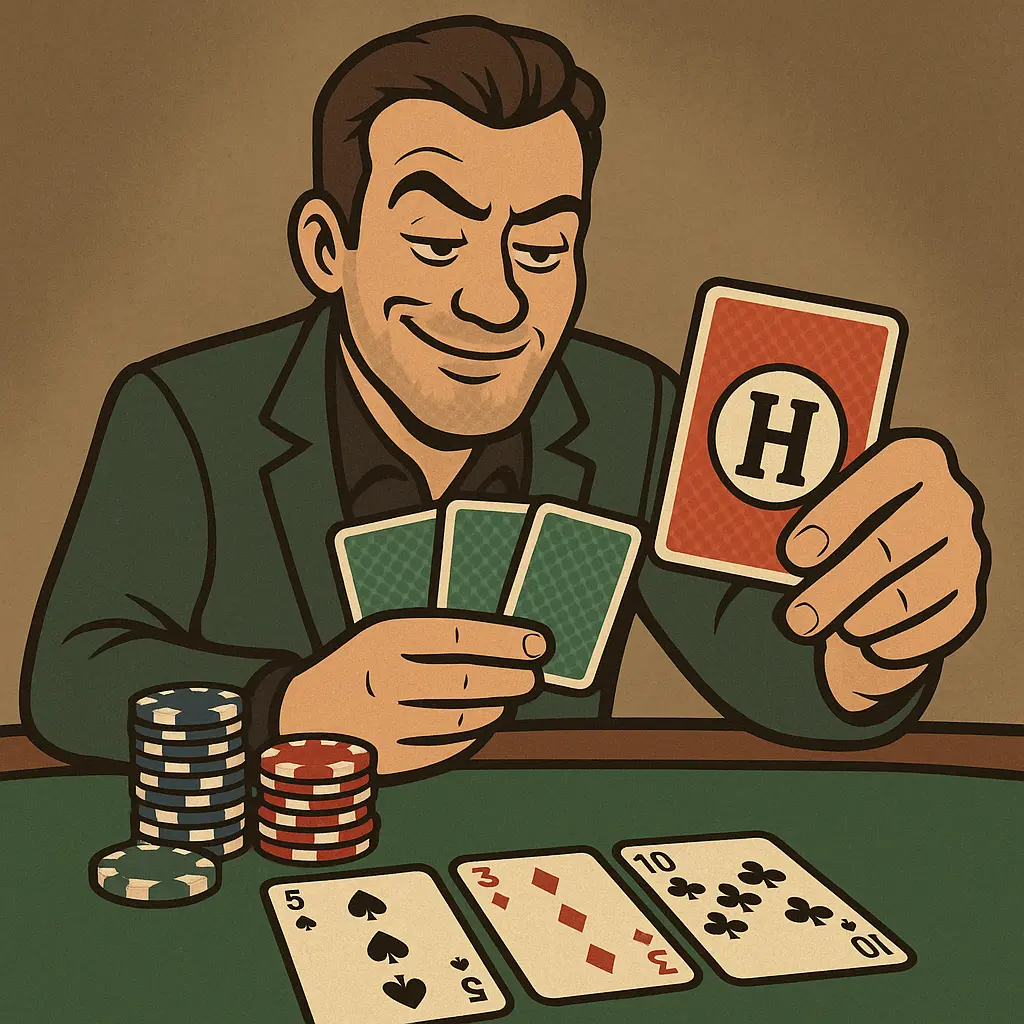
Welcome to The Fallacy Deck — a series exploring the rhetorical “trump cards” people play to shut down meaningful conversation. These aren’t just lazy arguments; they’re conversation-enders, often thrown onto the table with smug confidence, as if to say: “Checkmate.”
But real dialogue deserves better.
Each article in the series shines a light on one of these cards — dissecting the fallacy behind it, exposing the tactics it relies on, and asking what conversations we might finally be able to have if we stopped letting these cards decide the game.
There’s one name that ends arguments, silences nuance, and flattens reasoned discussion, probably more than any other: Hitler. Merely uttering his name is often enough to shut down conversation, to draw a moral line so sharp and final that any dissenting view is rendered irredeemable by proximity alone. In debates online and off, comparisons to Hitler are often wielded not as tools of critical thought, but as blunt instruments of dismissal.
But here’s the problem: this tactic doesn’t hold up under scrutiny. In fact, far from strengthening an argument, invoking Hitler in this way often exposes its weakness.
The Pattern of the “Hitler Card”
We’ve all seen it happen. A discussion becomes heated, points are exchanged, nuance fades—and then someone plays the Hitler card. Whether it’s comparing a modern politician to the Nazi regime, or using a tenuous link to suggest someone’s viewpoint is inherently dangerous, the invocation of Hitler is often a last-ditch attempt to gain moral ground.
And it works—not because it’s a good argument, but because it taps into a collective emotional wound. It hijacks the horror of history to shut down present-day discourse.
A Recognised Fallacy: Reductio ad Hitlerum
Interestingly, the tendency to invoke Hitler as a way of discrediting an argument is so common that it has its own name: Reductio ad Hitlerum. Coined by philosopher Leo Strauss in the 1950s, it refers to the fallacy of dismissing an idea solely because it was associated with Hitler or the Nazis. For example, saying, “You support environmentalism? Well, Hitler was an environmentalist too,” is a classic (and lazy) instance. It’s a textbook case of guilt by association, designed not to examine the argument’s actual merit, but to end the conversation through shock and shame. The fact that this fallacy is formally recognized reinforces how intellectually bankrupt this tactic truly is.
The Psychology Behind It
Reading between the lines, when someone reaches for a Hitler comparison, it often reveals more about their emotional state than the topic at hand. It’s a desperate attempt to claw back the weight of evidence. On a subconscious level, it can be a kind of white flag—an admission that they can’t win the argument on reason alone, so they reach for the nuclear option. It’s rhetorical carpet bombing.
It also makes the speaker feel powerful. In a world where moral high ground is a prized commodity, invoking Hitler is like hitting the “instant win” button—or so it seems. But in reality, it undermines genuine understanding and replaces complexity with performative condemnation.
The Dangers of Lazy Analogies
These kinds of comparisons do more harm than good. First, they trivialize the true horror of Hitler’s regime. When every authoritarian or disliked figure is casually equated with the architect of the Holocaust, we risk desensitizing ourselves to what that history actually means. The atrocities of Nazi Germany deserve more than to be used as shock-value talking points.
Second, these analogies create false equivalencies. Just because two things share a superficial resemblance doesn’t mean they are morally or historically comparable. This kind of shortcut in thinking discourages people from engaging with real, complex issues in favor of cheap outrage.
What We Should Do Instead
If someone’s ideas are dangerous, explain why they’re dangerous. Use history thoughtfully, not manipulatively. Resist the urge to shut down discussions with overblown comparisons and instead cultivate the patience to explain, to listen, and to engage.
Disagreement should never default to demonization. There is a strength in staying with the complexity, in resisting the temptation to oversimplify with a Hitler reference.
Conclusion: Rejecting the Shortcut
The Hitler card is not the sign of a strong argument. It’s a red flag that reason has left the room. And while the horrors of history must never be forgotten, neither should they be cheapened through rhetorical desperation. If we want to have meaningful conversations, we must learn to spot these shortcuts—and refuse to take them.
“There are little pockets of old time in London, where things and places stay the same, like bubbles in amber.” — Neil Gaiman, Neverwhere
Introduction
Have you ever wondered what’s going on right beneath our feet? London isn’t just a city above ground; it’s a vast, layered world below the surface, with an intricate network of infrastructure woven through soil, clay, and history. From gas pipes and fibre optics to ancient sewers and deep-level Tube tunnels, every layer tells a story of innovation, adaptation, and necessity. Join us on a journey down through the depths, as we explore the hidden city below.
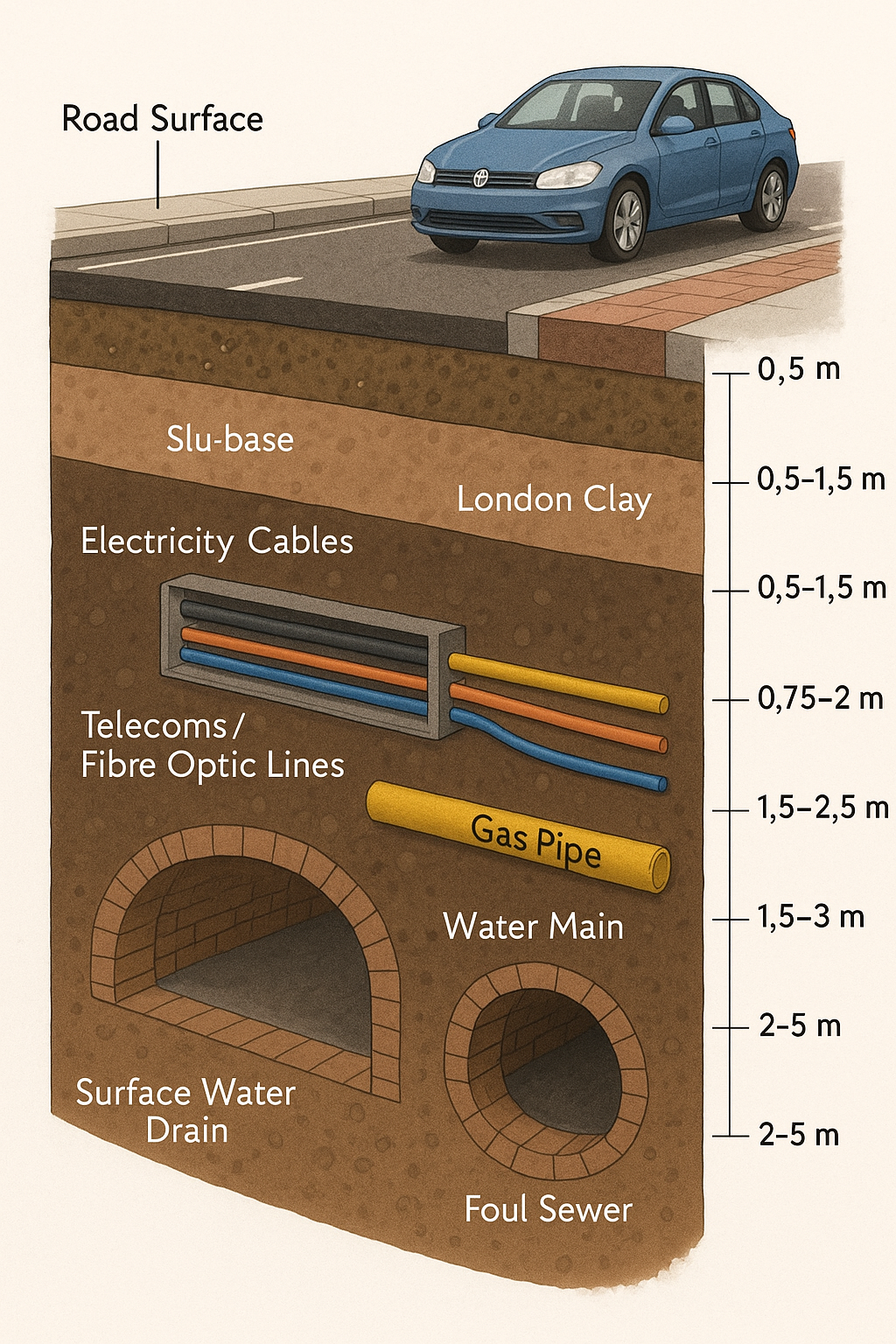
1. Road Surface and Sub-base (0–0.3m)
This is the topmost layer, the one we walk and drive on daily. It’s made up of asphalt (tarmac) and a crushed stone sub-base that helps distribute weight and provides structural integrity. Maintained by local councils, these layers are frequently resurfaced to repair potholes and wear from traffic.
2. Utility Lines: Electricity and Telecoms (0.3–1.5m)
Just beneath the surface lies a web of electricity cables and telecom/fibre optic lines, often housed in conduits. These are installed by utility companies like BT Openreach, Virgin Media, or UK Power Networks. Regular upgrades mean this layer is dynamic, adapting constantly to our growing digital and energy needs.
3. Gas Pipes (0.75–2m)
Gas infrastructure, typically made from yellow plastic or metal, delivers energy for heating and cooking. These pipes are managed by providers such as Cadent or SGN. Their depth helps protect against accidental damage from surface work.
4. Water Mains (1.5–3m)
Water mains, often the oldest parts of London’s infrastructure, supply clean water to homes and businesses. Thames Water oversees most of this system. Some mains still date back to the Victorian era—testaments to the durability of cast iron and early civil engineering.
5. Sewer Systems (2–5m)
London’s sewer network includes foul sewers (wastewater) and surface drains (rainwater), often large brick tunnels from the mid-1800s. Built under the guidance of Sir Joseph Bazalgette, this system saved the city from deadly cholera outbreaks and “The Great Stink” of 1858. Many of these tunnels are still in use today.
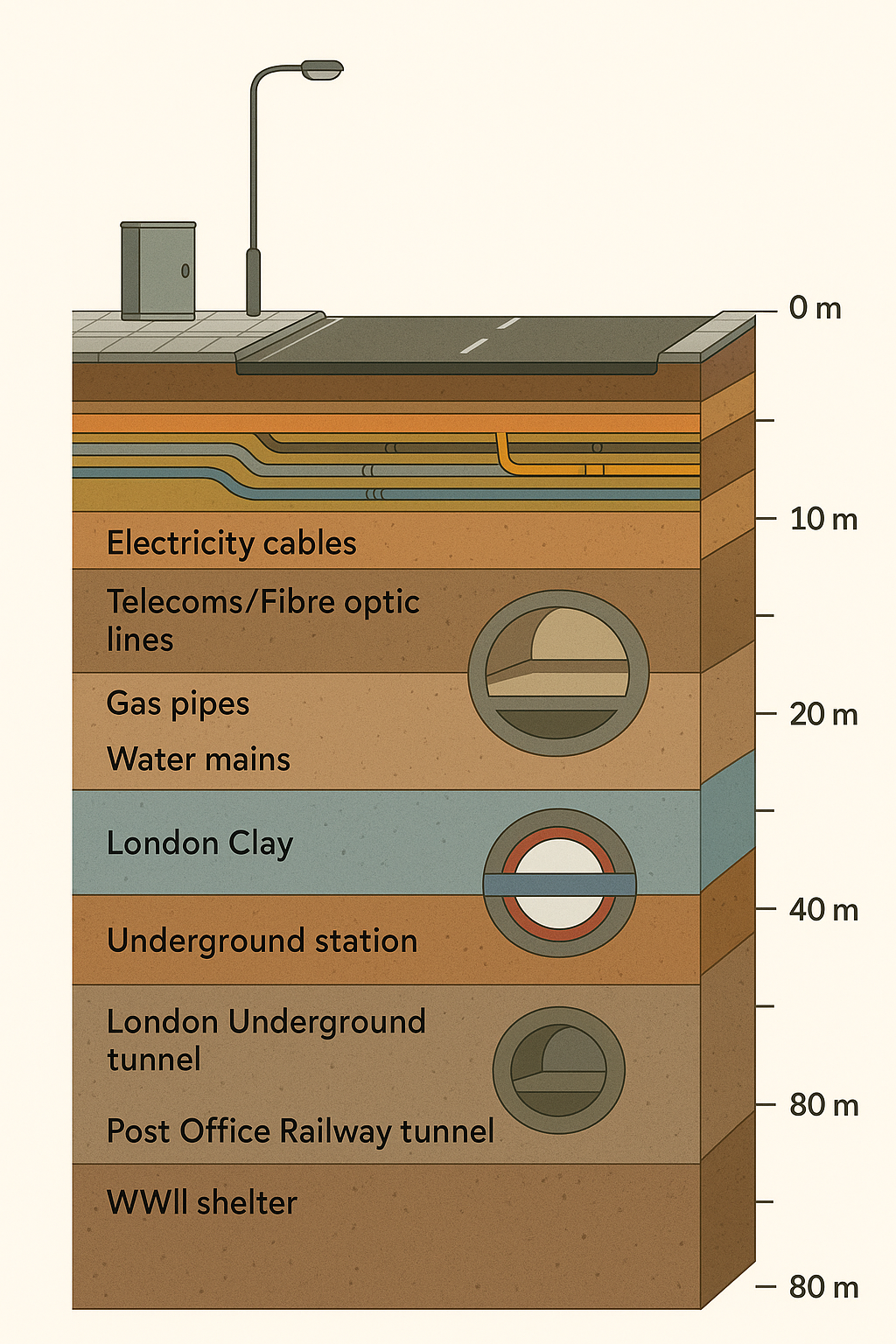
6. London Clay (varies ~4–40m)
Below the engineered layers lies London Clay, a dense, bluish sediment that’s perfect for tunneling. Its stability has enabled much of London’s deeper infrastructure, including Tube tunnels and bunkers. This natural geological layer has shaped how and where infrastructure can be safely placed.
7. Underground Stations (approx. 20–60m)
Deeper still are the London Underground stations. Subsurface stations (e.g., on the District line) are closer to the surface, while deep-level stations like Angel or Hampstead require long escalators or lifts to reach. Construction of these began in the late 19th and early 20th centuries, revolutionising city transport.
8. Tube Tunnels (20–40m)
Deep Tube lines such as the Northern and Piccadilly were created using tunnel boring machines, carving clean arcs through London Clay. These tunnels form a distinct ring in cross-section, and are reinforced with concrete or cast iron. They’ve been essential for commuting since the early 1900s.
9. Post Office Railway (aka Mail Rail, ~20m)
An often-forgotten relic, the Mail Rail was a driverless electric railway that shuttled post between sorting offices from 1927 to 2003. Now partially open as a museum, it runs even deeper than some Underground lines and offers a glimpse into the hidden logistics of old London.
10. WWII Bunkers and Shelters (40–80m)
During WWII, deep shelters were constructed as protection from aerial bombings. These included repurposed Tube stations and specially built chambers like the Clapham deep-level shelters. Some have since been used for secure storage, data centres, or even hydroponic farms.
Conclusion
Beneath the bustling streets of London lies a hidden, multilayered marvel of engineering and adaptation. Each level, from the surface to the deep clay, represents a chapter in the city’s history—of how it grew, coped, evolved, and prepared for the future. From the vital arteries of electricity and water to the silent corridors of the Tube and wartime bunkers, London’s subterranean infrastructure is a testament to human ingenuity. Next time you step onto a pavement, pause for a moment. Beneath your feet lies an entire hidden city.
A cautionary tale of espionage, absurdity, and the limitations of control
What do you get when you combine Cold War paranoia, cutting-edge surveillance tech, and a total disregard for feline autonomy? You get Project Acoustic Kitty—a very real CIA operation from the 1960s that feels like a rejected subplot from Archer.
The idea was simple in its madness: turn a cat into a mobile spy. Why? Because cats can go places humans can’t. They’re small. Stealthy. Adorable, even. Perfect for infiltration, thought someone in a very expensive suit.
So they did what the CIA does best: they poured millions of taxpayer dollars into it. They implanted a microphone in the cat’s ear, a radio transmitter at the base of its skull, and a battery along its spine. The poor creature was wired like a Cold War cyborg—but without consent, purpose, or understanding. It didn’t sign up for any of this. It just wanted to nap.
After extensive testing and surgical tinkering, the big moment came: the cat was released in Washington, D.C., near a park bench where two Soviet agents were reportedly sitting.
Seconds later, the cat wandered into the road and was immediately hit by a taxi.
That was it. Millions of dollars, years of research, and the life of a living creature—all flattened in an instant. The mission was aborted, the project scrapped, and the moral of the story was quietly buried beneath layers of government embarrassment.
But here’s the part that lingers:
This wasn’t just a failed experiment. It was a moment of grotesque poetry—a feline martyr sacrificed at the altar of control and surveillance. It exposes something all too human: our obsession with dominating the unpredictable, even when the subject is, by nature, uncontrollable.
Cats are not obedient tools. They are chaos in fur. And no matter how clever the tech, you can’t program agency out of nature.
Project Acoustic Kitty reminds us: Not everything can be wired, tracked, or turned into an asset. Some things just want to wander. And that, too, is sacred.
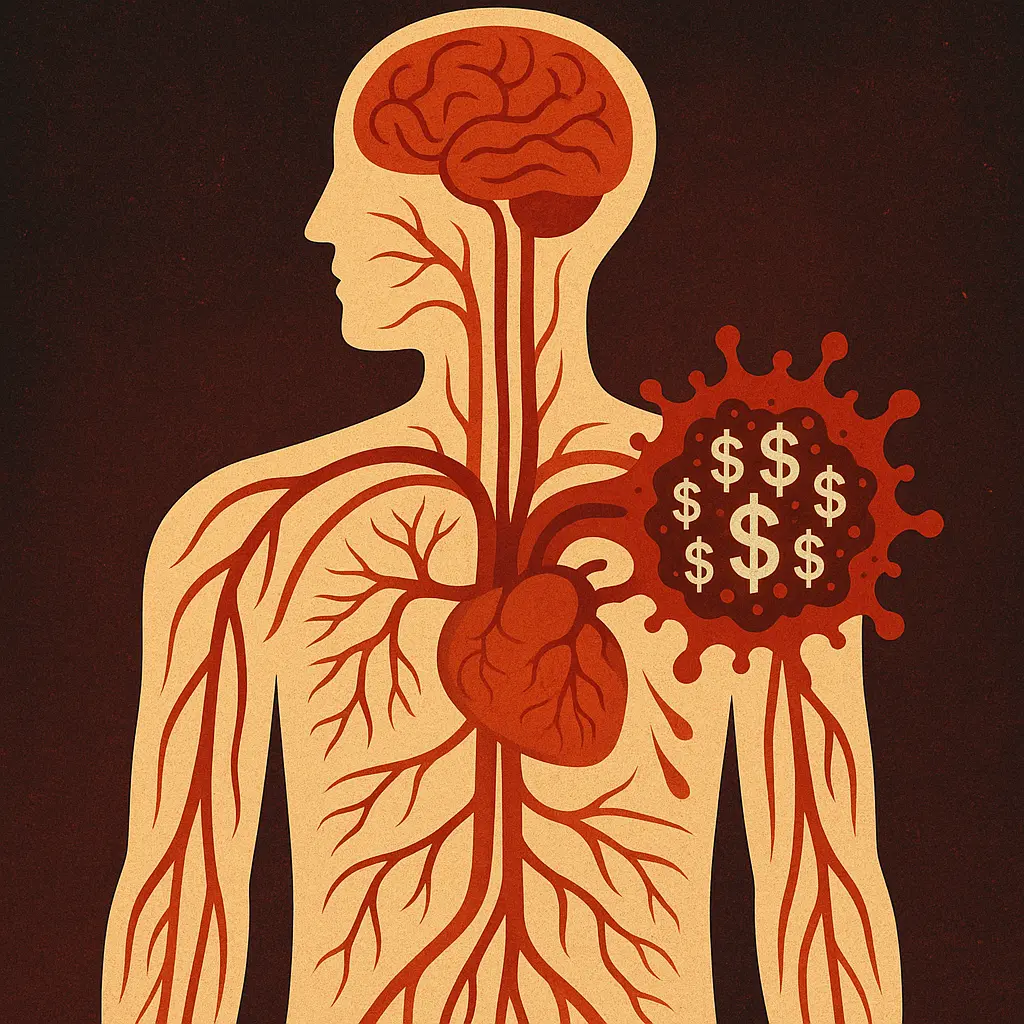
Money is more than currency. It’s the lifeblood of society—an abstract representation of energy, value, labor, and potential. It flows (or should flow) through the social body, facilitating action, growth, and survival. Every job done, every meal eaten, every home lived in is ultimately mediated by this symbolic fluid. It moves resources, motivates behavior, and governs who lives comfortably and who suffers.
But like blood, money can clot. And when it does, it becomes dangerous.
The accumulation of wealth—especially in massive, unspendable quantities—acts not as a facilitator of society, but as a blockage. Rather than circulating where it’s needed, wealth becomes trapped in symbolic reservoirs: offshore accounts, luxury assets, and inflated portfolios. It stops serving its organic function and instead becomes a self-sustaining monument to individual power.
This hoarding of potential is rarely about need. Nobody requires a billion dollars to live. The purpose of this accumulation is more psychological than practical—it’s a fortress, a deterrent, a cold war stockpile of “just in case” power. A performance of untouchability. A message to the rest of the world: Don’t challenge me. I can crush you. In this sense, hyper-wealth acts like nuclear armament—more a threat than a tool.
We have entered an era where individuals possess wealth that rivals the GDP of nations. And with this imbalance comes risk—not only to economies, but to democracy itself. One person’s whim can now shape public discourse, influence elections, or destabilize entire regions. We are no longer at risk of dictatorships from governments alone. We now face the specter of global dictatorship by wealth.
Meanwhile, society’s most vulnerable are accused of being the drain. The “benefit scroungers.” The disabled. The jobless. The marginalized. They are framed as parasites, leeching off the hard-working majority.
But that narrative is upside down.
Those struggling to survive are not hoarding. They are not stockpiling resources they’ll never use. They are not distorting the flow of society’s lifeblood. If anything, they are the ones most in need of that flow reaching them.
The real parasites are the ones who do hoard. The ones who sit atop mountains of untouched capital while the host organism—society—grows weak. Parasites don’t bleed the system by asking for enough to live; they bleed it by taking far more than they need and giving nothing back.
If we are to examine parasitism honestly, we must look to the organs that no longer circulate resources. The hoarders of lifeblood. The blood clots. The tumors.
A healthy organism distributes. It balances. It adapts to the needs of its parts.
We are not that organism.
Until we challenge the sanctity of accumulation, we will remain a sick society—mistaking our cancers for crowns, and punishing the wounded for bleeding.