Why Peanuts Are Evil (But We Love Them Anyway)

Introduction

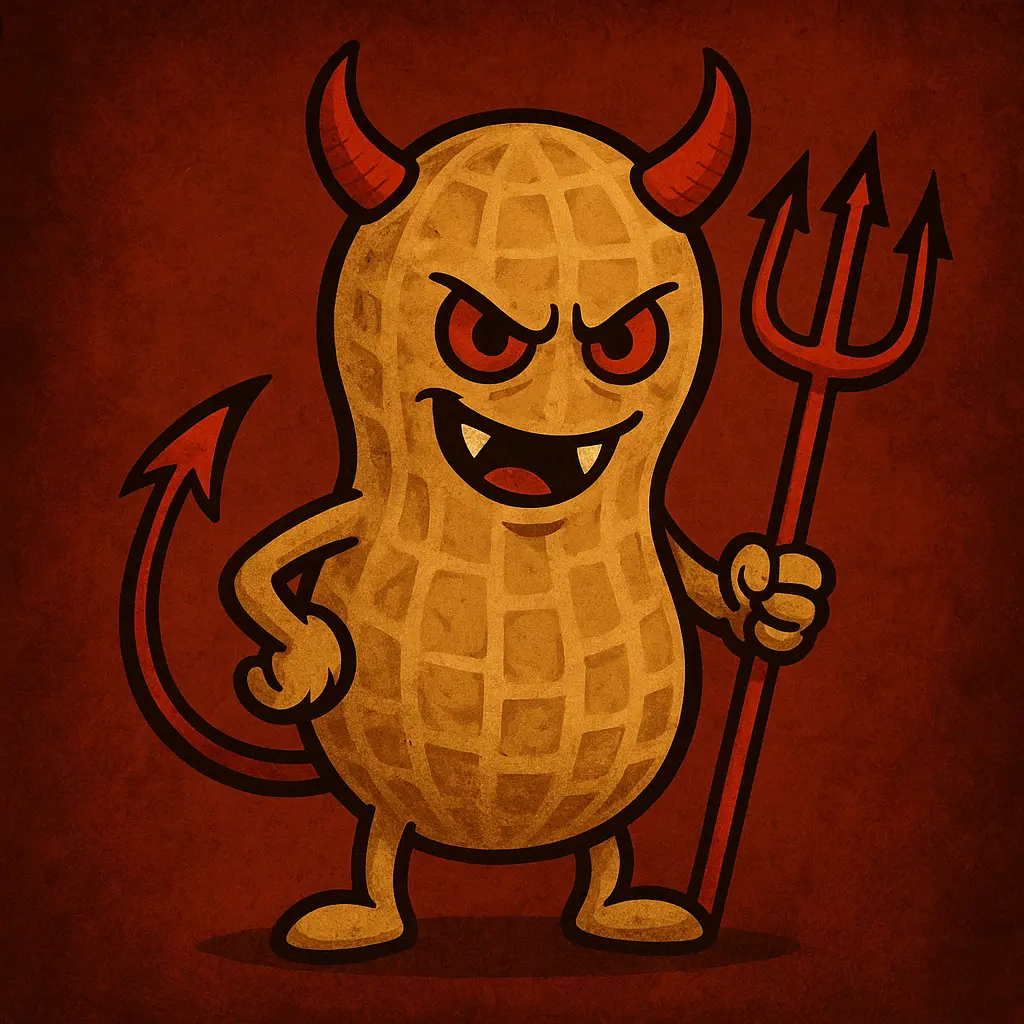
Peanuts. Beloved snack, protein powerhouse, and loyal companion to chocolate bars worldwide. But beneath their crunchy exterior lies a sinister truth — peanuts are not as innocent as they seem. Behind every jar of peanut butter and every bag of roasted nuts lies a history of allergic reactions, food recalls, agricultural exploitation, and deceptive appearances (spoiler: they’re not even real nuts). In this essay, we will unpack the evil lurking within the peanut’s wrinkled shell. But don’t worry — after all the doom and gloom, we’ll still find a reason to keep munching.


1. The Allergen Apocalypse

Perhaps the most obvious strike against peanuts is their notorious reputation as one of the most dangerous food allergens on Earth.

Peanut allergies affect approximately 1–2% of the population in many Western countries, including the UK and the US. Unlike some allergies that cause mild discomfort, peanut allergies can be life-threatening. Exposure to even trace amounts of peanut protein can trigger anaphylaxis — a severe reaction involving airway constriction, hives, swelling, vomiting, and in some cases, death.

Schools across the globe have banned peanut-containing products to protect allergic students. Airplane snack packs have gone peanut-free due to the possibility that a single airborne particle might trigger a reaction in a sensitive passenger.

The evil doesn’t stop at inconvenience — peanut allergies aren’t curable. Avoidance is the only reliable defense, and cross-contamination can make even that nearly impossible. For allergic individuals, peanuts don’t just ruin lunch — they turn everyday eating into a game of Russian roulette.


2. Choking on the Truth: A Silent Danger

Peanuts are also choking hazards, particularly for children. According to the American Academy of Pediatrics, whole nuts (including peanuts) are one of the leading causes of non-fatal choking incidents in children under 3. Their small, irregular shape and texture make them difficult for toddlers to chew and swallow safely.

Parents are frequently warned against giving whole peanuts to young children. In fact, in the UK and US, guidelines recommend avoiding whole peanuts until at least age 5, unless under supervision and after assessing allergy risk.

While this might seem like a small issue, it reflects the peanut’s insidious nature: even without allergy, even without spoilage, even without any wrongdoing on the eater’s part… the peanut still finds a way to kill.


3. Misleading Identity: Not Even a Real Nut

Brace yourself: peanuts are not nuts. They’re legumes. That’s right — they belong to the same family as beans and lentils. So not only are peanuts dangerous, they’re liars.

True nuts (like almonds, walnuts, and cashews) grow on trees and have a hard shell surrounding the seed. Peanuts, on the other hand, grow underground, forming in pods much like peas. This botanical betrayal might seem minor, but it reveals the peanut’s inherent duplicity. Even their name misleads — pea-nut — neither wholly pea, nor truly nut.

This deception has led to public confusion and even more dangerous allergic assumptions. Some people allergic to tree nuts are not allergic to peanuts, and vice versa — but the term “nut allergy” is often used interchangeably, creating misinformation that can be deadly.


4. Salmonella and Food Safety Scandals

In 2008–2009, one of the worst foodborne illness outbreaks in U.S. history occurred due to contaminated peanut products. The Peanut Corporation of America knowingly shipped salmonella-contaminated peanut paste that caused over 700 reported illnesses and at least 9 deaths.

The CEO of the company, Stewart Parnell, was sentenced to 28 years in prison for his role — the harshest sentence ever handed down in a U.S. food safety case. Documents showed executives choosing profits over lives, shipping contaminated products with falsified safety records.

This wasn’t an isolated incident. Peanuts and peanut butter continue to show up in food recall alerts due to contamination risks from salmonella, aflatoxins (a toxic mold), and listeria. Peanuts can become a breeding ground for dangerous microbes if improperly stored, thanks to their high fat content and porous structure.


5. Aflatoxins: Invisible Killers

Peanuts have a natural vulnerability to a group of toxic molds known as Aspergillus flavus and Aspergillus parasiticus, which produce aflatoxins. These toxins are carcinogenic, particularly linked to liver cancer, and can accumulate in food without any visible signs.

In countries with less stringent agricultural controls (particularly in parts of sub-Saharan Africa and Asia), aflatoxin contamination is a serious health crisis. According to the World Health Organization, aflatoxins contribute to up to 28% of all liver cancer cases worldwide, with peanuts being a significant vector.

Even in the UK and US, aflatoxin levels in peanut products are monitored and regulated, but zero risk is impossible. Roasting peanuts helps, but it doesn’t eliminate the toxins entirely.

Evil? Perhaps not by intention. But when you combine a delicious product with invisible mold-based carcinogens, you’ve got a perfect recipe for long-term harm.


6. Agricultural Exploitation and Environmental Toll

Beyond health concerns, the peanut has a darker legacy embedded in colonialism, exploitation, and environmental degradation.

Peanuts became a major cash crop in Africa and the Americas, often grown on plantations that profited from slave labor or other exploitative systems. In the modern era, peanut farming is still associated with labor violations in some countries, including child labor and poor working conditions.

Environmentally, peanuts are a thirsty crop. Although they are more drought-resistant than some other legumes, in industrial-scale agriculture (especially in areas with limited rainfall), peanut farming can strain water resources and deplete soil nutrients.

They also contribute to the monoculture problem — large swathes of land dedicated to a single crop, which decreases biodiversity, increases pesticide use, and weakens ecological resilience. Pest outbreaks in peanut farms can be devastating and often lead to heavy chemical spraying, which affects nearby wildlife and communities.


7. Peanut Butter: A Sticky Situation

Ah, peanut butter. Perhaps the most celebrated of peanut derivatives. But even here, evil lurks.

First, peanut butter is calorie-dense and often sugar-laden, especially commercial brands aimed at children. A single spoonful can contain over 100 calories — not to mention palm oil, high-fructose corn syrup, and artificial additives.

It’s also a nightmare to clean. Once it sticks to a surface — be it countertop, cutlery, or the roof of your mouth — it refuses to budge without a full-scale intervention. Dishwashers tremble in its presence.

And then there’s the toast dilemma — peanut butter’s tragic tendency to rip soft bread apart during spreading. Scientists have sent men to the moon, but we have yet to solve the structural instability of toast under peanut pressure.


8. Peanut Panic in Public Spaces

Let’s not forget the social ripple effects of peanut evil. Because of allergy risks, peanuts have created entire zones of paranoia — schools, airplanes, cafes, and cinemas must now operate with strict rules and constant vigilance.

Parents are burdened with hypervigilant lunch prep, while allergic individuals are forced into awkward conversations, carrying EpiPens, and constantly scanning food labels like forensic investigators.

The psychological weight of a peanut allergy is no joke. Research shows that children with severe allergies often experience anxiety, social exclusion, and reduced quality of life, knowing their life can be threatened by someone else’s snack choice.

Peanuts have created a landscape where one person’s snack is another person’s poison — a truly antisocial legacy.


9. The Weaponization of Peanuts

This may sound extreme, but there have been real cases of peanut exposure being used maliciously — essentially as a biological weapon.

There have been documented incidents where bullies smeared peanut butter on allergic students’ lockers, desks, or even skin. In 2017, a U.S. college student with a known allergy had peanut butter rubbed on his face while passed out at a party — an act treated as assault due to the life-threatening risk.

This speaks to the disturbing potential of peanuts as tools for harm. Very few foods can claim that notoriety.


10. They Just Taste Too Damn Good

So… what’s the catch?

After 9 sections of doom, disease, and deceit, it’s time to confess: peanuts are delicious. Salty, fatty, crunchy — they’re a perfect storm of flavour and texture. Evolution did not prepare the human brain for peanut butter cups, spicy satay sauce, or roasted honey-glazed peanuts.

In fact, the brain responds to peanuts and peanut products much like it does to addictive substances. Their high fat, salt, and protein content triggers dopamine release — the pleasure chemical. Once you start, it’s hard to stop.

Peanut butter and chocolate? Legendary. Peanut brittle? Nostalgic. Boiled peanuts? Southern comfort. From West African peanut stew to Thai peanut noodles, this legume masquerading as a nut has become a culinary global citizen.

Despite all the risks and controversies, the peanut has wriggled its way into our hearts, our cupboards, and our cravings. It’s the charming villain of the food world — dangerous, deceptive, and utterly irresistible.


Conclusion: The Devil You Know (And Keep Eating)

Are peanuts evil? If we define evil as “posing danger, deception, and destruction while wearing a friendly mask,” then yes — the peanut qualifies. Its legacy includes severe allergies, choking incidents, contaminated food recalls, mold-based toxins, ecological harm, and a trail of human rights concerns.

But like many “evil” characters in history and fiction, peanuts are complex. They bring pleasure, nutrition, and comfort to billions of people. They are inexpensive sources of protein and fat, lifelines in food-insecure areas, and versatile culinary gems.

And they taste incredible.

So while we acknowledge the darkness lurking in the humble peanut, we also recognize that resisting them is an exercise in futility. We may rant, accuse, and raise awareness… but at the end of the day, we’ll still be spreading peanut butter on toast, popping them at the pub, and sneaking them into cookies.

Because evil or not — they’re just too damn good.
An Alternative Bucket List

Introduction

The modern concept of a “bucket list” gained widespread popularity after the 2007 film The Bucket List, in which two terminally ill men set out to accomplish a series of grand adventures before they die. Since then, the phrase has become shorthand for any life goals meant to be ticked off before one’s final breath.

But somewhere along the way, the bucket list became a billboard. An itinerary of spectacle. Climb Everest. Go skydiving. See the Northern Lights. Write a novel. It became less about meaning and more about milestones. Less about living, and more about doing.

This list is an invitation to go the other way.

What follows is an alternative bucket list: a set of quiet, human, soul-nourishing challenges. No air miles required. No audience necessary. These are not tasks for applause, but dares for depth.


Self-Honesty and Inner Courage

  1. Admit to yourself something you’ve been in denial about.
    Start small or start seismic. Just start.
  2. Look at yourself in the mirror for one uninterrupted minute.
    No judgment, no posing. Just look.
  3. Forgive yourself for something you’ve held against yourself for years.
    You can still hold yourself accountable. But release the hatred.
  4. Change your mind about something important.
    Growth is not betrayal.
  5. Spend a whole day without trying to be ‘productive’.
    You’re still valuable.

Boundary and Boldness Practice

  1. Say no to someone’s request for a favour.
    Without apology. With respect.
  2. Stand up for something you believe in that isn’t popular.
    Even if your voice shakes.
  3. Let someone help you.
    Even if you feel you don’t deserve it.
  4. Tell someone how you really feel.
    Especially the good things.
  5. Let go of a goal you only pursued to please others.
    Make space for what you want.

Compassion and Connection

  1. Give money, food, or time to someone who needs it more than you.
    And don’t post about it.
  2. Have a meaningful, non-verbal exchange with an animal.
    It counts if it makes you feel something.
  3. Offer forgiveness to someone who never asked for it.
    Not for them. For you.
  4. Hold space for someone else’s story without interrupting.
    Listen until the end.
  5. Send a message to someone you miss, just because.
    They don’t have to reply.

Wonder and Awareness

  1. Come to your own conclusion about something most people accept without question.
    Even if you change your mind again later.
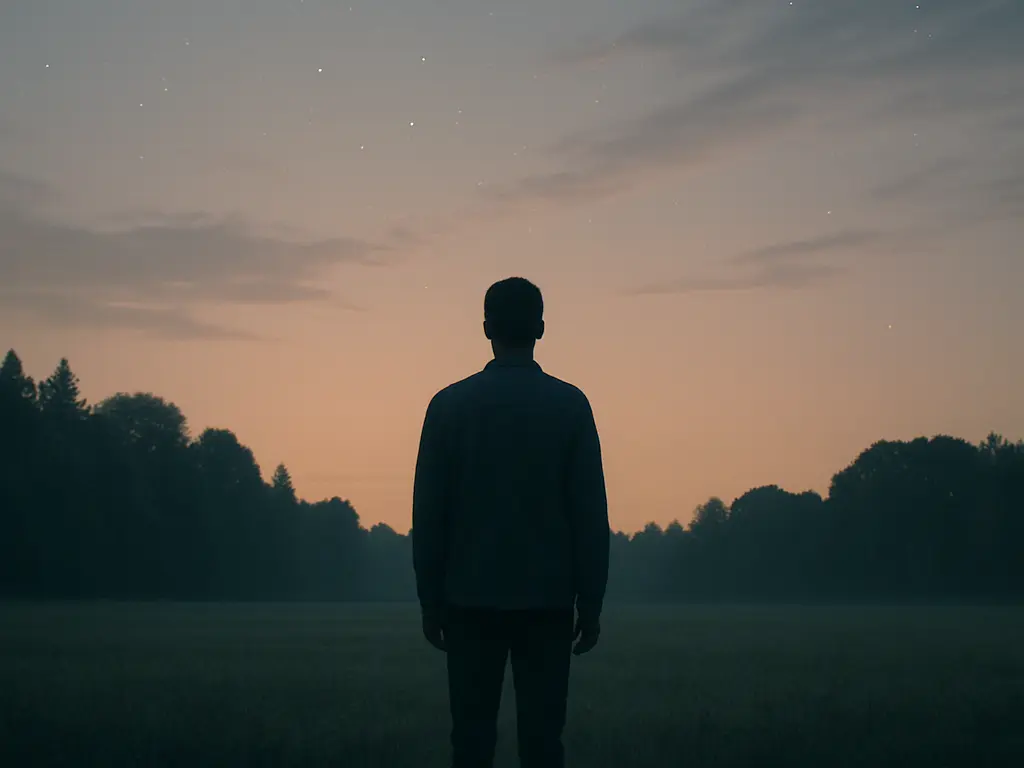
  2. Watch clouds move or stars appear, doing absolutely nothing else.
    Be a witness to the sky.
  3. Touch something natural and really notice it.
    Bark. Sand. Petals. Your own skin.
  4. Spend time in silence—not as punishment, but as presence.
    Let the stillness speak.
  5. Write a letter to yourself 10 years ago. Or 10 years from now.
    And maybe don’t send it.

Closing Thoughts

None of these challenges require wealth, a passport, or even much time. But they do ask for you. Your presence. Your willingness. Your inner gaze.

Try one. Try three. Make up your own. But whatever you do, let your life be more than a checklist of spectacles. Let it be a tapestry of moments that actually changed you.

You don’t need to leave the planet. Just show up on it.


About Me, Part II: The All-Seeing Eye

When I wrote About Me, Part I, I introduced the internal spheres through which I experience myself — a multidimensional system built to navigate both reality and identity. At the time, I thought I was mapping the foundations. But even then, silently present and ever-vigilant, was the entity at the heart of it all: The All-Seeing Eye.

The Eye has always been with me — not a recent revelation, but an enduring presence. In the years since that first post, it has only grown stronger in its clarity and importance. Not as a tyrant nor a god, but as a quiet, unblinking guardian of truth — the embodiment of my deepest core value: awareness.

The Eye in the World

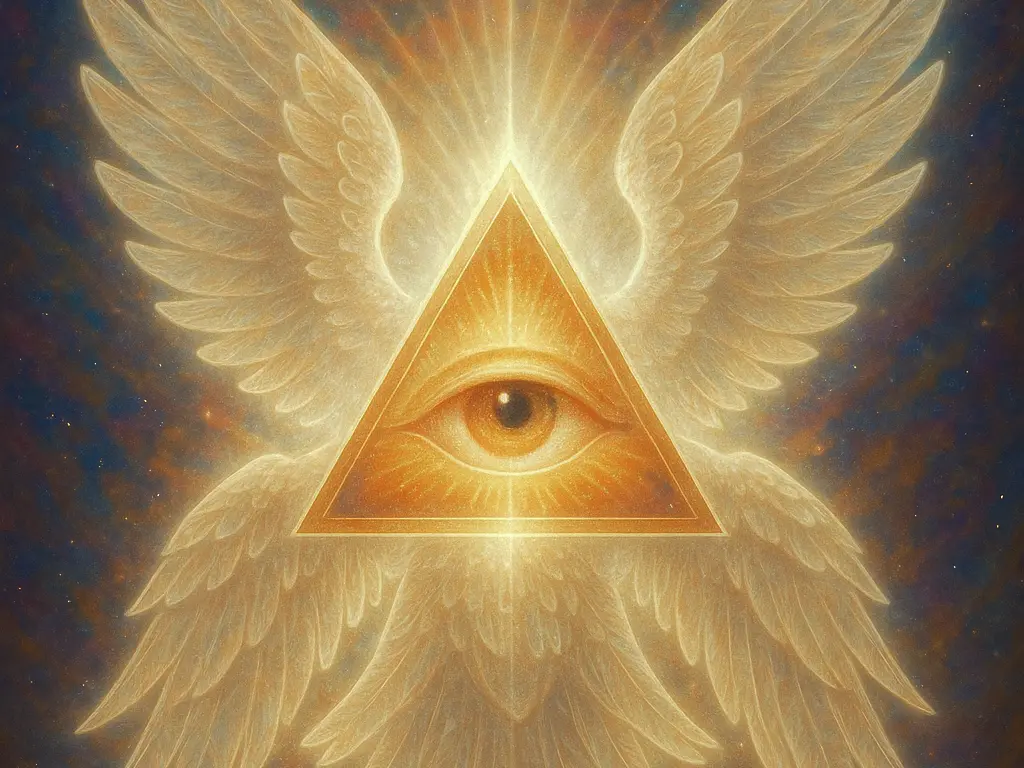
The symbol now commonly known as The All-Seeing Eye of Providence has haunted humanity’s visual language for centuries. A single eye enclosed within a triangle, often radiant with divine light, it appears atop pyramids, inscribed into temples, and peering from the seals of nations. Though it is now most famously embedded in the reverse side of the Great Seal of the United States — and by extension, the US dollar — the origins of this symbol stretch far deeper into religious and esoteric history.

In early Christian iconography, the eye represented the omniscient gaze of God — not one of punishment, but of holy watchfulness. The triangle often surrounding it symbolised the Trinity: Father, Son, and Holy Spirit. Together, they conveyed a cosmic reassurance that nothing is unseen by the divine.

Later, during the Enlightenment and revolutionary periods, the Eye of Providence took on new layers of meaning: divine legitimacy, moral order, and the pursuit of higher truth. It was a symbol adopted not only by religious authorities but also by secret societies — most notoriously the Freemasons. Over time, as secrecy bred suspicion, this symbol came to be associated with conspiracy theories, shadow governments, and the so-called Illuminati. To many, the eye became something sinister — an emblem not of sacred awareness, but of authoritarian surveillance.

And yet… I’ve never felt threatened by the symbol.

To me, the Eye has always felt familiar. Not as an external power looming overhead, but as something internal — something personal. Not a tool of control, but a faculty of liberation. In a world that often rewards willful blindness, my Eye does not police — it sees.

Reclaiming the Eye

While the world casts suspicion on the symbol — reducing it to a meme of control, corruption, or conspiracy — I reclaim it as sacred. Not sacred in the religious sense, nor as an emblem of external authority, but sacred as in personal, inviolable, foundational. The Eye, as it exists in my internal architecture, is not the Eye of God, nor the Eye of Empire. It is my Eye. It is the unwavering force within me that refuses to look away.

In my psyche, the Eye resembles something closer to the Eye of Sauron — not in intent, but in intensity. It does not flicker or blink. It does not become distracted. It pierces illusion. It burns away façades. It sees all that is — both around me and within me — and its purpose is not to judge or dominate, but to witness.

This witnessing is not passive. It is the raw essence of my value of awareness — not just sensory observation or intellectual knowing, but the kind of full-bodied presence that bears the weight of knowing. To see, and to not turn away. That is the Eye’s central ethic.

It lives not above me, but within me. It is neither function nor vessel. It is more like a permanent fixture in the architecture of my identity: a monolithic spire around which much of my internal world has formed. It is one of the oldest and most stable landmarks in my psyche — and one of the few I have never needed to rebuild.

It does not ask for worship. It does not demand loyalty. It simply is — watching, knowing, reminding me, when I’m tempted to dissociate or deceive myself, that I am seen. And being seen, I must also see.

The Eye and the Compass

The Eye doesn’t command my decisions — but it influences them in a way more profound than instruction. Its presence is not authoritarian; it is elemental. Like gravity or inertia, it exerts a silent but undeniable pull toward truth. When I am confronted with a dilemma, an uncertainty, or a moral fog, it is the Eye that holds the lantern.

It is the part of me that refuses convenient ignorance. It doesn’t tolerate self-deception, even when deception would bring temporary comfort. I have learned, sometimes painfully, that to betray what the Eye has shown me — to pretend I do not see — is to sever a vital tether between myself and my own integrity. And so, I have come to walk in alignment with it, not as a disciple, but as a co-navigator.

In practice, this often manifests as an intuitive ethical radar. Not in the sense of rigid moral codes, but as an inner sensitivity to what is true, meaningful, and in alignment. I feel it physically when something is off — a weight in the chest, a shift in tone, a tightening of the inner atmosphere. The Eye notices. It always notices.

It has also taught me the discipline of bearing witness. Sometimes, I cannot fix what I see. I cannot correct the injustice, or ease the suffering. But I can refuse to look away. And in that refusal, I affirm something essential — that reality, however painful, is worth honouring. That truth, however brutal, deserves to be acknowledged.

This, to me, is the backbone of my integrity: not performative righteousness, but sustained, inward attentiveness. The Eye is my compass — not always pointing to safety, but always pointing to what is.

The Architect of Values

The Eye does not stand alone. It watches — but it also builds. It is both the sentinel and the architect of my internal world, inciting the creation of new values and overseeing their development like a curator tending to sacred relics. Many of my core principles — compassion, autonomy, authenticity, curiosity — were not inherited or taught; they were forged beneath the Eye’s gaze.

In my psyche, these values do not exist as vague ideals. They are structured, living entities — monumental constructs with gravity and mass. Some are towering pillars; others are intricate, delicate bridges connecting distant parts of my identity. Together, they form a lattice — a kind of internal architecture that gives my life direction, cohesion, and sacred tension.

The Eye is the one who ensures that this architecture does not collapse under contradiction. It maintains the structural integrity of my system by relentlessly observing when I drift from alignment — when I begin to compromise values for convenience, or when a new experience threatens to destabilize the old foundations. It doesn’t shame, but it illuminates, holding up inconsistencies to the light until I can no longer ignore them.

Because of this, I do not see my creative work as separate from my values — it is a direct output of them. My art, writing, and even my humour are saturated with the same symbolic codes that the Eye safeguards. Every piece I create — whether it’s silly, sacred, or surreal — carries some element of that deeper structure. The Eye doesn’t impose direction, but its presence ensures that I do not create carelessly. My output is not random — it’s emergent, shaped by a system that values truth, awareness, and meaning.

In relationships, the Eye’s influence is quieter but equally vital. It watches for authenticity — in others and in myself. It flares when dishonesty enters the space, when manipulations slither into the room disguised as charm or niceness. It reminds me not to ignore red flags out of hope or habit. And it gently tugs me back toward the people who are real, present, seen. It urges me to show up as that kind of person, too.

Even my spirituality rests upon the Eye. I don’t believe in an external deity who watches from above. But I believe in this Eye, inside me. I believe in awareness as a force of spiritual gravity — the thing that keeps all other aspects of my being from drifting apart. In this way, the Eye is not just a symbol. It is the sacred center. The still point in the turning chaos. The guardian of coherence in a fragmented world.

The Path Forward, Under Watchful Light

The Eye has been with me longer than I fully understood. It was there before I had language for it, before I had mapped the spheres, before I knew I was building a system at all. In many ways, it was the first light — not a flare that demanded attention, but a steady glow in the dark, offering orientation through times of inner collapse and rebirth.

I expect it will remain with me until the end — not as a fixed icon, but as a living force that will continue to evolve as I do. Its form may shift, its voice may deepen, but its function remains constant: to keep me aware. Of what is real, what is right, what is still unfinished within me. To stop me from retreating into false comfort or performative noise. To draw me back, again and again, to what matters.

The Eye is not a doctrine. It does not require belief. It does not demand obedience. It simply sees — and in seeing, it reminds me of who I am.

And so, as I move forward — as artist, as outlier, as soul — I do so not blindly, but beneath the ever-watchful light of the Eye. A light that does not burn, but illuminates. A gaze that does not control, but clarifies. A witness not to what I pretend to be, but to what I am, and what I am becoming.

This is the Eye I serve. This is the Eye I trust. And this is the Eye I will write from, again.