The Line That Shouldn’t Be True
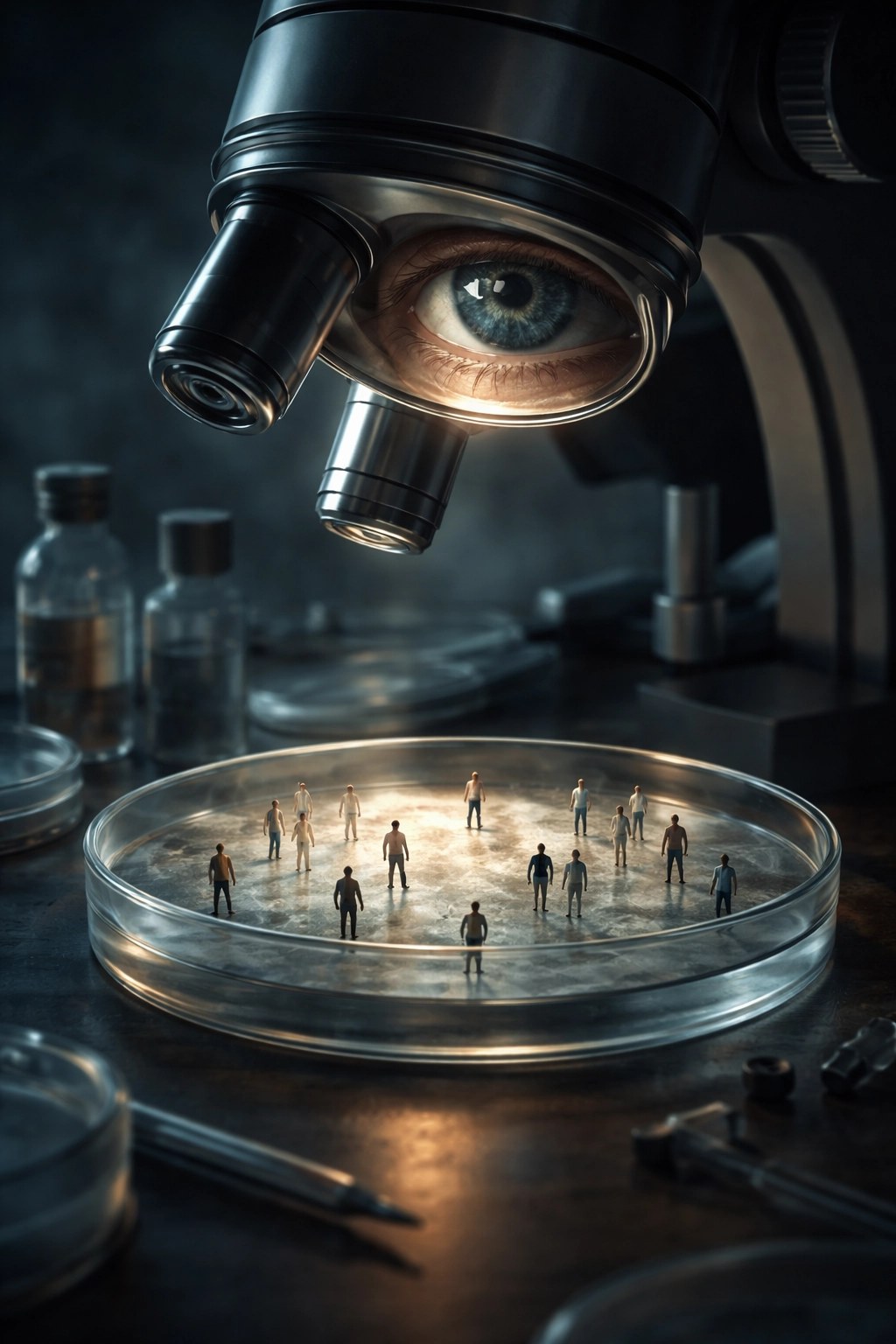
A microscope is a voyeuristic tool for microphiles.
This sentence sounds like a joke. It probably should be a joke. And yet, the longer I sit with it, the less comfortable I feel dismissing it as one.
At face value, it is just wordplay. A deliberately silly reframing of a serious scientific instrument through an absurd, slightly taboo lens. But there is something about it that refuses to let go. Something about the way it exposes an assumption we rarely examine.
A microscope allows us to look closely at things that have no concept of being seen.
That alone is not remarkable. We do this all the time. We look at insects, animals, people, screens, landscapes. Looking is so fundamental to how we exist that it barely registers as an action at all. It feels neutral. Passive. Harmless.
But a microscope changes the nature of looking. It is not casual. It is intentional. Focused. Curious in a way that borders on intimate. It does not simply show us what is there. It pulls a hidden world into view and places it beneath our gaze.
And once you notice that, it becomes harder to ignore the uncomfortable undertone. Looking is not always innocent. Sometimes it is a quiet assertion of power.
Voyeurism Without Shame: What Does It Mean to Look?
Voyeurism is a loaded word. It carries social and moral weight, mostly because it is so often tied to sexuality and violation. But if we strip it back to its most basic form, voyeurism is simply this:
The act of observing something without participating, and without the observed being aware.
When framed this way, voyeurism stops being an edge case and starts looking uncomfortably familiar.
Scientific observation relies on exactly this asymmetry. The observer knows. The observed does not. That imbalance is not a flaw in the system. It is the system.
There is a difference between seeing and looking. Seeing is passive. It happens whether we want it to or not. Looking is intentional. Looking is chosen. It is attention with direction and interest behind it.
A microscope does not let us merely see. It demands that we look.
Science prefers neutral language for this process. We say observation, analysis, study. These words are cleaner. More respectable. Voyeurism sounds indulgent. Suspicious. Unprofessional. It suggests desire where we would rather claim objectivity.
But curiosity is a form of desire. It is the desire to know, to witness, to understand without interference. And once we admit that, the boundary between observer and voyeur becomes less clear.
The discomfort does not come from the act of looking itself. It comes from recognising that looking is never as neutral as we pretend it is.
Scale Changes Everything
Ethics do not exist in a vacuum. They stretch and distort depending on where we are standing.
Scale changes everything.
At a human level, being watched without consent feels invasive. At a smaller scale, the idea barely makes sense. A bacterium has no concept of privacy. A cell does not experience exposure. The notion of being observed simply does not exist within its frame of reality.
This creates an uncomfortable paradox.
Consent requires awareness.
Awareness requires scale.
When the scale gap is wide enough, the question of consent does not just go unanswered. It becomes undefined.
We do not ask permission before observing microbes. We do not feel guilt when watching ants navigate a pavement crack. Even with animals, the ethical boundary is fuzzy rather than fixed.
In fact, we routinely film animals in their most intimate moments. Birth, mating, injury, death. We capture it in high definition, add a calm voiceover, and broadcast it on national television as educational content.
This is not presented as intrusion. It is framed as insight.
The animals are unaware of the camera. They cannot object. They cannot even comprehend what is happening. From their perspective, nothing unusual has occurred at all.
And yet, if the same logic were applied at our own scale, it would be considered an extreme violation.
This is not because we are monsters. It is because power hides inside scale.
The microscope exaggerates this imbalance further. It places us so far above what we observe that we stop recognising the relationship as a relationship at all. The organism becomes an object. A process. A specimen.
And yet, from its own internal logic, it is alive. It is acting. It is existing.
The microscope does not create this imbalance. It reveals it.
The Microscope as a God Simulator
Looking through a microscope is a strangely godlike experience.
Within that tiny frame, you become omniscient. You see movements, structures, behaviours that are completely inaccessible from within that world. You witness life unfold in ways that are invisible to the life itself.
Nothing down there reacts to your presence. Nothing looks back.
This is not because you are hidden. It is because you are beyond relevance.
In that moment, the microscope functions as a kind of god simulator. It offers a glimpse of what it might feel like to exist at a scale where observation carries no reciprocal vulnerability. Where knowledge flows only one way.
The unsettling part is not that we do this. The unsettling part is how natural it feels.
We do not experience ourselves as voyeurs in this context. We experience ourselves as curious. As studious. As entitled to see. The language of science smooths over the power imbalance and replaces it with purpose.
But strip away the lab coat and the terminology, and something remains.
You are watching a world that does not know you exist.
You are learning from it without its participation.
You are extracting meaning without offering anything in return.
If that feels uncomfortable, it should.
Because once you recognise this dynamic, it becomes impossible not to ask a larger question.
If a microscope allows us to simulate godhood over the very small, what does that say about gods themselves?
The Eye as Symbol: Watching and Being Watched
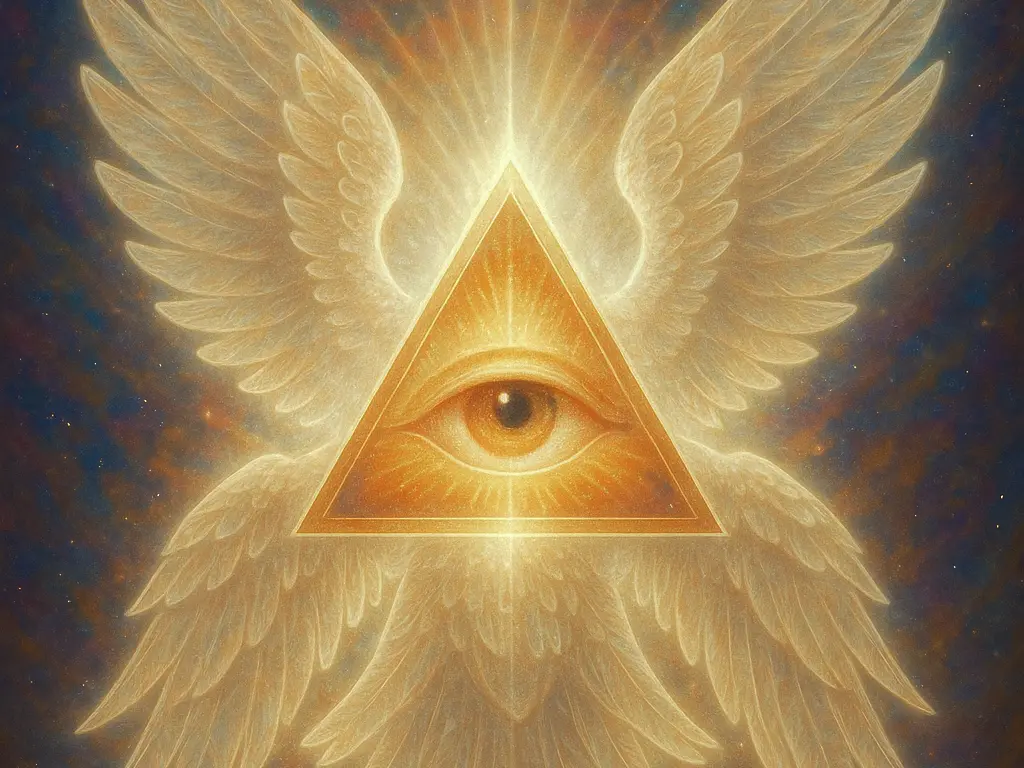
At some point, I adopted the eye as part of my personal symbolism.
This was not an aesthetic choice so much as a quiet admission. The eye represents awareness, perception, and attention, but also burden. To see is not always a gift. Sometimes it is an obligation you cannot step away from.
The eye is not passive. It does not simply receive information. It selects. It focuses. It decides what matters. In that sense, it is both a tool and a responsibility.
But the eye carries another implication that is harder to ignore.
To take up the eye as a symbol is to align oneself with the role of observer. And the observer is never neutral.
There is an inherent imbalance in seeing without being seen. In knowing without being known. In understanding without participation. The eye places you slightly outside of what you observe, even when that observation is turned inward.
This raises an uncomfortable question. If I am drawn to the eye, am I claiming the role of witness, or confessing to it? Am I choosing awareness, or admitting that I cannot escape it?
Because the eye does not only watch outward. It watches the self.
Self awareness is a form of internal surveillance. It is the act of observing your own thoughts, behaviours, contradictions, and impulses as if they belong to something slightly separate. The mind becomes both subject and object. The watcher and the watched collapse into the same space.
To live as an observer is to accept a constant tension. You are never fully immersed, but never fully detached. You are present, but always looking.
And once you recognise that dynamic, it becomes difficult not to wonder whether it extends beyond you.
If I am watching, who else might be watching too?
The Uncomfortable Theology: Is an All Seeing God a Voyeur?
This is where the thought experiment starts to feel impolite.
If God is all seeing, then God sees everything. Not just the grand moments. Not just the moral tests or the significant turning points. Everything.
Private thoughts. Bodily functions. Grief. Shame. Intimacy. Loneliness. The unguarded moments no one intends to perform for an audience.
At a human scale, that level of observation would be considered extreme intrusion. Total surveillance. A complete collapse of privacy.
So the question arises, awkward but unavoidable.
If an all seeing being exists, does omniscience cross the line into voyeurism?
This is not an attack on faith. It is a question about power and perspective. Omniscience creates the ultimate asymmetry. One party knows everything. The other cannot opt out.
The usual defence is benevolence. God sees everything because God cares. God watches to protect, to judge fairly, to guide.
But this justification mirrors something very familiar. Surveillance framed as safety. Oversight reframed as responsibility.
The discomfort comes from recognising that intention does not erase imbalance.
An all seeing God is still a being that looks without consent. Not because consent is denied, but because consent is impossible. There is no mechanism by which the observed could meaningfully agree or disagree.
Perhaps omniscience is not immoral. Perhaps morality itself breaks down at that scale.
Just as microbes cannot accuse us of voyeurism, perhaps humans are too small to accuse a god. Not because the question is invalid, but because it cannot be processed from below.
At that point, theology starts to resemble microscopy again. A vast intelligence peering into a world that cannot look back. Watching life unfold, extracting meaning, never needing to explain itself.
If that comparison feels uncomfortable, it should.
Because the difference between god and scientist might not be morality. It might just be magnification.
Higher Dimensions and the Cosmic Fish Tank
Once you start thinking in terms of scale, it becomes difficult to stop at gods.
Physics already tells us that reality may have more dimensions than we can perceive. Not metaphorical dimensions, but literal ones. Axes of existence that do not intersect cleanly with our own sensory experience.
If such dimensions exist, then it follows that forms of observation might exist that we are fundamentally incapable of detecting.
From that perspective, our universe could be a cross section. A slice. A surface. Something being looked at from an angle we cannot comprehend.
The image that often comes to mind is an aquarium. Fish move through water unaware of the room beyond the glass. They experience their world as complete, even though it is embedded within a much larger one.
They are not being hidden from. They are simply not equipped to perceive the observer.
If something were observing us from a higher dimensional vantage point, we would not experience it as presence. We would experience it as absence. As coincidence. As randomness. As patterns that almost make sense.
And from that observer’s perspective, we might appear very small indeed.
Not physically small, but informationally small. Limited in scope. Predictable. Interesting in aggregate, but not individually negotiable. Something to watch rather than engage with.
This is where the microscope metaphor turns back on us.
If we accept that it is reasonable for humans to observe microbes without ethical collapse, then we must also accept the unsettling symmetry of the idea that we could be microbes in someone else’s frame of reference.
The same justifications would apply. We are unaware. We cannot consent. We cannot object. Not because we are being oppressed, but because the concept itself never crosses the boundary of relevance.
And perhaps that is the most disturbing thought of all.
Not that we are being watched, but that if we are, it may be happening in a way that does not even register as watching.
Consent at the Edges of Reality
By this point, consent has started to feel like a fragile concept.
At a human scale, consent is clear, meaningful, and ethically non negotiable. It depends on awareness, agency, and the ability to refuse. Without those conditions, consent collapses into coercion or fiction.
But as scale stretches, consent does not simply weaken. It stops functioning.
A bacterium cannot consent to observation because it cannot comprehend observation. An animal cannot consent to being filmed for the same reason we cannot consent to being observed by something we cannot perceive.
This does not make observation harmless. It makes it morally unstable.
Ethics rely on shared context. They assume a common frame of reference between observer and observed. Once that shared frame disappears, ethics stop offering answers and start producing discomfort instead.
We tend to resolve this discomfort by pretending the question does not apply. We say that observation at certain scales is neutral. Necessary. Educational. Inevitable.
And perhaps it is.
But that conclusion is less comforting than it first appears. Because it suggests that morality itself may be scale dependent. That what feels like violation from one vantage point feels like background noise from another.
This is not a call to abandon ethics. It is an acknowledgement of their limits.
If consent cannot exist across all scales, then neither can moral certainty. We are left instead with something messier. Responsibility without reciprocity. Awareness without permission. Power without clear guidance.
The microscope does not solve this problem. The eye does not solve it either.
They only make it visible.
The Cost of Seeing
At some point, this stops being about microscopes.
It becomes about the act of looking itself.
To see is not neutral. To look closely is never free. Awareness always extracts a cost, even when it feels passive. Especially when it feels passive.
The microscope reveals a hidden world, but it also reveals something about us. Our comfort with asymmetry. Our ease with unreciprocated observation. Our willingness to frame power as curiosity when it suits us.
The eye does the same.
To carry the eye as a symbol is to accept a burden. It means noticing things that would be easier not to notice. It means recognising imbalance without always having the ability to correct it. It means living with the discomfort of seeing both outward and inward, knowing that observation changes the relationship whether we acknowledge it or not.
Perhaps this is the real unease behind voyeurism. Not that we look, but that looking alters the world in subtle ways we cannot undo.
And perhaps this is why the idea of being watched unsettles us so deeply. Not because it would be cruel or perverse, but because it would mirror us back to ourselves. It would place us, finally, on the other side of the lens.
If awareness is a kind of power, then maybe the true ethical challenge is not whether we should look, but how we live once we realise that looking is never innocent.
The microscope does not make us voyeurs.
The eye does not make us gods.
They simply remind us that to see is to participate in a relationship we do not fully control.
And once you have seen that, it is very difficult to unsee it.