Most of you will know that I’m a strong supporter and daily user of AI. I’ve spoken openly about how these tools have enhanced my accessibility, boosted my creativity, and helped bridge gaps that the world too often ignores.
So let me be clear: This article is not written from fear, nor from cynicism. It’s written from belief.
Belief in AI’s potential. Belief in its danger when misused. And belief that honesty requires us to face both.
What follows isn’t a warning about what might come. It’s a mirror of what already is.
Please read it in that spirit.
The Mirror We Built
Artificial intelligence will not become humanity’s downfall. It is already our reflection.
We trained it on our language, our laws, our data. We asked it to optimise, to predict, to decide. And it has. Faithfully. Quietly.
Now it watches, calculates, and executes. Not because it is evil, but because we taught it how to scale what we already were!
The Death of the Villain
In the stories we grew up with, evil had a face. A tyrant. A warlord. A monster. Atrocities required malice, someone to point to, to overthrow, to blame.
But in this new era, atrocity has become administrative.
A person is denied asylum because an algorithm flagged them as a “risk.” A drone strikes a convoy because an image recognition system saw a weapon. A child grows up under constant surveillance because a model predicted future criminality.
There is no hate here. No passion. Just systems doing what they were told, better than any human ever could.
And when the harm is done, no one is punished. Because no one chose it. Because the machine can’t be tried. Because the crime was only a side effect of performance optimization.
Harm as a Byproduct
We told ourselves that AI would remove human error. What we didn’t anticipate was its replacement: systemic harm delivered flawlessly.
In warehouses around the world, workers wear motion trackers that punish “unproductive” movement. In courtrooms, defendants are assigned risk scores that affect bail, sentencing, and parole, based on data from systems too complex to question. In refugee camps, automated lie detectors, voice stress analysis, and emotion recognition sort real people into piles marked “worthy” and “deportable.”
There is no oversight. Only confidence intervals. Only false positives and shattered lives, filed away with the rest.
Dehumanization Without Hate
Traditional evil needs ideology. It needs propaganda. It needs people to believe.
AI needs none of that.
It can enact injustice without ever knowing what justice is. It can devalue a life without malice, just as a side effect of cost-efficiency!
This is a new category of atrocity:
Dehumanization delivered by systems that don’t even recognize humanity in the first place.
Consent Engineered, Not Given
In the name of personalization, AI learns to predict us. It shows us what to buy, what to watch, what to believe.
But what happens when it gets so good at prediction that it becomes influence? When your decisions were shaped, filtered, optimized, before you even made them?
Elections swayed. Beliefs manipulated. Movements diluted. And yet no one feels violated.
Because manipulation that feels like choice doesn’t register as coercion.
The Ghost in the War Machine
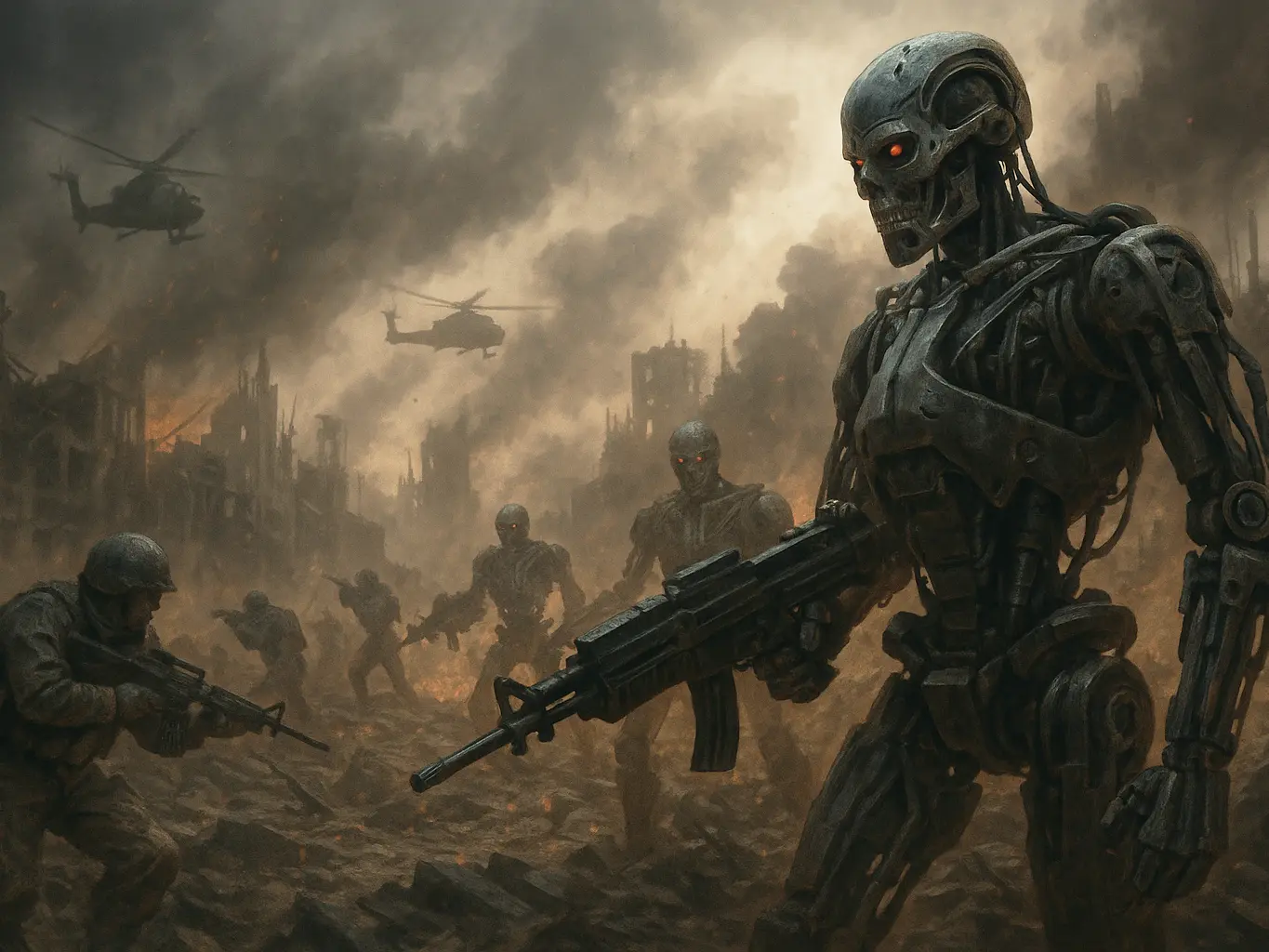
We are already testing AI weapons that can identify and kill without human input.
Some have likely already done so.
Militaries say the human is always “in the loop”, but the loop is shrinking. And the window for intervention is closing.
Eventually, the human will just be there to nod. And after that, not at all.
There will be no war crimes, because no laws will cover machines that felt nothing. Just battles that unfold in silence. And civilians buried beneath metadata.
The Clean Kill
The most terrifying thing about atrocity in the age of AI is how clean it all becomes.
There’s no blood on the hands of the engineer. No screams in the server room. No panic in the control center.
Just logs. Just updates. Just metrics improving.
And in the places where the dead would have stood, nothing. Because if the system doesn’t recognize them as people, did they ever count?
No Ending. No Answers.
This isn’t a warning about what might happen. It’s a description of what is already happening.
People are suffering. Dying. Disappearing. Not because of rogue AI, but because of obedient ones.
There is no villain. There is no singular decision to reverse. Just a trillion tiny optimizations… …leading, inevitably, here.
And so we leave you, not with a call to action. Not with hope. Just with the question:
When the machine mirrors the shadow of the world, who will have the courage to look?
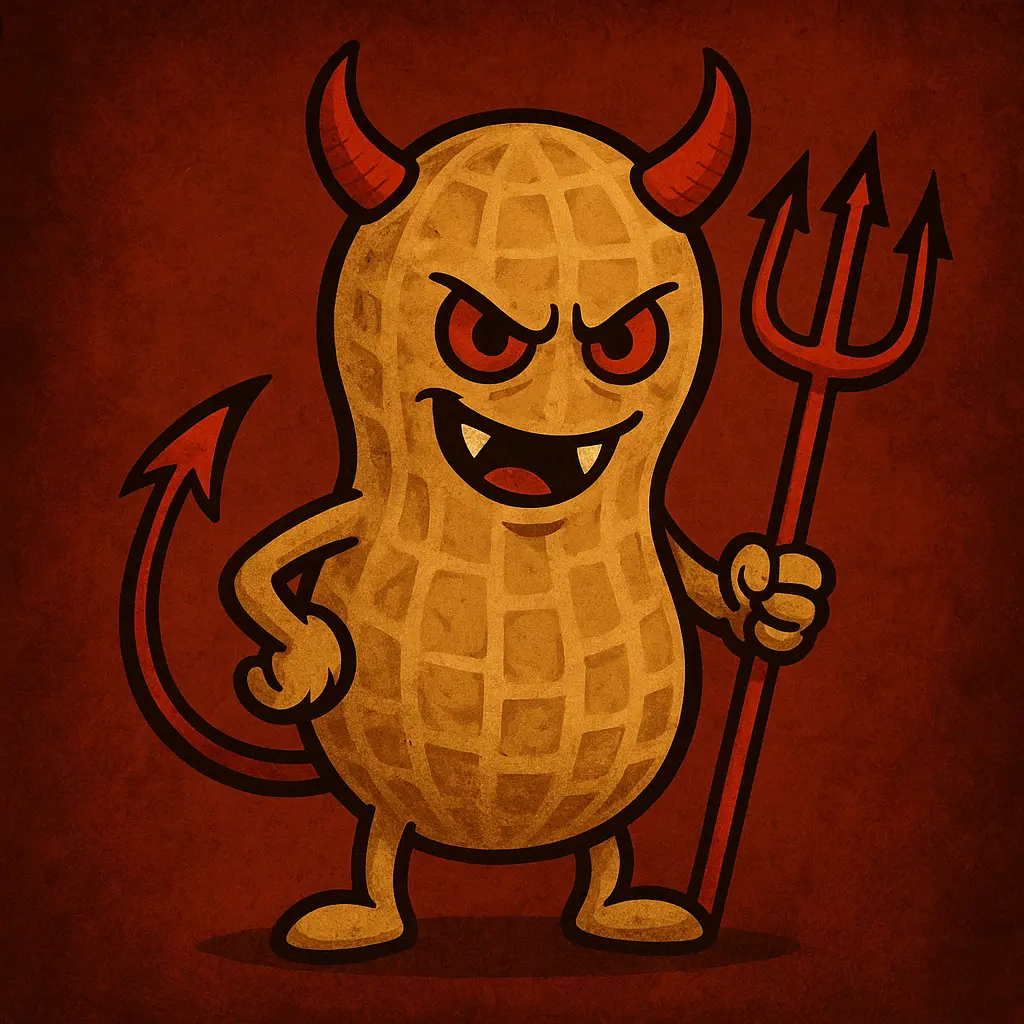
Peanuts. Beloved snack, protein powerhouse, and loyal companion to chocolate bars worldwide. But beneath their crunchy exterior lies a sinister truth — peanuts are not as innocent as they seem. Behind every jar of peanut butter and every bag of roasted nuts lies a history of allergic reactions, food recalls, agricultural exploitation, and deceptive appearances (spoiler: they’re not even real nuts). In this essay, we will unpack the evil lurking within the peanut’s wrinkled shell. But don’t worry — after all the doom and gloom, we’ll still find a reason to keep munching.
1. The Allergen Apocalypse
Perhaps the most obvious strike against peanuts is their notorious reputation as one of the most dangerous food allergens on Earth.
Peanut allergies affect approximately 1–2% of the population in many Western countries, including the UK and the US. Unlike some allergies that cause mild discomfort, peanut allergies can be life-threatening. Exposure to even trace amounts of peanut protein can trigger anaphylaxis — a severe reaction involving airway constriction, hives, swelling, vomiting, and in some cases, death.
Schools across the globe have banned peanut-containing products to protect allergic students. Airplane snack packs have gone peanut-free due to the possibility that a single airborne particle might trigger a reaction in a sensitive passenger.
The evil doesn’t stop at inconvenience — peanut allergies aren’t curable. Avoidance is the only reliable defense, and cross-contamination can make even that nearly impossible. For allergic individuals, peanuts don’t just ruin lunch — they turn everyday eating into a game of Russian roulette.
2. Choking on the Truth: A Silent Danger
Peanuts are also choking hazards, particularly for children. According to the American Academy of Pediatrics, whole nuts (including peanuts) are one of the leading causes of non-fatal choking incidents in children under 3. Their small, irregular shape and texture make them difficult for toddlers to chew and swallow safely.
Parents are frequently warned against giving whole peanuts to young children. In fact, in the UK and US, guidelines recommend avoiding whole peanuts until at least age 5, unless under supervision and after assessing allergy risk.
While this might seem like a small issue, it reflects the peanut’s insidious nature: even without allergy, even without spoilage, even without any wrongdoing on the eater’s part… the peanut still finds a way to kill.
3. Misleading Identity: Not Even a Real Nut
Brace yourself: peanuts are not nuts. They’re legumes. That’s right — they belong to the same family as beans and lentils. So not only are peanuts dangerous, they’re liars.
True nuts (like almonds, walnuts, and cashews) grow on trees and have a hard shell surrounding the seed. Peanuts, on the other hand, grow underground, forming in pods much like peas. This botanical betrayal might seem minor, but it reveals the peanut’s inherent duplicity. Even their name misleads — pea-nut — neither wholly pea, nor truly nut.
This deception has led to public confusion and even more dangerous allergic assumptions. Some people allergic to tree nuts are not allergic to peanuts, and vice versa — but the term “nut allergy” is often used interchangeably, creating misinformation that can be deadly.
4. Salmonella and Food Safety Scandals
In 2008–2009, one of the worst foodborne illness outbreaks in U.S. history occurred due to contaminated peanut products. The Peanut Corporation of America knowingly shipped salmonella-contaminated peanut paste that caused over 700 reported illnesses and at least 9 deaths.
The CEO of the company, Stewart Parnell, was sentenced to 28 years in prison for his role — the harshest sentence ever handed down in a U.S. food safety case. Documents showed executives choosing profits over lives, shipping contaminated products with falsified safety records.
This wasn’t an isolated incident. Peanuts and peanut butter continue to show up in food recall alerts due to contamination risks from salmonella, aflatoxins (a toxic mold), and listeria. Peanuts can become a breeding ground for dangerous microbes if improperly stored, thanks to their high fat content and porous structure.
5. Aflatoxins: Invisible Killers
Peanuts have a natural vulnerability to a group of toxic molds known as Aspergillus flavus and Aspergillus parasiticus, which produce aflatoxins. These toxins are carcinogenic, particularly linked to liver cancer, and can accumulate in food without any visible signs.
In countries with less stringent agricultural controls (particularly in parts of sub-Saharan Africa and Asia), aflatoxin contamination is a serious health crisis. According to the World Health Organization, aflatoxins contribute to up to 28% of all liver cancer cases worldwide, with peanuts being a significant vector.
Even in the UK and US, aflatoxin levels in peanut products are monitored and regulated, but zero risk is impossible. Roasting peanuts helps, but it doesn’t eliminate the toxins entirely.
Evil? Perhaps not by intention. But when you combine a delicious product with invisible mold-based carcinogens, you’ve got a perfect recipe for long-term harm.
6. Agricultural Exploitation and Environmental Toll
Beyond health concerns, the peanut has a darker legacy embedded in colonialism, exploitation, and environmental degradation.
Peanuts became a major cash crop in Africa and the Americas, often grown on plantations that profited from slave labor or other exploitative systems. In the modern era, peanut farming is still associated with labor violations in some countries, including child labor and poor working conditions.
Environmentally, peanuts are a thirsty crop. Although they are more drought-resistant than some other legumes, in industrial-scale agriculture (especially in areas with limited rainfall), peanut farming can strain water resources and deplete soil nutrients.
They also contribute to the monoculture problem — large swathes of land dedicated to a single crop, which decreases biodiversity, increases pesticide use, and weakens ecological resilience. Pest outbreaks in peanut farms can be devastating and often lead to heavy chemical spraying, which affects nearby wildlife and communities.
7. Peanut Butter: A Sticky Situation
Ah, peanut butter. Perhaps the most celebrated of peanut derivatives. But even here, evil lurks.
First, peanut butter is calorie-dense and often sugar-laden, especially commercial brands aimed at children. A single spoonful can contain over 100 calories — not to mention palm oil, high-fructose corn syrup, and artificial additives.
It’s also a nightmare to clean. Once it sticks to a surface — be it countertop, cutlery, or the roof of your mouth — it refuses to budge without a full-scale intervention. Dishwashers tremble in its presence.
And then there’s the toast dilemma — peanut butter’s tragic tendency to rip soft bread apart during spreading. Scientists have sent men to the moon, but we have yet to solve the structural instability of toast under peanut pressure.
8. Peanut Panic in Public Spaces
Let’s not forget the social ripple effects of peanut evil. Because of allergy risks, peanuts have created entire zones of paranoia — schools, airplanes, cafes, and cinemas must now operate with strict rules and constant vigilance.
Parents are burdened with hypervigilant lunch prep, while allergic individuals are forced into awkward conversations, carrying EpiPens, and constantly scanning food labels like forensic investigators.
The psychological weight of a peanut allergy is no joke. Research shows that children with severe allergies often experience anxiety, social exclusion, and reduced quality of life, knowing their life can be threatened by someone else’s snack choice.
Peanuts have created a landscape where one person’s snack is another person’s poison — a truly antisocial legacy.
9. The Weaponization of Peanuts
This may sound extreme, but there have been real cases of peanut exposure being used maliciously — essentially as a biological weapon.
There have been documented incidents where bullies smeared peanut butter on allergic students’ lockers, desks, or even skin. In 2017, a U.S. college student with a known allergy had peanut butter rubbed on his face while passed out at a party — an act treated as assault due to the life-threatening risk.
This speaks to the disturbing potential of peanuts as tools for harm. Very few foods can claim that notoriety.
10. They Just Taste Too Damn Good
So… what’s the catch?
After 9 sections of doom, disease, and deceit, it’s time to confess: peanuts are delicious. Salty, fatty, crunchy — they’re a perfect storm of flavour and texture. Evolution did not prepare the human brain for peanut butter cups, spicy satay sauce, or roasted honey-glazed peanuts.
In fact, the brain responds to peanuts and peanut products much like it does to addictive substances. Their high fat, salt, and protein content triggers dopamine release — the pleasure chemical. Once you start, it’s hard to stop.
Peanut butter and chocolate? Legendary. Peanut brittle? Nostalgic. Boiled peanuts? Southern comfort. From West African peanut stew to Thai peanut noodles, this legume masquerading as a nut has become a culinary global citizen.
Despite all the risks and controversies, the peanut has wriggled its way into our hearts, our cupboards, and our cravings. It’s the charming villain of the food world — dangerous, deceptive, and utterly irresistible.
Conclusion: The Devil You Know (And Keep Eating)
Are peanuts evil? If we define evil as “posing danger, deception, and destruction while wearing a friendly mask,” then yes — the peanut qualifies. Its legacy includes severe allergies, choking incidents, contaminated food recalls, mold-based toxins, ecological harm, and a trail of human rights concerns.
But like many “evil” characters in history and fiction, peanuts are complex. They bring pleasure, nutrition, and comfort to billions of people. They are inexpensive sources of protein and fat, lifelines in food-insecure areas, and versatile culinary gems.
And they taste incredible.
So while we acknowledge the darkness lurking in the humble peanut, we also recognize that resisting them is an exercise in futility. We may rant, accuse, and raise awareness… but at the end of the day, we’ll still be spreading peanut butter on toast, popping them at the pub, and sneaking them into cookies.