Reclaiming Empathy as a Tool for Understanding, Not Excuse
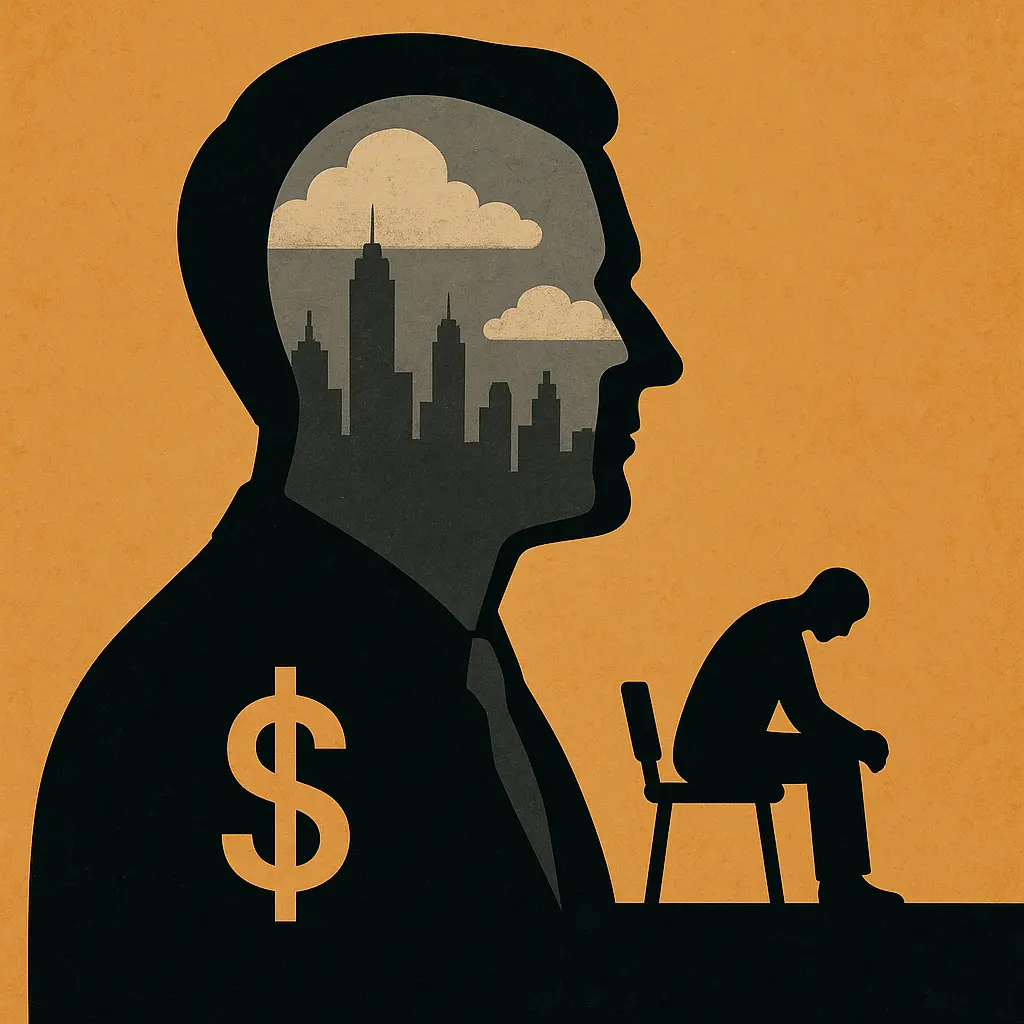
Let’s get the obvious out of the way first: No, billionaires do not need your sympathy. They’re not starving. They’re not being evicted. They’re not deciding between heating and food. So, should we feel bad for them? No. That’s not what this is about.
But that’s the trap, isn’t it? When we hear the word empathy, we often hear sympathy — as if empathy means letting someone off the hook, or feeling sorry for them. But empathy isn’t about deciding whether someone’s life is hard enough to deserve our concern. It’s about trying to see how they experience the world — and what that might teach us.
And when it comes to billionaires, there’s a lot to learn.
Empathy ≠ Sympathy
Empathy is the capacity to understand the state of another mind. It doesn’t mean agreeing, condoning, or comforting. It means observing, listening, inferring — without letting our emotions cloud the process.
Sympathy is emotional. Empathy is perceptive.
We tend to empathise most easily with those who suffer in ways we can relate to. But this leaves out entire swaths of human experience — including the very people who shape our economies, our policies, our futures. Understanding them isn’t an act of kindness. It’s an act of awareness.
Inside the Billionaire Psyche
Here’s the thing about billionaires: they are still human. We might like to think of them as cartoon villains, hoarding gold and twirling mustaches — but that’s a convenient simplification. Real people are messier. More conflicted. Often unaware of their own contradictions.
What drives someone to accumulate more wealth than they could ever need? What fears or beliefs keep them doing it? What worldview do you have to adopt to justify stepping over others to get there — or to sincerely believe you’re helping?
We don’t have to like the answers. But we do need to ask the questions. Because without understanding, we can’t meaningfully respond.
Dehumanisation Is a Blunt Instrument
When we reduce billionaires to monsters, we make them less real — and in doing so, we rob ourselves of clarity. We miss the psychological patterns, the system enablers, the personal histories that created them.
Yes, they may live in gated communities, surrounded by yes-men and soft lighting. But that doesn’t mean they’re free of fear, self-deception, or trauma. They just have the money to cover it in designer fabric.
Dehumanising them doesn’t dismantle their power. It just stops us from seeing how that power actually works.
Empathy as Strategy, Not Surrender
So no, we don’t owe billionaires forgiveness. But we do owe ourselves insight. If we ever want to redesign the system — or even just survive it — we have to understand the people at its apex. Not mythologise them. Not moralise. Understand.
Because once we see clearly, we can begin to respond intelligently. Strategically. Even subversively.
Empathy is not a soft virtue. It’s a sharp tool — one that can carve through illusion and reveal the truth beneath.
Final Thought
Empathy is not a tool for sympathetic evaluation. It is a tool for our own understanding.
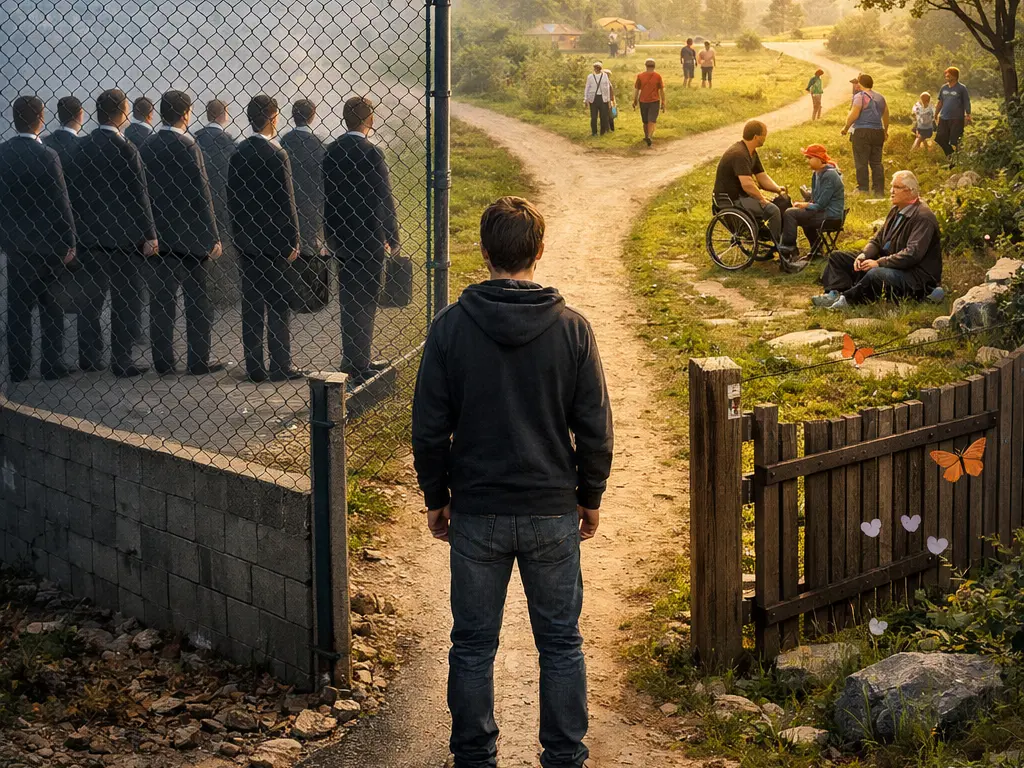
In a world where empathy, kindness, and equality are frequently championed, it’s hard to ignore the paradox that underpins many of our societal structures. We live in a system that, on the surface, promotes compassion and understanding, yet often fails to extend these values to those who fall outside of a narrow, idealized norm. The result is a form of systemic oppression—one that may not be overt or intentional, but which still deeply affects individuals who are considered “other” by society. From neurodivergent individuals, like those with autism, to those who live with mental health conditions or psychopathy, many are faced with a system that struggles to accommodate their unique experiences, perspectives, and needs.
This paradox presents a crucial question: can humanity evolve beyond the limitations of a system built on conformity and idealized norms? How can we recognize and address the underlying contradictions within a society that claims to value compassion but fails to apply it to everyone?
The Current System: Compassion in Theory, Oppression in Practice
At its core, our current system is rooted in ideals of fairness, justice, and compassion. In theory, it promotes equality, extending kindness to others and encouraging the alleviation of suffering. Yet, when it comes to those whose behavior, identity, or neurological wiring deviates from the mainstream, the system often fails to extend this compassion in practice.
Take, for example, individuals with autism. Many of these individuals navigate a world that is not designed with their neurodivergence in mind. Social norms, communication expectations, and sensory environments can all pose challenges that society rarely accommodates. While we understand that autistic individuals experience the world differently, the societal response is often to ask them to conform, masking their true selves in order to “fit in.” This can lead to exhaustion, frustration, and even feelings of invisibility. What’s meant to be a compassionate, inclusive society, at times, becomes one that marginalizes those who cannot easily conform to established norms.
The same paradox applies when we consider the ethical implications of psychopathy. Psychopaths, individuals whose behaviors are often characterized by a lack of empathy or remorse, are frequently viewed as dangerous, immoral, or even “evil.” However, this view fails to acknowledge the possibility that their experiences of the world—shaped by neurological and psychological factors—might be radically different from the norm. The tendency to label psychopathy as inherently wrong leads to punitive systems that rarely consider the possibility of rehabilitation, accommodation, or deeper understanding.
This creates a troubling dichotomy: a system that professes compassion but is not designed to accommodate those whose ways of being differ from the mainstream. In effect, society ends up compounding the suffering of those who already find themselves on the margins, further entrenching the very issues it seeks to solve.
The Paradox of Morality: Who Decides What’s “Normal”?
At the heart of this issue is the question of what is “normal” and who gets to decide. Society often creates moral frameworks that are rooted in a shared understanding of what constitutes acceptable behavior, thought, and identity. Those who fit within this framework are generally accepted and treated with compassion, while those who fall outside of it are labeled as “wrong,” “deviant,” or even “dangerous.”
This is where the paradox deepens: In striving for compassion, we often end up perpetuating exclusion and marginalization. The very same system that advocates for inclusion and kindness can, at times, act as a gatekeeper, denying access to those who are deemed “other.” And even more troubling, this dynamic is rarely examined or questioned in mainstream discourse.
By framing difference as “wrong,” society creates an environment in which those who are perceived as different—whether due to neurodivergence, mental illness, or extreme psychological traits—are denied the right to be understood, let alone accommodated. It is an approach that focuses on the conformity of individuals rather than the evolution of society itself to accept a broader spectrum of human experience.
Can We Grow Beyond This Paradox?
The answer to whether we can grow beyond this paradox is not simple, and it may require profound shifts in the way we understand and relate to others. There are, however, several steps we can take to begin moving towards a more inclusive and compassionate world—one that doesn’t just champion kindness in theory but applies it broadly, even to those who challenge our notions of “normal.”
Reframe Difference, Not Deficiency: The first step is to shift the way we view difference. Instead of framing non-normative behaviors, thoughts, or identities as “wrong” or “broken,” we can work to see them as variations of human experience. By reframing difference as a natural part of the human spectrum, we can begin to build a system that is more accommodating and understanding.
Create Inclusive Systems: Instead of demanding that individuals conform to rigid societal norms, we must look at how systems—whether educational, healthcare, legal, or social—can be adapted to accommodate a wider variety of human experiences. This might mean redesigning environments to be more sensory-friendly, adjusting communication expectations, or rethinking how we define and approach mental health and psychological differences.
Engage in Honest Conversations: Change begins with dialogue. We need to create spaces where challenging conversations about difference, morality, and societal expectations can take place. This includes recognizing the nuances of psychological conditions like psychopathy and autism, and moving away from simplistic labels toward deeper, more empathetic understandings. It’s about listening to marginalized voices and making space for their experiences to be heard.
Acknowledge the Limits of Empathy: Our current system is built on the assumption that empathy can and should guide our actions. While empathy is a powerful force, it has its limits—particularly when it comes to understanding those whose experiences of the world are radically different from our own. Moving beyond this paradox will require a more complex understanding of human difference and the development of strategies for responding to harm that do not rely solely on empathy or moral judgment.
Foster a Culture of Flexibility and Growth: In order to truly evolve, we need a cultural shift that embraces the idea of flexibility and growth. Rather than rigidly adhering to one model of behavior or identity, we need to embrace the fact that people grow, change, and experience the world in unique ways. Our systems must be able to adapt to these changes and provide pathways for everyone, even those who are perceived as “different,” to thrive.
A Path Toward True Compassion
The paradox of compassion and oppression is not an easy one to resolve. But by confronting it head-on, we have the opportunity to evolve into a society that not only values compassion but also practices it in ways that truly embrace the diversity of human experience. In doing so, we can build a future where no one is marginalized simply because they don’t fit into a narrowly defined mold.
While change may take time, the process begins with recognizing the inherent value of all individuals, even those who challenge our understanding of morality, empathy, and behavior. By expanding the boundaries of compassion to encompass the full spectrum of human experience, we can begin to create a world that is truly just, inclusive, and humane.