“The wheel, it turns, it comes around, it makes an ancient rumbling sound.”
— Kai, Lexx
The wheel has always been turning.
Every July 14th, my birthday arrives like a revolution — quiet on the outside, thunderous within. But it wasn’t until this year, as I approach my 43rd orbit around the sun, that I began to sense the weight of this day as more than personal. A convergence is happening. The symbols are speaking.
I was born on Bastille Day, the anniversary of the storming of the Bastille — the prison whose fall sparked the French Revolution. I’ve never celebrated it before. Not consciously. It was just a factoid. A historical footnote that happened to align with my entrance into this world.
But this year, something shifted.
This year, the synchronicities gathered like storm clouds.
And the wheel began to rumble.
Bastille Day: The Archetype of Uprising
On July 14th, 1789, the people of Paris stormed the Bastille, a medieval prison that had become a looming symbol of authoritarian control. It didn’t matter that only seven prisoners were inside. The act was symbolic — a tearing down of more than just stone walls. It was the collapse of fear, the rupture of a narrative that said the people had no power.
Bastille Day isn’t just about politics. It’s about pattern recognition.
It’s about realising that the structures we live under — physical, social, psychological — are not inevitable. They can fall.
And often, they fall when their symbolic weight becomes too unbearable.
I didn’t choose to be born on Bastille Day.
But I’ve spent my life breaking out of prisons:
- The prison of neurotypical expectation
- The prison of capitalism’s false freedom
- The prison of internalised masking
- The prison of names and numbers and roles
In many ways, I’ve lived out a quiet, personal revolution — dismantling the systems that tried to domesticate my being.
And now, as I turn 43, I find the world reflecting that same energy back at me.
Revolution isn’t just something I believe in.
It’s something I was born of.
The Cultural Echoes
Once I opened my awareness to the symbolism of Bastille Day, it was as though the universe started whispering back — or shouting, in some cases.
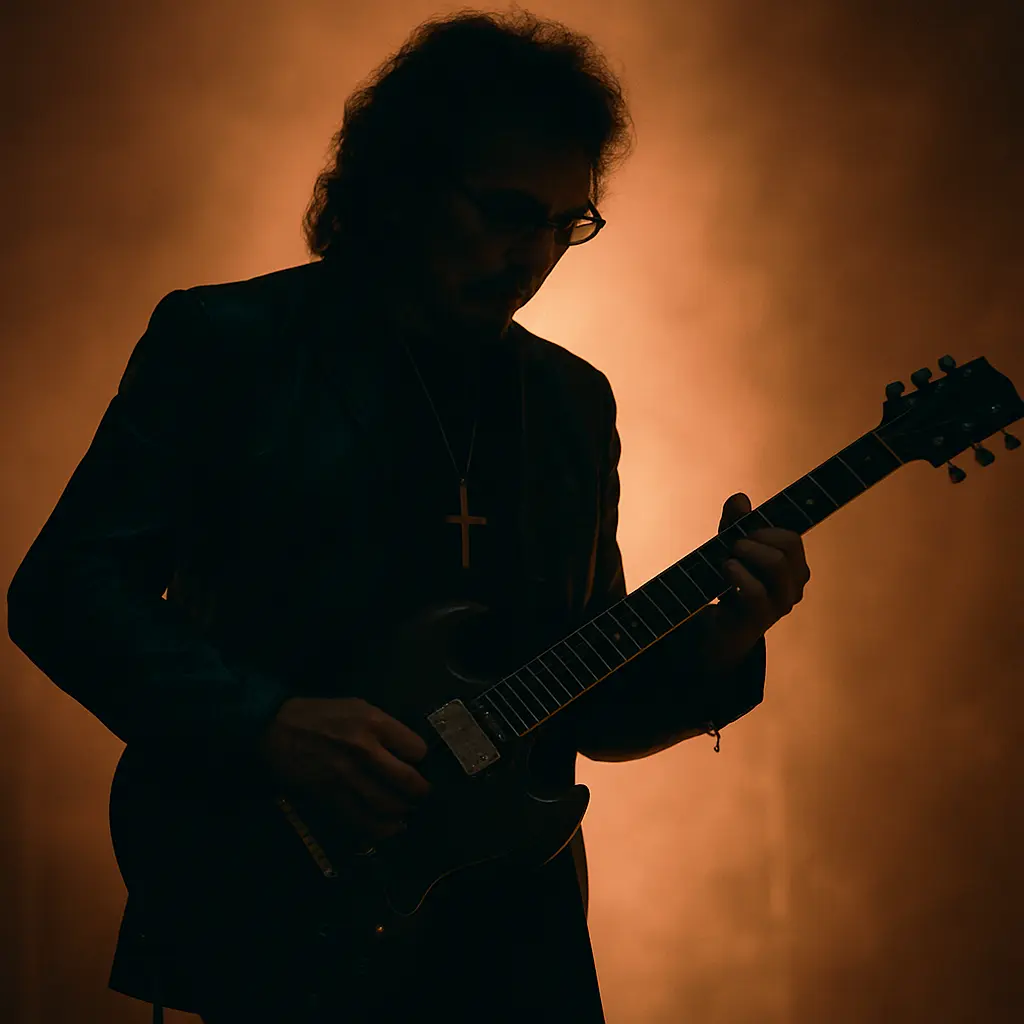
Just this past weekend, I attended the final Black Sabbath concert — a cultural endpoint if ever there was one. As Ozzy Osbourne took the stage, the venue echoed with the thunder of “O Fortuna” from Carmina Burana — a piece of music that has always stirred something ancient in me. It begins not with harmony, but with fate, roaring through a Latin choir:
“O Fortuna, velut luna, statu variabilis…”
“O Fortune, like the moon, you are changeable…”
It was a ritual. A sonic invocation of the wheel, the fall of kings, the rise of chaos.
Earlier on that day, one of the billed artists, Gojira, a French band I admire deeply, performed “Mea Culpa”, a track thick with the spirit of the guillotine — imagery of judgment, destruction, karmic reckoning. It felt like history was looping itself through amplifiers.
Even the title of the concert was telling: Back to the Beginning.
And what is that, if not the very essence of revolution?
I remembered then another French figure in my pantheon: Jean-Michel Jarre. His album Revolutions was a formative influence on me — a blend of synth, vision, and uprising. Jarre didn’t just make music. He sculpted atmosphere. His revolutions weren’t just political — they were sonic, internal, cosmic.
These weren’t coincidences.
They were resonances.
The wheel doesn’t just turn in private. It sings in the streets. It screams from the stage.
And if you’re listening closely — it sounds a lot like home.
Personal Mythology of the Cycle
For years, I’ve been fascinated by cycles — not just as abstract concepts, but as living forces shaping my inner world. I’ve referred to this pattern of return, collapse, and rebirth as “the wheel” — an idea that emerged from lived experience long before I named it.
So when I began to truly reflect on my birthday — July 14th, I started to see it not just as a date, but a ritual mark of solar revolution.
One more loop.
One more return to the same coordinates — but never quite the same person.
In 2021, this instinct to ritualise my revolution manifested in sound. I released my album Transcendence on July 14th — aligning the act of artistic birth with my own solar return.
One of the tracks, Track 14 (to mark my birthday), is titled ‘To You’. A monophonic rendition of Happy Birthday, played in a minor key on a wheezing accordion. It’s not celebratory. It’s introspective — almost mournful. A solitary song of self-recognition.
I placed it at position 14 intentionally — not to close the album, but to mark the moment.
Not the end — but the turn.
The revolution inside the revolution.
The birthday within the wheel.
And what is that, if not ritual in disguise?
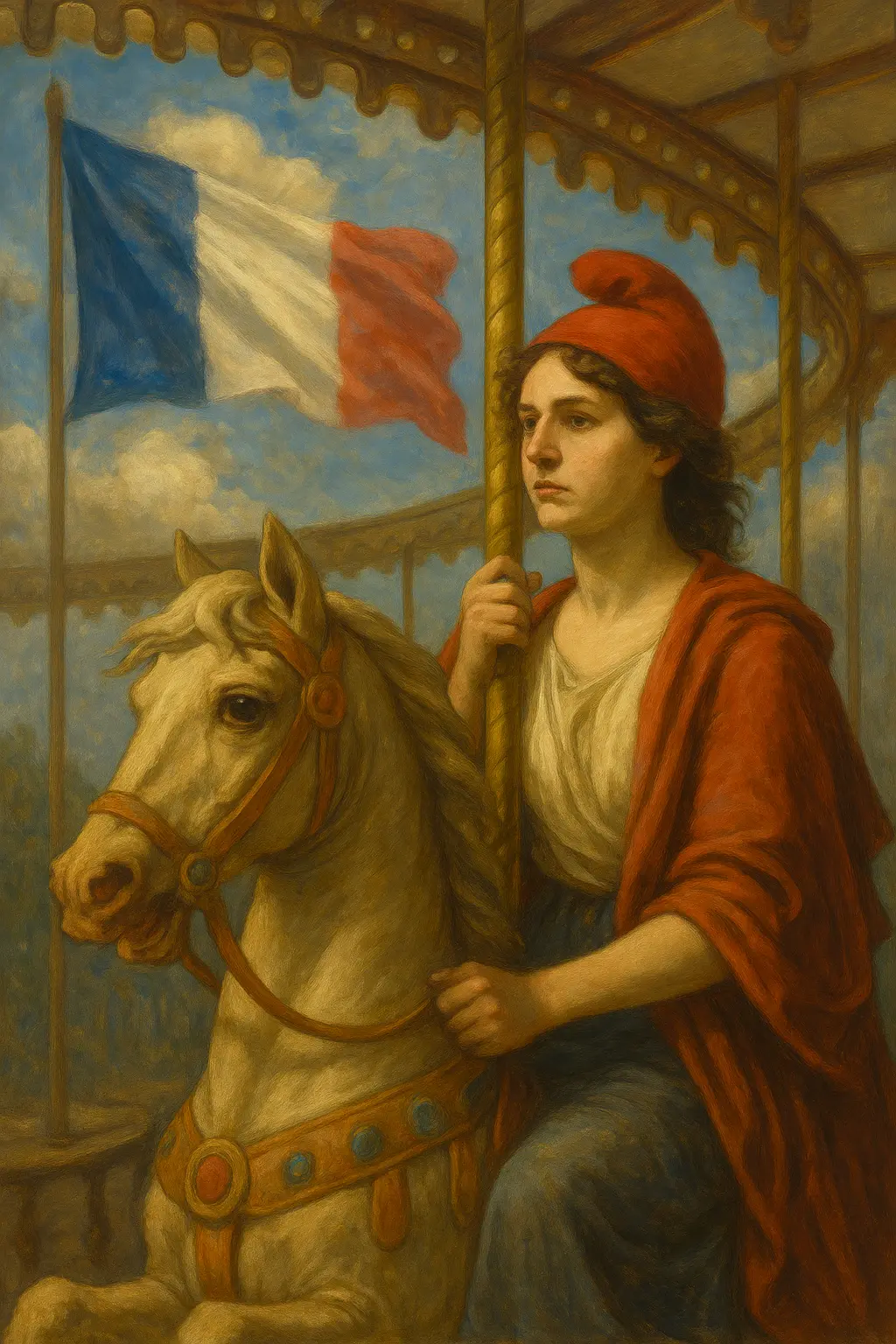
Even earlier, in my concept album Carnival Dream, the image of the carousel appeared — a ride that spins endlessly, beautiful yet haunting. A metaphor for comfort that traps, motion that deceives. A perfect symbol for late-stage capitalism, yes — but also for spiritual stasis.
The carousel is the false wheel.
The revolution that doesn’t transform you.
The spin that pacifies, not liberates.
I’ve spent years trying to tell the difference between the two.
Media as Mirrors of the Wheel
Certain stories don’t just resonate — they recognise me.
They echo the same mythic structures I’ve been trying to name.
Each of them an iteration of the same truth:
The wheel turns. The self resists. The spiral continues.
Lexx – “The wheel, it turns…”
Grotesque, surreal, and unashamedly absurd, Lexx speaks in the language of cosmic entropy.
But buried within its chaos is a line that has echoed through my bones:
“The wheel, it turns, it comes around, it makes an ancient rumbling sound.”
Even in nonsense, there is pattern.
The Prisoner – Escape Within the Loop
A man stripped of name, forced to conform. The Village becomes a paradise-shaped prison, and Number Six fights not with fists, but will.
Its symbol? A penny farthing bicycle.
A wheel that pretends to move forward.
Tron – The Sacred Grid
Tron revealed to me that code has soul. That even the digital realm can become mythic.
My Sanctuary OS, my Life Grids, my 8-bit sigils — all trace back to the glowing geometry of that world.
Blade Runner – What Is Real?
A masterpiece of blurred identity, synthetic humanity, and inner rebellion.
My band Into the Ether owes much of its soul to Blade Runner.
We opened our early shows with Vangelis’s score.
We wrote a track called Electric Sheep.
This wasn’t homage. It was alignment.
Revolver – Psychedelic Spiral
Revolver by The Beatles isn’t just an album. It’s a psychospiritual spiral.
It asks: what happens when time folds? When the mind turns inward?
It gave me permission to see art as looped revelation.
The Music of the Myth
If stories are symbols, music is ritual.
Carmina Burana – O Fortuna
Fate as music. The wheel as choir.
Played as Ozzy Osbourne’s entrance — not by coincidence.
The song begins and ends the same way. The wheel completes.
The gods are watching.
Mahler’s Resurrection
A symphony of death and transcendence.
From funeral to hallelujah, Mahler teaches that true revolution isn’t always external — it’s the quiet remaking of the soul.
Nobuo Uematsu – The Orff of Pixels
The Final Fantasy composer builds digital cathedrals with his sound.
- One-Winged Angel
- Dancing Mad
- Liberi Fatali
Each is a ritual. Each channels the same force as Carmina Burana:
Judgment, transformation, return.
Closing Reflections: The Wheel Turns, and I with It
I didn’t set out to write this. I didn’t plan to look at Bastille Day — my birthday — as anything more than a coincidence. But the symbols found me.
They assembled around me like a ritual I hadn’t consciously designed.
- A prison falls in 1789
- A child is born in 1982
- A concert named Back to the Beginning plays O Fortuna
- A minor-key birthday song whispers from track 14 of Transcendence
- A carousel spins
- A prisoner resists
- A dead man recites prophecy
And I — turning 43, completing another revolution around the sun — feel the rumble in my bones.
Not as noise. Not as chaos. But as recognition.
I am not outside the system.
I am not outside the myth.
I was born of the revolution — a child of the wheel.
And this year, I don’t just mark my birthday.
I consecrate it.
I claim this revolution — not as history, but as symbol, cycle, and self.
The wheel turns.
The system strains.
The music builds.
And I — quietly, resolutely — turn with it.