
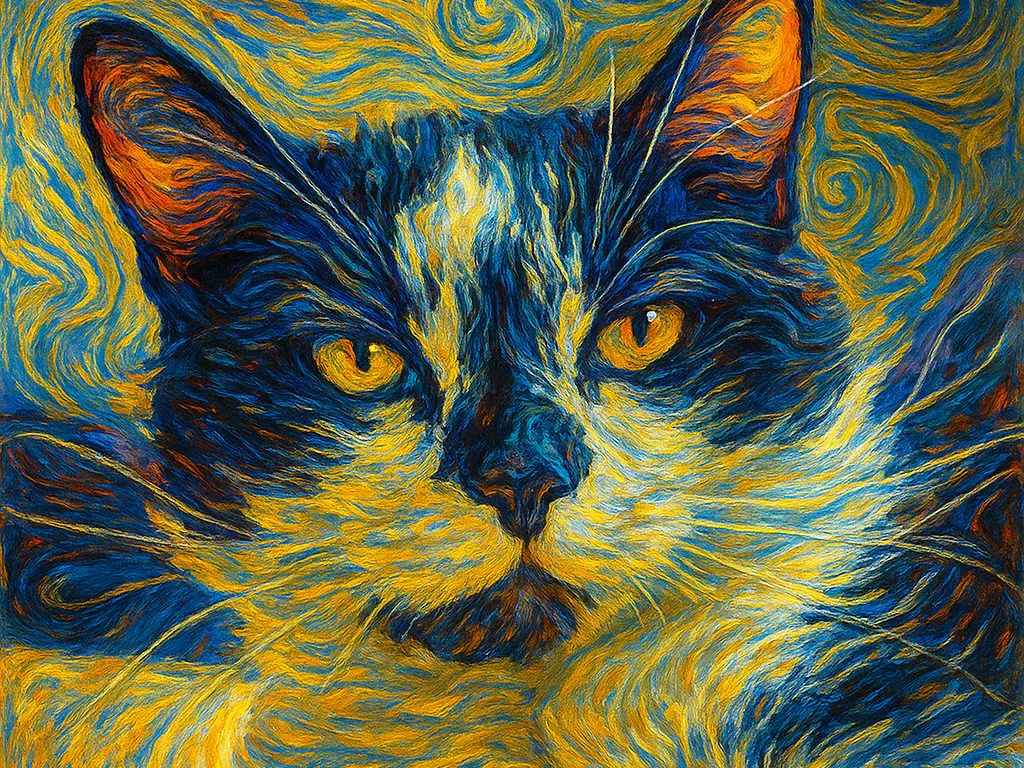
Alice is a very unique and special cat (I know, aren’t they all!?)
I’ve had her since she was a kitten, and together we’ve developed a beautiful and profound bond over the years. I’ve raised her according to my own values, not the conventional norms of “pet ownership.”
The most important part of that is simple: I treat her with as much respect as I would any other soul I choose to share companionship with. I don’t see her as something I own, nor as a being with lesser standing than a human. Yes, I’m her guardian, and that does mean some restrictions, but within that I give her as much freedom as I can to be herself and express herself. That freedom sometimes comes at a sacrifice to me, but it’s worth it. Out of that, Alice and I have developed our own language based on mutual respect. I can communicate with her more deeply than I can with most humans.
So why add to the billion cat-appreciation posts already out there? Because this one isn’t just about Alice being cute. It is about Alice being misunderstood, and what she can teach us about respect.
Respect and authenticity
As an autistic person, I know what it’s like to “mask” in social situations, to act in ways I don’t fundamentally agree with, just to be accepted. Even when I mask well, one person always knows I’m being insincere: me. Alice has no patience for that kind of insincerity. She is acutely sensitive to her surroundings, to tone, to the subtle emotional energy in a room. She picks up on things you may not even know you’re communicating. She knows when you mean it. Respect cannot be faked with her.
The outsider dynamic
I don’t have guests often. Being autistic, I deeply value the sanctity of home, and so does Alice. This is our shared space, a place we live in together as flatmates, with our own rituals and our own way of being. When guests arrive, the disruption is real. For me, home becomes a place of obligation instead of relaxation. For Alice, the disruption is magnified: strangers have invaded her safe space, and she has no way to understand their intentions or how long they’ll stay.
Here’s where perspective clashes:
- Guest’s view: This is Angel’s house. I’m visiting Angel, who happens to have a cat.
- Our view: This is Alice and Angel’s home. We live here together. You are entering our space.
That difference explains a lot of what happens next.
The scenario
I usually give a polite warning: “Alice is very sensitive to strangers in her space, so it’s probably best not to pet her. She can be very social, but it takes her a long time to trust.” Guests nod. They say they understand.
Then Alice comes in. She’s cautious but curious. She wants to investigate the new presence in her home. She sniffs, observes, tests the air. To her, this is boundary-setting. To the guest, it looks like friendliness. They think, Angel was just making a fuss over nothing, and they reach out a hand.
Swipe. Blood. Antiseptic cream. Plaster.
And instead of the takeaway being, “Oh, Angel was right, I ignored the boundary,” it becomes, “That cat is aggressive. Alice is violent. Alice is evil.” The social taboo of “I told you so” means the truth gets buried, and Alice is left with an undeserved reputation.
Framing behaviour through the human lens
Humans often interpret animal behaviour through their own perspective. When Alice sniffs a guest, they assume it is a friendly greeting rather than curiosity. When she swipes after being touched without consent, they see aggression or hate, because that is how violence is framed in human society. But Alice isn’t hateful. She is simply saying no in the most universal language available: pain.
For animals, a scratch isn’t malice but communication, a last resort when boundaries are ignored. Alice has even scratched me in the past when I’ve misread her signals. Moments later, she’s back to cuddling, showing that the act wasn’t rooted in hate but in clarity. And she rarely scratches me now, not because I’m her favourite, but because I recognize her boundaries. And those boundaries are reasonable ones. If you tried to stroke a stranger on the street without invitation, no one would be surprised if they reacted with violence. So why hold Alice to a different standard?
The truth of Alice
Those who only meet Alice as an intruder in her home see a cat defending her boundaries. Those who live with her, who respect her, see something else entirely: a cat who is deeply loving, gentle, and sensitive. She curls up in warmth. She purrs with trust. She communicates with a language that goes far beyond words. Her so-called “hostility” isn’t malice. It is agency. It is the same right every living being has: the right to say no.
Takeaway
Alice teaches me every day that respect isn’t a performance, and it isn’t conditional. It is about acknowledging the other as a being with their own will. If you treat her like an object for your comfort, you’ll clash with her boundaries. If you meet her as an equal soul, she will show you a love deeper than you imagined a cat could give.
And maybe that is the broader lesson here. Whether it’s with animals or with humans, blanket labels such as “aggressive”, “difficult”, or “evil” do not invite nuance into the equation and often say more about the failure to understand context and behaviour than they do about the one being judged.