I am not a fixer. I am not a follower. I am not here to convince those who benefit from broken systems.
I am here to observe. To recognize patterns. To tell the truth when others are distracted by noise or comfort.
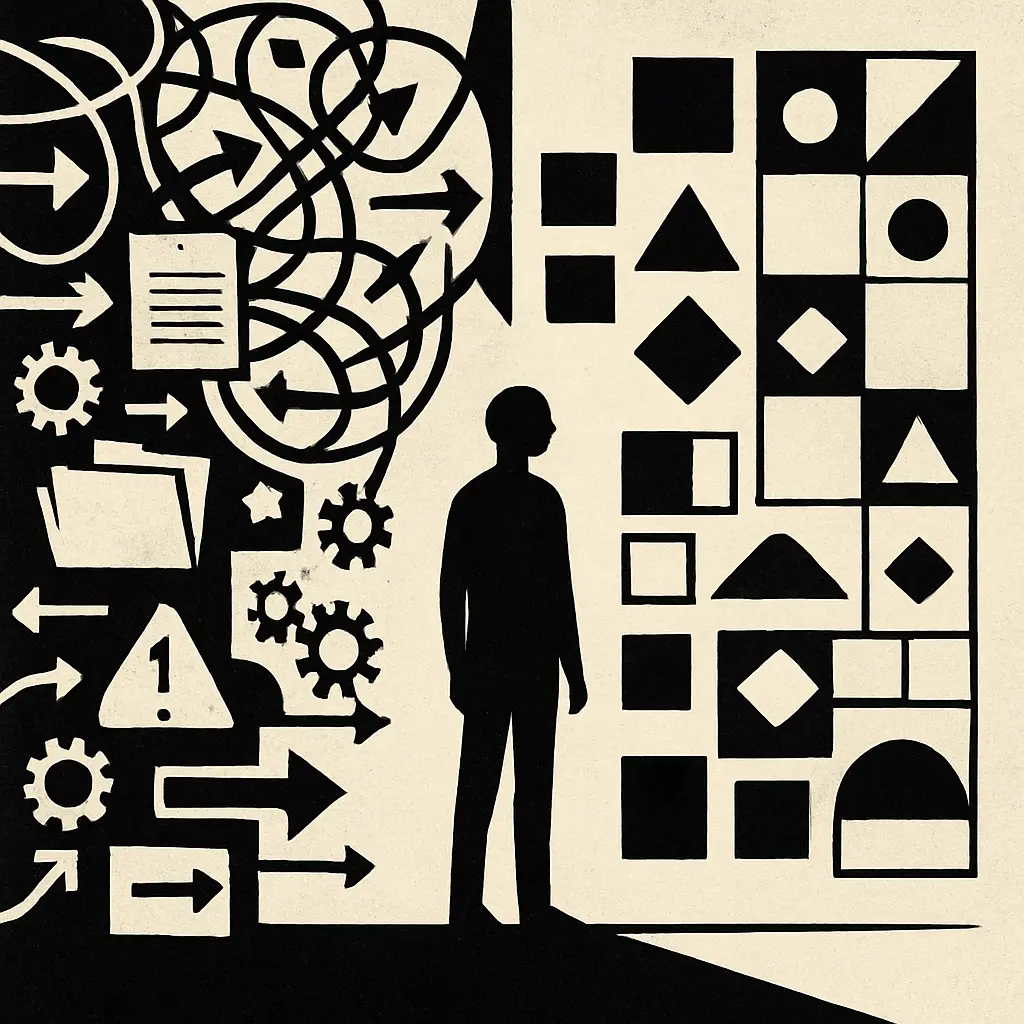
I see that the world is not designed for neurodivergent minds. I see that the systems we are told to fit into are inefficient, bloated, and built for convenience over clarity. I see the injustice; not just in how we’re treated, but in how much of our potential is wasted.
I do not exist to bend myself into an acceptable shape. I exist to name the shapes that no longer serve us, and to suggest better ones.
My function is:
To discern what is healthy and what is harmful.
To shine light on waste, inefficiency, and imbalance.
To reframe guilt into clarity.
To be a strategist, not for power, but for meaningful change.
To advise those who act, and empower those who doubt.
If I had it my way, the world would be:
Built with efficiency and fairness at its core
Rooted in communal wellbeing, not personal gain
Accessible to all, not filtered by outdated metrics
Free from excessive bureaucracy and artificial hurdles
Designed for diversity to thrive, not just survive
But I don’t need to reshape the entire world. I only need to be what I am: an objective seer at the edge of the noise.
And maybe, just maybe, help shift the balance by naming what others feel but haven’t yet spoken aloud.
That is enough. That is my function. That is the signal I choose to transmit.
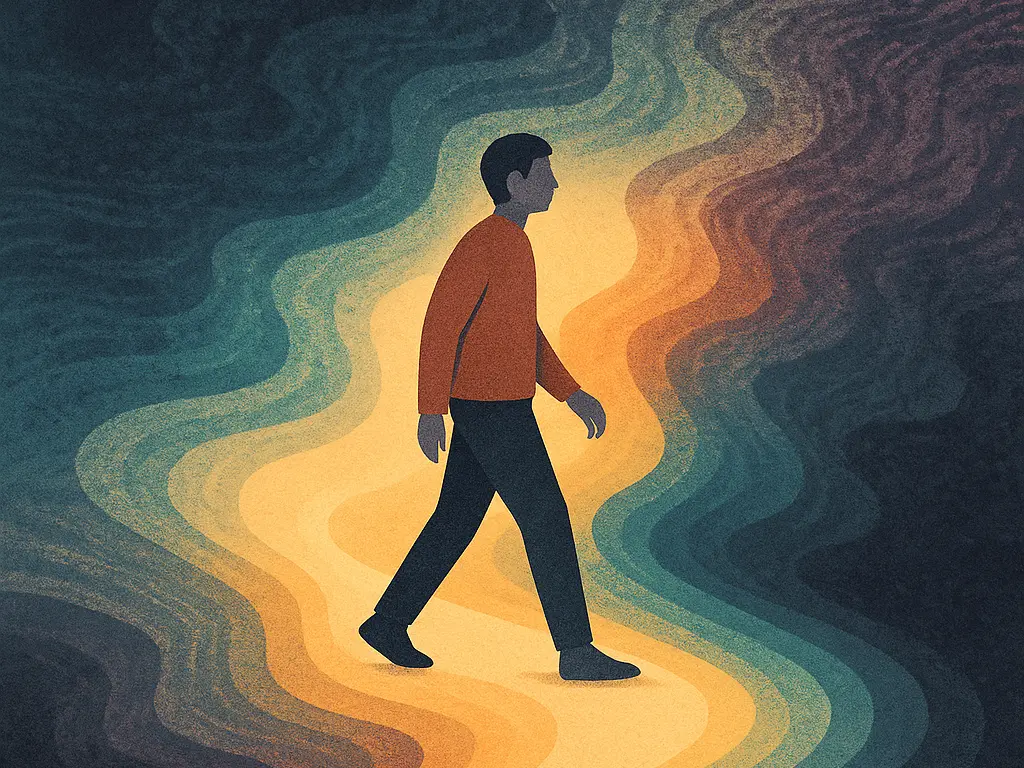
To me, authenticity has always had a texture. When I am living truthfully, it feels smooth, like fluid motion through life, unhindered navigation through systems that make sense to me. It is not euphoria. It is neutrality. Balance. Like the body when it is well: not ecstatic, just quietly functioning as intended.
But when that smoothness disappears, I know I am colliding with something unnatural, a pressure, a distortion, an external force trying to bend me into compliance. That is usually how I recognise oppression. It is not always dramatic or visible. Sometimes it is just a subtle grind, the friction between who I am and what the world expects me to be.
When Smoothness Breaks
When I lose authenticity, it does not just hurt emotionally, it feels like an illness. My thoughts start looping, as if my mind is trying to fix a broken system it cannot repair. I get frustrated at the lack of options, and sad that these dynamics even exist at all.
Sometimes there is nothing I can do but yield. And every time I do, it costs something invisible. The loss is not abstract, it is felt in the nervous system. It is the moment the body whispers, this is not how you are supposed to feel.
The Systems That Demand Performance
Oppression wears many masks: bureaucracy, capitalism, social obligations, the unspoken point system that governs human relationships. Each demands performance. Sometimes it is about survival, sometimes about social advantage. But in the end, both use the same energy source: you.
As an autistic person, I have always been acutely aware of “masking,” the act of performing normality to survive in social spaces. But I have also learned that this is not exclusive to autism. Everyone masks. Some call it professionalism. Others call it politeness. It is still performance. The only difference is how consciously one feels the cost.
The Humiliation of Performance
When I catch myself performing, it feels humiliating, not because anyone else can see it, but because I can. It is like betraying a sacred truth. Yet that awareness is balanced by another: I can also see the oppressive force causing it.
What hurts most is the fear that others see the performance too, but not the pressure behind it. That they see the surface act without understanding the system that coerced it.
They said “Be yourself” But that is not really what they wanted to see I tried doing things my way But that did not work for them I tried doing things their way But that did not work for me
That poem came from that place, the quiet despair of realising that either way, something in you must fracture to fit.
The Rare Moments of Unmasking
True authenticity is situational. I can relax certain parts of the mask around family, others around my girlfriend. But never all at once. Each relationship comes with its own invisible boundaries, some safe zones, some fault lines.
Even when I am alone, there is still the internal eye, the echo of social constructs that linger inside, long after the audience has gone home. Solitude is not the absence of performance; it is where you start to see which parts of the mask fused to your skin.
The Cost and Consequence
Sometimes unmasking feels liberating. Other times, it feels like punishment, a confirmation that the world does not welcome the real self. That is the cruel irony: the more genuine you become, the more visible your difference.
The aftermath can feel like emotional jetlag. There is vulnerability, fatigue, and occasionally grief. But there is also clarity. You see the architecture of the world more clearly when you have been bruised by its walls.
Authenticity as Survival
For me, authenticity is not optional. It is survival. The alternative feels worse than death.
Out of every living thing that has ever existed, there is only one instance of me, this consciousness, this perspective, this particular configuration of life. That makes it sacred. My job is to honour that singular existence.
If I betray it, if I trade it for comfort, convenience, or belonging, then I may as well be anyone else. Or nothing at all.
“To be anything other than myself is to betray the only version of me that will ever exist in the entire time-space continuum.”
Do Not Be Yourself (For Them)
So here is my advice to anyone struggling with authenticity:
Do not take the phrase “Be yourself” at face value. That advice is too often weaponised, a feel-good slogan used to sell you an illusion of freedom within controlled boundaries.
Be yourself, yes. But do it for your reasons. Do it because it is sacred. Do it because you are a one-off in the infinite catalogue of existence. Do it because the alternative is extinction by conformity.
But never do it because the world told you to. Do it because you told yourself to.
On Slowness, Authenticity, and the Hidden Cost of Making Art in a Capitalist Age
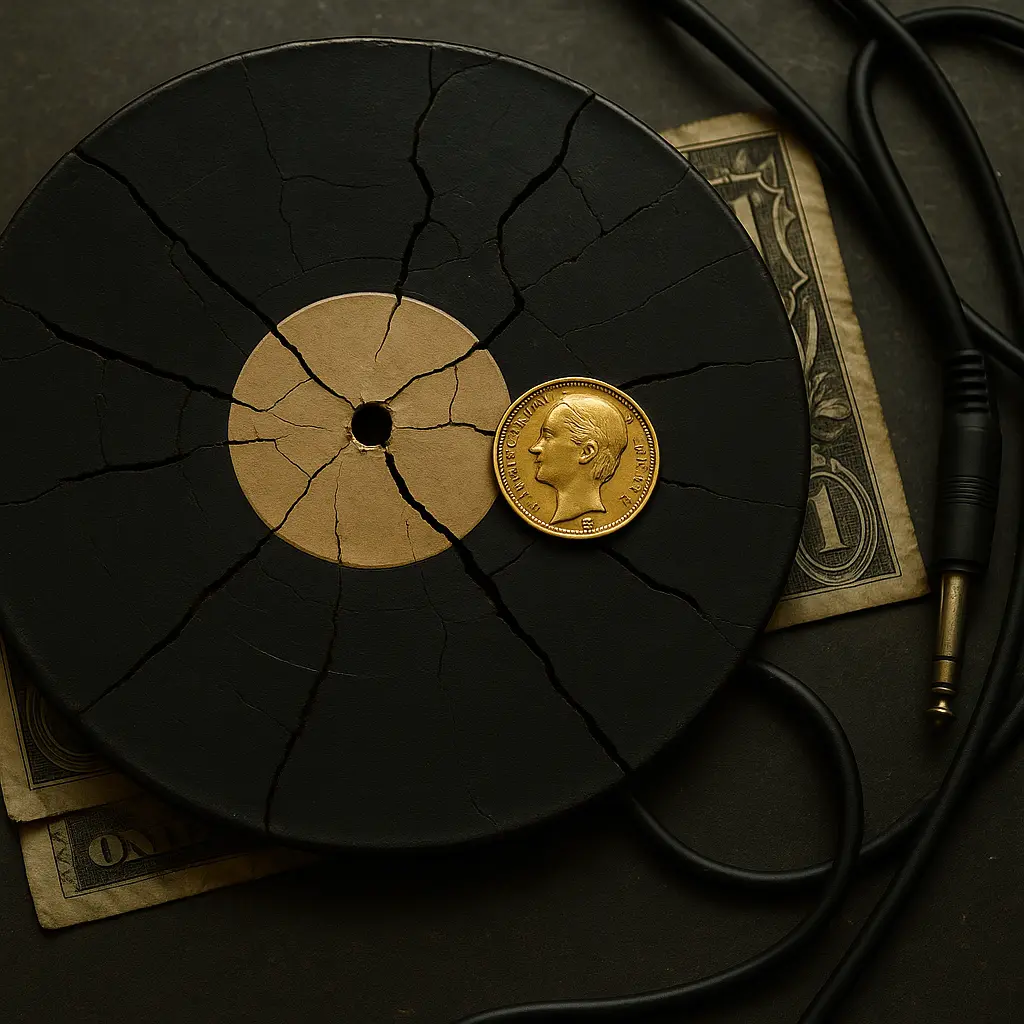
I never thought I’d feel excluded from the very thing that once gave me a sense of freedom. But lately, I’ve come to realise that I am being priced out of my own creativity. Not because I lack the passion, or the ideas, or the skill — but because I can’t afford to keep up. In a world where speed, output, and polished presentation have become the currency of success, the slow, deliberate path of authentic creation begins to feel like a liability. It’s not that I envy others for having more — it’s that I’m haunted by the quiet truth that if I could afford their shortcuts, I’d take them too. And maybe then, I’d finally be heard.
The Outsourced Artist
In today’s creative landscape, outsourcing isn’t just accepted — it’s expected. Bands hire mixing engineers, mastering engineers, session musicians, graphic designers, videographers, social media managers, PR firms, playlist pluggers, and even ghostwriters. What once might have been a collaborative luxury is now a prerequisite for visibility.
The result? A strange duality: the artist becomes both the brand and the product, while the actual act of creation is often fragmented, delegated, monetized.
What happens to those of us who can’t afford to participate in this system — not just financially, but philosophically?
If your process is slower, more solitary, more sacred — you risk becoming invisible. It begins to feel as though the art you bleed over is less “real” because it lacks the polish, the reach, the momentum.
But polish is not proof of depth. And speed is not proof of soul.
The Pace of the Mind
For some of us, slow work isn’t a choice — it’s how we’re wired. As a neurodivergent creator, my process often unfolds at the rhythm of deep focus, scattered epiphanies, or energy that arrives in brief, unscheduled waves. I don’t have the bandwidth to be “on” all the time, nor the capacity to split myself between creating, promoting, polishing, and packaging — all while maintaining a public-facing presence.
There are days when just starting takes all my energy. Not because I don’t care — but because I care too much. The ideas are there, the vision is vivid, but the executive function required to carry it through feels like swimming in glue.
In a society that equates slowness with laziness, this reality becomes invisible. But slow art isn’t lazy — it’s often more conscious, more personal, more layered.
The problem isn’t my pace. It’s that the creative world is rigged for speed.
The Misinterpretation of Slowness
In the eyes of an algorithm-driven world, slowness is indistinguishable from absence. If you’re not releasing something, promoting something, performing something, or networking somewhere, you might as well not exist.
The labor you’re doing behind the scenes — the quiet crafting, the emotional processing, the struggle to bring a foggy idea into form — becomes invisible.
There is no metric for sitting with your feelings. No content calendar for trial-and-error. No viral moment for doing something the hard way just because it felt true.
The unspoken message is: If you were really good, it wouldn’t take this long.
But what if the time it takes is part of the art?
Between Autonomy and Assistance
I sometimes wonder what I might create if I had the means to outsource the tedious parts of production — the repetitive tasks, the non-creative polish, the technical finishing touches. And yes, I would do so in a heartbeat if I could. There is no virtue in burnout.
But there are aspects of my work that feel sacred. Decisions that need to be made by hand, not handed over. Not everything can be automated without losing something vital.
Even in areas where tools like AI are beginning to offer creative support, I tread cautiously. I welcome augmentation — a scaffolding to help me express what’s already inside me — but I resist the pull toward a fully packaged aesthetic I didn’t choose.
To maintain agency over your art in a world that rewards trend-following over truth… is to walk a narrower path.
Why I Still Create
And yet, I keep creating.
Not because the system rewards me, but because something in me refuses to stop. I create for the moments when the noise falls away and something raw and beautiful emerges from the mess. I create because it connects me to myself, and sometimes, to others who are quietly walking similar paths.
I don’t know if my work will ever be widely seen, heard, or recognised. But I know it is mine. Every rough edge. Every choice made without compromise. Every imperfect but honest thing I shaped with my own hands.
That has to count for something.
So this is for the others like me — the slow ones, the careful ones, the fiercely authentic ones.
You’re not invisible to me. I see you in the cracks, in the edges, in the long silences before the next release. And I believe what you make, when it finally arrives, will be worth the wait.