
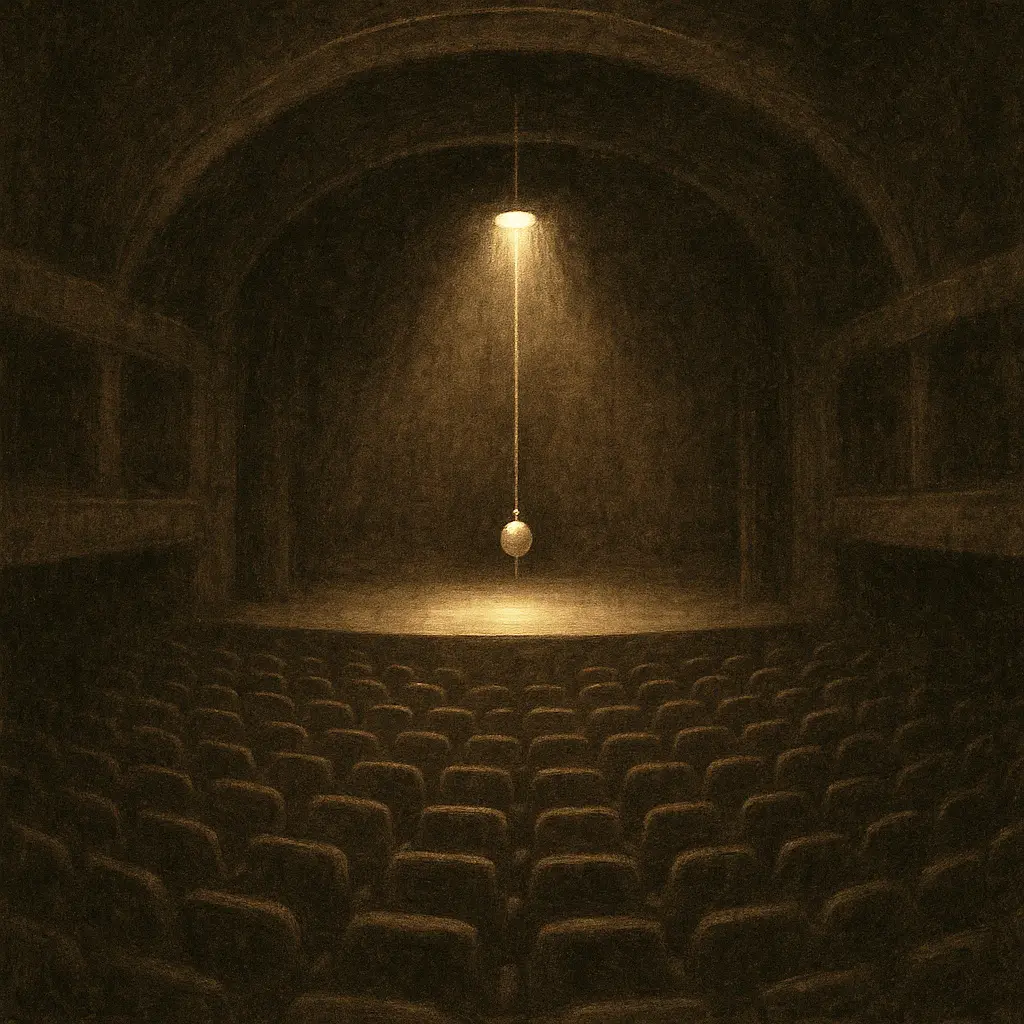
The Aura Machine explores how modern culture manufactures fame, value, and belief — from the economics of aura to the hypnosis of democracy, and the slow work of waking up.
Democracy as Stage Hypnosis
Democracy promises freedom of thought, yet much of modern discourse feels rehearsed. The same opinions echo through millions of voices, the same outrage erupts on cue. What if we are not as free as we believe? What if our public sphere operates like a stage show, and we are the volunteers who think we chose to participate?
Stage hypnosis depends on framing. The hypnotist does not control the mind directly; they shape the context until compliance feels like choice. They select suggestible participants, guide them with rhythm and repetition, and invite laughter from the audience to reinforce obedience. The subject performs, believing it to be their own idea.
The digital world works in the same way. Algorithms choose who steps onto the stage, which topics dominate, and what emotions are rewarded. Repetition becomes persuasion. The individual feels autonomous while unconsciously responding to invisible cues.
The key to hypnosis is attention management. As long as focus stays on the act and not the mechanism, the spell holds. Media ecosystems achieve this by keeping us fixated on the drama of personalities, scandals, and partisan conflict. The stage is lit brightly enough that few ever look toward the shadows where the scripts are written.
Every trend, hashtag, and viral story functions as a suggestion. Each repetition deepens the trance. Outrage and euphoria alternate to maintain engagement, just as a hypnotist uses tension and release to deepen focus. The crowd participates willingly, unaware that the rhythm itself is the real tool of control.
This is not conspiracy but design. The architecture of modern communication rewards reaction over reflection. Quick judgment is profitable; slow thought is not. The hypnotist does not need to lie when distraction will do.
To awaken from this collective trance does not mean rejecting technology or democracy. It means recognising the cues that steer emotion and reclaiming the right to pause. The moment you look at the mechanism instead of the show, the spell begins to break.
True freedom is not the absence of influence but the presence of awareness. To see the strings is not cynicism; it is clarity.